Game Review: Detroit: Become Human (2018, Quantic Dream)


Detroit: Become Human takes place in a Detroit of the near future.

Androids, built, programmed, and sold by CyberLife, have become so common place that almost everyone seems to own one.  The androids do everything from domestic work to hard labor to even dangerous security work.  Because they are viewed as just being machines, they have no rights in American society and they are often blamed for stealing jobs from hardworking humans.  Androids have become a luxury that few humans can do without.  Some try to treat their android laborers with respect while other humans are abusively cruel, secure in the knowledge that a damaged android can easily be replaced with a newer model.

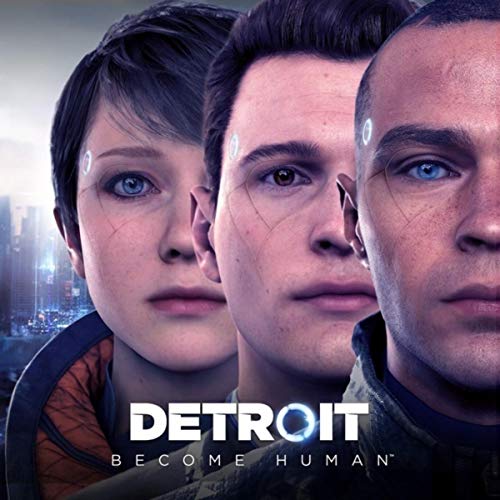
Detroit: Become Human is game about three androids, all of whom the player will control at different points in the game.  Two of the androids, Markus and Kara, turn deviant and develop their own free will.  Markus ends up discovering the android community of Jericho and, depending on decisions made by the player, can end up leading either a peaceful or violent revolution against the human race.  Kara is an abused housekeeper android who, after escaping her owner, runs away with a young girl named Alice and attempts to reach Canada, where there are no laws limiting the rights of androids.  On her journey, Kara discovers a mad scientist who tortures androids, a deserted amusement park that is populated exclusively by androids waiting for their humans to return, and eventually the future’s version of the Underground Railroad.

Lastly, Connor is an android who has been designed by CyberLife to track down and destroy deviants.  Connor is assigned to work with police Lt. Hank Anderson to discover why so many androids have been turning on their owners.  Much like Heavy Rain‘s Norman Jayden, Connor is an outsider who has been assigned to aide the establishment.  Just as Norman sought refuge in a VR world, Connor finds himself summoned to an ever-changing zen garden where he is asked questions by his superior and it is up to the player to decide if Connor should tell the truth or lie.  Like Norman, Connor eventually has to decide which side he is on.  How Connor’s story progresses depends on the decisions made by the player.  Choose one path and Connor and Hank can become unlikely allies and Connor might even end up going deviant himself.  Choose another path and Connor might remain a loyal servant of CyberLife to the very end.  It may sound like an easy choice to make but nothing concerning Connor is ever that simple.
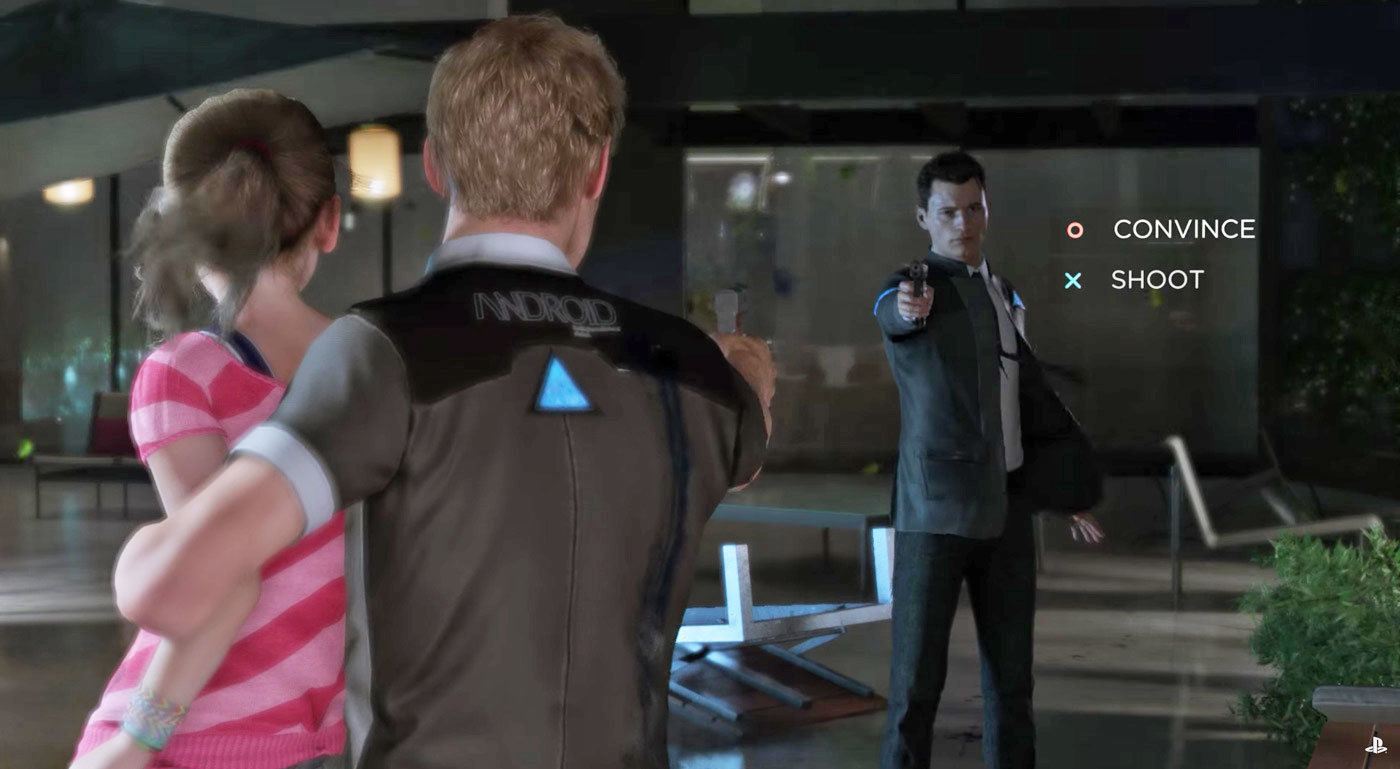
Of all the games that I’ve recently played, Detroit: Become Human is tied with Spider-Man for my favorite.  Like Quantic Dream’s previous games, Heavy Rain and Beyond: Two Souls, Detroit: Become Human tells a sprawling story where nearly every single decision that you make effects what happens in the game.  Like those previous two games, there are no do-overs.  If Markus or Kara dies during one of their chapters, the game continues without them.  (Connor, on the other hand, is just rebuilt by CyberLife and sent back into the field.)  Because the game follows three distinct (but connected) storylines, it is estimated to have over 40 possible endings, which makes it a game that very much rewards being replayed and experimented with.

Detroit: Become Human takes the storytelling and the gameplay concepts introduced in Heavy Rain and Beyond: Two Souls and it improves on both of them.  Unlike the uncertain voice acting of Heavy Rain, Detroit: Become Human features characters played by actors like Clancy Brown, Lance Henriksen, Minka Kelly, and Jesse Williams, all of whom do an excellent job of bringing their characters to life.  The game’s recreation of Detroit and the surrounding area is visually rich and detailed and, unlike Beyond: Two Souls, Detroit: Become Human does not get bogged down in quick time events.  Detroit: Big Human is a game that rewards observant and intelligent players who want to do more than just push buttons while they’re playing a game.
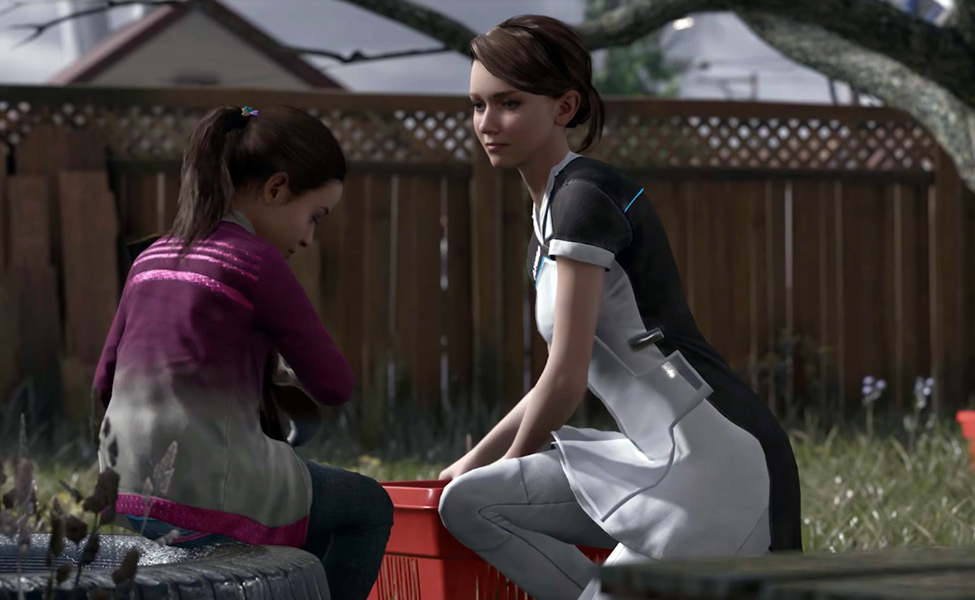
Of course, this is a Quantic Dream game so don’t expect any of Detroit: Become Human‘s political subtext to be subtle.  When t comes to dealing with issues, this game is even more heavy-handed than Beyond: Two Souls.  There’s barely a good human to be found in this game’s version of Detroit.  The best of them is Clancy Brown’s Hank who manages to hate everyone, human and android, equally.  (Of course, who Hank or anyone else in the film ultimately turns out to be, depends on the choices that you make during the game.)  The most interesting of the human characters, though, is Carl Manfred, the artist played Lance Henriksen.  Carl tries to teach Markus how to be human and it’s a confrontation between Carl and his real son (who is jealous of Carl’s relationship with Markus) that leads to Markus setting off on his own.  If Carl dies during the confrontation, he remains an inspiration to Markus and his revolution.  If Carl survives, his later reaction to Markus will depend on what the player has chosen to have Markus do over the course of the game.  Is Carl as benevolent as he seems or was his earlier kindness to Markus just his way of assuaging his own guilt over essentially being a slave owner?  The answer depends on how you play the game.
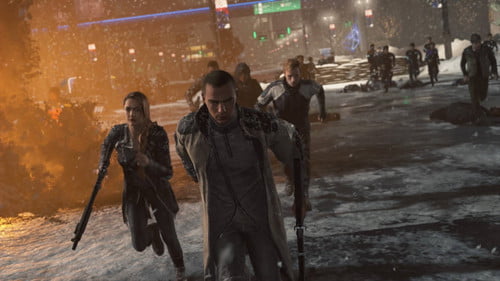
In the end, it’s the sheer number of possible endings that truly sets this game apart.  This is especially true of Kara.  I haven’t discovered all of the endings yet but, from those that I have reached, Kara’s story always seems to get either the best or the darkest possible conclusion.  Markus, meanwhile, can either be an android of peace or an android of war.  After everything that he is forced to endure over the course of the game, it’s difficult not to go for war every time.  As for Connor, it’s all up to you.  Ultimately, everything is up to you.

I look forward to replaying Detroit: Become Human and seeing what other endings this game has to offer.  And I look forward to seeing what will come next from Quantic Dream.

Retro Game Review: Beyond: Two Souls (2013, Quantic Dream)


In between replaying Heavy Rain and Detroit: Become Human, I decided to go ahead and also replay Qunatic Dream’s Beyond: Two Souls.

In Beyond: Two Souls you play two characters who are linked together.  Jodie (Ellen Page) is a troubled young woman who, after being rejected by her family while still a child, is raised by paranormal researcher, Nathan Dawkins (Willem DaFoe).  You are also Aiden, a mysterious psychic force that Jodie can use to read minds and move objects.  Because of Jodie’s powers, the CIA wants them to work for her.  Because Jodie does not want to assassinate progressive world leaders just because the CIA wants them dead (remember, this is a French game), Jodie goes on the run.  The game itself is told out of chronological order, with the player going back and forth from Jodie’s childhood and Jodie’s present as a fugitive.  Like Heavy Rain and Detroit: Become Human, Beyond: Two Souls has multiple endings depending on what you do during the game.

Beyond: Two Souls is a weaker game than both Heavy Rain and Detroit: Become Human but, when I replayed it, I discovered that it was not as bad as I remembered.  Willem DaFoe and especially Ellen Page are amazing in the roles of Jodie and Nathan and the parts of the game that took place during Jodie’s childhood actually improved on a second playing.  (There’s nothing more fun than burning down the bully’s house.)  The nonlinear storytelling was still needlessly confusing.  Fortunately, there is an option to play the game’s chapters in chronological order.

The game’s flaws were still there, though.  The CIA stuff was heavy-handed but that is to be expected from Quantic Dream.  The main problem I had with the game is that the constant switching back and forth between Jodie and Aiden felt awkward.  You can switch between the two throughout the game and I kept pushing the wrong button and I would suddenly find myself stuck in Aiden form, even when there wasn’t anything for Aiden to do.  The game’s heavy reliance on quick time events also made me feel as if I didn’t have as much control over the narrative as I did in Heavy Rain and Detroit: Become Human.

Quantic Dream is one of my favorite video game developers because they are willing to experiment and take risks.  Sometimes, those risks pay off and sometimes they lead to an interesting failure, like Beyond: Two Souls.  Tomorrow, I’ll look at one of their experiment’s that worked.

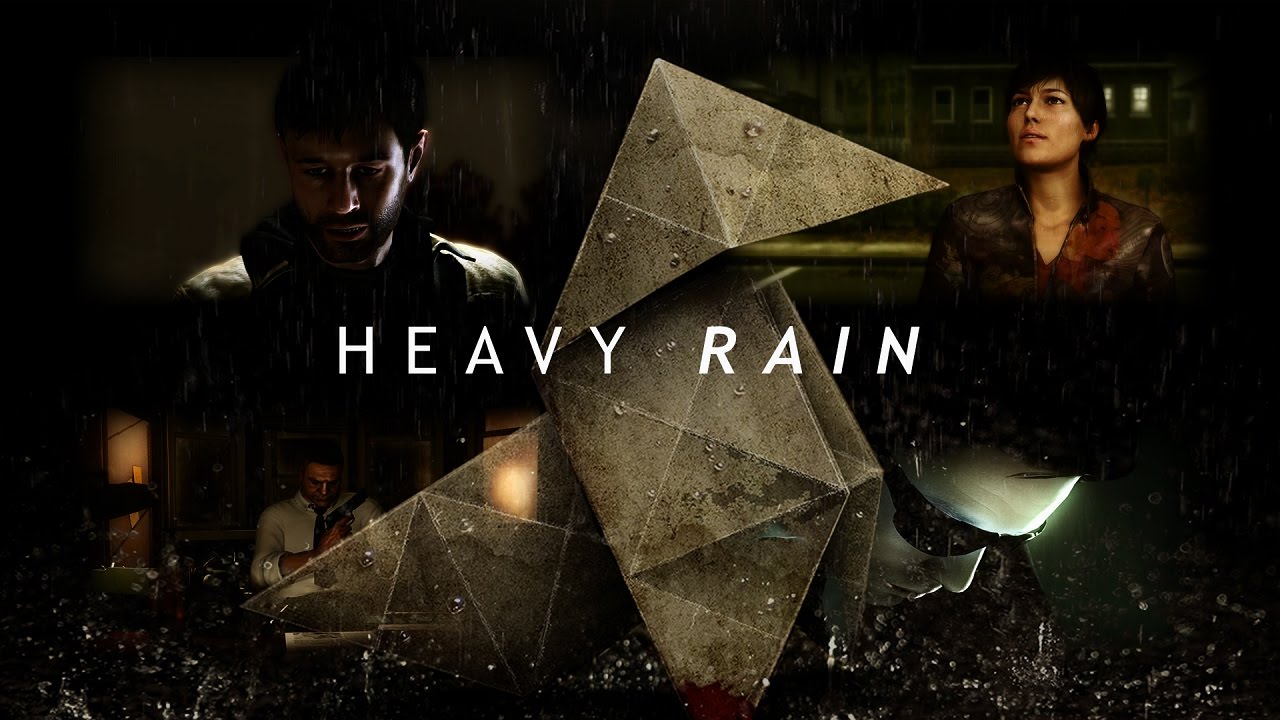
Retro Game Review: Heavy Rain (2010, Quantic Dream)


When it comes to Heavy Rain, it seems that there are two schools of thought.

Some people consider it to be one of the most important and ground-breaking games ever developed, a challenging mystery where nearly every decision that you make will effect what happens next in the game.  Unlike other games, there’s no easy do-overs in Heavy Rain.  If you get one of the four playable characters killed, the game will continue without them.  At a time when people had just started to get bored with games that featured a handful of endings, Heavy Rain revolutionized the entire concept with not just a good and a bad ending but instead with over 20 possible endings.  Your goal is to both discover the identity of the Origami Killer and also to save the life of little Shaun Mars before he drowns in a cage.  Fail and the chances are that the last thing the game will show you is an image of the flooded cage with Shaun nowhere to be seen.

Other people consider Heavy Rain to be a game where the main goal is to get Madison Paige naked as many times as possible.

Madison

Madison

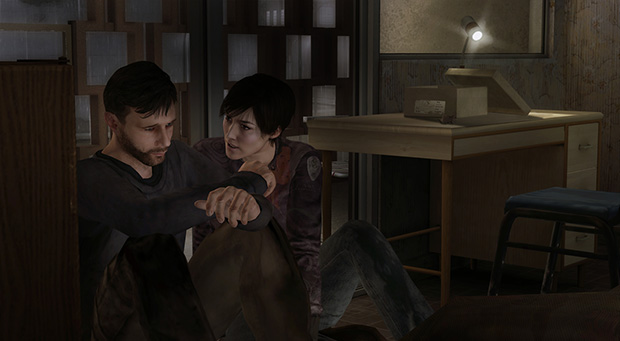
Madison is the photojournalist who, suffering from insomnia, checks into a cheap motel and happens to meet Shaun’s father, Ethan.  Madison seems to spend the entire game either undressing or getting threatened by men who want her to undress.  If the player chooses, Madison and Ethan can make love in his hotel room.  The bra removal mini-game is actually one of the more challenging parts of Heavy Rain.  For the record, it is possible to play the game without Madison taking a shower, stripping for a club owner, having sex with Ethan, or even getting attacked by the crazy doctor who repeatedly tries to stab her in the crotch with a surgical tool.  It’s possible but I doubt many players have done so.

Ethan


How does Heavy Rain hold up after 9 years?  Surprisingly well.  The game has its flaws.  There’s the infamous and much parodied scene where Ethan searches for his son in a mall while calling out his name in a flat monotone.  Quantic Dream is a French company and, when you play the game, it is obvious that some of the voice actors were more comfortable with the English language than others.  But the the game’s rain-soaked and doom-heavy imagery all hold up well and the multiple endings make this a game that’s worthy of multiple replays.

Norman

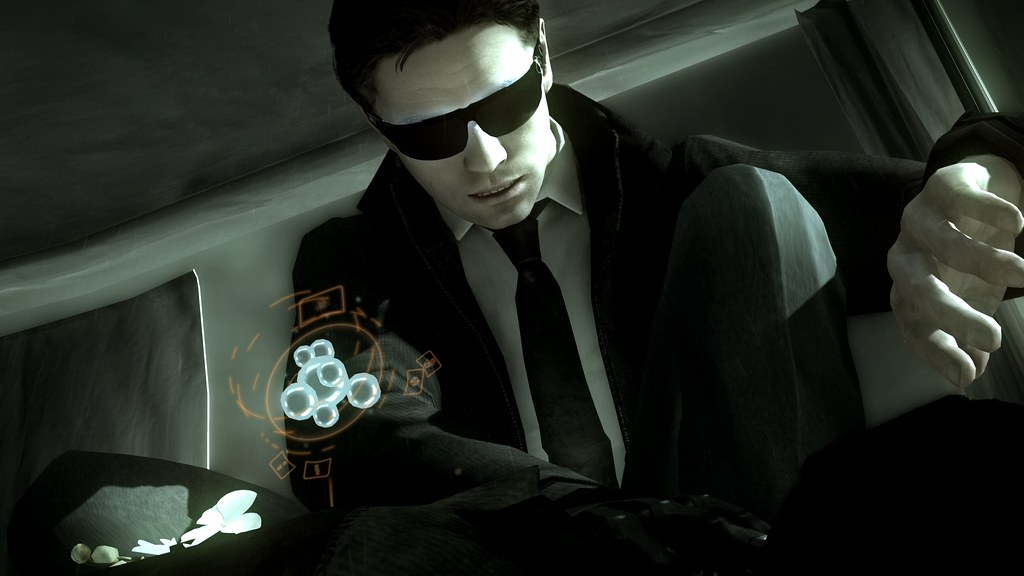
All four of the main characters are intriguing, even the much-criticized Madison Paige.  The best of them is Norman Jayden, the drug-addicted FBI agent who uses VR technology to solve his cases.  Unfortunately, the game also seems to be determined to kill Norman.  If you can make it to the end without Norman either dying or abandoning the case, you will have truly triumphed at Heavy Rain.  My only complaint is that Lauren Winter, the prostitute who joins forces with private eye Scott Shelby, wasn’t a playable character because she had one of the most interesting storylines.  If Lauren and Scott both somehow survive the game, you’ll get one of the best endings that Heavy Rain has to offer.

Lauren

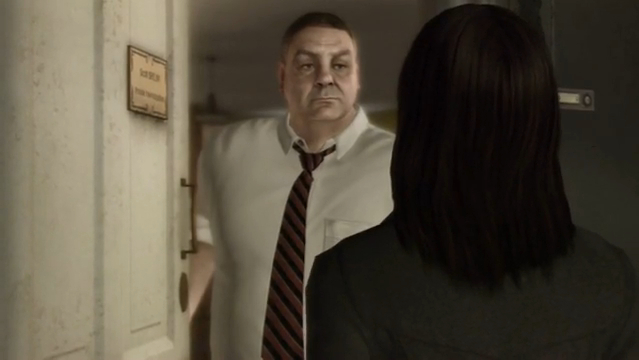
Scott Shelby, the private investigator, gets some of the game’s best scenes.  He is big and slow and he always seems to need to use his inhaler but he can still handle himself in a fight.  He gets the game’s big action set piece, where he takes out an entire army of armed guards in just a matter of minutes.  At the end of the scene, he also gets to make one of the game’s biggest decisions.  Do you do the “honorable” thing or do you leave a bad man to die?  Whichever decision you make, it is one of Heavy Rain‘s most satisfying moments.

Scott Shelby

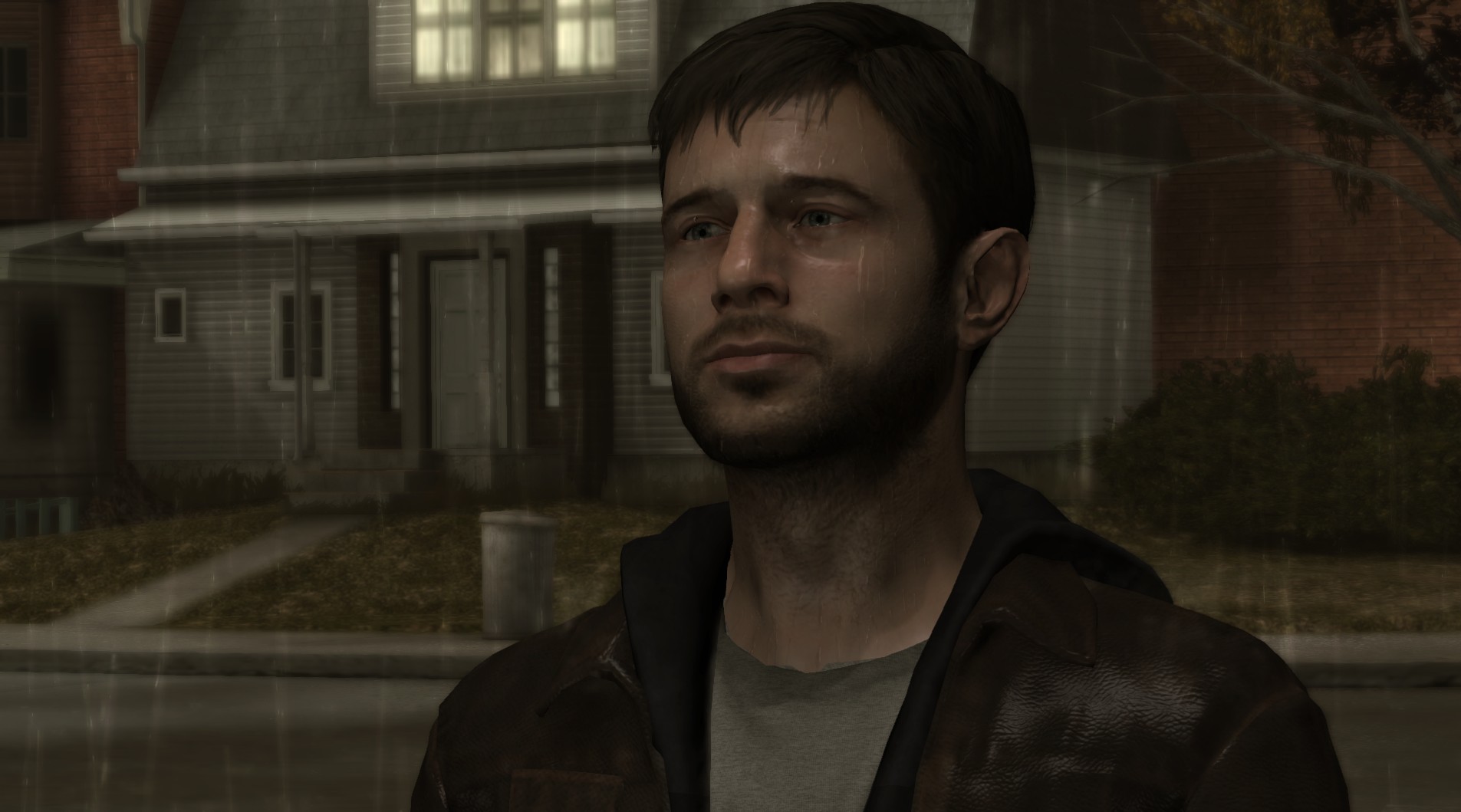
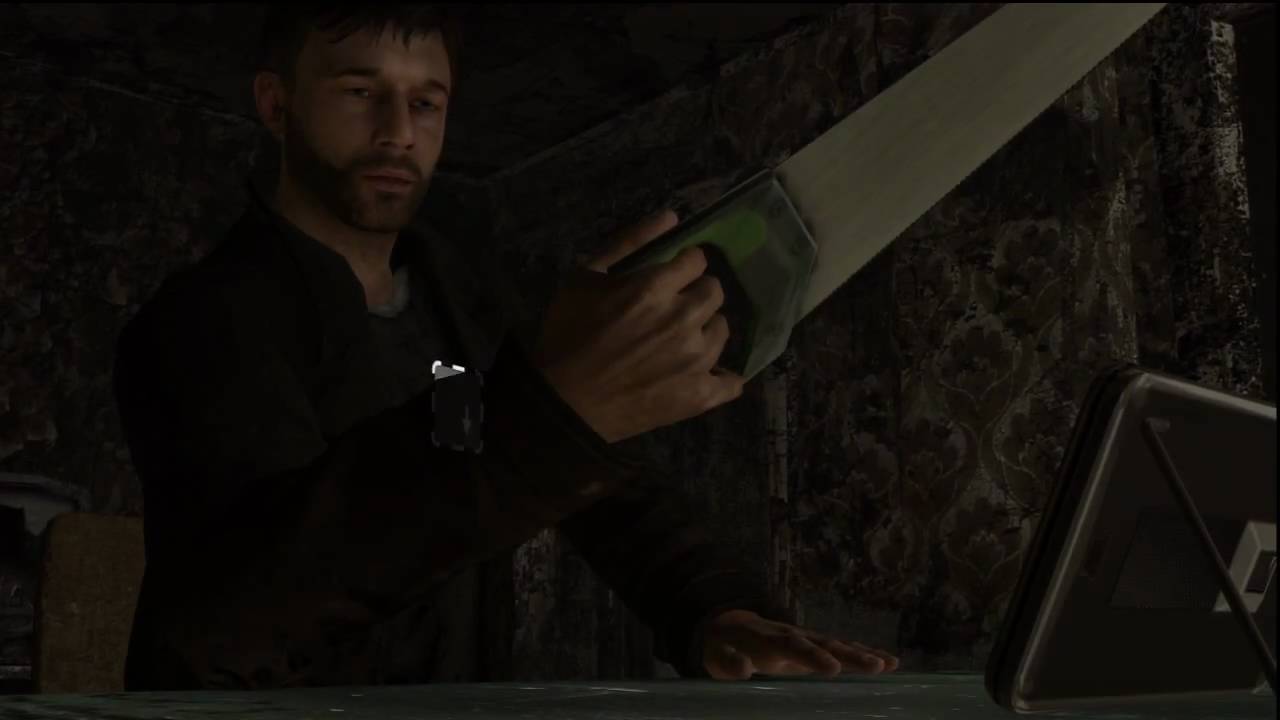
The majority of the game centers on Ethan, the father who has has to avoid the police while trying to save his son.  He is given a set of challenges by the Origami Killer, all designed to prove whether he’s worthy of being a father.  The bra-removal mini-game may be the most challenging part of Heavy Rain but the sawing off your own finger mini-game may be a close second.  A close third would have to be the diaper-changing mini-game.  It’s amazing how many different things you end up doing while trying to keep a little boy from drowning.  At the same time, I was as proud of myself for changing that diaper as I was for unsnapping that bra.  I was less proud about sawing off Ethan’s finger but it had to be done.

Ethan and saw

9 years after it was first released, Heavy Rain holds up better than I was expecting.  It’s flaws are still there and the plot holes become even more obvious with each time that you play it.  A frequent complaint that I’ve read about the game is that, in order for the mystery’s solution to make any sense, you have to be willing to accept that the Origami Killer would not only lie to other people but would also lie to himself.  The challenges that Ethan are put through are sometimes too reminiscent of Saw and even the rightly celebrated atmosphere sometimes leans too heavily on the obvious influence of Davids Fincher and Lynch.  (That Norman Jayden is based on Twin Peaks‘s Dale Cooper should be obvious to the most casual of viewers.)

Norman and Mad Jack

But, flaws and all, it’s impossible not to like this game or to appreciate the influence that it’s had on many of the games that have followed it.  Even it’s cheesiest moments are fun.  With the way the storyline branches out and changes depending on almost every decision that you make, this is a game that rewards frequent replays.  Each decision you make, you find yourself thinking, “What would have happened if I had done something else?”  Fortunately, with this game, you’ve got a chance to find out.  For that reason, Heavy Rain remains one of my favorites and a game that I’m looking forward to replaying soon.

Ethan, moping. Madison, helping.