Horror Review: The Evil Within


evil-within-4
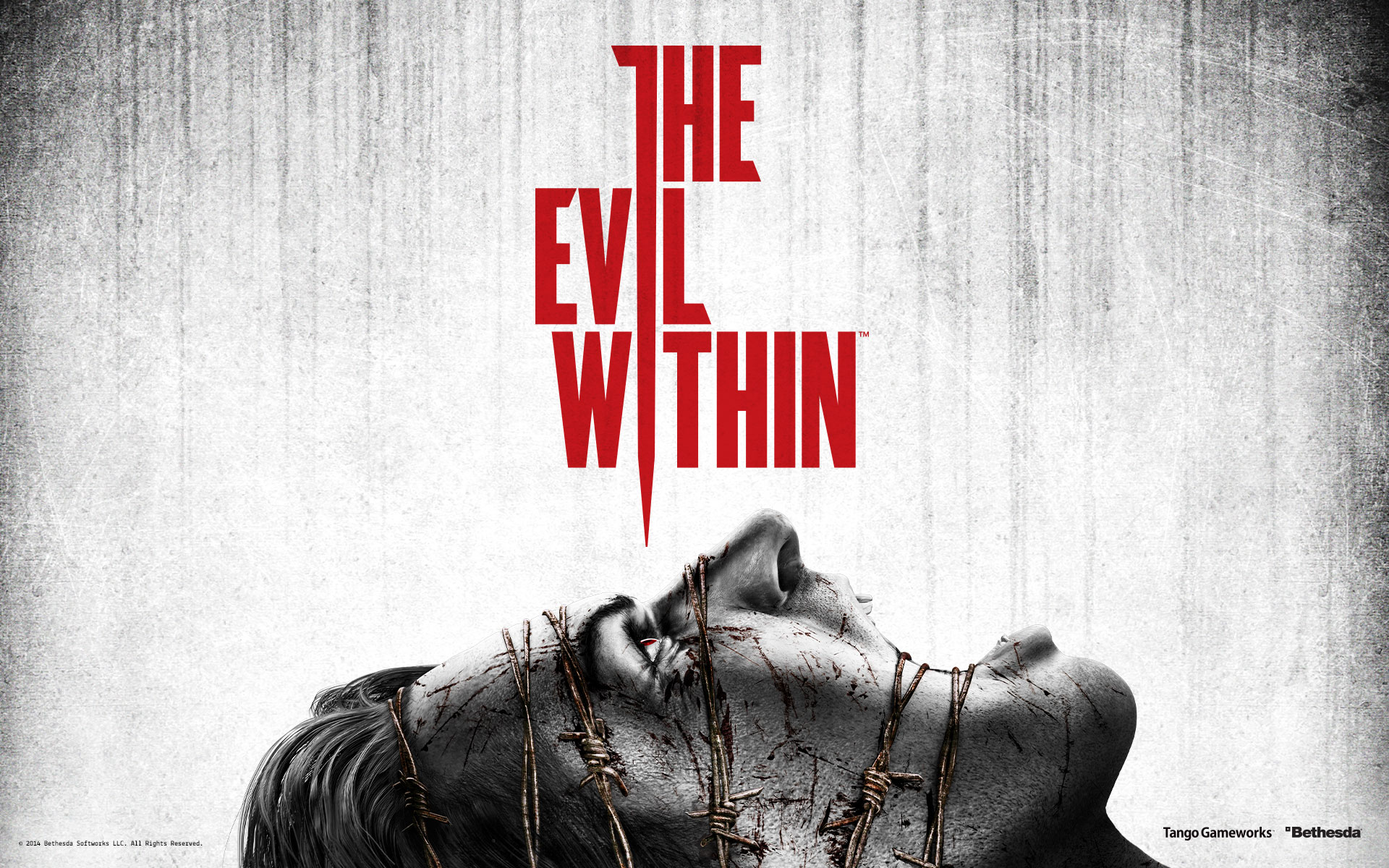
The Evil Within’s announcement was met with huge expectations for being an original horror title directed by Shinji Mikami, creator of Resident Evil, benchmark of modern horror videogames. Over the years he personally directed a few projects with very fluctuating results, but his leadership of the Resident Evil games was competent, and they only really squandered when he cut ties with the series after his involvement right after Resident Evil 4, which many regard as one of the best games of the last decade. No pressure in this new intellectual property then.

And I’ll just straight out say it. It’s a disappointment. It would be hard not to be one. But it’s not a normal disappointment. If it were I’d give it a passable review and say that people might enjoy it just for the effort. However, The Evil Within is, pardon me, utter piss. I realize negative reviews are very “in” nowadays and people do them just for the sake of it, but this one is sincere. I wouldn’t buy something on retail price crossing my fingers, HOPING, it would be such a mess. I spent cash on this shit. This money was invested. I wanted it to give some return in the form of entertainment. Which was wishful thinking, of course.

First of all let me talk about the technical issues. Full disclosure; I played the PC port; not a good option, apparently. To be honest I only had one issue with it, but I understand that “it is not a good port” because this piece of trivia was bombarded on me by my peers. So don’t buy the PC version, it’s bad (maybe until they release some patches). That being stated, we’re left with “the game”. The real horror.

Probably under the pretense that this would make the game scarier, the development team decided that the camera just had to be forever stuck on letterbox view. This is not just pretentious, it is an OBSTACLE. It takes maybe a third of everything in your field of view. Your eyes are hindered by two monstrous gaps of black bars, top and bottom. And you need to actually look at stuff to be able to pick them, so you can only imagine how this is cumbersome on the playing experience (By items, I mean ammo, medicine, documents, same kind of thing that was in Resident Evil). Are you a fan of collecting stuff? A perfectionist maybe? You’ll either spend more time than you should inside one map to make sure you’ve gotten everything or you’ll forget that. Chances are you’ll miss items either way. This camera is out of this world. It is a monster incarnate full of spite toward you. Catching inbound enemies is an equally hard job, as the lack of proper vision of your immediate surroundings makes it hard to realize if you’re being chased, or to know exactly how many enemies are around you. This might lead to some unintentional scares if that fancies you, but fact of the matter is that it’s simply put, bad camera mechanics. And let’s not talk about the obtuse amount of film grain. That being said, this title is not entirely offensive on a visual scale. The art and graphics are quite nice, even if hamfisted on the gore. It’s just too bad it’s so hard to see it properly.
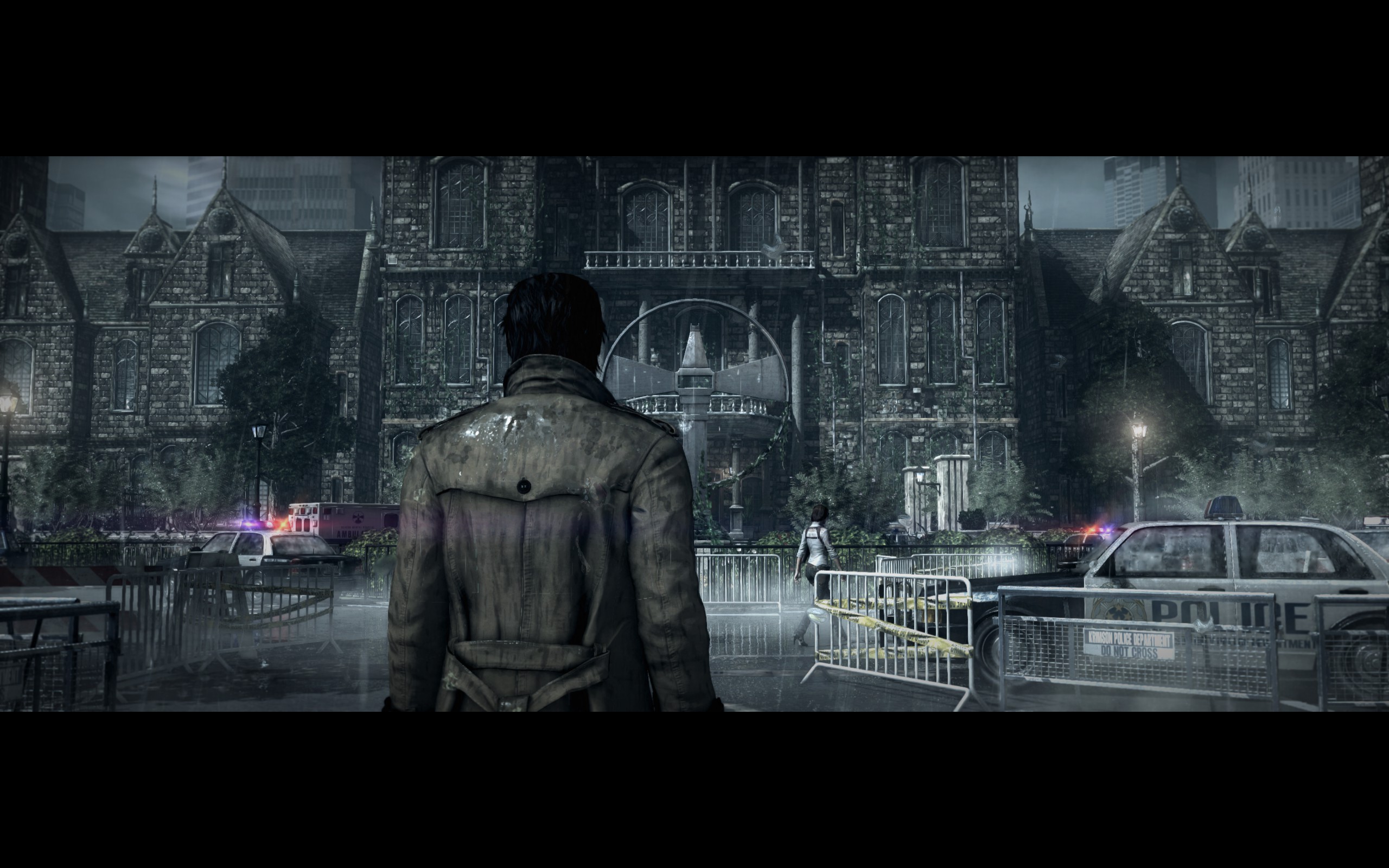
Apparently it actually covers something around 45% of the screen

Actually, it seems to cover something closer to 45% of the screen

A document early on the playthrough makes a point of telling you that the protagonist, Sebastian Castellanos is one of the fastest ever policemen of Krimson City to rise to the rank of detective (I feel like the name of the city might have been suggested by me when I was 14 and thought I was really death metal) . You will quickly notice though that Detective Castellanos isn’t the physical marvel he is laid out to be. The act of sprinting in the beginning takes a full 3 seconds from top speed to complete exhaustion. At his best, Sebastian can run for ten seconds before needing to stop and breathe in the middle of a full herd of enemies (which he WILL do if you rely on sprinting too much). He’s not a very good shot either, even at ranges close to point blank he’ll miss often unless you upgrade his weapon. Walking is awkward, running away is awkward, shooting is awkward. Some of these can be improved by buying common sense into the game in the form upgrades for the character with green goop. Seriously, that’s their currency. I confess to maybe having missed something, but I don’t think that part was ever explained.

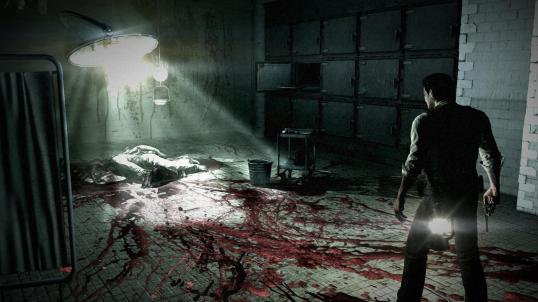
If you think objectively about it, Resident Evil was awkward. Even the fourth one. The controls were always strange at best. It comes to me that, while people were begging for a new, good Resident Evil, Mikami acknowledged their wants and needs. That’s what The Evil Within is. I mean, the zombies are there, the alien controls as well, and it’s ever so slightly scarier, which was another major complaint, since some viewed the Resident Evil series as having swayed from survival horror to mostly action with some horror elements. In this sense, people got just what they asked for: A survival horror made by Mikami that is very much like Resident Evil. However since Resident Evil 4, Mikami directed two titles, a four year gap between each of them (2006, 2010, and The Evil Within in this Gregorian year of 2014), and the other two were not even close to being horror games. So what we got is a newly released outdated survival horror with ten year old survival horror mechanics.
B

What happened!? I heard there was a good game in here!

The sad realization is that maybe Shinji Mikami isn’t a master of horror. The Evil Within isn’t very scary past the few initial chapters, where you’re completely powerless (and maybe this was this game’s real element, which in my opinion he failed to realize). Some of the more tense parts orchestrated by him come from trial and error, when some scripted event or other makes you face something new, something you’re totally willing to fight against. Then, upon closer inspection, you notice your head has just been pulverized by this new thing you perceive. So it occurs to you that you don’t fight this thing, you run from it. Of course, that’s after you died. Not very fair, honestly. The story is intriguing, but extends itself far too much. My interest was gradually lost on what could be a great mixture of body and psychological horror. It failed because while the art was on the right spot, the writing lost its way and somewhere it just became a zombie game. And I hoped it would pick up again. It never did.

It seems The Evil Within has few redeeming features and is somewhat obsolete in a very weird way. The space reserved for its image projection is malevolent. The gameplay is unimpressive and clumsy. It is artistically well intentioned, but ultimately poor. It does have, however, a very nice character in the form of an otherworldly and cryptic nurse that helps you through the story during dreamlike sequences. Her personality and oddities make her seem like a character from a Suda51 game, maybe something learned by Mikami in his time working with Suda on Shadows of the Damned. Man, now that’s a good title. Suda is really good, isn’t he?
The-evil-within

Review: The Wolf Among Us


The-Wolf-Among-UsThe Wolf Among Us was the first game released by Telltale after the extraordinary success of The Walking Dead. They had finally found their element, and decided (prudently) to stick with it. But how do you follow up a title based on a comic book series recognized by some as the best game of its year?

It’s simple. Make another title based on a comic.

Fables, the series Telltale’s following project was based upon, is about fairy tale characters we grew up reading about secretly living in our real world, in a real city, hiding their existence by creating their own society. None of that Once Upon A Time cutsey niceness. They are opressed and opressors, have severe flaws in their characters, vices and, in some cases, signs of antisocial personality disorder. That is to say, they’re often psychopaths.

I'll reconcile the shit out of you!

I’ll reconcile the shit out of you!

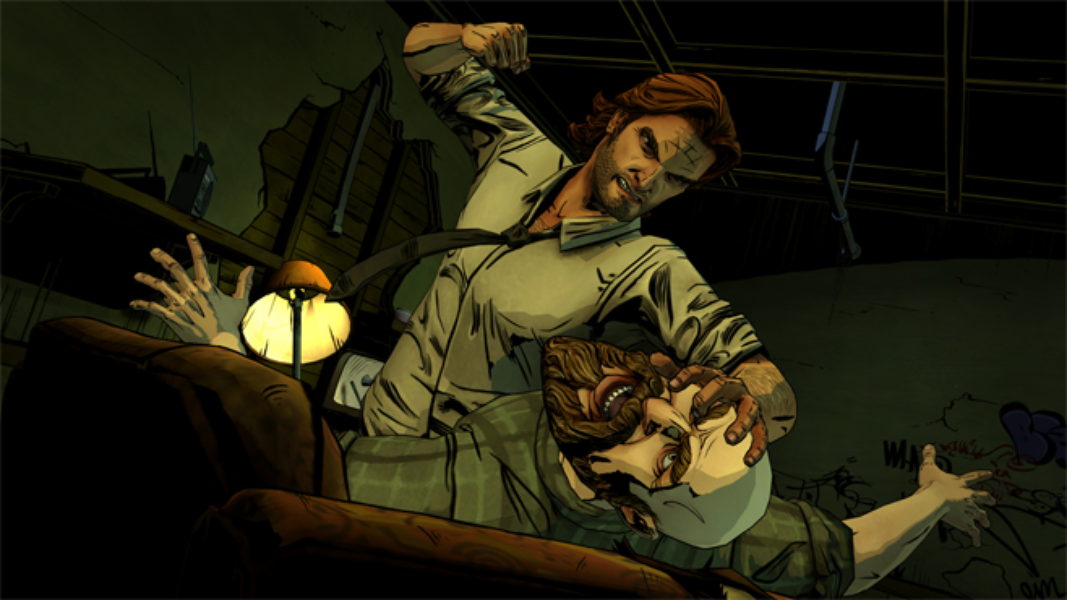
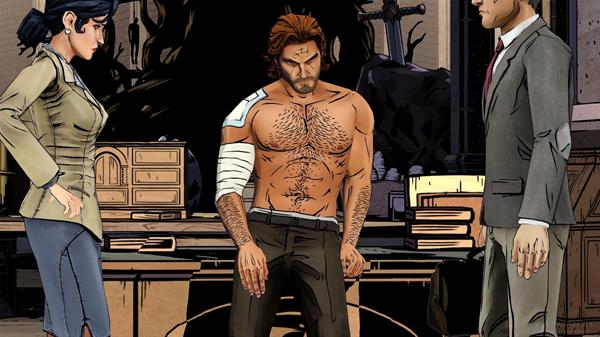
The game gives you control of Bigby Wolf, sheriff of the fables. As you might have guessed, previously known as the Big Bad Wolf of Little Red Riding Hood and Three Little Pigs fame. Reformed and willing to put his past behind him, Bigby tries to reconcile the poor and rebelious with the powerful and bureaucratic, in a very socially imbalanced society of mythical people.

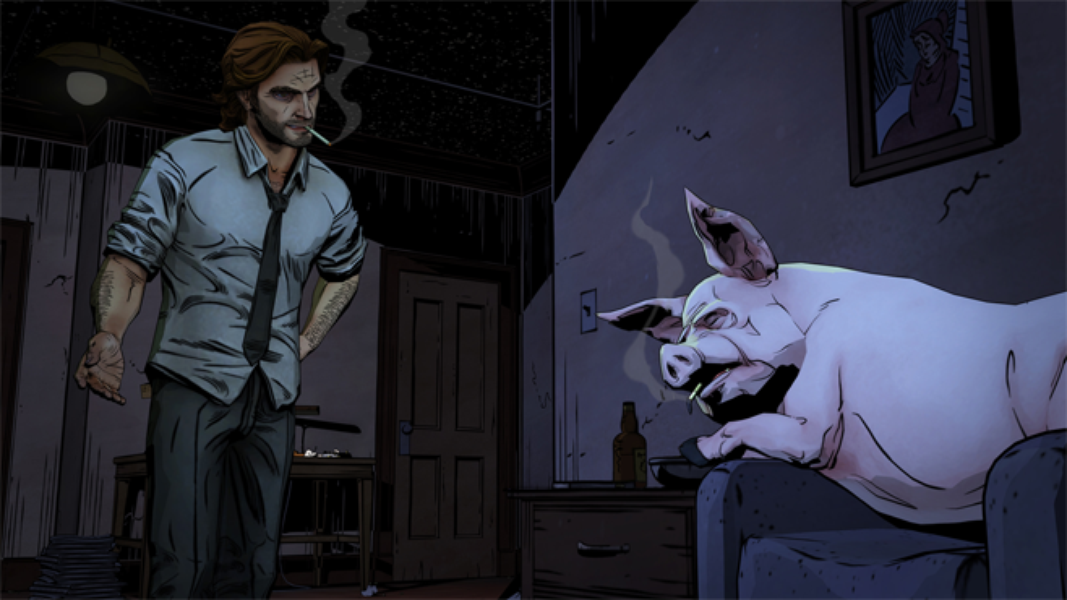
Bigby is the most human of all characters, ironically. Given the task of upholding the law in this broken, small society where everyone knows everyone else, he lives a lonely life, being recognized and feared for doing his job, which frustrates him. His tendency to bend the rules makes the fables’ mayor office see him as a loose cannon. Bigby is a noir hero, chain smoking and full clad in trenchcoat. Bitter with having to raise his hand against unsatisfied citizens and with the impunity of guileful villains; forced against rebellion, but resentful towards the bureaucrats, he often passes his own kind of law. His humanity is revealed through conversations with the only people close to him. Colin, one of the three pigs he used to terrorize, and Snow White, secretary of the mayor office and object of his affections.

the-wolf-among-us-004The amount of deviance from the path of justice in the game vary depending on your playing style. As you solve a series of murders during the span of the game, you decide how violent Bigby will be towards everyone, from the mostly innocent to the very guilty. However, this is not a story about choices like The Walking Dead, but about people leading double lifes. By taking fables, one of our most powerful cultural symbols of purity and innocence, and twisting and corrupting them, The Wolf Among Us is a modern and allegorical story with heavy noir influences, with fantasy and magic playing a part in the narrative.

It is not without flaws, however. It should be noted that, as the game needs a central story, the mystery of the series of murders obfuscate this amazing world, and one purely interested in the big picture; the unjust society of the fantastical, would be better served by reading the Fables comics. The Wolf Among Us has lots of ups far too early in the game and a few too many downs too late into it. It serves as a decent mystery thriller, and more importantly as an origin story for the comic book series, and it does have absolutely thrilling moments. However, it doesn’t bring much new to the table of longtime Fables fans other than focusing on one of the most interesting characters of its mythos.

the-wolf-among-us-episode-3-review-a-crooked-mile-1109968

As a standalone story, The Wolf Among Us has amazing action sequences and is a very exciting story up until the last quarter where it disappoints. As part of the Fables series, and possibly first chapter of others to come, it’s a perfect entry point and highly recommended. The complexity of its premise and excellence of some of its moments more than compensates for the lackluster closure of this first chapter. If that’s not enough to convince you, play it for Bigby Wolf, who might just be the coolest detective in videogame history.

Ten Years #45: Miki Higashino


Decade of last.fm scrobbling countdown:
45. 東野美紀 (Miki Higashino) (705 plays)
Top track (31 plays): Beautiful Golden City, from Suikoden (1995)

Ms. Higashino is the first of a handful of video game music composers to have risen through my ranks over the years, thanks almost entirely to her beautiful contributions to the soundtracks of Genso Suikoden I and II. (Funny, I would rank Suikoden II in a three way tie for my favorite video game ever, and all three relevant composers made it onto the charts.) Her discography is small but compelling, showcasing an appreciation for traditional Asian and European folk music that rarely surfaces with such force among her contemporaries. Paying special attention to Japanese and Irish folk in particular, she managed to imbue the first two Suikoden titles with a lively earthiness ideal for an unprecedented model of gameplay made possible by the Playstation. The Suikoden games eschewed fantasy in the raw for an appeal to political and military strife in which the hero moves from town to town gathering an army and waging war along grey lines, the quintessential naivete of the RPG hero being frequently exploited to generate scenarios in which the moral high ground stood open to debate. If the main plots centered around those characters most aware of war’s many faces, the hero and the bulk of his officers–108 recruitable characters in all–were simple folk, fighting for personal reasons without a grasp of the big picture. Miki Higashino’s success in the Suikoden soundtracks rested in her ability to score appropriate music for the simple majority–those characters with deep ties to the land, who lacked a grand vision and swallowed whole the political propaganda which cast their homes and country in jeopardy. Songs like Beautiful Golden City capture what the majority of the Suikoden cast fought to preserve.

Higashino has a long history in the video game music industry in spite of her short list of works. She composed her first two soundtracks–Gradius and Yie Ar Kung-Fu–in 1985, at the surprisingly young age of 17. Yie Ar Kung-Fu in particular reveals that Higashino bore an appreciation for folk music from the very beginning of her career. I’ll leave you with the NES version of this remarkably early score.

VGM Entry 57: Snatcher (part 2)


VGM Entry 57: Snatcher (part 2)
(Thanks to Tish at FFShrine for the banner)

Needless to say, when a game is released in six formats over a span of eight years the list of credits gets pretty wild. If we take Wikipedia’s unsourced credit synopsis for every Snatcher release mingled into one, it would appear that Akira Yamaoka, Keizou Nakamura, Masanori Adachi, Kazuhito Imai, and Masanori Ouchi are responsible for the score. But let’s not do that.

Konami’s ost releases generally only credit the Kukeiha Club as a collective, so that’s of no real help. Thanks to Snatcher‘s devout fan base though, a video of the end credits is available on youtube for every version of this game. They struck me as a bit suspect in so far as every version except the PC-Engine was in English, when only the Sega CD version was officially translated. But I do get the feeling–I’m sure plenty of people could easily confirm or deny–that a lot of games in Japan for whatever reason have English credits.

In any case, the PC-8801 ending credits are perhaps the most thorough I’ve ever seen in a game, and whether their English (Engrish really) is a fan translation or the authentic original, I do think it would be nice to provide a transcript. This is the track by track credits as listed in the two-part youtube video posted by AFX6502, condensed to save some space. Most tracks were listed with two names: one in quotations and one in parenthesis.

Compositions by M. Ikariko:
“Prologue Demo” (Bio Hazard Snatcher)
“Title Telop” (Evil Ripple)
“Pursuer Part1” (Creeping Silence)
“Pursuer Part3” (Pleasure of Tension)
“Pursuer Part4” (Endless Pursue)
“Katrine Part1” (Innocent Girl)
“Katrine Part2” (Theme of Katrine)
“Bath Room” (Virulent Smile)
“Joy Division” (Decadance Beat)
“Blow Up Tricycle”
“Mortuary Part1” (Morg)
“Restoration”
“Search Light” (Spreading Diehard)
“Credits”
“Game Over” (Lement for The Death)

Compositions by M. Shirakawa:
“Team Logo” (Slave to Metal)
“Jaime” (Theme of Jaime)
“Outer Heaven2” (Theme of Izabel)
“Title Part1” (Theme of JUNKER)
“Title Part2” (Theme of Randam)
“Title Part3” (Faded Memories)
“Title Part5” (Peace of Mind)
“Action” (Danger Dance…and Justice for all)
“Epirogue” (Beyond Sorrows)

Compositions by S. Fukami:
“Theme of Opening” (Twilight of Neo Kobe City)
“Outer Heaven1” (The Entrance to Hell)
“Goodbye Randam” (Eternal Promise)
“Requiem” (For Harry)

Compositions by S. Masuda:
“Pursuer Part2” (Criminal Omen)
“Pursuer Part5” (Follow up the Scent)
“Wrong Answer” (Axia)
“Transform Risa” (Virtual Image)

Compositions by M. Izumi:
“Ending 1” (Master of Puppets Among The Disease)
“Theme of Ending” (We Have to Struggle for Our Future Against Our Doubt)

Compositions by M. Adachi:
“Theme of Metal Gear” (Theme of Tara)
-remix from “Metal Gear” RC_750 1987-

Joint composition by I. Mizutani and M. Ikariko:
“Snatcher Title” (Squeak!!)

Composition by Pear Point:
“Jingle Bell” (Jingle Bell 2042)

So there you have it. Originally, Masahiro Ikariko composed 16 of the tracks, the rather elusive M. Shirakawa composed 9, and the remaining 13 were composed by a combination of Masanori Adachi, Seiichi Fukami, Mutsuhiko Izumi, Iku Mizutani, and another virtually anonymous figure, S. Masuda. Ikariko, Shirakawa, Fukami, and Masuda are given clear precedence over Adachi, Izumi, and Mizutani in the credits, and must have comprised the main music team. (While the credits to the original MSX version of Metal Gear are likewise confusing and Adachi is not listed where I looked, I have to assume he wrote the original song, “Theme of Tara”, upon which the Snatcher tune is based and had no direct involvement here.) We don’t even know M. Shirakawa and S. Masuda’s full names. Isn’t that something?

The PC-8801 credits tell us quite a bit more about Snatcher‘s music than simply the track-by-track credits. For instance, chief editors Hideo Kojima and Naoki Matsui named the songs. Iku Mizutani did the sound effects, and Masahiro Ikariko and Kazuhiko Uehara “arranged” the music–a credit Konami clearly distinguishes from composition.

The MSX2 credits are included in the PC-8801 version, so there’s no ambiguity on this front. Masahiro Ikariko and Kazuhiko Uehara made the MSX2 arrangements (with the exceptions of “Theme of Metal Gear”, converted by Uehara and Mizutani, and “Jingle Bell”, converted by Ikariko, Uehara, and Shirakawa).

The PC-Engine credits are in Japanese, and in the mess of a hundred open Firefox tabs I’ve lost track of the url to the translation I found, but I did copy it down:

Sound Program:
Kazuki Muraoka
Music:
Motoaki Furukawa
Kazuki Muraoka
Masahiro Ikariko
Seiichi Fukami
Mutsuhiko Izumi
Sound:
Kazuki Muraoka

It’s kind of weird to me that Shirakawa, who wrote a quarter of the music in the game, is not included here, but perhaps he and Masuda had left Konami and were erased from memory. Or perhaps Ikariko, Fukami, and Izumi returned to write additional material, but based on the songs I’ve heard, I get the impression that the list of original compositions for the PC-Engine version is quite short. Based on how the PC-8801’s credits were worded, I am lead to believe the PC-Engine arrangement was Kazuki Muraoka’s baby, with Motoaki Furukawa filling in the few added original tracks, however Furukawa has referred to himself as being “in charge of the BGM” for the PC-Engine port. Whether he meant merely the new compositions or the arrangements of the originals is beyond me.

The PC-Engine version and future releases included a revamped intro scene, for which I’ve provided the Sega CD take in spite of its awful voice acting, so that you can hear it in English. “One Night in Neo Kobe”, the song beginning at 2:55 in this video, was one of the new PC-Engine additions written by Motoaki Furukawa (he also confirmed composition of “Tears and Stains”, which must be “Tear-Stained Eyes“), and it remains one of the most famous songs of the game.

The Sega CD port was the first major departure from Ikariko and company’s original score. The credits here, which I’ve derived directly from the English version of the game, are pretty vague:

SegaCD Sound Design:
Keizou Nakamura
Masanori Adachi
Kazuhito Imai
Masanori Ouchi
Akira Yamaoka
Sound Programmer:
Osamu Kasai
Akira Souji

This list is kind of strange, because it was the Sega CD port’s arrangement that made it so drastically distinct from the first three versions. The songs were still based on the originals, but in a manner akin to Rob Hubbard and Tim Follin’s liberal port adaptations (consider the C64 ports of Commando and Bionic Commando respectively, for example). The credits clearly refer to the Sega CD arrangement, and Masanori Adachi must have been directly involved this time around. Even so, some of the tracks, “One Night in Neo Kobe”, aren’t even arrangements, but rather the exact same songs appearing on the PC-Engine. It’s pretty odd that Motoaki Furukawa and Kazuki Muraoka are restricted to a “Special Thanks” mention at the end of the credit roll.

Also, the distinction between “Sound Design” and “Sound Programmer” is completely obscure here. Konami don’t even bother with distinguishing between music and sound effects. Some of the ‘sound design team’ credits may have almost no real involvement in the music. Keizou Nakamura is credited specifically for SFX in a later version of the game, suggesting that that was his role here as well, and someone claiming to have spoken with Akira Yamaoka says he had little to no involvement in the project.

At this point in time technology may have advanced to the point where “programmer” did not as a rule imply “arranger”, and it’s possible that Osamu Kasai and Akira Souji’s contributions comprised a technical task which made the audio possible but did not affect what it actually sounded like. Never mind my uneducated speculation though; suffice to say the Sega CD port is a grey area dividing the old Snatcher compositions from the new.

Most PSX/Sega Saturn Snatcher songs were in fact new compositions entirely distinct from the originals. “The Morgue” is an example in which the changes are pretty rewarding. I think they definitely improve the whole ‘surrounded by rotting corpses’ atmosphere, whether that is actually the appropriate atmosphere for the scene in context or not. It does little to compensate for the outrageous censorship rules Sony inherited from Nintendo, but whatever. Here are the credits for both:

PSX:
Sound System Programmer:
Noritada ‘Nor’ Matukawa
Sound Mixer:
God Adachi
Music Composer/Arranger/Performer:
KIDA-Sun
SFX:
Hiroe Noguchi
Guest composers:
Hiroshi Tamawari
Akira Yamaoka
Kosuke Soeda
Guest Performer:
Tappy
Original Score Composers:
Kazuki Muraoka
Motoaki Furukawa

Saturn:
Sound Programmer:
Akiropito
Sound Mixer:
Masanori Adachi
Music Composer/Arranger/Performer:
KIDA Sun
Syouichirou Hirata
SFX:
Keizou Nakamura
Guest composers:
Akira Yamaoka
Hiroshi Tamawari
Guest Performer:
Tappy
Original score composers:
Kazuki Muraoka
Motoaki Furukawa
Akira Yamaoka
Hiroshi Tamawari
KIDA Sun

If you’re curious about the aliases here, “Akiropito” is Akira Souji, “God Adachi” is Masanori Adachi, “Tappy” is Tappi Iwase, and I couldn’t find the slightest clue for identifying “KIDA-Sun”. This makes for an odd discussion, as “KIDA-Sun” appears to be the most responsible party for the PSX and Saturn soundtracks. It’s also rather strange that Akira Yamaoka, Hiroshi Tamawari, and KIDA-Sun are listed as original score composers on the Saturn but not on the PSX, as to the best of my knowledge the Saturn used the exact same songs, making only minor (but always for the better) changes throughout. I don’t know that this change to the credits indicates a real change though: Akira Yamaoka and Hiroshi Tamawari are listed as ‘guest composers” in both versions, and a guest composer is still a composer, so it might all boil down to redundancy. In that case, we need only ask what became of Kosuke Soeda.

So basically, our credits look like this:

PC-8801 and MSX2
Composition: Masahiro Ikariko (16), M. Shirakawa (9), Seiichi Fukami (4), S. Masuda (4), Mutsuhiko Izumi (2), Iku Mizutani (1), Masanori Adachi (1)
Arrangement: Masahiro Ikariko, Kazuhiko Uehara

PC-Engine
Composition: Primarily the original 1988 staff, with additions (probably) limited to Kazuki Muraoka and Motoaki Furukawa
Arrangement: Kazuki Muraoka

Sega CD
Sound staff: Keizou Nakamura, Masanori Adachi, Kazuhito Imai, Masanori Ouchi, Akira Yamaoka
Sound Programmer: Osamu Kasai, Akira Souji

PSX and Saturn
Composition: Kazuki Muraoka, Motoaki Furukawa, KIDA-Sun, Akira Yamaoka, Hiroshi Tamawari, Kosuke Soeda (Saturn only)
Arrangement: KIDA-Sun, Syouichirou Hirata (Saturn only)

I’ll leave it at that. I hope you’ve enjoyed the sound samples in the meantime. I know I certainly have.

VGM Entry 56: Snatcher (part 1)


VGM Entry 56: Snatcher (part 1)
(Thanks to Tish at FFShrine for the banner)

At this point I think it’s safe to talk about Snatcher. Snatcher has quite a long history. Konami first released it on the PC-8801 in November 1988, following this up with an MSX2 port the following month. In 1992 it found its way to the PC-Engine, and in 1994 it got its first English translation via the Sega Mega-CD. It would go on to appear on the Playstation in February 1996 and the Sega Saturn in March before all was said and done.

Snatcher was a cyberpunk visual novel, which isn’t the sort of thing North American and European gamers are particularly familiar with. It also featured some graphic violence, partial nudity, and cultural references, which didn’t jive well with North America’s outrageous censorship and copyright laws. All of these factors contributed to the long delay of an English port, and it’s quite remarkable that Konami ended up making one at all. The market was not in fact ready for it, and Jeremy Blaustein, who oversaw the localization, admitted that the game “only sold a couple thousand units”. He provided the legitimate argument that this resulted from Konami’s decision to release a game on the rapidly tanking Sega CD, not any shortcomings of the game itself. Snatcher remained popular in Japan however, and by the sixth and final release in March 1996 it also boasted six different variations on the main soundtrack.

What’s great for our purposes is that liquidpolicenaut on youtube already did all the legwork for comparing them. In some cases, such as “Decadence Beat (Joy Division)”, the original PC-8801 and MSX2 versions survive every port on into the Sega Saturn, but more often the songs get replaced for the Sega CD or Playstation and retain their new forms the rest of the way.

It’s by no means immediately obvious which take on this song is best. As songs by themselves, displaced from any game, the MSX2 version stands out the most to me, but the comments by actual fans of the game seem to denounce the MSX2 version as out of touch with the atmosphere of the scene. “Joy Division” (censored to “Plato’s Cavern” for the US Sega CD port) was Snatcher‘s general store chain. As a cyberpunk game, it naturally ought to be a little bit sleazy, but since I never played it personally I can’t say just how far that should go. The Sega CD version sounds like a porn shop, and the PSX version sounds like the score to what the Sega CD store is selling. The Sega Saturn take, despite being practically identical to the PSX take in construction, comes off quite tasteful due to better quality instrument samples. The potential complaint, of course, is that it’s too tasteful to be wholly appropriate.

If the PC-8801 take is a bit too funky and the PC-Engine a bit too weird, I’m left with the MSX2 take. It has a very technological feel to it. This is music for the sort of store I’d go to to buy my cybernetic crack injection kits for sure. The visual helps it out too; the store clerk looks a lot more seedy and a lot less evil on the MSX2 and PC-8801 than in the other takes, and the emphasis on grey (the PC-8801 has a brown floor) makes the whole place seem a little metalic–a little more futuristic. Oh the MSX2 take wins for me hands-down. But I’m listening to this with nothing but a song, a single image, and a general idea of cyberpunk to go on. I never played the game. Maybe the MSX2’s atmosphere, while consistent in audio and imagery, is totally out of place in it. One of the great benefits of Snatcher and liquidpolicenaut’s comparison videos is to bring these finer aesthetic considerations to mind.

I mentioned that “Joy Division” was renamed “Plato’s Cavern” on the Sega CD. It’s one of many censorship issues that forced minor changes in detail as new ports were made. The left-hand mask on the wall behind the store clerk on the MSX2 and PC-8801 was Predator, and it vanishes starting with the PC Engine. Amazing what petty things billionaires will file lawsuits over…

The censorship on “Pursuer Part 4 (Endless Pursue)” is a little more obvious. (Supposedly the dog was twitching, still alive on the original versions, and this was removed before they took out the image altogether.) Musically, this is another instance where the same song was maintained for all six versions of the game. Here the differences aren’t nearly as extreme, either. Again the Playstation take comes off the worst to my ears, and this time the Saturn’s improved sound does not sufficiently redeem it–at least if this is meant to be the fairly tense, down to the wire scene that the track title and early versions imply.

I can’t think of any context in which the PSX and Saturn versions might sound appropriate to be quite honest. The PSX take kicks off like some progy jazz piece that completely fails to acknowledge any sort of distress, or anything remotely unsettling (we’re still staring at a dog with its guts spilled out mind you, even if it’s censored). The bass drum beat is made no less obnoxious in the Saturn version by actually sounding like a bass drum, and its pace is totally out of touch with the melody. No, the PSX and Saturn versions are bad–no getting around that.

If you go back to the MSX2 take, you’ll find that it’s far more imaginative anyway. Variations in the intensity of the drum beats give it a dimension lacking in the last two versions. The higher-pitched notes behind the main melody in the PC-8801 introduction carry the song much more effectively than their MSX2 equivalent, emphasizing the pace of events, and the variations in percussion intensity are retained, but the main melody is just a bit too clean. The MSX2 take has a more hollow, raspy sound. I suppose I would characterize the MSX2 and PC Engine versions as prioritizing an element of danger, while urgency dominates the PC-8801 and Sega CD takes.

I could go on like this for every track, but I fancy it’s already gotten old. Tomorrow I’ll tackle who exactly wrote it all.