Now separated from Jane (Priscilla Presley) and working in Washington D.C., Frank (Leslie Nielsen) finds himself investigating a bombing at the offices of Dr. Albert S. Meinheimer (Richard Griffiths), an advocate of renewable energy who has just been put in charge of America’s energy policies by President George H.W. Bush (John Roarke, who was better-known for playing Ronald Reagan on Friday’s). With the help of Captain Ed Hocken (George Kennedy) and Officer Nordberg (O.J. Simpson), Drebin’s investigation leads him to Quentin Haspburg (Robert Goulet), an oilman who is plotting on replacing Dr. Meinheimer with a double. It also leads him back to Jane, who is now working as an assistant to Meinheimer and being wooed by Hapsburg.
The Naked Gun 2 1/2 is a worthy sequel to the first Naked Gun. It’s more plot-heavy than the first film and some of the jokes feel a little bit too familiar but it’s still a very funny film. That’s largely due to Neilsen, Kennedy, and Presley, all of whom really commit to playing their absurd characters. (Robert Goulet gives a game performance but he really can’t match Ricardo Montalban’s villainous turn in the first movie.) Nielsen was probably the only actor alive who could keep a straight face even while hitting Barbara Bush in the face while opening a door and then struggling to eat lobster at a state dinner. As was often the case with the ZAZ films (even though Jim Abrahams and Jerry Zucker didn’t have anything to do with the screenplay of the sequel), the funniest moments are also the most random and the stupidest. I laughed a lot harder than I should have at Leslie Neilsen struggling with a very small towel that had been thrown against his face. And don’t worry, O.J. Simpson fans. Nordberg gets injured in this movie too.
Leslie Nielsen was one of those actors who could make anything funny. Whether he was delivering his hard-boiled dialogue or doing absurd physical comedy with an absolutely straight face, it was impossible not to laugh when Leslie Nielsen was onscreen. He was a true cinematic treasure.
Welcome to Retro Television Reviews, a feature where we review some of our favorite and least favorite shows of the past! On Fridays, I will be reviewing St. Elsewhere, a medical show which ran on NBC from 1982 to 1988. The show can be found on Hulu and, for purchase, on Prime!
It’s time to go under the knife in Boston.
Episode 1.16 “The Count”
(Dir by Kevin Hooks, originally aired March 8th, 1983)
Harold Beaumont (Michael Halsey), an adult film actor better known as The Count, has checked into St. Eligius. Of course, Dr. Samuels immediately recognizes him because Samuels is obsessed with porn. Dr. Annie Cavanero does not recognize him but, once she learns what he does for a living, she has to tell him that she finds his work to be offensive because Dr. Cavanero’s entire personality pretty much revolves around getting offended by stuff.
It’s not much of a plot. There’s a process server (William G. Schilling) who wants to serve the Count with a courts summons so Samuels and Cavanero help the Count hide and disguise his identity. It’s silly and dumb story that involves the two of the least likable members of the show’s regular cast.
Meanwhile, Dr. Wendy Armstrong (Kim Miyori) comes to suspect that one of the hospital’s heart surgeons, Dr. Larry Andrews (Peter Michael Goetz), is giving pacemakers to people who don’t actually need them. She takes her concerns to Dr. Craig. Craig, an old friend of Dr. Andrews, is initially dismissive but he later confronts Dr. Andrews and finds out that Armstrong was correct. Dr. Andrews explains that it takes a lot of money to fund his lifestyle. This story was an improvement over the Count but it perhaps would have had more power if it had been someone like Dr. Ehrlich who suspected that Dr. Andrews was giving people pacemakers that they don’t need. Ehrlich actually has a complicated relationship with Dr. Craig and his own less-than-stellar record as a resident would have added some ambiguity to storyline. Dr. Armstrong, on the other hand, has been portrayed as being hypercompetent and a bit self-righteous and, if we’re going to be honest, she’s kind of a boring character.
Speaking of Dr. Ehrlich, he is getting fed up with living with Fiscus. Howie Mandel is driving someone crazy? Who could have seen that coming?
This week’s episode was pretty forgettable. The story involving Dr. Andrews had potential but choosing to make the show’s least interesting characters the center of an entire episode was a decision that really didn’t pay off.
Welcome to Retro Television Reviews, a new feature where we review some of our favorite and least favorite shows of the past! On Fridays, I will be reviewing St. Elsewhere, a medical show which ran on NBC from 1982 to 1988. The show can be found on Hulu!
When I started reviewing Homicide, Jeff suggested that I should also review St. Elsewhere because the two shows shared a similar sensibility and a lot of behind-the-scenes personnel. (Homicide showrunner Tom Fontana started out as a writer on St. Elsewhere.) Apparently. a few characters from St. Elsewhere would eventually cross-over to Homicide. Since I’m planning on soon reviewing two shows that were descended from Homicide — Oz and The Wire — it only seemed right to also review a show that was Homicide’s ancestor.
Though the show aired largely before my time, St. Elsewhere is definitely a show that I have heard about. Everyone who follows American pop culture has either read about or seen the show’s infamous final episode and knows about the Tommy Westphall Universe Hypothesis. Obviously, I can’t get into it now because that would be a spoiler but we’ll discuss it when the time comes!
For now, let’s start at the beginning, with the pilot!
Episode 1.1 “Pilot”
(Dir by Thomas Carter, originally aired on October 26th, 1982)
St. Eligius is a hospital in Boston that has obviously seen better days. From the outside, it looks old. On the inside, the hallways have the dim and dull look of a building that hasn’t been renovated in over ten years. As Dr. Mark Craig (William Daniels, long before he played Mr. Feeney on Boy Meets World) angrily puts it, the hospital gets no respect in Boston. It’s seen as being a “dumping ground” for patients who can’t afford anything better. Dr. Craig is world-renowned heart surgeon whose wealthy patients have donated what few improvements the hospital has seen over the past few years. (“All of our clocks now read the same time!” Dr. Craig brags at one point.) But not even Dr. Craig can change the hospital’s reputation as being secondary to Boston General.
There are actually a few good things about St. Eligius. For one thing, a young Denzel Washington is on staff, playing resident Phillip Chandler. Denzel doesn’t get to do much in the pilot but still, his presence fills the viewer with confidence. St. Eligius is also home to a world-renowned liver specialist, Dr. Daniel Auschlander (played by Norman Lloyd, who also worked with Hitchcock and Orson Welles). Auschlander has liver cancer but the hospital chief-of-staff, Dr. Donald Westphall (Ed Flanders), assures everyone that Auschlander will probably “out live us all.” (And he was right, to an extent. Norman Lloyd lived to be 106 years old before passing away in 2021. Ed Flanders died, tragically by suicide, in 1995.) St. Eligius is a teaching hospital and the residents want to make a good impression by keeping their patients alive. That’s always a good thing.
At the same time, how secure can you feel when Howie Mandel is one of the residents? Mandel plays Dr. Wayne Fiscus, who wears a baseball cap and acts …. well, he acts a lot like Howie Mandel. Like Washington, Mandel doesn’t do a lot in the pilot. He does get a subplot where he apparently has sex in the morgue with goth pathologist Cathy Martin (Barbara Whinnery) but otherwise, we don’t see him treating a patient or anything like that. Still, it’s a bit jarring to see Howie Mandel as a doctor. I would not necessarily want him for my doctor because he’s to be easily distracted. Maybe he’ll change my mind as the series progresses.
Speaking of sex, Dr. Ben Samuels (David Birney) has gonorrhea and spends most of the pilot approaching doctors and nurses and informing them of his conditions and suggesting that they might want to get tested themselves. That’s not exactly the best way to be introduced to a character but it also lets us know that this show is not just going to be about dedicated doctors who spend all of their time worrying about their patients and making amazing medical discoveries. Instead, this show is also about doctors who get venereal diseases. Has anyone checked on Fiscus in the morgue?
(That said, Dr. Samuels does get a scene where he saves the life of a woman who was injured in a terrorist bombing, as if the show does want to make sure that we know that he can do his job, even if he is spreading VD through the hospital.)
The majority of the episode follows Dr. Jack Morrison (David Morse), a first-year resident who has been working several 24-hour shifts and who complains, at one point, that he hasn’t seen his wife for days. Dr. Morrison gets upset when a surgeon wants to operate on one of his patients, a 15 year-old girl named Sandy (Heather McAdams). Morrison believes that surgeons always want to cut into somebody. Morrison gets even more upset when Sandy’s mother requests that Sandy be transferred to Boston General, which has a reputation for being a better, more modern hospital. In fact, Morrison is so upset and exhausted that he forgets to file a death certificate for a patient who dies during the night. As a result, it’s believed that the patient, who has a reputation for being violent, has gone missing and is stalking the hospital. Dr. Annie Cavanero (Cynthia Sikes) spends the entire episode looking for a dead man, which at least gives her an excuse to visit every ward and introduce the viewers to the members of the show’s ensemble cast.
Having lost my mom to cancer and now my Dad to Parkinson’s, I was hesitant about reviewing St. Elsewhere. (Actually, I was hesitant about reviewing any medical show.) When my Dad was in the hospital, I felt like I couldn’t get anyone to give me a straight answer about his condition and I often felt the doctors were talking down to me. To be honest, my worst conflicts were with the nurses, one of whom told me that I would have to “lose the attitude” before she would explain why my father had been moved to the Delirium Ward. (It didn’t help that, at the same time my Dad was in the hospital, there was a huge storm that left us without power for a week.) At the same time, there were other doctors who were helpful. The staff at the rehab center that my dad was sent to were also wonderful. I have my regrets about agreeing to hospice care but the nurse who was assigned to my Dad was very empathetic and totally understanding whenever I asked her for a cigarette. (Under normal circumstances, I don’t smoke because I have asthma but seriously, the stress was killing me.) I’m bitter and angry about a lot of what happened but I’m also thankful for the small moments of kindness.
Watching a show set in a hospital was not easy for me but the pilot of St. Elsewhere appealed to me with its mix of melodrama and humor. There was a quirkiness to it that I appreciated. William Daniels made me laugh with his annoyed rant about how little respect the hospital received. Most of all, I cared about whether or not Dr. Morrison would still be alive at the end of his shift. David Morse’s performance won me over. He’s the type of doctor that I would want to have. Well, actually, I’d probably want Denzel to my doctor but Dr, Morrison could assist. Just keep Dr. Howie Mandel away from me. Nothing against him but he seemed to be having way too much fun at the hospital….
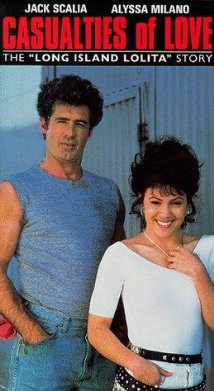
As seen in the 1993 made-for-TV movie Casualties of Love, Joey is a saintly, salt-of-the-Earth blue collar guy who works as an auto mechanic on Long Island. He’s also an aspiring drummer, one who struggles with a major cocaine addiction. When his loving wife, Mary Jo (Phyllis Lyons), threatens to leave him and take the kids unless he cleans up his act, Joey checks into rehab. Six months later, he leaves rehab clean and sober and dedicated to his family. All of the other patients lean out of their windows and wish Joey well. Everyone loves Joey!
Joey, the most handsome and sweetest auto mechanic in the state of New York, does have a problem, though. A sociopathic teenager named Amy Fisher (Alyssa Milano) has grown obsessed with him and keeps intentionally damaging her car so that she can come hang out at the garage. When the other mechanics say that Amy is hot, Joey agrees but that’s all he does. Joey loves his wife. When Amy tries to kiss him at a carnival, he shoves her away and then kisses his wife to make sure that everyone understand that Joey Buttafuoco is the best guy ever. When Amy accuses Joey of giving her a STD, everyone realizes she’s lying because Joey would never have an STD in the first place.
And when Amy shoots Mary Jo in the face, the media and the police try to make it seem like Joey is somehow to blame but again, we know that he’s not. Joey Buttafuoco is a name that means honor and respect.
Uhmm …. yeah.
So, this is story is very loosely based on a true story and by that, I mean that there was a teenager named Amy Fisher who shot a woman named Mary Jo in the face and later said that she was having an affair with her husband, Joey. Apparently, there were three made-for-TV movies made about the case, all of which premiered in the same month. Casualties of Love is told from the point of view of Joey and Mary Jo and it fully supports Joey’s initial claim that he never slept with Amy and she was just some obsessed psycho.
While watching this film, I got bored enough to look up the case on Wikipedia and I learned that, after this movie aired, Joey admitted that he did have an affair with 16 year-old Amy Fisher and he subsequently went to jail for statutory rape. After getting out of jail, Joey divorced his wife and has subsequently been in and out of trouble with the law. He also become a regular on TV court shows, where he would sue people who failed to pay him for fixing their cars. My point is, Joey Buttafuoco sounds like a bit of a sleaze in real life. That makes this film’s portrayal of him as being some sort of Saint of Long Island feel rather dumb.
Actually, it would feel dumb even if the real Joey Buttafuoco was a solid citizen. Casualties of Love is one of the silliest films that I’ve ever seen, portraying Joey as being a streetwise former cocaine addict who was somehow too naive to realize that it would look bad to spend time in his office alone with Amy. As Joey, Jack Scalia is very handsome and very sincere and he feels totally miscast as someone who spends hours working underneath the hood of other people’s cars. Leo Rossi and Lawrence Tierney both show up, mostly so they can say, “Oh, what were you thinking!?” to Joey. As Amy Fisher, Alyssa Milano gives an amazingly lifeless performance. Occasionally she talk fast and plays with her hair. This is the film’s way of letting us know that she’s supposed to be unhinged. I mean, I do the same thing. If you’ve got long hair, you’re going to play with it whenever you got bored. It doesn’t make you crazy.
Unfortunately, though the film may be silly, it’s not much fun. The direction is workmanlike and the film’s portrayal of Joey and Mary Jo’s marriage is so earnestly bland that the film never even rises to the level of camp. The film ends with a warning that Amy would soon be eligible for parole. (Oddly, it also points out that Amy could take college courses in jail, as if that was a bad thing.) Meanwhile, “Mary Jo is taking it one day at a time.” Fortunately, Mary Jo eventually took herself out of Joey’s life and filed for divorce. That’s the happy ending this film lacks.
In an unnamed city that is probably meant to be Los Angeles but which looks like Toronto, a criminal gang known as the Scullions have taken over the 16th precinct. Led by the loud, marble-mouthed Zed (Bobcat Goldthwait), the Scullions are terrorizing the citizens and harassing one shop owner, Carl Sweetchuck (Tim Kazurinsky), in particular. The captain of the 16th precinct, Pete Lassard (Howard Hesseman), calls his brother, Eric Lassard (George Gaynes), and asks for the best cadets to have recently graduated from the police academy.
Carey Mahoney (Steve Guttenberg) and a few other of the cadets from the first Police Academy movie end up in the 16th. Tackleberry (David Graf) is there and so is accident-prone Douglas Fackler (Bruce Mahler). Bubba Smith is back as Hightower and so is Michael Winslow, the human sound effects machine. They’re determined to help Lassard’s brother but it’s not going to be easy because they have to work with Lt. Mauser (Art Metrano) who is basically a dick who wants to be captain. Mauser is exactly like Harris from the first film, except his name is Mauser and, instead of getting his head stuck up a horse’s ass, he gets his hands super-glued to his head.
Police Academy 2 is less raunchy than the first film but still not quite as family friendly as the films that would follow. There’s still one f-bomb dropped and a few adult jokes, as if the film wasn’t fully ready to admit that it was destined to become associated with juvenile viewers who would laugh at almost anything involving a bodily function. There is one funny moment where Steve Guttenberg goes undercover to join Zed’s gang, mostly because he’s Steve Guttenberg and he’s even less believable as a gang member than he was as a cop. The closest thing that movie has to a highlight is Bobcat Goldthwait’s manic turn as Zed and Tim Kazurinsky’s desperation as he watches his store get repeatedly destroyed. Tackleberry also gets an amusing romantic subplot, where he meets a police woman (Colleen Camp) who loves guns almost as much he does. Unfortunately, Tackleberry’s romance gets pushed to the side by all of the gang activity.
Police Academy 2 is stupid but, depending on how much tolerance you have for Bobcat Goldthwait, sometimes funny. It’s not as “good” as the first film but it’s still better than most of what would follow. Speaking of which, tomorrow, I will be reviewing the first Police Academy film to get a PG-rating, Police Academy 3: Back in Training.
For tonight’s excursion into televised horror, we present you the premiere episode of the 6th season of HBO’s Tales From The Crypt!
In Let The Punishment Fit The Crime, attorney Geraldine Ferrett (Catherine O’Hara) is pulled over while driving through a small town in upstate New York. It turns out that Geraldine didn’t have enough numbers on her licence plate. (That’s because she has a vanity plate that reads, “Sue me.”) It doesn’t sound like a huge crime but, as everyone at the courthouse keeps trying to warn her, she is in “a very strict town.” Let The Punishment Fit The Crime is a satirical look at our overregulated and overlitigious society.
This episode originally aired on October 31st, 1994 — hey, this is a Halloween episode!
Tonight’s excursion into televised horror is the 16th episode of the 2nd season of HBO’s Tales From The Crypt!
Television Terror, which originally aired on July 17th, 1990, tells the story of Horton Rivers (Morton Downey, Jr.) Horton has his own television show, one where he hunts for ghosts and seeks proof of the supernatural. Needless to say, Horton’s a big fake, a nonbeliever who loathes his audience. It’s kind of like Ghost Hunters, except for the fact that — over the course of this episode — Horton actually finds something. Or perhaps we should say that something find Horton…
Needless to say, things do not end well.
Television Terror has a lot of atmosphere and, with its theme of venal television hosts and gullible audiences, it’s probably even more relevant today than when it was first broadcast.
 Frank Drebin is back!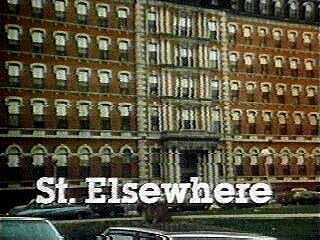

 Through the Shattered Lens