4 Shots From 4 Films is just what it says it is, 4 shots from 4 of our favorite films. As opposed to the reviews and recaps that we usually post, 4 Shots From 4 Films is all about letting the visuals do the talking.
In memory of Udo Kier, here are…
4 Shots From 4 Udo Kier Films
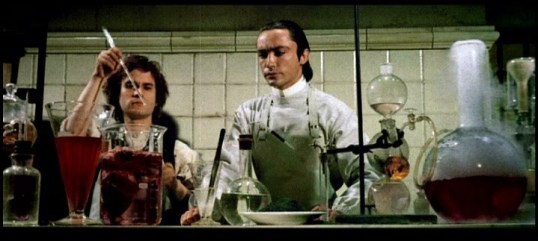
Flesh For Frankenstein (1973, dir by Paul Morrissey, DP: Luigi Kuveiller)
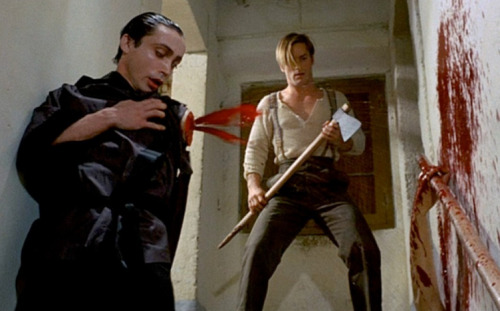
Blood For Dracula (1974, dir by Paul Morrissey, DP:Luigi Kuveiller)
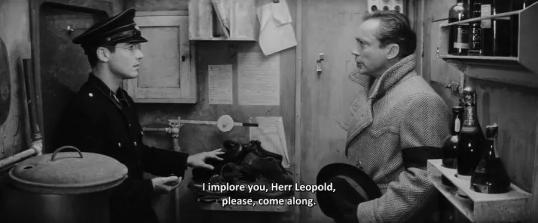
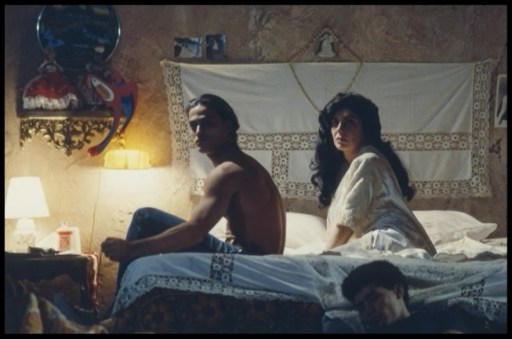
Europa (1991, directed by Lars Von Trier, DP: Henning Bendtsen, Edward Kłosiński, Jean-Paul Meurisse. Released as Zentropa in North America)
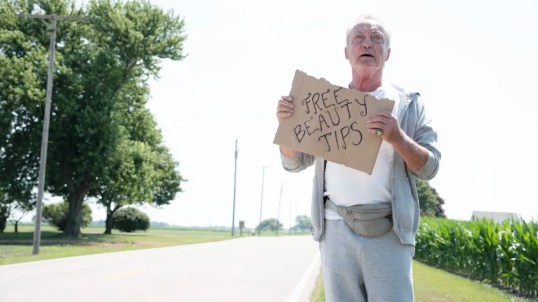
Swan Song (2021, dir by Todd Stephens, DP: Jackson Warner Lewis)
4 Or More Shots From 4 Or More Films is just what it says it is, 4 shots from 4 of our favorite films. As opposed to the reviews and recaps that we usually post, 4 Shots From 4 Films lets the visuals do the talking!
On this date, 97 years ago, Andy Warhol was born. Today, we mark this occasion with….
4 Shots From 4 Andy Warhol Films
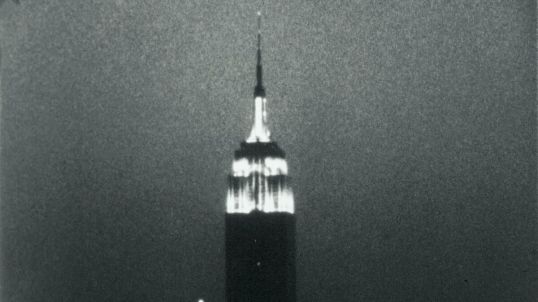
Empire (1965, dir by Andy Warhol)
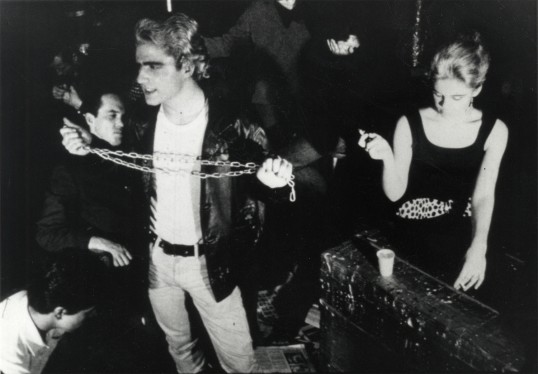
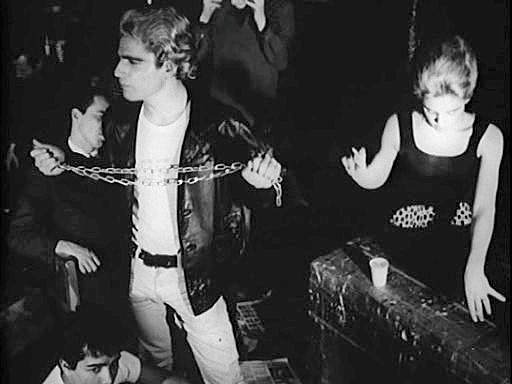
Vinyl (1965, dir by Andy Warhol)
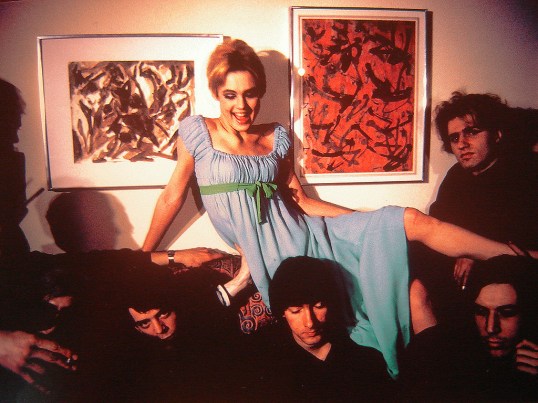
Poor Little Rich Girl (1965, dir by Andy Warhol)
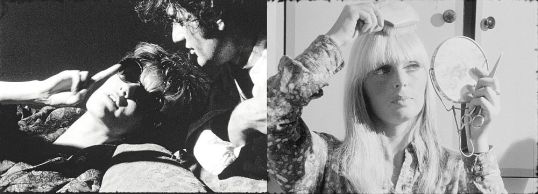
Chelsea Girls (1966, dir by Andy Warhol and Paul Morrissey)
4 Shots From 4 Films is just what it says it is, 4 shots from 4 of our favorite films. As opposed to the reviews and recaps that we usually post, 4 Shots From 4 Films lets the visuals do the talking!
Happy Pop Art Day! It’s time for….
4 Shots From 4 Pop Art Films
Empire (1965, dir by Andy Warhol)
Vinyl (1965, dir by Andy Warhol)
Lupe (1966, dir by Andy Warhol)
Chelsea Girls (1966, dir by Andy Warhol and Paul Morrissey)
4 Shots From 4 Films is just what it says it is, 4 shots from 4 of our favorite films. As opposed to the reviews and recaps that we usually post, 4 Shots From 4 Films lets the visuals do the talking!
Today, the Shattered Lens honors Paul Morrissey, a pioneering director who passed away yesterday at the age of 84.
Though he may not have been as well known as some of his contemporaries, Paul Morrissey was one of the godfathers of independent film. He first came to notice as a collaborator of Andy Warhol’s. Morrisey’s first films were shot at the Factory and starred the members of Warhol’s entourage. At a time when the indie film scene barely even existed, Morrissey was making boldly transgressive films and distributing them largely on his own. In fact, it could probably be argued that, if not for Paul Morrissey, the American independent film scene would never have grown into the impressive artistic and financial force that it is today.
There’s always been some debate over how much influence Warhol had over Morrissey’s films. Morrissey always said that Warhol had next to nothing to do with the films, beyond occasionally taking a producer’s or a co-director’s credit. Others have disagreed. What can be said for sure is that, even after Warhol retreated from directly involving himself in the cinematic arts, Morrissey continued to make fiercely independent films.
Paul Morrissey made films about outsiders. While other directors were telling stories about the middle and upper classes, Morrissey was making movies about junkies, prostitutes, and people simply trying to make it from one day to another. His films also frequently satirized classic Hollywood genres. In fact, his two best-known films, Flesh for Frankenstein and Blood for Dracula, not only satirized the old Universal horror films but also the Marxist-themed films being made in Europe. A devout Catholic and a political conservative, Morrissey took a particular delight in tweaking the left-wing assumptions of the counterculture. Who can forget Joe Dallesandro’s gloriously shallow revolutionary in Blood for Dracula?
Here are….
4 Shots From 4 Paul Morrissey Films
Chelsea Girls (1966, dir by Paul Morrissey and Andy Warhol)
Today, the Shattered Lens wishes a happy 86th birthday to the one and only Paul Morrissey!
Though he may not be as well known as some of his contemporaries, Paul Morrissey is one of the godfathers of independent film. He first came to notice as a collaborator of Andy Warhol’s. Morrisey’s first films were shot at the Factory and starred the members of Warhol’s entourage. At a time when the indie film scene barely even existed, Morrissey was making boldly transgressive films and distributing them largely on his own. In fact, it could probably be argued that, if not for Paul Morrissey, the American independent film scene would never have grown into the impressive artistic and financial force that it is today.
There’s always been some debate over how much influence Warhol had over Morrissey’s films. Morrissey has always said that Warhol had next to nothing to do with the films, beyond occasionally taking a producer’s or a co-director’s credit. Others have disagreed. What can be said for sure is that, even after Warhol retreated from directly involving himself in the cinematic arts, Morrissey continued to make fiercely independent films.
Paul Morrissey made films about outsiders. While other directors were telling stories about the middle and upper classes, Morrissey was making movies about junkies, prostitutes, and people simply trying to make it from one day to another. His films also frequently satirized classic Hollywood genres. In fact, his two best-known films, Flesh for Frankenstein and Blood for Dracula, not only satirized the old Universal horror films but also the Marxist-themed films being made in Europe. A devout Catholic and a political conservative, Morrissey took a particular delight in tweaking the left-wing assumptions of the counterculture. Who can forget Joe Dallesandro’s gloriously shallow revolutionary in Blood for Dracula?
Today’s scene of the day comes from Paul Morrissey’s 1985 Mixed Blood, a film about a war between a Brazilian gang and a Puerto Rican gang that is fought almost entirely by underage soldiers. (The film compares the street soldiers to the members of the boy band Menudo, in that they are rotated out once they reached the age at which they could be tired as adults.) In this scene, a police officer visits a drug operation that is almost entirely staffed by children.
4 Or More Shots From 4 Or More Films is just what it says it is, 4 shots from 4 of our favorite films. As opposed to the reviews and recaps that we usually post, 4 Shots From 4 Films lets the visuals do the talking!
On this date, 94 years ago, Andy Warhol was born. Today, we mark this occasion with….
4 Shots From 4 Andy Warhol Films
Empire (1965, dir by Andy Warhol)
Vinyl (1965, dir by Andy Warhol)
Poor Little Rich Girl (1965, dir by Andy Warhol)
Chelsea Girls (1966, dir by Andy Warhol and Paul Morrissey)
4 Shots From 4 Films is just what it says it is, 4 shots from 4 of our favorite films. As opposed to the reviews and recaps that we usually post, 4 Shots From 4 Films lets the visuals do the talking!
Today, the Shattered Lens wishes a happy 82nd birthday to the one and only Paul Morrissey!
Though he may not be as well known as some of his contemporaries, Paul Morrissey is one of the godfathers of independent film. He first came to notice as a collaborator of Andy Warhol’s. Morrisey’s first films were shot at the Factory and starred the members of Warhol’s entourage. At a time when the indie film scene barely even existed, Morrissey was making boldly transgressive films and distributing them largely on his own. In fact, it could probably be argued that, if not for Paul Morrissey, the American independent film scene would never have grown into the impressive artistic and financial force that it is today.
There’s always been some debate over how much influence Warhol had over Morrissey’s films. Morrissey has always said that Warhol had next to nothing to do with the films, beyond occasionally taking a producer’s or a co-director’s credit. Others have disagreed. What can be said for sure is that, even after Warhol retreated from directly involving himself in the cinematic arts, Morrissey continued to make fiercely independent films.
Paul Morrissey made films about outsiders. While other directors were telling stories about the middle and upper classes, Morrissey was making movies about junkies, prostitutes, and people simply trying to make it from one day to another. His films also frequently satirized classic Hollywood genres. In fact, his two best-known films, Flesh for Frankenstein and Blood for Dracula, not only satirized the old Universal horror films but also the Marxist-themed films being made in Europe. A devout Catholic and a political conservative, Morrissey took a particular delight in tweaking the left-wing assumptions of the counterculture. Who can forget Joe Dallesandro’s gloriously shallow revolutionary in Blood for Dracula?
Here are….
4 Shots From 4 Paul Morrissey Films
Chelsea Girls (1966, dir by Paul Morrissey and Andy Warhol)
Count Dracula (played by Udo Kier) has a problem. In order to stay strong and healthy, he needs a constant supply of virgin blood. (Or, as Kier puts in, “weergen blood.”) Unfortunately, he lives in 1920s Romania and apparently, there just aren’t many virgins left in Eastern Europe.
However, Dracula’s assistant, Anton (Arno Juerging) has a solution. Dracula just needs to move to Italy! After all, Italy is the home of the Vatican and it’s just been taken over by Mussolini and the fascists. Surely, no one in Italy is having sex! Dracula should be able to find all the virgins that he needs in Italy!
So, Dracula climbs into his coffin and Anton drives him to Italy. Once they arrive, they meet an Italian land owner, Il Marchese di Fiore (played by Italian neorealist director Vittorio De Sica). The Marchese is convinced that Dracula is a wealthy nobleman and he says that Dracula can marry any of his four daughters. He assures Dracula that they’re all virgins but Dracula soon discovers that two of them are not. It turns out that, thanks to the estate’s Marxist handyman, Mario (Joe Dallesandro), it’s getting as difficult to find a virgin in Italy as it was in Romania!
After completing work on Flesh For Frankenstein, director Paul Morrissey and actors Udo Kier, Joe Dallesandro, and Arno Juerging immediately started work on Blood for Dracula. Though Blood for Dracula never quite matches the excesses of Flesh for Frankenstein, it still taps into the same satiric vein that provided the lifeblood that gave life to Flesh for Frankenstein. Once again, the sets and costumes are ornate. Once again, the frequently ludicrous dialogue is delivered with the straightest of faces. Once again, Udo Kier goes over-the-top as a famous monster. And, once again, Joe Dallesandro plays his role with a thick and anachronistic New York accent and he looks damn good doing it.
Ironically, one of the differences between Flesh for Frankenstein and Blood for Dracula is that there’s quite a bit less blood in the Dracula film. Then again, that’s also kind of the point. Dracula literally can’t find any blood to drink and, as a result, he’s become weak and anemic. Udo Kier is perhaps the sickliest-looking Dracula in the history of Dracula movies. By the time that he meets the Marchese’s four daughters, he’s so sick that he literally seems like he might fade away at any second. As ludicrous as the film sometimes is, you can’t help but sympathize with Dracula. All he wants is some virgin blood and the communists aren’t even willing to let him have that. Blood for Dracula is, in its own twisted way, a much more melancholy film than Flesh For Frankenstein. Or, at least it is until the finale, at which point one character gets violently dismembered but still continues to rant and rave even after losing the majority of their limbs.
When Blood for Dracula was released in 1974, it was originally called Andy Warhol’s Dracula, though Warhol had little to do with the movie beyond allowing his name to be used. As with Flesh for Frankenstein, Antonio Margheriti was credited in some prints as a co-director, largely so the film could receive financial support from the Italian government.
Sadly, there would be no Andy Warhol’s The Mummy or Andy Warhol’s Wolfman. One can only imagine what wonders Kier, Dallesandro, and Morrissey could have worked with those.
Here are just a few things to be experienced in 1973’s Flesh For Frankenstein:
A fanatical Baron von Frankenstein (Udo Kier) needs a brain for his latest creation so his assistant, Otto (Arno Jurging) goes out with a giant pair of hedge clippers, snips off a divinity student’s head, and then runs off with it.
An incredibly sexy farmhand named Nicholas (Joe Dallesandro) speaks with a thick and very modern New York accent, despite living in Germany in the 19th century. Meanwhile, everyone around him speaks with an extra-thick German accent.
The Baron announces to Otto, “To know life, you must fuck death in the gall bladder!”
Nicholas has an affair the Baroness von Frankenstein (Monique van Voreen), who in one scene loudly sucks on Nicolas’s armpit.
The Baron gets rather obviously turned on while removing organs from a body.
The Baron’s children decapitate their dolls and take a perverse pleasure in being cruel. Some of this could possibly be because the Baron and the Baroness are also brother and sister.
The Baron rants and raves about how, by bringing the dead back to life, he will be able to create the perfect Serbian race, one that will only take orders from him and which will …. well, do something. The Baron has a lot of plans but he’s not always clear on just what exactly the point of it all is.
Speaking of points, one character eventually gets a spear driven through his back an out of his chest. Despite the fact that his heart is literally hanging off the tip of the spear, he still manages to get out a very long and very emotional monologue before dying.
Now, of course, you have to remember about that scene with the heart is that Flesh for Frankenstein was originally shot in 3D, which means that audiences in 1973 would have literally had that heart dangling over their heads while waiting for that endless monologue to stop. How the audience would react to that would have a lot to do with whether or not they were in on the joke.
And make no mistake, Flesh For Frankenstein is not a film that’s meant to be taken too seriously. It’s a satire of …. well, just about everything. Baron Frankenstein, with his sexual hang-ups and his obsession with creating a perfect male and a perfect female so that they can have perfect Serbian children, is the ultimate parody of the mad scientists who usually populate these films and Udo Keir gives a truly mad performance in the role. One need only compare Keir’s Frankenstein to the coldly cruel version that Peter Cushing played in Hammer’s “serious” Frankenstein films to see just how much Keir embraced the concept of pure batshit insanity. Whereas Keir joyfully overacts every moment that he’s on-screen, Joe Dallesandro pokes fun at the traditional image of the strong, silent hero by barely reacting to anything at all. The film’s nonstop flow of blood parodies the excesses of the horror genre while Nicholas’s affair with the Baroness satirizes not only Marxism but also an infinite number of European art films. Flesh for Frankenstein is a film that is so deliberately excessive that it often feels as if it’s daring you to stop watching. Of course, you don’t stop watching because you know the movie will probably start making fun of you as soon as you turn your back on it.
Flesh For Frankenstein is also known as Andy Warhol’s Frankenstein. Warhol actually had little do with the movie, beyond lending his name. The film was directed by Paul Morrissey, who served as Warhol’s “house director” during the Factory years. The best Factory films were defined by the combination of Warhol’s detachment with Morrissey’s political and religious conservatism. With Flesh For Frankenstein, Morrissey not only satirizes what he viewed as being the excesses of European and horor cinema but he also satirizes the fact that there’s an audience for his satire. Flesh For Frankenstein is definitely not a film for everyone but, in this case, that can be considered a compliment. It’s an audacious and wonderfully over-the-top movie, one that would be followed by Blood for Dracula.
One final note: Because the film was made in Italy, Antonio Margheriti was credited as being a co-director on the film with Morrissey. While Margheriti did do some second unit work, it is generally agreed that he was not, in any way, a co-director. Apparently, Margheriti was credited as being a co-director so that the film could receive financial aid from the Italian government. This scheme later led to both Margheriti and producer Carlo Ponti being charged with criminal fraud.
4 Shots From 4 Films is just what it says it is, 4 shots from 4 of our favorite films. As opposed to the reviews and recaps that we usually post, 4 Shots From 4 Films is all about letting the visuals do the talking.
We survived Tuesday the 13th!
To celebrate, here are 4 shots from 4 underground films!
4 Shots From 4 Films
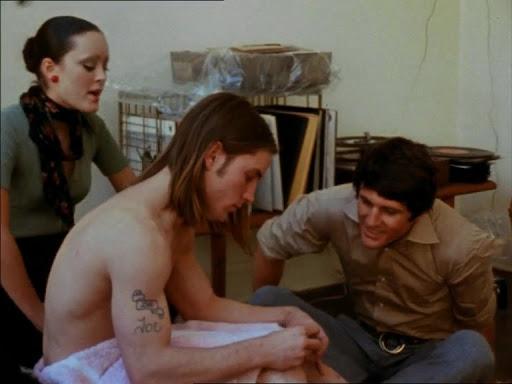
Vinyl (1965, directed by Andy Warhol)
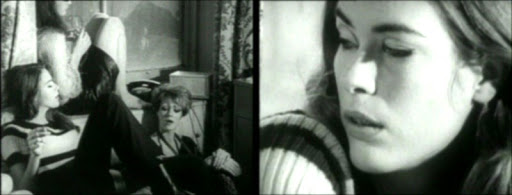
Beauty No. 2 (1965, dir by Andy Warhol)
Kitchen (1966, dir by Andy Warhol)
Chelsea Girls (1966, dir by Andy Warhol and Paul Morrissey)





 Through the Shattered Lens