Brad reviews BLOOD AND BONE (2009), starring Michael Jai White! 


Michael Jai White is Bone, an ex-convict who also happens to be a badass martial artist. After getting out of prison, Bone heads to Los Angeles and rents a room from Tamara (Nona Gaye), a foster mother to three kids. Once there, he hooks up with Pinball (Dante Basco) and enters the underground street-fighting scene, quickly gaining a reputation as the best fighter around. This catches the attention of the ruthless James (Eamonn Walker) who controls the local fighting action. Bone takes a special interest in James’ woman, the beautiful Angela (Michelle Belegrin). When Bone easily dispatches James’ best fighter Hammer (Bob Sapp), James invites him into his life because he wants him to take on Pretty Boy Price (Matt Mullins). Price is the prize fighter of the wealthy and powerful Franklin McVeigh (Julian Sands), and James sees Bone as his chance to beat Price and join the big time. But Bone is much more complicated than he initially seems, and he has an agenda that involves Angela and keeping a promise he made to an old friend. 

I’m a fan of B-movie star and martial artist Michael Jai White. I remember buying the DVD of BLOOD AND BONE a decade or more ago and thinking it was a good movie. I decided to revisit the film today and my opinion remains the same. It has a memorable opening scene where mixed martial artist Kimbo Slice and his crew confront White’s character Bone in the bathroom of an unnamed prison. Slice runs his mouth, and we soon learn that Bone is the biggest badass around. It’s a simple, awesome scene that proves to be a perfect introduction to our hero. From this point forward, BLOOD AND BONE seems to follow a similar storyline to my favorite Charles Bronson film HARD TIMES (1975). In HARD TIMES, Bronson is a badass fighter who rolls into town, hooks up with the fast talking James Coburn, dominates the local street fighting competition, and then heads back out of town. In BLOOD AND BONE, Michael Jai White rolls into town, hooks up with the fast talking Dante Basco, and dominates the local street fighting competition. However, in this film we find out that White is doing all of this to keep a jailhouse promise to a friend before heading out of town. I like White as an actor, martial artist, and charismatic screen presence, so I was all in as the action and the story played out. 

Aside from Michael Jai White’s basic badass character, I also like the relationship that develops between his Bone and Nona Gaye’s character, Tamara. She has a world weariness and bullshit detector, but she also realizes that his character has more depth than it may initially appear. They have some good moments sprinkled throughout the film that seem more grounded in reality than your typical B action movie relationships. Eamonn Walker is appropriately evil as the ruthless James, a man who has zero redeeming qualities. His character may not be set in the real world, but a movie like this needs someone to really dislike and Walker fits the bill. Dante Basco is fine as the fast-talking Pinball who helps break Bone into the underground fighting scene, but I didn’t find his character especially memorable. Julian Sands is prominently billed, but his part is quite small. He shows up at the beginning and the end, and delivers an outrageous monologue to Eamonn Walker about how he and his rich, white buddies are entertained by African Americans, but they don’t really want to hang out with them. It’s a pretty uncomfortable scene to be honest with you even though it’s being delivered to a completely despicable character. 

Overall, I like BLOOD AND BONE as a badass action and martial arts film with some heart. It’s not always easy to watch as it’s pretty violent, with multiple arms broken and shoulders dislocated to graphic effect. It also throws around some inappropriate slurs, which is somewhat typical of B movies made fifteen to twenty years ago, but they still stand out in this day and time. However, thanks to Michael Jai White’s badass performance, BLOOD AND BONE delivers the goods for anyone looking for an entertaining, bone-crunching action film. In that context, I definitely recommend it. See the trailer below:
Embracing the Melodrama #53: Crash (dir by Paul Haggis)


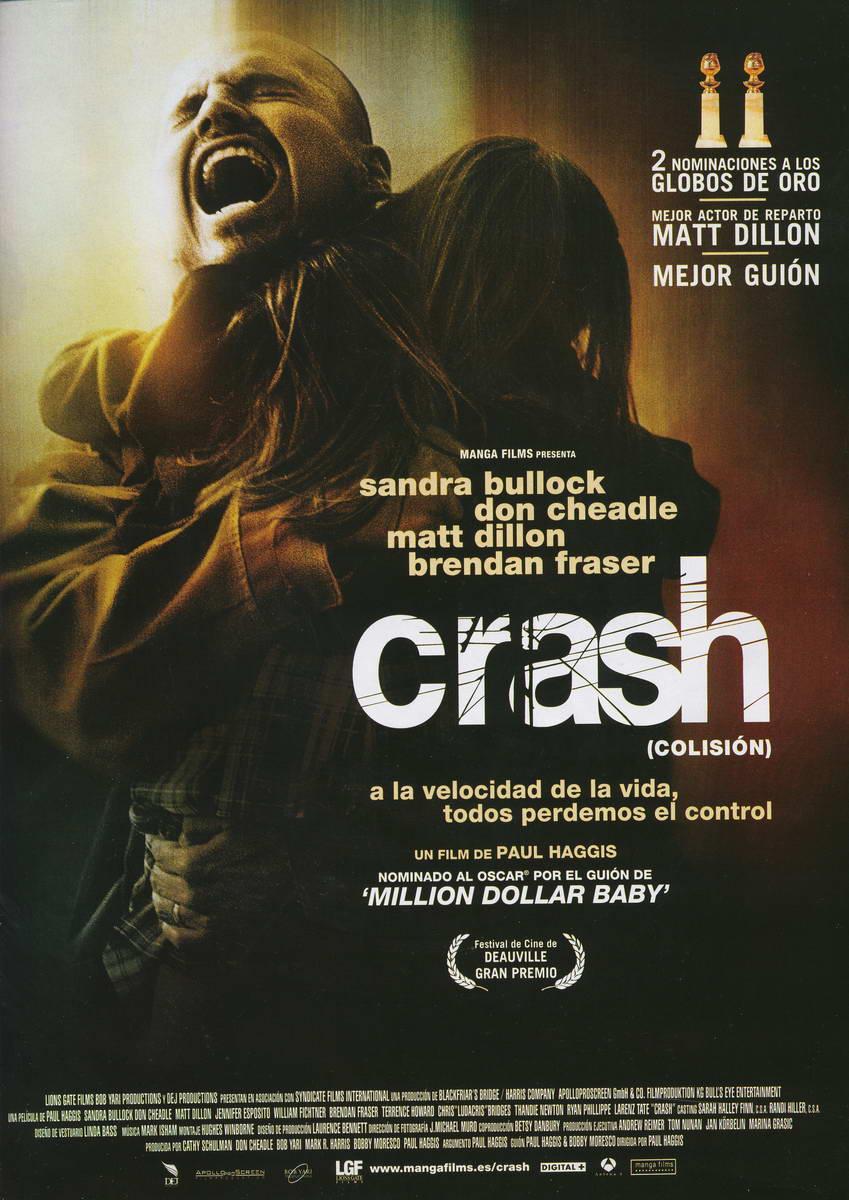
crash-2004-poster

For the past two weeks, I’ve been reviewing, in chronological order, some of the most and least memorable melodramas ever filmed.   We started way back in 1916 and now, after 52 reviews, we’ve finally reached the year 2004.  And that can only mean that it is time to review the worst film to ever win an Oscar for best picture of the year.  I am, of course, talking about Crash.

Crash is an ensemble piece that follows a multi-racial cast of characters as they deal with issues of race, crime, and — well, that’s about it.  In Crash, everyone’s life revolves around race and crime.  Well, I take that back,  There is at least one character whose life revolves around being a good maid to the white woman who employs her.  But otherwise, it’s all about race and crime.  The film is set in Los Angeles which, from what I’ve read, is actually a pretty big city but you really wouldn’t know that from watching Crash.  All of the characters in Crash are constantly and randomly running into each other.  I think director/screenwriter Paul Haggis is trying to make a statement about the power that coincidence plays in the world but, often times, it just feels like lazy plotting.

Anyway, here are the characters who are meant to bring Los Angeles to vivid cinematic life:

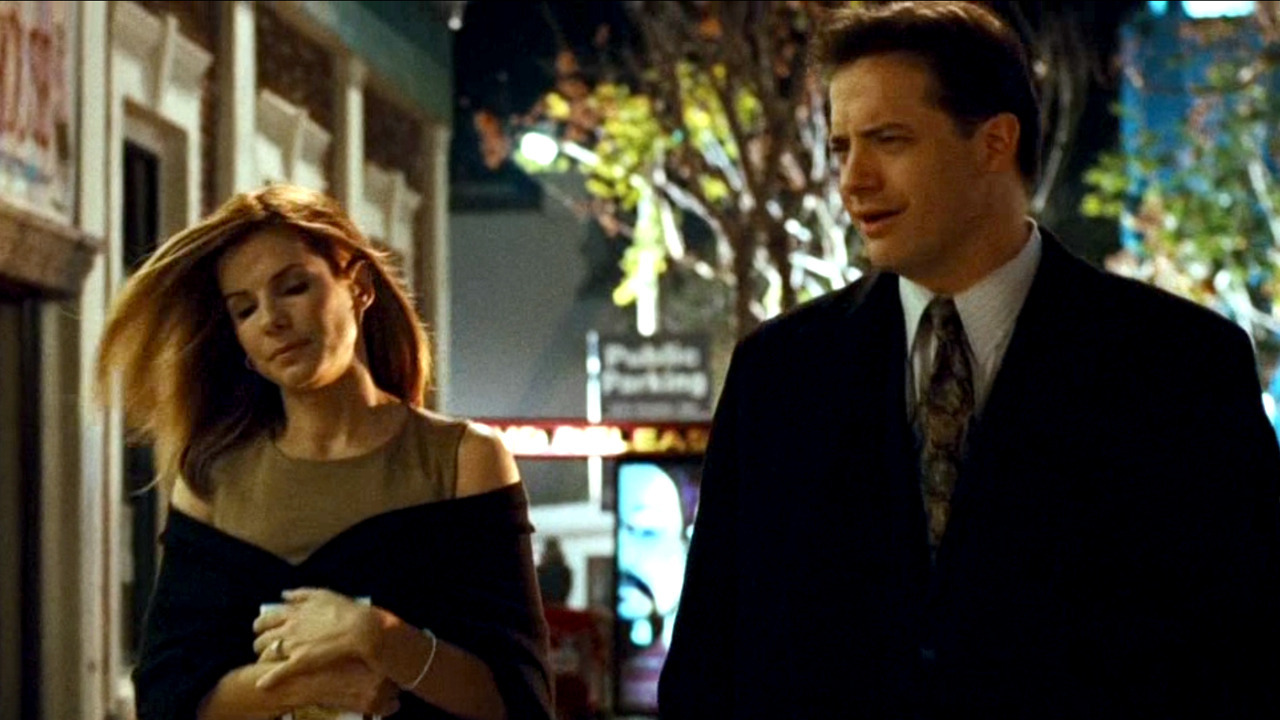
Brendan Fraser and Sandra Bullock play rich white people Rick and Jean Cabot.  Rick Cabot has just been elected District Attorney of Los Angeles County.  (Because when I think of a successful urban politician, I automatically think of Brendan Fraser…)  Jean is his materialistic wife.  At the start of the film, they’re carjacked by two young black men, which leads to Jean suspecting that every non-white she sees is secretly a gang member.  Later, Jean falls down a flight of stairs but she’s helped by her maid, who happens to be — surprise, surprise — not white!  Apparently, this teaches Jean an important lesson about tolerance.  The message, I guess, is that white people can be redeemed by interacting with their minority servants.

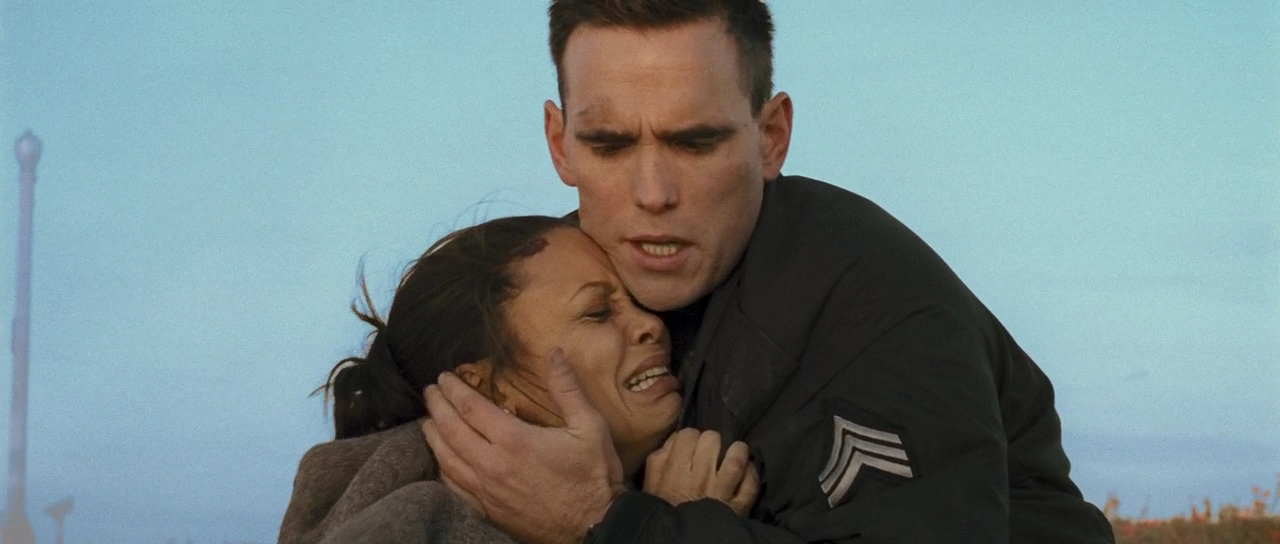
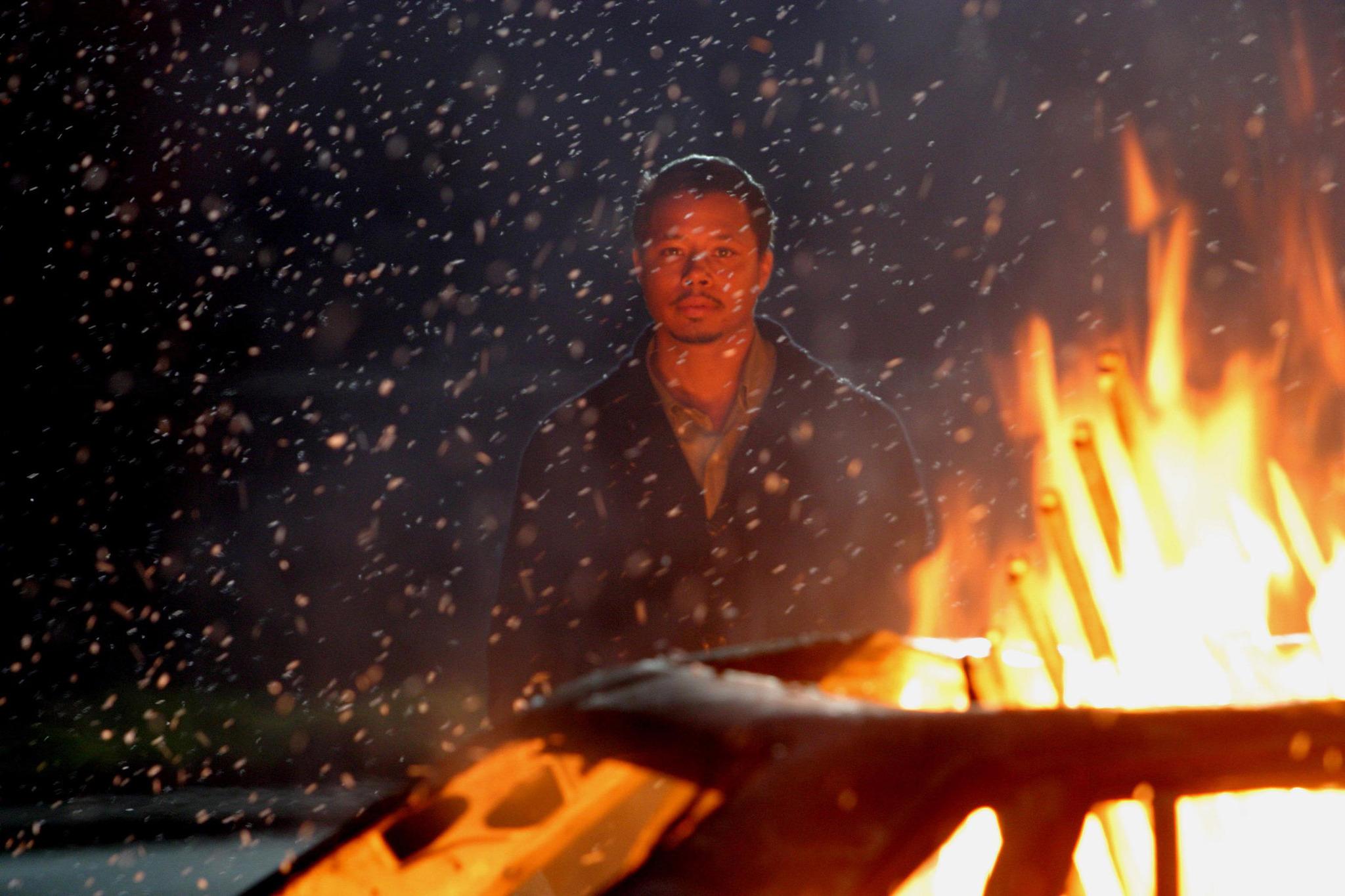
And then there’s Cameron (Terrence Howard) and his wife Christine (Thandie Newton) who are upper class and black.  Cameron directs sitcoms for a living and, at work, he has to deal with Fred (Tony Danza) constantly double guessing him and demanding that he reshoot scenes.  One night, as they leave an awards ceremony, Cameron and Christine are pulled over by two white cops — the racist Ryan (Matt Dillon) and his idealistic partner Hansen (Ryan Phillippe).  Ryan proceeds to molest Christine while giving her a pat down.  The next day, Christine is involved in a car accident on the freeway and is pulled from the burning car by none other than Officer Ryan.  The point here, I suppose, is that the same pervert who finger rapes you one night is just as likely to be the same guy who comes across your overturned car on the freeway.  For that scene alone, Crash deserves the title of worst best picture winner ever.

crash-2004 4

But that’s not all!

There’s also Detective Graham Waters (Don Cheadle), who has been assigned to investigate a police corruption case that would not be out of place in an episode of … well, just insert your own generic cop show title here.  Graham also visits his mentally unstable mother who demands that Graham find his younger brother.  Now, of course, as soon as we hear this, we know that Graham’s brother is going to have to turn out to be one of the other characters in the film.  Since there are only three other black males in this film (and since Cameron appears to be the same age as Graham), it’s not difficult to figure out who it’s going to be.

It’s either going to be Anthony (Ludacris) or Peter (Larenz Tate), who also happen to be the same two men who carjacked the Cabots’ car at the start of the film.  Larenz Tate probably gives the best performance in this whole sorry mess of a film, even if his role is ultimately a thankless one.

There’s also a locksmith named Daniel (Michael Pena), who finds himself being stalked by an angry Middle Eastern man.  Daniel’s story contains a hint of magic realism, presumably because Paul Haggis was reading something by Gabriel Garcia Marquez while writing the script.

Crash

You can fault Crash for many things but you also can’t deny that it’s far more ambitious than the typical bad film.  In the space of 112 minutes, Paul Haggis attempts to say everything that needs to be said about race and class in America.  Unfortunately, while watching the film, it quickly becomes obvious that Haggis really doesn’t know much about race and class in America.  Hence, the film becomes a collection of scenes that think they mean something while actually meaning nothing.  Crash is less about race in America and more about how other movies have traditionally portrayed race in America.  Unfortunately, director Haggis does not have the self-awareness to truly bring the subtext of screenwriter Haggis’s script to life.

The main theme of Crash seems to be that everyone has a good side and a bad side and that you can the hero of one story while being the villain of another.  That’s not a bad theme, it’s just an incredibly mundane one.  The film illustrates this theme by continually having a character say something racially offensive just to then have him do something heroic in the very next scene.  As a result, the characters don’t come across as being so much complex as just incredibly inconsistent.  Crash is never as deep as it thinks it is.

Reportedly, Crash was inspired by Paul Haggis’s own experience of getting carjacked.  Haggis has said that being a victim of crime led to some intense soul searching on his part.  Hopefully, Haggis got something better than just Crash out of the whole experience.

still-of-terrence-howard-in-crash-(2004)-large-picture