20 Horror Films For Halloween (10/29/25)


Here’s 20 suggestions, some of which are obvious and some of which are not.

The Essentials

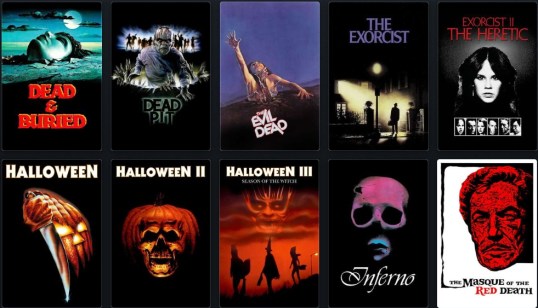
What would Halloween be without watching Halloween (1978)?  And, just to make clear, I’m talking about the John Carpenter Halloween and not any of that David Gordon Green crap.  John Carpenter’s Halloween continues to be one of the most effective horror films ever made and it’s also the rare example of a slasher film in which the victims are just as memorable as the killer.  I love Donald Pleasence’s performance as Dr. Loomis.  Halloween can be viewed on Shudder.

Halloween II (1981) picks up right where the first Halloween ended.  Jamie Lee Curtis doesn’t really do much in this version, other than spend her time limping through the hallways of Haddonfield’s nearly deserted hospital.  However, that just means that we get to spend more time with Dr. Loomis!  Halloween II is nowhere near as effective as the first film but it still introduced some really interesting ideas, like Samhain and Laurie being Michael’s sister.  David Gordon Green decided all of that unnecessary.  I disagree.  Halloween II can be viewed on Peacock.

Halloween III: Season of the Witch (1982) does not feature Michael Myers or Laurie Strode or even Dr. Loomis.  However, it does feature the Silver Shamrock theme song, Tom Atkins yelling like a badass, and Don O’Herlihy explaining the true meaning of Halloween.  “….and Happy Halloween.”  Halloween III can be viewed on Peacock.

The Exorcist (1973), William Friedkin’s masterpiece and the first horror film to ever be nominated for Best Picture, is one of the few horror film to remain frightening even after repeat viewings.  I will add that you don’t have to be Catholic to get The Exorcist but it definitely helps.  The Exorcist can be viewed on HBOMax. 

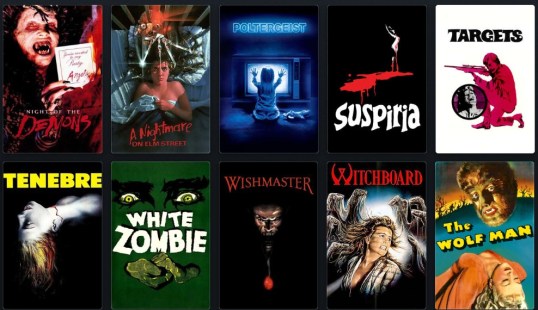
Suspiria (1977) remains Dario Argento’s best film, a dizzying masterpiece of horrific pop art that mixes blood, ballet, witches, music, and names that start with S.  From the moment that Jessica Harper (giving a great performance) steps into the rainy night to the shocking double murder at the red apartment building to the mind-bending climax, Suspiria is a brilliant mix of suspense and horror.  Do not see the remake.  (What is the deal with pretentious schmucks remaking brilliant horror films?)  The original is all you need.  It’s on Tubi.

Inferno (1980) is one of Argento’s more unfairly overlooked films.  A loose sequel to Suspiria, Inferno is a masterpiece of both horror and paranoia.  Irene Miracle’s opening swim is one of Argento’s most haunting set pieces.  The killer kitties are adorable.  The ending features effects work from none other than Mario Bava.  Sadly, the making of Inferno was not a happy experience for Argento and it temporarily soured him on working in America.  This brilliant film is on Tubi.

After his bad experience with Inferno, Argento returned to his giallo roots with Tenebrae (1982).  A series of murders in Rome are connected to an American writer.  Argento reportedly did not get along with star Anthony Franciosa but he still got a good performance out of him.  The wonderfully quirky supporting cast includes John Saxon, Daria Nicolodi, Christian Borromeo, John Steiner, Lara Wendel, Ania Pieroni, and Giuliano Gemma.  This film features several frightening and suspenseful set pieces.  The relentless dog still freaks me out.  Tenebrae can be viewed on Tubi.

A Nightmare on Elm Street (1984) — again, the original and not the remake — holds up surprisingly well.  Whenever I watch it, I’m shocked to be reminded of just how scary Freddy Krueger actually was in his first film appearance.  This Wes Craven shocker is available on HBOMax.

Poltergeist (1982) — the original, not the remake — also holds up well.  JoBeth Williams finding the strength after being thrown around her room to limp down that ever expanding hallway to save her children continues to be both horrifying and inspiring.  Craig T. Nelson’s over-the-top delivery of “YOU LEFT THE BODIES!” continues to make me smile.  Poltergeist can be viewed on HBOMax.

It’s not Halloween without Bruce Campbell and Evil Dead (1981) — the original, though the remake isn’t bad — is available on Tubi.  Though it lacks the humor of the sequels, the first Evil Dead holds up very well and one can definitely see why not only Bruce Campbell but also Sam Raimi went on to have active and successful career afterwards.

In my previous entry, I listed several Vincent Price/Roger Corman collaborations.  Somehow, I failed to include The Masque of the Red Death (1964), which is the best of them all.  Vincent Price is wonderfully evil.  Roger Corman’s direction is appropriately intense.  Nicholas Roeg’s cinematography is beautifully ominous.  It can be viewed on Tubi.

The Wolf Man (1941) — the original, even though I like the remake — is one of my favorite Universal horror films, even if it does leave me wondering how Lon Chaney, Jr. could possibly be the son of Claude Rain.  In future films, Larry Talbot would become a bit too whiny for his own good.  In this one, your heart breaks for him and his father.  The Wolf Man can be viewed on Peacock.

White Zombie (1932) is considered to be first feature-length zombie film.  It’s a bit creaky but it does feature one of Bela Lugosi’s best performances.  One should see it for its historical significance, if nothing else.  It can be viewed on on Tubi!

Odds and Ends

One can debate whether or not Targets (1968) should be considered a horror film or a thriller but it features what is perhaps Boris Karloff’s best performance, playing an aging horror star who fears that his old movies can’t compete with reality.  For once, Karloff is the hero, bravely confronting a madman who starts shooting at the people attending a showing of one of Karloff’s old films.  Targets can be viewed on Pluto TV.

The Dead Pit (1989) is a personal favorite of mine.  An amnesiac (energetically played by Cheryl Lawson) finds herself in an insane asylum where she spends a lot of time running around in her underwear while a doctor performs experiments and the dead rise.  Lawson’s committed performance and director Bett Leonard’s atmospheric direction elevate the entire film.  This is 80s, low-budget horror at its best and it’s on Tubi.

Night of the Demons (1988) asks the question, “Is it really a good idea to have a party in a deserted house?”  Night of the Demons is enjoyable in its shameless and demented way.  Linnea Quigley and Angela Kinkade throw themselves into the role of the two girls throwing the party.  The film is energetic, surprising, witty, and occasionally even scary.  It can be viewed on Tubi.

From the same director as Night of the Demons, Witchboard (1986) is the ultimate film about why one shouldn’t mess with a Ouija board.  I relate to Witchboard because it’s about a redhead who never curses.  Beyond that, though, this is a good horror film that features Stephen Nichols getting upset when everyone fails to take his Ouija board seriously.  This film actually has its share of very real jump scares.  It can be viewed on Tubi.

Wishmaster (1997) is well-remembered for Andrew Divoff’s creepy intensity as the Djinn but the cast is actually a who’s who of horror royalty.  Robert Englund, Tony Todd, George “Buck” Flower, Kane Hodder, Reggie Bannister, Joe Pilato, they all made appearances.  I like the fact that no one ever chooses their words carefully when speaking to Wishmaster.  The film is on Tubi.

Dead and Buried (1981) features strange things happening in a coastal town.  This film feels like a particularly gruesome episode of The Twilight Zone and features a strong performance from Jack Albertson as the coroner with a secret.  It’s on Tubi.

Exorcist II: The Heretic (1977) has a terrible reputation that is largely deserved but I have to admit that I find it to be strangely fascinating.  It’s such a misfire that you really can’t look away and it takes an all-star cameo approach to its story that feels so wrong that it leaves you wondering whether John Boorman was intentionally going for a parody or not.  Richard Burton doesn’t waste any time with being subtle.  See if you can figure out what’s going on during the flashback scenes.  It’s on Tubi and I dare you to watch it.

Click here for the weekend’s list!


6 Shots From 6 Films: Special Wes Craven Edition


4 (or more) Shots From 4 (or more) Films is just what it says it is, 4 (or more) shots from 4 (or more) of our favorite films. As opposed to the reviews and recaps that we usually post, 4 (or more) Shots From 4 (or more) Films lets the visuals do the talking.

Today would have been Wes Craven’s 82nd birthday.  I have to admit that I was shocked to be reminded that Craven was 76 years old when he tragically passed away in 2015.  I always assumed that he was much younger, perhaps in his late 50s.  Perhaps that’s because Craven himself always seemed so energetic and enthusiastic about both horror and cinema.  He was one of the best ambassadors that the horror genre could have asked for.

Today, in honor of Wes Craven, we present to you….

6 Shots From 6 Wes Craven Films

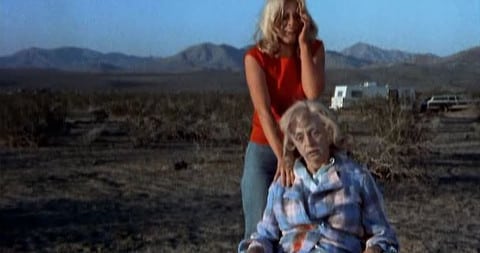
The Hills Have Eyes (1977, dir by Wes Craven, DP: Eric Saarinen)

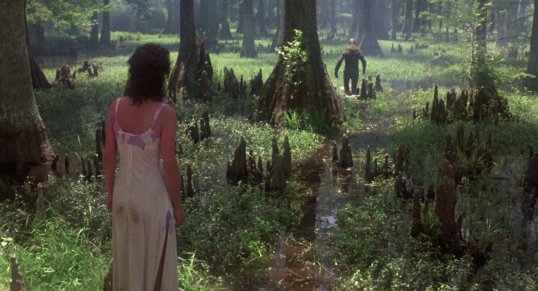
Swamp Thing (dir by Wes Craven, DP: Robbie Greenberg)

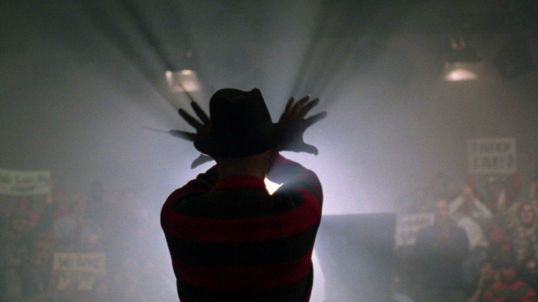
A Nightmare on Elm Street (1984, dir by Wes Craven, DP: Jacques Haitkin)

The People Under The Stairs (1991, dir by Wes Craven, DP: Sandi Sissel)

New Nightmare (1994, dir by Wes Craven, DP: Mark Irwin)

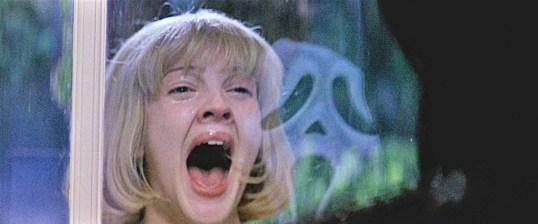
Scream (1996, dir by Wes Craven, DP: Mark Irwin)

Thank you for the cinematic memories, Wes Craven.

(Credit: Gracja Waniewska)


6 Trailers from Wes Craven


(Credit: Gracja Waniewska)

(Credit: Gracja Waniewska)

Last night, we were all stunned by the news that director We Craven had passed away after a battle with brain cancer.  If you want to see a great tribute to Craven, check out this 4 Shots From 4 Films that Arleigh posted on his birthday.  If you want to read a great reflection of Wes Craven and his career, check out this tribute from Ryan the Trashfilm Guru.

As for me, I’m going to share an anecdote and then, I’m going to pay tribute to Wes with a six trailer salute.

First, the anecdote.  I can still remember the first time that I ever watched Last House On The Left.  It was a film that I had mixed feelings about.  On the one hand, as a horror lover, I could not help but be impressed by the terrifying performances of Fred Lincoln and David Hess.  I could not help but by moved by the way Hess’s haunting song, Now You’re All Alone, was used in the film.  And, as low-budget and exploitive as the film may have been, I could see that Wes Craven was more interested in critiquing sadism than in celebrating it.

At the same time, it was still an unpleasant film for me, as a woman, to watch and the addition of some clumsy humor pretty much confirmed that Craven was still finding his way as a filmmaker.  It was one of those films that I knew, as a horror fan, I had to watch but I wouldn’t say that I enjoyed it.

However, that night, I did end up watching the movie twice.  I watched it a second time so that I could listen to the commentary from Wes Craven and producer Sean S. Cunningham.  And — oh my God — both of these guys were so funny and charming!  Craven, especially, seemed to enjoy pointing out scenes that didn’t quite work and the frequently awkward dialogue that he had written.  Craven and Cunningham both came across as being two of the nicest guys in the world and it was indeed an experience to hear them cheerfully talking while these absolutely vile images were flickering by onscreen.

And really, that taught me an important lesson and it’s one that I remember to this day.  Whenever I hear some judgmental know-it-all claiming that only a sick person could direct or write a horror movie, I remember that charming Wes Craven audio commentary.

And now, here are six trailers for six of Wes Craven’s films.

Wes Craven, R.I.P.

http://www.youtube.com/watch?v=95C1wxkwMeA

http://www.youtube.com/watch?v=jdb_HSvf2Zk

Film Review: Freddy Vs. Jason (dir. by Ronny Yu)


(This review probably contains what some people would consider to be spoilers.)

Today, as part of my continuing series reviewing the films of the Friday the 13th franchise, I take a look at Freddy Vs. Jason.

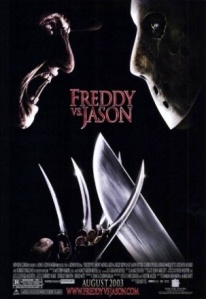
After spending 15 years in development Hell, the film Freddy Vs. Jason was finally released in 2003.  With this film, New Line Cinema brought together the stars of their two best-known horror franchises, Jason Voorhees (played here not by Kane Hodder but by Ken Kirzinger) and Freddy Krueger (Robert Englund.) 

During the time that Freddy Vs. Jason was languishing in development Hell, a huge number of potential storylines were pursued and a lot of scripts were written.  Some of those scripts are surprisingly good and one of them (the one with the enviromental message) is hilariously self-important.  Most of them are just terrible and can be found online via a google search.  The main problem was how to convincingly bring both Jason and Freddy together when the two of them essentially epitomized two radically different subsets of the slasher genre.  Especially when compared to some of the other ideas that were considered, the concept behind FreddyVs. Jason is actually pretty clever.

As the film starts, Freddy is trapped in Hell because he’s been forgotten by the teenagers of the world.  They’re no longer scared of him and, as such, they’re not having nightmares about him.  Freddy’s solution?  He tracks down Jason (also hanging out in Hell and having dreams that neatly parody his whole image of being a murderous defender of purity) and, by disguising himself as Pamela Voorhees, he convinces Jason to resurrect himself in Freddy’s old hometown.  Jason promptly starts killing teenagers and Freddy is blamed.  Soon, people are having nightmares and Freddy has his gateway back into the real world.  Unfortunately for Freddy, Jason keeps killing everyone before Freddy can get to them.  Freddy sets out to kill Jason and it all leads to one “final” battle between the two of them.

I have to admit that when I first saw Freddy Vs. Jason, I didn’t care much for it.  Of course, at that point in my life, my view of whether or not a film was good or bad was largely based on the type of night I was having when I saw it.  I saw Freddy Vs. Jason with a guy who 1) thought proper date attire was shorts, a t-shirt, and a baseball cap and 2) who apparently thought my right breast was just an armrest there for him to lean on whenever he got bored.  Bleh.  Beyond the company that I saw the film with, I was also upset that the character I most related to, Katharine Isabelle’s Gibb, was rather brutally killed off while boring old Monica Keena was allowed to survive.  My initial response to Freddy Vs. Jason was that it had to be bad film because I had a bad time while I was watching it.

However, I recently rewatched it again with my BFF Evelyn (who always dresses up and is pretty good about not feeling me up every three minutes) and I actually enjoyed Freddy Vs. Jason a bit more the second time around.  I think it also helped that, in between the two viewings, I got a chance to see all the other Friday the 13th and Nightmare on Elm Street films along with a lot of other horror films and was now able to see how scenes that seemed pointless the first time around were actually meant to comment on the history and the conventions of both the Friday the 13th and Nightmare on Elm Street franchises.  The 2nd time around, I could better appreciate the perverse parody at the center of Robert Englund’s performance as Freddy Krueger.  While the human characters are never all that interesting, the “final” battle between Jason and Freddy is genuinely exciting.  When I first saw it, I thought that the film’s final scene (with Freddy’s decapitated head winking at the camera before laughing) was incredibly stupid but now I appreciate it for what it is — a deliberately campy homage to the over the top exploitation films of the 70s and 80s. 

As opposed to the previous few films in the Friday the 13th franchise, Freddy vs. Jason was a huge box office success.  It was the first (and, come to think of it, only Friday the 13th film) that I saw in an actual theater and it actually did give me nightmares (mostly because I foolishly chose to relate to the obviously doomed Katharine Isabelle).  With that type of success, it was inevitable that there would be another film in both the Friday the 13th and Nightmare on Elm Street franchises.  Those two films, however, would not be sequels.  Instead, they would be (bleh) reboots.  We’ll take a look at the reboot of Friday 13th (and finish off this series of reviews) tomorrow.

6 Trailers To Make You Go “Yay!” Or “Bleh!”


Hi out there.  As I sit here typing this, I am so freaking sick, it is not even funny!  Seriously.  I’m congested, I’m running a fever, and I’m taking way too many naps while everyone else in the world is having a lot of fun playing outside and going to the new Twilight film.  However, despite feeling all bleh, nothing will stop me from sharing another edition of Lisa Marie’s Favorite Grindhouse and Exploitation Film Trailers.  NOTHING!

1) A Nightmare On Elm Street (1984)

One of the classic “old school” horror trailers.  The bit with the stairs always freaks me out.

2) Alone in the Dark (1982)

Not to be confused with the later film from Uwe Boll.

3) Without Warning (1980)

Martin Landau was apparently busy in the early 80s.

4) Deadtime Stories (1986)

This film appears to be an alternative take on beloved bedtime stories and…wait.  Bedtime.  Deadtime.  Hey, I just got that!  Neat.

5) Hello Mary Lou: Prom Night 2 (1987)

Apparently, this film has next to nothing to do with the original Prom Night and you have to ask yourself: if there’s no elaborate disco dance-off, then what’s the point?  Still, I own this one on DVD and I’ll be watching it soon if I don’t start to feel better.

6) Pet Sematary 2 (1992)

I remember that I saw this movie on TV one late night when I was like ten or eleven and oh my God, it scared the Hell out of me!  I mean, literally everyone dies in it!  Even kids!  Trust me, that’s a really scary thing to see when you’re still just a kid yourself.  But anyway, I rewatched it last year and was mostly bored. 

Rooney Mara as Lisbeth Salander?


It’s official.  The role of Lisbeth Salander in the thoroughly unnecessary and borderline insulting American remake of The Girl With The Dragon Tattoo will be played by Rooney Mara.

It’s hard for me to say how I feel about this casting.  When I first heard about it, my initial thought was, “Who’s that and how could she be better suited for the role than Jena Malone?”  However, after talking to Arleigh, I realized that I actually do know Rooney Mara.  She was the lead in another remake, this year’s Nightmare on Elm Street.  In that movie, Mara was a likable presence but she was no Lisbeth.  Then again, woman like Lisbeth Salander — independent women who refuse to be solely defined as either a good virgin or a bad whore — don’t appear in slasher films.  What is important is that Mara has proven she can carry a film.  She hasn’t proven that she can carry The Girl With The Dragon Tattoo.

Then again, considering just how iconic a figure as Lisbeth has become (both in the original novel and in the original film) it’s probably for the best that director David Fincher went with an unknown.  Rooney appears to be a talented young actress but she’s got a very difficult job ahead of her.

It’s probably not a coincidence that Rooney also has a small role in Fincher’s upcoming film, The Social Network (which is going to suck, by the way).  It’s possible that Fincher saw something in Rooney that she hasn’t been allowed to show the rest of the world.  Me, I’m just happy that if there is going to be an American version of Lisbeth Salander, at least she’s going to be played by an Irish-American.  At heart, Lisbeth is as Irish as a Swede can get.

(Though again, the ideal Irish-American to play Lisbeth would have been and still is Jena Malone.)

As I’ve stated before, I have mixed feelings about the remake of the Girl With The Dragon Tattoo.  (And yes, it is a remake regardless of what they’re saying over at Awardsdaily.com.)  On the one hand, the entire literary Millenium Trilogy (of which The Girl with the Dragon Tattoo was the 1st part) is one of the best recent works of pop cultural fiction.  Lisbeth Salander is destined to be an iconic noir figure.  On a personal note, even though she’s ultimately just a fictional character, she is a fictional character who has provided a great deal of strength and hope to abuse survivors (such as myself).  When we read about her and her refusal to allow herself to be victimized or to be dependent on even as well-meaning a man as Mikael Blomkvist, the book’s nominal hero, Lisbeth Salander becomes the vehicle for our own wish-fulfillment fantasies.  She is a character who transcends the page to become a role model in real life as well.  In many ways, she is the 21st century version of Scarlett O’Hara.  Scarlett gave hope to aging Southern belles.  Lisbeth gives hope to bipolar neurotics like me.  And much as everyone couldn’t wait to see Scarlett on-screen, a lot of us couldn’t wait to see Lisbeth on-screen.

And that is the biggest hurdle that director David Fincher and Rooney Mara are going to face with this much-hyped remake of The Girl With The Dragon Tattoo.  We’ve already seen Libseth onscreen and, in our mind’s eye, she’s not Rooney Mara.  Instead, she’s Noomi Rapace.  Both Fincher and Mara have a difficult task ahead of them.  Not only do they have to meet the expectations of the people who have read the original novel, they have to exceed the expectations of the people who have seen the original Swedish film.

And that, to me, is the issue that is being avoided, the proverbial Elephant in the room.  For all the wannabe, internet-based film critics who are currently gleefully devouring any crumbs of information concerning Fincher’s production, nobody has yet to answer the question as to why this film needs to be made at all?  (Beyond the obvious fact that there’s money to be made…) 

I found it interesting that, at the end of the EW article concerning Mara’s casting, it is mentioned that the film is set to begin filming in Sweden.  Why exactly?  Hasn’t a film about a girl with a dragon tattoo who helps a smug journalist investigate a disappearance in Sweden already been made?  It would seem that the “American version” has little to offer beyond offering up a fantasy Sweden where everyone speaks English and those viewing the film are freed from having to try to read subtitles and rattle their jumbo tubs of popcorn at the same time.  Or are we just sending David Fincher over to Sweden because we think we’ve got a thing or two to teach the nation that gave us Ingmar Bergman?

It’s easy to find a lot of people trying to convince themselves that this film is a guaranteed classic.  (“I’m so happy they cast Robin Wright!” they exclaim.  “I usually hate remakes but with David Fincher aboard, I’m looking forward to this,” another one will say.  And, of course, my favorite: “This movie is not a remake!”)  But nobody seems to be willing to address just why exactly we would need a new Lisbeth Salander when she’s already been created to perfection by Noomi Rapace.

Seriously, both Rapace and Lisbeth deserves better.

For that matter, so does Rooney Mara.