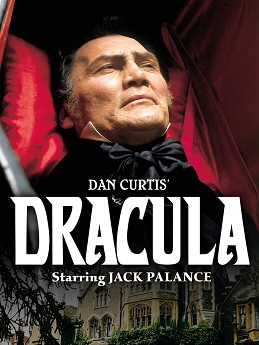
Horror Film Review: Bram Stoker’s Dracula (dir by Dan Curtis)


1974’s Bram Stoker’s Dracula opens with a familiar sight.

British solicitor Jonathan Harker (Murray Brown) is in Transylvania, where he has an appointment with a mysterious man named Dracula.  The local villagers are superstitious and seem to be frightened of Dracula’s very name.  When Harker reaches Dracula’s castle, he discovers that Dracula (Jack Palance) is a courtly but enigmatic man.  When Dracula sees a photograph of Jonathan’s fiancée, Mina, and her best friend, Lucy, something about it seems to capture his attention.  Later, that night, Jonathan is attacked by several female vampires.  After Dracula saves Jonathan’s life, he forced Jonathan to write a letter home, saying that he will be staying in Transylvania for month.  Jonathan attempts to escape but is instead dragged off to the crypt, where Dracula’s brides await….

Soon, Dracula is in England.  Lucy (Fiona Lewis), who looks exactly like Dracula’s long-dead wife, is taken mysteriously ill and dies.  Dr. Abraham Van Helsing (Nigel Davenport), called in when Lucy was showed signs of being sick, suspects that there is a vampire at work.  Lucky’s fiancé, Arthur Holmwood (Simon Ward), doesn’t believe it until he sees, with his own eyes, Lucy raised from the dead and calling for him to come and join her….

Not to be confused with the Francis Ford Coppola film, 1974’s Bram Stoker’s Dracula was directed by horror impresario Dan Curtis.  It’s a rather loose adaptation of Bram Stoker’s novel.  For one thing, Jonathan Harker does not return to England.  Dracula is, from the start, more interested in Lucy than in Mina.  Lucy’s other suitors — Quincy Morris, John Seward — are not present.  And Dracula himself does not get younger as the result of drinking blood.  In fact, it’s such a loose adaptation that it’s actually difficult to justify calling it Bram Stoker’s Dracula.  (In fact, the film is also known as Dan Curtis’s Dracula, which is a far more appropriate title.)

That said, it’s still an entertaining vampire movie.  Jack Palance, who previously worked with Dan Curtis in The Strange Case of Dr. Jekyll and Mr. Hyde, gives a properly intense performance as Dracula.  He doesn’t try to adopt any sort of Eastern European accent or anything like that.  Instead, he delivers his lines through clenched teeth (or, perhaps, fangs) and he fixes his victims with a powerful stare that hints at the animalistic urges behind his controlled demeanor.  Palance plays Dracula as being arrogant and convinced that no mere mortal can defeat him.  At the same time, there’s a vulnerability to Palance’s Dracula.  Watch how his face briefly lights up when he sees Lucy’s picture and is reminded of his long-dead wife.  Watch his fury when he discovers that Van Helsing and Arthur have gotten to Lucy before him.  His love for his wife is the one shred of humanity that Dracula still has within him.  When he loses her a second time (in the form of Lucy), he’s prepared to go to war.

Bram Stoker’s Dracula was originally meant to air in October of 1973 but the showing was pre-empted by the announcement that Vice President Spiro Agnew had resigned.  As a result, this film — so clearly meant for Halloween — did not air until February of 1974.  That doesn’t seem fair.  Poor Dracula.
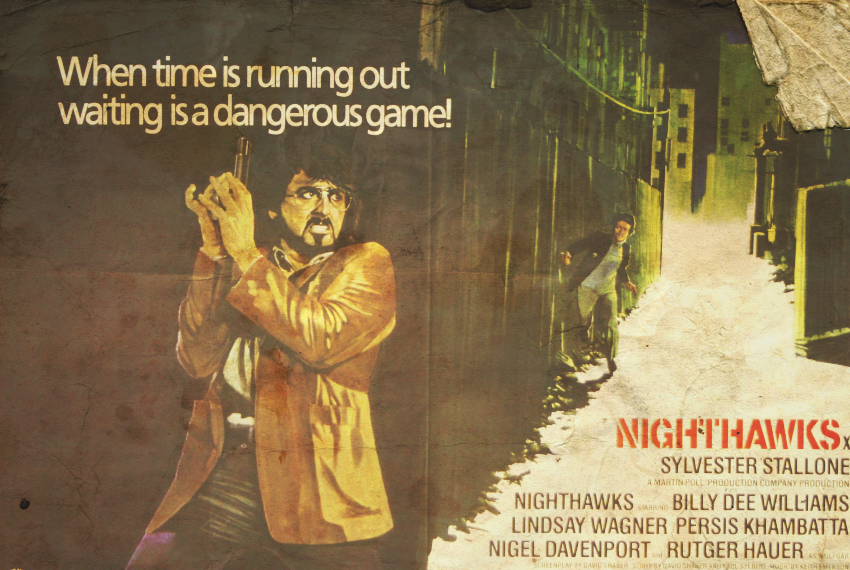
#SundayShorts with NIGHTHAWKS!


Since Sunday is a day of rest for a lot of people, I present #SundayShorts, a weekly mini review of a movie I’ve recently watched.

Deke DaSilva (Sylvester Stallone) and Matthew Fox (Billy Dee Williams) are two badass New York City Cops. Wulfgar (Rutger Hauer) is one of the most dangerous terrorists in the world. When it’s suspected that Wulfgar is in New York City, DaSilva and Fox are transferred to an elite anti-terrorist squad, led by the British expert Peter Hartman (Nigel Davenport). Will they be able to find Wulfgar and stop him before it’s too late?

I’m a big fan of NIGHTHAWKS. The performances from Stallone, Williams, and Hauer are all excellent. Hauer is especially good as the terrorist, Wulfgar. He knocks it out of the park. The action is hard hitting at times, and the tension builds nicely throughout the film, leading to its audience pleasing conclusion. Definitely recommended for fans of action movies and the stars!

Five Fast Facts:

  1. Dutch actor Rutger Hauer was a huge star in the Netherlands when NIGHTHAWKS was made. This is his American film debut.
  2. Sylvester Stallone and Rutger Hauer clashed early and often while making NIGHTHAWKS. The first day on the set, Rutger Hauer had to film a violent action scene. While filming the sequence, Hauer was injured when a cable that would yank him to simulate the force of being shot was pulled too hard, straining his back. Afterward, Hauer discovered that the cable was pulled with such force on Sylvester Stallone’s orders. Hauer threatened Stallone that he would “break his balls” if he ever did something like that again. Reportedly, they clashed often on the film from this point forward.
  3. The director of NIGHTHAWKS, Bruce Malmuth, played the ring announcer of the All-Valley karate tournament at the end of THE KARATE KID. I was 12 years old when I saw THE KARATE KID, and I wanted to be the karate kid. It’s one of my favorite movies, leading to a lifetime crush on Elizabeth Shue.
  4. Reportedly, during the exciting subway chase sequence, Rutger Hauer continually outran Stallone, who is known for his competitive streak. This is one of my favorite sequences in the film, and Hauer does look extremely fast.
  5. If you’re looking for a reason to upgrade to the Shout! Factory blu ray…the Universal Pictures widescreen DVD omits the use of “Brown Sugar” by The Rolling Stones and “I’m a Man” by Keith Emerson. The 2016 Blu-ray release from Shout! Factory adds them back.

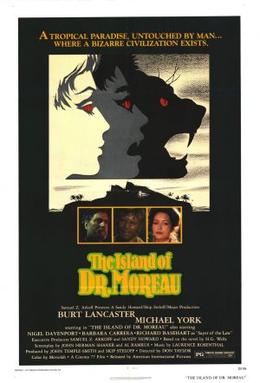
The Island of Dr. Moreau (1977, directed by Don Taylor)


After the ship that he’s working on sinks, engineer Andrew Braddock (Michael York) washes up on an uncharted island. It’s a beautiful island but it quickly proves dangerous as another survivor of the sinking is killed by wild animals. The injured Braddock passes out and when he wakes up, he’s being cared for by a mysterious scientist named Moreau (Burt Lancaster).

Braddock discovers that the island is populated by creatures that are half-human and half-animal. Led by the Sayer of the Law (Richard Basehart), these creatures are the results of experiments conducted by Moreau and his assistant, Montgomery (Nigel Davenport).  Moreau’s experiments are expected to obey Moreau’s laws.  Should they fail, they will be taken to the House of Pain and punished.  When Baddock objects to Moreau playing God, Moreau plots to reverse the experiment on Braddock and turn him into an animal. Even as he falls in love with a former cheetah (played by Barbara Carrera), Braddock realizes that he must escape the Island of Dr. Moeau.

This is the forgotten adaptation of H.G. Wells’s classic novel, as well as being the most faithful. The Island of Lost Souls, from 1932, is considered to be a classic. The third version, directed by John Frankenheimer and starring Marlon Brando and Val Kilmer, is a legendary disaster. This version, though, is usually overlooked. It’s also my favorite of the three but that might be because it was the first version that I ever saw. It’s a straight-forward version of H.G. Wells’s story of science gone mad with director Don Taylor not wasting any time getting the action started. Michael York, always an underrated actor, convincingly portrays Braddock’s outrage and his struggle to maintain his humanity after Moreau starts to experiment on him while Carrera is beautiful and mysterious as Maria. Probably the film’s biggest surprise is Burt Lancaster, who turns out to be ideally cast as Moreau. More subdued than either Charles Laughton or Marlon Brando, Lancaster plays Moreau as a brilliant but callous man who is too arrogant to realize that he’s become as much of an animal as those he claims to be perfecting.  What makes Lancaster’s Moreau so disturbing is that he doesn’t have the excuse of being insane.  Instead, he’s just too stubborn to admit that he’s potentially made a huge mistake.

It may be forgotten but this still the version of The Island of Dr, Moreau that I would recommend.

(Trailer courtesy of Classic Movie Reviews)

Nighthawks (1981, directed by Bruce Malmuth)


DaSilva (Sylvester Stallone) and Fox (Billy Dee Williams) are two tough New York cops who just want to be left alone so that they can arrest muggers and purse snatchers.  However, because they both have a background in the military, they are assigned to work with an international anti-terrorism task force that is being headed up by Detective Inspector Peter Hartman (Nigel Davenport).  Rumor has it that the notorious terrorist Wulfgar (Rutger Hauer) is coming to New York and Hartman tells DaSilva and Fox that they must be prepared to do whatever is necessary to take Wulgar down, even if it means taking a shot while he is hiding behind a hostage.  DaSilva says he’s not sure that he could shoot an innocent person, even if it meant stopping Wulfgar from escaping.

Wulfgar has no such moral qualms.  Wulfgar is a terrorist-for-hire who claims to be fighting for the people but whose main interest is remaining employable.  Unfortunately, Wulfgar has become so ruthless and so cavalier about killing civilians (including children) that most terrorist groups have started to refuse to hire him.  He brings too much bad publicity to his employers.  Wulfgar has come to New York to lead a bombing campaign, with the hope of once again making himself employable.  Wulfgar’s partner in all of this is the equally ruthless Shakka Kapoor (Persis Khambatta).

Nighthawks was one of the films that Stallone made after he found stardom as Rocky but before he redefined his career by playing John Rambo.  Stallone actually gives a surprisingly good performance as DaSilva.  DaSilva may be another tough cop who plays by his own rules but the script still gives the character some unexpected shadings and Stallone plays him as being more cerebral than you might expect.  It’s interesting to see Stallone play a character who is worried about using excessive force to do his job and, to the film’s credit, it actually takes DaSilva’s conflicted feelings seriously.  Billy Dee Williams, unfortunately, is not given as much to do as Stallone and his character is far more one-note than Stallone’s.  He’s the loyal partner and, with his natural charisma, Williams deserved a role with more depth.  Also appearing in small roles are Joe Spinell (as Stallone’s boss), Lindsay Wagner (as Stallone’s ex-wife), and the legendary pornographic actor Jamie Gillis (as Wagner’s boss).

Not surprisingly, the film is stolen by Rutger Hauer, who gives a performance that, in many ways, anticipates his more acclaimed work in Blade Runner.  As played by Hauer, Wulfgar is a charismatic sociopath who knows exactly the right thing to say but who, because of his own arrogance, is still vulnerable to allowing his emotions to get the better of him.  He and Stallone both play-off each other well and their face-to-face confrontations are intense.  It probably helped that Hauer and Stallone did not personally get along during the filming.  (Both, however, were very complimentary towards each other in the years that followed Nighthawks, with Hauer especially saying that there was nothing personal about their on-set arguments.)

Nighthawks is hardly an in-depth look at the realities of international terrorism but it has a handful of exciting action scenes and two excellent performances from Stallone and Hauer.  It’s currently on Netflix and worth watching.

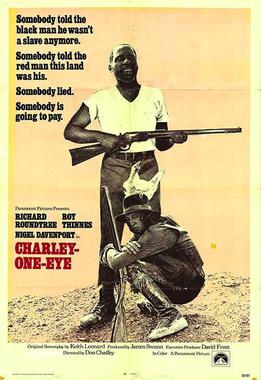
A Movie A Day #334: Charley One-Eye (1973, directed by Don Chaffey)


Welcome to the old west, where life is brutal and unpredictable.  Ben (Richard Roundtree) joined the Union Army so he could kill white men.  When his commanding officer caught Ben in bed with his wife, Ben was forced to commit murder and go on the run.  When Ben stumbles across an unnamed Indian (Roy Thinnes) with a bad leg, Ben forces the Indian to accompany him.  Despite Ben being loud, cruel, and mentally unstable, an unlikely friendship develops between Ben and the Indian, cemented by their mutual hatred of the white man.  When they find a deserted church, Ben and the Indian settle in and start to raise chickens.  The Indian’s favorite chicken is a one-eyed bird that he has named Charley.  Meanwhile, the Bounty Hunter (Nigel Davenport), a British racist, retraces their every step.
Richard Roundtree made Charley One-Eye after shooting to fame as John Shaft.  This film was his attempt to show that he was capable of playing more than just the black private dick that’s a sex machine to all the ladies.  Ben is a world away from Shaft.  There’s nothing smooth or charming about Ben, who never stop laughing or talking about how much he wants to kill a white man.  (Though the character introduces himself as being named “Ben,” the end credits simply read, “The Black Man … Richard Roundtree.”) The Indian is also half-crazy and given to fits of laughter.  The Bounty Hunter never laughs.  Whenever these three aren’t talking, the sound of buzzing flies is heard.  Death and decay are all around.

Don Chaffey was a British director who best known for films like Jason and the Argonauts and One Million Years B.C.  Charley One-Eye was a strange departure for him and he would never make another film like it.  It has elements of the Blaxploitation genre and Spaghetti western fans will recognize Aldo Sambrell in the tiny role of a Mexican bandit.  But it is really neither blaxploitation nor a western.  It’s a slowly paced, sometimes boring character study of two outsiders.  Both Roundtree and Thinnes give good performances, though their characters are sometimes hard-to-take.  The only thing that makes Ben and the Indian tolerable is that their enemies, like the Bounty Hunter, are a hundred times worse.  There is a weird religious subtext running through the entire movie and the ending will leave you wondering whether the director of Jason and the Argonauts was actually calling for armed revolution.  Charley One-Eye is uneven and it goes on for at least thirty minutes too long but it is still an intriguingly strange movie.

One final note: Charley One-Eye was produced by none other than David Frost, the British media personality whose post-presidency interview with Richard Nixon was recreated in Frost/Nixon.

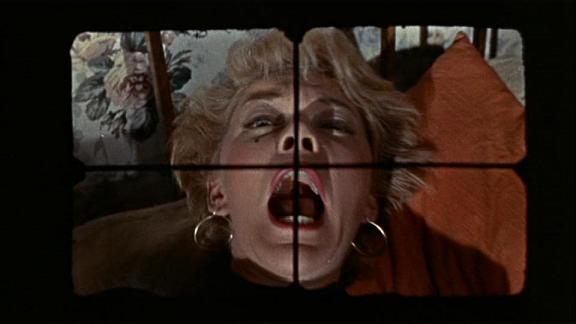
Halloween Havoc!: PEEPING TOM (Anglo-Amalgamated 1960)


gary loggins's avatarcracked rear viewer

Exif_JPEG_PICTURE

PEEPING TOM had been sitting in my DVR for a year before I finally got around to viewing it recently. I shouldn’t have waited so long, for this is absolutely one of the best horror films I’ve ever seen, and I’ve seen a lot of them. This movie, released the same year as Hitchcock’s PSYCHO, is an outstanding look at voyeurism, mental illness, and murder, and along with PSYCHO helped usher in the slasher genre. It’s ‘movie within a movie’ backdrop makes it a bonus for film fans, putting it in a category beyond horror as a great film period!

tom2

The opening sequence sets the stage for the madness yet to come, as we salaciously watch the murder of a prostitute through the lens of the killer’s camera. Then we see the killer go home and view the footage in his darkroom, obviously getting off on it. It’s a chilling…

View original post 992 more words

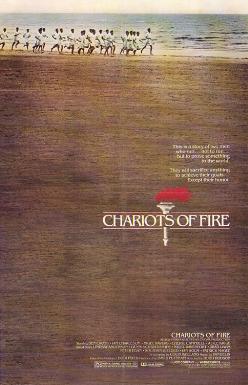
Lisa Watches An Oscar Winner: Chariots of Fire (dir by Hugh Hudson)


Chariots_of_fire

It took me two viewings to really appreciate the film Chariot of Fire.

First released in 1981, Chariots of Fire won the Oscar for best picture.  It’s also one of the few British productions to take the top award.  (British films are regularly nominated but the winner is usually an American production.)  A few nights ago, it was broadcast on TCM and I watched it for the first time.  And I have to admit that I struggled to follow the film.

It’s not that the film’s story was exceptionally complicated.  At heart, it’s an inspirational sports film and it features all of the clichés that one usually associates with inspirational sports films — i.e., come-from-behind victories, eccentric trainers, athletes who are determined to compete under their own terms, training montages, and a memorable score.  (The score for Chariots of Fire was so effective that it’s still used as the background music for countless Olympic specials.)

No, I struggled to follow the film because it really was just so extremely British, featuring everything from Cambridge to Gilbert and Sullivan to a rigidly enforced class system to casual anti-Semitism,  This may have been a sports film but it was a very reserved sports film.  If Chariots of Fire had been an American film, we would have gotten countless shots of people screaming, “YESSSSS!  GO! GO! GO! GO!” Instead, the characters in Chariots of Fire are far more likely to say, “Good show, old boy.”  Whereas an American sports film would have scored a montage of competition to the sound of “Eye of the Tiger,” Chariots of Fire features a men’s chorus singing, “For he is an Englishman….”

It takes a bit of getting used to and perhaps I knew that because, even as I was watching Chariots of Fire, I still set the DVR to record it.  The first time I watched the film, I was overwhelmed by the culture shock and the resolute Britishness of it all.  My reaction was to think that, much like The Big Chill, Chariots of Fire was a “you just had to be there” type of film, the type of film that was once impressive but now just inspires you to go “meh.”

And I was prepared to write a review stating just that.  But, somehow, in the back of my mind, I knew that I should give Chariots of Fire another chance before I dismissed it.  Maybe it was the fact that I couldn’t get the damn music out of my head.  Who knows?  But I couldn’t think about the film’s opening — with all those men running on the beach and getting mud all over their white uniforms — without smiling.

So, seeing as how I am currently snowed in for the weekend, I spent this morning watching Chariots of Fire for a second time and I’m glad that I did.  Because you know what?  Chariots of Fire is actually a pretty good film.  It tells the story of Eric Lidell (Ian Charleson) and Harold Abrahams (Ben Cross), two British runners who competed at the 1924 Olympics.  Harold is a student at Cambridge.  He’s an angry young man who is running to prove all of the anti-Semites wrong.  (Of course, Harold is angry in a very sort of upper class British way).  Eric is the son of missionaries who views running as a mission from God and who refuses to run on a Sunday.  The film looks gorgeous, Charleson and Cross both give good performances, and that music demands an emotional response.  While Chariots of Fire may not be a great film, it’s definitely a likable film and there’s something to be said for that.

Plus, did I mention that the music’s great?

http://www.youtube.com/watch?v=L-7Vu7cqB20