Welcome to Retro Television Reviews, a feature where we review some of our favorite and least favorite shows of the past! On Tuesdays, I will be reviewing the original Fantasy Island, which ran on ABC from 1977 to 1984. Unfortunately, the show has been removed from most streaming sites. Fortunately, I’ve got nearly every episode on my DVR.
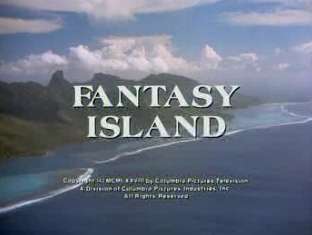
This week …. hey, where’s Tattoo!?
Episode 5.19 “Face of Love/Image of Celeste”
(Dir by Don Chaffey, originally aired on March 20th, 1982)
Once again, as I did with Miami Vice and CHiPs, I am going to save time by doing this review bullet-point style. It’s the holidays, after all.
- After two (or was it three) weeks of just Roarke and Tattoo, this episode features only Julie as Roarke’s assistant. Apparently, Tattoo has been busy helping a guest fulfill a “Cinderella fantasy” but things have gone wrong. The carriage turned back into a pumpkin. The horses turned back into mice and are now running all over the Island. Tattoo is not seen in this episode, which is a shame because the last few episodes (featuring only him and Roarke) really did feel like a throw-back to the first two seasons of the show.
- It’s been kind of weird during this season, continually hearing that various fantasies are going wrong. That’s not the Fantasy Island that we all know. Fantasy Island has previously been portrayed as a place where Roarke would never allow anything to truly go wrong.
- Julie doesn’t really do anything as Roarke’s assistant in this episode. Roarke tells her who each guest is and gives her the details of their fantasy but that’s pretty much it.
- Laura Jensen (Erin Gray) has spent her life with a face that was scarred during a housefire. She’s grown up to be bitter and angry. She’s just gotten out of prison and she’s brought to the Island by her parole officer, Ron (Monte Markham). Ron’s fantasy is for Laura’s scars to go away so that Laura can let go of her anger and live a norma;l life.
- Though initially weary, Laura is amazed when Roarke gives her a magical cream that causes her scars to temporarily vanish. In fact, Laura appears to be ready to get on with her life and accept that she and Ron are in love. But then Laura’s sleazy ex (Larry Manetti) shows up and tempts her back to her old ways. Don’t worry. It all works out in the end and Ron and Laura leave as a couple. However, I get the feeling that Ron’s going to lose his job as a parole officer. Falling in love with a parolee and taking a tropical vacation with her seems like something that would go against every rule in the book.
- The other fantasy was slightly more interesting, if just because it featured Paul Gauguin. When Celeste Vallon (Joanne Pettet) discovers that Roarke owns a Gauguin portrait of a woman who looks just like her, Celeste requests to go back to the past and be that woman. Roarke agrees, even though he warns her that she will also have to make a very serious decision, one that could change history.
- Right away, this fantasy ran into a major stumbling block. The Gauguin painting looked absolutely nothing like something that Gauguin, one of the great post-impressionists, would have painted. Instead, it’s a very conventional painting.
- The second stumbling block is that the legendary and charismatic Gauguin is played by the handsome but mild-mannered Robert Goulet.
- What Celeste discovers is that she is directly descended from the woman in Gauguin’s painting. The woman was Gauguin’s mistress and was engaged, against her will, to marry a soldier (Christopher Stone). If Celeste agrees to remain with Gauguin, then Gauguin will never paint another painting. If Celeste agrees to return to France, her ancestor will lose the love of her life but Gauguin will continue to paint.
- Celeste chooses not to change history. Good for her! Of course, that’s kind of an easy decision to make when Celeste isn’t the one who is actually going to have to live the rest of her life in Paris, dreaming of returning to Tahiti and Gauguin.
- I wanted to like this episode more than I did. The parole officer bringing one of his parolees to the Island felt strange to me and the Gauguin story would have worked if the painter had been anyone other than the Paul Gauguin. If they had come up with a fictional painter, perhaps Goulet would have seemed more appropriate in the role. As it was, this episode felt bland and miscast.
- Herve Villechaize was an accomplished painter so it’s a shame he wasn’t present for the Gauguin story. It’s previously been established that Tattoo is quite a painter himself so this episode definitely feels like a missed opportunity.

 Through the Shattered Lens