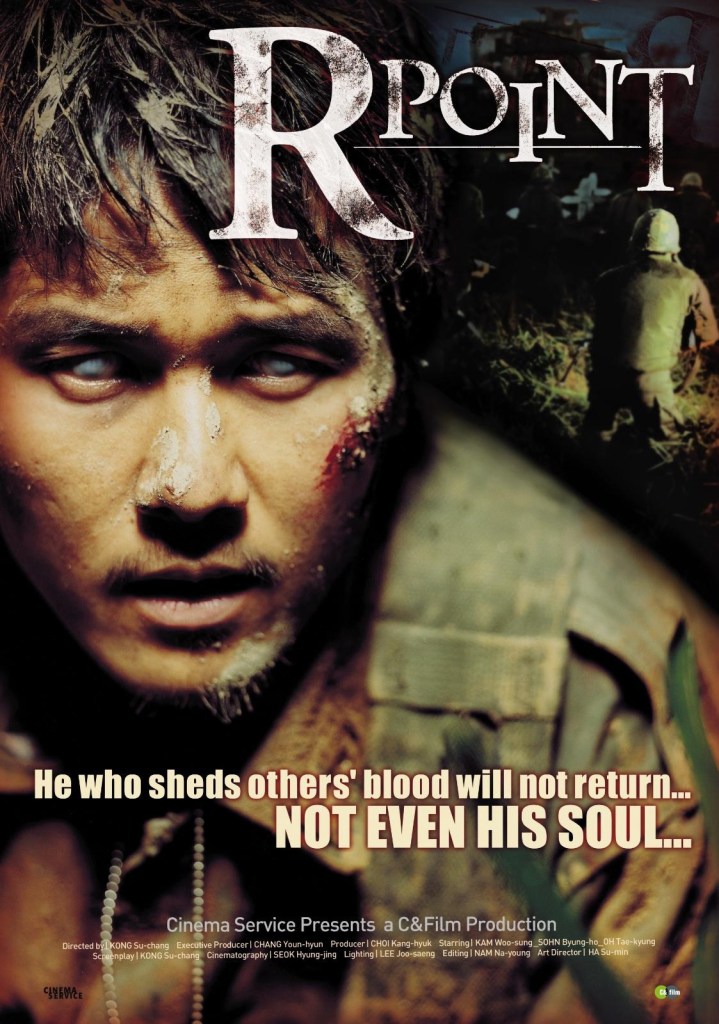
Quick Review: R-Point (dir. by Kong Su-chang)


R-Point, a 2004 South Korean war horror film, expertly combines the tension and brutality of a war movie with the eerie, unsettling atmosphere of supernatural horror. Set during the late stages of the Vietnam War, it follows a South Korean military unit sent to investigate the mysterious disappearance of a platoon. The story swiftly transforms into a nightmarish journey as the soldiers confront ghostly apparitions and unexplainable phenomena deep within the thick jungle. The jungle itself acts almost like a living entity—claustrophobic, fog-shrouded, and ominous—intensifying the psychological strain the men endure.

What sets this film apart is its reliance on atmosphere over traditional jump scares, favoring a slow burn of mounting dread that perfectly suits the haunted setting. The cinematography focuses on muted greens and earthy tones, drawing the viewer into a world steeped in decay and menace. This deliberate pace and mood are enhanced by the film’s exploration of the mental and emotional toll of war, making the supernatural elements feel like extensions of the soldiers’ trauma and guilt rather than standalone scares.

The characters are more deeply developed than is typical in horror, with their individual backstories and emotional vulnerabilities slowly unfolding, making their psychological unraveling all the more impactful. Kam Woo-sung’s portrayal of Lieutenant Choi Tae-in offers a nuanced look at a man burdened by leadership and haunted by the realities of combat.
Narratively, R-Point embraces ambiguity—it blurs the lines between what’s real and what might be hallucination or spiritual torment. This ambiguity invites the audience to interpret the haunting either as a literal curse tied to past wartime atrocities or as a metaphorical reflection of psychological wounds. This open-endedness adds depth and leaves a lingering impression far beyond the film’s runtime.

That said, R-Point has its share of flaws that cannot be overlooked. Its deliberate pacing can feel slow, which may frustrate viewers looking for a more tightly paced story. The dialogue sometimes tends toward repetition, and the heavy use of helmets combined with underdeveloped character distinctions can make it difficult to connect with or differentiate the soldiers. Additionally, occasional reliance on familiar horror clichés breaks the tension rather than building it, and the film’s ambiguity, while intriguing, borders at times on confusing rather than compelling. These issues temper the film’s strengths and might limit its appeal for some audiences.

An interesting note is the film’s 2011 DVD re-release under the title Ghosts of War, which helped bring the film to a wider audience and emphasized its unique blend of war and supernatural horror.

Overall, R-Point offers a dark and thought-provoking meditation on war, trauma, and the supernatural. It stands as an evocative piece of South Korean cinema that quietly pushes the boundaries of horror by intertwining the terrors of the battlefield with unseen forces. For those seeking horror rich in atmosphere and substance, R-Point remains a haunting and worthwhile experience despite occasional imperfections.
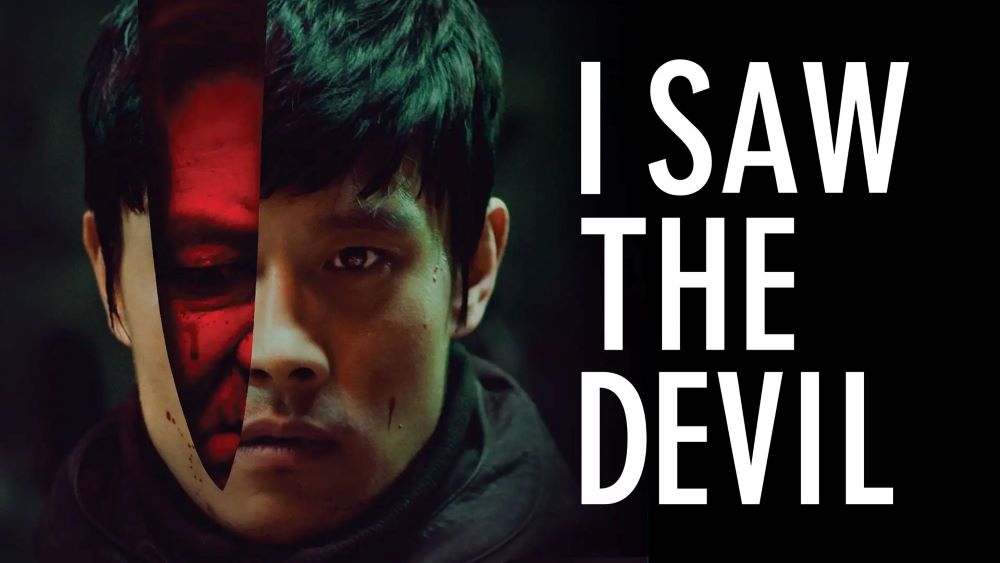
Horror Review: I Saw the Devil (dir. by Kim Ji-woon)


“Revenge is a fire that burns you the most.”

I Saw the Devil (2010) is a film that refuses to play by the rules of typical revenge thrillers. Instead, it pushes the boundaries into some of the most brutal and unflinching territory South Korean cinema has to offer. Directed by Kim Ji-woon, the movie blends elements of horror and psychological thriller, creating a hybrid that’s as disturbing as it is compelling. Much like Kingdom, it blurs the lines between genres—what starts as a revenge story quickly morphs into something darker and more extreme, turning familiar tropes into a raw exploration of evil’s destructive power.

The story follows Soo-hyeon (Lee Byung-hun), an intelligence agent whose fiancée becomes the victim of a sadistic serial killer named Kyung-chul (Choi Min-sik). Instead of a straightforward pursuit of justice, Soo-hyeon dives into a nightmarish game of cat and mouse. His goal? To inflict suffering on Kyung-chul in return, not for closure but for unleashing a kind of revenge that is almost self-destructive. Repeatedly capturing and releasing Kyung-chul, Soo-hyeon becomes trapped in a cycle of violence that steadily erodes his moral boundaries.

That cyclical pattern forms the backbone of the film, adding a rhythm that oscillates between moments of calm and bursts of brutal violence. Scenes of horror are often tinged with dark humor, adding an unsettling layer to the narrative. One standout moment occurs in a remote farmhouse, where Kyung-chul meets his twisted friend Tae-joo, a cannibalistic serial killer who treats violence like a casual dinner conversation. This scene exemplifies the film’s unsettling ability to find morbid humor in the most horrific circumstances, emphasizing how evil—when normalized—becomes almost banal.

Choi Min-sik’s performance in I Saw the Devil is chilling, showcasing his ability to embody pure evil. It’s a stark contrast to his role in Oldboy, where he played Oh Dae-su, a man seeking revenge for his own suffering. Here, Choi’s Kyung-chul is the embodiment of savagery—an inhuman predator with no remorse, no moral compass, just pure chaos. The role reversal highlights the incredible range of an actor whose presence can turn the screen into a nightmare. This flip from sympathetic avenger to monstrous villain makes the film’s exploration of morality even more compelling.

The film’s approach to violence is unabashed and graphic. Scenes of sexual assault, torture, and murder are depicted in unflinching detail, sparking inevitable debates about whether it’s gratuitous or necessary. Kim Ji-woon doesn’t hold back — he wants you to feel the full weight of evil in its most visceral form. This isn’t horror for shock’s sake; it’s a brutal mirror held up to the darker sides of human nature, exploring how unchecked vengeance can corrupt and destroy everything in its path.

Beyond the violence, I Saw the Devil probes deeper questions about morality and obsession. Soo-hyeon’s transformation from devastated lover to relentless avenger is portrayed with subtlety—they’re not just chasing a killer; they’re unraveling themselves. Lee Byung-hun brings a quiet intensity to his role, capturing the tragic descent into obsession and madness. The film makes you ask: how far can you go to punish someone before you become what you hate? And is vengeance ever truly justified? These aren’t easy questions, but I Saw the Devil forces you to sit with them.

Visually, the film is bleak and cold—mirroring its themes of alienation and moral decay. Kim Ji-woon keeps things straightforward, focusing on clear visuals that highlight the starkness of both urban and rural settings. The action scenes are brutal but precise, often choreographed with a sense of dark beauty that enhances their impact. The pacing is tight—about two hours—delivering a relentless story that never quite lets go of the tension.

The soundtrack and sound design don’t overshadow the visuals but add to the sense of dread. Quiet moments are ominous; violent sequences are thunderous, immersing viewers fully into this nightmare landscape. Every detail, from lighting to camera angles, emphasizes the film’s mood: raw and unsettling from start to finish.

The themes extend beyond personal revenge, touching on broader issues of societal trauma and the cyclical nature of violence. Korea’s history of brutal trauma and social upheaval echoes in the film’s exploration of how wounds—personal or national—can perpetuate more violence if left unresolved. It’s a brutal reminder that revenge can become a self-fulfilling prophecy, devouring everyone involved.

But make no mistake: I Saw the Devil is a challenging film. It doesn’t shy away from explicit content or disturbing themes. It’s brutal, unrelenting, and sometimes hard to watch. But that’s its power. It forces viewers out of their comfort zones and confronts uncomfortable truths about justice, evil, and our capacity for cruelty.

I Saw the Devil is a landmark in Korean cinema—an uncompromising look at revenge as a corrosive force. Its fusion of extreme horror and psychological drama creates a haunting experience that stays with you long after the credits roll. It’s not just a revenge story; it’s a primal reflection on what it means to be human—and what it costs to seek vengeance in a world full of monsters.