March Madness starts today, so here is Basketball by Kurtis Blow.
That’s all I have for you. The floors are being torn up at my house and I am typing this on my phone because my Internet connection decided to go down at the same time. The next couple of days might be like this. Sorry.
There’s no way I can exclude this song from a retrospective of ABBA music videos. Sadly, it’s not because one really exists. It’s just that not spotlighting this would be like excluding Waterloo even though that’s what won them Eurovision, and kicked off their career.
The video above is what is on ABBAs official YouTube channel. The video below is an excerpt from ABBA: The Movie (1977).
I might as well throw them all together here. Here is the Spanish version called Gracias Por La Música. I have no idea when or where it was recorded. It is on ABBAs official channel.
I hope you understand me cheating here. I will also have to fudge Spanish versions of their other songs since some of them include videos like this, others include totally different videos like the one for Fernando, and then there’s Happy New Year and Felicidad that are proper videos, but have minor differences–those videos get a little weird. You’re also going to get a third version of Knowing Me, Knowing You since I have found a Spanish version available through ABBA’s official channel. However, that one doesn’t seem to have been released till 1979. Gracias Por La Música has a copyright date of 2012, but there’s no way the video above was done in 2012. I have nowhere else to stick it, so it goes here.
If you live in a place that celebrates Daylight Savings Time, then remember to set your clocks forward an hour.
This is one of those videos where the people involved can tell the story behind the video.
Pete Angelus was the director of the video. He had a relationship with the band that went back to the 1970s.
Robert Lombard was the producer.
Ann Carli was the senior vice president of artist development at Jive Records.
Here’s the backstory from the book I Want My MTV:
Robert Lombard: “Jump” is where the drama really started. Dave wanted the performance video intercut with him doing crazy shit, like driving his chopped Merc hot rod and hanging out with midgets and girls in maids’ outfits. So we shot hours of footage.
Pete Angelus: Rather than doing something bigger than life, which is how Van Halen was perceived, we wanted something very personal. Let’s see if we can get Edward to smile. Of course, we also had to appease Dave, who wanted to throw his karate tricks into the equation.
Michael Anthony: There was getting to be a little bit of tension between us three and Dave.
Robert Lombard: I told the band, “I’m gonna shoot in sections.” Alex would show up, we’d do some drum segments, then bass with Michael Anthony, then guitar, then David. I didn’t shoot them together until the end of the day. I was trying to keep peace, because I felt tension amongst them. David thought he was bigger than the rest of them.
I was in post-production with a rough cut of the video. I knew that if they kept it as a straight-on performance video, they would have a number one single. So I took the rough cut to Eddie’s house up in Coldwater Canyon and played it for him and his brother Alex. I said, “Guys, I’m taking a stand here. If you put in this crazy footage”–which later surfaced in “Panama,” after I was gone–“the video isn’t gonna have the impact it should have.” Eddie and Alex said, “We agree with you, one hundred percent. We’re not gonna release this video unless it’s done this way.”
Two days later, I got fired. Noel Monk, their manager, said, “You don’t do that–you don’t go behind Dave’s back. Here’s your check, never want to see you again.” That video won the award for best performance video at the first VMAs. And I still don’t have my award.
Pete Angelus: I think we spent less money making “Jump” than we did on having pizzas delivered to the set of “Hot for Teacher.”
Ann Carli: The legend was that “Jump” was a $5,000 video. David Lee Roth’s swinging on a rope, but he’s also playing right to camera. Nobody did that. That was a groundbreaking video, and it had an impact on how everybody looked at making videos.
The first question I had was probably the first one that came to your mind. The answer is that the game they are playing is called “Fia-spel”. It’s a Scandinavian version of the German board game “Mensch ärgere dich nicht”, which is a variation of Parcheesi/Ludo.
The thing that always fascinates me with music videos is how they choose to use lip-syncing. This time around the song is entirely Frida and Agnetha singing, but they also have Benny and Björn lip-sync some of the lines, so it appears that Frida and Agnetha’s voices are coming out of them.
You’ll notice that at times the lyrics become things they are saying to each other over a game of Fia-spel rather than coming across as being sung. They also do it in such a way that to the viewer it’s as if the person who lip-syncs lyrics is being given an answer in normal speech. It also dips in and out of those parts.
There seems to be two levels to this game between the members of ABBA. The first is just playing the game. The other is the higher level that intersects the first level at certain parts where lip-syncing happens. I’m sure there’s a connection to the game itself. However, I have never played any of the board games mentioned at the beginning of this post.
I’m not really sure what the purpose of the silent film look and obstructions in front of the camera are in the video. The silent film thing doesn’t even bookend the video. The obstructions add some style that doesn’t really work for me. I do like the spinning part. It fits with where the song is at that point. I think the rare cutaways to the guitar and piano are nice too. I can’t put it into words, but I think it was the right call to not show who’s playing. In any other ABBA music video, you’d see Benny and Björn during those parts.
Finally, the little pig-nose thing Agnetha does is nice. It’s moments like that which make me wonder how much of the music videos Hallström did with ABBA were scripted, and how much were improvised. I can’t imagine Hallström telling Agnetha to do that.
It took 33 music videos, but I think I’ve reached what is my current favorite ABBA music video. This is the Snow Version of Knowing Me, Knowing You. We already did the Sailboat Version.
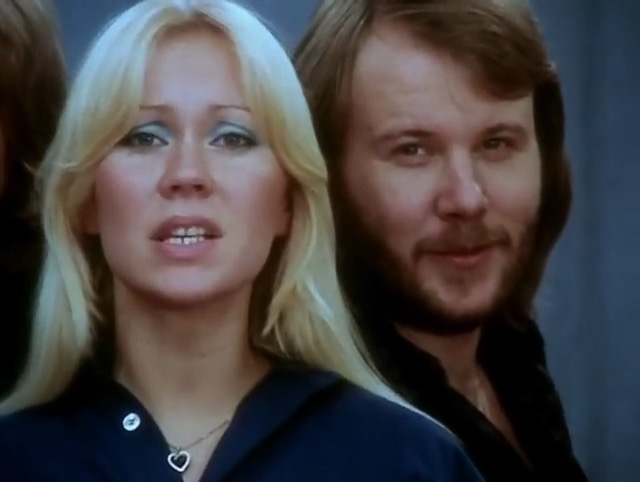
If there’s one thing that should be clear by now about ABBA music videos, it’s the importance of blocking in them. I think this video is one of the finest examples of that. I love the parts of the video where the person singing switches, but the camera doesn’t cut as you would normally expect it to. Instead, it either moves on its own to another member of the group, or follows one of them into another position onscreen.
The other reason I particularly like this music video is because it features more of Benny and Björn. It feels like a full group song and video rather than Agnetha and Frida with those two guys in the background of some shots. This allows them to do interesting things by having four people to work with in a greater capacity than previous videos.
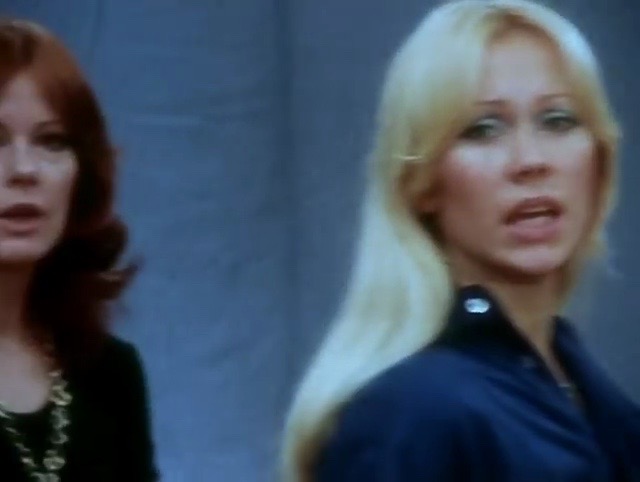
My favorite example of this is when it starts with Agnetha and Frida walking…
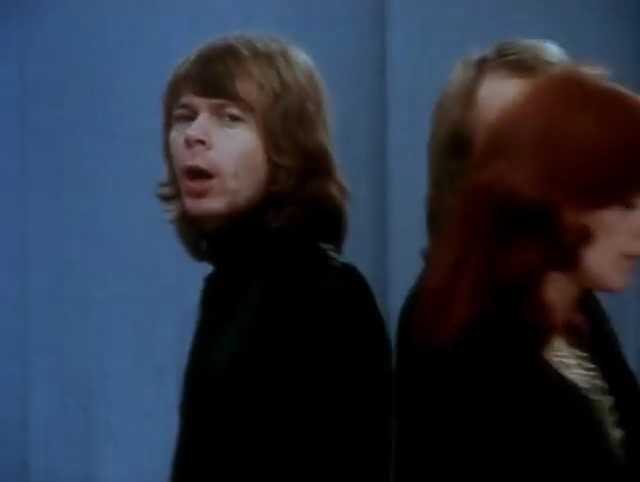
past Benny and Björn…
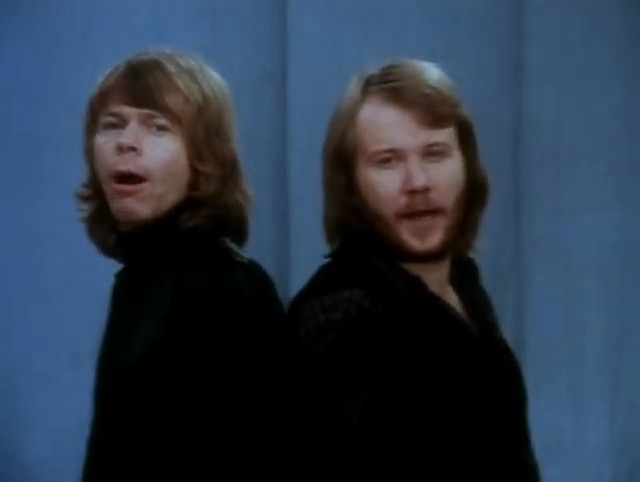
where the camera stops for a bit to let them get out their backing vocals.
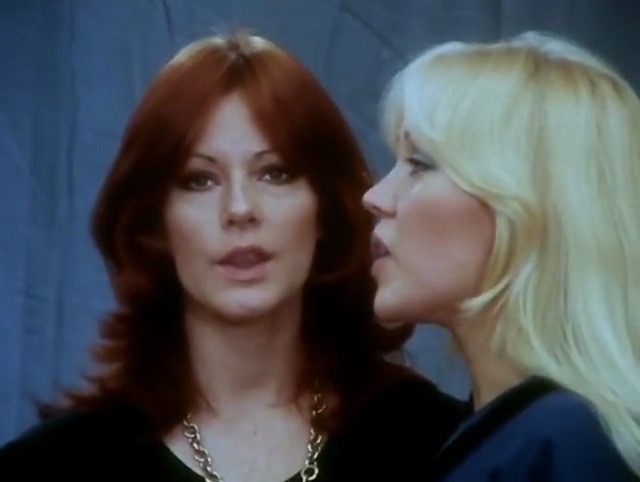
Then it quickly goes over to Agnetha and Frida who are in their typical headshot and profile-shot blocking.
They finish their part, and Agnetha walks over to stand between Benny and Björn.
The camera moves in to crop out Björn.
Finally, Angetha walks back over to Frida to be in the same headshot and profile-shot thing, but with her on the opposite side of Frida.
It also leads them symbolically out of the relationship of the song that ends with hugs, freeze-frames as they look back, and them walking off into the distance.
One last thing to take note of is that the video appears to begin with Agnetha and Frida having already left, as evidenced by their footprints in the snow–footprints we see them make at the end of the video.
At the time of writing this, I had to be up at 5:45 AM to go have CT Scans done on my chest, neck, and sinuses. I’m okay. The point is that I am running on empty. I honestly thought that today’s video was the one where they sing next to a giant snowman, which would basically make the post this sentence before the comma. Instead, it turns out that the video is for the song That’s Me. As a result, I don’t have a whole lot to say. Not that it really matters with this video. I wouldn’t have a whole lot to say anyways.
According to Wikipedia, this was filmed during the making of ABBA-DABBA-DOO! Okay, if you say so. The Flapper Dress version of Money, Money, Money was filmed on that show and it looks nothing like this. However, it does also say that it was combined with some original footage and stock footage from their other music videos. That I buy since it’s what you are getting here. The majority of this video is the Snow Version of Knowing Me, Knowing You and the well-known version of Money, Money, Money with a little bit of Agnetha and Frida singing spliced into it. At one point, Frida looks bored as her eyes just drift off into space.
Apparently, it wasn’t even released back in 1977 or, as Wikipedia says, 1976. Things get dicey with their album Arrival since it came out in October of 1976, so it could be either year. I’m going with 1977. It’s not important anyways since it appears to have gotten the She’s Gone by Hall & Oates treatment. By that, I mean that it was filmed back then, but wasn’t actually released until 1993. She’s Gone being that bizarre video made in 1973–never aired–that John Oates himself leaked onto the Internet.
I don’t particularly like this one, but Agnetha must have since her 1998 compilation album of her solo work is called That’s Me.
Seeing as today is International Women’s Day, I thought I would take that as an opportunity to spotlight the Neneh Cherry music video she did with Michel Gondry. I already did Heart, which she did with David Fincher. Since Cherry happens to be from Sweden, it works into the “International” part of the day and the ABBA retrospective I’ve been doing.
It’s exactly what you would expect from Gondry–distortion of time and space. Also, notice how Gondry not only uses the color of her jacket as an indicator of where she is in far shots, but shows up as the color of cars and other things as well. Take a look at the text on the “TV FOR DOGS” box. It says “No Crap Programs”, “Look Reel [possibly Real]”, and “For A Dog Vision”.
François Nemeta was the assistant director. He worked on around 13 music videos with Gondry and has done 20+ music videos himself. The most recent one I can find is from 2014, so I assume he is still in the business. You can visit his website here.
Err…according to mvdbase, there are four versions of this music video. FOUR! Why? Oh, well. On the plus side, I can’t find the others.
I can find them performing at the Swedish Royal Opera for the marriage of the then new Queen of Sweden the night before her wedding.
I can also find them on Top Of The Pops.
You can also find them performing this song on a TV special for Olivia Newton-John that also featured Andy Gibb. There’s even one where they all do some songs by The Beach Boys.
I can’t find anything particularly interesting about this video to talk about. They captured the fun of the song well. What else is there to say? One of the kids looks at the camera at one point. I guess that’s something to mention.
After yesterday’s long post on Money, Money, Money; here’s a nice and easy one. There are only two noteworthy things I can find.
One is that it was popular enough to warrant both a Swedish and Spanish version in addition to this English one. However, I can’t find a Spanish specific version of the music video like you can with some of their later songs. The best I could find is the video below that says it was recorded for the Lina Morgan Show and dubbed. Seeing as I can’t find any record of this being a music video rather than a live performance with some effects put in, I’m just including it here.
The other is that the song was originally released by Frida for her solo album Frida ensam, and then was done by ABBA. Apparently, the Swedish lyrics differ quite a bit from the English one. Here is the song sung in Swedish with English subtitles.
If you read yesterday’s post on the Flapper Dress version of Money, Money, Money; then you might want to go back to that post. I messed up. I have since found the actual Flapper Dress version and added it to the end of the post.
According to Wikipedia, this was based on Cabaret (1972), which explains the Flapper Dress version. But I found that out at the last minute, so let’s talk about this version as if I didn’t know that fact.
The video starts off by reminding us that while international in appeal, they are a Swedish band.
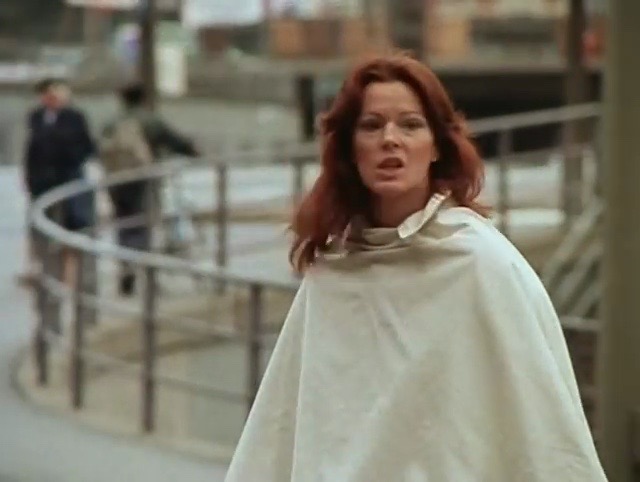
Then we cut to Frida working hard for the money in white with the sun out on location in order…
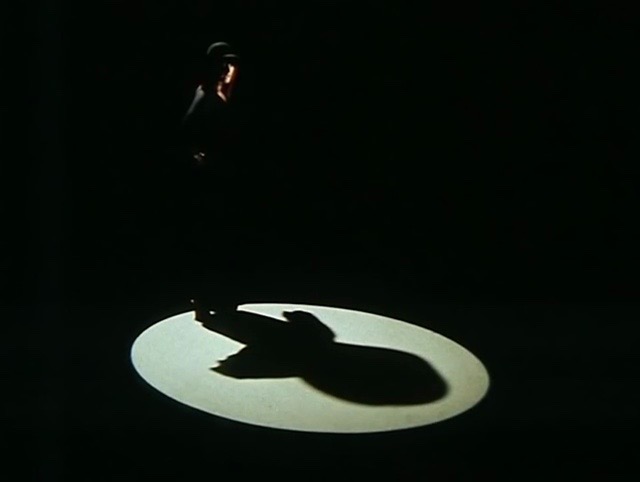
to contrast with the next shot of her in black on the edge of a spotlight in a studio.
The spotlight showing Frida standing on the edge of stardom if you will. Note that the music video never shows Frida like that again as if it is a state to which she can’t or never will let herself return to again.
By the way, this might look familiar for two reasons. The first one is that the shot above is what Dancing In The Dark by Bruce Springsteen was originally supposed to look like.
That was the version that was going to be directed by Jeff Stein who came to fame directing The Who rockumentary The Kids Are Alright (1979).
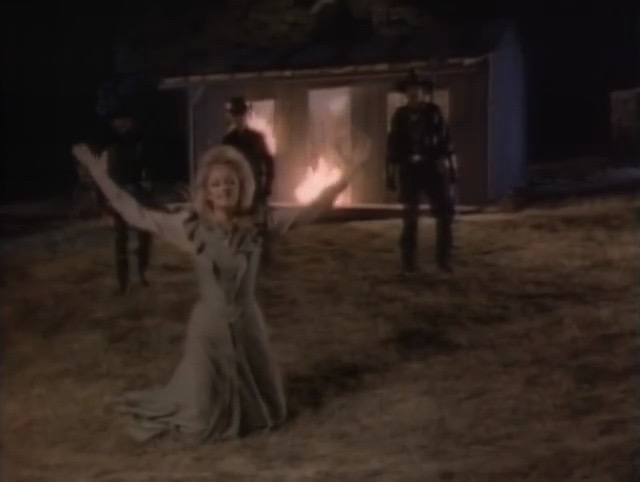
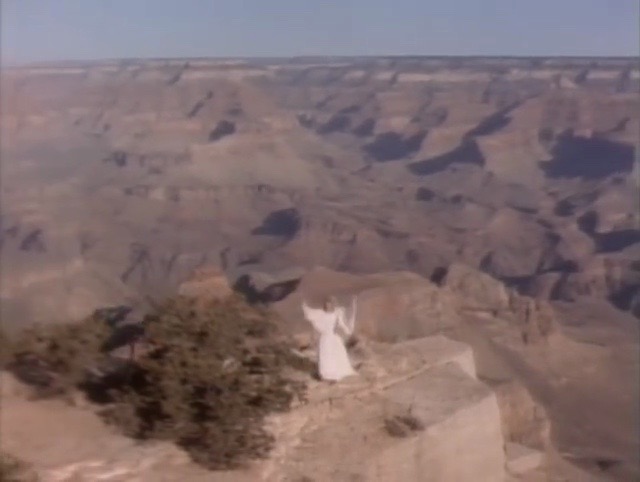
The other reason is that Holding Out For A Hero by Bonnie Tyler would use contrast between location shooting and a studio set. One where she is free, and the other where she is in the dark waiting for the hero of the title.
That music video was directed by Doug Dowdle who started in music videos as an editor for Australian director Russell Mulcahy. While Mulcahy didn’t direct Holding Out For A Hero like he did Total Eclipse Of The Heart, it was written by Keith Williams who wrote the treatment for many of Russell Mulcahy’s music videos. I know I already said it in a previous post, but the Sailboat version of Knowing Me, Knowing You has parts that remind one of Rio by Duran Duran–which Mulcahy directed. ABBA was huge enough in Australia that ABBA: The Movie (1977) takes place there. No wonder music video director Kevin Kerslake once commented about how much music video directors borrowed from each other. Even if those connections are superficial, you probably could bring all music videos into some sort of Lasse Hallström universe, like the Tommy Westphall universe that apparently ties just about every TV Show after St. Elsewhere together. Moving on.
The camera now gives us a head-on shot of Frida where we can see her face has been divided into shadow and light.
Now the chorus kicks in where we see Hallström timing shots of the band to the song. My favorite part here is how the coin and the spotlight are shown to be the same thing.
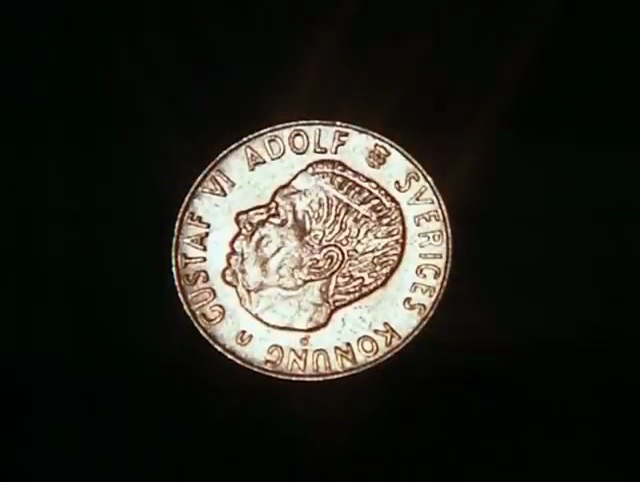
Notice that this money is Swedish because that will soon change. You might also notice the poses of the band. It’s noteworthy that they shot this upwards with the guys behind Agnetha and Frida considering the chorus of the song.
You’ll only see the guys and girls together in this shot, and when they are driving in the car.
The entire video seems to be drawing a parallel between the song’s story of a woman fascinated with being rich to escape the normal grind and ABBA’s career.
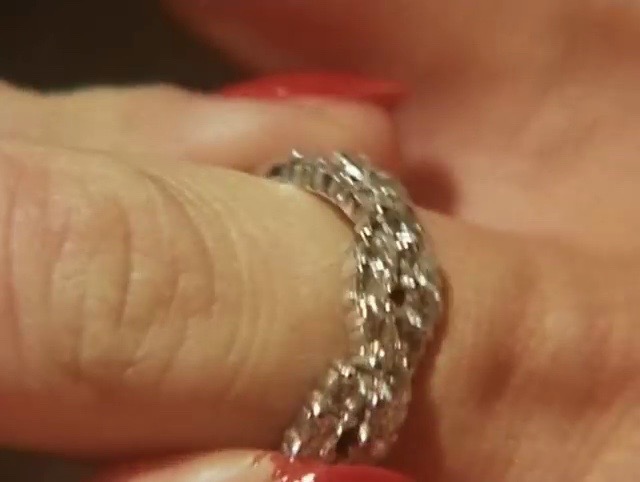
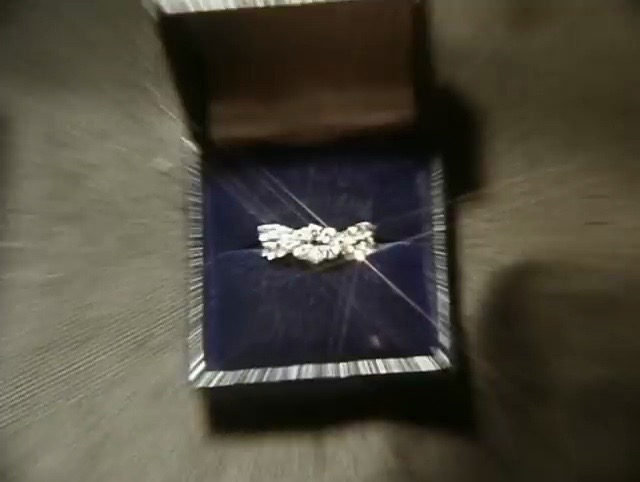
At about the halfway mark, we see the woman of the story appear to start coming into money as she puts on a ring. Marriage? I don’t know. Of course the fact that ABBA are Swedish, but sing in English in order to have international appeal, can be seen as a marriage to wealth by singing in someone else’s more well-known language. Most of the times that was English, but there are Spanish versions of some of their songs as well. Frida even did a version Fernando in Swedish. This ties in with the change of the kind of money later in the video. Today we have examples of this kind of thing in The Hives and PewDiePie.
The lyrics now change to the woman going away somewhere to make money. Note that the ring is no longer on her finger.
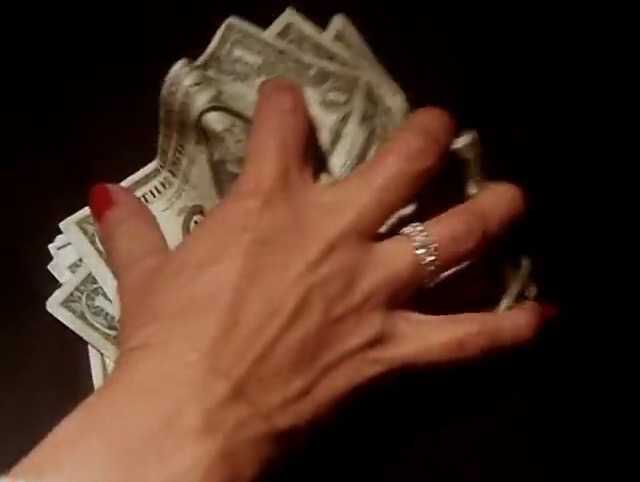
I don’t know if that means she isn’t married, or if it means she can buy the ring herself seeing as that is followed by riches and champagne, which includes more jewelry. You can see that she is the one who puts the ring on her finger. In addition, the money is now American dollars.
They’ve gone international at this point. Pay attention to how she takes the money here because after some closeups, we’ll see her grab the cash.
Why the closeups of their mouths? It was 1976. I wouldn’t be surprised if Hallström was going for a Deep Throat (1972) reference, which was still fresh in people’s minds having popped up in The Rocky Horror Picture Show (1975) and even Dirty Duck (1974). Seeing as Agnetha and Frida made money with their voices, whereas Benny and Björn did it by writing the songs, it’s not that much of a stretch. Everyone saw that movie back then. Even Jackie Kennedy saw it.
That, and Sweden’s ties to adult films during the 1970s. Their Linda Lovelace of the time probably being Christina Lindberg who returned to Sweden in the mid-1970s when she didn’t want to do hardcore sex scenes. It’s worth noting that Lindberg worked with director Joe Sarno on Swedish Wildcats (1972) because Sarno would go to direct the sequel to Deep Throat in 1974. Also, if Wikipedia is to be believed, then it was Gerard Damiano (director of Deep Throat) who urged Lindberg to return to Sweden because he knew she wouldn’t be comfortable with the direction the film they were making together was going.
Perhaps she is supposed to have been married seeing as the video shortly follows up the money grab with an intimidating shot of Björn…
and cuts to Agnetha’s eye which appears to wink before cutting to her face. I say that because they were married in real life.
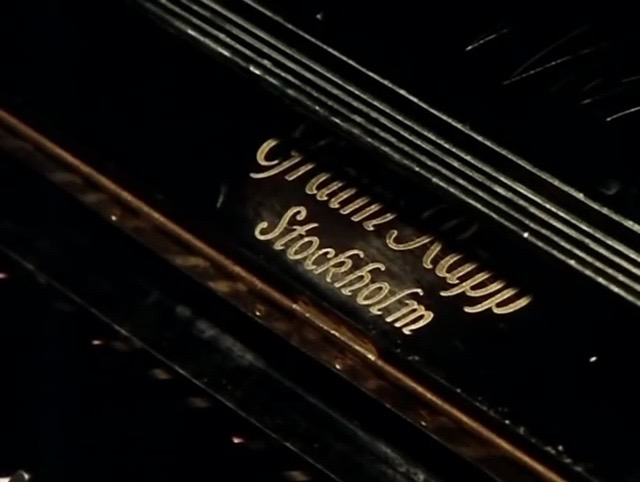
The video does eventually come back around to the Stockholm piano before taking us into the spotlight ourselves.
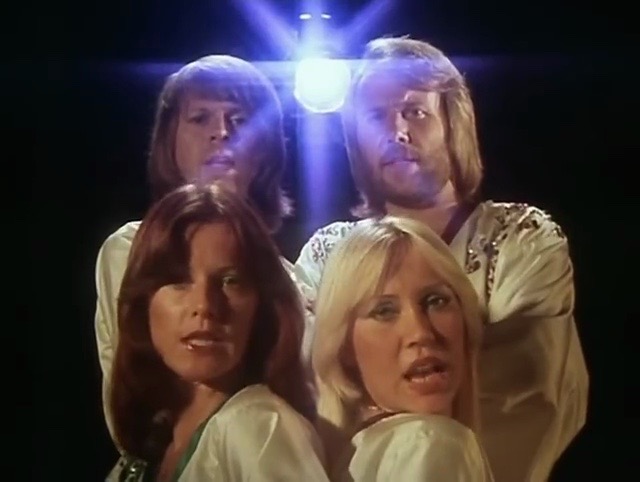
I can see why Hallström once said this is the best ABBA music video he ever directed. I still prefer the Snow version of Knowing Me, Knowing You–but I get it. You can even read into the use of the colors of the spotlight. The women share both the blue and red spotlight solo, and with the guys. The guys only have the blue light when they are with the girls posing as the band. In the solo shots of them, it is the red light.
Yes, I did notice that Agnetha and Frida nearly kiss in the video before turning towards the camera. I wonder how many times it took before they could nail that without bumping into each other or stopping short.
Finally, I do know about the ties to royalty that most likely go along with showing the face of the Swedish coin and the American dollar. ABBA sang Dancing Queen at a special party in tribute to the new Swedish queen Silvia Sommerlath, whom married the King of Sweden in 1976. That king being the son of the man featured on the coin–Gustaf VI Adolf.
I can see why they would compare Martha Washington–who married into wealth–and Silvia Sommerlath–who married into royalty–by also zooming in on George Washington.
I’m sure there’s more in there having to do with Sommerlath, but the Wikipedia article runs up a lot of red flags, so something like her supposedly working as a flight attendant before marrying the king is not something I feel comfortable stating as fact. There’s probably also something to do with Louise Mountbatten who had married Gustaf VI Adolf, thus becoming Queen of Sweden before dying in 1965. Her husband died in 1973, at which point Carl XVI Gustaf became king and married Sommerlath three years later. They are still the King and Queen of Sweden to this day.








 Through the Shattered Lens