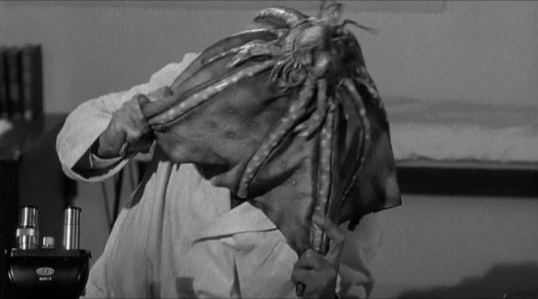
Horror on the Lens: Dementia (dir by John Parker)


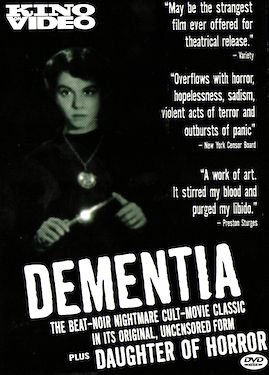
Today’s Horror on the Len is 1955’s Dementia, an experimental horror film without dialogue.  The film follows a young woman (Adrienne Barrett) over the course of one surreal and nightmarish night on Los Angeles’s skid row.

Despite an opening endorsement from no less a Hollywood luminary as Preston Sturges, audiences in 1955 were not sure what to make of this dream-like film.  However, it has since been rediscovered and reappreciated by audiences who appreciate the film’s surreal vision.

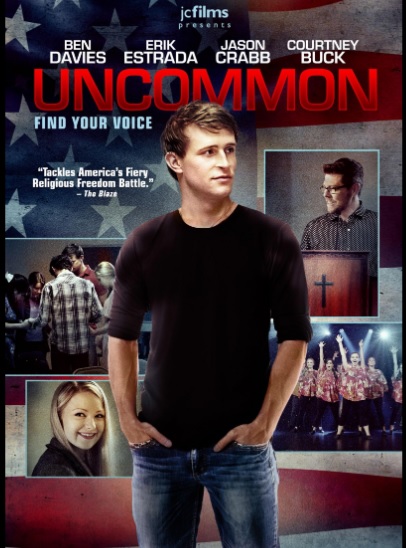
October Positivity: Uncommon (dir by Bill Rahn)


The 2015 film, Uncommon, opens with narration from Marc Garcia (Erik Estrada), a high school maintence worker.  Marc tells us that he’s seen a lot at his school.  He’s seen many changes.  He’s watched as school has gone from a home away from home to a frightening place where students come to class carrying bullet-proof backpacks.  He wonders what has caused the change in school.  He suggests that it all started in 1962, when the Supreme Court ruled the school prayer was a violation of the separation of church and state….

And let’s just stop right there.

On the one hand, I do think that, for a growing number of people, there’s a feeling that their life has no purpose and that their existence is empty and meaningless.  Some people would say that’s because our increasingly online world has left people unsure of how to relate to one another and express their emotions.  Some people would say that’s because of the decline of religion.  Some would say that’s because society is obsessed with fame.  Regardless of the reason, when you feel that your life has no purpose, it is undoubtedly a lot easier to justify doing things that, in the past, would have been unthinkable.

That said, when it comes to prayer in public, state-funded schools, the Supreme Court made absolutely the right and the Constitutional decision.  Separation of church and state is one of the most important amendments to be found in the Constitution.  Not only does it prevent the State from telling you what to believe, it also prevents the State from ordering you what not to believe.  If you think the government has a tendency toward being authoritarian now, just imagine what it would be like if they could claim that they were passing the laws of God.

Believe it or not, this is relevant to the film because Uncommon is all about the separation of church and state.  As you may have already guessed, the film’s opinion is the opposite of mine.

Uncommon does open strongly, with Aaron (Ben Davies) helplessly watching as a gunman shoots up his school.  His brother dies in the shooting and Aaron transfers to another high school.  While attending church, Aaron meets and befriend Mike Garcia.  Mike recruits Aaron and his friend, Drew (Wesley Elder), to volunteer at the local assisted living facility.

Meanwhile, at Aaron’s new school, budget cuts have led the principal to announcing that there is no more money to fund the Drama Department or the choir.  The drama kids freak out, especially Hailey (Courtney Buck).  Hailey was counting on getting a theater scholarship to college but how is that going to happen without a theater department!?  Eventually, Hailey and the theater kid come up with a clever idea.  They’ll start a drama club and just put on a show themselves!  But they have to find a faculty sponsor and all of the teachers are busy.  Hey, how about Mike Garcia?  Mike agrees, on the condition that the drama club also help out at the assistant living facility.

Meanwhile, Aaron wants to start a bible study group.  Mr. Stevens (Don Brooks), the atheist social studies teacher, throws a fit and announces that the school cannot sponsor a bible study group.  To be honest, it seems like the easy solution would be for Aaron to just do his bible study group off school grounds but whatever.

Anyway, Mike introduces Aaron to the Drama kids and Aaron agrees to write their school play, which is based on stories from the Bible and…. well, you can see where this is going, right?  Again, Mr. Stevens throws a fit.  The school board announces that the school cannot sponsor a religious play.  Mike somehow knows a lawyer who files a lawsuit on the behalf of the drama club.  Somehow, the drama kids win their lawsuit and they perform their show.  We only see the first musical number, in which the kids sing that “You got to have faith,” which would seem to prove that Mr. Stevens was right about the show being intended to push religion on the audience.
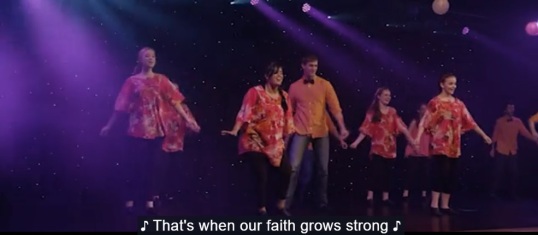
When people talk about preachy religious films that beat their audience over the head with their message, they’re talking about films like UncommonUncommon is a very earnest film but, in the end, it’s mostly just a case of wish fulfillment.  Despite the fact that there’s no way that the drama club should have been allowed to put on their show at the high school, they were.  Why?  Because this film wanted them to be able to.  But, in the end, Mr. Stevens was right.  Mr. Stevens was obnoxious and hateful but, when he said that a public school can’t put on a show that promotes one religion over another, he was absolutely correct.

Beyond the film’s theological and legal arguments, Uncommon is also a poorly-acted film that is full of corny humor. The drama kids are so overdramatic.  The old people are so quirky.  It gets old pretty quickly.  Erik Estrada was a lot more fun when he was starring in Guns.
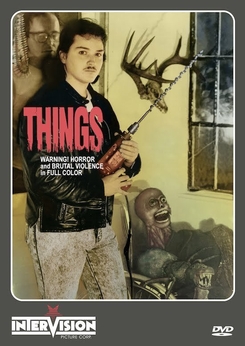
The TSL Horror Grindhouse: Things (dir by Andrew Jordan)


Things is a low-budget, independently-made horror film from 1989.

Things tells the story of Don (Barry J. Gillis) and Fred (Bruce Roach), two gentlemen with mullets who decide to drop by the house of Don’s brother, Doug (Doug Bunston).  When they arrives at the house, they’re surprised to find that Doug is nowhere to be seen.

“Doug, are you here?” Don asks, “Doug, are you alive?”

Don and Fred decide to raid the refrigerator in search of beer.  Inside the refrigerator, they find a book by Aleister Crowley and a tape recorder.  They decide to listen to the tape, which was a huge mistake because, when you’re starring in a crappy horror film, the last thing you want to do is remind the viewer of a different, better horror film.  As they played the tape, I thought to myself, “Don’t mention Evil Dead, don’t mention Evil Dead….”

“Hey,” Don said, “this is like that movie where those weird things happened….”

Anyway, Doug finally makes an appearance and orders them to stop making so much noise.  His wife is trying to sleep.  She’s been exhausted because she and Doug have been working with the mad Doctor Lucas (Jan W. Pachul) in an attempt to conceive a child.  Unfortunately, Lucas’s experiments have led to Susan giving birth to several insect-like monsters, which promptly attempt to eat Doug, Don, and Fred.

Things is such a Canadian film that I actually had to pause the movie after about ten minutes so that I could put on one of Jeff’s hockey jerseys and watch the film in proper style.  Don and Fred are just two regular guys who want to show off their guts and drink some beer.  Indeed, it’s debatable whether or not Don and Fred are as upset about the killer monsters as they are about the fact that Doug doesn’t have much beer left in the refrigerator.  For his part, Don sports both a formidable mullet and truck driver mustache.  He looks like he can’t wait to head back to Toronto as soon as the problem with all of the killer monsters are taken care of.

Things has a reputation for being one of the worst horror films ever made and …. well, it’s certainly not a good film.  The film takes a few stabs at Robocop-style social commentary by casting porn star Amber Lynn as a news reader who appears at random moments and announces that there’s been a power failure in New York and that George Romero is heading to the Supreme Court in his attempt to establish his ownership of Night of the Living Dead.  We’re also promised a story about the presidency of George H.W. Bush and the growing possibility of nuclear war.  Unfortunately, these scenes don’t add much to the film but they do provide a diversion from listening to Don and Fred attempt to have an articulate conversation.  Even if one can accept the bad acting (and sometimes, when it comes to indie horror films, you have to be ready to accept a few awkwardly delivered lines), the film itself is so poorly lit that it’s often difficult to tell what’s actually happening on screen.  Perhaps Things’s biggest problem is that, unless you really enjoy listening to two grown men argue about whether or not there’s any beer left, Things is just a boring movie.  It’s developed a cult reputation, largely due to being riffed on by the Rifftraxx crew, but I would be shocked to find anyone who has actually watched the film more than once.  Things is not The Room.  It’s not even Birdemic.

That said, the film did end with the suggestion that the whole thing might have just been a dream and I appreciated that.  It was a solution that made about as much sense as anything else in the film.

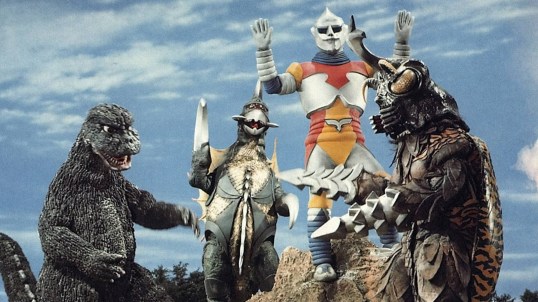
Horror Scenes That I Love: Godzilla in Godzilla vs. Megalon


For today’s Horror Scene That I Love, let’s take a minute or two to show some respect to one of the world’s greatest (and longest-lived) film stars, Godzilla!  Whether he’s attacking humanity as the literal representation of atomic age anxiety or if he’s saving Earth from a bunch of aliens, Godzilla has always been a superstar.

In this scene from 1973’s Godzilla vs. Megalon, Godzilla shows just how much of a star he is by taking a stand against bullying and saving his friend, Jet Jaguar.  In this scene, Godzilla shows that he was an anti-bullying activist even before it was cool.  Megalon and his friend thought they could just taunt poor old Jet Jaguar.  Not as long as Godzilla’s around!

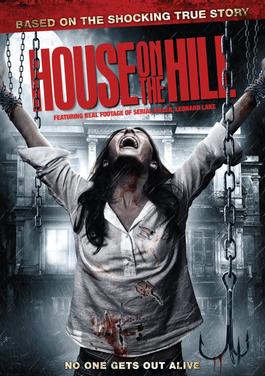
October True Crime: House on The Hill (dir by Jeffrey Frentzen)


2012’s House on the Hill is loosely based on the true story of Leonard Lake and Charles Ng, two of the worst serial killers to ever haunt California.

Two former Marines who met after Ng placed an advertisement in a survivalist magazine, Lake and Ng lived together on an isolated tract of land.  Underneath their cabin, they constructed a dungeon.  Over the next year, they murdered a countless number of people in their dungeon and buried their remains.  Lake and Ng killed anyone they came across, including several people who had previously been friends of Lake’s.  (Ng apparently didn’t have any friends to kill.)  Though they were officially accused of committing eleven murders, it’s felt that the number was probably much higher.  The two of them videotaped their crimes.  Ng kept a detailed and graphic journal in which he gloated about all of the people who he had killed.  Lake made videos in which he explained his philosophy and expounded on why he felt that he deserved a slave.  Eventually, Lake committed suicide after he was arrested on a shop lifting charge.  Ng fled to Canada but was eventually sent back to the United States.  He currently sits on California’s inactive death row.

In the film, Sonia (Naidra Dawn Thompson) is visited at her home by Paul (Kevin McCloskey), a detective.  Paul explains that he knows that Sonia was the only survivor of Ng and Lake’s rampage.  She survived by being the slave that Leonard Lake desired, filming Ng and Lake’s crimes.  Paul wants to know if Sonia remembers one of Lake and Ng’s victims, a woman named Karianna (Shannon Leade).  Paul says that his clients want to know the circumstances that led to Karianna’s death.  After some hesitation, Sonia tells Paul about her experiences as Lake and Ng’s prisoner.  The film is a mix of black-and-white scenes involving Paul and Sonia and color flashbacks to the crimes of Lake (Stephen A.F. Day) and Ng (Sam Leung).  While Sonia and Karianna are both fictional, the audience is shown footage of the real Leonard Lake, talking about his “philosophy” of life.

At first, it feels a bit tasteless to include the actual footage of the real Leonard Lake but, by the end of the film, I was glad that it had been included because, physically, the real-life Leonard Lake and Charles Ng were both considerably less attractive than the actors who played them in the film.  This is especially true of Charles Ng.  The real life Ng was pudgy and nerdy.  Sam Leung, on the other hand, is undeniably handsome and muscular.  Meanwhile, Stephen A.F. Day has the looks and manner of a friendly social worker so it was good to have actual footage of Lake so that the audience could see that, in real life, Leonard Lake was an overweight, loser incel whose spoke like someone who was desperately trying to convince the listener that he was smarter than he actually was.  (Leonard Lake was the type to stumble over any word that had more than one syllable.)  Probably the best thing that a serial killer film can do is remind the audience that most killers are not erudite and clever.  They’re not Hannibal Lecter.  Instead, they’re losers who are striking out at a world in which they have no hope of succeeding.

As for the film itself, it does capture the horror of being trapped but it’s hard not to feel that it made a mistake by focusing on the fictional Sonia and her conversation with Paul.  Indeed, by having the film narrated by a fictional character who managed to escape, the film does a disservice to to the real victims who weren’t so lucky.  With all of the flashbacks and flashforwards, the narrative itself feels too jumbled to really tell us anything about how or why Lake and Ng not only committed their crimes but how they managed to get away with it for over a year.  In the end, the scariest thing about Lake and Ng is that, if not for that one shoplifting incident, their reign of terror could have continued uninterrupted for even longer than it did.

4 Shots From 4 Films: Special Roger Corman Edition


4 Shots From 4 Films is just what it says it is, 4 shots from 4 of our favorite films. As opposed to the reviews and recaps that we usually post, 4 Shots From 4 Films is all about letting the visuals do the talking.

This October, I am going to be using our 4 Shots From 4 Films feature to pay tribute to some of my favorite horror directors, in alphabetical order!  That’s right, we’re going from Argento to Zombie in one month!

Today’s director is one of the most influential figures in American film history, the one and only Roger Corman!

4 Shots From 4 Roger Corman Films

Not of this Earth (1957, dir by Roger Corman, DP: John Mescall)

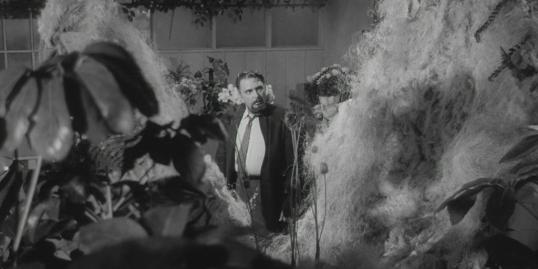
The Little Shop of Horrors (1960, dir by Roger Corman, DP: Archie R. Dalzell)

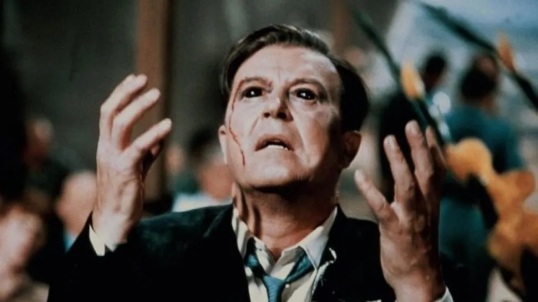
X: The Man With The X-Ray Eyes (1963, dir by Roger Corman, DP: Floyd Crosby)

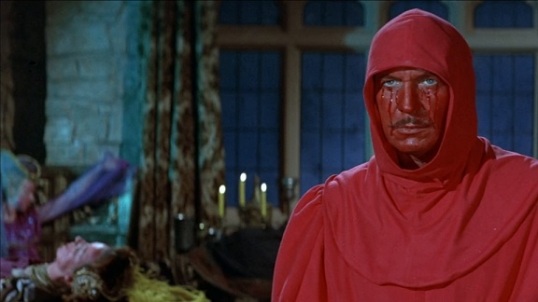
The Masque of Red Death (1964, dir by Roger Corman, DP: Nicolas Roeg)

Horror Film Review: Hounded (dir by Tommy Boulding)


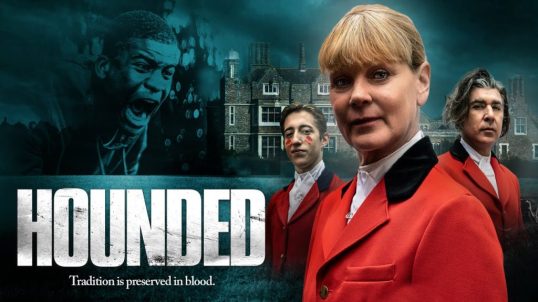
In this British film from 2022, Leon (Nobuse Junior) is the head of a crew of thieves.  Yes, he spends his time breaking into people’s houses and stealing their stuff but the film insists that he’s not that bad.  He’s just trying to raise the money to send his younger brother, Chaz (Malachi Pullar-Latchman) to a university.  Working with the two brothers are the perpetually angry Vix (Hannah Traylen) and the perpetually religious Todd (Ross Coles).  To be honest, none of the really seem like they should be hanging out together but I guess crime makes for unexpected partnerships.  Still, you really do have to wonder in what world would Vix and Todd even say “hi” to one another, let alone work together as a part of a burglary crew?

An antique dealer (Larry Lamb) hires the crew to beak into the estate of the Katherine Redwick (Samantha Bond, best-known for playing Ms. Moneypenny in the Timothy Dalton Bond films) and steal a valuable ceremonial knife.  Unfortunately, it turns out that it’s all a set up and soon, the four thieves are being chased across the estate by Katherine and her family.  If the thieves can make it back to civilization, they’ll be safe.  If they can’t, then they’ll have to face the ceremonial knife.  Yes, they’re playing a most dangerous game, with Count Zaroff’s isolated island being replaced by a posh British country estate.  The film is called Hounded because, just as in a fox hunt, the Redwicks use dogs to chase down their prey.  The dogs are cute and fear not, no harm comes to them.  This is a 2022 film and everyone knows better than to harm a dog.  The humans on the other hand….

There’s a lot of class struggle commentary to be found in Hounded.  The thieves are all working class and angry about not being given the same opportunities as the rich.  The Redwicks are so posh and refined that they basically come across as Monty Python-style caricatures.  They may be hunting people for sport but they’re very polite and proper about it and Katharine spends a lot of time talking about how the Redwicks always hunt with honor.  Unfortunately, while Samantha Bond is entertaining as the main villain, the rest of the characters are not particularly memorable and some of the actors playing the thieves give performances are downright embarrassing.  As such, you never really care much about whether the thieves are going to escape or if the Renwicks are going to face justice.  All you care about is whether or not the dogs are going to be okay.  If your film is going to feature a lot of scare scenes featuring dogs, try not to cast cute Dalmatians.  Seriously, I found myself rooting for the dogs because I knew that, no matter what they did, they would be adorable while doing it.

For the most part, Hounded is a predictable film.  It’s short but it seems much longer.  The version of The Most Dangerous Game just isn’t dangerous enough.

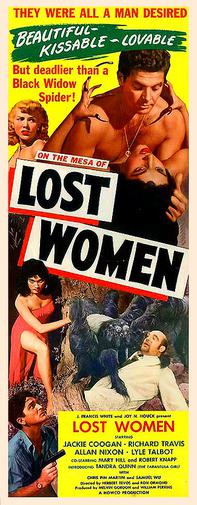
Horror on the Lens: Mesa of Lost Women (dir by Herbert Tevos and Ron Ormond)


Today’s Horror on the Lens is the infamous 1953 film, Mesa of Lost Women.  Off in the middle of the desert, Dr. Aranya (Jackie Coogan) is conducting dangerous experiments that are resulting not only in giant spiders but also a master race of superwomen who Aranya is planning to use to conquer the world or something.

Mesa of Lost Women is a bit of a disjointed film.  It was originally filmed by a German director named Herbert Tevos, who claimed to be an associate of Erich Von Stroheim’s and a former collaborator of Marlene Dietrich’s.  However, despite his claims of being well-connected, no one was particularly impressed with Tevos’s first cut of the film so Ron Ormond was brought in to film additional scenes, the majority of them featuring Jackie Coogan as the insane Dr. Aranya.  Jackie Coogan was, at the time, still best-known for playing The Kid in the Charlie Chaplin film of the same name.  After Mesa, he would go on to play Uncle Fester on the original Addams Family.

Anyway, Mesa of Lost Women is one of those B-movies that simply has to be seen and heard to be believed.  (Lyle Talbot provides the narration, which is judgmental even by the standards of the 1950s.)  Enjoy Mesa of Lost Women!

October Positivity: Prayer Never Fails (dir by Wes Miller)


The 2016 film, Prayer Never Fails, tells the story of Aiden Paul (Nick Lashaway).  Having survived a traumatic childhood that was full of abuse, Aiden is now the beloved basketball coach at the local high school.  (The fact that he never shaves or gets his hair out of his face does not seem to be a problem as far as this school district is concenred.)  When one of his players approaches Aiden and tell him that he’s being abused by his father (Lorenzo Lamas), Aiden suggests that the player pray on it.  When the player says that he doesn’t know how to pray (because his father is not just abusive but also a hardcore atheist, of course), Aiden takes him into a classroom and teaches him how.

Unfortunately, another teacher sees Aiden and the player praying and reports Aiden to the principal.  Aiden is fired from his position.  Though Aiden says that he’s just going to give up and find another job, his players demand that Aiden fight to be reinstated.  Aiden decides to take the school to court!

Unfortunately, there aren’t any lawyers that Aiden can afford.  (And most lawyers would hopefully be ethical enough tell Aiden that, regardless of his good intentions, he doesn’t have a case.)  Finally, a chance meeting at a diner leads to Aiden hiring Michael Brown (Clifton Davis), an agnostic lawyer with a gambling problem.  Michael takes the case but he soon finds himself going up against master litigator Joseph T. Harrington (Corbin Bernsen).  Can Michael somehow win the case?

This is another one of those Christian courtroom films where no one does anything that makes sense.  For instance, it seems like, instead of ducking into an open classroom for a quick prayer, Aiden could have reported that one of his students was being abused by a parent, which is something that, as a teacher, he would have been required to do in the first place.  (Instead, that subplot is abandoned after Aiden is fired.)  As well, to win the case, all Joseph T. Herrington had to do was 1) point out that Aiden had admitted to leading a prayer in school and 2) call to the stand a Constitutional law expert to explain the establishment clause.  Instead, Herrington puts the entire concept of prayer on trial and tries to argue that praying doesn’t work.  It’s an argument based purely on emotion and bias, which allows Michael to make a counter-argument that’s based purely on emotion and bias.  At one point, Michael interrogates the school’s principal as to why he was willing to defend a transgender teacher but not Aiden’s right to pray.  The correct answer, of course, is that whether or not another teacher is transgender has nothing to do with Aiden’s case and that the Supreme Court has ruled that prayer is not allowed in public schools.  That’s really all anyone needed to say to any of Michael’s arguments but no one does because, if they did, it would be a very short film.

(Along with the dubious legal arguments, this film annoyed me because Aiden didn’t ever bother to shave or comb his hair before the trail began.  I mean, seriously, did someone tell him that it was a good strategy to go to court looking like you spend the previous week sleeping in the back of a pickup truck?  I would not want him coaching my school’s basketball team.)

On the plus side, Eric Roberts is in this movie.  He plays the judge and goes through the film with a bemused smile on his face, as if even he can’t believe the legal arguments that he’s hearing.  It’s always nice to see Eric Roberts picking up a paycheck.

Previous Eric Roberts Films That We Have Reviewed:

  1. Star 80 (1983)
  2. Blood Red (1989)
  3. The Ambulance (1990)
  4. The Lost Capone (1990)
  5. Love, Cheat, & Steal (1993)
  6. Love Is A Gun (1994)
  7. Sensation (1994)
  8. Dark Angel (1996)
  9. Doctor Who (1996)
  10. Most Wanted (1997)
  11. Mr. Brightside (2004)
  12. Six: The Mark Unleased (2004)
  13. Hey You (2006)
  14. In The Blink of an Eye (2009)
  15. Enemies Among Us (2010)
  16. The Expendables (2010) 
  17. Sharktopus (2010)
  18. Deadline (2012)
  19. Miss Atomic Bomb (2012)
  20. Lovelace (2013)
  21. Self-Storage (2013)
  22. This Is Our Time (2013)
  23. Inherent Vice (2014)
  24. Road to the Open (2014)
  25. Rumors of War (2014)
  26. Amityville Death House (2015)
  27. A Fatal Obsession (2015)
  28. Stalked By My Doctor (2015)
  29. Joker’s Poltergeist (2016)
  30. Stalked By My Doctor: The Return (2016)
  31. The Wrong Roommate (2016)
  32. Dark Image (2017)
  33. Stalked By My Doctor: Patient’s Revenge (2018)
  34. Monster Island (2019)
  35. Seven Deadly Sins (2019)
  36. Stalked By My Doctor: A Sleepwalker’s Nightmare (2019)
  37. The Wrong Mommy (2019)
  38. Exodus of a Prodigal Son (2020)
  39. Free Lunch Express (2020)
  40. Her Deadly Groom (2020)
  41. Top Gunner (2020)
  42. Deadly Nightshade (2021)
  43. Just What The Doctor Ordered (2021)
  44. Killer Advice (2021)
  45. The Poltergeist Diaries (2021)
  46. A Town Called Parable (2021)
  47. My Dinner With Eric (2022)

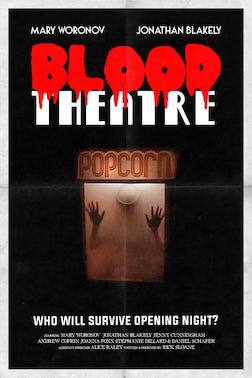
October Hacks: Blood Theatre (dir by Rick Sloane)


I have watched my share of not-good films but, as I sit here typing this, it’s hard for me to think of anything quite as mind-numbingly bad as 1984’s Blood Theatre.

Blood Theatre is a horror film without scares and a comedy without laughs.  It starts at some point in the past, when a lovelorn movie theater owner (played, as a young man, by David Milbern) has a nervous breakdown upon discovering that the ticket girl doesn’t love him.  So, he stabs her to death and then sets the theater on fire, killing the majority of the patrons inside.  Years later, Mr. Murdock (Rob-Roy Fletcher) decides to increase his chain of Starlite Theaters by purchasing the old theater.  He sends three of his employees over to get the place in shape.  What he doesn’t stop to consider is that the theater owner (now played, as an old man, by Jonathan Blakely) is still haunting the old theater and killing anyone who shows up.  Is the owner a ghost or a human killer?  The film never quite makes up its mind, as sometimes he appears to have control of electricity and time and space and other times, he’s just an old geezer with a knife.

But the motives of the killer really aren’t that important because, oddly enough, he’s not really in the much of the film.  Instead, the majority of the film is a broad comedy about the people working at the theater, none of whom are particularly funny or even likable.  Selena (Joanna Foxx) gets mad when someone fails to pay for their popcorn so, for some reason, she follows them into theater and rips of her bra in front of them.  I’m not really sure how that is supposed to get back at them for not paying for their popcorn but it does lead to a riot in the theater as everyone demands that she sit down so that they can enjoy the movie.  Amazingly, this somehow does not lead to Selena getting fired but instead, she and her friend Darcy (Stephanie Dillard) are transferred to the new theater, much to the irritation of their co-worker, cheerleader Jennifer (Jenny Cunningham).  Jennifer, Selena, and Darcy are all supposed to be in high school but they also all appear to be in their 30s.

Mary Woronov is also in this film.  She’s totally wasted in the role of Murdock’s administrative assistant.  She spends the entire movie answering the phone in the office and rolling her eyes and then making sarcastic comments about the fact that Murdock has gone to a theater owner’s convention but he hasn’t returned yet because he’s been mugged.  For reasons that aren’t really clear, she hates Murdock and she hates everyone that she works with but then again, no one in this movie seems to like anyone else.  Everyone in this movie dislikes everyone else and, as a result, it’s not as if any of the people are particularly pleasant to hang out with.

This is one of those comedies where every joke is repeated ad nauseum, to the point where it becomes impossible to watch the film without wanting to throw something at the screen.  It would help, of course, if the jokes were funny but none of them are.  It would also help if there was a shred of charisma to be found in the cast but, with the exception of Mary Woronov, everyone delivers their lines stiffly and without personality.  Clocking in at 75 minutes but feeling much, much longer, Blood Theatre is one of the most incredibly dull films that I’ve ever seen.  This is the slasher film that answers the question, “Just how bad can these films get?”