Scenes That I Love: Lee Marvin on Point Blank


100 years ago today, Lee Marvin was born in New York City.  One of the great screen tough guys, Lee Marvin played stoic and determined men who you didn’t want to upset.

That was certainly true of his role as Walker in 1967’s Point Blank.  A thief who was double crossed by his partner and the organization to which his partner was in debt, Walker is determined to get back the money that he stole from someone else.  Relentlessly, Walker moves from one mob boss to another and repeatedly, those bosses make the mistake of thinking that they can double cross him again.

Point Blank (1967, directed by John Boorman)

In this scene, which was reportedly considered to be shockingly violent by 1967 standards, Carter (Lloyd Bochner) attempts to fool Walker, just to discover that Walker is smarter and far more ruthless than anyone realizes.

14 Days of Paranoia #3: The Passover Plot (dir by Michael Campus)


First released in 1976 and based on a book that had come out ten years previously, The Passover Plot is a film that asks, “What if Jesus was a political revolutionary who faked his own death?”

Even when the film was first released, that wasn’t a particularly novel or new theory.  Ever since the Crucifixion, there have been conspiracy theorists who have claimed that the entire thing was staged.  Indeed, the early days of the Church were defined by conflicts between different sects debating the true nature of Jesus, with those who believed that he was the son of God and that he had risen from the dead eventually winning out over sects who claimed that Jesus was not divine or that he had actually escaped from the Romans and was instead hiding out in Egypt or even on the island that would eventually become known as Britain.  (The fact that so many Gnostics and other heretics were executed by the Church and their texts suppressed only served to lend them credibility with future theorists.)  Still, every few decades, some new book or film will claim that Jesus faked his death or married Mary Magdalene and gullible people will act as if this is somehow a new argument.  It’s been over 20 years since all of that Da Vinci Code nonsense convinced bored suburbanites across America that they could be experts on both boxed wine and historical conspiracy theories.  We’re about due for a new version of the old story.

As for The Passover Plot, it features Zalman King as Yeshua of Nazareth, an angry young man who dreams of the day when Judea will be free of the Romans.  Having a knowledge of the prophecies of a messiah and also knowing that he is descended from King David, Yeshua specifically patterns his life after the prophecies and presents himself as being not just another revolutionary but instead as being sent by God.  However, he is also aware that it will be necessary for him to “die” and “rise from the dead,” so he goes out of his way to force the hand of Pontius Pilate (Donald Pleasence).  Having seen plenty of crucifixions when younger, Yeshua arranges for the local revolutionaries to drug him so that he’ll appear to be dead.  When he later wakes up, everyone will believe that he has returned from the dead.  The film ends with several title cards, all arguing that the Gospels were written long after Yeshua’s death (“Mark lived in Italy!” one title card proclaims with almost comical indignation) and were subsequently rewritten by “unknown” hands.

The Passover Plot is a weird combination of biblical epic and conspiracy thriller.  Scenes of Yeshua preaching feel as if they could have come from any traditional Biblical epic but they are awkwardly placed with scenes of Yeshua having secret, melodramatic meetings with various conspirators.  It would make for an interesting contrast if not for the fact that the film itself is so slowly paced and boring.  Zalman King, who is best-known for his subsequent career as a softcore filmmaker, spends a lot of time yelling and smoldering intensely but he still doesn’t have the charisma or screen presence necessary to be convincing in the role.  In the scene were he’s meant to be passionate, he shrieks with such abandon that he makes Ted Neeley’s performance in Jesus Christ Superstar feel restrained.  This film asks us to believe that people would not only abandon their previous lives to follow Yeshua but that they would also take part in an elaborate conspiracy that could have gone wrong at any time.  For that to be believable, Yeshua needs to be played by someone who doesn’t come across like the drama student that everyone dreads having to do a scene with.  Far more impressive is Donald Pleasence, whose portrayal of a ruthless and unfeeling Pilate is a marked contrast to some of the more sympathetic interpretations of the character that tend turn up in the movies.

On the plus side, the film does look good.  It was shot on location in Israel and there is a certain authenticity to the film’s recreation of the ancient world.  Along with Pleasence, character actors like Scott Wilson (as Judas!) and Dan Hedaya get a chance to shine.  But otherwise, The Passover Plot is too slowly paced and kooky for its own good.  Conspiracy theorists never seem to understand that the more elaborate a conspiracy theory becomes, the less convincing it is to anyone who isn’t already a true believer.  In the end, how one feels about the film’s conclusions will probably be connected to how one already views Jesus and the Church.  The Passover Plot is not a film that’s going to convince anyone who wasn’t already convinced.

14 Days of Paranoia:

  1. Fast Money (1996)
  2. Deep Throat II (1974)

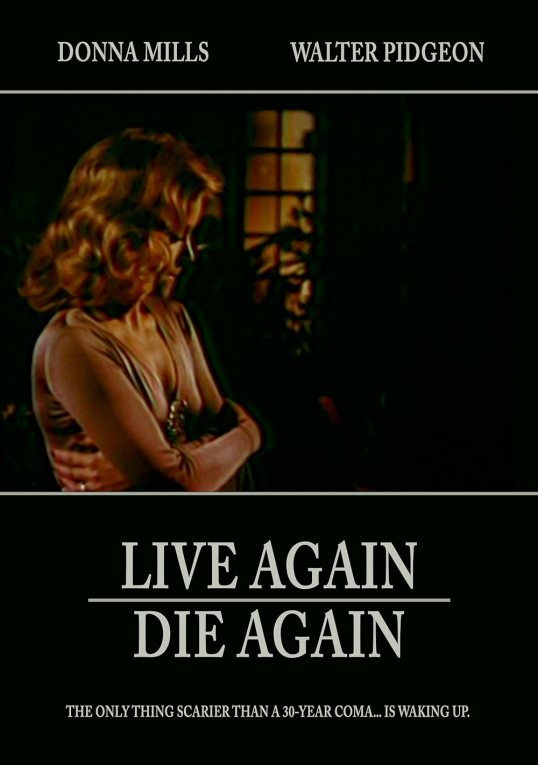
Retro Television Reviews: Live Again, Die Again (dir by Richard A. Colla)


Welcome to Retro Television Reviews, a feature where we review some of our favorite and least favorite shows of the past!  On Sundays, I will be reviewing the made-for-television movies that used to be a primetime mainstay.  Today’s film is 1974’s Live Again, Die Again!  It  can be viewed on YouTube.

30 years ago, Caroline Carmichael (Donna Mills) died.

Except, she really didn’t.  Instead, when on the verge of death, she was put into cryogenic suspension.  She has spent the last three decades in suspended animation and, as a result, she has not aged in all that time.  In fact, her hair still looks perfect.  (I have some doubts about the scientific validity of any of this but let’s just go with it.)  As this movie begins, Caroline Carmichael finally wakes up.

Caroline has an entirely new world to discover.  At a party to celebrate her awakening, Caroline is shocked to discover that, while she still appears to be young, all of her friends are now in their 60s. Her husband, Thomas (Walter Pidgeon), is now old and sickly.  Her beautiful home is now looked after by a strict and suspicious housekeeper (Geraldine Page).    Her two children (played by Mike Farrell and Vera Miles) both appear to be older than her.  In fact, her daughter was so traumatized by Caroline’s “death,” that she is now terrified of being left alone with her mother.

You might expect that this film would be dedicated to Caroline adjusting to the world of the 70s and that it might feature some thoughts on whether it’s ethical to keep someone in suspended animation for 30 years.  And there are elements of that.  Caroline is amazed by all the tall buildings.  Her daughter’s reaction to Caroline’s return is hardly heart-warming and even Caroline’s whiny son doesn’t seem to be quite as happy about it as one might expect.  Her husband has spent the last 30 years of his life waiting for Caroline to wake up and it’s hard not to consider how many opportunities for happiness or success that he missed as a result.

That said, the film itself quickly becomes more of a gothic murder mystery, as Caroline comes to realize that someone is trying to kill her.  That’s kind of a shame because I actually found all of the cryogenic stuff to be much more interesting and the idea that one could basically just stop aging for 30 years was an intriguing one.  It’s an interesting question.  If it could save your life at some undetermined point in the future, would you be frozen?  Myself, I think I would be reluctant to do so because you never know what type of world you might wake up in.  Caroline is lucky enough to wake up wealthy in the 70s but what if you woke up and discovered that your entire family had died while you were in your coma?  What if you woke up and discovered that your country had become some sort of socialist Hellhole?  Imagine if someone went into hibernation in 1994 and then woke up in 2024?  They would probably want to go back to sleep.

The film was written Joseph Stefano, who also did the script for Psycho and was one of the producers behind The Outer Limits.  Not surprisingly, the script is full of snappy dialogue and the cast features two Psycho cast members, Vera Miles and Lurene Tuttle.  Director Richard Colla keeps the action moving and, early on in the film, he does a good job of depicting Caroline’s disorientation with finding herself in an entirely new world.  The film is well-acted by the entire cast, with Donna Mills especially doing a good job as Caroline.  This was an intelligent, well-made, and — most importantly — short made-for-TV movie.  At a time when almost all movies and TV shows seem to be too long for their own good, it’s hard not appreciate Live Again, Die Again‘s 73-minute runtime.

14 Days of Paranoia #2: Deep Throat Part II (dir by Joseph Sarno)


First released in 1974, Deep Throat II (also known as Linda Lovelace, Secret Agent) is the R-rated sequel the legendary X-rated film, Deep Throat.  I should, at this point, confess that I have never seen Deep Throat, though I have seen the 2005 documentary about the making of the film and its subsequent cultural impact, Inside Deep Throat.  I’ve also read Legs McNeil’s oral history of the adult film industry, The Other Hollywood.  Perhaps most importantly, I’ve watched Boogie Nights a dozen times.

Anyway, Deep Throat II….

The star of the original film, Linda Lovelace, returns as …. Linda Lovelace!  Linda is working as a nurse for a perpetually turned-on sex therapist (Harry Reems) who, when told that he got laid just last night, whines, “Last night was a long time ago!”  Among the therapist’s patients is nerdy Dilbert Lamb (Levi Richards), who is obsessed with black lingerie and his aunt, Juliet.  Dilbert has built a giant super computer named Oscar.  In its electronic voice, Oscar says stuff like, “Why do you want to talk to me, baby?”

The plot is not particularly easy to follow but, as far as I could tell, the head of the CIA (played by adult film vet Jamie Gillis) is concerned that Dilbert has been compromised by either the Russians or by a bunch of do-gooder activists led by a Ralph Nader-style journalist named Kenneth Whacker (David Davidson).  (The journalist’s followers call themselves Whacker’s Attackers.)  The decision is made to recruit Linda Lovelace to investigate because Lovelace apparently has a mysterious technique that she can use to get men to tell her anything.

When Linda is first approached by the CIA, she thinks that she is being drafted into the Army so that she can fight in Vietnam.  “But I have asthma and I need new reading glasses!” she says.  Hey, me too!  Anyway, Linda is relieved to discover that she will not being going to Vietnam and that her new codename is Agent — wait for it — 0069.  (Just in case you were wondering what the level of humor was in this particular film….)

Despite the film’s cast of veteran adult performers and the fact that it’s a sequel to the movie that some people went to jail for transporting across state lines, Deep Throat II is an incredibly tame movie.  The film is edited so haphazardly that it feels as if at least half of it was left on the cutting room floor.  At first, I assumed that I was watching a heavily edited version of the original film but a few minutes of research online revealed that I was watching the original.  (Apparently, director Joe Sarno directed the film so that more explicit scenes could be directed by another filmmaker and inserted into the action but, for whatever reason, those scenes were never filmed.  Sarno was usually one of the more aesthetically interesting and thematically daring of the directors working in the adult film industry.  You would not necessarily know that from his work on this film.)  The actors struggle to keep a straight face while delivering their lines, Harry Reems enthusiastically jumps up and down in almost every scene in which he appears, and Linda Lovelace seems to be trying really hard but she just has a blah screen presence.  Unlike Marilyn Chambers in Rabid or Sasha Grey in The Girlfriend Experience, Linda Lovelace does not come across as having been a particularly good actress.

That said, there is one interesting aspect to Deep Throat II.  Kenneth Hacker worries that Oscar could become smarter than the human being who programmed it and that the computer’s creation could be the first step to the creation of a permanent surveillance state, one in which even private thoughts will be used against the citizens of the United States.  In the film, everyone laughs him off.  50 years later, it no longer sounds that fanciful.

14 Days of Paranoia:

  1. Fast Money (1996)

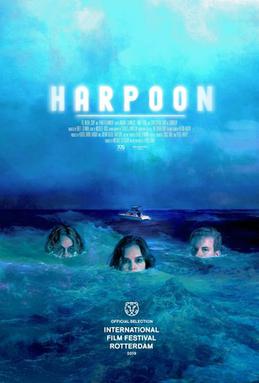
Live Tweet Alert: Watch Harpoon With #ScarySocial!


As some of our regular readers undoubtedly know, I am involved in a few weekly live tweets on twitter.  I host #FridayNightFlix every Friday, I co-host #ScarySocial on Saturday, and I am one of the five hosts of #MondayActionMovie!  Every week, we get together.  We watch a movie.  We tweet our way through it.

Tonight, for #ScarySocial, I will be hosting 2019’s Harpoon!

If you want to join us on Saturday night, just hop onto twitter, start the film at 9 pm et, and use the #ScarySocial hashtag!  The film is available on Prime!  I’ll be there co-hosting and I imagine some other members of the TSL Crew will be there as well.  It’s a friendly group and welcoming of newcomers so don’t be shy.

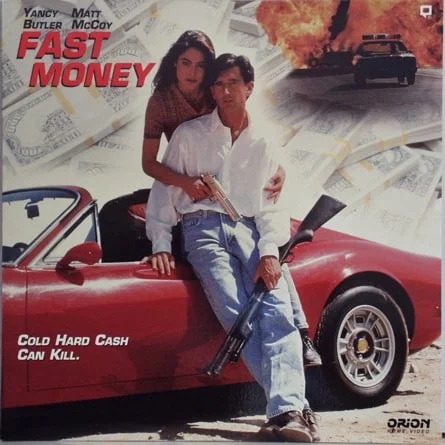
14 Days of Paranoia #1: Fast Money (dir by Alex Wright)


First released in 1996, Fast Money opens with Francesca March (Yancy Butler) stealing a car.

This is what Francesca does for a living.  She steals cars and she’s good at it.  She’s the type of who can look in any trashcan and find something that she can use to pick a lock.  She’s master at hot-wiring a car.  I personally have no idea how to hot-wire a car but, judging from the movies that I’ve seen, it appears to be the easiest thing in the world to do.  Francesca doesn’t just steal cars for the money.  She sincerely enjoys doing it, to the extent that it’s a compulsion for her.  If she sees a car, she has to steal it.

This has not made her popular with the LAPD.  In fact, an entire taskforce has been set up to stop her.  Realizing that she has to get out of town, she rushes to the airport.  It’s there that she runs into Jack Martin (Matt McCoy), a nerdy journalist who is working on a story that could take down a powerful U.S. Senator.  Jack is looking to catch a flight to Reno.  For reasons that aren’t particularly clear, Francesca rushes up to Jack and pretends to be his wife and the recently widowed Jack goes along with it.

Further complicating matters is that Francesca impulsively decides to seal one last car and the one that she picks just happens to have 3 million dollars in mob money and a bunch of counterfeit printing plates in the trunk.  The evil Sir Stewart (Jacob Witkin) wants his money back and he sends Regy (Trevor Goddard) and corrupt detective Lt. Diego (John Ashton) to track down Francesca and Jack.

Soon, Francesca and Jack are desperately trying reach the Mexican border while dodging corrupt cops, FBI agents, and mobsters.  It leads to a lot of car chases, explosions, helicopters, and shoot-outs.  (The otherwise meek Jack turns out to be a surprising good shot.  Neither he nor Francesca freaks out after he shoots multiple people, which is the sort of thing that I would probably freak out about.)  Francesca and Jack also find themselves falling in love but wondering just how much they can trust each other.  Stolen money does that to people.

Fast Money is a cheerfully dumb but entertainingly fast-paced movie, one in which the chase never stops long enough for the viewer to have too much time to try to figure out why the ultracool Francesa would be willing risk her freedom for a relationship with someone as whiny as Jack.  Yancy Butler plays Francesca as being so confident and so fearless that it’s hard not to admire her but there’s also no way that she seems like she would ever have much use for someone as meek and repressed as Jack, regardless of how deadly his aim might be.  One gets the feeling that the only thing keeping this couple together is the adrenaline rush of being hunted.  If Jack and Francesca do make it to safety, their relationship will probably be over by the end of the week.

Though Fast Money is ultimately a fun but somewhat generic direct-to-video action film, I appreciated the film’s vision of a world where everyone from the mob to the police to the FBI were basically working together to track down one career criminal and one innocent man.  When even the usually likable John Ashton is trying to murder you in a cheap motel, you know you have reached the other side of the looking glass.  Jack learns what Francesca has always understood, which is that one should be suspicious of authority.  Though it may not have been the film’s intent, Fast Money‘s ultimate message becomes, “Trust no one but yourself.”

Live Tweet Alert: Join #FridayNightFlix For Mad Max!


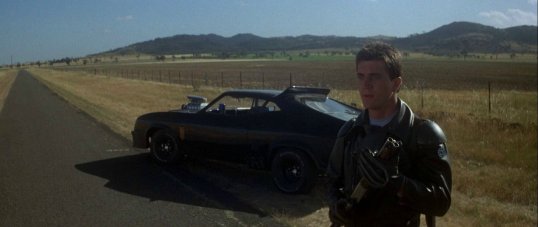
Mad Max (1979, dir by George Miller, DP: Dave Eggby)

As some of our regular readers undoubtedly know, I am involved in a few weekly live tweets on Twitter and Mastodon.  I host #FridayNightFlix every Friday, I co-host #ScarySocial on Saturday, and I am one of the five hosts of #MondayActionMovie!  Every week, we get together.  We watch a movie.  We tweet our way through it.

Tonight, at 10 pm et, we’ve got an action classic, 1979’s Mad Max!

If you want to join us this Friday, just hop onto twitter, start the movie at 10 pm et, and use the #FridayNightFlix hashtag!  It’s a friendly group and welcoming of newcomers so don’t be shy.

Mad Max is available on Prime!  See you there!

Love On The Lens: The Amy Fisher Story (dir by Andy Tennant)


Poor Mary Jo Buttafuoco!

As seen in the 1993 made-for-tv movie, The Amy Fisher Story, Mary Jo (Laurie Paton) was just a normal Long Island housewife.  She was married to an auto mechanic named Joey (Anthony John Denison).  She had a family and a nice house and a seemingly perfect life.  But, one day, a teenage girl named Amy Fisher (played by a young Drew Barrymoe) showed up at her front door and claimed that her younger sister was having an affair with Joey.  When Mary Jo accused Amy of lying and then said she was going to call her husband, Amy pulled a gun and shot Mary Jo in the head.  That Mary Jo survived, albeit with partial facial paralysis, was a miracle.

The Amy Fisher Story was the third of the movies to be based on the true story of Amy Fisher and her affair with Joey Buttafuoco.  If Casualties of Love portrayed Amy as being an obsessed stalker who targeted a saintly man and if Amy Fisher: My Story portrayed Amy as a vulnerable teen who was groomed by a sleazy older man, The Amy Fisher Story suggests that perhaps the truth was somewhere in between.  As played by Drew Barrymore, Amy Fisher is immature, unstable, and self-destructive even before she meets Joey Buttafuoco.  As played by Anthony John Denison, Joey is a cocky and arrogant womanizer who grooms a teenage girl and leads her to believe that the only thing keeping them from being truly together is the fact that he has a wife.  (If Casualties portrayed Joey as being a dumb, salt-of-the-Earth type of guy and Amy Fisher: My Story portrayed him as being coldly manipulative and cruel, The Amy Fisher Story portrays him as being a self-centered idiot who did whatever he felt like doing without thinking about any possible consequences.)  Of all the performers who played Amy and Joey, Drew Barrymore and Anthony John Denison are the most convincing.  On the one hand, that lends a credibility to this film’s version of the events that led to the shooting of Mary Jo.  On the other hand, it also means that neither of the main characters is particularly likable.

The film instead tries to make a hero out of a reporter named Amy Pagnozzi (Harley Jane Kozak), who finds herself assigned to follow the Amy Fisher story when she would much rather be reporting on the upcoming presidential election.  Pagnozzi pops up throughout the story, commenting on the media feeding frenzy and generally acting annoyed by the whole thing.  The problem with this approach is that, for all of Pagnozzi’s condemnation of the country’s tabloid mentality, she’s still a part of the monster.  It’s hard to have sympathy for someone complaining about how a story is covered when they’re the one doing the covering.

Interestingly, for a film that condemns that way the story was covered, The Amy Fisher Story is probably the most tabloid-y of the three films.  Every sordid detail — from Amy and Joey’s motel meetings to Amy’s work as an escort to her subsequent dalliance with a gym owner — is provided in artfully filmed detail.  The result is a film that can feel a bit over-the-top but that’s exactly the right approach to take when it comes to a story like this.  When you’re making a movie about a suburban teenage escort who shoots her boyfriend’s wife, there’s really not much need or room for subtlety.  The Amy Fisher Story works because it fully embraces the melodrama and it features a performance from Drew Barrymore that remind us that, back before she became a permanently cheerful talk show host, Drew was a force of pure chaos.

When it comes to the story of the Fishers and the Buttafuocos, this is the film to see.

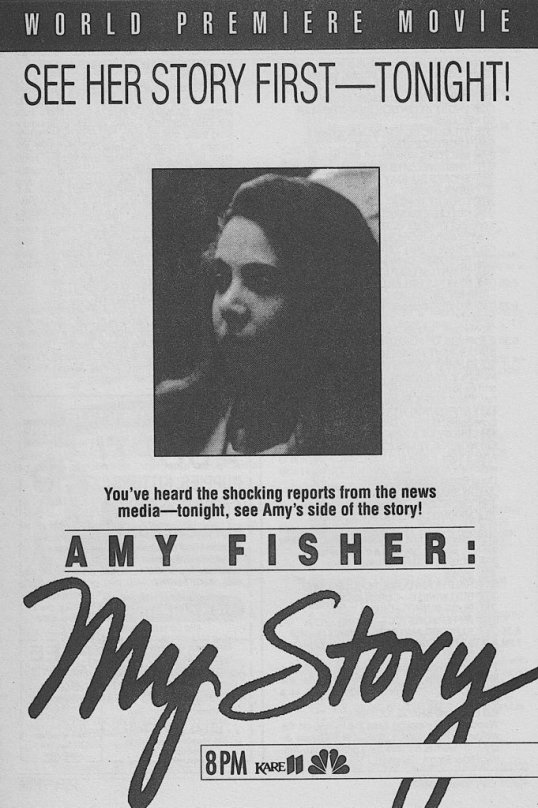
Love on the Lens: Amy Fisher: My Story (dir by Bradford May)


Poor Amy Fisher!

In the 1993 made-for-TV movie, Amy Fisher: My Story, Amy Fisher (played by Noelle Parker) is an insecure teenager growing up on Long Island.  She goes to high school.  She has a boyfriend.  She has lots of girl friends.  She has a part-time job.  She has a car.  Everything should be perfect but it’s not.  For one thing, her creepy father (played by veteran Canadian character actor Lawrence Dane) likes to come into her room while she’s trying to sleep and sit on the edge of her bed.  Her mother (Kate Lynch) refuses to believe that there’s anything strange about the way her husband treats their daughter.

When Amy and her father take her car to the local auto body shop, she meets the handsome and slick Joey Buttafuoco (Ed Marinaro).  Amy is polite to Joey but Joey takes one look at Amy and he smiles in a way that immediately lets us know that he’s not to be trusted.  Soon, he’s going out of his way to spend time with Amy and eventually, he seduces her in the house that he shares with his wife, Mary Jo (played by Check It Out‘s Kathleen Laskey).  Soon, Joey and Amy are checking into cheap motels together.  Amy think that she’s in love with Joey and Joey says that he loves her (though only when he wants her to do something).

Joey eventually coerces Amy into becoming an escort, enjoying the stories of her spending time with other older men.  And yet, when Amy follows his orders and gets a gym membership, Joey freaks out when she attracts the attention of a man who is close to her own age.  For her part, Amy starts to wonder whether she and Joey will ever truly be together.  Joey insinuates that his wife would have to die before he could even think of marrying Amy Fisher.  Amy happens to have a friend who has a gun….

Amy Fisher: My Story largely plays out in flashbacks and is narrated by Amy as she sits in her jail cell.  It’s based on the same true story that inspired Casualties of Love, with the main difference being that this is Amy’s version of the story.  And it must be said that Amy’s version, with Amy as an insecure and abused teenager being groomed by a manipulative sociopath, feels considerably more plausible than Casualties of Love‘s portrayal of Joey Buttafuoco as being the misunderstood Saint of Long Island.  Working to Amy Fisher: My Story‘s advantage is that it doesn’t let Amy off the hook.  Ultimately, she’s the one who decides to knock on Mary Jo’s front door and then shoot her when she answers.  Amy is not portrayed as being a saint but she’s not a one-dimensional psycho either.  Instead, she’s a naive and emotionally damaged girl who is so desperate to feel loved that she allows Joey to push her over the edge.

Amy Fisher: My Story is a well-done look at a sordid story.  Ed Marinaro is appropriately sleazy and macho as Joey.  Noelle Parker gives a quiet but strong performance as Amy Fisher, playing her as someone who knows that she’s being manipulated but who still finds herself clinging to the smallest shred of hope that she’s not.  While the film never quite transcends its tabloid origins, it still provides a worthy reminder that there’s always a human behind the headlines.

Love On The Lens: Casualties of Love: The Long Island Lolita Story (dir by John Herzfeld)


Poor Joey Buttafuoco!

As seen in the 1993 made-for-TV movie Casualties of Love, Joey is a saintly, salt-of-the-Earth blue collar guy who works as an auto mechanic on Long Island.  He’s also an aspiring drummer, one who struggles with a major cocaine addiction.  When his loving wife, Mary Jo (Phyllis Lyons), threatens to leave him and take the kids unless he cleans up his act, Joey checks into rehab.  Six months later, he leaves rehab clean and sober and dedicated to his family.  All of the other patients lean out of their windows and wish Joey well.  Everyone loves Joey!

Joey, the most handsome and sweetest auto mechanic in the state of New York, does have a problem, though.  A sociopathic teenager named Amy Fisher (Alyssa Milano) has grown obsessed with him and keeps intentionally damaging her car so that she can come hang out at the garage.  When the other mechanics say that Amy is hot, Joey agrees but that’s all he does.  Joey loves his wife.  When Amy tries to kiss him at a carnival, he shoves her away and then kisses his wife to make sure that everyone understand that Joey Buttafuoco is the best guy ever.  When Amy accuses Joey of giving her a STD, everyone realizes she’s lying because Joey would never have an STD in the first place.

And when Amy shoots Mary Jo in the face, the media and the police try to make it seem like Joey is somehow to blame but again, we know that he’s not.  Joey Buttafuoco is a name that means honor and respect.

Uhmm …. yeah.

So, this is story is very loosely based on a true story and by that, I mean that there was a teenager named Amy Fisher who shot a woman named Mary Jo in the face and later said that she was having an affair with her husband, Joey.  Apparently, there were three made-for-TV movies made about the case, all of which premiered in the same month.  Casualties of Love is told from the point of view of Joey and Mary Jo and it fully supports Joey’s initial claim that he never slept with Amy and she was just some obsessed psycho.

While watching this film, I got bored enough to look up the case on Wikipedia and I learned that, after this movie aired, Joey admitted that he did have an affair with 16 year-old Amy Fisher and he subsequently went to jail for statutory rape.  After getting out of jail, Joey divorced his wife and has subsequently been in and out of trouble with the law.  He also become a regular on TV court shows, where he would sue people who failed to pay him for fixing their cars.  My point is, Joey Buttafuoco sounds like a bit of a sleaze in real life.  That makes this film’s portrayal of him as being some sort of Saint of Long Island feel rather dumb.

Actually, it would feel dumb even if the real Joey Buttafuoco was a solid citizen.  Casualties of Love is one of the silliest films that I’ve ever seen, portraying Joey as being a streetwise former cocaine addict who was somehow too naive to realize that it would look bad to spend time in his office alone with Amy.  As Joey, Jack Scalia is very handsome and very sincere and he feels totally miscast as someone who spends hours working underneath the hood of other people’s cars.  Leo Rossi and Lawrence Tierney both show up, mostly so they can say, “Oh, what were you thinking!?” to Joey.  As Amy Fisher, Alyssa Milano gives an amazingly lifeless performance.  Occasionally she talk fast and plays with her hair.  This is the film’s way of letting us know that she’s supposed to be unhinged.  I mean, I do the same thing.  If you’ve got long hair, you’re going to play with it whenever you got bored.  It doesn’t make you crazy.

Unfortunately, though the film may be silly, it’s not much fun.  The direction is workmanlike and the film’s portrayal of Joey and Mary Jo’s marriage is so earnestly bland that the film never even rises to the level of camp.  The film ends with a warning that Amy would soon be eligible for parole.  (Oddly, it also points out that Amy could take college courses in jail, as if that was a bad thing.)  Meanwhile, “Mary Jo is taking it one day at a time.”  Fortunately, Mary Jo eventually took herself out of Joey’s life and filed for divorce.  That’s the happy ending this film lacks.