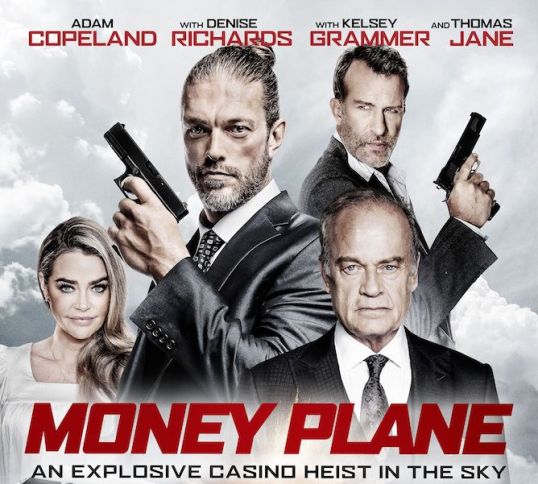
Who is Andrew Lawrence? He is the director of the greatest film ever made, Money Plane!Today’s scene that I love comes from that 2020 masterpiece. In this scene, Adam Copeland learns that it’s not as easy to take over a plane as one might think. I just love this super-powered co-pilot!
4 Shots From 4 Films is just what it says it is, 4 shots from 4 of our favorite films. As opposed to the reviews and recaps that we usually post, 4 Shots From 4 Films is all about letting the visuals do the talking.
Today, the Shattered Lens wishes a happy birthday to Rob Zombie! It’s time for….
4 Shots From 4 Rob Zombie Films
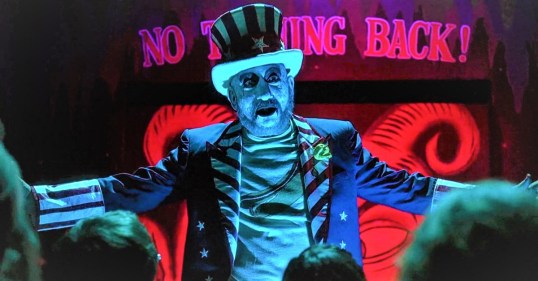
House of 1,000 Corpses (2003, dir by Rob Zombie, DP: Alex Poppos and Tom Richmond)
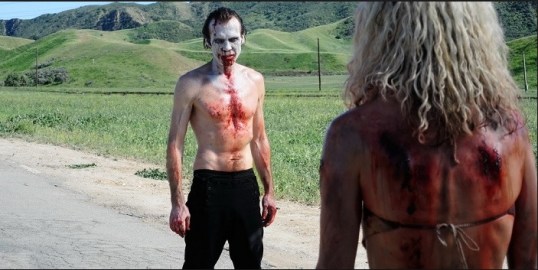
Halloween II (2009, dir by Rob Zombie, DP: Brandon Trost)
The Lords of Salem (2012, dir by Rob Zombie, DP: Brandon Trost)
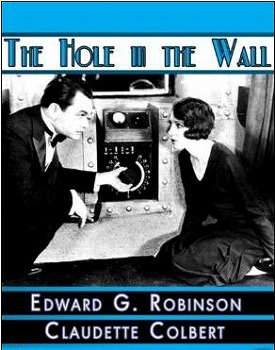
Released in 1929, at the dawn of the sound era, The Hole In The Wall tells the story of The Fox (Edward G. Robinson) and two women known as Madame Mysteria.
The Fox is a con artist, a veteran criminal who takes care of the people working for him. He may not be an upstanding citizen but he seems to truly care about his sidekick Goofy (Donald Meek) and his partner-in-crime, Madame Mysteria (Nellie Savage). Madame Mysteria is a fake psychic. She sits in a chair and does readings while The Fox sends her a series of electric shocks in morse code to let her know what she should say about each victim of their con. They’ve got a pretty good thing going until Madame Mysteria is killed in a train accident.
(Since this film is from 1929, the train accident is recreated with a miniature train that falls off a track in what appears to be a plastic city. Basically, it looks like a primitive YouTube video made by an enthusiastic toy train hobbyist. It may not be convincing but there’s something charming about just how cheap it all is.)
Shortly after Mysteria is killed, Jean Oliver (Claudette Colbert) wanders into The Fox’s shop. Jean is looking for a job and for revenge. As she explains it, she used to have a good job in a department store until her manager accused her of stealing. Though Jean was innocent, she still spent some time in jail. Her life was ruined. Now, she wants to be the new Madame Mysteria and she wants to kidnap the daughter of the woman who accused her. She doesn’t want to get any ransom or anything like that. Instead, she wants to raise the little girl to become a criminal. Fox and Goofy agree, which leads me to wonder if the Fox is really as clever as he thinks he is. Is Jean really the only person they could find to be the new Madame Mysteria? Surely they could find a Madame Mysteria who doesn’t demand they commit a major felony just for her services. Still, kidnap the little girl they do and strangely enough, she never seems to be upset over being taken from her parents. (Even more strangely, we don’t actually see or learn the details of how she was kidnapped. She just suddenly shows up at the Fox’s home.) Goofy becomes a babysitter and Jean becomes Madame Mysteria.
By an amazing coincidence, the reporter (boring David Newell) who decides to write a story on the amazing psychic Made Mysteria just happens to be Jean’s ex-boyfriend! While the Fox falls in love with Jean and the police search for the abducted child, Jean herself starts talking to the dead….
In many ways, The Hole In The Wall is typical of the melodramas that came out during the early sound era. The majority of the supporting actors are still adjusting to acting with sound and the action often feels rather stagey. That said, it’s an entertaining film, largely due to the performance of Claudette Colbert and Edward G. Robinson, both of whom were just starting their careers and on the cusp of stardom. This was Robinson’s first role as a gangster and he snarls with style while Colbert actually keeps the audience guessing at her motivations. The Hole In The Wall is definitely a film from a different era but, for a film that was made nearly 100 years ago, it holds up remarkably well.
Since Sunday is a day of rest for a lot of people, I present #SundayShorts, a weekly mini review of a movie I’ve recently watched. Today’s movie is WANTED DEAD OR ALIVE from 1986.
Former CIA agent Nick Randall (Rutger Hauer) now works as a bounty hunter. After the authorities find out that Malak Al Rahim (Gene Simmons) is responsible for blowing up buildings in Los Angeles, Nick’s former employers request his assistance. With the help of his old friend Philmore (Robert Guillaume), Nick signs on to take Malak out and end his reign of terror!
WANTED DEAD OR ALIVE is one of those movies I enjoyed watching back in the mid-80’s as a junior high teenager. Rutger Hauer makes for a badass bounty hunter and Gene Simmons makes for a mean villain. Robert Guillaume plays Hauer’s friend and primary law enforcement contact in the movie. He was just coming off his 158 episode run on the TV show BENSON (1979-1986). Although he was good in the film, I still remember being surprised when Benson kept saying the F-word. If you like 80’s action movies and Rutger Hauer, like I do, WANTED DEAD OR ALIVE is still a fun watch.
Five Fast Facts:
Rutger Hauer plays Nick Randall, a descendant of Josh Randall, who was played by Steve McQueen on the WANTED DEAD OR ALIVE TV series that ran from 1958-1961.
Actor Ted White who portrays Pete, Charlie Higgins friend in the bar & the store robbery, also portrayed killer Jason Voorhees in FRIDAY THE 13TH: THE FINAL CHAPTER (1984).
According to writer and director Gary Sherman, Mel Gibson was also considered for the part of Nick Randall since he was still largely unknown outside of Australia at the time. The producers settled on Rutger Hauer for the role because it would have cost twice as much to get Gibson for the role.
Gary Sherman also directed the 1982 film VICE SQUAD starring Season Hubley, Gary Swanson, and Wings Hauser. I loved Rutger Hauer and Wings Hauser in the 80’s. Wings’ son Cole plays Rip Wheeler on the YELLOWSTONE TV series.
Gene Simmons from the rock band KISS specialized in playing bad guys on screen in the 1980’s. Aside from WANTED DEAD OR ALIVE, he was also a villain in RUNAWAY (1984) and NEVER TOO YOUNG TO DIE (1986).
I’ve included the trailer for WANTED DEAD OR ALIVE below.
Two twin brothers, John and Jeremiah, grew up in a series of terrible group homes. One night, John fell off a bridge and Jeremiah failed to rescue him from the water below. Jeremiah was convinced that John drowned. Wracked with guilt, Jeremiah turned his life around. He became an upstanding citizen and, as an adult, he’s an Episcopal deacon who is just a few weeks away from being ordained. His girlfriend (Cynthia Watros) loves him but can tell that he’s not always open with her about his past and his emotions.
What Jeremiah doesn’t know is that John did not drown. He survived and grew up to be a career criminal. Having spent the last few years in jail, he tracks down his mentor, Rome (Eric Roberts), as soon as he’s released. (That’s right! This is an Eric Roberts film!) Rome wants John to help him out with a scheme involving counterfeit money. John decides to grab the money and run. When Rome can’t catch John, he decides to abduct Jeremiah instead.
Meanwhile, John takes over Jeremiah’s life. Pretending to be his brother, John fixes Jeremiah’s relationship with his girlfriend and he even proves to be better at delivering sermons than Jeremiah, despite the fact that John is not religious at all. While Jeremiah gets a crash course in how to be a counterfeiter, John learns how to be an upstanding member of society.
Of course, it doesn’t last. Jeremiah eventually escapes from Rome and finds himself on the streets, where he struggles to not fall into the same criminal lifestyle that previously captured his brother. Fortunately, Jeremiah runs into a priest named Tom (Stacy Keach), who offers some good advice. Meanwhile, John learns about the importance of forgiveness and redemption and discovers that Jeremiah has spent his entire life mourning the brother who he thought was dead.
Mercy Streets is an odd mix of religion and action. On the one hand, the film features David A.R. White playing two brothers who feel like they could have walked out of one of his wholesome Pureflix movies. (White, while being a decent actor, is not exactly the most believable hardened criminal that I’ve ever seen.) On the other hand, you’ve got Eric Roberts teaching Jeremiah how to be a criminal and basically taking over the entire film whenever he’s onscreen. (The scene where Rome teaches Jeremiah how to pass fake money is surprisingly well-acted and directed.) The movie runs into the same problem that plagued many a DeMille production. The heroes may all be Godly but the sinners appear to be having more fun. That said, this film at least reminds us of what a good actor Eric Roberts can be when he’s got a decent role.
Previous Eric Roberts Films That We Have Reviewed:
In the 1955 short film, Cindy Goes To A Party, Cindy is upset because she hasn’t received an invitation to a party. Even her dumbass friend Dennis has been invited! Cindy’s mom assures Cindy that her invitation has probably just gotten lost in the mail. Consumed by ennui, Cindy goes to bed at 2 in the afternoon.
Cindy is visited by her fairy godmother who, with the help of her magic wand, transports Cindy to the party and then gives Cindy and Dennis a long list of rules to obey. For those of you who don’t have 9 minutes to watch this film and discover the rules for yourself, here they are:
Be Clean and Neat
Arrive on Time
Leave on Time
Join In The Games (even if the games are totally lame)
Don’t Be Noisy and Rough
Don’t Break Things
Don’t Tease or Make Fun of Others (even if Dennis kind of deserves it)
Obey the Rules of the Game
Be a Good Loser (this rule is specifically given to Dennis because it’s obvious Dennis will never have to worry about being a winner)
Be Considerate
Be A Good Winner (something that Dennis will never have to worry about)
Be Polite
Be Considerate of other (wait a minute, we just did that one)
Remember Your Table Manners
Leave On Time (again, we already did that one)
Thank Your Hostess
That’s a lot of rules! I think Cindy would have more fun just staying home.
This short film was one of the many educational films directed by Herk Harvey. Today, of course, Harvey is best known for directing the horror classic, Carnival of Souls.
I have to admit that I was hesitant about reviewing the 2021’s King Richard because the last thing that I wanted to do was talk about the moment that Will Smith slapped Chris Rock at the 2022 Oscar Ceremony. That moment has been talked about and written about to death. The last thing I want to do is rehash it but The Slap has actually overshadowed the Oscar that Smith won that night. As King Richard was specifically made to win Smith that Oscar, the Slap has become a part of the film’s story.
For those who need to be reminded, Chris Rock was brought out on stage to introduce the presenters for Best Documentary Feature. Rock did some material, which largely consisted of making jokes about the nominees in the audience. Myself, I actually remember being a bit annoyed when Rock started in with his jokes because the ceremony was already boring enough without having to spend however long listening to Chris Rock go on about how Penelope Cruz losing Best Actress meant that Javier Bardem would be in trouble if he won Best Actor. I had actually stopped paying attention when Rock made his now famous joke about Jada Pinkett Smith starring in G.I. Jane 2. I did not see Pinkett role her eyes at Will when Will laughed. I heard Rock say, “Uh-oh, here comes Richard,” but I initially missed the slap. I hard the audience gasp. I looked at the screen and I saw Smith yelling at Rock but the audio had been cut. I had to go on YouTube to see an unedited clip of what happened.
Making the moment even more awkward was the knowledge that Will Smith would soon win his first Oscar for King Richard. On Twitter, there were rumors that Smith had been escorted out of the theater but those turned out to be false. After Smith was announced as the winner for Best Actor, I sat there and thought, “Oh no, he’s going to invoke God, isn’t he?” Smith went on stage and promptly invoked God.
We all know what happened next. For two weeks straight, the Slap discourse was nonstop. Will Smith was described as being a bully, though I can only guess what we would have said about him if he hadn’t done anything in response. (“Would you slap Chris Rock if he made fun of me?” I asked Jeff at one point. Wisely, he promised he would.) A lot of people predicted that Will Smith would never work again which, in retrospect, was a pretty stupid thing to predict. America has forgiven its celebrities for a lot worse than just being a jackass at an awards ceremony. Smith’s career has recovered just fine. Quite frankly, no one is going to look at the trailer for a new Bad Boys or Men In Black movie and say, “But Will Smith slapped Chris Rock on national television.”
In the end, the most interesting thing about the Slap is that, before Chris Rock made that comment about Jada, the Oscars were supposed to be Will Smith’s greatest night. From the minute the first trailer for King Richard dropped, it was obvious that the film was going to be the one the won Will Smith an Oscar. It didn’t even matter whether or not he gave a good performance, though he does give a good one in the film. The Academy will often decide that it’s an actor’s time and it was obvious that was what had been decided as far as Will Smith was concrned. Will Smith had been a star for a long time. He had made a lot of people a lot of money. Before the Slap, the public perceived him as being a likable and goofy guy. It was time to reward him. From the start of 2021, everyone knew that Will Smith would be getting his Oscar. For The Academy, it was also a chance to make up for not nominating him for his adequate if not particularly memorable performance 2015’s Concussion. Smith not getting nominated for that film was often (incorrectly, I would argue) considered to be the starting point of the whole “#Oscarssowhite” movement. (Personally, I would say the movement’s roots could actually be traced to Ava Duvernay not being nominated for directing Selma.) Along with everything else, honoring Will Smith would be a way for the Academy to say, “See? We learned our lesson!”
Will Smith does give a good performance in King Richard, playing Richard Williams, the father of Venus and Serena Williams (played, respectively, by Saniyya Sidney and Demi Singleton). Smith does a good job of capturing both Richard’s stubbornness and his anger but, even importantly, he makes you believe that, as obsessed as he is with his daughters becoming champions, their will-being is still his main motivation and concern. Richard and his daughters may go from practicing on dangerous courts at night to practicing at an exclusive Florida training center but, through it all, Richard always looks after his daughters. Like 2024’s Saturday Night, this is a film where it’s important that the audience already knows what the future is going to hold for its main characters. The coaches played by Tony Goldwyn and Jon Bernthal may not agree with Richard’s decision to keep his daughters out of the juniors tournaments but those of us watching know that Richard’s right and, as a result, we’re on his side. Richard can be cantankerous and difficult. We understand why his wife (Aunjanue Ellis-Taylor) get frustrated with him. But, the important thing is that we know that he will be vindicated and Will Smith has such a likable screen presence that we root for Richard even when he’s acting like a jerk.
King Richard is not a bad sports films, though I do think there were other films more deserving of a Best Picture nomination in 2021. (The Tragedy of MacBeth comes to mind.) It’s unfortunate that Smith’s performance (which was so much better than his work in Concussion) will probably forever be linked to The Slap. As for the film itself, it lost Best Picture to another heartwarming film, CODA.
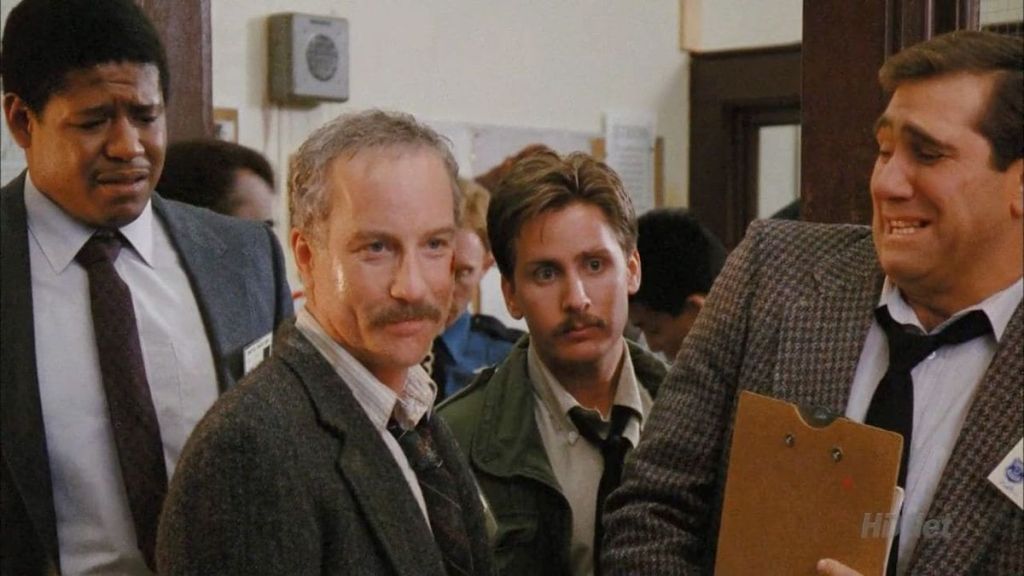
What were those years in your life where movies really became something special to you? I’d say mine began in around 1984 and extended all the way through about 1991, when I headed off to college and the realities of the world started kicking in. Our family got our first VCR around 1984, and this is when I first truly began to fall in love with the cinema. These are the years when I would spend every moment I could in our local video stores inspecting every film in their stock. So many of my favorite movies came out during this time and hold a sense of nostalgic value in my life even now. One of those movies is STAKEOUT, an action comedy from 1987 starring Richard Dreyfuss and Emilo Estevez.
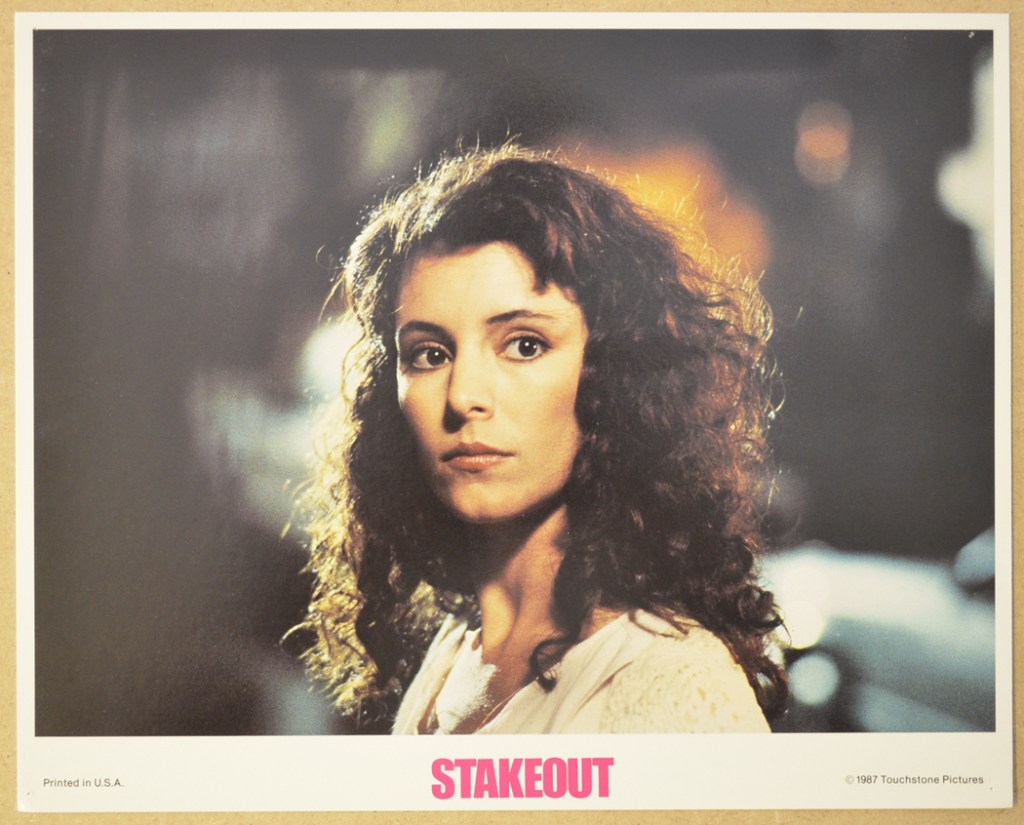
STAKEOUT begins with Richard “Stick” Montgomery (Aidan Quinn) escaping from prison, where he has been sent for killing an FBI agent a year earlier. Enter Seattle police detectives Chris Lecce (Richard Dreyfuss) and Bill Reimers (Emilio Estevez). They are assigned to stakeout the home of Montgomery’s beautiful ex-girlfriend Maria (Madeleine Stowe). In order to listen to her phone conversations, Chris impersonates a telephone repairman and meets her when he goes into her home to install the “bugs.” As fate would have it, he runs into Maria again at the local grocery store when he’s gone out to buy some supplies and donuts. She asks him to give her a ride home when she discovers she has a flat tire on her bike. He reluctantly gives her a ride home, but once he’s there, he puts up her groceries, she makes him a spicy dinner, and then he not so reluctantly makes love to her… all while his partner Bill is across the street waiting for his donuts. As you might imagine, this complicates the entire situation. And meanwhile, “Stick” Montgomery keeps making his way Seattle and Maria’s house where he stashed his cash before going away to prison.
STAKEOUT is one of those movies that our family rented in the late ‘80’s, and I immediately fell in love with. It’s my favorite kind of movie, the buddy cop film. Richard Dreyfuss and Emilio Estevez have a really nice chemistry together, and they come across as old friends. Even though there’s quite a bit of violence, the movie has a playful streak that I enjoy. There’s a series of running gags where Chris and Bill play practical jokes back and forth with the cops who relieve them on the stakeout each day, played by Dan Lauria and Forest Whitaker. The movie even throws in a little self-referential humor. In order to relieve the boredom of the stakeout, Estevez’ character is asking Dreyfuss movie trivia questions. He asks him to identify the movie where the line “this is no boating accident!” is from! Dreyfuss’ character has no idea. These are fun moments for me.
Another thing I love about STAKEOUT is the presence of the gorgeous Madeleine Stowe, who was making her first major film appearance. Seeing the film for the first time as a teenager of 14 years old made me a fan of hers for life. I’m not saying the movie was made specifically for 14-year-old boys, but it certainly wasn’t trying to push us away with its ad campaign that prominently featured the lovely Ms. Stowe. I’ll also point out that Aidan Quinn is effective and intimidating as the escaped murderer Richard “Stick” Montgomery. The fact that his character really does seem dangerous helps to make the film even more exciting when everything finally comes to a head. Veteran Director John Badham has made some really good movies in his career, including SATURDAY NIGHT FEVER (1977), BLUE THUNDER (1983), THE HARD WAY (1991), and NICK OF TIME (1995), to name a few. He knows what he’s doing, and I really started following his work based on how much I enjoyed STAKEOUT.
As much as I enjoy STAKEOUT, it’s one of those movies I don’t hear that much about these days even though it was a substantial box office hit. There was a misguided sequel made in 1993, ANOTHER STAKEOUT, that brought back Dreyfus, Estevez, and director Badham. I remember watching the sequel in the 90’s, but I honestly don’t remember anything about it. One of the reasons I enjoy writing about movies is because it gives me an opportunity to share a part of who I am, the things I enjoy, and maybe even serve as a reminder to others of films like STAKEOUT. I don’t think of these movies often myself, but when I was looking at my DVD collection earlier today, I smiled when I saw it and happily pulled it off the shelf to watch it again for the first time in several years!
First released in 1989, Casablanca Express takes place during World War II.
The three leaders of the Allied nations — Franklin D. Roosevelt, Joseph Stalin, and Winston Churchill — are scheduled to meet in Casablanca to plan the Allied strategy for the next phase of the war. Churchill insists that he will take a train from Algiers to Casablanca, despite the danger that might put him in. Even though everyone advises him against it, Churchill is determined. He makes it clear that he will be traveling by train.
When Major Valmore (Jean Sorel), Colonel Bats (Donald Pleasence), and Maj. Gen. Williams (Glenn Ford) learn that the Germans are aware that Churchill will be on the train and that they will be sending their own intelligence agents to try to kidnap or even assassinate him, they assign three intelligence agents to travel with Churchill. The agents are Alan Cooper (Jason Connery), Captain Franchetti (Francesco Quinn), and Lt. Lorna Fisher (Jinny Steffan) and they are under orders to do whatever is necessary to protect Churchill’s life. Unfortunately, Cooper gets so busy chasing after a French double agent that he misses the train’s departure time. When Otto van Tiblis (Manfred Lehmann) makes his move to take over the train, it falls to Franchetti and Lorna to stop him. Despite their best efforts, they fail. Now, it appears that Churchill’s only hope is that Cooper will not only be able to reach the train but also defeat the army of Germans who have taken it over.
Directed by Sergio Martino, Casablanca Express is an Italian film that owes quite a bit to the legacy of writers like Ian Fleming and Jack Higgins. The plot to capture Churchill owes more than a bit to The Eagles Has Landed, right down to one of the film’s final twists and Donald Pleasence making a cameo appearance as an authority figure. Alan Cooper is a combination of James Bond and Indiana Jones. He’s just as comfortable in a suit and tie as he is riding a camel across the desert. Sergio Martino was one of the best directors of Italian genre films. He dabbled in everything, from giallo films to Hercules films to crime films to cannibal films to action films like this one. As a filmmaker, he was efficient and quick to get to the point. The action in Casablanca Express moves quickly. In fact, it moves so quickly that the audience often doesn’t have time to consider all of the plot holes. Martino knows better than to worry about authenticity. That’s not the type of film that Casablanca Express is.
The film stars Jason Connery and Francesco Quinn, the sons of Sean Connery and Anthony Quinn. They are both adequate in their roles, even though neither one of them has quite the screen presence of their famous fathers. Jason Connery is handsome and he looks good in a suit and Francesco Quinn looks good throwing a punch. That’s all that’s really required of them. Personally, my favorite character was Lorna Fisher, who fought the Nazis by distracting them with her legs. That would be my strategy as well so I’m glad to see that it worked here.
CasablancaExpress was made at a time when the Italian film industry was going through a down period. Hence, the budget is low and the film can sometimes seem a bit rushed. But, all in all, it’s an entertaining B-action movie.
By most accounts, Che Guevara epitomized the excesses and the hypocrisies of the extreme Left. He spoke of the class struggle while remaining an elitist himself. He oversaw thousands of executions and advocated for authoritarian rule. In his writings, he frequently revealed himself to be a racist and a misogynist. By arguing that the Russians should be allowed to bring nuclear missiles to Cuba, he brought the world to the brink of destruction. However, he also died relatively young and he looked good on a t-shirt. Decades after he was executed by the Bolivian Army in 1967 (or was it the CIA?), he remains an icon for college students and champagne socialists everywhere.
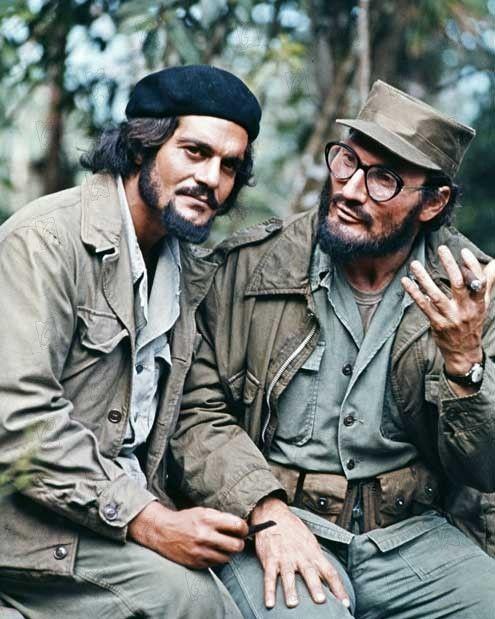
The film about Che! was released in 1969, two years after his death. Starring the Egyptian actor Omar Sharif as Che Guevara, Che! opens with Guevara already a martyr and then quickly gives way to flashbacks. Various actors pretending to be Cuban appear and speak directly to the audience, debating Che Guevara’s legacy. Some describe him as being a violent thug who killed anyone who displeased him. Others describe him as a visionary doctor who sacrificed his comfortable existence for the people. It’s a rather conventional opening and one that hints that Che! is going to try to have it both ways as far as Che’s legacy is concerned. But it’s still effective enough. A montage of soldiers and rebels creates the proper feeling of a society on the verge of collapse.
And then Jack Palance shows up.
Palance first appears creeping his way through the Cuban jungle with a group of soldiers behind him. Palance is chomping on a cigar and he wears the intense look of a man on a mission. My initial reaction was that Palance was playing one of the CIA agents who sent to Cuba to try to assassinate Fidel Castro or to set up the Bay of Pigs invasion. I kept waiting for him to look at the camera and launch into a monologue about why, for the safety of America, he had been dispatched the topple Cuba’s communist government. Imagine my shock when Omar Sharif called Palance, “Fidel.”
Yes, that’s right. Jack Palance plays Fidel Castro! As miscast as the suave Omar Sharif is as Che Guevara, nothing can prepare one for seeing Jack Palance playing Fidel Castro. Needless to say, there is nothing remotely Cuban or even Spanish about Jack Palance. He delivers his lines in his trademark terse Jack Palance voice, without even bothering to try any sort of accent. (And, needless to say, both he and Sharif speak English through the entire film.) Anyone who has ever seen a picture of a young Fidel Castro knows that, while he shared a family resemblance with Justin Trudeau, he looked nothing like Jack Palance. Eventually, Palance puts on a fake beard that makes him look even less like Castro. When one of our narrators mentions that Castro was a great speaker, the film cuts to a scene of Palance spitting out communist slogans with a noted lack of enthusiasm. When Castro takes control of Cuba, Palance looks slightly amused with himself. When Che accused Castro of selling out the revolution, Palance looks bored. It’s a remarkably bad piece of casting. Seeing Palance as Castro feels like seeing John Wayne as Genghis Khan. Thank goodness Hollywood never tried anything that silly, right? Anyway….
As for the rest of the film, it hits all the expected notes. The film was made in the very political year of 1969, a time when the New Left was ascendant and many considered Che Guevara to be a hero. However, since this was a studio production, Che! tries to appeal to both college radicals and their parents by taking a “both sides” approach to Che Guevara. Here’s Che teaching an illiterate farmer how to read. Here’s Che overseeing a bunch of dissidents being executed. Here’s Che getting angry at Castro for not being properly enthusiastic about housing Russian nuclear missiles. Here’s Che talking about a moral revolution. Here’s Che trying to start an unwanted war in Bolivia. Here’s Che talking to Sid Haig — hey, Sid Haig’s in this film!
Like so many mainstream political films of the 60s and today, Che! tries to be political without actually taking any firm positions. One is tempted to say that is the film’s downfall. Of course, the film’s real downfall is casting Jack Palance as Fidel Castro.



 Through the Shattered Lens