4 Shots From 4 Films is just what it says it is, 4 shots from 4 of our favorite films. As opposed to the reviews and recaps that we usually post, 4 Shots From 4 Films lets the visuals do the talking!
Today, it’s time for….
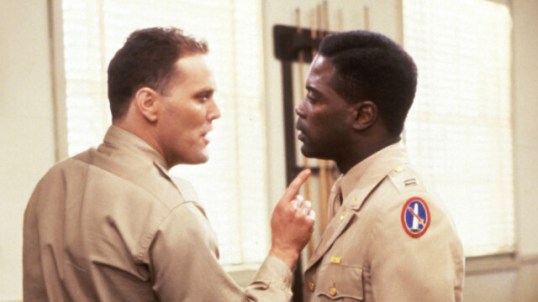
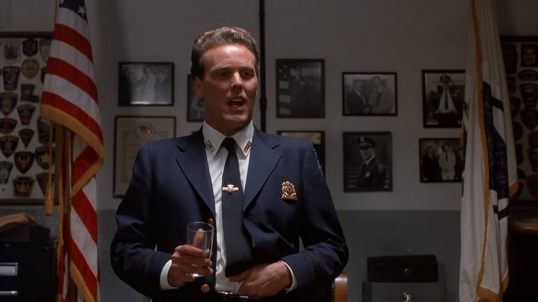
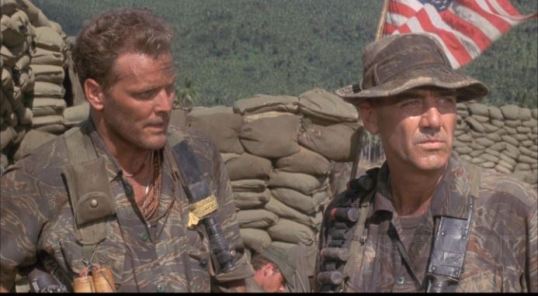
4 Shots From 4 Wings Hauser Films
Vice Squad (1982, dir by Gary Sherman, DP: John Alcott)
A Soldier’s Story (1984, dir by Norman Jewison, DP: Russell Boyd)
Tough Guys Don’t Dance (1987, dir by Norman Mailer, DP: Mike Moyer)
The Siege of Firebase Gloria (1989, dir by Brian Trenchard-Smith, DP: Kevin Lind)
There are a lot of names that get mentioned. Some people give all the credit to U.S. Senator Gaylord Nelson of Wisconsin, who was an environmentalist before it was trendy and who proposed a day-long “teach-in” in 1970. (According to Norman Mailer, Hunter Thompson, and Gary Hart, Gaylord Nelson was also George McGovern’s personal pick for his running mate in 1972 but ultimately, Nelson didn’t get the spot because it was felt people would make fun of his first name. Considering how things went with Thomas Eagleton, one imagines that McGovern probably ended up wishing he had the courage to go with his first instinct.) A peace activist named John McConnell also proposed the idea of an Earth Day in 1969 but there’s some debate whether his proposed Earth Day became the actual Earth Day. Like all things, many people have taken credit for the idea behind Earth Day.
Ira Einhorn was one of those people. A prominent member of Pennsylvania’s counter-culture, Einhorn was a self-styled New Age environmentalist and he did speak at the first Earth Day event in Philadelphia. Einhorn went on to become a prominent guru, providing his services to several corporations that were looking to shake off their stodgy image. He led protests against nuclear energy. He wrote articles about CIA duplicity. He was, for a while, a popular figure and, due to his last name, he was nicknamed “The Unicorn.” He always claimed that he was instrumental in starting Earth Day but the organizers behind the event have always been quick to say that he had little do with it.
It’s understandable that the people behind Earth Day would rather not be associated with Ira Einhorn. Einhorn presented himself as being a quirky, fun-loving hippie but, in private, he was known for having both a violent temper and a misogynistic streak. In 1977, Einhorn’s ex-girlfriend, Texas-born Holly Maddux, disappeared. In 1979, her mummified remains were found in a box that Einhorn kept in his closet. Arrested for her murder and defended in court by future U.S. Sen. Arlen Specter, Einhorn claimed that he was innocent and that he had no idea how Holly Maddux ended up in his closet. (He suggested the CIA might be responsible.) With the help of his wealthy friends, Einhorn fled the United States and ended up in Europe. He lived in Europe for nearly 20 years until he was finally arrested in France. Einhorn’s claim that he was being framed for his anti-nuclear advocacy found a sympathetic audience amongst certain members of the French intellectual community. Eventually, though, Ira Einhorn was extradited to Pennsylvania. He spent the rest of his life in prison, eventually dying in 2020. To the end, he had his supporters despite the fact that he was clearly guilty.
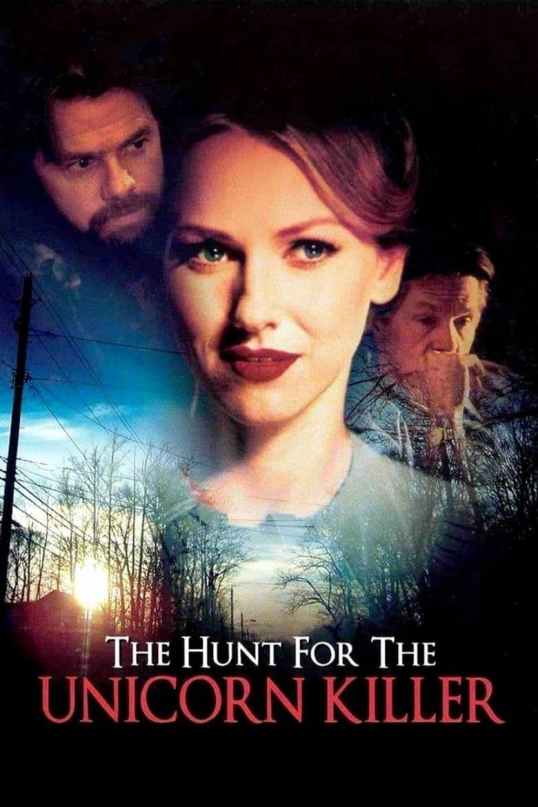
Made for television in 1999, The Hunt For The Unicorn Killer tells the story of Ira (Kevin Anderson), Holly (a pre-MulhollandDrive Naomi Watts), and Holly’s father, Fred (Tom Skerritt). It does a good job of telling the disturbing story of Ira Einhorn and it features good performances from its main stars. Tom Skerritt especially does a good job as a father determined to get justice for his daughter. The film shows how so many of Ira’s friends rationalized his actions, not wanting to admit that their nostalgia for the 60s and the counterculture was blinding them to the monster in their midst. It’s a portrait of how one evil man was able to take advantage of the idealism of others.
The Hunt For The Unicorn Killer‘s original running time was 163 minutes and it was aired over two nights. It was later edited down to 90 minutes for syndication. The uncut version is available on YouTube and that’s definitely the one to see.
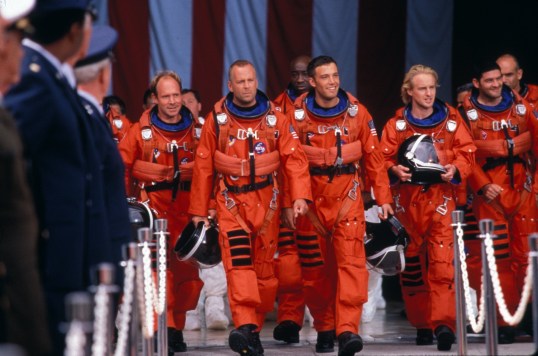
Remember that time that Bruce Willis and a team of oil drillers saved all of humanity from a giant asteroid that was apparently the size of Texas?
Sure, you do! Everyone remembers Armageddon!
1998’s Armageddon is a film that doesn’t get a lot of respect but which everyone remembers. There’s been a lot of movies made about giant asteroids on a collision path with the Earth. Ever since scientists announced that a collision with a comet or an asteroid probably killed the dinosaurs, there’s been a somewhat irrational fear that the same thing could happen to us. Back in 1978, Sean Connery and Karl Malden tried to stop a Meteor(and failed). In 1998, the same year that Armageddon came out, Morgan Freeman, Robert Duvall, and Elijah Wood tried to stop an asteroid from causing a Deep Impact (and failed). Adam McKay made an entire film about everyone saying, “Don’t Look Up,” in an attempt to promote increased panic about climate change (and failed). (“I’m so scared!” Leonardo DiCaprio shouted and audiences responded, “Oh, calm down.”) And yet, it’s Armageddon — ridiculed by critics, endlessly parodied by other movies — that people use as their go-to source for commenting on the prospect of a mass extinction event. Mostly because, in Armageddon, humanity didn’t fail. Bruce Willis showed that asteroid who was boss!
Why do we love Armageddon? A lot of it has to do with the cast. Not only do you have Bruce Willis battling an asteroid but you’ve also got Steve Buscemi, Owen Wilson, Ben Affleck, Will Patton, Michael Clarke Duncan, Peter Stormare, William Fichtner, and a host of others working with him. You’ve got Billy Bob Thornton working ground control. You’ve got Liv Tyler, somehow managing to give a decent performance even while Ben Affleck attacks her with animal crackers. It’s not just the cast is full of familiar and likable actors. It’s that the members of the cast know exactly what type of film that they’re appearing in and they all give exactly the right type of performance for that film. They deliver their lines with conviction while not making the mistake of taking themselves too seriously. Bruce Willis announces that his crew will destroy that asteroid in return for never having to pay taxes again and he announces with just the slightest hint of a smirk, knowing that the audience is going to cheer that moment.
But really, the real reason why Armageddon has survived that test of time is because it’s just so utterly shameless. Director Michael Bay will never be accused of being a subtle director but Bay instinctively understood that Armageddon was not a film that demanded subtlety. Armageddon is a film that demands that constantly moving camera and all of those carefully composed scenes that were clearly made so they could be included in the trailer. It’s a film about big moments and big emotions. Unlike something like Deep Impact, it doesn’t get bogged down in trying to be better than it actually is. Unlike Don’t Look Now, it doesn’t degenerate into a bunch of histrionic speeches. Armageddon exists to make the audience cheer and it succeeds. It takes guts to include a slow motion scene of a bunch of kids celebrating in front of a faded Kennedy For President poster but Bay is exactly the type of director who can pull that off. Michael Bay’s style is not right for a lot of films. But it was perfect for Armageddon.
As I sit here typing this, there are some people panicking because there’s speculation that a meteor is going approach the Earth in the 2030s. It’ll probably miss us but who knows? But you know what? I’m not worried at all. I’ve seen Armageddon. So, on this International Earth Day, let’s remember the courageous men who saved this planet back in 1998.
Wings Hauser, the great character actor who brought his unhinged intensity to many a film, has passed away. Rest in Peace.
Today’s scene that I love comes from what may be Hauser’s best-known film, 1983’s Vice Squad. In this scene, the Vice Squad thinks that they have busted Ramrod, the sadistic pimp played by Hauser. In this scene, Hauser makes Ramrod into an intimidating figure even as he’s being arrested. Martin Scorsese once said Wings Hauser deserved an Oscar for his performance in Vice Squad and he was right.
What’s an Insomnia File? You know how some times you just can’t get any sleep and, at about three in the morning, you’ll find yourself watching whatever you can find on cable or streaming? This feature is all about those insomnia-inspired discoveries!
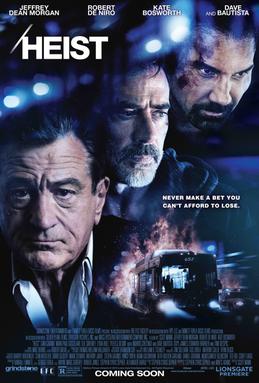
If you find yourself awake later tonight, you can always go over to Tubi and watch the 2015 direct-to-video action thriller, Heist.
Heist takes place in Louisiana. Francis “The Pope” Silva (Robert De Niro) is a mobster and businessman who owns a riverboat casino. The Pope lives his life according to a set of simple but very specific rules. He doesn’t lend money. He doesn’t forgive people who betray him. If you steal from him, he will track you down and he will get his money back and he will make you regret your decision. Working as his main henchman is the sadistic Dog (Morris Chestnut). The Pope’s former main henchman was a man named Luke Vaughn (Jeffrey Dean Morgan) but Luke grew tired of the violence and walked away from it all. Now, Luke works as a dealer in The Pope’s casino. His daughter is sick and Luke desperately needs $300,000 to pay her medial bills. When The Pope refuses to give him the money, Luke teams up with security guard Jason Cox (Dave Bautista) and sets out to rob the place.
The robbery is carefully planned by Luke but, inevitably, things go wrong. A security guard shows up earlier than he was supposed to. A shootout leads to Jason’s best friend, Dante (Stephen Cyrus Sepher), getting shot. The getaway driver panics and drives off, leading to Luke, Cox, and Dante hijacking a bus. Cox orders the bus driver (D.B. Sweeney) to take them to Galveston but Luke is more concerned with getting the money to his daughter. Meanwhile, two police officers — Kris Bajos (Gina Carano) and Detective Marconi (Mark-Paul Gosselaar) — follow the bus, each pursuing their own agenda.
Considering that this film is basically a low budget rip-off of Speed (albeit without a bomb threatening to take out the cast), Heist has an impressive cast and they all do a good job of elevating the film above its B-movie origins. Don’t get me wrong. There are hundreds of plot holes to be found in Heist. The film’s big twist really doesn’t make much sense when you think about it. But, in the end, Heist is an entertaining thrill ride that moves quickly enough that most viewers really won’t have time to obsess on all the lapses of logic. Morgan plays his role with just enough heart that you want his criminal to succeed. De Niro brings some extra layers to a role that could have been a caricature. There’s a brief scene in which he meets his estranged daughter (Kate Bosworth) and, as a result, you suddenly see his character in an entirely new light. As a character who seems like a much more sinister version of Zach Morris, Mark-Paul Gosselaar keeps you guessing. And finally, Gina Carano — years before her cancellation — gives an earnest performance that works despite her character being rather inconsistently written.
Heist is an entertaining and fast-paced action film with a good cast and an interesting story. If you can’t sleep, you might as well be entertained.
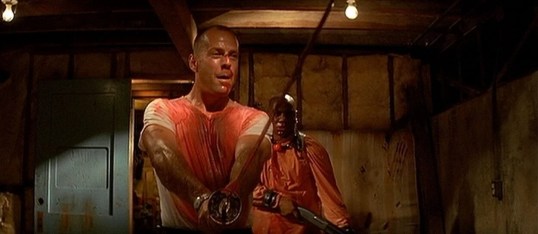
Today’s scene that I love comes from 1994’s Pulp Fiction.
There aren’t many happy endings to be found in Pulp Fiction. Vince ends up gunned down in Butch’s bathroom. Jules leaves to wander the Earth. Mia is still married to Marcellus. Marcellus may get his briefcase but he’s still going to be traumatized for life. However, Bruce Willis’s aging boxer, Butch, gets a happy ending. And good for him!
4 Shots From 4 Films is just what it says it is, 4 shots from 4 of our favorite films. As opposed to the reviews and recaps that we usually post, 4 Shots From 4 Films lets the visuals do the talking!
Today, Bruce Willis turns 70. It’s time for….
4 Shots From 4 Bruce Willis Films
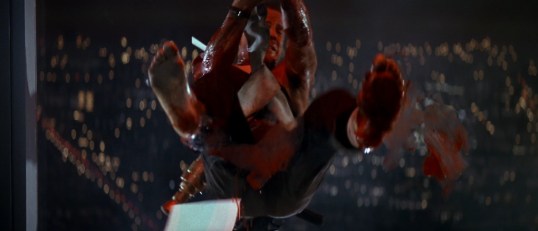
Die Hard (1988, directed by John McTiernan, DP: Jan de Bont)
Pulp Fiction (1994, dir by Quentin Tarantino, DP: Andrzej Sekuła)
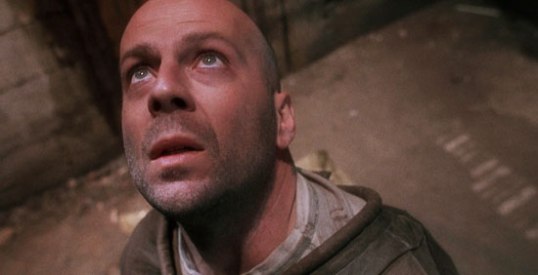
12 Monkeys (1995, dir by Terry Gilliam, DP: Roger Pratt)
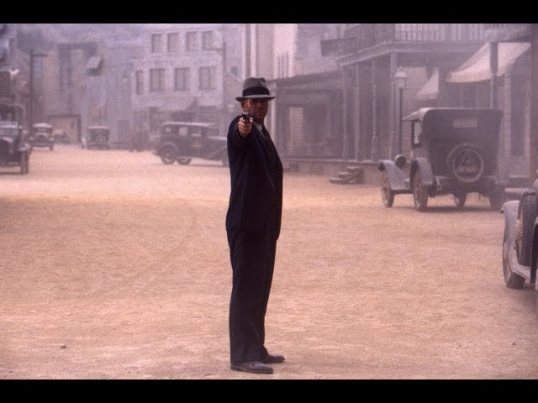
Last Man Standing (1996, dir by Walter Hill, DP: Lloyd Ahern II)
2016’s Precious Cargo tells the story of Jack (Mark-Paul Gosselaar) and his ex-wife Karen (Claire Forlani).
Karen is a professional thief who has botched a robbery for her former lover, crime boss Eddie Filosa (Bruce Willis). Eddie wants Karen dead so, of course, Karen flees down to the Florida everglades, where she finds Jack living in a swamp shack and making love to his latest girlfriend, Jenna (Lydia Hull). Karen tells them to go ahead and finish up and she’ll just wait out in the kitchen. Jack in not particularly happy to see Karen again but then he notices that she has a baby bump. “Always use a condom,” Karen tells Jenna. Eddie’s men, led by Simon (Daniel Berhardt), attack and it all leads to a boat chase that is surprisingly exciting when you consider that Precious Cargo is a low-budget, direct-to-video offering.
It turns out that Jack can save Karen from Eddie’s wrath by planning and executing a heist for the crime boss. Jack assembles his crew, Jack gets ready for the heist …. uh-oh, it’s time for a double cross! The plot is nothing special. It’s identical to a hundred other low-budget crime films that you’ve seen recently. It’s the type of thing that Michael Mann could have turned into a metaphor for American ennui but, in this film, it’s just a typical heist. The viewer enjoys it while it’s happening and then forgets about it two minutes afterwards.
That said, Precious Cargo is not quite as bad as the typical direct-to-video film. Mark-Paul Gosselaar — yes, Zack Morris himself — gives a reasonably compelling performance as Jack. To a certain group of people, he’s always be Zack and I imagine he’s sick of people asking him about whether or not he still has his giant phone but, as he’s gone from teen idol to adult actor, Gosselaar has shown himself to be a talented actor. (For the record, Zack lost his phone in the drunk driving episode. I know some people say that episode doesn’t count because it was a Tori episode but I say that it does. So there.) Claire Forlani is actually more compelling in these direct-to-video films than she ever was in any of the big budget studio films that she used to appear in.
Of course, I imagine that the main selling point for this film was meant to be Bruce Willis. This is one of the direct-to-video films that dominated the last fourth of Willis’s career. When Willis retired due to aphasia, there was a general assumption that all of Willis’s direct-to-video films were made as a result of his condition. I don’t know if that’s quite true. (It’s entirely possible that he just wanted a quick payday.) But it is true that Willis only has a few minutes of screentime in Precious Cargo and that several shots involving Eddie were accomplished with a stand-in. That said, in this film, Willis still brings some energy to the part. He’s an effective villain, even if I think everyone prefers to see Willis saving the day. Even in the direct-to-video era, Bruce Willis still had a definite presence.
Precious Cargo is predictable and ultimately forgettable but it’s still entertaining enough for 90 minutes.
2012’s Lay the Favorite is a movie about gambling.
Rebecca Hall stars as Beth Raymer, a dancer in Florida who makes her money by giving private shows and lap dances to paying customers. Bored and disillusioned with her life, she follows the advice of her father (Corbin Bernsen) and decides to pursue her lifelong dream of becoming a Las Vegas cocktail waitress.
(Really, that’s your dream? I mean, my mom occasionally worked as a waitress because she was essentially taking care of four girls by herself and she needed the extra money but it was hardly a lifelong dream.)
Vegas is a union town, which means that Beth can’t just walk in and start serving drinks. Instead, she gets a job working with Dink Heimowitz (Bruce Willis), a big-time gambler who hires other people to place bets for him. Dink is surprisingly nice for a professional gambler and it’s not long before Beth finds herself falling for him. Dink’s wife, Tulip (Catherine Zeta-Jones), is not happy about that. Tulip need not worry about Beth eventually ends up falling in love with a journalist named Jeremy (Joshua Jackson) and the two of them quickly become one of the most boring couples that I’ve ever seen in my life. Eventually, Tulip does demand that Dink fire Beth and Beth ends up in New York, working for a decadent gambler named Rosy (Vince Vaughn). Uh-oh — bookmaking’s illegal in New York!
Rebecca Hall is one of those performers who tends to act with a capitol A. There’s not necessarily a bad thing. Hall has given some very strong and very memorable performances, in films like Vicky Christina Barcelona, Please Give, and the heart-breaking Christine. However, when Hall is miscast — as she is in this film — her style of acting can seem overly mannered. Hall plays Beth as being a collection of quirks and twitches and nervous mannerisms and embarrassed facial expressions and the end result is that Beth comes across not as being the endearing ditz that the film wants her to be but instead as just a very annoying and very immature human being. It’s actually perfectly understandable why Tulip would demand that Dink fire her. What’s less understandable is why we should care. Myself, I wanted someone to warn Joshua Jackson because I don’t think he knew what he was getting into.
Lay The Favorite is yet another film that tries to use Las Vegas as a metaphor for American culture. That’s not a bad idea. David Lynch made great use of Vegas in Twin Peaks: The Return. Martin Scorsese did the same with Casino. However, Lay The Favorite was directed by the British Stephen Frears and, as happens so often whenever a European director tries to understand American culture, the entire film leaves you feeling as if you’re on the outside looking in. Lynch and Scorsese, for instance, both understood that Las Vegas represents both the ultimate risk and the ultimate second chance. If you have the courage, you can bet every asset that you have. And if you’re lucky, you might win. If you lose, you know you can still rebuild. Whether it’s grounded in reality or not, it’s a very American idea. Lay The Favorite, on the other hand, can’t see beyond the glitz of the strip and the harsh concrete reality of a nearby apartment complex. It’s portrait of Vegas is as superficial as a tourist’s postcard. Thematically, Lay The Favorite feels as empty and predictable as its double entendre title.
On the plus side, Bruce Willis, Vince Vaughn, and Catherine Zeta-Jones all gave better performances that the film probably deserved. Willis, especially, gives a poignant performance as temperamental, henpecked, and good-natured Dink. Bruce Willis spent so much time as an action star that it was often overlooked that he was a very good character actor. Even in a bad film like this one, Willis came through.
The Kennedy files were just released a few hours ago. There’s supposedly either 8,000 or 80,000 of them, depending on which source you trust. It’ll take a while for people to go through them and, to be honest, I’ll be surprised if anything new is discovered. I’m pretty much a natural born skeptic when it comes to conspiracy theories, even though I love reading about them.
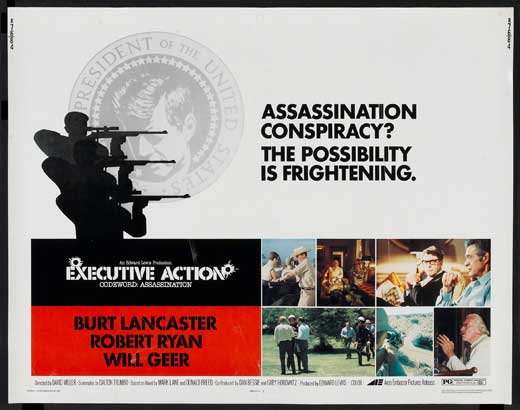
Today’s scene that I love comes from one of the first conspiracy-themed films to be made about the Kennedy assassination, 1973’s Executive Action. In this scene, the infamous photograph of Lee Harvey Oswald holding his rifle is created.

 Through the Shattered Lens