4 (or more) Shots From 4 (or more) Films is just what it says it is, 4 (or more) shots from 4 (or more) of our favorite films. As opposed to the reviews and recaps that we usually post, 4 (or more) Shots From 4 (or more) Films lets the visuals do the talking.
105 years ago today, Michael Anderson was born in London. Anderson may have never become a household name but he directed some memorable movies. Around The World in 80 Days proved that audiences love spectacle and celebrity cameos and it won the Oscar for Best Picture of 1956. (Though Anderson was nominated for best director, the award went to George Stevens for Giant.) However, I think that Anderson’s best-remembered film is probably Logan’s Run. Whenever I shout, “I hate outside!” or I reply to a simple question with, “There is no sanctuary,” people always seem to automatically know which film I’m referencing. Anderson followed up Logan’s Run with Orca, which is one of the better Jaws rip-offs.
Today, we honor the career and legacy of Michael Anderson with….
4 Shots From 4 Michael Anderson Films
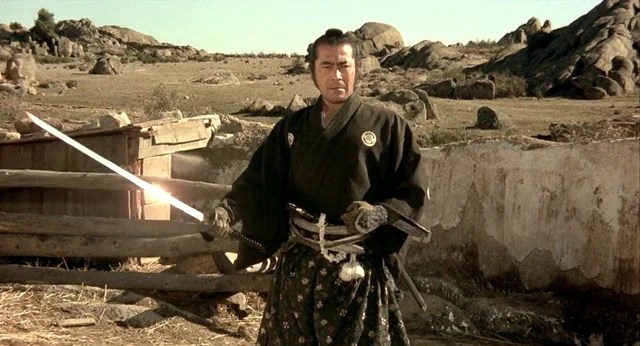
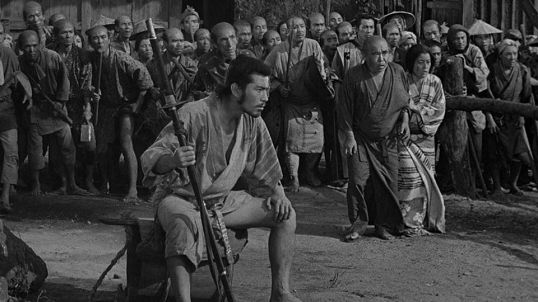
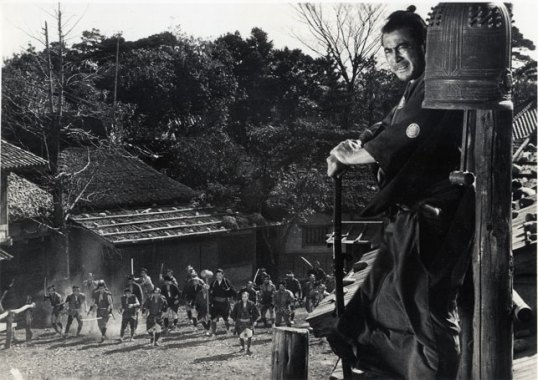
Around The World in 80 Days (dir by Michael Anderson, DP: Lionel Lindon)
Logan’s Run (1976, dir by Michael Anderson, DP: Ernest Laszlo)
Orca (1977, dir by Michael Anderson, DP: J. Barry Herron and Ted Moore)
The Martian Chronicles (1980, directed by Michael Anderson, DP: Ted Moore)
Gene Hackman is a tremendous, multiple Oscar winning actor who has been in some of the best movies ever made. Of all that great work, the movie that means the most to me is HOOSIERS (1986). If you don’t believe me, just go ahead and follow me on X. I’m easy to find. My handle is @Hoosiers1986. I’ve shared before that my dad was a high school basketball coach at small schools here in Arkansas that weren’t much different from the one in Hickory, IN depicted in the film. Growing up in the Crain household, basketball was my life and my dad and HOOSIERS have always been such inspirations to me.
On his 95th birthday, I wanted to share this video I found of Hackman discussing his role as Coach Norman Dale in HOOSIERS, which includes clips from behind the scenes and of the film itself. I had never seen this material before so I found it especially interesting. He tells a really special story about a lady he met while on location. It was quite touching. Happy Birthday, Mr. Hackman! Enjoy!
Tom Selleck has been a part of my life almost as far back as I can remember. I was seven years old when MAGNUM P.I. premiered on T.V., so I literally grew up on the adventures of Hawaii’s best private eye! Selleck is such a likable and charismatic screen presence.
My wife and I are celebrating his birthday by watching my very favorite Tom Selleck movie, QUIGLEY DOWN UNDER (1990). I love this scene where Wyoming cowboy Matthew Quigley first arrives at the Australian ranch of Elliott Marston (Alan Rickman), and then proceeds to prove his prowess with a long distance rifle to a bunch of smirkers.
Enjoy, my friends, and Happy Birthday, Mr. Selleck!
Continuing our theme of dystopian noir, today’s scene of the day comes from 1982’s Blade Runner. In this scene, we not only meet Rick Deckard (Harrison Ford) but we also get a look at the future of Los Angeles, from both the sky and the ground.
(Of course, the film takes place in 2019 so its future is our past!)
This is one of the best world-building scenes that I’ve ever seen, one that works because it takes place in a world we can recognize but which has obviously developed and changed over the years. Plus, I just like Harrison Ford wearing a trench coat and looking grumpy. He should have done more noirs.
4 Shots From 4 Films is just what it says it is, 4 shots from 4 of our favorite films. As opposed to the reviews and recaps that we usually post, 4 Shots From 4 Films lets the visuals do the talking!
I have a headache and it’s raining outside. It’s time for….
4 Shots From 4 Dystopian Film Noirs
Blade Runner (1982, dir by Ridley Scott, DP: Jordan Cronenweth)
Streets of Fire (1984, dir by Walter Hill, DP: Andrew Laszlo)
Inland Empire (2006, dir by David Lynch, DP: David Lynch)
Blade Runner 2049 (2017, dir by Denis Villeneuve, DP: Roger Deakins)
The Sundance Film Festival is currently underway in Utah. For the next few days, I’ll be taking a look at some of the films that have previously won awards at Sundance.
First released in 2000, Minari is a classic story of the pursuit of the American dream.
Taking place in the early 80s, the movie follows Jacob Yi (Steven Yeun), a South Korean immigrant who relocates his family from California to Arkansas. Jacob has purchased a farm and he plans to make a fortune selling Korean produce to restaurants in Dallas. (Dallas, I should mention, does have a very large Korean population so Jacob’s plan is not a bad one.) Jacob is enthusiastic and confident that his plan will succeed. His wife Monica (Han Ye-ri) is a bit less confident. She doesn’t want to live in a mobile home and she worries about the health of her young son David (Alan Kim), who has a heart murmur. Monica feels that her husband has dragged them out to the middle of nowhere and that he has no idea what he’s doing. Jacob is determined to become a success and he even hires his first employee, Paul (Will Patton), a local eccentric who often walks up and down the highway with a cross on his back.
I have to admit that I was initially a bit cautious about watching Minari. I have family from Arkansas. When I was growing up, my family sometimes lived in Arkansas. (When I was growing up, we moved around so much that I used to just think of Arkansas, Oklahoma, New Mexico, Louisiana, Colorado, and Texas as just being one big state that I called home.) Arkansas is one of those states that is usually not treated particularly kindly in the movies. For that reason, I was pleasantly surprised by Minari. Jacob may be an outsider, as both an immigrant and a former Californian, but, for the most part, the people that he meets are kind and willing to help. Paul is especially an interesting character. Many movies would have treated Paul as a redneck joke but, in Minari, he’s given a certain dignity. The cinematography is wonderful, capturing the humid beauty of not just Arkansas but the midwest in general. Jacob and his family are 20th century pioneers, exploring what for them is a new and untouched land.
Eventually, Monica’s mother, Soon-ja (Youn Yuh-jung), comes to stay with the family. She shares a room with David and it takes a while for David to get used to his grandmother. (David complains that she doesn’t act like a grandmother.) It also takes Soon-ja a while to get used to life in Arkansas. Youn Yuh-jung won a deserved Oscar for her performance here, playing a stranger in a strange land who ultimately inspires David to find his own inner strength. The scenes between Youn and Alan Kim are some of the strongest in the film. Towards the end of the film, Youn has a scene that truly left me in tears.
Minari is about the pursuit of the American dream but it’s also about the strength of family. Jacob is not always a sympathetic character but he proves himself in the end. The film ends on an ambiguous note but I choose to believe that Jacob eventually found his fortune.
Minari won the Dramatic Grand Jury Prize and, like many so many Sundance hits in the past, it went on to be nominated for Best Picture. It lost to Nomadland, despite Minari being a far superior film. That’s the Academy for you.
I hope that Bradley Cooper will win an Oscar soon.
It’s obvious that Cooper wants that Oscar and really, who can blame him? After spending years being dismissed as a lightweight comedy actor, Cooper has really come into his own over the past thirteen years. 2012 was the year that he starred in Silver Linings Playbook and received his first Best Actor nomination. In the years that followed, he was nominated for American Sniper, American Hustle, A Star Is Born and Maestro. He deserved to be nominated for both Nightmare Alley and Licorice Pizza. Cooper has shown himself to be both a talented actor and director. He may not have been nominated for his direction of A Star Is Born but everyone knows that he should have been. He’s come a long way from being the star of The Hangover films and it makes sense that he would want an Oscar to make it official.
(The Oscar itself may not carry the cultural cachet that it once did but seriously, an award is an award.)
That desire for an Oscar is probably the best way to explain 2023’s Maestro, a film that really might as well have just been called Oscar Bait. Not only did Cooper direct and co-write Maestro but he also donned a prosthetic nose (and was briefly the center of some online controversy) to play the role of composer Leonard Bernstein. Filmed in both black-and-white and color, the film follows Leonard Bernstein from his young debut as a conductor through his marriage to Felecia (Carey Mulligan). Throughout the film, Felecia remains Leonard’s strongest supporter and his muse, even when she’s embarrassed by the rumors of his own impulsive behavior and his habit of cheating on her with men. The film is a portrait of the struggle to be a genius, the struggle to support a genius, and the love that can hold two people together even during the most difficult of times. And it’s all very Oscar bait-y, giving both Bradley Cooper and Carey Mulligan several scenes that, while well-executed, still feel as if they were designed specifically to appeal to the voters.
I had mixed feelings about Maestro when I watched it. On the one hand, I definitely admired the craft and the skill that went into the production. I admired the performances of both Bradley Cooper and Carey Mulligan. The movie’s soundtrack is full of the best of Bernstein’s compositions, all performed by the London Symphony Orchestra. The movie looked wonderful and it sounded wonderful but it also felt strangely hollow. Watching it, I realized that the movie really didn’t know what it wanted to say about Bernstein and Felecia. The movie was so consumed with technical perfection that the emotions of the story sometimes felt rather remote. It was a film about Leonard Bernstein that, despite Cooper’s strong performance, failed to really give us a reason to care about Bernstein. Maestro is a film that you admire while you watch it but it doesn’t really stick with you afterwards. It’s the epitome of Oscar bait.
Maestro did not win Cooper any Oscars, though it did bring some nominations. The film was also nominated for Best Picture but it lost to Oppenheimer. That said, I’m looking forward to the year when Bradley Cooper does finally win his Oscar and hopefully, he’ll win it for a film that’s more like the emotion-filled A Star Is Born than the rather detached Maestro. He’s one of my favorite actors and he’s due.
In honor of Director Frank Darabont’s 66th birthday, I’m sharing a scene from his masterpiece, THE SHAWSHANK REDEMPTION. One of the best things about this movie is how much humor is found behind those prison walls, often coming from seemingly unexpected places. In this scene, the humor is found when the characters take on the mundane task of cataloging the prison library. Enjoy!
I recently reviewed THE SHAWSHANK REDEMPTION on my son’s birthday.
4 Shots From 4 Films is just what it says it is, 4 shots from 4 of our favorite films. As opposed to the reviews and recaps that we usually post, 4 Shots From 4 Films lets the visuals do the talking!
Happy Pop Art Day! It’s time for….
4 Shots From 4 Pop Art Films
Empire (1965, dir by Andy Warhol)
Vinyl (1965, dir by Andy Warhol)
Lupe (1966, dir by Andy Warhol)
Chelsea Girls (1966, dir by Andy Warhol and Paul Morrissey)
In March of 1965, Andy Warhol, Gerard Malanga, and Chuck Wein went to the New York City apartment of Edie Sedgwick and made a movie. Edie Sedgwick, at that time, was a 22 year-old model who had been christened a “youthquaker” by Vogue. She was also, for a year or so, the best-known member of Andy Warhol’s ensemble. Of all the so-called superstars that spent time with Warhol and appeared in his films, Edie was the one who actually was a star.
The film opens with Edie waking up, walking around her bedroom, smoking a cigarette, popping pills, exercising, and lounging in bed. (That’s pretty much my morning routine too, except for the cigarettes.) She doesn’t speak. The only sound that we hear is a record being played in the background and the whirring of Warhol’s camera. Because of a faulty lens, the first 30 minutes of Poor Little Rich Girl are out-of-focus. We can see Sedgwick’s form as she moves and we can, for the most part, tell what she’s doing but we can’t see any exact details. Her face is a blur and sometimes, her body seems to disappear into the walls of the room itself. It’s a genuinely disconcerting effect, even if it was an accident on Warhol’s part. Edie is there but she’s not there. The blurry image seems to reflect an unfocused life. Edie is the poor little rich girl of the title and indeed, she was known as a socialite before she even became a part of Warhol’s circle. The blurriness indicates that she has everything but it can’t be seen.
After 30 minutes, the film comes into focus. Clad in black underwear, Edie answers questions from Chuck Wein, who remains off-camera. Sometimes, we can hear Chuck’s questions and sometimes, we can’t. Our focus is on Edie’s often amused reaction to the questions, even more so than her actual answers. Edie smokes a pipe and looks at herself in her mirror and she talks about how she blew her entire inheritance in just a manner of days. She raids her closet and tries on clothes while Wein offers up his opinions. Edie is living the ultimate fantasy of trying on different outfits while your gay best friend makes you laugh with his snarky comments. Edie comes across as someone who is living in the present and not worrying about what’s going to happen in the future. It’s only when she nervously smiles that we get hints of the inner turmoil that came to define her final years. The camera loves Edie and, even appearing in what is basically a home movie, Edie has the screen presence of a star. There was nothing false about Edie Sedgwick.
Edie Sedgwick, Chuck Wein, and Andy Warhol
Watching the film today, of course, it’s hard not to feel a bit sad at the sight of a happy Edie Sedgwick. While Edie would become an underground star as a result of her association with Andy Warhol and his films, their friendship ended when Edie tried to establish a career outside of Warhol’s films. Edie’s own struggle with drugs and her mental health sabotaged her career and she died at the age of 28. I first read George Plimpton’s biography of Edie Sedgwick when I was sixteen and I immediately felt a strong connection to her and her tragic story, so much so that I was actually relieved when I made it to my 29th birthday. Though most people ultimately see Edie Sedgwick as being a tragic figure, I prefer to remember Edie as she appeared in the second half of Poor Little Rich Girl, happy and in focus.