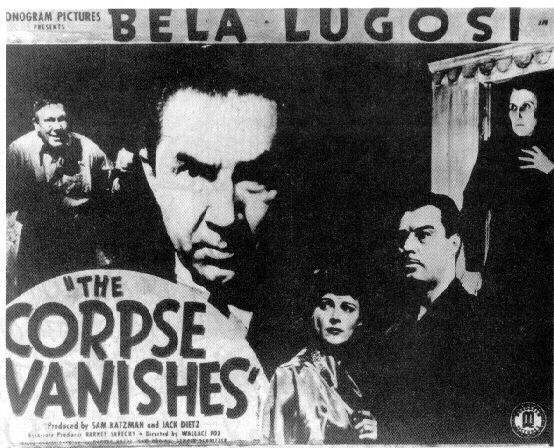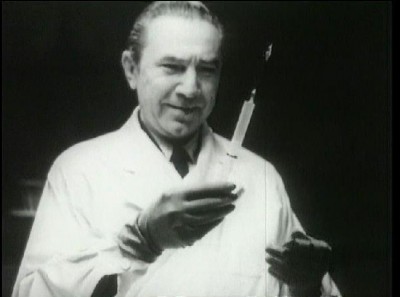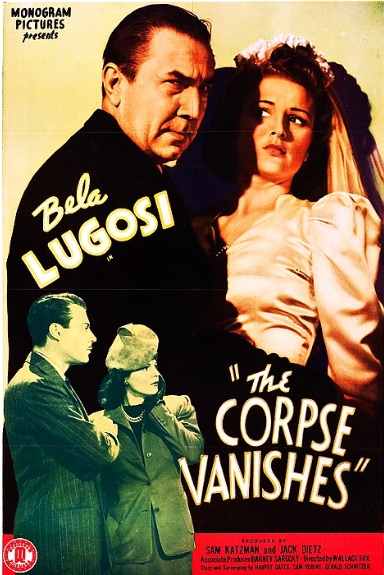
Horror Film Review: The Corpse Vanishes (dir by Wallace Fox)


1942’s The Corpse Vanishes opens with a young bride collapsing at her wedding.  A doctor runs over to her and says that she’s died.  A hearse — or a “stiff wagon,” as one witness puts it — pulls up and takes the body.  However, the body never reaches the morgue!

It turns out that this is not the first time this has happened.  In fact, there’s an epidemic of brides dying on their wedding day and their bodies disappearing.  One would think that this would cause a citywide panic or, at the very least, it would cause some people to maybe get married out-of-town.  Considering that the most recent victim was the daughter of one of the richest families in the community, you would think solving this mystery would be the police’s number one priority.

However, the police are useless.  And when the police can’t get the job done, it falls to journalists.  At least, that’s the way it worked in movies from the 1930s and the 40s.  While the cops were busy saying, “Scram!” and “Beat it, buster!,” it fell to the cynical and quick-witted journalist to find out what was going on.  In this case, Patricia Hunter (Luana Walters) investigates and discovers that all of the brides received an orchid on their wedding day.  (How the police didn’t notice this, I don’t know.)  Patricia tracks down the eccentric Dr. Lorenz (Bela Lugosi), who was once quite renowned for his orchids.

Dr. Lorenz now lives in a secluded mansion.  He’s polite when Patricia comes to speak to him but it’s obvious that he’s hiding something.  A sudden thunderstorm leads to Patricia and Dr. Foster (Tristram Coffin) getting stranded at Lorenz’s mansion.  Foster was visiting the mansion to examine Lorenz’s wife, the Countess (Elizabeth Russell).

Lorenz, as you probably already guessed, is behind the corpse abductions.  Except, of course, the brides aren’t dead.  Instead, the orchid has put them into a state of suspended animation.  Lorenz is extracting their blood and using it to keep his wife young.  Helping him out are his servants, a dwarf named Toby (Angelo Rossitto), Toby’s hulking half-brother, Angel (Frank Moran), and their mother, Fagah (Minerva Urecal).  Patricia figures out what is going on but will she be able to convince anyone else!?

From what I read about the film online, it would appear that The Corpse Vanishes has got a terrible reputation but, when I watched it, I actually found it to be entertaining when taken on its own Poverty Row terms.  No, the plot doesn’t make any sense.  But Bela Lugosi’s smile manages to be both sinister and inviting and Toby and Angel make for good henchmen.  The movie only has a 64-minute runtime and, as a result, the plot has to keep moving fairly quickly.  The film also features a lot of snappy “newsroom” dialogue between Patricia and her easily-annoyed editor (Kenneth Harlan), all delivered at a fast pace and with the the casually cynical outlook that makes 1940s newspaper movies so entertaining.  The Corpse Vanishes is a thoroughly ludicrous film that epitomizes an era and, as such, it’s far more diverting than one might otherwise expect.
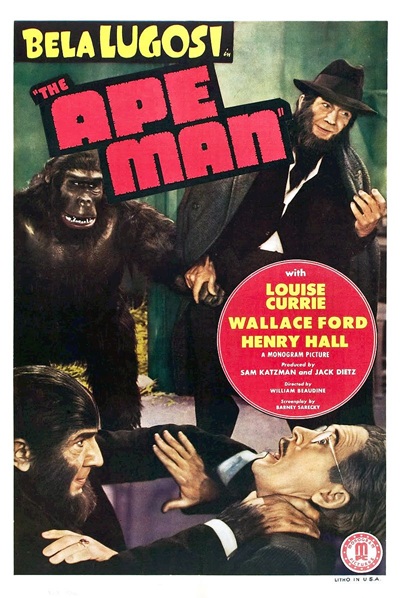
Horror Film Review: The Ape Man (dir by William Beaudine)


In this 1943 film, a mysterious man suggests to reporter Jeff Carter (Wallace Ford) that he should go out to the mansion of Dr. James Brewster (Bela Lugosi) and look into the recent disappearance of the doctor.  Dr. Brewster’s sister (Minerva Urecal) is a well-known ghost hunter and Carter’s editors likes the idea of Carter and photographer Billie Mason (Louise Currie) heading out to the mansion and getting a picture of a ghost.

Carter is upset because he’s having work with a — gasp! — woman.  Bliie is not impressed by the fact that Carter is still in America while all the other men his age are fighting overseas.  Carter explains that he’ll be enlisting in the Navy in a week.  Billie realizes that Carter is not an unpatriotic coward and we, the viewers, are reminded that this film was made during World War II.  I like the fact that America was so unified during World War II that even fictional characters were expected to explain what they were doing for war effort.

For the record, Dr. Brewster’s mansion is not haunted by ghosts.  Instead, the problem is that Dr. Brewster’s experiments have turned him into a man-ape hybrid.  He has a beard, he walks like a monkey, and he fears that he’s turning more into an ape everyday.  He spends almost all of his time locked up in a cage with a gorilla.  Dr. Brewster has (somehow) discovered that the only way to reverse the process is to get regular injections of spinal fluid.  However, it’s impossible to extract the spinal fluid without also killing the donor.  Dr. Brewster’s colleague, Dr. Randall (Henry Hall), refuses to be a party to murder but he still wants to help Brewster.  Unfortunately, Brewster is beyond saving and he’s also losing his mind as he finds himself slowly becoming more and more of an ape.

The Ape Man was directed by William Beaudine, a filmmaker who directed 179 movies over the course of his long career.  Beaudine worked in all genres, starting off as a major director during the silent era before then becoming a prolific B-movie maker during the sound era.  As a B-movie director, Beaudine was famous for rarely doing second take.  If someone flubbed a line or a piece of scenery nearly fell over, that was too bad.  Of course, it should be noted that Beaudine was working for various Poverty Row production companies and he probably didn’t have the budget to do multiple takes.  His job was to get the film shot quickly and for as little money as possible.

That certainly seems to be the philosophy between The Ape Man, which is only a little over an hour long and which features all of the usual plot holes and continuity eras that one might expect to find in a film that was tossed together in just a few days.  That said, The Ape Man is kind of a fun movie.  Bela Lugosi does his best, even when he’s wearing a totally ludicrous beard.  Wallace Ford and Louise Currie deliver their lines in the rat-a-tat fashion that seemed to be popular with journalists in the films of the 30s and 40s.  The plot’s cheeful lack of coherence actually becomes rather charming and the story ends with a nice moment of 4th wall breaking, as the film itself is saying, “Hey, we had fun, didn’t we?”

Woman They Almost Lynched (1953, directed by Allan Dwan)


At the height of the Civil War, the small town of Border City, Missouri has declared itself to be neutral ground.  Mayor Delilah Courtney (Nina Varela) announces that anyone who enters her town looking to recruit for either the Union or the Confederacy will be arrested and will face the possibility of being hung from the noose in the middle of Main Street.

That doesn’t stop Charles Quantrill (Brian Donlevy) from coming to town.  Quantrill is a former Confederate officer who now terrorizes the Arkansas/Missouri border with his gang of thieves.  Accompanying Quantrill is his wife, Kate (Audrey Totter), who once lived in Border City and who still enjoys singing a song at the saloon.

Another new arrival is Sally Maris (Joan Leslie), who comes down from Michigan to help her no-account account, Bitterroot Bill (Reed Hadley), run his saloon.  Sally attempts to bring some order to the rowdy saloon, which makes an enemy out of Kate.  When Bill is killed in a gunfight, Sally takes over the saloon and soon, she is being challenged first to a fight and then to an actual duel by Kate.  With the disapproving Mayor Courtney watching all of the action from her office, it is obvious that one of the women is eventually going to be taken to the noose in the middle of the street but which one?

This is one of the best of the many B-westerns that Allan Dwan directed in the 1950s.  Though much of the emphasis is on the usual western action — Quantrill wants to take over a mine, there’s a Confederate spy in town, and both Frank and Jesse James appear as supporting characters — the film is really about the rivalry and eventual partnership between a group of strong-willed woman who aren’t going to let anyone tell them how to live their lives.  As tough as Kate is, Sally proves to be stronger than she looks and, in the end, they realize that they are stronger working together for a common goal than trying to tear each other down.  Audrey Totter and Joan Leslie both give sexy and tough performances as Kate and Sally.  They’re equally believable hanging out in a saloon, flirting with a cowboy, or drawing guns on each other in the middle of the street.

Along with taking a strong stand against vigilante justice, Woman They Almost Lynched features an exciting stage coach robbery, an intriguing story, and two very interesting lead characters.  It’s a western that deserves to be better known.


Halloween Havoc!: Bela Lugosi in THE CORPSE VANISHES (Monogram 1943)


gary loggins's avatarcracked rear viewer

cv1

A little over a week ago I wrote about Bela Lugosi’s pairing with The East Side Kids , and mentioned what’s been come to know as “The Monogram Nine”. These Poverty Row horrors were ultra-low-budget schlockfests made quickly for wartime audiences, and though the films weren’t very good, they gave Bela a chance to once again have his name above the titles. From 1941 to 1944, the Hungarian cranked out the rubbish: THE INVISIBLE GHOST, BLACK DRAGONS, THE CORPSE VANISHES, BOWERY AT MIDNIGHT, THE APE MAN, VOODOO MAN, RETURN OF THE APE MAN, and the two East Side Kids entries. Let’s take a look at a typical Lugosi vehicle, 1943’s THE CORPSE VANISHES.

cv2

Our story concerns young, virginal society brides who keep dying at the altar, their corpses hijacked by mysterious Dr. Lorenz (Bela, of course). The brides receive an “unusual orchid” whose “peculiar sweet odor” causes them to go into a…

View original post 602 more words

The Fabulous Forties #33: Boys of the City (dir by Joseph H. Lewis)


Boysofthecity

The 33rd film in Mill Creek’s Fabulous Forties box set was 1940’s Boys of the City.

As a classic film lover, I have to admit that I groaned a bit when the opening credits announced that Boys of the City starred “East Side Kids.”  The East Side Kids were a group of actors who appeared in a number of B-movies from the 1930s through the 50s.  Many of the actors started out as members of the Dead End Kids and a few more were members of a group known as The Little Tough Guys.  In the 40s, they merged to become the East Side Kids and then eventually, once the East Side Kids started to hit their 30s, they became known as the Bowery Boys.  Their movies started out as tough and gritty melodramas but, by the time they were known as the Bowery Boys, they were making cartoonish comedies.  Occasionally, one of their films will show up on TCM.  Their early serious films (Dead End, Angels With Dirty Faces) remain watchable but, from what little I’ve seen of them, their later comedies appear to be damn near unbearable.

Boys of the City finds the East Side Kids in transition.  The kids still have an edge to them.  They are definitely portrayed as being juvenile delinquents who are walking a thin line between either a short life of crime or a long life of poverty.  But them film itself, while it may not be as cartoonish as the films that were to come in the future, is definitely a comedy.

Basically, the East Side Kids (Bobby Jordan, Leo Gorcey, Hal E. Chester, Frankie Burke, Sunshine Sammy, Donald Haines, David Gorcey, and Algy Williams) have been arrested for vandalism and are given a choice.  They can either go to juvenile hall or they can spend the summer at a camp in upstate New York.  Somewhat reluctantly (and hopefully remembering the unlucky fates of Humphrey Bogart in Dead End and James Cagney in Angels With Dirty Faces), the kids agree to go to the camp.

However, on the way to the camp, their car breaks down and they are forced to stay at the nearby home of a crooked judge (Forrest Taylor) until they can get the car repaired.  The judge, however, is killed and it’s up to the East Side Kids to solve the murder!  Was the judge killed by the gangsters that he was set to testify against?  Was he killed by his niece (Inna Gest)?  Or maybe it was his housekeeper, Agnes (Minerva Urecal, who appears to be parodying Judith Anderson’s performance in Rebecca)?  Or was he murdered by Knuckles (Dave O’Brien), who the judge wrongly sentenced to die and who, following his vindication and release from prison, has become a guardian to the East Side Kids?

Who knows?  Who cares?  I certainly didn’t.

Clocking in at 68 minutes, Boys of the City is a typical 1940s second feature.  Designed to keep audiences entertained without requiring them to think, Boys of the City moves quickly and adds up to nothing.  I know that there are some classic film lovers who can tell the difference between the various East Side Kids (or Dead End Kids or Bowery Boys or whatever you want to call them) but they all pretty much blended together for me.

Not surprisingly for a film made in 1940, Boys of the City is full of casual racism.  Sunshine Sammy plays an East Side Kid named Scruno.  As soon as Scruno sees the cemetery next to the house, his eyes go wide and he says, “G-g-g-ghosts!”  Apparently, that was very popular in the 40s but today, it’s impossible to watch without cringing.

Boys of the City has some interest as a time capsule but otherwise, it’s a film that is easily and happily forgotten about.