I love the character actor Stuart Margolin. He’s well known for his work as Angel Martin on the James Garner TV series THE ROCKFORD FILES, but I’ll always appreciate him the most for his important performances with director Michael Winner and actor Charles Bronson in the movies THE STONE KILLER and DEATH WISH. Margolin passed away in 2022 but his legacy on film and TV live on forever!
For a bit of 70’s cinema trivia, if anyone ever asks you who gave Paul Kersey his Colt revolver in the original DEATH WISH, the answer is Aimes Jainchill, played by Mr. Margolin. Join me in celebrating his legacy by watching this scene from the vigilante classic!
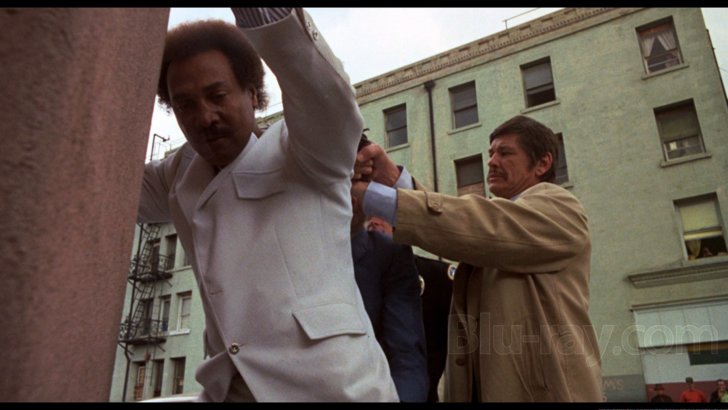
THE STONE KILLER opens in Spanish Harlem with detective Lou Torrey (Charles Bronson) following a young man, who had just shot a cop, into an abandoned building. When the young man refuses to turn himself in, and even tries to shoot Torrey, he gets blown away. In trouble with his superiors on the force, and being dragged in the press for the shooting, Torrey decides to change locations and continue his law enforcement career under his friend Les Daniels (Norman Fell) in Los Angeles. Soon after he arrives in Los Angeles, Torrey and his partner Mathews (Ralph Waite) are working a case against a drug dealer, when they arrest “Bootlace” Armitage (Eddie Firestone), a drug addict, but also a well-known hitman from New York. Torrey is delivering the “mechanic” back to New York for outstanding warrants when Armitage says that he is willing to give up some big information on “Wexton” in exchange for a reduced sentence. When Armitage is gunned down in what is obviously a professional hit, it’s clear that there is something going on that involves the name Wexton. We soon learn more as we meet mafia leader Al Vescari (Martin Balsam). As Vescari walks through a cemetery, he tells the leader of his operation, Lawrence (Stuart Margolin), of his plans to get revenge for a string of mafia killings that occurred 42 years earlier by using “stone killers,” in this case, former military men with no connection to the mob. As the film moves forward, Detective Lou Torrey and his fellow cops will eventually put the pieces together and find themselves taking on these “stone killers” and the mob!
I’ll just go ahead and say up front that I’m a big fan of THE STONE KILLER these days, but that’s because the movie has grown on me over the years with repeat viewings. When I first watched the film as a teenager in the 1980’s, I enjoyed it as a tough cop film, but it wasn’t one of my favorites. I think that part of the reason I didn’t appreciate it as much back then is the more convoluted plot of the film. Most Bronson films have simple and easy to follow plot lines, but THE STONE KILLER includes a somewhat complicated mafia assassination plan, and it also sends the cops on wild goose chases that have nothing to do with the actual story. Watching the film as an adult, I appreciate Director Michael Winner taking us with him on some of those 1970’s flavored tangents that include getting to hang out with some hippies at an ashram, as well as some unjustly accused black militants.
Even though the plot is more complicated than the average Charles Bronson film, director Michael Winner gives us some of the best action sequences of Charles Bronson’s career. There are two sequences in particular that stand out to me. After the impressive opening scenes where Torrey blows away the gun wielding young man in Spanish Harlem, it takes a while to get to the next extended action sequence, but it’s definitely worth the wait. The scene involves Detective Torrey in a car chase where he’s after one of the stone killers, Albert Langley (Paul Koslo), who’s on a motorcycle. In an era of great car chases, this is a doozy that features many amazing and dangerous stunts. The late 60’s and early 70’s are an embarrassment of riches for cinematic car chases and this one stands the test of time. The next great action sequence occurs later in the film when Detective Torrey and the cops bust the home and facility where the killers have trained for the planned massacre. Bronson is still in his physical prime in 1973, and his athletic prowess is clearly on display as he slides across floors, jumps on tables, and does anything else that is required to take down the bad guys. The film is not wall to wall action, but what’s here is as badass as it gets.
Detective Lou Torrey is a really good role for Charles Bronson. In his best roles, Bronson is tough, but you can also tell that he cares about other people. That’s definitely the case here as he consistently shows empathy for some of the people he’s after. For example, at the beginning of the film, he has to shoot the young man in Spanish Harlem in self-defense, but he later explains to his sister that he didn’t want to do it, even expressing some understanding of how the young man may have found himself in that situation. A little later while arresting a drug dealer with his partner Mathews, Torrey is clearly disgusted when his partner uses racial slurs during the arrest. Torrey then talks to the man with respect and gets the needed information to arrest the man buying the drugs. There are further examples later in the film as he deals with other drug addicts and militants. I say none of this to insinuate that Bronson’s character is weak in any way. Rather, he seems to want to do his job and arrest criminals in a professional manner. He’s also a complex character in some ways as he will bend the rules to get what he needs if he has to. He does end up punching the car thief, Jumper (Jack Colvin), a couple of times during an interview. While this is definitely not legal, in the context of this film, it’s required in order to get to the facts of the case. Bronson is actually quite great in the film.
Besides international superstar Charles Bronson, Michael Winner put together an amazing cast for THE STONE KILLER. Martin Balsam had won an Oscar a few years earlier, and he’s good here as the mafia boss with four decades worth of patience for revenge. Ralph Waite is also excellent as Bronson’s incompetent, racist partner Mathews. It’s hard to believe the guy would go on to play Papa Walton based on the ignorance he shows in both this film and in the Bronson/Winner collaboration CHATO’S LAND from the prior year. It’s fun watching both Norman Fell and John Ritter work together in this film, especially knowing that they would be making television history a few years later on the classic TV sitcom “Three’s Company.” The last two actors I want to mention are Stuart Margolin as the leader of the stone killers, Lawrence, and Paul Koslo as the bi-sexual badass musician Albert Langley. Both actors, especially Koslo, are good here and would have important roles with Bronson the next year as well. Margolin was an important character in DEATH WISH, and Koslo may have even outdone his work here the next year as a particularly slimy weasel in MR. MAJESTYK. Oh yeah, be sure to look for a short, uncredited cameo from B-movie queen Roberta Collins! I also want to shout out the musical score from Roy Budd, who also did the score for GET CARTER (1971). Thanks to Budd’s work, the opening credits are very cool and memorable.
THE STONE KILLER was marketed as Charles Bronson’s “Dirty Harry” and meant to be his breakout hit in America. Unfortunately, while the film was an international hit, the actual grosses in the United States were respectable but not as much as the filmmakers had hoped for. As such, we didn’t get any more entries in the case log of Detective Lou Torrey and Bronson would have to wait another year for his American box office breakout with DEATH WISH. But that’s okay because THE STONE KILLER has stood the test of time as an excellent 1970’s cop film, emerging in my personal rankings as a major feather in the cap of Charles Bronson’s career.
I don’t know how many of you enjoy listening to podcasts, but I joined a Facebook group back in 2021 focused on the actor Charles Bronson. The group is called the “This Week in Charles Bronson: Podcast.” We focus on Bronson, but the page is really just a springboard for all kinds of pop culture discussions. Well, one of the things we do is periodically produce podcasts focused on Bronson’s movies, the actors who are in them, the directors, the stunt people… you name it, we discuss it. I’ve been lucky enough to meet actors and actresses who’ve worked with Bronson, authors who write about Bronson, and most importantly, people just like me all over the world who love Charles Bronson. It’s been such a fun experience in my life.
Today, I’m sharing just a snippet from one of our podcasts where we discuss the excellent opening sequence of Bronson’s 1972 action classic, THE MECHANIC! If you like what you hear, listen to the full episode and our back catalogue of episodes on YouTube, Spotify, Apple Podcasts, etc. Heck, we’d love you to join our Facebook page and get involved. That’s all I did! Before you know it, you could be part of the show! Enjoy my friends!
I’ve been really busy the last few days preparing to record the next episode for the THIS WEEK IN CHARLES BRONSON Podcast. We’ll be covering THE STONE KILLER where Bronson plays a tough cop who stumbles upon a mafia revenge scheme decades in the making. It’s an interesting film that I can’t wait to cover in detail with a great group of Bronson enthusiasts. Did you know that THE STONE KILLER contains an incredibly underrated “car chases a motorcycle” sequence? The 70’s were so full of great stunts that some of the very best have almost been forgotten. Well that just doesn’t set well with me, so I’m sharing that chase with all of you. It’s a sequence that was filmed in 1973, the same year I was born, so it’s extra special to me. Enjoy my friends!
Now, to make clear, I’m not the Bronson expert that Brad is so I will picking from a smaller pool of selections. But no matter! Let’s do this!
6. Death Wish III (1985, dir by Michael Winner)
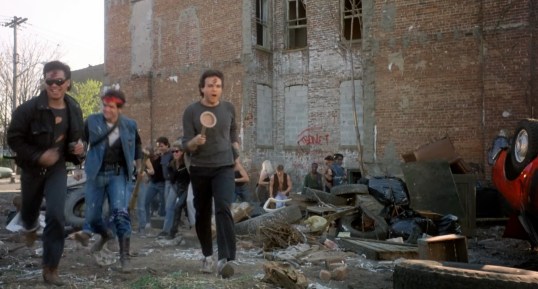
Yes, I have to start with Death Wish III. The Death Wish sequels are definitely a mixed bag but Death Wish III was wonderfully over-the-top, a film that cheerfully dropped Bronson in the middle of an absurd circus and allowed him to tame the lions, as it were. I will always love this film for the presence of Plunger Guy, a bad guy who heads into battle carrying a plunger.
5. Breakheart Pass (1975, dir by Tom Gries)
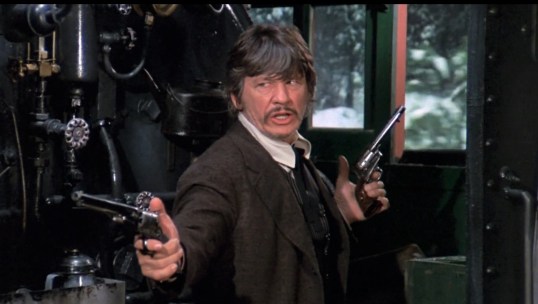
This is an enjoyable mix of a western, a murder mystery, and an adventure film. Charles Bronson is a mysterious man on a snowbound train. Charles Durning, Ben Johnson, Richard Crenna, Jill Ireland, and Ed Lauter co-star and everyone — especially Johnson and Durning — bring a lot to their roles. This may not be one of Bronson’s best-known films but it is one of his most enjoyable and Bronson himself is at his most likable.
4. Death Wish (1973, dir by Michael Winner)
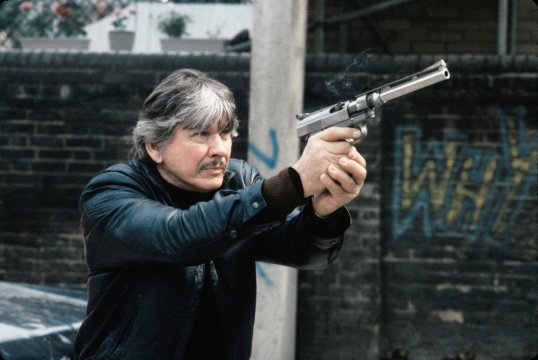
“My heart bleeds a little for the less fortunate,” Bronson’s Paul Kersey says at the start of the film and those of us watching immediately say, “C’mon, Charlie, really?” That said, one reason why Death Wish works as well as it does is because Bronson actually gives a very good and very emotionally honest performance as a man who finally snaps and starts to take the law into his own hands. (I love the barely veiled contempt that’s present whenever Paul talks to his son-in-law.) Not surprisingly, considering that it was directed by Michael Winner, Death Wish is an often-sordid film that doesn’t have a hint of subtlety. But it’s also brutally effective, a film that captures the way a lot of people feel when they hear about reports of out-of-control crime. Even today, it’s easy to see why Death Wish was the film that finally Bronson a star in the United States.
3. Once Upon A Time In The West (1968, dir by Sergio Leone)
Bronson plays Harmonica in the most epic of all of Sergio Leone’s spaghetti westerns. Leone pays homage to the American western while also gleefully subverting it. The quiet and unemotional Bronson is the film’s hero. Henry Fonda is the sadistic villain who guns down a child. Jason Robards is an outlaw. While I don’t consider it to be quite as good as either The Good, The Bad, or the Ugly or Once Upon A Time In America, Once Upon A Time In The West is still one of Leone’s masterpieces.
2. From Noon Till Three (1976, dir by Frank D. Gliroy)
For all of his reputation for being a tough guy who didn’t show much emotion, there was no denying Bronson’s love for his second wife, Jill Ireland. From Noon Till Three brings Bronson and Ireland together in a film that is a third western, a third romantic comedy, and a third social satire. It’s a film that gives Bronson a chance to show off his romantic side and it might leave you surprised! The film also featured Jill Ireland’s best performance in a Bronson film. I always highly recommend this one. It’s proof that there was more to Bronson than just shooting the bad guys.
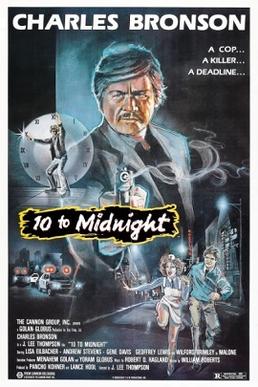
Ten To Midnight (1983, dir by J. Lee Thompson)
This is the ultimate 80s Bronson film and one that I like for a reason that might surprise you. On the one hand, you’ve got Bronson as a tough cop, Andrew Stevens as his liberal partner, and Gene Davis as the disturbingly plausible serial killer, Warren Stacy. Bronson is great as the world weary cop. His scenes with Stevens are amusing and, at times, even poignant. (It helps that Stevens was the rare co-star that Bronson liked.) Davis is terrifying and the film’s final moments are very emotionally satisfying. (“No, we won’t.”) But the reason why I love this film is because of the relationship between Bronson’s cop and his daughter, who played by Lisa Eilbacher. Their scenes together — testy but loving — are well-acted by both actors and they always make me think of me and my Dad. Ten To Midnight is the Bronson film that actually makes me cry.
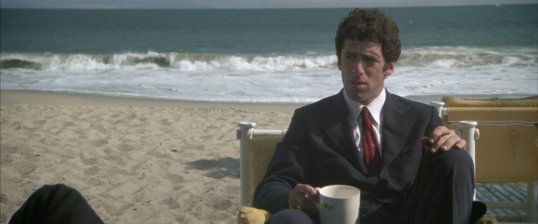
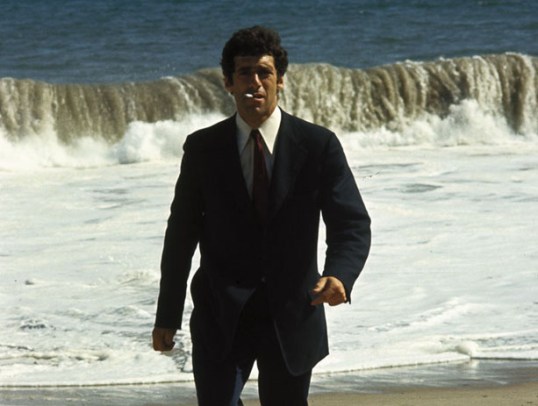
The Long Goodbye (1973, dir by Robert Altman, DP: Vilmos Zsigmond)
4 Shots From 4 Films is just what it says it is, 4 shots from 4 of our favorite films. As opposed to the reviews and recaps that we usually post, 4 Shots From 4 Films is all about letting the visuals do the talking.
Today is the anniversary of the birth of Raymond Chandler. That means that it’s time for….
4 Shots From 4 Philip Marlowe Films
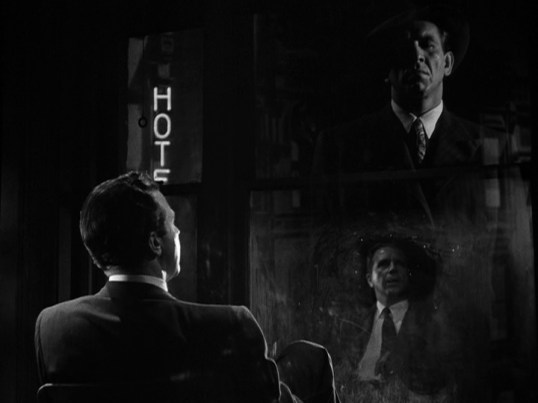
Murder, My Sweet (1944, dir by Edward Dmytryk, DP: Harry J. Wild)
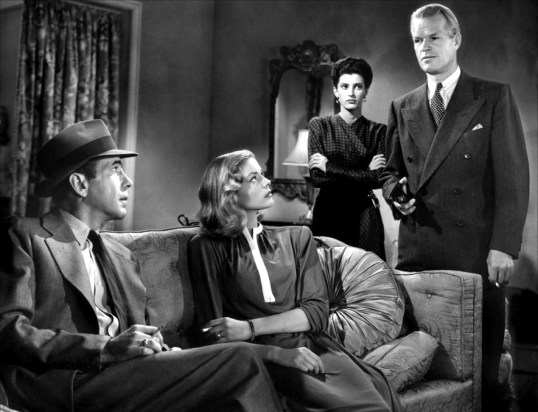
The Big Sleep (1946, dir by Howard Hawks, DP: Sidney Hickox)
The Long Goodbye (1973, dir by Robert Altman, DP: Vilmos Zsgimond)
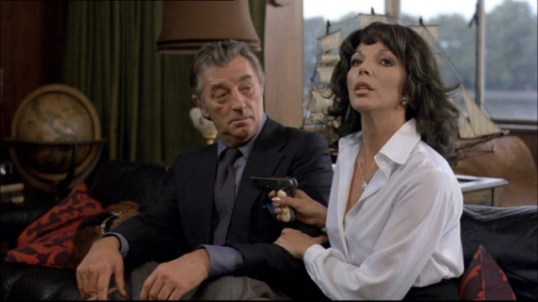
The Big Sleep (1978, dir by Michael Winner, DP: Robert Payner)
Well everyone has to start somewhere! Today I celebrate Alex Winter’s 60th birthday by watching a scene from DEATH WISH 3, the insane Charles Bronson vigilante classic, where Alex earned his first big screen credit as gang member Hermosa! What an honor it must have been for Alex to get smashed in the head with a tire tool by the legend in his signature series of revenge. If you haven’t seen DEATH WISH 3 before, you may never see “Bill” in quite the same light again!
(Note – the scene below features taunts and threats of an extreme sexual nature. Do NOT hit play if that offends you!)
Happy Birthday in cinema heaven to 1970’s heartthrob, Jan-Michael Vincent. It’s arguable that a 70’s Vincent was as good looking as a 1990’s Brad Pitt. In the 1980’s, Vincent would play Stringfellow Hawke in the iconic TV series AIRWOLF, where he was the highest paid actor on American television, bringing in $200,000 per episode. As a kid of the 80’s, I loved that show. My own extensive collection of physical media is filled with films starring Jan-Michael Vincent, especially his work from the 70’s and early 80’s. A few of my favorites are WHITE LINE FEVER (1975), HOOPER (1979 – with Burt Reynolds), and DEFIANCE (1980). Unfortunately, severe drug and alcohol abuse ultimately took its toll on Vincent’s career and his post AIRWOLF years were filled with straight-to-video B movies and walk on TV roles. Still, you couldn’t browse the inventory of Mom and Pop video rental stores in late 80’s and early 90’s without seeing loads of films with Vincent on the cover. A true cautionary tale of the damage that intoxicants will ultimately do to the human body and mind, Vincent’s final years were hard to watch, but his great work as a younger man still remains, and that’s what I’m choosing to focus on today.
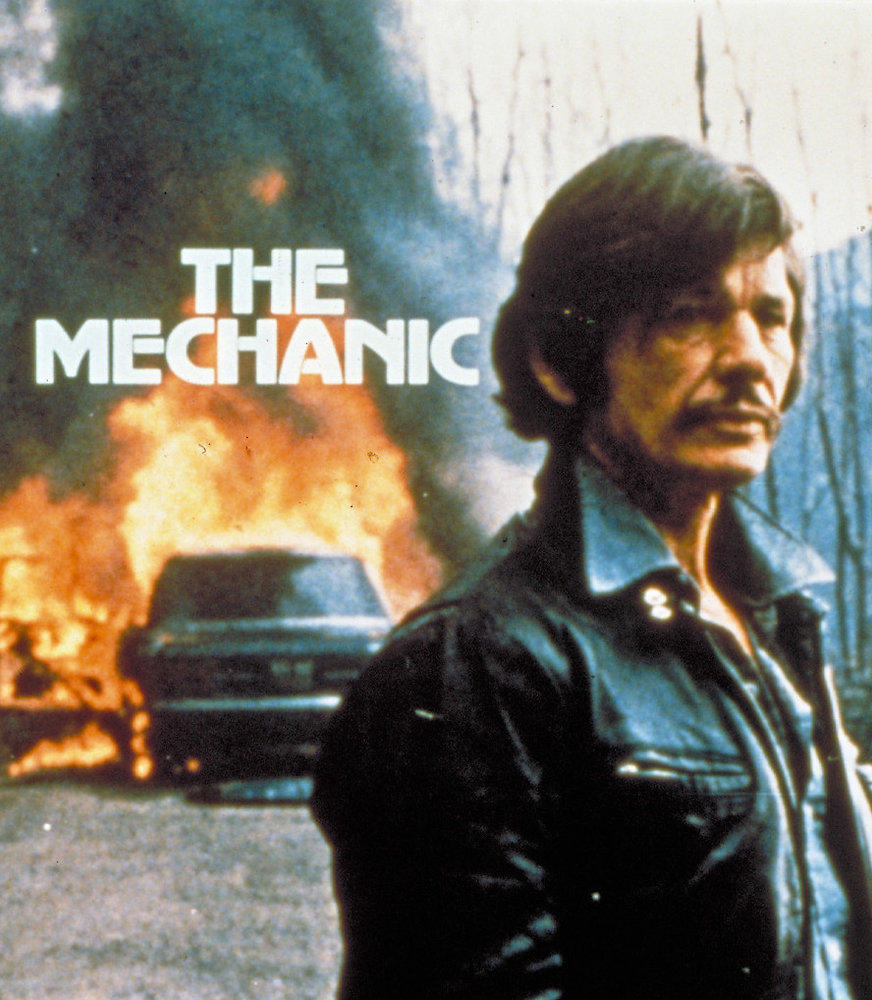
In honor of what would have been Jan-Michael Vincent’s 80th birthday, I’m going to celebrate here on The Shattered Lens by sharing a scene from my favorite Jan-Michael Vincent movie, THE MECHANIC, co-starring Charles Bronson. Vincent holds his own with the veteran star in one of his most iconic roles!
We’re watching THE MECHANIC (1972) on our #MondayMuggers live tweet tonight (see my prior post for the details). The film is a character study of an aging hitman, that just happens to feature some awesome action sequences. In case you’re on the fence about joining us, here’s a little taste of badassery to whet your appetite!
Every Monday night at 9:00 Central Time, my wife Sierra and I host a “Live Movie Tweet” event on X using the hashtag #MondayMuggers. We rotate movie picks each week, and our tastes are quite different. Tonight, Monday June 16th, we are showing THE MECHANIC (1972) starring Charles Bronson, Jan-Michael Vincent, Keenan Wynn, Jill Ireland, and Frank DeKova.
In THE MECHANIC, Charles Bronson plays a hitman who takes on a young apprentice (Jan-Michael Vincent) and trains him to be a professional assassin. But in their world, you never know when you’ll go from being the killer… to becoming the next target!
I reviewed THE MECHANIC for The Shattered Lens back on New Year’s Day!
 Through the Shattered Lens