Retro Television Review: The Love Boat 6.27 and 28 “Country Music Jamboree”


Welcome to Retro Television Reviews, a feature where we review some of our favorite and least favorite shows of the past!  On Wednesdays, I will be reviewing the original Love Boat, which aired on ABC from 1977 to 1986!  The series can be streamed on Paramount Plus!
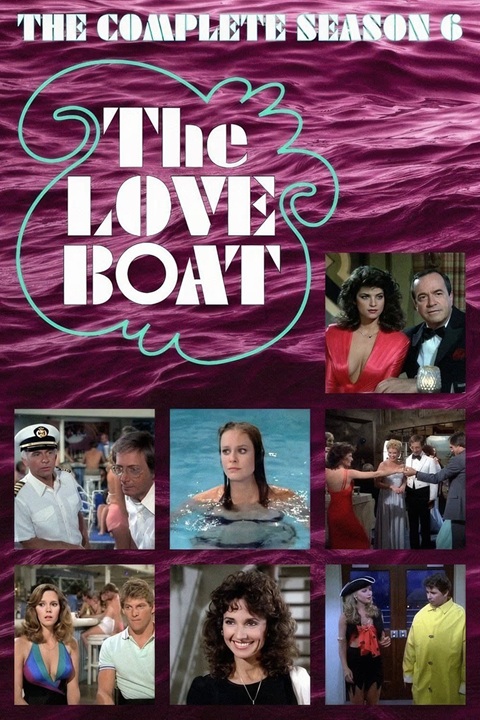
This week, the Love Boat goes a little bit country.

Episodes 6.27 and 6.28 “Country Music Jamboree”

(Dir by Richard Kinon, originally aired on April 30th, 1983)

It’s the special, two-hour country music cruise!

I have to admit that I lost interest in this episode as soon as I saw the banner in the Love Boat lobby that read “County Music Jamboree.”  Country music’s not my thing.  I lost even more interest when Florence Henderson showed up as country singer Annabelle Folker.  Florence Henderson was a frequent guest on both Fantasy Island and The Love Boat and I can’t think of a single time that I was ever happy to see her name in the credits.  Whenever she appeared, she almost always seemed like she was trying too hard.  Her performances always brought to mind dinner theater and holiday special guest spots.

Annabelle was traveling with her boyfriend (Bert Convy) and the three orphans (Michael Evans, Angela Lee Sloan, and Neil Billingsley) that she was planning on adopting.  The problem was that her boyfriend didn’t want to adopt the kids.  But then, he changed his mind because the show was nearly over and the storyline needed a happy ending.  Seriously, the kids were obnoxious as Hell.

While that went on, singer Holly Hartmann (Jessica Walter) was upset to discover that her husband (Mel Tillis) was secretly writing songs for an up-and-coming singer named C.G. Thomas (Tanya Tucker).  Holly was not happy when she found out but then she sang Stand By Your Man and that solved everything.

The Love Boat chef (Pat Buttram) was upset that his kitchen implements kept disappearing.  That’s because Isaac, Doc, Gopher, and Julie were stealing them so that they could form a country-western band.  Meanwhile, two fat people (Kenny Price and Lulu Roman)  boarded the boat and never stopped eating.

(Don’t give me that look, I didn’t write the script.)

Effie Skaggs (Minnie Pearl) sold homemade elixirs from her cabin while Doc attempted to romance her granddaughter (Misty Rowe).  When Effie got sick, she refused to accept any of Doc’s strange modern medicine.  No antibiotics for Effie Skaggs!

Jeannie Davis (Beth Howland) feared that her husband (Steve Kanaly) would learn that her latest piece of jewelry was given to her by a man with whom she had an affair.  A jewelry appraiser (Sherman Hemsley) insisted on finding out how much the jewelry was worth.  Jeannie feared that her husband would suspect something was amiss when he discovered how expensive it really was.  She begged the appraiser to lie about how much it was worth.  The appraiser said that he could not risk damaging his reputation but then he decided to lie anyway.

Gopher and Isaac tried to get a picture with Dottie West (a singer who played herself) but Dottie just wanted to rest.

Is that it?  Is that all of the storylines or is that just all my exhausted mind can remember?  Seriously, this was a busy two-hour episode.  It was an annoying episode too.  Maybe I’d feel differently if I was into country music.  Of the guest stars, Mel Tillis and Jessica Walter gave the best performances.  Of the Love Boat crew, no one came out of this episode with their dignity intact.

This was a cruise to miss.

This cruise?  This cruise was a perfect 10 out of 10 on the How Coked Up Was Julie Scale.

Cleaning Out The DVR: The Love-Ins (dir by Arthur Dreifuss)


(Hi there!  So, as you may know because I’ve been talking about it on this site all year, I have got way too much stuff on my DVR.  Seriously, I currently have 179 things recorded!  I’ve decided that, on February 1st, I am going to erase everything on the DVR, regardless of whether I’ve watched it or not.  So, that means that I’ve now have only have a month to clean out the DVR!  Will I make it?  Keep checking this site to find out!  I recorded the 1967 film, The Love-Ins, off of TCM on September 28th, 2017!)

“We now enter Haight Ashbury.  The promised land of the love movement.  The utopia of LSD…and now we take you to Golden Gate Park for a hippie love-in!”

— A San Francisco Tour Guide in The Love-Ins (1967)

I doubt I could ever be a hippie.  I don’t mind the drugs, the free love, or the music but the whole lack of showers and underwear would be too much for me.  Add to that, from what I’ve seen, it appears that whenever there was a hippie gathering, it would inevitably lead to the arrival of mimes and who wants to deal with that?  That said, I certainly do enjoy watching movies about hippies.

Take The Love-Ins for instance!

This 1967 film is all about hippies, or at the very least the popular perception of hippies.  There’s even a lengthy sequence that takes place at a hippie gathering in San Francisco.  While the hippies plays bongo drums, blow bubbles, dance, and stare at multi-colored umbrellas with stoned eyes, they’re watched by Jonathan Barnett (Richard Todd).  Barnett used to be a respected philosophy professor but then he resigned his teaching position in protest after two students were expelled for publishing an underground newspaper.  This led to Barnett appearing on a right-wing talk show where the antagonistic host told him that, if he loved the hippies so much, maybe he should got to Haight Ashbury and see how they really live.  Barnett does just that and it blows his mind!

Soon, Barnett has re-invented himself.  He’s now a psychedelic prophet, living in a commune with the expelled students and encouraging everyone to “Be more.  Sense more.  Love more.”  That doesn’t quite have the same ring to it as “Tune in.  Turn On.  Drop out,” but it’s the same basic idea.  Soon, hippies from all over the country are flocking to Prof. Barnett, dropping LSD, and doing interpretive dances.  Not even the local outlaw bikers can stop Barnett from spreading his message.

Unfortunately, it doesn’t take long for his newfound fame to go to Barnett’s head.  He soon stops listening to Larry (James MacArthur), the student whose expulsion started the whole movement, and instead surrounds himself with sycophants like Elliott (Mark Goddard).  Barnett goes from being an idealist to a messianic cult leader.  Soon, hippies are fighting in the streets, setting fired to newspaper they don’t like, and jumping out of windows.  (“LSD told him he could fly.  Gravity had different plans.”  No one actually said that in the movie but I wish they had.)  After discovering that his girlfriend (Susan Oliver) has been impregnated by Barnett, Larry realizes that he has to stop his former professor, one way or the other.

The Love-Ins was made by the same people responsible for Riot on Sunset Strip but, whereas Sunset Strip at least pretended to take an even-handed, documentary-like approach, The Love-Ins is a psychedelic freakout.  Whereas Sunset Strip features Mimsy Farmer taking LSD and then staring at her hand, The Love-Ins features Susan Oliver taking LSD, transforming into Alice in Wonderland, and then dancing with Tweedle Dee and Tweedle Dum.  And whereas Sunset Strip tried to be on the side of both the young and the old, The Love-Ins leaves little doubt that those hippies are no good!  (While Larry may be a the film’s hero, he looks like he would be more comfortable in the ROTC than at Woodstock.)  Barnett’s love-ins are revealed to be as choreographed as any political rally and, if there’s any doubt that he’s become a really bad guy, he even starts to perform impromptu wedding ceremonies.  “How dare you make a mockery of marriage!?”  an outraged observer shouts.

Seen today, the main value of The Love-Ins is a chance to see how many adults viewed the counter-culture and its leaders in 1967.  (Director Arthur Dreifuss was 60 when he directed this film and the film often views its young characters with the detachment of someone not sure of how close he can really get before being attacked.)  Of course, the main reason I liked The Love-Ins was because of the psychedelic dance scenes.  (Though no one’s going to mistake this film for another Face in the Crowd, I also enjoyed some of the film’s satiric jabs at the cult of celebrity, which was apparently just as big in 1967 as it is in 2018.)  It’s definitely a film of its time, though whether or not the people involved with the movie actually understood their time is another issue all together.

Cleaning Out The DVR: Riot on Sunset Strip (dir Arthur Dreifuss)


(Hi there!  So, as you may know because I’ve been talking about it on this site all year, I have got way too much stuff on my DVR.  Seriously, I currently have 180 things recorded!  I’ve decided that, on February 1st, I am going to erase everything on the DVR, regardless of whether I’ve watched it or not.  So, that means that I’ve now have only have a month to clean out the DVR!  Will I make it?  Keep checking this site to find out!  I recorded the 1967 film, Riot on Sunset Strip, off of TCM on September 28th, 2017!)

“Dig that scene!”

That’s a line that’s heard more than once in Riot on Sunset Strip, a film that’s all about digging that scene.

In this case, the scene is Hollywood’s Sunset Strip in 1966.  All the kids are going to the clubs and dancing to that strange rock and roll music.  Protesters are walking up and down the sidewalk, carrying signs that carry radical messages like: “Be Nice” and “Make Peace.”  (As far as I could tell, no one had a “Join the Conversation” sign.)  Some of the so-called “long hairs” are wearing red armbands to show that they are a member of the counter-culture police force, determined to keep peace on the Strip.  Meanwhile, the real police are a constant presence.  There’s a 10 o’clock curfew for anyone under the age of 18 and if the cops catch you, you’re going to the station where your parents will be called and your mom will probably freak out over the length of your skirt.  The kids want the police to change their attitude.  The local business owners — the ones who don’t own a club and who all look like they might be related to Dwight Eisenhower — want the police to get even more aggressive.

Stuck in the middle of it all is the local police captain, Walt Lormier (Aldo Ray).  Sure, Walt might be a member of the establishment, with his neckties and his J. Edgar Hoover haircut.  But Walt knows that the kids aren’t all bad.  Sure, their music sounds like noise to him.  And some of the boys may wear their hair a little bit longer than Walt thinks they should.  (In some scenes, it’s easy to imagine Walt thinking, “That haircut would have gotten you shot if you’d been in my unit in Korea…”)  But mostly, Walt wants to keep peace.  He’s even willing to meet with one of the protesters and listen to his concerns.

“Are you in college?” Walt asks the protester.

“Third year,” the protester replies, “Straight A’s.”

Of course, what Walt doesn’t realize is that his own daughter, Andy (Mismy Farmer, before she relocated to Italy), is one of the kids who is hanging out on the strip!  Of course, it’s been a while since he’s seen Andy.  Walt is divorced from Andy’s mother and says he really isn’t even sure where either Andy or his ex-wife lives now.  Of course, we know that they’re living in a shack, one that has only one room and where wet clothes are hung from the ceiling so that they can dry.  Andy’s mom is always drunk.  Can you blame Andy for wanting to spend all of her time on the Strip?

Of course, not everyone on the Strip is as reasonable as a third year college student.  Some of the kids actually are bad.  One of them slips Andy LSD, which leads to Andy staring at her hand and then doing an interpretive dance at a house party.  After discovering that his drugged daughter has been raped, Walt attacks her three rapists, which leads to the riot promised by the title.  Being a good middle-of-the-road liberal, Walt realizes that he now has to make amends with the good kids but can he stop things before they get out of control?  After all, those protesters are already passing out signs…

Based on an actual event. Riot on Sunset Strip is a real time capsule of a film.  Regardless of whether the film itself is any good or not, it’s worth watching as just a reflection of the time in which it was made.  Like a lot of the “social problem” films made in the mid-60s, it deals with a very real issue and then resolutely refuses to come down on either side.  Older viewers could watch Mimsy Farmer freaking out on LSD and say, “See, that’s why we need a curfew!”  Younger viewers could look at Andy’s drunk mother and the parents picking up their children at the station and say, “See, that’s why we need to burn down the establishment and move to Cuba!”  In the end, the film declares that the kids are all right except for the ones that aren’t.  Ultimately, it’s all the parents’ fault except for the parents who aren’t at fault.

(That said, I imagine that any truly committed 60s revolutionary would have rolled their eyes at the way they were portrayed in the film.  The protesters and their signs automatically made me think about the infamous Kendall Jenner Pepsi commercial.)

Seen today, the main thing that I noticed about Riot on Sunset Strip is that all of the wild kids on the Strip looked more like missionaries than revolutionaries.  One of Andy’s friend’s did occasionally let his hair fall in his eyes but otherwise, they were an amazingly clean-cut group of delinquents, the type who, today, would probably get blocked by every member of Resistance Twitter because everyone would assume that they were actually undercover Russian bots.

(At the end of the film, a narrators informs us, “Soon, half the world’s population will be under 25 years of age.  What will happen to them?  Where will they go?”  The answer, of course, is that most of them will go to the suburbs.)

Today, it’s easy to roll your eyes at something like Riot on the Sunset Strip.  Our modern culture of snark almost demands that you do.  But, honestly, I enjoyed this film.  Watching it was like having my own little time machine.