Late Night Retro Television Review: CHiPs 2.19 “Bio-Rhythms”


Welcome to Late Night Retro Television Reviews, a feature where we review some of our favorite and least favorite shows of the past!  On Mondays, I will be reviewing CHiPs, which ran on NBC from 1977 to 1983.  The entire show is currently streaming on Freevee!
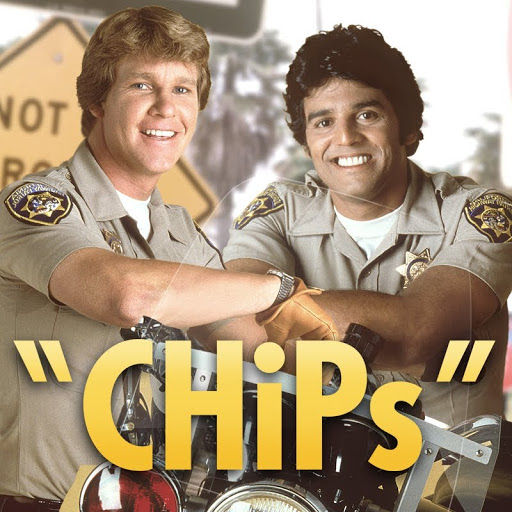
This week, it’s all about bio-rhythms!

Episode 2.19 “Bio-Rhythms”

(Dir by Don Weis, originally aired on February 17th, 1979)

The Davis family is back!

Now, if you don’t remember the Davises. they were the family of independent truckers who appeared in an episode called The Volunteers.  Patriarch Charley Davis (Tige Andrews) is taciturn and protective.  Their friend, Sam (Steve Franken), is taciturn and protective …. actually, to be honest, he and Charley are kind of interchangeable.  Daughter Robbie (Katherine Cannon) is in charge of the business and is being pressured by another trucker (Michael Conrad), who is willing to resort to sabotage to keep Robbie from making her deliveries.  It’s a good thing that Robbie has got Ponch on her side!

Technically, Robbie also has Baker on her side but this is definitely a Ponch episode.  Baker is present but he does very little.  Instead, it’s Ponch who flirts with Robbie.  It’s Ponch who stops by Robbie’s apartment and uses her shower.  It’s Ponch who spends an extended period of time wearing just a towel.  Somewhat inevitably, Charley shows up around the same time that Ponch steps out of the shower.  Ponch is kicked out of the apartment and his clothes are tossed out the window.  Ponch loses his towel while retrieving his clothing.  Cue the close-ups of an old woman staring at him with a impressed look in her eyes and Erik Estrada flashing his Estrada smile.  It’s not that Erik Estrada wasn’t nice to look at.  It’s just that he was so obviously aware that he was nice to look at that the whole scene ends up feeling rather smarmy.  One gets the feeling that there was a clause in Estrada’s contract specifying that he, and only he, would be allowed to show off on the show.

While Ponch helps Robbie deal with her rivals, he also learns about biorhythms, the pseudo-science that says that, by calculating how long someone’s been alive, it can be determined which days are going to be good for them and which days are going to be bad.  Sindy Cahill is doing a study on biorhythms for her master’s degree.  Getraer tells his squad that the department is also very interested in whether or not biorhythms effect an officer’s productivity.  Baker is skeptical about biorhythms but Ponch believes in them and even buys a biorhythm calculator.

Believing the Baker’s biorhythms have him at peak physical perfection, Ponch arranges for Baker to play handball against Getraer.  Ponch even takes bets.  Unfortunately, Ponch spent so much time figuring out Baker’s biorhythms that he never stopped to consider Getraer’s.  The episode ends with Getraer on his way to victory and Baker looking embarrassed.

Handball?  Biorhythms?  Corrupt labor unions?  Could this episode be more Californian?

This episode was fairly dull.  A huge problem was that the Davis family and their drama are never as interesting as the show seems to think that they are.  Much as with The Volunteers, I felt like I was watching a backdoor pilot for a show about the Davises when I really just wanted to watch a show about the Highway Patrol.  This episode didn’t do much for me.  Maybe everyone’s biorhythms were off when they filmed it.

14 Days of Paranoia #3: The Passover Plot (dir by Michael Campus)


First released in 1976 and based on a book that had come out ten years previously, The Passover Plot is a film that asks, “What if Jesus was a political revolutionary who faked his own death?”

Even when the film was first released, that wasn’t a particularly novel or new theory.  Ever since the Crucifixion, there have been conspiracy theorists who have claimed that the entire thing was staged.  Indeed, the early days of the Church were defined by conflicts between different sects debating the true nature of Jesus, with those who believed that he was the son of God and that he had risen from the dead eventually winning out over sects who claimed that Jesus was not divine or that he had actually escaped from the Romans and was instead hiding out in Egypt or even on the island that would eventually become known as Britain.  (The fact that so many Gnostics and other heretics were executed by the Church and their texts suppressed only served to lend them credibility with future theorists.)  Still, every few decades, some new book or film will claim that Jesus faked his death or married Mary Magdalene and gullible people will act as if this is somehow a new argument.  It’s been over 20 years since all of that Da Vinci Code nonsense convinced bored suburbanites across America that they could be experts on both boxed wine and historical conspiracy theories.  We’re about due for a new version of the old story.

As for The Passover Plot, it features Zalman King as Yeshua of Nazareth, an angry young man who dreams of the day when Judea will be free of the Romans.  Having a knowledge of the prophecies of a messiah and also knowing that he is descended from King David, Yeshua specifically patterns his life after the prophecies and presents himself as being not just another revolutionary but instead as being sent by God.  However, he is also aware that it will be necessary for him to “die” and “rise from the dead,” so he goes out of his way to force the hand of Pontius Pilate (Donald Pleasence).  Having seen plenty of crucifixions when younger, Yeshua arranges for the local revolutionaries to drug him so that he’ll appear to be dead.  When he later wakes up, everyone will believe that he has returned from the dead.  The film ends with several title cards, all arguing that the Gospels were written long after Yeshua’s death (“Mark lived in Italy!” one title card proclaims with almost comical indignation) and were subsequently rewritten by “unknown” hands.

The Passover Plot is a weird combination of biblical epic and conspiracy thriller.  Scenes of Yeshua preaching feel as if they could have come from any traditional Biblical epic but they are awkwardly placed with scenes of Yeshua having secret, melodramatic meetings with various conspirators.  It would make for an interesting contrast if not for the fact that the film itself is so slowly paced and boring.  Zalman King, who is best-known for his subsequent career as a softcore filmmaker, spends a lot of time yelling and smoldering intensely but he still doesn’t have the charisma or screen presence necessary to be convincing in the role.  In the scene were he’s meant to be passionate, he shrieks with such abandon that he makes Ted Neeley’s performance in Jesus Christ Superstar feel restrained.  This film asks us to believe that people would not only abandon their previous lives to follow Yeshua but that they would also take part in an elaborate conspiracy that could have gone wrong at any time.  For that to be believable, Yeshua needs to be played by someone who doesn’t come across like the drama student that everyone dreads having to do a scene with.  Far more impressive is Donald Pleasence, whose portrayal of a ruthless and unfeeling Pilate is a marked contrast to some of the more sympathetic interpretations of the character that tend turn up in the movies.

On the plus side, the film does look good.  It was shot on location in Israel and there is a certain authenticity to the film’s recreation of the ancient world.  Along with Pleasence, character actors like Scott Wilson (as Judas!) and Dan Hedaya get a chance to shine.  But otherwise, The Passover Plot is too slowly paced and kooky for its own good.  Conspiracy theorists never seem to understand that the more elaborate a conspiracy theory becomes, the less convincing it is to anyone who isn’t already a true believer.  In the end, how one feels about the film’s conclusions will probably be connected to how one already views Jesus and the Church.  The Passover Plot is not a film that’s going to convince anyone who wasn’t already convinced.

14 Days of Paranoia:

  1. Fast Money (1996)
  2. Deep Throat II (1974)

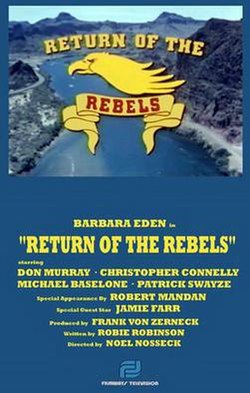
Retro Television Reviews: Return of the Rebels (dir by Noel Nosseck)


Welcome to Retro Television Reviews, a feature where we review some of our favorite and least favorite shows of the past!  On Sundays, I will be reviewing the made-for-television movies that used to be a primetime mainstay.  Today’s film is 1981’s Return of the Rebels!  It  can be viewed on YouTube!

Mary Beth Allen (Barbara Eden) used to be the wife of the leader of Rebels, Arizona’s toughest motorcycle gang.  She’s now a widow and she operates a Colorado River campground.  Her teenager daughter, Amy (Deanna Robbins), has got a crush on a local boy named K.C. Barnes (Patrick Swayze) and that’s a problem because K.C. is kind of a jerk.

Every weekend, K.C. and his gang descend on the campground and proceed to have a good time, redneck-style.  They set up a few kegs of beer.  They water ski.  They play loud music.  They get into fights.  They drive their vans all over the property.  They are so disruptive that Mary Beth is losing customers.  For reasons that are not quite clear, the police refuse to help her.  For some reason, K.C. seems to be determined to drive Mary Beth out of business.  And when I say “for some reason,” what I mean is that there’s absolutely no reason for K.C. to be as obnoxious as he is.  It’s not like he owns a rival campground or anything.  He’s not going to gain a thing by running Mary Beth out of business.  K.C.’s only motivation seems to be that he’s a jerk.  Unfortunately, he’s played by a young Patrick Swayze, who was a bit too likable to be believable as someone who would be a jerk just for the Hell of it. Swayze smirks and sneers and laughs whenever Mary Beth yells at him but, up until the last few moments of the film, he still comes across more as being an overgrown teenager who is too dumb to realize how annoying he’s being than a true villain.  When K.C. does suddenly reveal himself to be a true villain, it’s a bit jarring.  It’s like seeing the neighborhood bully suddenly pick up a gun and rob a bank.  Swayze’s character was definitely bad but he didn’t seem that bad,

Regardless of K.C.’s level of villainy, his antics are threatening to put Mary Beth out of business.  She goes into the city and pays a visit on Sonny (Don Murray).  Sonny used to be a member of the Rebels.  Now, he’s a fairly successful auto mechanic.  He’s also always been in love with Mary Beth.  When he finds out that Mary Beth needs help, he decides that it’s time to get the old Rebels back together so that they can put some young punks in their place. 

The problem, of course, is that some of the old Rebels are really, really old.  Al Williams (Robert Mandan) was once the most fearsome dude on a motorcycle but now he sells used cars and collapses after he’s challenged to run down to the end of the street.  Mickey Fine (Jamie Farr) is now more concerned with taking care of his family than riding motorcycles.  Jay Arnold Wayne (Christopher Connelly) is a wealthy businessman who …. well, he doesn’t get much of a personality beyond that.  “Wild” Bill Karp (Michael Baseleon) is still wild but he’s also middle-aged and out-of-shape.  

Can Sonny get the gang back together before K.C. takes over the campground?  And even if he can, will he able to gather enough former Rebels to take on K.C.’s surprisingly large gang?  Seriously, when K.C. and his gang show up at the campground, K.C. appears to be leading a convoy.  It’s almost as if the entire population of Arizona is following K.C. around for the weekend.

As you may have already guessed, Return of the Rebels struggles to find a consistent tone.  On the one hand, the battle between the old bikers and the young rednecks is a dangerous one and the film tries to generate some suspense over whether everyone will survive.  On the other hand, the film’s cast is full of sitcom veterans who often deliver their lines as if they’re waiting for a laugh track to punctuate their point.  On the one hand, Patrick Swayze’s gang is supposed to be dangerous.  On the other hand, they’re Patrick Swayze’s gang.  For a bunch of delinquents, it seems like all they really want to do is spend the weekend water skiing and drinking beer.  Obviously, beer and motorboats don’t always go well together but Swayze and his friends still never come across as being quite as dangerous as they’re supposed to be.

Return of the Rebels is a film about getting old.  The members of the Rebels have all found success but all of them are nostalgic for their days of being “outlaw” bikers and they get one final chance to show everyone what they can do.  It’s not a bad theme but again, the film can never quite make up its mind how seriously it wants us to take either the Rebels or Swayze’s gang.  It’s a bit of a mess.  That said, the scenery was gorgeous and I’m enough of a country girl that I definitely got a little thrill out of watching scenes of various pickup trucks and vans driving through the river.  I have a weakness for rebels and reformed bikers.  It’s an amiable film, even if it doesn’t make much sense in the end.