Brad reviews HITCH (2005), starring Will Smith and Kevin James!


I guess you can call this the holiday season of love for me, as I turn my attention today toward the 2005 romantic comedy HITCH. Will Smith stars as Alex “Hitch” Hitchens, a somewhat legendary and highly discreet consultant based in New York City. His specialty… helping less than perfect, even slightly awkward, men win the hearts of beautiful women. His methods are very effective, but he only works with men who are genuinely in love and not just chasing a one-night stand. His latest lovelorn client, the sweet and clumsy tax accountant Albert Brennaman (Kevin James), is smitten with a famous heiress named Allegra Cole (Amber Valletta), a client of the tax firm he works for. As Hitch works his magic for Albert, he also meets the cynical, but extremely beautiful tabloid journalist Sara Melas (Eva Mendes). Hitch finds himself falling for Sara at the same time that she’s on the trail of an urban myth of a “Date Doctor,” mistakenly believing that he is exploiting the emotions of women in the city for his own personal gain. When Sara and Amber discover who Hitch really is, will the guys’ true love win the day, or will the ladies believe it was all just a sleazy, manipulative setup?

HITCH is one of my favorite romantic comedies, and I watch it every year, usually multiple times. I’m a romantic at heart, and I really enjoy a film that plays with the idea of characters who truly care about, and respect, each other. This dynamic plays out through several different relationships. My favorite is the genuine friendship that develops between Hitch and Albert Brennamen. Hitch recognizes the sincere feelings that Albert has for Allegra, and he then goes all in to help him win her heart. While Will Smith is effortlessly charming and in peak movie star form, unsurprisingly, the character I identify the most with is Kevin James as Albert. His character is so sweet and earnest in his pursuit of Allegra that you just can’t help but pull for him. Balance that part of his character with James’ excellent physical comedy, whether it be his natural clumsiness or his unfounded confidence in his dance moves, and James gives the performance that takes this movie over the top for me. When teaching Albert the dance moves that he should stick with when he’s out on a date with Allegra, Hitch utters the line, “Don’t you bite your lip. Stop it!” It was that moment when I realized that, like Albert, I never dance without biting my own lip!

While the fraternal love between Hitch and Albert is my favorite relationship in the film, I also like the romantic relationship that develops between Hitch and Sara. I appreciate the way both characters step out of their comfort zones and risk their own hearts for each other. This is not easy for either of them, as Hitch’s charm and confidence actually masks deep insecurities based on his past relationships. Sara, on the other hand, has allowed herself to become very cynical towards all men, building walls so tall that no man can climb them. The fact that they truly open themselves up to each other, even if there are some serious complications along the way, gave me a strong rooting interest in their happiness.

The last performance I wanted to highlight in HITCH is that of Jeffrey Donovan, who plays sleazy narcissist Vance Munson. Munson tries to hire Hitch to help him get a vulnerable woman into bed, and in a moment of pure audience satisfaction, he pays the price for his disrespect. About the time I watched HITCH, Donovan was starring in a T.V. series that I really enjoyed called BURN NOTICE. I’m a big fan of Donovan, and he’s perfect here as a man you love to hate. In a movie full of likable characters, Vance Munson was a needed counterpoint, and his A-hole character really stands out.

No movie is perfect, but if you’re in the mood for something that’s lighthearted, funny, and makes you want to fall in love, then HITCH is about as close as it gets.

Film Review: The Caine Mutiny Court-Martial (dir by Robert Altman)


In the 1980s, director Robert Altman found himself even more outside of the Hollywood system than usual.  A series of films that confused critics and repelled audiences had led to Altman becoming something of a pariah.  As no studio was willing to give Altman a chance to make the type of quirky feature films that he made his name with in the 70s, Altman instead directed a series of low-budget theatrical adaptations.  These films may not have gotten the attention of his earlier films but they allowed Altman to show off his talents, especially when it came to working with actors.

1988’s The Caine Mutiny Court-Martial was one of those films.  Made for television and based on the play by Herman Wouk, The Caine Mutiny Court-Martial was a courtroom drama that Altman brought to life with his usual flair.  Anyone who has read either the play or Herman Wouk’s original novel (or who has seen the 1953 film version, The Caine Mutiny) will know the story.  In the final days of World War II, Lt. Steven Maryk (Jeff Daniels) has been court-martialed for mutiny.  During a particularly violent storm, Maryk took command of the USS Caine away from Lt. Commander Queeg (Brad Davis).  Maryk and his fellow officers, including aspiring novelist Lt. Thomas Keefer (Kevin J. O’Connor), claim that, after several incidents that indicated he was mentally unstable, Queeg froze up on the bridge and had to be relieved of command.  Queeg claims that everything he did was to enforce discipline on the ship and that he never froze.  Prosecuting Maryk is Lt. Commander John Challee (Peter Gallagher).  Defending him is Lt. Barney Greenwald (Eric Bogosian), who is determined to win the case even though he doesn’t necessarily agree with Maryk’s actions.

The Caine Mutiny Court-Martial is very much a filmed play.  Almost all of the action takes place in one location, a gymnasium that has been converted into a court of military law.  We don’t actually see what happened on the Caine when Maryk took control.  Instead, we just hear the testimony of those involved.  Queeg defends himself, ably at first but soon he starts to show signs of the pressure of being in command.  Maryk explains his actions and we want to believe him because he’s played by fresh-faced Jeff Daniels but, at the same time, there’s something a little bit too smug about his declaration that Queeg was not fit for command.  The other officers on the Caine testify.  Under Greenwald’s skillful cross-examination, Queeg is continually portrayed as being a flawed officer.  But only Greenwald understand that Queeg was isolated not only by the loneliness of being in charge but also by members so his own crew, like Keefer, who hated the Navy and didn’t want to take their part in the war effort seriously.  As a Jew who is very much aware of what’s at stake in the war, Greenwald has mixed feelings about the way that Queeg was treated.  It ends with a party, where a drunk Greenwald calls out the true architect of The Caine Mutiny.  As opposed to the way the scene was portrayed in the 1953 film or in Willam Friedkin’s recent adaptation), Altman focuses not so much on Greenwald but on the party occurring around him.  If the other versions of this story ended on a note of triumph for Greenwald, this one ends on a note of sadness with Greenwald’s words being almost unheard by the officers of the Caine.

Altman gets excellent performances from the entire cast and, even more importantly, he avoids the downfall of so many other theatrical adaptations.  The Caine Mutiny Court-Martial may be a talky film and it may largely take place in only one location but it’s never boring.  Altman’s camera is continually prowling around the makeshift courtroom, reflecting the tension of the case in every movement.  The end result is one of Altman’s best theatrical adaptations.

Ghosts of Sundance Past: In The Company Of Men (dir by Neil LaBute)


The Sundance Film Festival is currently underway in Utah.  For the next few days, I’ll be taking a look at some of the films that have previously won awards at Sundance.

1997’s In The Company of Men is a film about two guys playing a series of very viscous jokes.

Howard (Matt Malloy) and Chad (Aaron Eckhart) are two mid-level executives who have been sent to work at a branch office for six weeks.  While Chad is talkative and aggressive, Howard is much more meek and often seems to be in awe of the far more confident Chad.  What the two men have in common is a lot of resentment and bitterness towards women.  Chad suggests that they should both date a woman at the same time and fool her into falling for both of them.  Then, they’ll both dump her at the same time.  Chad has even picked out a victim, Christine (Stacy Edwards), a deaf and introverted co-worker.

That Chad would come up with such a cruel scheme really isn’t a surprise.  From the first minute that we see Chad, we think we can tell what type of person he is.  Because this is a movie, we hold on to hope that Chad will somehow reveal that he’s not as bad as he seems but, in the end, the whole point of the film is that Chad is not only as bad as we initially think he is but he’s actually even worse.  Howard, on the other hand, comes across like a rather mild-mannered guy, the stereotypical nerdy mid-level manager who no one ever notices.  Howard could never come up with a scheme like this on his own but, once Chad suggests it, Howard agrees.  Howard is a natural follower.  He looks at Chad and he sees who he wants to be.  Chad looks at Howard and sees someone who he can easily manipulate.

Chad and Howard set their plan in motion and yes, it is difficult to watch as they both pretend to be falling in love with the sensitive Christine while making cruel fun of her behind her back.  Again, we know that at least one of the men is going to have second thoughts and try to back out of the plan.  We know this because we’re watching a movie.  We spend most of the movie hoping that Chad is going to be the one to find his conscience because Aaron Eckhart is the more charismatic of the two men and Chad is the one with whom Christine seems to be truly falling in love.  Instead, it’s Howard who falls in love with Christine while Chad remains as sociopathic as ever.  By the end of the film, Chad reveals just how manipulative he truly is and Howard discovers that Christine was not the only victim of Chad’s joke.

In The Company Of Men is not an easy film to watch.  The comments that Chad and Howard make are shockingly cruel, though one gets the feeling that they’re probably an accurate reflection of what men like Chad and Howard sound like when they’re in private.  Director Neil LaBute doesn’t make any effort to soften or excuse their misogyny.  It’s a testament to the talents of Eckhart, Malloy, and Edwards that we stick with the film.  In the end, In The Company Of Men is an unsettling portrait of misogyny and toxic masculinity, one that is made all the more disturbing by Aaron Eckhart’s charismatic performance as a truly despicable person.  The film uses Eckhart’s middle-American good looks to subversive effect and, even when he’s playing such a hateful character, there’s something undeniably fascinating about him.  You watch his performance of Chad and you’re almost desperate to find some sort of good inside of him.  It’s not there, though.  That’s what is truly frightening about In The Company Of Men.

As the 1997 Sundance Film Festival, In The Company Of Men won the Filmmaker’s Trophy.

Here Are The 2023 Nominations of The Film Independent Spirit Awards


The nominations of the Independent Spirit Awards were announced today.  While the Spirits are definitely an Oscar precursor, it’s important to remember that some of the year’s big contenders — Oppenheimer, Maestro, Rustin, Nyad, Barbie, Killers Of The Flower Moon – -are not eligible for the Spirits.

Of the film nominated for Best Feature, May December, Past Lives, and American Fiction seem to be the most likely to also show up when the Oscar nominations are announced next year.

Here are the nominees!  The winners will be announced on February 25th, 2024!

BEST FEATURE (Award given to the producer)
All of Us Strangers – Producers: Graham Broadbent, Pete Czernin, Sarah Harvey
American Fiction – Producers: Cord Jefferson, Jermaine Johnson, Nikos Karamigios, Ben LeClair
May December – Producers: Jessica Elbaum, Will Ferrell, Grant S. Johnson, Pamela Koffler, Tyler W. Konney, Sophie Mas, Natalie Portman, Christine Vachon
Passages – Producers: Michel Merkt, Saïd Ben Saïd
Past Lives – Producers: David Hinojosa, Pamela Koffler, Christine Vachon
We Grown Now – Producers: Minhal Baig, Joe Pirro

BEST FIRST FEATURE (Award given to director and producer)
All Dirt Roads Taste of Salt – Director: Raven Jackson, Producers: Maria Altamirano, Mark Ceryak, Barry Jenkins, Adele Romanski
Chronicles of a Wandering Saint – Director: Tomás Gómez Bustillo, Producers: Gewan Brown, Amanda Freedman
Earth Mama – Director/Producer: Savanah Leaf, Producers: Sam Bisbee, Shirley O’Connor, Medb Riordan, Cody Ryder
A Thousand and One – Director: A.V. Rockwell, Producers: Julia Lebedev, Rishi Rajani, Eddie Vaisman, Lena Waithe, Brad Weston
Upon Entry – Directors: Alejandro Rojas, Juan Sebastián Vásquez, Producers: Sergio Adrià, Carlos Juárez, Alba Sotorra, Carles Torras, Xosé Zapata

JOHN CASSAVETES AWARD – Given to the best feature made for under $1,000,000 (Award given to the writer, director and producer)
The Artifice Girl – Director/Writer: Franklin Ritch, Producers: Aaron B. Koontz, Ashleigh Snead
Cadejo Blanco – Director/Writer/Producer: Justin Lerner, Producers: Mauricio Escobar, Ryan Friedkin, Jack Patrick Hurley
Fremont – Director/Writer: Babak Jalali, Writer: Carolina Cavalli, Producers: Rachael Fung, Chris Martin, Marjaneh Moghimi, George Rush, Sudnya Shroff, Laura Wagner
Rotting in the Sun – Director/Writer: Sebastián Silva, Writer: Pedro Peirano, Producer: Jacob Wasserman
The Unknown Country – Director/Writer/Producer: Morrisa Maltz, Writer: Lily Gladstone, Writers/Producers: Lainey Bearkiller Shangreaux, Vanara Taing, Producers: Katherine Harper, Laura Heberton, Tommy Heitkamp

BEST DIRECTOR
Andrew Haigh – All of Us Strangers
Todd Haynes – May December
William Oldroyd – Eileen
Ira Sachs – Passages
Celine Song – Past Lives

BEST SCREENPLAY
David Hemingson – The Holdovers
Cord Jefferson – American Fiction
Laura Moss & Brendan J. O’Brien – Birth/Rebirth
Emma Seligman & Rachel Sennott – Bottoms
Celine Song – Past Lives

BEST FIRST SCREENPLAY
Samy Burch; Story by Samy Burch & Alex Mechanik – May December
Noah Galvin, Molly Gordon, Nick Lieberman & Ben Platt – Theater Camp
Tomás Gómez Bustillo – Chronicles of a Wandering Saint
Laurel Parmet – The Starling Girl
Alejandro Rojas & Juan Sebastián Vásquez – Upon Entry

BEST LEAD PERFORMANCE
Jessica Chastain – Memory
Greta Lee – Past Lives
Trace Lysette – Monica
Natalie Portman – May December
Judy Reyes – Birth/Rebirth
Franz Rogowski – Passages
Andrew Scott – All of Us Strangers
Teyana Taylor – A Thousand and One
Jeffrey Wright – American Fiction
Teo Yoo – Past Lives

BEST SUPPORTING PERFORMANCE
Erika Alexander – American Fiction
Sterling K. Brown – American Fiction
Noah Galvin – Theater Camp
Anne Hathaway – Eileen
Glenn Howerton – BlackBerry
Marin Ireland – Eileen
Charles Melton – May December
Da’Vine Joy Randolph – The Holdovers
Catalina Saavedra – Rotting in the Sun
Ben Whishaw – Passages

BEST BREAKTHROUGH PERFORMANCE
Marshawn Lynch – Bottoms
Atibon Nazaire – Mountains
Tia Nomore – Earth Mama
Dominic Sessa – The Holdovers
Anaita Wali Zada – Fremont

BEST CINEMATOGRAPHY
Katelin Arizmendi – Monica
Eigil Bryld – The Holdovers
Jomo Fray – All Dirt Roads Taste of Salt
Pablo Lozano – Chronicles of a Wandering Saint
Pat Scola – We Grown Now

BEST EDITING
Santiago Cendejas, Gabriel Díaz, Sofía Subercaseaux – Rotting in the Sun
Stephanie Filo – We Grown Now
Daniel Garber – How to Blow Up a Pipeline
Jon Philpot – Theater Camp
Emanuele Tiziani – Upon Entry

ROBERT ALTMAN AWARD – Given to one film’s director, casting director and ensemble cast
Showing Up
Director: Kelly Reichardt
Casting Director: Gayle Keller
Ensemble Cast: André Benjamin, Hong Chau, Judd Hirsch, Heather Lawless, James Le Gros, John Magaro, Matt Malloy, Amanda Plummer, Maryann Plunkett, Denzel Rodriguez, Michelle Williams

BEST DOCUMENTARY (Award given to the director and producer)
Bye Bye Tiberias – Director: Lina Soualem, Producer: Jean-Marie Nizan
Four Daughters – Director: Kaouther Ben Hania, Producer: Nadim Cheikhrouha
Going to Mars: The Nikki Giovanni Project – Directors/Producers: Joe Brewster, Michèle Stephenson, Producer: Tommy Oliver
Kokomo City – Director: D. Smith, Producers: Bill Butler, Harris Doran
The Mother of All Lies – Director/Producer: Asmae El Moudir

BEST INTERNATIONAL FILM (Award given to the director)
Anatomy of a Fall (France) – Director: Justine Triet
Godland (Denmark/Iceland) – Director: Hlynur Pálmason
Mami Wata (Nigeria) – Director: C.J. ‘Fiery’ Obasi
Tótem (Mexico) – Director: Lila Avilés
The Zone of Interest (United Kingdom, Poland, USA) – Director: Jonathan Glazer

PRODUCERS AWARD
 Presented by Bulleit Frontier Whiskey – The Producers Award, now in its 27th year, honors emerging producers who, despite highly limited resources, demonstrate the creativity, tenacity and vision required to produce quality independent films.

Rachael Fung
Graham Swon
Monique Walton

SOMEONE TO WATCH AWARD
The Someone to Watch Award, now in its 30th year, recognizes a talented filmmaker of singular vision who has not yet received appropriate recognition.

Joanna Arnow – Director of The Feeling That the Time for Doing Something Has Passed
Laura Moss – Director of Birth/Rebirth
Monica Sorelle – Director of Mountains

TRUER THAN FICTION AWARD 
The Truer Than Fiction Award, now in its 29th year, is presented to an emerging director of non-fiction features who has not yet received significant recognition.

Set Hernandez – Director of unseen
Jesse Short Bull, Laura Tomaselli – Director of Lakota Nation vs. United States
Sierra Urich – Director of Joonam

BEST NEW NON-SCRIPTED OR DOCUMENTARY SERIES (Award given to the Creator, Executive Producer, Co-Executive Producer)
Deadlocked: How America Shaped the Supreme Court
Executive Producers: Vinnie Malhotra, Aaron Saidman, Eli Holzman, Dawn Porter
Dear Mama
Executive Producers: Lasse Järvi, Quincy ‘QD3’ Jones III, Staci Robinson, Nelson George, Charles D. King, Peter Nelson, Adel ‘Future’ Nur, Jamal Joseph, Ted Skillman, Allen Hughes, Steve Berman, Marc Cimino, Jody Gerson, John Janick, Nicholas Ferrall, Nigel Sinclair
Murder in Big Horn
Executive Producers: Matthew Galkin, Vinnie Malhotra
Co-Executive Producers: Lisa Kalikow, Joshua Levine
Stolen Youth: Inside the Cult at Sarah Lawrence
Executive Producers: Mindy Goldberg, Dan Cogan, Liz Garbus, Jon Bardin, Zach Heinzerling, Krista Parris, Daniel Barban Levin, Felicia Rosario
Co-Executive Producer: Julie Gaither
Wrestlers
Executive Producers: Greg Whiteley, Ryan O’Dowd
Co-Executive Producers: Alejandro Melendez, Adam Leibowitz

BEST NEW SCRIPTED SERIES (Award given to the Creator, Executive Producer, Co-Executive Producer)
Beef
Creator/Executive Producer: Lee Sung Jin
Executive Producers: Steven Yeun, Ali Wong, Jake Schreier, Ravi Nandan, Alli Reich
Co-Executive Producers: Alice Ju, Carrie Kemper
Dreaming Whilst Black
Creator/Executive Producer: Adjani Salmon
Creators: Maximilian Evans, Natasha Jatania, Laura Seixas
Executive Producers: Tanya Qureshi, Dhanny Joshi, Bal Samra, Thomas Stogdon
I’m a Virgo
Creator/Executive Producer: Boots Riley
Executive Producers: Tze Chun, Michael Ellenberg, Lindsey Springer, Jharrel Jerome, Rebecca Rivo
Co-Executive Producers: Marcus Gardley, Carver Karaszewski
Jury Duty
Creators/Executive Producers: Lee Eisenberg, Gene Stupnitsky
Executive Producers: David Bernad, Ruben Fleischer, Nicholas Hatton, Cody Heller, Todd Schulman, Jake Szymanski, Andrew Weinberg
Slip
Creator/Executive Producer: Zoe Lister-Jones
Executive Producers: Ro Donnelly, Dakota Johnson, Katie O’Connell Marsh, David Fortier, Ivan Schneeberg

BEST LEAD PERFORMANCE IN A NEW SCRIPTED SERIES
Emma Corrin – A Murder at the End of the World
Dominique Fishback – Swarm
Betty Gilpin – Mrs. Davis
Jharrel Jerome – I’m a Virgo
Zoe Lister-Jones – Slip
Bel Powley – A Small Light
Bella Ramsey – The Last of Us
Ramón Rodríguez – Will Trent
Ali Wong – Beef
Steven Yeun – Beef

BEST SUPPORTING PERFORMANCE IN A NEW SCRIPTED SERIES
Murray Bartlett – The Last of Us
Billie Eilish – Swarm
Jack Farthing – Rain Dogs
Nick Offerman – The Last of Us
Adina Porter – The Changeling
Lewis Pullman – Lessons in Chemistry
Benny Safdie – The Curse
Luke Tennie – Shrinking
Olivia Washington – I’m a Virgo
Jessica Williams – Shrinking

BEST BREAKTHROUGH PERFORMANCE IN A NEW SCRIPTED SERIES
Clark Backo – The Changeling
Aria Mia Loberti – All the Light We Cannot See
Adjani Salmon – Dreaming Whilst Black
Keivonn Montreal Woodard – The Last of Us
Kara Young – I’m a Virgo

BEST ENSEMBLE CAST IN A NEW SCRIPTED SERIES
Jury Duty
Ensemble Cast: Alan Barinholtz, Susan Berger, Cassandra Blair, David Brown, Kirk Fox, Ross Kimball, Pramode Kumar, Trisha LaFache, Mekki Leeper, James Marsden, Edy Modica, Kerry O’Neill, Rashida Olayiwola, Whitney Rice, Maria Russell, Ishmel Sahid, Ben Seaward, Ron Song, Evan Williams

4 Film Reviews: Bridge To Silence, The Chocolate War, Kiss The Bride, Wedding Daze


Last week, I watched six films on This TV.

Which TV?  No, This TV!  It’s one of my favorite channels.  It’s not just that they show a lot of movies.  It’s also that they frequently show movies that are new to me.  For instance, last week, This TV introduced me to both Prison Planet and Cherry 2000.

Here are four other films, two good and two not so good, that This TV introduced to me last week.

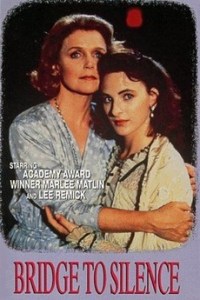
First up, we have 1989’s Bridge to Silence.

Directed by Karen Arthur, Bridge To Silence was a made-for-TV movie.  Lee Remick plays Marge Duffield, who has a strained relationship with her deaf daughter, Peggy (Marlee Matlin).  After Peggy’s husband is killed in a traffic accident, Peggy has a nervous breakdown.  Marge and her husband, Al (Josef Sommer) take care of Peggy’s daughter, Lisa, while Peggy is recovering.  However, even as Peggy gets better, Marge still doesn’t feel that she can raise her daughter so Marge files a lawsuit to be named Lisa’s legal guardian.  While all of this is going on, Peggy is starring in a college production of The Glass Menagerie and pursuing a tentative romance with the play’s director (Michael O’Keefe).

Bridge to Silence is one of those overwritten but heartfelt melodramas that just doesn’t work.  With the exception of Marlee Matlin, the cast struggles with the overwrought script.  (Michael O’Keefe, in particular, appears to be miserable.)  The film’s biggest mistake is that it relies too much on that production of The Glass Menagerie, which is Tennessee Williams’s worst play and tends to be annoying even when it’s merely used as a plot device.  There’s only so many times that you can hear the play’s director refer to Peggy as being “Blue Roses” before you just want rip your hair out.

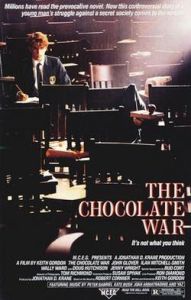
Far more enjoyable was 1988’s The Chocolate War.

Directed by Keith Gordon, The Chocolate War is a satirical look at conformity, popularity, rebellion, and chocolate at a Catholic boys school.  After the manipulative Brother Leon accidentally purchases too much chocolate for the school’s annual sale, he appeals to one of his students, Archie Costello (Wallace Langham), to help him make the money back.  Archie, who is just as manipulative as Leon, is the leader of a secret society known as the Vigils.  However, Archie and Leon’s attempt to manipulate the students runs into a roadblack when a new student, Jerry Renault (Illan Mitchell-Smith) refuses to sell any chocolates at all.  From there, things get progressively more complicated as Archie tries to break Jerry, Jerry continues to stand up for his freedom, and Leon … well, who knows what Leon is thinking?

The Chocolate War was an enjoyable and stylish film, one that featured a great soundtrack and a subtext about rebellion and conformity that still feels relevant.  John Glover and Wallace Langham both gave great performances as two master manipulators.

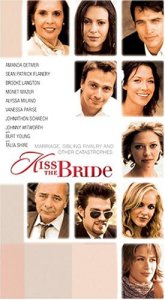
I also enjoyed the 2002 film, Kiss The Bride.

Kiss The Bride tells the story of a big Italian family, four sisters, and a wedding.  Everyone brings their own personal drama to the big day but ultimately, what matters is that family sticks together.  Directed by Vanessa Parise, Kiss The Bride featured believable and naturalistic performances from Amanda Detmer, Talia Shire, Burt Young, Brooke Langton, Monet Mazur, and Parise herself.

I have to admit that one reason why I liked this film is because it was about a big Italian family and it featured four sisters.  I’m the youngest of four sisters and, watching the film, I was reminded of my own big Irish-Italian family.  The movie just got everything right.

And then finally, there was 2006’s Wedding Daze.

Wedding Daze is a romantic “comedy.”  Anderson (Jason Biggs) asks his girlfriend to marry him, just to have her drop dead from shock.  Anderson’s best friend is afraid that Anderson will never get over his dead girlfriend and begs Anderson to not give up on love.  Anderson attempts to humor his friend by asking a complete stranger, a waitress named Katie (Isla Fisher), to marry him.  To everyone’s shock, Katie says yes.

From the get go, there are some obvious problems with this film’s problem.  Even if you accept that idea that Katie would say yes to Anderson, you also have to be willing to accept the idea that Anderson wouldn’t just say, “No, I was just joking.”  That said, the idea does have some comic potential.  You could imagine an actor like Cary Grant doing wonders with this premise in the 30s.  Unfortunately, Jason Biggs is no Cary Grant and the film’s director, comedian Michael Ian Black, is no Leo McCarey.  In the end, the entire film is such a misjudged failure that you can’t help but feel that Anderson’s ex was lucky to die before getting too involved in any of it.

Shattered Politics #65: Election (dir by Alexander Payne)


Election_1999filmLast year, when I did my series of Back to School reviews, it somehow slipped my mind to review Alexander Payne’s 1999 comedy, Election.  Don’t ask me how I managed to do that.  Election, after all, is one of the greatest high school films ever made.  Not only does it feature Reese Witherspoon’s best performance (or, at least, it was her best performance up until the release of Wild) but it also features Ferris Bueller himself, Matthew Broderick, as the type of teacher who regularly inspired Ferris to skip school.  Trust me — when I realized that I had managed to review Cavegirl while somehow ignoring Election, I was mortified.

But then, a few months later, I decided to do Shattered Politics and review 94 films about politics and politicians.  And it occurred to me that Election may have been a high school film but it was also a political satire.  Add to that, it’s totally plausible that Reese Witherspoon’s Tracy Flick will someday end up running for President.

That certainly seems to be the concern of Jim McAllister (Matthew Broderick) in Election.  When he learns that Tracy is planning on running for student body president, Jim is concerned.  Tracy is an overachiever.  Tracy is the type of student who always raises her hand in class and who always has the right answer.  Tracy is the type of student that tends to drive other students crazy.  As Jim puts it, if Tracy is elected Student Body President, who knows where it will end?

Of course. Jim has other reasons for disliking Tracy.  Earlier in the year, for instance, Tracy was seduced by Jim’s fellow teacher and best friend, Dave Novotny (Mark Harelik).  When Tracy’s mother (played by Colleen Camp) discovered the affair, Dave was forced to retire and was subsequently divorced.  When Tracy mentions that if she’s elected President, that means she and Jim will be working closely together, Jim panics.  Jim thinks that Tracy will try to seduce him and he knows that he would be too weak to resist.  Instead, Jim would rather have an affair Dave’s ex-wife (Delaney Driscoll) while trying unsuccessfully to get his own wife (Molly Hagan) pregnant.

So, of course, Jim decides to recruit Paul Metzler (Chris Klein) to run against her.  Paul is a simple-minded but sweet-natured jock who, as the result of breaking his leg while skiing, has become something of a school martyr.  As soon as Paul announces that he’s running, his cynical little sister Tammy (Jessica Campbell) also announces that she’s running, despite the fact that she hates school and thinks that idea of student government is a joke.  Tammy’s main motivation is that her ex-girlfriend, Lisa (Frankie Ingrassia) has announced that she was just “experimenting” and is now dating Paul and managing his campaign.

Got all that?

As the campaign plays out, Jim is panicked to discover that, while Paul may be popular, he’s also amazingly inarticulate and really doesn’t seem to care whether he wins or not.  Meanwhile, Tammy announces that her first action as president will be to destroy the student government.  However, Jim then has reason to believe that Tracy destroyed some campaign signs (mostly because Tracy did) and he comes up with a plan to get her disqualified from the ballot.

Except, of course, it’s not that easy to get rid of Tracy Flick…

One of the things that always amuses me about TV shows set in high school is that they almost always feature an absurdly powerful student council.  Remember that episode of Boy Meets World where Topanga is elected president because she gives a speech about how somebody has to do something about the mold in the cafeteria?  That’s the fantasy view of the student council.  The reality is that, when I was in high school, the student council was something that, whenever we remembered that it actually existed, we all laughed about.

(One of the great things about Degrassi is that it’s one of the few teen shows to acknowledge that the student council has no power.  Considering that the current President of the Degrassi Student Council is Drew Torres, that’s probably for the best.)

But here’s the thing — we all knew someone like Tracy Flick.  We all knew someone who took things like the student council very seriously and who would always get very angry whenever the rest of us showed less reverence for school institutions.  And, in retrospect, you almost have to feel sorry for her because what she never understood was that devotion to the rules and hard work really don’t mean much in either high school or college.  The genius of Reese Witherspoon’s performance is that she brings to life a character that we all know and then, at the same time, makes her a unique human being.  In the role of Tracy, Witherspoon allows us to understand what motivated the girls who always used to get on our nerves.

And then, of course, there’s Matthew Broderick.  Broderick starts out as a glibly self-confident character just to end the film as something of a twisted gargoyle, unshaven because he’s been sleeping in his car and, as the result of a bee sting, a frightfully swollen eye.  By the end of the film, Jim has essentially been destroyed by his fear and obsessive hatred of one student.  Broderick is not exactly playing a sympathetic character here but it’s still a compelling performance because it confirms everything that I always suspected about all of my teachers — i.e., that they specifically and targeted certain students and that most of them were motivated by jealousy.

Thank you, Election, for letting me know that I was right!

Back to School #62: Elephant (dir by Gus Van Sant)


http://www.youtube.com/watch?v=SC8ogZ4Jsuw

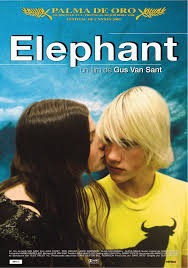
Gus Van Sant’s dream-like 2003 film Elephant is not an easy film to review.  Working with a non-professional cast and avoiding any easy answers or traditional narrative tricks (and indeed, the film ends with the fates of most of the characters still unknown), Elephant is ultimately a disturbing and nightmarish film.  It’s also an important film, one that examines the violence that runs through our current culture.

I’m one of the lucky ones.  I managed to get through all 12 years of my public education without ever getting shot at.  There’s quite a few people my age who can’t make the same claim.  I’d be lying if I said that I spent a lot of time in school obsessing over whether or not someone was going to start shooting but now, when I look back, I sometimes wonder how close I may have come.  One of the scarier things about the typical profile of school shooter is that we’ve all known somebody who fits it.  Sometimes, I can’t help but wonder if I just got lucky.  Maybe the guy who was planning on shooting up my school couldn’t get his hands on a gun.  Maybe, at the last moment, he changed his mind and decided to leave his gun in his locker instead of taking it out before the start of second period.  We come into contact with thousands of people over the course of our lives and we can never for sure what any of them are truly thinking or planning.

According to Wikipedia, there were a dozen school shootings in the U.S. during the time I was in high school.  Thankfully, none of them happened at my high school but, as I looked over the list, I couldn’t help but wonder why my classmates and I were spared the trauma of random violence while the students at Rocori High School in Cold Springs, Missouri were not.  Were we somehow better or more deserving than the students at Rocori?  Had they done something wrong or had we done something right?  Why were they forced to deal with violence while I was spared?  It all just seems so random.

And that’s the terrifying thing about random violence — it is, in the end, all so random.  We always tend to look for explanations afterward.  We try to assign blame and we try to come up with a reason because we know that, if we can explain random violence, then we can do something about it.  But, far too often, there are no reasons.

Elephant perfectly captures this randomness.  The film’s ensemble of characters spend what for many of them will be their final hours randomly wandering through their high school and their lives. Three mean girls eat lunch and then duck into toilet stalls where all three of them proceed to throw up.  John (John Robinson) searches for his drunk father (Timothy Bottoms) who may be wandering around the campus.  Awkward Michelle (Kristen Hicks) goes from her gym class to the library, little aware that she will soon be the first to be confronted by the gunmen.  Once the shooting starts, silent jock Bennie (Bennie Dixon) walks through the body-strewn halls, a potential hero until he is randomly shot.  The film is full of flash forwards and flashbacks, in which we see Alex (Alex Frost) and Eric (Eric Duelen) planning their rampage and we’re given clues as to their motives but we’re not given any answers.

Perhaps most memorable of all, at least to me, is the character of Eli (Elias McConnell), an aspiring photographer who gets one picture of Alex and Eric as they enter the library.  Up until that moment, the entire film has pretty much centered on Eli.  We’ve gotten to know him.  We’ve come to like him.  And yet, when Eli is shot, it happens almost as an afterthought.  One minute, he’s standing in the background and the next moment, he’s gone.  And we’re left to wonder if he survived or if it was even him who got shot.  Ultimately, what we realize is that, in that one split second, Eli ceased to be.  Even if he does survive being shot, he’ll never be the same person we saw earlier.  Even if he wasn’t shot, he’ll always be one of the students who went to that school.  In the end, we may have cared about Eli but none of that could stop the random violence.

Elephant is not an easy film to watch but then again, it shouldn’t be.  (If you want to read a bunch of comments from some people who just don’t get it, you can go read the simple-minded comments that some of them have posted over on the movie’s page at the imdb.) Elephant is a dark and troubling film, one that gave me nightmares after I saw it.  It’s a film so effective and powerful that one viewing is more than enough.

(Incidentally, one of Elephant‘s credited producers was JT Leroy, the pen name of Laura Albert whose books inspired a similarly difficult but powerful film, Asia Argento’s The Heart is Deceitful Above All Else.)

images