Happy 125th birthday to America’s first movie star, Mary Pickford!
4 Shots From 4 Films
Over on Through the Shattered Lens Presents the Oscars, we are reimagining Oscar history, one year at a time. Today, we take a look at 1920. Prohibition goes into effect, women finally get the right to vote, Harding is elected President, D.W. Griffith finally gets some recognition, and Fatty Arbuckle is the most popular man in Hollywood!
Through the Shattered Lens Presents The Oscars
William S. Hart, the Third President of AMPAS
1920 was a year of many changes.
On January 16th, the 18th Amendment went into effect and prohibition became the law of the land. Suddenly, it was illegal to transport and sell alcohol in the United States. As social reformers rejoiced, the government grew and ordinary citizens started to hoard whatever liquor they had. (Selling alcohol was illegal but drinking it was not.) Perhaps the people happiest about prohibition were the gangsters who now had a totally new market to exploit.
On August 26th, the 19th amendment to the U.S. Constitution passed and, finally, all women were granted the right to vote. And it came not a minute too late because it was time for the United States to elect a new president. Weary after the nonstop drama of 8 years of Woodrow Wilson, the American electorate turned to Warren…
View original post 1,342 more words
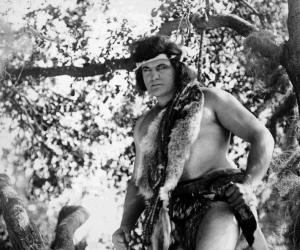
Over on Through the Shattered Lens Presents the Oscars, we are continuing to reimagine Oscar history, one year at a time! Today, we take a look at the year 1918. World War I ended, the Spanish Flu wiped out 5% of the world’s population, and the Academy embraced Tarzan of the Apes!
Through the Shattered Lens Presents The Oscars
A scene from Tarzan of The Apes
1918 was a year of dominated by war and pestilence. As the world seemed to be intent on destroying itself, both the Academy and American filmgoers embraced escapism.
Overseas, the Great War continued to drag on. With no end to the fighting in sight, there were fears that the American public would turn against the war and their elected leaders would withdraw American soldiers from the fighting. The British government, realizing the potential of film as a propaganda tool, contacted director D.W. Griffith and offered to help him make a film. The end result was Hearts of the World, an epic war film that starred Lillian Gish as a French girl who struggles to survive and find true love as the Germans raid her village.
View original post 1,357 more words
Lisa and I continue to reimagine the Oscar history, one year at a time. Today, we look at 1917. The U.S. enters World War I, the Pickfords take over Hollywood, and, for the first time, the entire membership of the Academy gets to vote.
Through the Shattered Lens Presents The Oscars
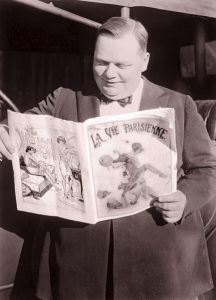
The host of the 4th Annual Academy Awards, Roscoe “Fatty” Arbuckle
On March 4th, 1917, President Woodrow Wilson took the oath of office and began his second term of President. Just a few months earlier, he had run for reelection on a platform of maintaining American neutrality in the war that was ravaging Europe. His slogan was “He Kept Us Out Of War,” and it was enough to allow him to survive one of the closest elections in U.S. History.
Whereas the previous year had been dominated by films, like the Award-winning Civilization, that promoted neutrality and world peace, 1917 saw the release of several films that were designed to support the American war effort. The pacifism of Civilization was forgotten as the box office embraced…
View original post 1,241 more words
Over on Through the Shattered Lens Presidents the Oscars, Jedadiah Leland and I have been reimagining Oscar history, one year at a time! Today, we take a look at 1916, the year of Thomas H. Ince, Civilization, and Intolerance!
Through the Shattered Lens Presents The Oscars
Thomas H. Ince, the 2nd President of AMPAS
In the long history of the Academy of Motion Picture Arts and Sciences, 1916 was dominated by one man: Thomas H. Ince.
Today, Ince is a largely forgotten figure and his many accomplishments have been overshadowed by the mysterious and potentially sordid circumstances of his death in 1924. However, in 1916, Ince was one of the most popular figures working in the film industry. He was the first producer to build his own studio in California and, with D.W. Griffith and Academy President Mack Sennett, founded the Triangle Motion Picture Company. When, following the 2nd Academy Awards ceremony, Sennett announced the he would not be running for a second term as president of the AMPAS, Ince was the obvious choice to replace him.
As President, Ince immediately launched a recruiting drive to bring more industry professionals into the organization…
View original post 1,487 more words
Continuing to reimagine Oscar history one year at a time, LMB and I take a look at what 1915 could have been.
Through the Shattered Lens Presents The Oscars
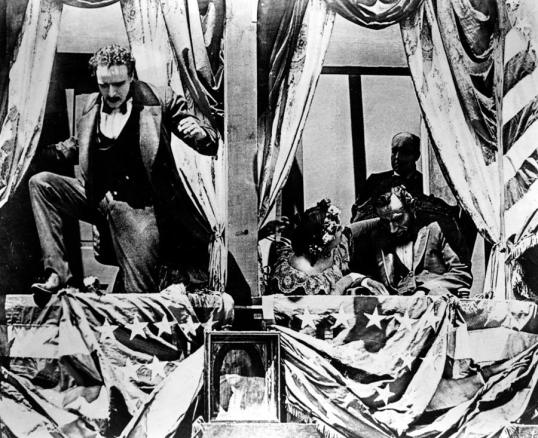
John Wilkes Booth (Raoul Walsh) flees after shooting Abraham Lincoln in D.W. Griffith’s Birth Of A Nation
The second annual Academy Awards were handed out on January 20th, 1916. For the second and final time, the ceremony took place in the Empire Room of the Waldorf Hotel in New York City. Just as in the previous year, the awards were handed out after dinner and a speech from Academy President Mack Sennett. Again, the winners were announced before the actual ceremony and were given certificates of achievement. According to contemporary reports, the winners who were present all gave brief acceptance speeches but nobody bothered to record what anyone said.
As in the previous year, winners were selected by a jury of distinguished citizens. The 1915 jury consisted of:
View original post 794 more words