4 Shots From 4 Films is just what it says it is, 4 shots from 4 of our favorite films. As opposed to the reviews and recaps that we usually post, 4 Shots From 4 Films lets the visuals do the talking!
Today, let us take a look back at a classic cinematic year. It’s time for….
4 Shots From 4 2006 Films
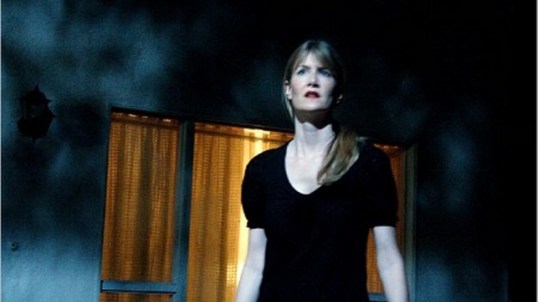
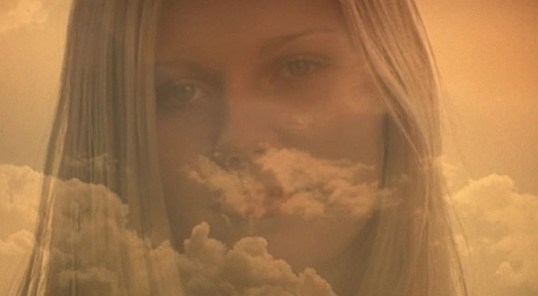
Inland Empire (2006, dir by David Lynch, DP: David Lynch)
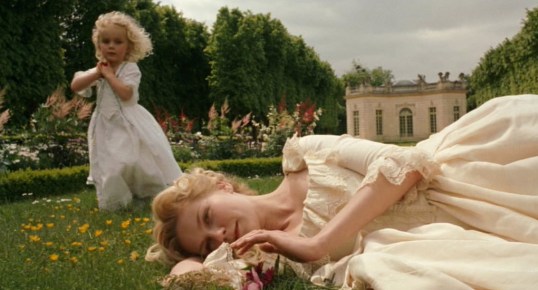
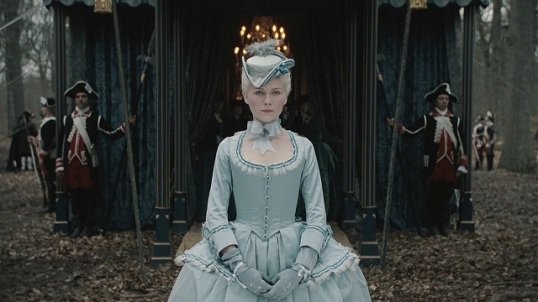
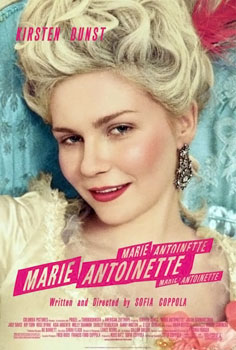
Marie Antoinette (2006, dir by Sofia Coppola, DP: Lance Acord)
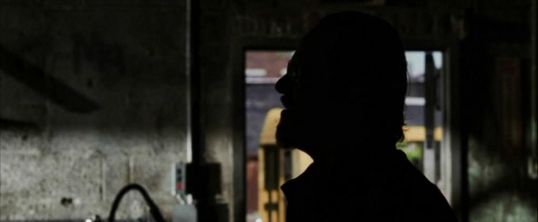
A Scanner Darkly (2006, directed by Richard Linklater, DP: Shane F. Kelly)
The Departed (2006, dir by Martin Scorsese, DP: Michael Ballhaus)
4 Shots From 4 Films is just what it says it is, 4 shots from 4 of our favorite films. As opposed to the reviews and recaps that we usually post, 4 Shots From 4 Films lets the visuals do the talking!
Today is the birthday of one of my favorite American directors, the one and only Sofia Coppola! In honor of this day, here are….
4 Shots From 4 Sofia Coppola Films
The Virgin Suicides (1999, dir by Sofia Coppola, DP: Edward Lachman)
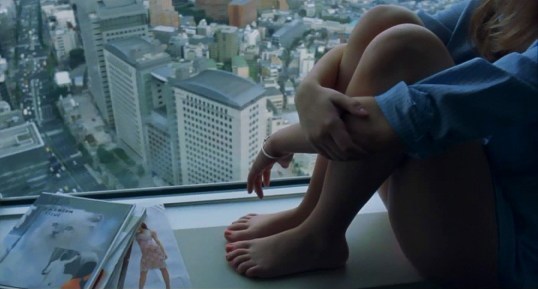
Lost In Translation (2003, dir by Sofia Coppola, DP: Lance Acord)
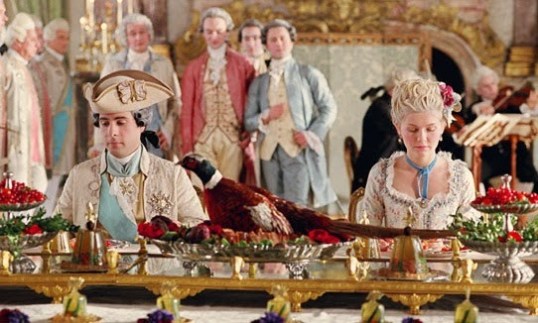
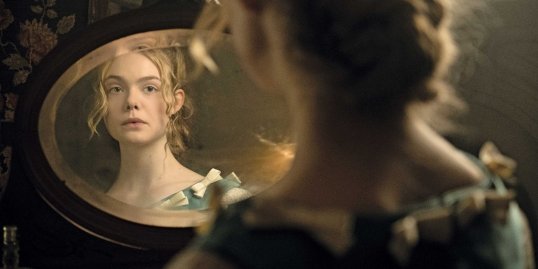
Marie Antoinette (2006, dir by Sofia Coppola, DP: Lance Acord)
The Bling Ring (2013, dir by Sofia Coppola, DP: Harry Savides and Christopher Blauvelt)
4 Shots From 4 Films is just what it says it is, 4 shots from 4 of our favorite films. As opposed to the reviews and recaps that we usually post, 4 Shots From 4 Films lets the visuals do the talking!
Today is the birthday of one of my favorite American directors, the one and only Sofia Coppola! In honor of this day, here are….
4 Shots From 4 Sofia Coppola Films
The Virgin Suicides (1999, dir by Sofia Coppola, DP: Edward Lachman)
Lost In Translation (2003, dir by Sofia Coppola, DP: Lance Acord)
Marie Antoinette (2006, dir by Sofia Coppola, DP: Lance Acord)
Somewhere (2010, dir by Sofia Coppola, DP: Harris Savides)
4 Shots From 4 Films is just what it says it is, 4 shots from 4 of our favorite films. As opposed to the reviews and recaps that we usually post, 4 Shots From 4 Films lets the visuals do the talking!
Today is the birthday of one of my favorite American directors, the one and only Sofia Coppola! In honor of this day, here are….
4 Shots From 4 Sofia Coppola Films
The Virgin Suicides (1999, dir by Sofia Coppola, DP: Edward Lachman)
Lost In Translation (2003, dir by Sofia Coppola, DP: Lance Acord)
Marie Antoinette (2006, dir by Sofia Coppola, DP: Lance Acord)
The Bling Ring (2013, dir by Sofia Coppola, DP: Harry Savides and Christopher Blauvelt)
4 Shots From 4 Films is just what it says it is, 4 shots from 4 of our favorite films. As opposed to the reviews and recaps that we usually post, 4 Shots From 4 Films lets the visuals do the talking!
Today is the birthday of one of my favorite American directors, the one and only Sofia Coppola! In honor of this day, here are….
4 Shots from 4 Films is just what it says it is, 4 shots from 4 of our favorite films. As opposed to the reviews and recaps that we usually post, 4 Shots from 4 Films lets the visuals do the talking!
Today is Sofia Coppola’s birthday!
Sofia Coppola has long been one of my favorite directors. Unfortunately, she’s also a director who is frequently misunderstood and underestimated. No one captures romantic ennui with quite the skill of Sofia Coppola. At the same time, she’s also shown a rare ability to make films that feel at home in both an art house and a commercial theater. If the MCU ever gets around to doing that Black Widow solo movie, I demand Sofia Coppola be hired to direct it.
This edition of 4 Shots From 4 Films is dedicated to her.
(Lisa recently discovered that she only has about 8 hours of space left on her DVR! It turns out that she’s been recording movies from July and she just hasn’t gotten around to watching and reviewing them yet. So, once again, Lisa is cleaning out her DVR! She is going to try to watch and review 52 movies by the end of Tuesday, December 6th! Will she make it? Keep checking the site to find out!)
On November 12th, I recorded 2016’s Marie Antoinette off of Starz.
Before I review Marie Antoinette, I think it’s important that you know that I am an unapologetic Sofia Coppola fan. I love every film that she’s made and I look forward to her upcoming remake of The Beguiled. At the same time, I can also understand why some people feel differently. Sofia Coppola’s films are not for everyone. For one thing, almost all of her films deal with rich people. The existential angst of the wealthy and/or famous is not a topic that’s going to fascinate everyone. When you watch a Sofia Coppola film, you never forget that you’re watching a film that’s been directed by someone who largely grew up in the spotlight and who knows what it’s like to have money. An ennui born out of having everything and yet still feeling empty permeates almost every scene that Sofia Coppola has ever directed. (If you have to ask what ennui is, you’ve never experienced it.) Many viewers look at Sofia Coppola’s filmography and they ask themselves, “Why should we care about all these materialistic people?”
However, while Sofia Coppola may not know what’s it’s like to be poor (or even middle class for that matter), she does understand what it’s like to feel lonely. Her filmography could just as easily be called “the cinema of isolation.” It doesn’t matter how much money you may have or how famous you may or may not be, loneliness is a universal condition. A typical Sofia Coppola protagonist is someone who has everything and yet still cannot connect with the rest of the world. More often that not, they turn to excessive consumption in order to fill the void in their life. To me, the ultimate Sofia Coppola image is not, regardless of how much I may love them, Bill Murray and Scarlett Johansson in Lost in Translation. Instead, it’s Stephen Dorff (playing a far less likable version of Bill Murray’s Translation character) standing alone in the desert at the end of Somewhere.
Marie Antoinette, which was Sofia’s follow-up to Lost in Translation, is technically a historical biopic, though it makes little effort to be historical or accurately biographical. Kirsten Dunst plays Marie Antoinette, the final queen of France before the French Revolution. It was Marie Antoinette was accused of dismissing starving French peasants by announcing, “Let them eat cake!” (For the record, it’s probable that Marie Antoinette never said that. It’s certainly never heard in Coppola’s film.)
Marie Antoinette opens with the title character arriving in France at the age of 14. She’s an Austrian princess who has been sent to marry the future king of France, Louis XVI (Jason Schwartzman). From the minute we meet her, Marie Antoinette is portrayed as being a pawn. Her mother arranges the marriage as a way to seal an alliance with France. The king of France (played by Rip Torn) expects Marie Antoinette to get produce an heir to the throne as quickly as possible. Meanwhile, her new husband is an infantile and immature fool who doesn’t even know how to make love. Marie Antoinette finds herself isolated in a strange country, expected to be all things to all people.
And so, Marie Antoinette does what I always do whenever I’m feeling unsure of myself. She hangs out with her girlfriends. She throws expensive parties. She gambles. She flirts. She shops. She has fun, regardless of whether it’s considered to be proper royal behavior or not. Occasionally, she is warned that she is losing popularity with the French people but she’s not concerned. Why should she be? She doesn’t know anything about the French people. All she knows about is the life that she was born into. She didn’t choose to be born in to wealth and power but, since she was, why shouldn’t she have a good time?
The French Revolution doesn’t occur until near the end of Marie Antoinette and when it does happen, it happens quickly. And yet, the shadow of the revolution hangs over the entire film. We watch the knowledge that neither Marie Antoinette nor her husband possess: eventually, they are both going to be executed. And knowing that, it’s hard not to cheer Marie Antionette on. She may be destined for a tragic end but at least she’s having a little fun before destiny catches up with her.
Kirsten Dunst makes no attempt to come across as being French or Austrian but then again, neither does anyone else in the film. After all, this is a movie where Rip Torn plays the King of France without once trying to disguise his famous Texas accent. Coppola isn’t necessarily going for historical accuracy. Instead, in this film, Marie Antoinette serves as a stand-in for countless modern celebrities. In the end, Marie Antoinette is portrayed as not being much different from Paris Hilton or Kardashian. Meanwhile, the people who eventually show up outside the palace, carrying torches and shouting threats, are the same as the viewers who loudly condemn reality television while obsessively watching every episode of it.
Coppola’s stylized direction results in a film that is both thought-provoking and gorgeous to look at and which is also features several deliberate anachronisms. (In many ways, Marie Antoinette blatantly ridicules the very idea that history can be accurately recreated.) Perhaps because it was following up the beloved Lost In Translation, Marie Antoinette has never got as much praise as it deserves but I think it’s a film that is totally deserving of a reevaluation.
(Sidenote: Fans of Italian horror should keep an eye out for Asia Argento, who has a small but very important supporting role.)
So, a few weeks ago, some of my fellow pop culturally inclined writers were talking about the worst movies of 2010. I had, earlier, declared Love and Other Drugs to be the worst film of 2010 and I was told to hold off on making that judgment until I saw Sofia Coppola’s latest film, Somewhere. At this point, another writer chimed in to let me know that he hadn’t heard one good word about Somewhere.
At that point, I made a prediction. Simply based on the movie’s trailer (which played at Plano Angelika for 5 months before it actually opened in Dallas last week) and the fact that so many people seemed to hate this film with such a passion, I predicted that Somewhere would probably turn out to be one of my favorite films of the year.
I saw the film last Saturday and it turns out I was correct. I absolutely loved Somewhere.
In many ways, Somewhere feels like a prequel to Coppola’s Lost In Translation. Somewhere tells the story of Hollywood actor Johnny Marco (Stephen Dorff) who, despite being a film star — if not, its implied, a particularly respected actor — spends his days wandering through life in a haze of ennui. At the start of the film, he drunkenly breaks his arm and, when not promoting an upcoming action film, he spends his days recovering at the Chateau Marmont in Los Angeles. He smokes a lot of cigarettes, drinks a lot of beer, and languidly lies in bed while twin pole dancers do their routines in front of him. The first fourth of the film is devoted to establishing Johnny’s shallow daily routine with the only excitement coming from insulting text messages that he occasionally receives. Right when you’re wondering how much more of Johnny Marco’s existential crisis you can handle, his 11 year-old daughter Cleo (Elle Fanning, who gives a surprisingly mature performance) shows up and both Johnny and the movie suddenly spring to life.
Cleo’s mother has basically abandoned her daughter, calling up Johnny and explaining that she needs “to find” herself. Until Cleo is scheduled to start at summer camp, she tags along with Johnny on his day-to-day life. They go to Italy where Johnny promotes his latest film and answers vapid questions at a hilariously awkward press conference and then accepts an award during a televised ceremony even though he’s not quite sure what the award is for. Back in the states, Cleo and Johnny hang out at the hotel, discuss the plot of Twilight, and finally — on the way to summer camp — Johnny takes her to Vegas.
With the exception of one scene, Cleo and Johnny never discuss why he’s no longer with her mother nor do they address the issue that both of her parents are essentially abandoning Cleo. However, even though it’s never addressed directly, the movie is full of clues for those who are willing to pay attention. We actually learn very little about why Johnny is the way he is but, again, Coppola fills every scene with hints and then allows the viewer to draw their own conclusions. None of the film’s mysteries are directly explained — we never learn who is sending Johnny the angry text messages nor do we ever learn the full significance of a phone call Johnny makes to an unseen woman named Layla — but the explanations are there and, in Coppola’s assured and subtle hands, the search for those explanations ultimately turns into a portrait of a society full of lost human beings who have lost the ability to connect.
Admittedly, one reason why I loved this film is because the relationship between Johnny and Cleo reminded me a good deal of my relationship with my own dad. So much of the film rang painfully true to me that I was thankful for the many moments where Cleo and Johnny were just allowed to be a normal father and daughter. I’m thinking of the moments were Cleo explains to plot of Twilight or where, during their trip to Italy, Cleo sits in the hotel lobby and concentrates on Sudoku. It was moments like this that rang so true to me and it’s these moments that made Somewhere one of my favorite movies of 2010.








 Through the Shattered Lens