The TSL Grindhouse: The Wild Angels (dir by Roger Corman)


“What is it exactly that you want?” a preacher (Frank Maxwell) asks a congregation of leather-clad bikers.

“We want to get loaded!” Heavenly Blues (Peter Fonda) replies, “And we want to have a good time!”

And have a good time, they proceed to have.  Of course, it’s a good time for them.  Everyone else who meets the bikers at the center of 1966’s The Wild Angels are horrified by this collection of rebellious and violent outsiders.  Sure, Heavenly Blues might actually be a soulful guy who mistakenly believes that he can control the gang’s more excessive tendencies.  His girlfriend, Mike (Nancy Sinatra), actually seems rather reserved and conservative when compared to the rest of the gang.  But make no mistake about it, the majority of the members of the gang are into violence for its own sake.  They are bullies who couldn’t make the football team so, instead, they hopped on a motorcycle and formed their own society.  They’re self-styled rebels  but what are they rebelling against?  What have you got?

I know, I know.  That famous line comes from Marlon Brando and it was uttered in The Wild One.  Peter Fonda, to put it lightly, was no Marlon Brando and, as directed by Roger Corman, The Wild Angels doesn’t have the societal concerns that lay at the hear of The Wild One.  As Corman was often the first to admit, his main concern when it came to making movies was to make money.  Corman wasn’t necessarily against message films.  He often stated that, as a director, 1962’s The Intruder was the film in which he took the most pride.  The Intruder took a firm stand against racism and it let everyone know where Corman stood on when it came to the Civil Rights Movement.  It was also one of his few films to lose money.  The Wild Angels celebrates rebellion but one gets the feeling that celebration is motivated by the fact that younger filmgoers would be happy to pay to see a movie about a bunch of “youngish” people telling the old folks to shut up and get out of the way.  The Wild Angels themselves don’t seem to be motivated by any sort of grand ideology.  Heavenly Blues preaches about getting loaded and having a good time and celebrating freedom but he also allows the members of the gang to drape a Nazi flag over a casket.  What does Heavenly Blues actually believe in?

Heavenly Blues believes in loyalty to his friends.  For all the fights and the orgies and the scenes of motorcycles roaring down country roads, this is ultimately just a film about a guy who wants to give his best friend a decent burial.  The Loser (Bruce Dern) dies about halfway through the film and one gets the feeling that he probably would have lived if the gang hadn’t kidnapped him from the hospital.  Heavenly Blues wants to give The Loser the type of wild funeral that Blues thinks he would have wanted though I think The Loser probably would have been happier not have been killed by the actions of his idiot friends.  Diane Ladd, who was married to Bruce Dern at the time and who has said Laura Dern was conceived during the filming of The Wild Angels, is heart-breaking as The Loser’s girlfriend, Gaysh.  Gaysh wants to mourn her boyfriend while the rest of the gang is more concerned with figuring out who her next boyfriend is going to be.

Does Heavenly Blues ever realize that he’s traveling with a bunch of animals?  He does but one gets the feeling that he’s accepted his fate.  There’s no going back.  The past can’t change and the future cannot be controlled so Heavenly Blues is content to live in the present.  All he can do is try to give his friend a decent burial while the sirens of cops shriek in the distance.

The Wild Angels was a controversial film when it was first released.  It also made a lot of money and led to a whole cycle of outlaw biker films, culminating with Easy Rider.  Seen today, it’s a portrait of a society coming apart, with the establishment and the bikers not even willing to stop fighting long enough to allow for a simple burial.  It’s definitely a time capsule film, one of those productions that epitomizes an era.  There’s not much going on underneath the surface and most of the film’s bikers really are awful people but there is something touching about Blues giving it all up just to try to give his friend a decent burial.

An Offer You Can’t Refuse #3: The Purple Gang (dir by Frank McDonald)


The 1960 gangster film, The Purple Gang, really took me by surprise.

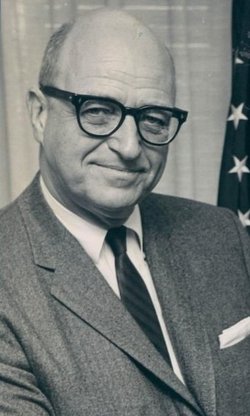
The film opens with U.S. Rep. James Roosevelt standing in front of his desk.  James Roosevelt was the son of President Franklin D. Roosevelt.  He was a notoriously shady businessman who, before entering politics, dabbled a bit in Hollywood.  That probably explains how he eventually came to be standing in his congressional office, filming the introduction for a low-budget B-movie about Detroit gangsters.  Roosevelt tells us that he’s already watched the movie that we’re about to see and that he can assure us that it is an accurate portrayal of not just the history of The Purple Gang but also of how 1920s bootlegging led to a host of other crimes.  Roosevelt goes on to compare bootleggers to modern day drug pushers.  The most interesting thing about the speech is that it almost sounds like a defense of prohibition, the law that FDR famously opposed.

To use a term from the film’s era, it’s kind of a square opening.  James Roosevelt comes across as being so vacuously earnest that it’s almost as if Beto O’Rourke got his hands on a time machine and went back to 1960.  At the same time, there’s something oddly charming about how awkward it is.  One can only imagine how audiences would react if a film today opened with a speech from a congressperson.  I guess some parts of the country would love it.  Down here in Texas, the theater would probably get set on fire.

Now, based on that less than edgy opening, you might be justified in expecting that The Purple Gang will just be your standard 1960s crime thriller but it most definitely is not.  The Purple Gang is a tough and violet movie, one that is full of shadowy and sometimes disturbing imagery.  A very young Robert Blake plays Honeyboy Willard, a teenage hoodlum who, through pure sociopathic ruthlessness, takes over the rackets in Detroit.  Barry Sullivan is Lt. Harley, the police detective whose quest to bring down the Purple Gang leads to him losing almost everything that was important to him.

Our first impression of Lt. Harley comes when he skeptically listens to a liberal social worker, Joan McNamara (Jody Lawrance), explain that criminals are not born but are instead made by their circumstances.  Harley obviously doesn’t agree.  Later, while Joan is walking around Detroit at night, she is attacked, rape,d and then murdered by the same criminals that she was earlier defending.  With the city outraged over Joan’s murder, Lt. Harley steps up his efforts to bring down the gang so Honeyboy murders Harley’s pregnant wife.

While Harley seeks revenge, Honeyboy is busy making deals with Canadian liquor distributors and building the Purple Gang into the biggest criminal enterprise in the northern midwest.  When a group of distraught businessmen, upset at being extorted by the Purple Gang, turns to the Mafia for help, Honeyboy declares war….

Of course, despite James Roosevelt’s assurance at the start of the film and the semi-documentary approach that director Frank McDonald takes to the material, the truth is far different from the movie.   In real life, The Purple Gang was predominantly made up of the children of recent immigrants from Russia and Poland.  It was run not by Honeyboy Willard but by the four Bernstein brothers.  The Purple Gang did not go to war with the Mafia but instead, they were allied with Lucky Luciano and Meyer Lansky in their attempts to create a national crime syndicate.  They were also closely allied with Al Capone, to the extent that it’s been suggested that Capone used Purple Gang gunmen to carry out the St. Valentine’s Day Massacre.  The Purple Gang eventually fell apart due to infighting and the end of prohibition, with the majority of the members who weren’t in jail simply joining other gangs.

So, no, The Purple Gang is not historically accurate but it’s still an effective and surprisingly brutal gangster film.  The noirish photography makes certain scenes seem almost as if they’ve been lifted straight out of a nightmare and, historically accurate or not, the film does do a good job of showing how organized crime came to exist in the United States.  It’s a quick-paced and energetic film and it features a great performance from Robert Blake as the chillingly sociopathic Honeyboy.  The Purple Gang is a low-budget B-movie that packs a punch.

Plus, James Roosevelt did ask you to watch.  Are you going to say no to James Roosevelt?

James Roosevelt, film critic

Previous Offers You Can’t Refuse:

  1. The Public Enemy
  2. Scarface

Cleaning Out The DVR: The Love-Ins (dir by Arthur Dreifuss)


(Hi there!  So, as you may know because I’ve been talking about it on this site all year, I have got way too much stuff on my DVR.  Seriously, I currently have 179 things recorded!  I’ve decided that, on February 1st, I am going to erase everything on the DVR, regardless of whether I’ve watched it or not.  So, that means that I’ve now have only have a month to clean out the DVR!  Will I make it?  Keep checking this site to find out!  I recorded the 1967 film, The Love-Ins, off of TCM on September 28th, 2017!)

“We now enter Haight Ashbury.  The promised land of the love movement.  The utopia of LSD…and now we take you to Golden Gate Park for a hippie love-in!”

— A San Francisco Tour Guide in The Love-Ins (1967)

I doubt I could ever be a hippie.  I don’t mind the drugs, the free love, or the music but the whole lack of showers and underwear would be too much for me.  Add to that, from what I’ve seen, it appears that whenever there was a hippie gathering, it would inevitably lead to the arrival of mimes and who wants to deal with that?  That said, I certainly do enjoy watching movies about hippies.

Take The Love-Ins for instance!

This 1967 film is all about hippies, or at the very least the popular perception of hippies.  There’s even a lengthy sequence that takes place at a hippie gathering in San Francisco.  While the hippies plays bongo drums, blow bubbles, dance, and stare at multi-colored umbrellas with stoned eyes, they’re watched by Jonathan Barnett (Richard Todd).  Barnett used to be a respected philosophy professor but then he resigned his teaching position in protest after two students were expelled for publishing an underground newspaper.  This led to Barnett appearing on a right-wing talk show where the antagonistic host told him that, if he loved the hippies so much, maybe he should got to Haight Ashbury and see how they really live.  Barnett does just that and it blows his mind!

Soon, Barnett has re-invented himself.  He’s now a psychedelic prophet, living in a commune with the expelled students and encouraging everyone to “Be more.  Sense more.  Love more.”  That doesn’t quite have the same ring to it as “Tune in.  Turn On.  Drop out,” but it’s the same basic idea.  Soon, hippies from all over the country are flocking to Prof. Barnett, dropping LSD, and doing interpretive dances.  Not even the local outlaw bikers can stop Barnett from spreading his message.

Unfortunately, it doesn’t take long for his newfound fame to go to Barnett’s head.  He soon stops listening to Larry (James MacArthur), the student whose expulsion started the whole movement, and instead surrounds himself with sycophants like Elliott (Mark Goddard).  Barnett goes from being an idealist to a messianic cult leader.  Soon, hippies are fighting in the streets, setting fired to newspaper they don’t like, and jumping out of windows.  (“LSD told him he could fly.  Gravity had different plans.”  No one actually said that in the movie but I wish they had.)  After discovering that his girlfriend (Susan Oliver) has been impregnated by Barnett, Larry realizes that he has to stop his former professor, one way or the other.

The Love-Ins was made by the same people responsible for Riot on Sunset Strip but, whereas Sunset Strip at least pretended to take an even-handed, documentary-like approach, The Love-Ins is a psychedelic freakout.  Whereas Sunset Strip features Mimsy Farmer taking LSD and then staring at her hand, The Love-Ins features Susan Oliver taking LSD, transforming into Alice in Wonderland, and then dancing with Tweedle Dee and Tweedle Dum.  And whereas Sunset Strip tried to be on the side of both the young and the old, The Love-Ins leaves little doubt that those hippies are no good!  (While Larry may be a the film’s hero, he looks like he would be more comfortable in the ROTC than at Woodstock.)  Barnett’s love-ins are revealed to be as choreographed as any political rally and, if there’s any doubt that he’s become a really bad guy, he even starts to perform impromptu wedding ceremonies.  “How dare you make a mockery of marriage!?”  an outraged observer shouts.

Seen today, the main value of The Love-Ins is a chance to see how many adults viewed the counter-culture and its leaders in 1967.  (Director Arthur Dreifuss was 60 when he directed this film and the film often views its young characters with the detachment of someone not sure of how close he can really get before being attacked.)  Of course, the main reason I liked The Love-Ins was because of the psychedelic dance scenes.  (Though no one’s going to mistake this film for another Face in the Crowd, I also enjoyed some of the film’s satiric jabs at the cult of celebrity, which was apparently just as big in 1967 as it is in 2018.)  It’s definitely a film of its time, though whether or not the people involved with the movie actually understood their time is another issue all together.

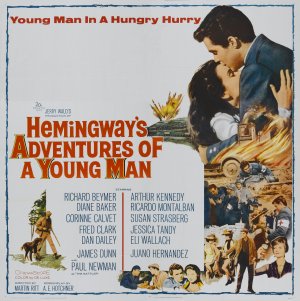
Lisa Cleans Out Her DVR: Hemingway’s Adventures Of A Young Man (dir by Martin Ritt)


(Lisa is currently in the process of cleaning out her DVR!  It’s going to take a while.  She recorded this 1962 literary adaptation off of FXM on January 30th!)

Hemingway’s Adventures Of A Young Man is one of those films that you just know was made specifically to win Oscars.  It’s a big prestige production, complete with a historical setting, an epic scope and big, all-star cast.  That most of those stars appear in relatively small roles was undoubtedly meant to evidence of the film’s importance.

“Look!” the film seems to shout at times, “This is such an important film that even Paul Newman was willing to stop by for a day’s work!”

The film is based on ten short stories by Ernest Hemingway and, loosely, A Farewell to Arms.  The stories all dealt with the early life of Nick Adams, who was a literary stand-in for Hemingway.  Since the Nick Adams stories were autobiographical (and, for that matter, so was A Farewell to Arms), the film can also be viewed as biopic.  Richard Beymer (who, a year earlier, had starred in West Side Story and who is currently playing Ben Horne on Twin Peaks) may be playing Nick Adams but the film leaves little doubt that he was actually meant to be playing Ernest Hemingway.

The film opens with Nick hunting with his father, Dr. Harold Adams (Arthur Kennedy).  He is present when his father travels to an Indian camp and helps to deliver a baby.  He respects his father but Nick wants to see the world and the film follows him as he explores America, working odd jobs and meeting colorful characters along the way.  Paul Newman shows up as a punch-drunk boxer and proceeds to overact to such an extent that he reminded me of Eric Roberts appearing in a Lifetime film.  Nick meets rich men, poor men, and everything in between.  He works as a journalist.  He works as a porter.  Eventually, when World War I breaks out, Nick enlists in the Italian army and the film turns into the 100th adaptation of A Farewell to Arms.

And really, I think it would have been an enjoyable film if it had been directed by someone like Otto Preminger, George Stevens, or maybe even Elia Kazan.  These are directors who would have embraced both the pulpy potential of the Nick Adams stories and the soapy melodrama of the war scenes.  A showman like Preminger would have had no fear of going totally and completely over the top and that’s the approach that this material needed.  Instead, Hemingway’s Adventures Of A Young Man was directed, in a painfully earnest style, by Martin Ritt.  Ritt tries to imitate Hemingway’s famously understated style with his understated direction but, cinematically, it’s just not very interesting.  Ritt portrays everything very seriously and very literally and, in the end, his direction is more than a little dull.

Sadly, the same can be said for Richard Beymer’s performance in the lead role.  Beymer comes across as being the nice guy who everyone says you should marry because he’ll be able to get a good and stable job and he’ll probably never go to jail.  Two months ago, when I watched and reviewed Twin Peaks, I really loved Beymer’s performance as Ben Horne.  He just seemed to be having so much fun being bad.  Unfortunately, in Hemingway’s Adventures Of A Young Man, he never seemed to be having any fun at all.  No wonder he temporarily put his film career on hold so that he could fully devote himself to working as a civil rights activist.

In the end, this is a movie that’s a lot more fun to look at than to actually watch.  Visually, the film is frequently quite pretty in an early 1960s prestige movie so sort of way.  And there are some good performances.  Eli Wallach, Ricardo Montalban, Susan Strasberg, Arthur Kennedy — there’s a whole host of performers doing memorable supporting work.  Unfortunately, even with all that in mind, this well-intentioned film largely falls flat.