From 1986’s Manhunter.
Only Tom Noonan could have Francis Dollarhyde both so human and so monstrous.
RIP.
From 1986’s Manhunter.
Only Tom Noonan could have Francis Dollarhyde both so human and so monstrous.
RIP.
4 Shots From 4 Films is just what it says it is, 4 shots from 4 of our favorite films. As opposed to the reviews and recaps that we usually post, 4 Shots From 4 Films lets the visuals do the talking!
Today, we celebrate the 83rd birthday of the great Michael Mann! It’s time for….
4 Shots From 4 Michael Mann Films
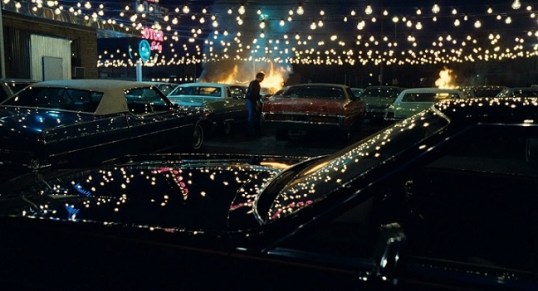
Thief (1981, dir by Michael Mann, DP: Donald Thorin)
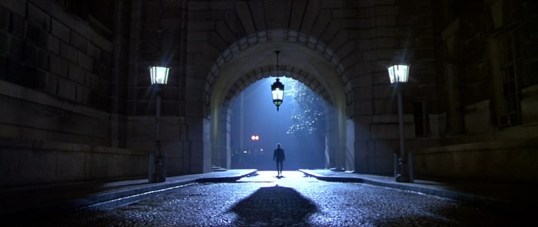
Manhunter (1986, dir by Michael Mann, DP: Dante Spinotii)
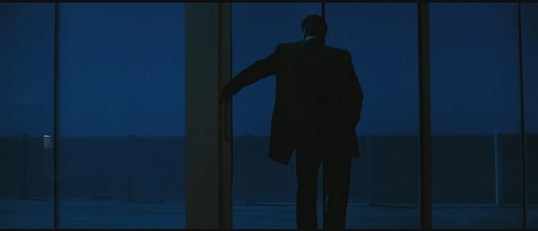
Heat (1995, dir by Michael Mann, DP: Dante Spinotti)
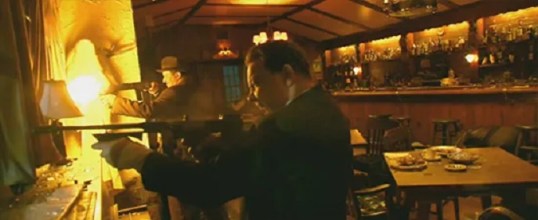
Public Enemies (2009, dir by Michael Mann, DP: Dante Spinotti)
4 Shots From 4 Films is just what it says it is, 4 shots from 4 of our favorite films. As opposed to the reviews and recaps that we usually post, 4 Shots From 4 Films lets the visuals do the talking!
Today, the Shattered Lens wishes a happy birthday to the legendary cinematographer, Dante Spinotti! It’s time for….
4 Shots From 4 Dante Spinotti Films

Manhunter (1986, dir by Michael Mann, DP: Dante Spinotti)
Heat (1995, dir by Michael Mann, DP: Dante Spinotti)
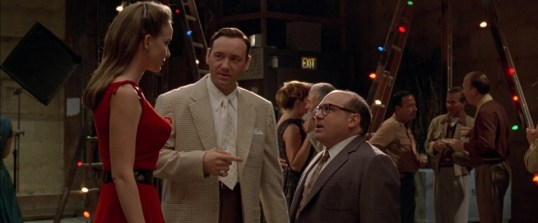
L.A. Confidential (1997, dir by Curtis Hanson, DP: Dante Spinotti)
Public Enemies (2009, dir by Michael Mann, DP: Dante Spinotti)
Hi, everyone! Brad and his wife Sierra are on vacation so guess is who is guest hosting the #MondayMuggers live tweet tonight? That’s right …. me!
Tonight’s movie will be MANHUNTER (1986), the classic Michael Mann-directed thriller that introduced the world to the characters of Will Graham, Jack Crawford, Francis Dollarhyde, and Hannibal Lecter! (Though it’s spelled Lektor in this film.) Check out the trailer!
You can find the movie on Prime and then you can join us on twitter at 9 pm central time! (That’s 10 pm for you folks on the East Coast.) See you then!
Since today is Michael Mann’s birthday, today’s scene that I love comes from his 1986 film, Manhunter.
In this scene, a blind woman (played by Joan Allen) pets a sedated tiger while her new boyfriend (Tom Noonan) watches. This would actually be a pretty romantic scene if not for the fact that her boyfriend is also a homicidal maniac. This is a scene that, when you watch the film, seems to come out of nowhere but, when you look back, you realize it was one of the key moments in the narrative. While the killer watches the woman who represents a possible redemption embrace another predator, the profiler played by William Petersen continues his way into the killer’s tortured psyche.
This scene is Michael Mann at his best.
4 Shots From 4 Films is just what it says it is, 4 shots from 4 of our favorite films. As opposed to the reviews and recaps that we usually post, 4 Shots From 4 Films lets the visuals do the talking!
Today, we celebrate the 82nd birthday of the great Michael Mann! It’s time for….
4 Shots From 4 Michael Mann Films
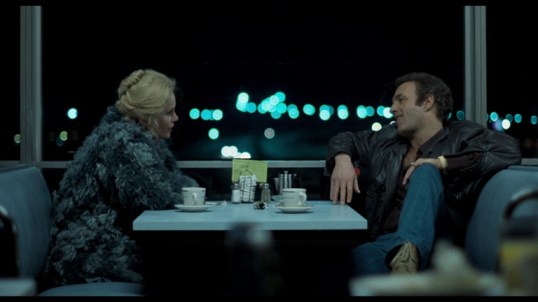
Thief (1981, dir by Michael Mann, DP: Donald Thorin)
Manhunter (1986, dir by Michael Mann, DP: Dante Spinotii)
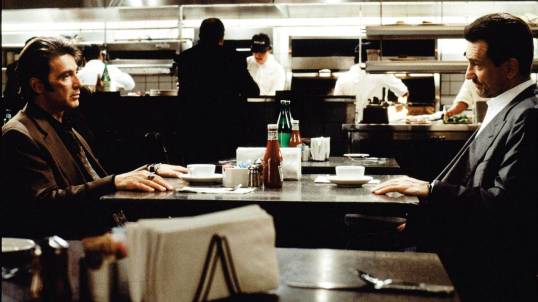
Heat (1995, dir by Michael Mann, DP: Dante Spinotti)
Public Enemies (2009, dir by Michael Mann, DP: Dante Spinotti)
4 Shots From 4 Films is just what it says it is, 4 shots from 4 of our favorite films. As opposed to the reviews and recaps that we usually post, 4 Shots From 4 Films lets the visuals do the talking!
Today, we celebrate the 80th birthday of the great Michael Mann! It’s time for….
4 Shots From 4 Michael Mann Films
Thief (1981, dir by Michael Mann, DP: Donald Thorin)
Manhunter (1986, dir by Michael Mann, DP: Dante Spinotii)
Heat (1995, dir by Michael Mann, DP: Dante Spinotti)
Public Enemies (2009, dir by Michael Mann, DP: Dante Spinotti)
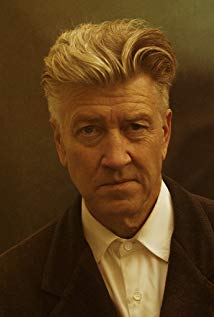
Let us take a moment to consider the career of David Lynch.
As we all know, David Lynch is one of America’s most unique and idiosyncratic directors, an unapologetic surrealist whose films always seem to come from a very dark and very personal place. He began his career with Eraserhead and was then brought to Hollywood by Mel Brooks so that he could direct The Elephant Man. Following the huge success of The Elephant Man, Lynch signed a contract with Dino De Laurentiis and directed Dune (a movie that Lynch later said was as close as he ever came to “selling out”) and the far better received Blue Velvet.
After the success of Blue Velvet, Lynch turned to television. Twin Peaks was, in its way, Blue Velvet adapted for network television. While people across the world were debating who killed Laura Palmer, Lynch won the 1990 Palme d’Or with Wild At Heart. Frustrated with ABC’s attempts to interfere with the direction of Twin Peaks, Lynch became less involved with the televisions series and it was canceled after its second season. Lynch’s cinematic prequel, Twin Peaks: Fire Walk With Me, was released an initially tepid response, though — like much of Lynch’s work — it has since been positively reevaluated.
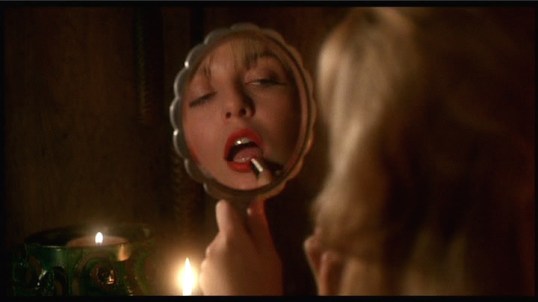
In 1997, Lynch directed his most surreal film yet, Lost Highway. He then shocked critics by directing the G-rated The Straight Story and proving that his surreal vision could be heart-warming as well as frightening. When Lynch couldn’t get a network to commit to his proposed second televisions series, Lynch filmed some more footage and released the pilot as a feature film. Mulholland Drive has gone on to be recognized as one of the greatest films of all time and it also earned Lynch his third Oscar nomination for Best Director.
Despite the success of Mulholland Drive, Lynch still struggled to find the financial backing for the films that he wanted to make. In 2006, he directed Inland Empire, a film that’s as surreal as any that he’s ever directed and also, in its way, one of the most emotionally powerful films ever made. Again, much like Fire Walk With Me and Lost Highway, Inland Empire was initially dismissed by critics but it has since been rediscovered.
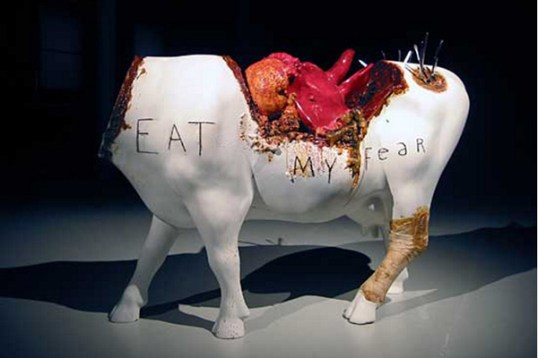
Eat My Fer by David Lynch
Following Inland Empire, Lynch focused on painting, music, and promoting meditation and it was feared that he had retired from filmmaking. In 2017, he brought Twin Peaks: The Return to Showtime and, for a few brief months, we were again enraptured by his genius.
David Lynch has directed ten feature films. (Eleven, if you count Twin Peaks: The Return. I do.) He has one of the greatest filmographies of any living director. But what about the films that David Lynch didn’t make? In his memoir, Room to Dream, Lynch wrote about not only the projects for which he couldn’t find backing but also about several films that he was offered but turned down.
Here are a few of the films David Lynch turned down:
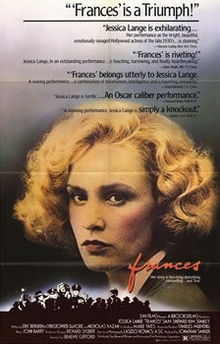
Frances Farmer was a Golden Age actress who was famous for her refusal to conform to the demands of 1940s society. She was outspoken in her political views. She drank heavily. She was open about her drug use. Following the end of her affair with playwright Clifford Odets, Farmer had a nervous breakdown and was sent to a draconian mental hospital where she was horrifically abused, suffered through electroshock treatments, and was eventually lobotomized before being released in 1950.
It’s a pretty disturbing story and one can imagine that Lynch could have made a powerful film out of it, especially as Frances Farmer is the archetype for the troubled women who are often at the center of his films. Mel Brooks, who also produced The Elephant Man, produced Frances and was hopeful that Lynch would direct it. However, Lynch had already signed a contract with Dino De Laurentiis and was not available. Frances was eventually directed by Graeme Clifford, who took a far more straight-forward approach to the material than Lynch would have.
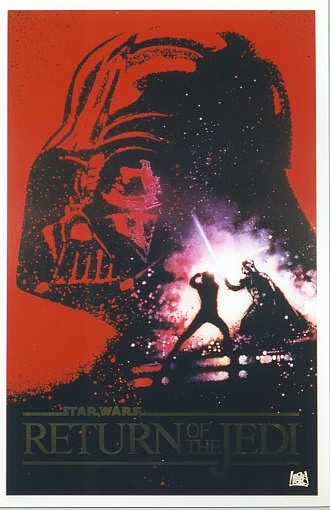
2. Return of the Jedi (1983)
This is probably the most famous of the films that David Lynch turned down. George Lucas was a fan of Eraserhead and, in the early 80s, Lynch was riding high as a result of having received his first Oscar nomination for The Elephant Man. Reportedly, Lucas actually did offer the film to Lynch. Lynch turned him down, saying that he felt that the film would ultimately have been seen as being Lucas’s film and not the film of whoever was hired to direct it. Instead, Lynch directed another sci-fi epic, Dune.
Lucas reportedly then offered the film to another maverick director, David Cronenberg. After Cronenberg turned it down, Lucas settled on Richard Marquand.
3. Tender Mercies (1983)
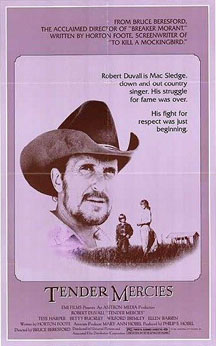
Robert Duvall won his first Oscar for this film, in which he played an alcoholic country singer who finds redemption with a Texas widow and her son. This rather gentle film may seem like the furthest thing one would associate with Lynch but I personally think that David Lynch could have done a good job with it. Tender Mercies is a film that feels like it might be distantly related to The Straight Story and Lynch’s unapologetic love of Americana would have served the story well.
Lenny Von Dohlen, who played a small role in Tender Mercies, later played the shut-in who had Laura Palmer’s diary in Twin Peaks.

4. Manhunter (1986)
Also known as Red Dragon, this film was the first to feature Dr. Hannibal Lecter. The film was offered to Lynch by Dino De Laurentiis. Lynch turned it down so he could concentrate on Blue Velvet. Manhunter was instead directed by Michael Mann, who — it must be said — filled the film with surreal imagery that occasionally felt very Lynchian. Considering that Lynch’s films are full of flamboyantly evil men, it’s hard not to be curious what Lynch would have done with characters like Hannibal Lecter and Francis Dollarhyde.

5. American Beauty (1999)
American Beauty was one of the many scripts that was sent to Lynch in the 90s. Lynch turned the film down and it was instead made by Sam Mendes. American Beauty went on to win Best Picture. That said, it’s also one of the most pretentious film ever made and the fact that some people love it will never cease to amaze me. Interestingly, one of the main problems with the film is that, as a director, Mendes often tries too hard to capture the mood and feeling that Lynch was later able to so effortlessly create in Twin Peaks: The Return. Lynch probably could have made a decent film out of American Beauty but, fortunately for us, he devoted his attention to Mulholland Drive instead.
6. The Ring (2002)
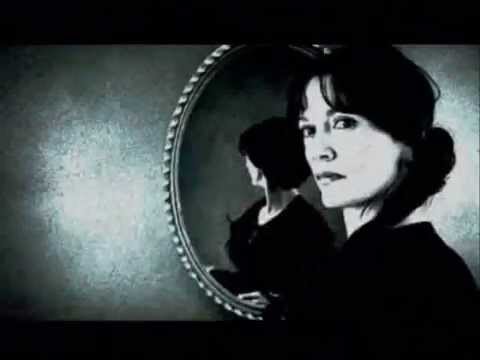
This film was offered to Lynch but he turned it down. (Interestingly enough, when the film was made, it starred Naomi Watts, who had just appeared in Mulholland Drive and who went on to appear in both Inland Empire and Twin Peaks: The Return.) I would have been curious to see what Lynch would have done with the killer video.
7. Motherless Brooklyn (2019)
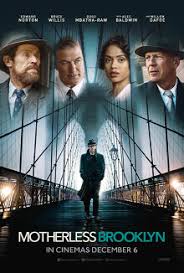
In 1999, Lynch was among the directors who Edward Norton approached about directing a film version of the just-published detective novel, Motherless Brooklyn. Lynch, who was working on Mulholland Drive, turned Norton down. 20 years later, Motherless Brooklyn was finally made into a film, with Norton starring and directing.
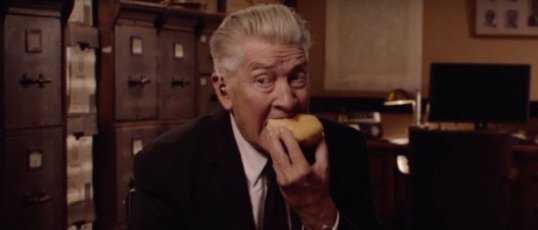
It’s hard to guess what the future holds for David Lynch. There have been reports that Lynch will no longer make films though Lynch himself says that his disillusionment with cinema has been overstated. There are also rumors that Lynch might give us another season of Twin Peaks. Who knows? Even if David Lynch spends the rest of his days promoting transcendental meditation and never again steps behind a camera, no one can deny that he’s given us some of the most amazing and important films of all time. Happy birthday, Mr. Lynch!
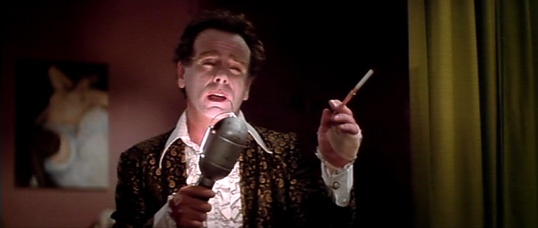
Dean Stockwell in Blue Velvet
Last week, we considered whether or not Out of Africa deserved the title of best picture of 1985. As of this writing, the votes would seem to indicate that most of you feel that it did not.
For this week, let’s jump ahead one year to 1986. According to the Academy, the five best films of the year were:
1) Children of a Lesser God, an adaptation of play about an angry deaf girl and the teacher who falls in love with her,
2) Hannah and Her Sisters, a Woody Allen film about three sisters and the neurotic people they know,
3) The Mission, a film about Jesuit missionaries in South America that also won the Palme d’Or at Cannes,
4) Room With A View, James Ivory’s super romantic adaptation of E.M. Forster’s novel,
and finally, the winner,
5) Platoon, Oliver Stone’s autobiographical film about the Viet Nam war.
Unlike Out of Africa, Platoon has remained a fairly respected winner. Still, was Platoon actually the best film of 1986? If I had been a member of the Academy back in 1986, I would have been torn between A Room With A View and Hannah and Her Sisters with my final vote going to Room With A View. How about you?
Now, here comes the fun part. Let’s say that Platoon turned out to be a disaster. Let’s say that Room With A View never made it over to American theaters and maybe Woody Allen decided to retire early. Let’s say that none of the best picture nominees had been eligible to be nominated. Which five films would have nominated in their place?
You can vote for up to five films and yes, write-ins are accepted!
(I voted for Blue Velvet, Ferris Bueller’s Day Off, Pretty In Pink, Betty Blue, and Something Wild.)
I read earlier that film producer Dino De Laurentiis died on Wednesday. He was 91 years old and he either produced or helped to finance over a 150 movies. He started his career with Federico Fellini and went on to produce two of the iconic pop art films of the 60s, Roger Vadim’s Barbarella and Mario Bava’s Danger: Diabolik. Then in the 70s he went through the most infamous stage of his career when he produced several overblown “event” films like the 1976 remake of King Kong. However, even while De Laurentiis was devoting his time and effort to critically reviled attempts at spectacle, he was also supporting the visions of independent directors like David Lynch. In the 21st Century, De Laurentiis was probably best known for producing the Hannibal Lecter films.
De Laurentiis, born in Naples, was a Southern Italian and, not surprisingly, was one of those legendary, larger-than-life moguls who built his career walking on the thin line between the Mainstream and the Grindhouse. Hollywood is run by people who try to be De Laurentiis but De Laurentiis was the real thing.
Dino De Laurentiis, R.I.P.
(On a personal note, De Laurentiis produced one of my favorite films of all time, Bound. And I’m a fourth-Southern Italian myself. Southern Italians are the best.)
 Through the Shattered Lens