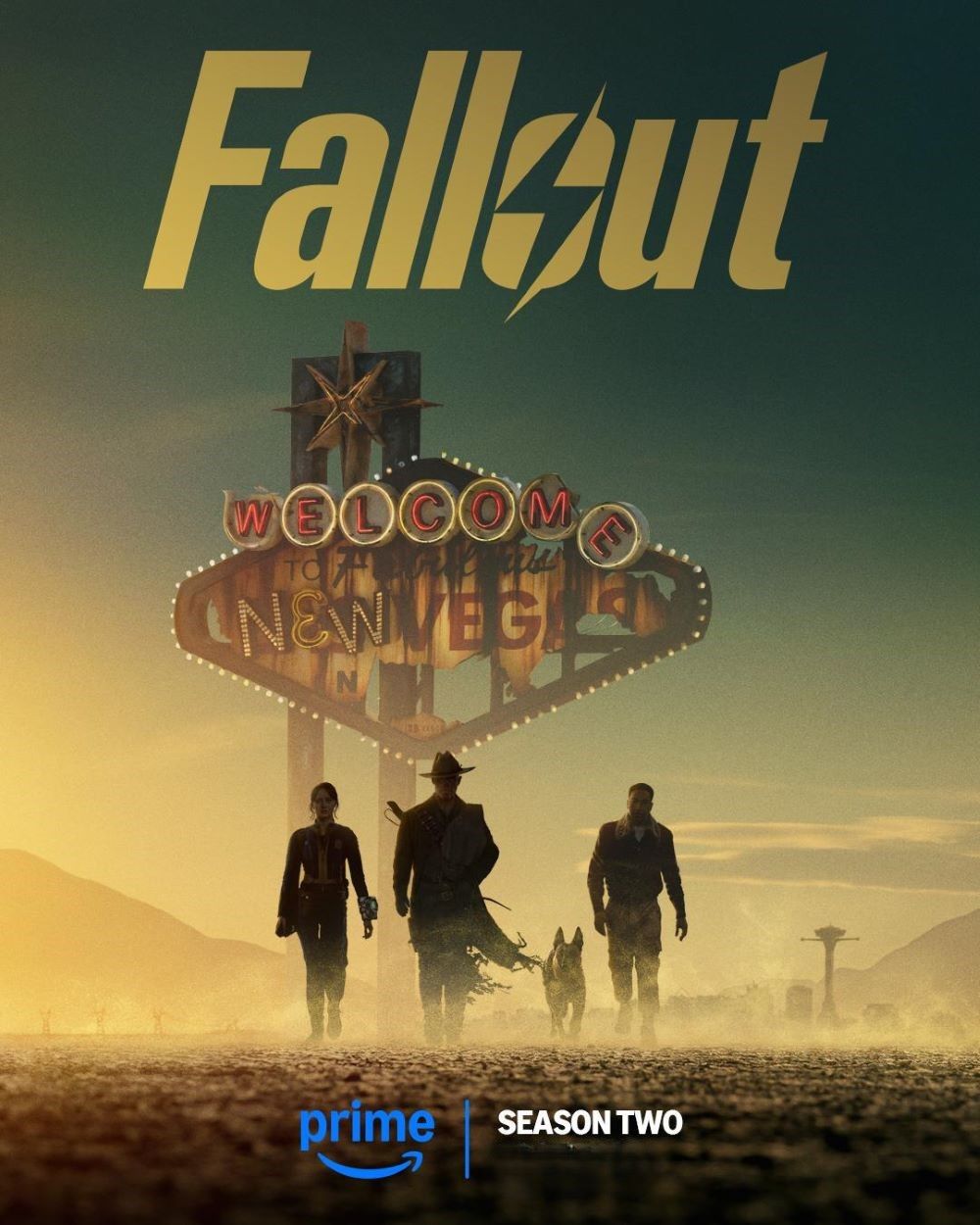
Review: Fallout (Season 2, Episode 6 “The Other Player”)


“So, for our daughter, you would kill millions of people. Billions of people. Other-other mothers just like you. Other daughters just like our daughter!” — Copper Howard

Episode 6 of Fallout season 2, titled “The Other Player,” ramps up the tension as the series dives deeper into the messy origins of the apocalypse and the fragile illusions of control in its aftermath. This installment centers on power dynamics—who pulls the strings before the bombs fall, who grabs them afterward, and who dares to cling to ideals like justice in a wasteland that mocks them at every turn. It delivers some standout moments for key characters like Barb and Lucy, blending corporate horror with personal reckonings, though a few subplots in the irradiated wilds feel like they’re just treading water ahead of bigger payoffs.

Barb’s storyline takes the spotlight early, peeling back the pre-war curtain to reveal Vault-Tec’s chilling machinery of doom. Picture her navigating a day packed with boardroom horrors: pitches for vaults rigged to fail on purpose, exclusive escape routes for elite clients, and slick strategies to polish the end times into a marketable package. The satire bites hard, but things darken when she brushes up against the shadowy layers beneath the corporate facade, including a tense encounter that exposes the ruthless leverage being used against her family. By the time she’s cornered into advancing the nuclear launch herself, her shift from confident insider to reluctant pawn feels raw and human—someone who glimpses the abyss but steps closer anyway.

This arc shines because it doesn’t paint Barb as a cartoon villain or a blameless dupe; she’s stuck in that gray zone of complicity, making choices under duress that echo through centuries. Her eventual clash with Cooper, where he probes just how deep the rot goes, hits with real weight, forcing her to confront the fallout of her inaction. When she aids in a high-stakes extraction involving Hank, it’s a flicker of atonement laced with disaster, underscoring how good intentions in this universe always curdle. The episode leaves her arc hanging in a compelling limbo, hinting at ripple effects that could redefine loyalties as the Enclave’s shadow looms larger.

Lucy’s journey mirrors this theme of fractured morality, thrusting her into a reconstructed slice of her Vault 33 life that’s equal parts nostalgic trap and dystopian experiment. She stirs in a familiar setup, only to spot the mind-control collars on patrolling guards—Hank’s twisted vision of order, where impulses are leashed to forge a “civilized” society from savages. True to form, Lucy opts for due process over vengeance, collaring her dad for a trial back home, betting on the vault-bred rules that have crumbled around her. It’s a stubborn spark of optimism that the show handles with nuance, never letting it tip into naivety.

As she prowls Hank’s operation, Lucy witnesses the eerie results: former killers and cannibals reshaped into mundane workers, content in their programmed bliss. Her bid to liberate them backfires when some admit they’d rather stay subdued, posing the gut-punch question at Fallout‘s core—is peace worth the chains if it’s chosen? The episode’s visceral demo drives it home: a restrained brute turns feral, brutalizing a captive in a frenzy of violence until Lucy flips the override switch, transforming rage into rote camaraderie. Hank’s philosophy—that curbing free will is the ultimate mercy—creeps under the skin, challenging Lucy’s worldview without fully vindicating him.

Hank embodies the franchise’s archetype of the self-righteous tyrant, framing his atrocities as paternal duty. Shackling himself for “accountability” feels like calculated theater, a nod to Shady Sands’ destruction wrapped in protective bluster. Their father-daughter standoff crackles with unresolved pain, elevating what could be talky scenes into emotional tinder. He doesn’t dodge blame entirely, but his rationalizations muddy the waters just enough to keep Lucy—and viewers—wrestling with the cost of survival.

The wasteland threads, by contrast, deliver flashes of grit but lack the same punch. The Ghoul kicks off skewered and desperate, his radiation-fueled rasp devolving into pleas about lost family as he fights for his gear. A massive super mutant swoops in for the save, channeling that gravelly lore vibe with a uranium “cure” and whispers of an anti-Enclave uprising. It’s a thrilling nod to the games’ icons, yet the sequence fizzles by sidelining the mutant’s deeper motives and knocking Ghoul out cold too soon—cool on paper, but it whets the appetite without satisfying.

Maximus and Thaddeus fare worse, stuck in nomadic chit-chat mode. Ditching the traceable armor leads to debates over hawking their prize or gifting it to some vague “greater good,” laced with buddy-cop quips around the campfire. It’s breezy filler that humanizes them amid the heavier drama, and their eventual Ghoul rendezvous teases convergence, but it drags compared to the vault intrigue. These beats keep the ensemble breathing, yet they underscore how the episode prioritizes cerebral clashes over explosive action.

Down in the vaults, bureaucratic farce provides lighter relief: a support group devolves into snack-hoarding chaos until the overseer axes it over budget cuts. Reg’s defiant munching on pilfered treats captures that petty vault defiance, a microcosm of resistance against soul-crushing routine. Still, this undercurrent ties loosely to the topside stakes, feeling more like world-building seasoning than plot fuel.

Clocking in as a character-driven pivot, “The Other Player” excels at unpacking ethical quagmires—Barb’s pre-war slide, Lucy’s moral tightrope, Hank’s paternal authoritarianism—while teasing Enclave escalation. The super mutant tease and wasteland wanderings underwhelm in execution, marking time until the ensemble collides, but the thematic heft carries it. Season 2’s back half feels primed for chaos, with these personal fractures promising a powder keg payoff amid the radiation storms. If it balances the introspection with more wasteland fury, this episode will slot neatly as the calm before the irradiated storm.

Fallout Season 2 Episodes

  1. Episode 1: “The Innovator”
  2. Episode 2: “The Golden Rule”
  3. Episode 3: “The Profligate”
  4. Episode 4: “The Demon in the Snow”
  5. Episode 5: “The Wrangler”

Review: Fallout (Season 2, Episode 5 “The Wrangler”)


“Where I come from, which is America, the House always wins.” — Robert House

Episode 5 of Fallout Season 2 (“The Wrangler”) is the point where the show stops flirting with heartbreak and finally commits to it, using a brutally inevitable betrayal to crack open its core relationships while quietly escalating the bigger myth arc in the background. It is not the flashiest hour of the season, but it is one of the most emotionally coherent, and that focus is both its biggest strength and its main limitation.​

Most of the episode’s weight lands on the dynamic between Lucy and The Ghoul, and the writers lean hard into that “we knew this was coming” tension without turning it into a cheap twist. The Ghoul’s choice to hand Lucy over to Hank in exchange for the continued survival of his cryo-frozen family feels properly miserable: the kind of decision that is logically defendable and morally ugly at the same time. Watching Lucy slowly clock that she’s been a bargaining chip this whole time, right after she and Coop finally seemed to be in sync, gives the betrayal some sting beyond the spectacle of her Power Fist launching him out the window and onto a pole. The performances sell it; Ella Purnell plays Lucy’s hurt as a mix of disbelief and exhaustion, while Walton Goggins lets just enough regret bleed through the monster façade to make it clear that this is hurting him, too, even as he pulls the trigger on the plan.​

Structurally, the episode benefits from narrowing its scope to a few intersecting tracks instead of trying to cover the entire wasteland at once. On the Strip, Lucy’s Buffout fallout continues, sending her hunting for Addictol and instead into a mess involving price-gouging, a fake Sonny, and a very dead real Sonny in a bucket. That sequence walks the line between dark comedy and horror in a way that fits Fallout nicely, turning a simple “go buy meds” errand into a reminder that every familiar storefront can hide a fresh corpse and a new trauma. In parallel, The Ghoul drifts toward his fateful deal at the hotel bar, framed as a guy who has been running for two centuries and finally hits a wall he can’t brute-force his way through. The pacing is patient without feeling sluggish, and the way these threads converge in the final act makes the ending feel earned rather than engineered.​

The big lore bomb this week is less about who’s shooting whom in New Vegas and more about who actually ended the world and what Vault-Tec was really doing. Mr. House’s scenes with pre-Ghoul Cooper ramp up the paranoia by suggesting that Barb may not be the one who actually pushed the apocalypse over the edge, hinting at “another player at the table” tied to the creation of Deathclaws and bigger, unseen forces. It is classic Fallout conspiracy energy: corporations within corporations, shadow projects like FEV and “Future Enterprise Ventures,” and a corporate end-of-the-world plan that feels less like a singular villain’s choice and more like the outcome of a lot of self-interested people nudging the same disaster. The episode does not over-explain any of this, which is smart; it plants a few specific clues—like Norm’s discovery that Vault-Tec’s phase two revolves around genetic testing and forced evolution—and then lets your mind connect it to everything from Deathclaws to the vault experiments we have already seen.​

Norm’s storyline, which could easily feel like a cutaway from the “real” show, actually rebounds this week by giving the corporate plot teeth. His trip with the defrosted junior executives to Vault-Tec HQ mixes bleak humor—finding Janice’s corpse still at her desk, complete with coworkers sniping about her work ethic—with genuine dread as he starts to piece together that FEV is basically a “gene-altering agent for organism supercharging.” It is not subtle, but it works, especially when you realize how neatly it dovetails with what Hank is doing with that head-device in New Vegas: mind control, memory wiping, and turning humans into tools that fit Vault-Tec’s objectives better than their original personalities ever would. Norm getting choked out just as he starts to get real answers is a little on-the-nose as a cliffhanger, yet it keeps his thread from feeling aimless and promises that his office snooping will matter more than it might initially seem.​

On the spectacle side, the episode plays a funny trick: it teases what looks like a huge Deathclaw set piece on the Strip and then has Lucy and The Ghoul do what any sensible player has done in the games—run like hell and load into a different area. For anyone hoping for a full-on Deathclaw brawl, it is bound to be a letdown, especially since three of them are staged as this major escalation and then promptly sidestepped. That said, the choice is thematically on point; the show leans into the fear of the creatures rather than the mechanics of fighting them, and seeing The Ghoul genuinely terrified ties nicely back to his first encounter with one in Alaska two centuries ago. New Vegas itself feels more alive here, with Freeside looking busier and the Strip more dangerous, even if the action is more about near-misses and quick exits than big choreographed battles.​

The humor is hit-and-miss but usually lands on the right side of weird. The Snake Oil Salesman’s return, only to be drafted as Hank’s “voluntary” guinea pig for a head gadget that can pop skulls or wipe memories, leans into the show’s nastier comedic streak. His eagerness to forget a life full of sleaze says a lot about him in a single, darkly funny beat, while also underlining how casually Hank treats human minds as raw material. Not every gag works—some of the junior exec bits feel like they are chasing a joke about tech-bro sociopathy we have already seen before—but the episode keeps the comedy tightly woven into character and plot instead of dropping in random skits.​

If there is a legitimate knock against this episode, it is that the emotional gut-punch between Lucy and The Ghoul is so strong that almost everything else can feel like setup by comparison. The supposed “answer” about who dropped the bombs is really more of another mystery box, and viewers looking for a clearer reveal may feel strung along. The Deathclaw fake-out also risks feeling like the show talking a big game and then refusing to spend the budget to pay it off, even if the character beats that replace the fight are strong. And while Norm’s storyline is finally paying off, it still sometimes plays like a slower, less visceral series running parallel to the one in New Vegas, which might frustrate anyone hooked primarily on Lucy and The Ghoul’s arc.​

Still, as a midpoint episode, this is exactly where Fallout needs to hurt. The Ghoul’s betrayal is painful precisely because the show has spent so much time making Lucy good for him, setting her up as the one person who makes his humanity flicker back on—and then forcing him to choose the ghosts of his past over the partner standing right in front of him. Episode 5 might not deliver the biggest action of the season, but it gives the story a necessary emotional crash-out, sharpens the larger Vault-Tec conspiracy, and leaves nearly every character in a worse, more interesting place than they started.

Fallout Season 2 Episodes

  1. Episode 1: “The Innovator”
  2. Episode 2: “The Golden Rule”
  3. Episode 3: “The Profligate”
  4. Episode 4: “The Demon in the Snow”

Review: Fallout (Season 2, Episode 4 “The Demon in the Snow”)


“If doing the right thing makes me a traitor, then maybe I’m not the one who’s broken.” — Maximus

Episode 4 of Fallout Season 2, “The Demon in the Snow,” feels like the moment the season properly hits its stride: nasty, funny, and chaotic, but with just enough focus that it never collapses into pure noise. The hour leans into monster-movie horror and drug-fueled mayhem while still pushing the major storylines forward in ways that feel purposeful rather than like random side quests. It is very much a mid-season “everything is escalating at once” chapter, and for the most part, that energy works in its favor.

The episode is built around escalation on multiple fronts. On the surface level, that means finally unleashing a full-on deathclaw, escalating Brotherhood tension into outright war, and sending Lucy stumbling into New Vegas with a chemically assisted death wish. Underneath the spectacle, though, the script keeps circling one idea: the ways addiction, ideology, and systems twist people into thinking their worst decisions are actually noble. That combination of pulpy set pieces wrapped around a fairly sharp thematic throughline is where the episode finds its groove, even if not every beat lands cleanly.

The Cooper flashbacks give the title “The Demon in the Snow” its most literal read. He’s stuck in a remote war zone long before the bombs fall, only to come face to face with a deathclaw framed as this almost mythic horror cutting through soldiers like they barely exist. The sequence works both as a tense creature-feature moment and as a reminder that the apocalypse wasn’t born just from nukes; it was also born from the weapons and bioweapons people created and then failed to control. There’s something quietly grim in the way Cooper realizes that whatever “victory” his side claims out here has less to do with human heroism and more to do with the nightmare they’ve unleashed.

That past horror reverberates nicely against Lucy’s present-day story. She wakes up in an NCR camp wired to Buffout after being dosed for days, which means she’s basically sidelined into instant addiction. The show has a dark sense of humor about it: Lucy’s twitchy, hyper-focused, and suddenly way too ready to bulldoze through anything that isn’t directly tied to rescuing her father. She frames staying on the drug as a moral choice—if it helps her get to Hank faster, then it must be “right”—and that rationalization is exactly the sort of self-delusion the episode keeps poking at. The Ghoul plays the exasperated straight man here, watching her slide further into this chemically boosted version of herself that’s both capable and deeply compromised.

Their approach to New Vegas walks a satisfying line between fresh ground and game nostalgia. The city’s automated defenses are already wrecked by the time they roll up, which kills any chance of a slow-burn infiltration and immediately tells you something very bad has been here recently. The reimagined Kings—now a feral ghoul faction that riffs on the Elvis-obsessed gang from Fallout: New Vegas—become cannon fodder once Lucy lets the Buffout and her revenge drive take the wheel. The fight that follows is gory, brisk, and noticeably sharper in choreography than some of the earlier action this season. At the same time, the show never totally lets the audience forget how disturbing Lucy’s enthusiasm for the violence actually is; even The Ghoul looks a bit rattled by just how far she’s willing to go now.

The Vegas section eventually funnels into the Lucky 38, where the horror angle fully takes over. The once-bustling casino sits eerily vacant, patrolled only by the corpses of destroyed securitrons and an ominous egg that Lucy discovers a little too late. When the deathclaw finally emerges, it’s staged as a true “oh, we’re in over our heads” moment rather than just a giant CGI flex. The earlier wartime flashback helps here; by the time the creature steps into the light in the present, it already has weight in the story as something more than just a boss fight. Pairing Lucy’s adrenaline and bravado with a threat that genuinely terrifies her is a smart way to cap the episode’s Vegas thread.

Over with the Brotherhood, the show continues leaning into its mix of satire and tragedy. Maximus, scrambling to cover up the fact that he killed his superior, shoves Thaddeus into the dead man’s armor, which leads to some very deliberate physical comedy as Thaddeus fumbles around in a suit he barely understands. Around that goofiness, though, the tension over the cold fusion relic boils over. Leadership squabbles turn ugly, and different Brotherhood factions reveal how thin the veneer of honor and order really is once power is on the line. Dane quietly emerges as one of the more competent and grounded figures, slipping recruits out of harm’s way and securing the relic while the so-called authorities are busy imploding.

The strongest Brotherhood moment belongs to Max’s confrontation with High Cleric Quintus. Max comes clean about killing the Paladin and gets a surprisingly measured response—until he explains that he did it to protect ghouls. The conversation flips on a dime into pure zealotry, with Quintus dropping any pretense of nuance and revealing just how deep the organization’s dehumanizing worldview runs. It’s a blunt scene, but it makes the point: the Brotherhood can talk about discipline and order all it wants, yet underneath that rhetoric sits a fanatical hatred that ultimately guides its choices. When the ships start falling and the Brotherhood’s fortress turns into a battlefield, the chaos feels like the natural endpoint of that ideology colliding with reality.

While all of this plays out topside, the Vault storyline quietly remains the show’s creepiest thread. Vault 33 is dealing with a growing water crisis, yet somehow there are still little pockets of privilege and favoritism intact, which underlines how these supposedly “ordered” societies still manage to ration compassion as much as supplies. Overseer Betty’s attempt to negotiate for help with Vault 32 turns anything resembling cooperation into a transaction; every promise of aid seems to come with a hidden clause involving Hank or Vault 31. At the same time, the group from Vault 31 stumbling into the outside world and discovering things like old food trucks brings a streak of bleak comedy. They’re technically in charge, but their naïveté makes them feel just as fragile as anyone else.

Hints of a looming “phase two” for the Vault experiments keep that story humming in the background, suggesting that the worst outcomes for Vault 32 and 33 haven’t even surfaced yet. The vault sections may be quieter compared to the deathclaw and Brotherhood fireworks, but they deepen the sense that the real villain of the series is still the architecture of Vault-Tec’s grand experiment, not just any one person caught inside it.

If there’s a major knock against the episode, it’s that it occasionally feels like it’s doing too much at once. Between Cooper’s war memories, Lucy’s spiral in Vegas, Brotherhood infighting, and the various vault machinations, the hour sometimes jumps away from a scene right as it’s hitting an emotional high point. Lucy’s addiction arc, in particular, moves so quickly that it risks feeling like a setup beat rather than something fully explored in the moment. On the other hand, that density also gives the world a lived-in, interconnected feel—plotlines bump into each other, collide, and ricochet, instead of sitting on separate tracks waiting for their turn.

Taken as a whole, “The Demon in the Snow” stands out as one of the more compelling entries in Season 2 so far. It delivers on fan expectations with the live-action deathclaw and New Vegas callbacks, but it doesn’t stop at simple spectacle. Lucy’s compromised heroism, Max’s struggle to reconcile his conscience with his faction, Cooper’s haunted past, and the vault dwellers’ slow realization that their home is a gilded cage all circle the same idea: people will justify almost anything—violence, bigotry, self-destruction—if it feels like it serves a higher cause or keeps them from admitting they’re afraid. The episode is rough-edged and occasionally overloaded, but that messiness fits the world it’s dealing with, and it sets the board for the back half of the season in a way that feels genuinely promising.

Review: Fallout (Season 2, Episode 3 “The Profligate”)


“If you think everyone else is the bad guy, chances are, you’re the bad guy.” — Lucy McLean

Episode 3 of Fallout season 2 takes a deliberate breath after the season’s earlier frenzy, shifting focus to simmering tensions and the cracks forming within key factions. It trades some high-octane action for deeper dives into moral gray areas and character dilemmas, while sprinkling in plenty of nods to the game’s lore that will thrill longtime fans. The result is an episode that feels more introspective than explosive, building quiet dread that hints at bigger fractures ahead without fully detonating them just yet.

The spotlight falls heavily on Caesar’s Legion this time around, turning their rigid hierarchy into a pressure cooker of internal strife. Lucy finds herself right in the thick of it, her wide-eyed vault dweller optimism clashing hard against a group that views compromise as heresy. Hanging in the balance between rival power plays, she becomes a symbol of the wasteland’s brutal tug-of-war, where diplomacy often looks more like desperation. It’s a tough spot for her character, one that tests her limits and forces some uncomfortable reflections, though the episode spends more time on the surrounding politics than her personal evolution at first.

The Ghoul shines in his signature blend of cynicism and cunning, navigating a high-stakes deal that underscores his “ends justify the means” survival code. His interactions with NCR remnants carry that dry, world-weary edge, laced with flashbacks that keep peeling back layers of his pre-war life under influences like Vault-Tec and figures from New Vegas lore. These moments aren’t just backstory—they tie directly into his current ruthlessness, showing how old betrayals and power games echo into the irradiated present. It’s the kind of character work that makes his choices feel earned and uneasy, never fully heroic or villainous.​

Meanwhile, Maximus’s path with a Brotherhood superior veers into unexpectedly dark territory, blending camaraderie with the order’s uglier underbelly. What starts as armored antics at a familiar Nuka-Cola site uncovers dilemmas about who gets to claim “civilization,” hinting at rifts that could shake the Brotherhood to its core. His arc builds to a tense crossroads, mirroring the Legion’s own divisions and raising questions about loyalty in a world where ideals curdle fast. It’s a smart parallel that keeps the episode’s themes cohesive without feeling forced.

Guest spots add some unexpected flair, like Macaulay Culkin’s turn as a Legion figure whose quirky menace fits the faction’s cultish vibe perfectly. He brings a bureaucratic fervor to the role, emphasizing how the Legion ritualizes its brutality right down to succession squabbles over key artifacts. These cameos feel organic, enhancing the world rather than stealing focus, and they nod to the games’ eccentric cast without overwhelming the main threads.

Pacing-wise, this hour simmers more than it boils, which might test viewers craving constant momentum. Lucy’s predicament holds steady for a stretch, the Ghoul operates in the shadows, and Maximus’s detour unfolds gradually before tensions spike. That restraint pays off by letting atmosphere build—the Legion camp’s stark crosses and sun-scorched decay capture the series’ horror-Western mashup beautifully. Locations like Camp Golf and NCR outposts evoke New Vegas nostalgia, but twisted into symbols of faded glory, reinforcing the show’s point that no empire endures unscathed.

For game fans, the episode is a treasure trove of subtle references, from Legion dynamics to Securitron teases, woven in ways that serve the plot rather than just fan service. Newcomers won’t feel lost, as the context emerges naturally through dialogue and fallout from prior episodes. Visually, it’s peak Fallout: practical effects make the wasteland feel lived-in and lethal, with practical power armor clanks and irradiated horrors that pop off the screen.​​

By the later beats, the episode starts hinting at shifts in the power balance, leaving characters at pivotal junctures without spelling everything out. Lucy grapples with harsh realities that could harden her edge, the Ghoul’s gambit ripples outward in unpredictable ways, and Maximus faces choices that test his place in the Brotherhood. These teases set up a powder keg for the back half, where alliances fray and the wasteland’s chaos might force some reluctant team-ups or betrayals.​​

All told, episode 3 delivers a balanced mix of lore love, character depth, and atmospheric tension, even if its slower gear occasionally mutes the thrill. Strengths like the Ghoul’s layered flashbacks and faction parallels outweigh any mid-episode lulls, making it a solid bridge that primes the pump for escalation. In a season already nailing the games’ spirit, this one reminds us why Fallout endures: beneath the satire and shootouts lies a grim meditation on humanity’s stubborn flaws.

HOME ALONE, the Christmas spirit & celebrating my Mom’s birthday! 🎉🎂


This weekend our family has been celebrating my Mom’s birthday together at our family cabin. One thing about hanging out with Mom in November is you know you’re going to be watching Christmas movies. It may be on the Hallmark channel or it may be one of her countless DVD’s or Blu rays of Christmas classics, but you’re going to be getting in the Christmas spirit. Last night we watched HOME ALONE.

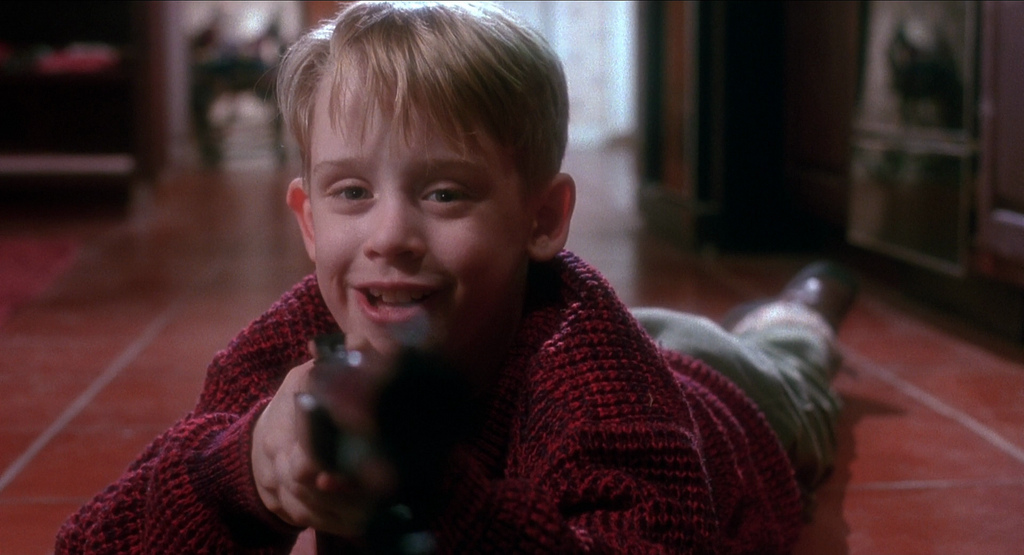
The story is well known. A family is going on a Christmas vacation in Paris. In all the craziness created by a fluke power outage, 8 year old Kevin McCallister (Macaulay Culkin) is accidentally left home alone while the rest of the family gets on a plane to France. Meanwhile, a pair of house robbers (Joe Pesci & Daniel Stern) plan on hitting homes in the neighborhood on Christmas Eve. Kevin not only survives with his parents gone, he thrives, and he makes the robbers wish they’d never stumbled into his neighborhood. With that said, he does learn some valuable lessons along the way, and he realizes that he does love and miss his family. 

What can you say about Macaulay Culkin in HOME ALONE?!! He owns the movie. It’s one of the great child performances in the movies.  Joe Pesci and Daniel Stern are funny as the robbers, with young Kevin putting them through hell. I still cringe in pain at times as the two step on ornaments, get burned and are physically assaulted, all thanks to Kevin’s assorted collection of tricks & booby traps. There’s also a plot line with Kevin’s scary neighbor that leads to a touching conclusion. And finally, as we celebrate Mom’s birthday, I can’t help but be touched by the reunion at the end between Kevin and his mom (Catherine O’Hara). No matter how much they can get on each other’s nerves, the truth is that they both love each other with all of their hearts. It’s a special feeling when you have a mom who loves you. That’s one thing Kevin and I have in common. And we love them back. 

HOME ALONE is highly recommended!

October True Crime: Party Monster (dir by Fenton Bailey and Randy Barbato)


Michael Alig!  He was the flamboyant, self-declared “King of the Club Kids.”  He was a club promoter in New York City in the late 80s and the 90s.  He had money.  He had fame.  He had a huge following.  He used to appear regularly on the daytime talk shows.  He was a regular feature in the gossip columns.  He also had a raging drug addiction and an ego that most people couldn’t stand.  He tried to position himself as the successor to Andy Warhol, overlooking the fact that Warhol himself actually had a bit of talent.  And, in 1996, he became a murderer.

He and his roommate killed his drug dealer, a fellow club kid who was known as Angel.  They hit him over the head and suffocated him before then dismembering him.  Everyone knew that Alig was responsible for Angel’s disappearance, largely because he wouldn’t shut up about killing him.  Alig even threw a party where the macabre and bloody decorations left little doubt that Alig had murder on his mind.  Eventually, a group of children found Angel’s remains and Alig and his roommate were arrested.  Due to a plea deal, Alig was sent to prison for manslaughter.  He served 14 years before being paroled.  Alig died of a heroin overdose in 2020.

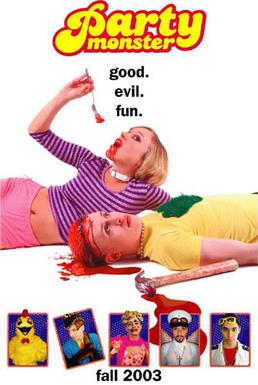
Released in 2003 (while Alig was still in prison), Party Monster is a biopic of Michael Alig and also a look at New York club culture in the 90s.  The film got a bit of attention when it came out because it starred Macaulay Culkin and Seth Green as, respectively, Michael Alig and James St. John, who was Alig’s mentor-turned-friend-turned-enemy.  Unfortunately, the film itself isn’t very good and both Culkin and Green are lousy in their roles.  Both of them come across like middle American high school kids trying to score cheap laughs by acting as self-consciously flamboyant as possible.  At the time the film was made, Culkin did bear a passing a resemblance to Michael Alig but the same could have been said of Michael Pitt and, at the very least, we know that Pitt is capable of playing a character who is capable of murder.  Culkin, on the other hand, seems to be trying so hard to make us forget that he’s Macaulay Culkin that he instead continually reminds us that we’re watching the star of Home Alone snort cocaine and urinate in wine glasses.  (Ewwwww!)  That said, Culkin and Green aren’t the only two giving bad performances here.  I started giggling as soon as Dylan McDermott showed up wearing an eyepatch.  Only Wilson Cruz as Angel and Chloe Sevigny as one of Alig’s associates feel in any way convincing in their roles.

For a film about a group of people who claimed “fabulousness” as their defining aesthetic, Party Monster is a visually dull film.  Many scenes are overlit, to the extent that the performers look wan and washed out.  That may be a good look for the drug-addled Alig who killed Angel but, in this film, Alig looks and seems burned out from the minute he shows up in New York City.  The end result is a rather boring film that doesn’t offer up any insight into the Club Kids or the murders.

Mac Attack: The Good Son (1993, directed by Joseph Ruben)


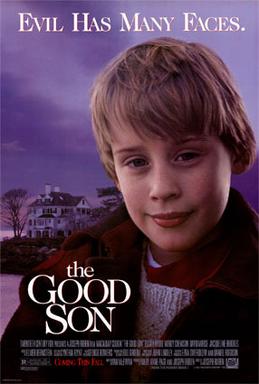
“Hey, Mark, don’t fuck with me,” 12 year-old Henry (Macaulay Culkin) says to his cousin Mark (Elijah Wood) in The Good Son‘s signature scene.  But fuck with him Mark does because Mark knows that evil exists and that Henry’s evil.  Henry killed his brother and he tries to kill his sister, Connie (Quinn Culkin), by throwing her onto thin ice.  When Mark, whose mother has recently died, decides that Henry’s mother, Susan (Wendy Crewson), is going to be his new mom, Henry gets jealous and tells Mark that he would rather kill Susan than allow her to have another son.  Eventually, Mark and Henry both end up dangling from a cliff with Susan holding onto them.  Susan has to decide who to save, her evil son or the distant relation that she barely knows.  She makes her choice and the camera lingers on the corpse of the less fortunate child on the rocks below.  For most mothers, it probably wouldn’t even be a difficult decision.  Of course you would save your own child!  But Susan has to think about it.  Maybe she can see the future and knows that Elijah Wood has the Lord of the Rings to look forward to while Macaulay is destined for something much different.

The Good Son caused a lot of controversy when it came out in 1993, not because it was about a murderous child but because that murderous child was played by the then-biggest star in America.  How would people who loved watching Macaulay seriously injure two burglars react to watching Macaulay kill people?  The movie actually did well at the box office but it also revealed that the Macaulay Culkin was a limited actor.  Elijah Wood was a good actor but Mark still comes across like a little creep.  Trying to steal his cousin’s mother?  What did he think was going to happen?

Finally, The Good Son was written by Ian McEwan, of all people.  In McEwan’s defense, he only wrote the first draft and that was long before Macaulay Culkin was miscast as Henry.  Apparnetly, Macaulay’s father and manager, Kit Culkin, demanded that his son be cast as a psycho murderer before he would allow Maccaulay to appear in Home Alone 2.  I guess Kit thought making his son look evil would be a good career movie.  If only someone had been willing to say, “Hey, Kit Culkin, don’t fuck with the movie.”

Music Video of the Day: All Alone on Christmas by Darlene Love (1992, dir by ????)


Darlene Love’s Christmas (Baby Please Come Home) is one of my favorite Christmas song but, unfortunately, there’s not an official music video for Love’s version.

However, there is a music video for Love’s 1992 Christmas song, All Alone on Christmas.  As you can tell from watching the video, this song was actually a part of the Home Alone 2 soundtrack.  The video is full of footage from the movie but it does not include the scenes with Donald Trump.  However, it does feature Macaulay Culkin “producing” the song.  I understand that the grown-up Culkin now performs song about pizza which …. well, I mean, I like pizza so hopefully it’s not as stupid as it sounds.

In the video, Darlene Love is backed up by members of the E Street Band, who all look happy to be freed (if only momentarily) from the tyranny of Bruce Springsteen.

Enjoy!

Horror Film Review: Jacob’s Ladder (dir by Adrian Lyne)


The 1990 film Jacob’s Ladder asks the question, “Who is Jacob Singer?”

Is Jacob (played by Tim Robbins), a soldier serving in Vietnam who has just been severely wounded in an enemy attack and who is now barely clinging to life in a helicopter?

Is Jacob a withdrawn postal worker who lives in 1970s New York with his girlfriend, Jezzie (Elizabeth Pena), and who is haunted by horrifying visions of faceless, vibrating figures and viscous demons?  This Jacob is haunted by ill-defined past incidents.  Whenever he gets depressed, Jezzie is quick to demand that he snap out of it and that he stop thinking about anything other than the present day.  This Jacob can only watch as all of his old friends either sink into paranoia or die.  He hears rumors that they all may have been part of some sort of experiment involving LSD.  He’s sure that he served in the army but when he attempts to hire an attorney, he’s informed that the army has no record of him ever having served in combat and that they say he was discharged for psychological reasons.

Or is Jacob the husband of Sarah (Patricia Kalember) and the father of Gabe (Macaulay Culkin — yes, that Culkin)?  This is the Jacob who occasionally wakes up in bed with his wife and tells her that he’s been having the weirdest dream, one where he was living with “that crazy woman” from the post office, Jezebel?

Which one of these three realities is the truth for Jacob?  At times, Jacob himself doesn’t even seem to be sure.  Perhaps the one thing that you can be sure about in this movie is that whenever Jacob closes his eyes, he’s going to reopen them and discover that he’s in a different time and place.  Jacob spends almost the entire film trying to work out what’s happening in the present, what’s happening in the past, and what’s just happening in his head.

And, to be honest, it all gets a bit pretentious at times.  The film’s script has a lot on its mind.  In fact, it might have a little bit too much going on.  No sooner have you soaked in what the film has to say about denial and acceptance than you’re suddenly getting a crash course in MK-ULTRA and other mind-control conspiracy theories.  Whenever Jacob isn’t seeing demons and faceless apparitions, he’s being kidnapped by government agents.  There’s so much going on that this film can get a bit exhausting.

Fortunately, the film itself is such a triumph of style that it doesn’t matter that the script is a bit of a mess.  Director Adrian Lyne does a great job bringing Jacob’s nightmarish world to life.  Jacob seems to live in a world where the skies are permanently overcast and the streets are always wet after a recent storm.  When Jacob makes the mistake of walking down a subway tunnel, Lyne frames it as if Jacob is literally following a tunnel into Hell.  When a subway train rushes by Jacob, we catch disturbing glimpses of featureless faces facing the windows.  When Jacob sees a demon at a party, Lynne films the moment so that, just like Jacob, it takes us a few minutes to realize what we’re seeing.  And when Jacob is kidnapped and taken to a Hellish hospital, the scene is nightmarish in its intensity.

Tim Robbins gives a great performance as the emotionally withdrawn and haunted Jacob.  (In fact, he’s so good that it makes it all the more sad that he really hasn’t had a decent role since he won an Oscar for 2003’s Mystic River.)  He’s matched by Elizabeth Pena, who constantly keeps you wondering if Jezzie truly cares about Jacob or if she’s just another part of the conspiracy that seems to have taken over his life.

Jacob’s Ladder is an intensely effective, if somewhat messy, horror film.  Apparently, like almost every other horror film released in the 20th century, it’s currently being remade, with the remake due to released on February 9th.  Just in time for Valentine’s Day!