Sci-Fi Film Review: Warriors of The Year 2072 (dir by Lucio Fulci)


New Gladiators

Before The Hunger Games

Before The Purge

There was…oh wait, does this sound familiar?  Did you just read those two lines and get hit by a sudden feeling of déjà vu?  Well, that might be because I used those exact same lines to start my review of the 1965 Italian sci-fi film, The Tenth Victim.

They’re still applicable for this review though.  In many ways, the 1984 film Warriors of the Year 2072 (a.k.a. The New Gladiators) is a loose remake of The Tenth Victim.  (I imagine some critics would say it’s more of a rip-off than a remake.  What you label it will probably depend on how much tolerance you have for Italian exploitation films in general.)  Of course, Warriors of the Year 2072 draws inspiration from more than just The Tenth Victim.  A Clockwork Orange, Escape From New York, the Mad Max films, Blade Runner; bits and pieces from all of them show up here.

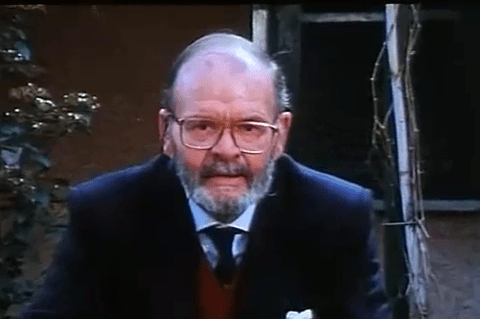
Even if you didn’t already know it, you might be able to guess that this film was directed by Lucio Fulci.  The film features Fulci regulars Al Cliver (of Zombi 2 fame) and Howard Ross (of New York Ripper fame) in supporting roles.  Cinzia Monreale, who had her throat ripped apart in Fulci’s The Beyond, appears in a cameo in which she again has her throat ripped apart.  (Actually, she just hallucinates having her throat ripped apart and is seen alive afterward, as if Fulci himself is saying, “See, it’s all just film trickery.  Nobody really gets hurt in my movies.”)    Finally, and most obviously, a character graphically loses an eye.  It’s simply not a Fulci film without some sort of graphic ocular trauma.

The film also features a theme that would show up in a lot of Fulci’s post-New York Ripper works.  Warriors of the Year 2072 is about the role of violent entertainment in both maintaining and destroying society.  Which is not to say that the film really has that much to say about it.  Thematically, Warriors of the Year 2072 is all surface level but those themes are still present.

As for the film itself, it takes place in the year 2072, so at least the title is being honest with us.  The world is now run by competing television networks.  The American television network has the highest rated show: Kill Bike, in which men on motorcycles battle to the death.  Cortez (Claudio Cassinelli), the program director for Rome-based WBS-TV, is ordered by the station’s owner, the mysterious Sam, to come up with a program that will be more popular than Kill Bike.  At first, Cortez tries to put on a show called The Danger Game, where people are forced to hallucinate dying in violent ways.  When that show fails to beat Kill Bike, Cortez decided to just rip-off Kill Bike

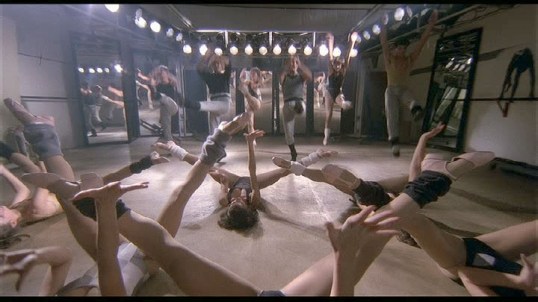
And let’s just stop a moment to point out the obvious.  Neither The Danger Game nor Kill Bike would feel at all out-of-place on television today.  Remember Fear Factor?  How different is The Danger Game from that old show?

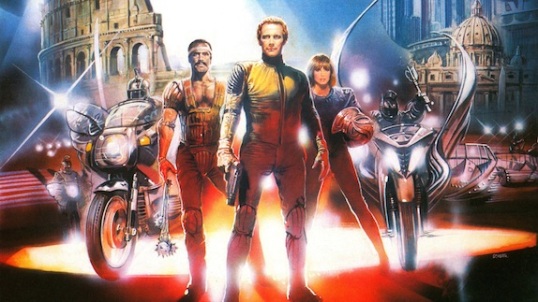
Anyway, Cortez’s new show is basically Kill Bike with a twist.  The motorcycle combat will now take place in the Roman coliseum and the contestants will all be convicted murderers awaiting execution.  Fortunately, the very popular star of Kill Bike — Drake (Jared Martin) — has recently been convicted of murder!  It’s convenient how that worked out…

As we discover through the magic of slow motion flashbacks, Drake was returning home one night when he discovered that his wife had been murdered by three young men who all appeared to be doing a bad impersonation of Malcolm McDowell in A Clockwork Orange.  The three men were then murdered and Drake was convicted.  However, Drake insists that he’s innocent and, even when confronted by laughing hallucinations of the three men, he refuses to attack them.

Could it be that someone is framing Drake?  Of course!  But why…

Well, before we find out the answer to that, we watch as Drake is brought to the coliseum and is trained in gladiatorial battle.  He immediately makes an enemy out of the head guard, the sadistic Raven (Howard Ross, who is hilariously over-the-top).  He also bonds with the other gladiators, one of whom is named Abdul.  Abdul is played by Fred Williamson, largely because it’s not a mid-80s Italian sci-fi dystopia without Fred Williamson.

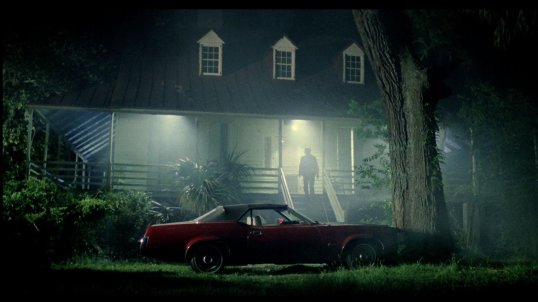
Warriors of The Year 2072 cannot compare to Fulci at his best.  This is no Zombi 2 or The House By The Cemetery.  At the same time, it’s definitely better than most of the films that Fulci made after The New York Ripper.  Fulci was a supreme stylist and, as a result, Warriors of the Year 2072 is always watchable.  Even when you don’t have the slightest idea what’s going on, you still can’t quite bring yourself to look away.  Yes, the special effects are nothing special.  And yes, it’s obvious that futuristic Rome was just a miniature set.  But the cheapness of the film gives it an odd charm.  It’s the cheapest future imaginable and somehow, it actually feels appropriate.  Why do we always assume the future will be sleek and shiny?  Maybe it’ll look like cardboard, like in Warriors Of The Year 2072!

Warriors of the Year 2072 is a campy, frequently silly, and oddly entertaining look at the future of the human race.  If you’re a Fulci fan or a lover of Italian exploitation cinema, track it down.

4 Shots From 4 Lucio Fulci Films: City of the Living Dead, The Beyond, The House By The Cemetery, Manhattan Baby


4 Shots From 4 Films is just what it says it is, 4 shots from 4 of our favorite films. As opposed to the reviews and recaps that we usually post, 4 Shots From 4 Films is all about letting the visuals do the talking.

4 Shots From 4 Films

The City of The Living Dead (1980, directed by Lucio Fulci)

The City of The Living Dead (1980, directed by Lucio Fulci)

The Beyond (1981, dir by Lucio Fulci)

The Beyond (1981, dir by Lucio Fulci)

The House By The Cemetery (1981, directed by Lucio Fulci)

The House By The Cemetery (1981, directed by Lucio Fulci)

Manhattan Baby (1982, dir by Lucio Fulci)

Manhattan Baby (1982, dir by Lucio Fulci)

4 Shots From 4 Films: Lucio Fulci Edition


CATINTHEBRAIN-Lucio

Lucio Fulci (1927 — 1996)

Yesterday, I was excited to see Arleigh launch a new feature here at the site.  With 4 Shots From 4 Films, the TSL contributors will be sharing favorite shorts from some of their favorite scenes.  As opposed to doing our usual review or recap, this feature will let the image do the talking.  Hopefully, some readers will be inspired to track down and watch, if they haven’t already, some of the films that we end up featuring.

At the very least, it’s a great way for us all to express our love for the cinematic art form.

Yesterday was also the birthday of the late, great Lucio Fulci.  My first entry in 4 Shots From 4 Films highlights some of the maestro‘s finest work.

The City of the Living Dead (1980)

The City of the Living Dead (1980)

The Beyond (1981)

The Beyond (1981)

The House By The Cemetery (1981)

The House By The Cemetery (1981)

Murder Rock (1984)

Murder Rock (1984)


The Daily Horror Grindhouse: Zombi 2 (dir by Lucio Fulci)


Zombie_Flesh_eaters

(After reading my review, please be sure to check out Arleigh’s thoughts on Zombi 2!)

Two questions:

1) Do you love Zombie movies?

2) Have you seen Lucio Fulci’s 1979 film Zombi 2?

If your answer to the first question was yes, then you should definitely have had the same answer for the second.  Along with launching the long and extremely influential genre of the Italian zombie film and being one of the best zombie films ever made, Zombi 2 is also one of the best horror films ever made.

First off, a few words about that title.  Zombi was the Italian title for George Romero’s Dawn of the Dead.  Zombi was a huge hit on Italy and, in that shameless way that is beloved by all Italian horror fans, producers Fabrizio De Angelis and Ugo Tucci decided to take advantage of Zombi‘s success by naming their upcoming zombie film Zombi 2.  And, while I have always liked to think of Zombi 2 as being a prequel to Romero’s Dead trilogy, Zombi 2 is actually in no way related to Dawn of the Dead.

It has often been assumed that Zombi 2 was directly inspired by Dawn of the Dead.  While Romero’s film certainly provided more of an influence than just providing a title, Zombi 2 was actually in production before Dawn of the Dead opened in Italy.  And, ultimately, Zombi 2 is a far different film from Romero’s film.  Eschewing the social commentary and satire that ran through Dawn of the Dead, Zombi 2 is instead a work of pure horror.  They’re both excellent films but Dawn of the Dead ultimately inspires debate while Zombi 2 inspires nightmares.

Zombie_2_1978

Opening with a previously dead body being shot in the head as it slowly sits up on a stretcher and ending with a haunting vision of apocalypse, Zombi 2 is coated in a palpable atmosphere of doom.  A boat floats into a New York harbor and the two cops who investigate are greeted by a lumbering and hungry corpse.  Tisa Farrow plays the daughter of the boat’s owner.  When she and a reporter (Ian McCulloch, giving a likable and bemused performance that often finds him playing straight man to a bunch of decaying corpses and which provides a nice run up for his openly subversive performance in Zombie Holocaust) team up to find her father, their investigation leads them to an isolated island where the haunted and alcoholic Dr. Menard (Richard Johnson, bringing so much gravity and self-loathing to his role that he literally elevates the entire film) is struggling to deal with an outbreak of zombies.  Along with a boat captain (Al Cliver) and his girlfriend (Auretta Gay), McCulloch and Farrow try to escape the island before they end up joining the ranks of the undead…

As a director, Lucio Fulci was known for bringing his own unique visual flair to the horror genre.  Fulci, perhaps more than any of the other great Italian horror directors working during the Italian horror boom of the 80s and 90s, literally brought nightmares to cinematic life.  As a result, Zombi 2 is probably one of the most visually memorable zombie films ever made.  From the minute that McCulloch, Farrow, Cliver, and Gay arrive on the island, you can literally feel the oppressively hot wind and dusty wind that blows through every scene.  When the dead walk across the desolate landscape, Fulci emphasizes the decayed state of these zombies, forcing the audience to consider just how fragile the human body truly is.  The fact that the undead manage to be so pathetic and so dangerous at the same time only serves to make them all the more frightening.  When a group of conquistadors come back to life, Fulci films it from their point of view and, for a few minutes, we literally are one of the undead, clawing our way out of a grave.  Needless to say, Fulci doesn’t shy away from the gore of a zombie apocalypse either.  His zombies are ravenous and destructive.  The Walking Dead may be bloody but it’s got nothing on Zombi 2.

Along with the conquistador scene, Zombi 2 is especially remembered for two scenes, both of which showcase the best of both Fulci and Italian horror.

zombi-2-04

One is the scene where Dr. Menard’s wife (Olga Karlatos) is menaced by zombies after taking a shower.  Even after she slams the bathroom door, a zombies hand breaks through the door and grabs her by the hair and starts to pull her through the jagged hole in the door.  As she is slowly pulled to her doom, her eyeball is pierced by a splinter of wood.  It’s definitely an over-the-top moment, the type of thing that we expect from an Italian horror film.  But, as over-the-top as it may be, it’s also incredibly effective and terrifying.  It’s a scene that lets us know that there is no escape from our fate.  It’s a scene that reminds us that the zombies will always win because there is no way to lock out death.

(In fact, it’s such an iconic scene that almost all of Fulci’s subsequent films would feature a character losing an eye.  Adding a certain poignancy to his trademark scenes of ocular destruction was the fact that Fulci, himself, was diabetic and reportedly often feared that he would lose his eyesight.)

a

The other is a scene that always seems to bring a smile to the face of anyone who see it.  That’s the scene where a zombie gets into a fight with a shark while Auretta Gay swims nearby.  Again, it’s a bit ludicrous but it’s also incredibly effective.  If nothing else, it invites us to wonder how — if a shark can’t beat a zombie — can there be any hope for humanity?

The answer, of course, is that there isn’t.  Ultimately, in the world of Fulci’s film, whether by causes natural or unnatural, we’re all destined to become one of the zombies.

Zombi-2-Zombie-Flesh-Eaters

(This review is cross-posted over at Fourth-Day Universe where all of October has been Zombie Month!)


Finally! It’s the return of Lisa Marie’s Favorite Grindhouse and Exploitation Film Trailers!


I am very proud to announce the return of Lisa Marie’s Favorite Grindhouse and Exploitation Film trailers!

Yes, the feature took a short break in November while I was busy plotting my escape to Canada.  However, after giving it a lot of thought, I’ve decided to give America another chance.

(Or, at the very least, to wait until after the 2014 elections to decide whether or not to stay here in Texas or to move to Degrassi street in Toronto, Canada.)

Anyway, without further delay, here are this week’s 6 trailers!

(One thing will always remain the same.  Whether a Canadian or a Texan, Lisa does not do odd numbers.)

1) Texas Adios (1976)

This film stars my Facebook friend, Franco Nero.

2) City of the Living Dead (1980)

This zombie classic was directed by Lucio Fulci and features Giovanni Lombardo Radice, who recently liked a cute cat picture that I shared on Facebook.  Merci, Johnny!

3) Starcrash (1978)

If this trailer looks familiar, it may be because I previously included it in another one of my trailer posts.  But no matter!  I love this trailer and I’m sure that a lot of our readers here at TSL will enjoy it as well.  Next Halloween, I’m going to be Stella Starr.  (Starcrash, incidentally, was directed by my Facebook friend, Luigi Cozzi.)

4) Far From Home (1989)

This film, which stars Drew Barrymore, was made by a bunch of people who are not friends with me on Facebook.

5) The Astounding She Monster (1957)

One reason I love 50s B-movies is because the monsters were always astounding.

6) Malibu Beach (1978)

And finally, let’s end things on a positive note!

What do you think, Trailer Kitties?

 No, don't look!

Horror Scenes That I Love: The Conquistador Scene From Lucio Fulci’s Zombi 2


Both Arleigh and I have devoted a lot of time on the site to talking about our mutual admiration for the films of Italian horror director Lucio Fulci.  While Fulci will always have as many detractors as defenders, the fact of the matter is that Fulci has been a major and often unacknowledged influence on the direction of horror cinema.  To cite just one prominent example, the disturbing and graphic body horror of The Walking Dead has less to do with Romero and everything to do with Fulci.

Fulci remains a controversial figure and that’s not surprising.  For every Fulci lover, there’s a detractor.  For every good horror film that he made between 1979 and 1982, there’s a terrible one that he made in the years leading up to his   mysterious death.  But what everyone seems to agree on is that his 1979 epic Zombi 2 is one of the best (and most important) of the post-Romero Zombie films.  Zombi 2 may have been produced to take advantage of the popularity of Romero’s Dawn of the Dead but Fulci created a film that transcended its origins.

(Personally, I prefer Fulci’s film to Romero’s but that’s a discussion for another day.)

Zombi 2 is a film that’s provided us with a few scenes that we love here at the Shattered Lens.  Whether it’s the scene where a zombie wrestles with a shark or the very first Fulci’s signature eyeball impaling, Zombi 2 is a film that is full of memorable scenes.  Tonight, I want to highlight another moment from Zombi 2 — the conquistador scene.

As this scene begins, the film’s star are already fleeing from an army of zombies when they discover that it’s not just the recently deceased that they have to fear.  This is a scene that manages to be shameless, silly, and disturbingly effective at the same time.  In other words, it’s pure Fulci.

6 Trailers Beyond Imagination


Hi, Lisa Marie here!  I apologize for taking last week off but have no fear and let not your heart be troubled — I have returned and I’ve brought with me another edition of Lisa Marie’s Favorite Grindhouse and Exploitation Film trailers!  (And I’ve also returned with a few trailer kitties, as well…)

1) The Hunger (1983)

Tony Scott, R.I.P.

2) Aenigma (1987)

From director Lucio Fulci comes a film about psychic powers and killer slugs.  Agck!

3) Dolly Dearest (1991)

This is what happens when you build a toy factory next door to Satan’s grave.

4) Godmonster of Indian Flats (1973)

Killer sheep!

5) Rattlers (1976)

If it’s not the sheep, it’s the snakes…

6) The Lollipop Girls In Hard Candy (1976)

In 3-D! 

What do you think, trailer kitties?

6 Trailers That Will Not Be Broadcast On NBC This Week


Hi there!  Welcome to the latest installment of Lisa Marie’s Favorite Grindhouse and Exploitation Film trailers.  Since I know everyone’s probably busy watching the Olympics (seriously, I try not think about all the pervs who are calling in to work so they can stay home and watch women’s indoor volleyball in private), I won’t waste much time with a long introduction.  Instead, let’s get straight to the trailers…

1) Swimfan (2002)

I’m including this trailer for everyone who has ever wondered what Michael Phelps was doing between Beijing and London.  I can still remember seeing this movie when I was 16 and, even then, getting annoyed with how stupid this film actually was.

2) Fatal Games (1984)

Speaking of the Olympics…

3) Death Spa (1988)

Let’s continue our theme of athletic mayhem with this trailer for Death Spa.

4) Dr. Who And The Daleks (1965)

I doubt this ever showed up at the grindhouses but no matter.  With the Olympics taking place in London, everyone’s currently pretending to like all things British and that seems like as good an excuse as any to feature this trailer for Dr. Who And The Daleks.  (I have to admit that I can count, on one hand, the number of times that I’ve actually been able to watch an entire episode of Dr. Who without either falling asleep or changing the channel.)

5) The New Gladiators (1985)

This look at the future of competitive sports comes to us courtesy of none other than Lucio Fulci!  This trailer has a definite Hunger Games feel to it, no?

6) Perversion Story (1968)

Finally, what could be better than one Fulci trailer?  How about two Fulci trailers?  This trailer is for Lucio Fulci’s giallo Perversion Story, which was retitled One On Top of Another when it was released in the United States.

What do you think, trailer kitties?

Rom-Com Trailer Kitties

6 Trailers For A Doomed Society


Hi there and welcome to yet another edition of Lisa Marie’s Favorite Grindhouse and Exploitation Film trailers!

1) Damnation Alley (1977)

This movie was actually on the Fox Movie Channel last night.  The trailer’s better.

2) The Tenement (1985)

As this trailer makes clear, this film is also known as Slaughter In The South Bronx.

3) Enter The Ninja (1981)

It’s Franco Nero!

4) Eat My Dust (1976)

It’s Ron Howard!

5) Beatrice Cenci (1969)

Before Lucio Fulci devoted himself to making zombie films, he made this one.  It tells the true story of Beatrice Cenci, an Italian noblewoman who, in 1599, conspired to murder her abusive father.  Fulci considered it to be his second best film.  I’ve never seen it but I hope to do so someday soon.

6) The Slams (1973)

Finally, let’s conclude this edition with Jim Brown in … The Slams!

Film Review: The Woman In Black (dir. by James Watkins)


Taking place in turn-of-the-century England, The Woman In Black tells the story of Arthur Kipps (played by Daniel Radcliffe), a young lawyer who is still struggling to recover from the death of his wife four years previously.  Arthur is sent to an isolated village to settle the estate of a woman named Alice Drablow.  Despite several warnings from the superstitious townspeople, Arthur goes to Alice’s decrepit old mansion and he soon finds himself haunted by fleeting glimpses of a woman in black who seems to be in the house with him.  With each sighting of the woman in black, another child in the village commits suicide.

Despite a few genuinely disturbing scenes (mostly involving children committing suicide), The Woman In Black is, ultimately, a pretty typical PG-13 horror film.  There’s a few good, if predictable, jump scenes (most of which involve the title character popping up in the background) and there’s all the usual Insidious-style tracking shots through the creepy old house.  However, any time that it seems like the film is about to become truly disturbing or scary, it runs smack into that PG-13 rating and it has to pull back.  The end result is that the film is creepy yet oddly bland, like something you might find playing on Chiller around one in the morning.

Of course, The Woman in Black is getting a lot of attention because this is Daniel Radcliffe’s first film since the end of the Harry Potter franchise.  How does Radcliffe do in his first adult role?  Well, he’s okay.  In fact, I would say that he’s better than okay.  He’s perfectly adequate.  I think the main issue I had with Radcliffe’s performance is that he sometimes seems to be trying too hard to make sure that we understand that he’s not playing Harry Potter.  For that reason, he doesn’t shave and he spends almost the entire film with a grim expression on his face.  Radcliffe’s a good actor and I think he’ll have a long career but he’s just miscast here.  Arthur Kipps is a man who has given up on life and Radcliffe is simply too exuberant of a performer to play defeated.  Oddly enough, Ciaran Hinds (who co-stars in this film) would have made the perfect Arthur.

I did enjoy spotting the various references to other horror films that were littered throughout The Woman in Black.  While the film obviously owes its existence to the success of the Paranormal Activity films, both the film’s overall plot and isolated village setting reminded me of Mario Bava’s masterpiece, Kill, Baby, Bill.  Furthermore, the film’s somewhat effective ending reminded me of the end of Lucio Fulci’s The House By The Cemetery.  I’m not sure if any of those homages were intentional but they were still fun to spot.

As a final note, The Woman in Black is the latest PG-13 rated horror film to be advertised with annoying infrared footage of people watching the movie and screaming.   Personally, I think it might be time for a new cliché.