“A fight to the death… only one will live… and the survivor… will face me!” — Grendel King
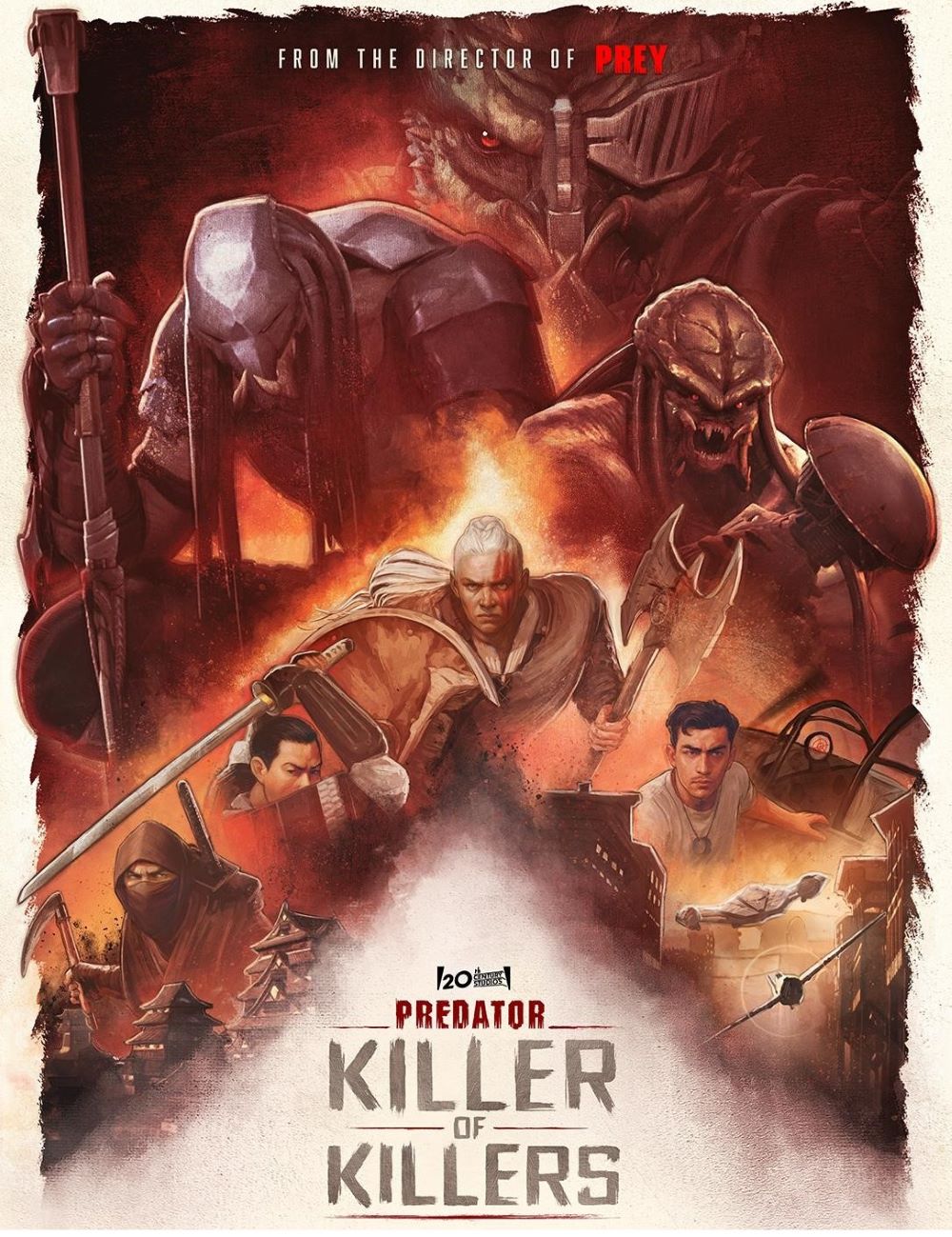
Hulu’s Predator: Killer of Killers signifies an ambitious and stylistically bold evolution of the Predator franchise, once again directed by Dan Trachtenberg following his excellent 2022 film Prey. Trachtenberg has clearly become the new creative caretaker of this series, bringing fresh vision and depth to the franchise. This animated anthology spans three distinct historical periods—Viking-era Scandinavia, feudal Japan, and World War II Europe—and tells the story of humanity’s ongoing, brutal clash with the alien hunters. By setting the predator mythos across such different cultures and eras, Trachtenberg presents a compelling exploration of survival, legacy, and adaptation.
The film unfolds in three chapters, each focusing on a different protagonist. The first segment introduces Ursa, a Viking mother consumed by grief and vengeance, who soon encounters a Predator in a primal battle that tests her strength and will to survive. The second segment is largely silent, centering on estranged brothers—a samurai and a ninja—in feudal Japan, who must unite against the alien menace. The final chapter shifts to World War II, following Torres, a Latino mechanic who seizes a chance to become a pilot amid chaotic battles against the Predators. Each story is steeped in its cultural milieu, aiming for depth and texture despite the limited runtime.
Visually, the film leverages a painterly animated style reminiscent of acclaimed adult animations like Arcane and Spider-Verse, yet it carries a darker, grittier tone suitable for the Predator universe. This style allows for intense, stylized violence—gore, blood, and brutal combat—which the anthology format showcases spectacularly. The distinct visual aesthetics of each era—from the somber shadows of Viking times, the flowing elegance of Japanese landscapes, to the metallic intensity of WWII dogfights—remarkably serve the film’s atmospheric ambitions. Notably, the Predators themselves are designed to reflect the atmosphere of each segment: the hulking, brute force Predator in the Viking-era matches the raw, physical brutality of that time; the lithe, agile Predator in feudal Japan suits the stealthy, precise combat of the samurai and ninja; and the grizzled, veteran pilot Predator in the WWII segment complements the aerial warfare and war-hardened theme. While some viewers may find the animation style unconventional compared to live-action, it delivers a fresh and inventive energy, allowing for spectacle and mood impossible in a traditional film.
Trachtenberg and screenwriter Micho Robert Rutare invest effort in creating emotionally grounded characters despite the anthology’s compressed storytelling. Ursa’s portrayal as a grieving mother brings weight to her arc, the Japanese chapter uses sibling rivalry and silence to evoke tension and tradition, while Torres embodies hope, determination, and cultural representation in a largely unexplored protagonist archetype for the series. The Predator itself remains a fearsome, vigilant hunter. Yet this film adds layers by examining how violence and survival shape human experience across eras, giving thematic weight beyond simple action thrills.
The film delivers relentless and varied action, ranging from poetic, skillful duels in Japan to brutal, visceral fights in the Viking and WWII chapters. Its anthology structure allows exploration of different combat styles and settings. However, this rapid pace sometimes sacrifices emotional depth and character development, making the stories feel like glimpses rather than fully realized narratives. Regarding the WWII segment, I found Torres’s character problematic; he often seems to succeed less through skill or ingenuity and more through luck or circumstance, embodying a “failing upwards” trope that weakens the audience’s emotional investment in his narrative. His frequent self-dialogue also disrupts the tone established by the near-silent Japanese chapter, creating a jarring shift that detracts from the overall cohesion.
Another notable aspect is the anthology format itself: while it enables a rich diversity of storytelling across periods and styles, the film’s roughly two-hour runtime limits how deeply each segment can develop. This leaves viewers craving more time to fully explore the characters and settings. In this respect, Predator: Killer of Killers might have been better served as a four-episode limited series rather than a single anthology film. Such a format would have allowed each segment to breathe, providing more room for nuanced storytelling and emotional engagement without making the runtime feel excessive. Stretching this anthology into a feature film already pushes its length near two hours, and adding more time to fully flesh out each story could have pushed it close to three hours, which might have been challenging for a theatrical or streaming movie. A limited series would have accommodated this expansiveness, letting each era’s story flourish while maintaining pacing and cohesion across episodes.
Though the film culminates in a grand finale combining the protagonists, the climax is somewhat chaotic and lacks coherence, which diminishes its impact. Notably, the movie ends on an unresolved note that doesn’t fully tie up the main storyline but instead clearly hints at a future sequel. While this open-ended conclusion may frustrate viewers seeking closure, it sets up anticipation for what lies ahead under Trachtenberg’s continued direction.
A fun piece of trivia is Michael Biehn’s inclusion as one of the voice actors in the film. With his role as Vandy in the WWII segment, Biehn has joined a very exclusive club: he is just the second actor to be part of all three iconic 1980s sci-fi franchises—Alien, Predator, and Terminator. Known for his roles as Kyle Reese in The Terminator and Corporal Dwayne Hicks in Aliens, Biehn’s presence in Killer of Killers cements his unique legacy alongside fellow actors Lance Henriksen and the late Bill Paxton, who both previously held this sci-fi trifecta distinction. Director Dan Trachtenberg deliberately cast Biehn as a nod to this legacy, making his involvement a meaningful Easter egg for longtime fans.
While Predator: Killer of Killers marks a striking artistic and narrative effort within the franchise, it is not without flaws. The anthology format, while innovative, sometimes feels like a drawback—it limits how much the film can dig into each character or setting fully. The weakest link remains the WWII chapter and its protagonist Torres, whose arc doesn’t quite deliver the same resonance and often feels contrived. The finale’s lack of narrative closure may leave some feeling unsatisfied, though it promises more to come.
Despite these negatives, this film confirms Dan Trachtenberg’s role as a visionary leader for the Predator franchise, blending genre thrills with cultural specificity and psychological insight. For fans and newcomers alike, it offers a unique, stylized, and intense take on the alien hunters—the best the franchise has offered in many years. The film’s ambition and creativity outweigh its shortcomings, setting a foundation for a promising future for Predator under Trachtenberg’s direction.

 Through the Shattered Lens