Jimmy Dolan (Douglas Fairbanks Jr.), the light heavyweight champion of the world, goes out of his way to present himself as being a wholesome boxer who loves his mom and is as saintly outside the ring as he’s fearsome inside. Instead, in private, Jimmy is a hard-drinking cynic with a corrupt manager (Lyle Talbot) and a wild girlfriend (Shirley Grey). When a reporter (George Meeker) threatens to reveal the truth, Jimmy’s manager punches him and accidentally kill him. The manager frames Jimmy for the crime and then flees with Jimmy’s girlfriend, just to suffer a fiery end in a car accident.
Everyone except for weary Inspector Phalanxer (Guy Kibbee) thinks that Jimmy is dead. Jimmy goes on the run, hitching rides on freight trains and nearly starving to death before he stumbles over a home for orphans. Peggy (Loretta Young) takes Jimmy in and gives him food and a place to live. Jimmy helps with the kids (including Mickey Rooney). When Jimmy learns that the orphanage might be shut down, he agrees to fight in a charity boxing match against the fearsome King Cobra (Sammy Stein). King Cobra is so tough that even John Wayne (playing a boxer named Smith) is scared to get in the ring with him. Jimmy risks his life and his freedom for the orphanage.
This is a good pre-code melodrama. Because this was a pre-code film, it doesn’t have to shy away from portraying Jimmy’s decadent lifestyle outside of the ring. Douglas Fairbanks, Jr. was a likable actor and easy to root for. He was athletic enough to be convincing as someone who could handle himself in a fight. When he finds himself down-and-out, he’s standing in for everyone who was struggling during the Depression. The great character actor Guy Kibbee also has some great moments as the inspector, especially towards the end of the film. Fans of John Wayne won’t see much of him here but it’s still interesting to see Wayne play a character who is frightened of something.
All in all, The Life of Jimmy Dolan is a good, pre-code boxing movie.
In 1947’s The Bishop’s Wife, Cary Grant stars as Dudley.
We first see Dudley walking down the snow-covered streets of a city that is preparing for Christmas. He watches Julia Broughman (Loretta Young), the wife of the local Anglican bishop. He stops to talk to Prof. Wutheridge (Monty Woolly), a secular humanist who is close to Julia and her husband, despite being irreligious himself. Dudley seems to know all about the professor, even though the professor is not sure who he is. The professor mentions that he was fired from a university because he was considered to be a “radical,” even though he has no interest in politics. The professor says that the town’s church has seen better days, especially since the Bishop is more interested in raising money from the rich to build a grand new cathedral than actually meeting with the poor who need help.
The last person that Dudley visits is Bishop Henry Broughman (David Niven). Dudley reveals to Henry that he’s angel and that he’s come in response to Henry’s prayers. Henry has been frustrated in his attempts to raise money for a new cathedral. Dudley has come to provide guidance.
With only the Bishop knowing the truth about Dudley, Dudley becomes a houseguest of the Broughmans. The Bishop has become so obsessed with his new cathedral that he’s not only been neglecting his diocese but also his family. While Dudley tries to show Henry what’s really important, he also helps Julia and her daughter Debby (Karolyn Grimes) to fit in with the neighborhood. (Bobby Anderson, who played the young George Bailey in It’s A Wonderful Life, makes an appearance as a boy having a snowball fight who says that Debby can’t play because no one wants to risk hitting a bishop’s daughter with a snowball.) The Bishop becomes jealous of Dudley and perhaps he should be as Dudley finds himself falling in love with Julia and considering not moving on to his next assignment.
(And now we know where Highway to Heaven got the inspiration for 75% of its episodes….)
The Bishop’s Wife is an enjoyable film, one that is full of not just Christmas imagery but also the Christmas spirit as well. The Bishop finally realizes that his planned cathedral is more of a gift to his ego than to the men and women who look to him for guidance and comfort in difficult times. David Niven is, as always, likable even when his character is acting like a jerk. That said, this is pretty much Cary Grant’s show from the start. Suave, charming, and gently humorous, Grant joins Claude Rains and Henry Travers in the ranks of great cinematic angels. Never mind that Grant’s character is a bit pushy and has his own crisis of faith. From the minute that Grant appears, we know that he’ll know exactly the right way to answer Henry’s prayers.
Cary Grant was not nominated for Best Actor for his performance here. Undoubtedly, this was another case of Grant making it all look so easy that the Academy failed to realize just how good of a performance he gave. Interestingly enough, The Bishop’s Wife was one of two Christmas films nominated for Best Picture that year, along with Miracle on 34th Street. Both films lost to Gentleman’s Agreement.
“No, you must not miss the newsreels. They make a point this week no man can miss: The war has strewn the world with corpses, none of them very nice to look at. The thought of death is never pretty but the newsreels testify to the fact of quite another sort of death, quite another level of decay. This is a putrefaction of the soul, a perfect spiritual garbage. For some years now we have been calling it Fascism. The stench is unendurable.”
Those words were written in 1945 by director Orson Welles. He was writing about the footage that had been filmed at the Nazi concentration camps during the final days of World War II. These films not only revealed the crimes of the Third Reich but they also proved the existence of evil. With World War II finally ended and Hitler dead, many people were eager to move on and forget about the conflict. Many even claimed (and some continue to do to this very day) that the reports of the Nazi death camps were exaggerated. Writing in his syndicated column for the New York Post, Welles told those doubters that the reports of the Nazi death camps were not exaggerated and that, unless people confronted the horrors of the Nazi regime by watching the newsreels and seeing for themselves, history would repeat itself.
A year later, Welles would use that documentary footage in a key scene of his 1946 film, The Stranger. A government agent named Mr. Wilson (Edward G. Robinson) shows the footage to Mary Longstreet Rankin (Loretta Young), the daughter of a Supreme Court justice. Wilson is hoping that, by showing her the footage, he’ll be able to convince her to help him bring a Nazi war criminal to justice. Complicating things is that Wilson believe that the Nazi war criminal is Mary’s new husband, Professor Charles Rankin (played by Orson Welles, himself).
In this shot, the horrors of the Holocaust are literally projected onto Edward G. Robinson’s face, a reminder that is on us to prevent it from ever happening again.
Rankin’s real name is Franz Kindler. One of the architects of the Holocaust, he escaped from Germany at the end of World War II and, after making his way through Latin America, he ended up in a small town in Connecticut. He got a job at the local prep school, where he instructs impressionable young minds. He also found the time to work on the town’s 300 year-old clock.
When we first see Kindler/Rankin, he’s walking out of the school and it’s obvious that all of his students love him. Rankin has a quick smile, which he uses whenever he has to talk to Mary or any of the other townspeople. However, that smile disappears as soon as he’s approached by another Nazi fugitive, Konrad Meinike (Konstantin Shayne). Rankin assures Meinike that he’s merely biding his time until he can establish a Fourth Reich. Meinike, meanwhile, announces that he’s found God and he suggests that Rankin should turn himself in. Correctly deducing the Meinike is being followed by Wilson, Rankin promptly strangles his former collaborator and spends the rest of the movie trying to cover up his crimes.
Welles was best known for playing characters who had the potential for greatness in them but who were ultimately brought down by their own flaws. Think about Charles Foster Kane or Harry Lime or the detective in Touch of Evil or even Falstaff in Chimes at Midnight. The Stranger is unique as one of the few instances in which Welles played an outright villain. Unlike Kane or Falstaff, there’s no greatness to be found in Rankin/Kindler. He’s fooled the town into thinking that he’s a good man but, instead, he’s a soulless sociopath who is even willing to murder his wife if that’s what he has to do to protect his secret. Franz Kindler is the Third Reich and, by having him thrive under a new name in America, Welles argues that the Nazi threat didn’t end just because Hitler killed himself in Berlin.
The Stranger was Welles’s third completed film as a director. It was a film that he reportedly agreed to direct in order to prove that he was capable of bring in a film on budget and ahead-of-schedule. Because Welles was largely acting as a director-for-hire on this film, there’s a tendency to overlook The Stranger when discussing Welles’s films. While that’s understandable, The Stranger is clearly a Welles film. From the use of shadow to the skewed camera angles, the film has all of Welles’s visual trademarks. Thematically, this is another one of Welles’s films about a man who is hiding a secret underneath his ordinary facade.
It’s a good film, with Welles giving an appropriately evil performance as Kindler and Loretta Young providing strong support as Mary. That said, the film’s soul is to be found in Edward G. Robinson’s performance. Robinson was born Emmanuel Goldenberg in Romania. In 1904, his family fled to America after one of his brothers was attacked by an anti-Semitic mob. As someone who had experienced anti-Semitism firsthand, Robinson brought a righteous fury to the role of Mr. Wilson. Wilson isn’t just pursuing a fugitive in The Stranger. Instead, he’s seeking justice for the six million Jews who were murdered by men like Franz Kindler.
The Stranger is an important film and it seems like the right film with which to end my 30 Days of Noir. Noirvember is ending and so ends our 30-day walk through the shadowy streets of noir cinema.
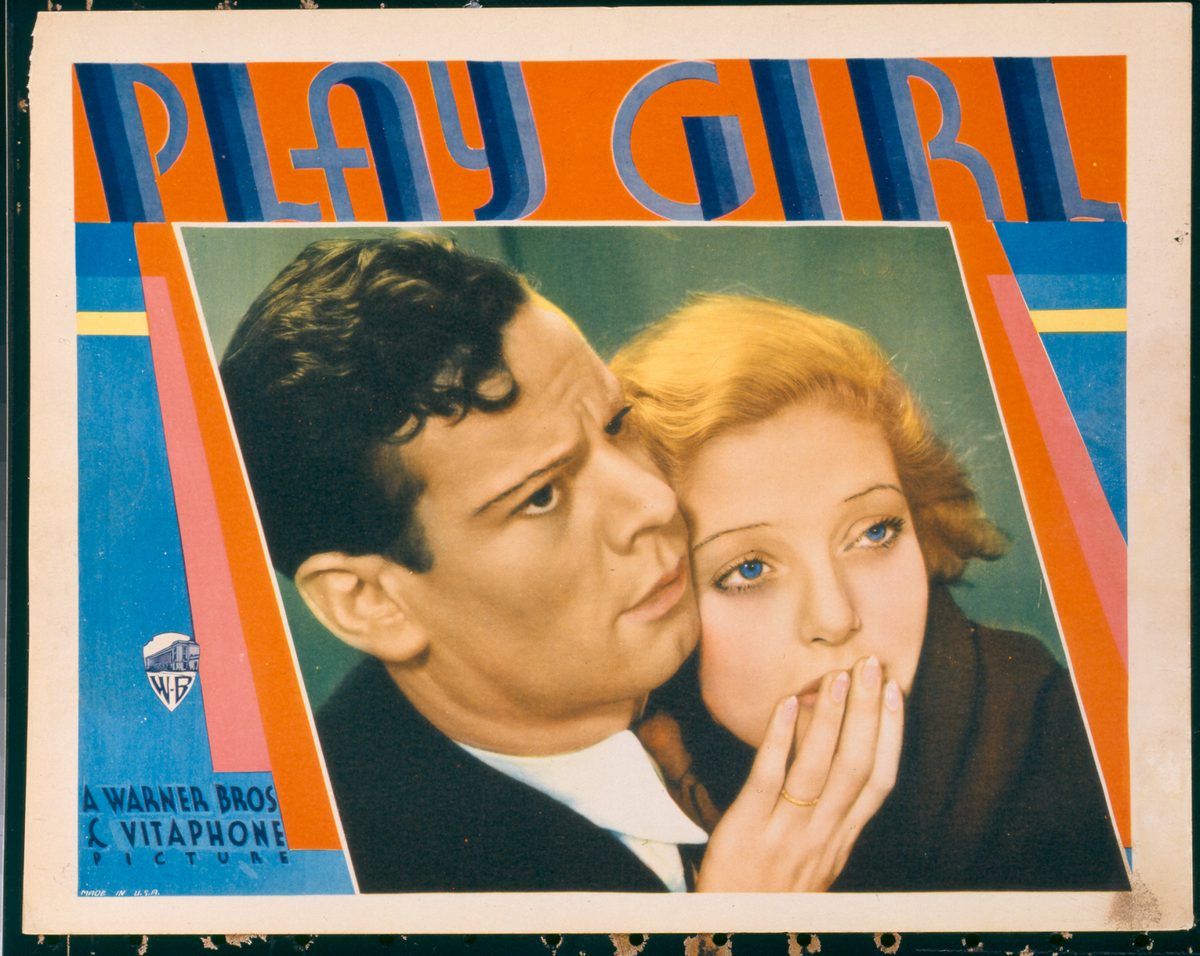
One of the many fun things about Pre-Code films is seeing how they get away with racy dialog without being overly explicit. The risqué double entendres fly freely in PLAY-GIRL, starring Loretta Young as an independent woman who ends up marrying a degenerate gambler, winding up pregnant and husbandless until the conclusion. The story didn’t really matter to me; it was the innuendo-laden script that kept me interested.
That saucy script was written by Maurine Dallas Watkins, who wrote the play “Chicago”, later adapted into the 1942 film ROXIE HART with Ginger Rogers, and then turned into Bob Fosse’s smash Broadway musical CHICAGO, which in turn became the Oscar winning Best Picture of 2002. Ms. Watkins was a former crime reporter for the Chicago Tribune, and based her play on the murder trial of “jazz babies” Beulah Annan and Belva Gaertner. Hollywood beckoned, and she wrote screenplays for UP THE RIVER (the film…
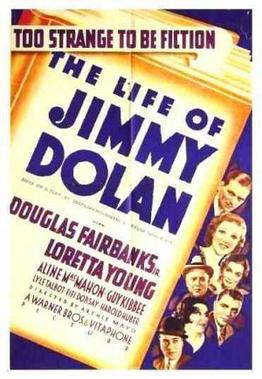 Jimmy Dolan (Douglas Fairbanks Jr.), the light heavyweight champion of the world, goes out of his way to present himself as being a wholesome boxer who loves his mom and is as saintly outside the ring as he’s fearsome inside. Instead, in private, Jimmy is a hard-drinking cynic with a corrupt manager (Lyle Talbot) and a wild girlfriend (Shirley Grey). When a reporter (George Meeker) threatens to reveal the truth, Jimmy’s manager punches him and accidentally kill him. The manager frames Jimmy for the crime and then flees with Jimmy’s girlfriend, just to suffer a fiery end in a car accident.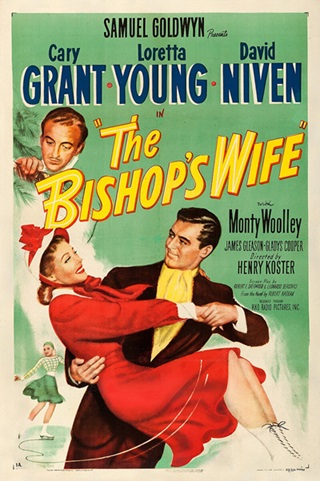


 Through the Shattered Lens