Late Night Retro Television Review: CHiPs 4.16 “Karate”


Welcome to Late Night Retro Television Reviews, a feature where we review some of our favorite and least favorite shows of the past!  On Mondays, I will be reviewing CHiPs, which ran on NBC from 1977 to 1983.  The entire show is currently streaming on Prime!
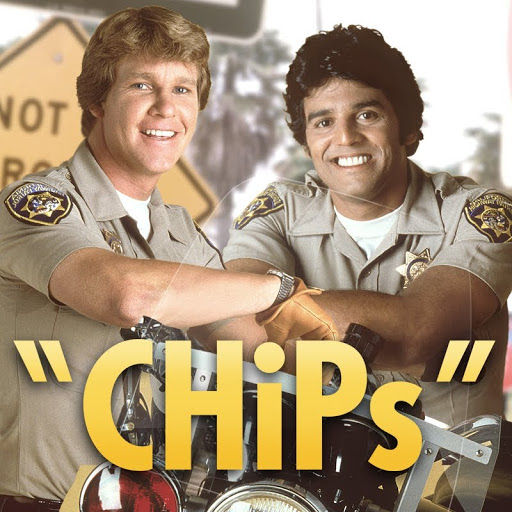
This week, Ponch reveals even more hidden talents!

Episode 4.16 “Karate”

(Dir by Leslie H. Martinson, originally aired on March 8th, 1981)

Ponch and Baker have been assigned to patrol Ponch’s old neighborhood.  Ponch says that he feels as if he can see a ghost on every corner.  Baker laughs and says that at least they have an easy assignment.

Not so fast, Baker!

Andy Macedon (Lewis Van Bergen) is paying teenagers to steal dirt bikes for him.  Macedon went to school with Ponch.  Macedon was a few years ahead of him and he was always a bully.  Now, Macedon is setting up a crime ring.  He’s even got Donny Bonaduce working for him!

Ponch’s solution?  Ponch decides to encourage the neighborhood kids to come to the local youth center by having Bonnie teach gymnastics while Ponch teaches karate.  Are you surprised to discover that, on top of everything else, Ponch knows karate?  You shouldn’t be.  You’re watching….

Admittedly, it doesn’t start off well.  When Andy Macedon comes down to the Youth Center and personally challenges Ponch to a fight, Ponch backs off.  He does it because he doesn’t want to make trouble for the Youth Center but the kids view him as being a coward.  If Ponch is ever going to stop Andy Macedon and keep young Rivas (Mario Marcelino) from falling under Macedon’s evil spell, he’s going to have to beat Andy in a karate street fight with everyone watching.

And that’s exactly what Ponch does.  Why?  Because it’s the Ponch Show and there is nothing that Ponch cannot do!

This episode featured a combination of bass-heavy music and not just Erik Estrada but also Danny Bonaduce doing karate moves so you know it was a classic.  I related to Terri (Kari Michealson), the teenager who couldn’t decide if she wanted to be a gymnast or a criminal.  I went through the same thing when I was 16.  Ballet or crime?  Crime or ballet?  I compromised by shoplifting makeup after my dance classes.

There is nothing Ponch can’t do.  Never forget.


14 Days of Paranoia #3: The Passover Plot (dir by Michael Campus)


First released in 1976 and based on a book that had come out ten years previously, The Passover Plot is a film that asks, “What if Jesus was a political revolutionary who faked his own death?”

Even when the film was first released, that wasn’t a particularly novel or new theory.  Ever since the Crucifixion, there have been conspiracy theorists who have claimed that the entire thing was staged.  Indeed, the early days of the Church were defined by conflicts between different sects debating the true nature of Jesus, with those who believed that he was the son of God and that he had risen from the dead eventually winning out over sects who claimed that Jesus was not divine or that he had actually escaped from the Romans and was instead hiding out in Egypt or even on the island that would eventually become known as Britain.  (The fact that so many Gnostics and other heretics were executed by the Church and their texts suppressed only served to lend them credibility with future theorists.)  Still, every few decades, some new book or film will claim that Jesus faked his death or married Mary Magdalene and gullible people will act as if this is somehow a new argument.  It’s been over 20 years since all of that Da Vinci Code nonsense convinced bored suburbanites across America that they could be experts on both boxed wine and historical conspiracy theories.  We’re about due for a new version of the old story.

As for The Passover Plot, it features Zalman King as Yeshua of Nazareth, an angry young man who dreams of the day when Judea will be free of the Romans.  Having a knowledge of the prophecies of a messiah and also knowing that he is descended from King David, Yeshua specifically patterns his life after the prophecies and presents himself as being not just another revolutionary but instead as being sent by God.  However, he is also aware that it will be necessary for him to “die” and “rise from the dead,” so he goes out of his way to force the hand of Pontius Pilate (Donald Pleasence).  Having seen plenty of crucifixions when younger, Yeshua arranges for the local revolutionaries to drug him so that he’ll appear to be dead.  When he later wakes up, everyone will believe that he has returned from the dead.  The film ends with several title cards, all arguing that the Gospels were written long after Yeshua’s death (“Mark lived in Italy!” one title card proclaims with almost comical indignation) and were subsequently rewritten by “unknown” hands.

The Passover Plot is a weird combination of biblical epic and conspiracy thriller.  Scenes of Yeshua preaching feel as if they could have come from any traditional Biblical epic but they are awkwardly placed with scenes of Yeshua having secret, melodramatic meetings with various conspirators.  It would make for an interesting contrast if not for the fact that the film itself is so slowly paced and boring.  Zalman King, who is best-known for his subsequent career as a softcore filmmaker, spends a lot of time yelling and smoldering intensely but he still doesn’t have the charisma or screen presence necessary to be convincing in the role.  In the scene were he’s meant to be passionate, he shrieks with such abandon that he makes Ted Neeley’s performance in Jesus Christ Superstar feel restrained.  This film asks us to believe that people would not only abandon their previous lives to follow Yeshua but that they would also take part in an elaborate conspiracy that could have gone wrong at any time.  For that to be believable, Yeshua needs to be played by someone who doesn’t come across like the drama student that everyone dreads having to do a scene with.  Far more impressive is Donald Pleasence, whose portrayal of a ruthless and unfeeling Pilate is a marked contrast to some of the more sympathetic interpretations of the character that tend turn up in the movies.

On the plus side, the film does look good.  It was shot on location in Israel and there is a certain authenticity to the film’s recreation of the ancient world.  Along with Pleasence, character actors like Scott Wilson (as Judas!) and Dan Hedaya get a chance to shine.  But otherwise, The Passover Plot is too slowly paced and kooky for its own good.  Conspiracy theorists never seem to understand that the more elaborate a conspiracy theory becomes, the less convincing it is to anyone who isn’t already a true believer.  In the end, how one feels about the film’s conclusions will probably be connected to how one already views Jesus and the Church.  The Passover Plot is not a film that’s going to convince anyone who wasn’t already convinced.

14 Days of Paranoia:

  1. Fast Money (1996)
  2. Deep Throat II (1974)

Retro Television Reviews: Half Nelson Episode 1.5 “Diplomatic Immunity”


Welcome to Retro Television Reviews, a new feature where we review some of our favorite and least favorite shows of the past! On Fridays, I will be reviewing Half Nelson, which ran on NBC from March to May of 1985. Almost all nine of the show’s episodes can be found on YouTube!

L.A. …. you belong to me….

Episode 1.5 “Diplomatic Immunity”

(Dir by Alan Cooke, Originally aired on April 12th, 1985)

Somebody is stealing luxury cars in Beverly Hills!  Detective Hamill (Gary Grubbs) is pretty sure that he’s caught the responsible party, a teenager who was seen near one of the cars when it was taken.  The teenager, who is in danger of losing his athletic scholarship, insists that he was just thinking about stealing the car but he didn’t actually do it.  Instead, the car was stolen by some guy who arrived on the scene via a limousine.  Why would a car thief be getting transported around in a limo?

That’s what Rocky Nelson (Joe Pesci) wants to find out!  Just as in the previous episodes, everyone tells Rocky to not get involved.  The police tell Rocky to stay out of the way.  Rocky’s boss, Chester (Fred Williamson), tells him that it’s not his concern.  Rocky’s landlord, Mr. Martin (Dean Martin), stops by the guesthouse to use Rocky’s phone and, though he doesn’t say not to get involved, it’s still pretty obvious that Dean Martin doesn’t care about the car thieves.

Only Rocky cares!  Actually, Kurt (Bubba Smith) and Beau (Dick Butkus) care as well.  In fact, in this episode, Kurt and Beau get almost as much screen time as Rocky.  They follow Rocky around, hoping to learn how to become better detectives.  As critical as I can sometimes be of Dick Butkus’s character on Hang Time, he was actually pretty funny on Half Nelson.  He and Bubba Smith made a good comedy team and they seem to be having so much fun together that it makes up for the fact that neither one of them had much range as an actor.  For instance, when Rocky goes to Beverly Hills High School to do some investigating, Kurt and Beau follow him.  Kurt and Beau claim to be two new teachers at the school.  “We got traded to this school from Harvard,” Beau says before Kurt explains that they got traded for another teacher and several draft picks.  It’s a dumb joke but Butkus and Smith sell it with their enthusiasm.

Eventually, Rocky figures out that the car theft ring is being led by a diplomat (John Saxon) from Central America.  Saxon pretends to be collecting money for charity but he’s actually just stealing cars and smuggling them out of the country.   Rocky’s investigative techniques are not particularly complex.  He “borrows” an expensive car from the studio and then hides in the trunk with his pitbull, Hunk.  When Saxon’s henchman (Lewis van Bergen) steals the car, Rocky and Hunk jump into action.  Hunk cripples the thief by biting his ankle and then Rocky and his dog run away as the car explodes.  “Run, Hunk, run!” Rocky yells.

Rocky, Kurt, and Beau manage to catch Saxon right before he boards a plane to leave the country.  The teenager is freed from jail.  As he leaves his cell, he complains about the incompetence of the cops.  Rocky yells at him for being disrespectful.  It’s the best scene in the show, just because it feels spontaneous.  It’s almost as if Pesci himself suddenly got mad and started yelling at the kid.

Rocky, Amanda (Victoria Jackson, who has been underused in every episode, with the exception of the pilot), and the rest of the Beverly Hills Security team throws a birthday party for Chester.  Dean Martin does not show up.  The end credits roll.

Half Nelson‘s main weakness is that, despite having an once-in-a-lifetime cast, the plots tend to feel somewhat generic.  It just doesn’t feel right to have actors like Joe Pesci, Fred Williamson, Dean Martin, and even Dick Butkus and Bubba Smith dealing with the type of boring cases that any 80s TV detective could have solved.  That said, compared to the previous episodes of Half Nelson that I’ve watched, this episode was okay.  Pesci got to show off his streetwise attitude and, as always, he seemed to be happiest when acting opposite Dean Martin.  John Saxon was stuck playing a one-note villain but it’s still always enjoyable to watch Saxon as he plots to do something bad.  This episode was enjoyable if not exactly memorable.

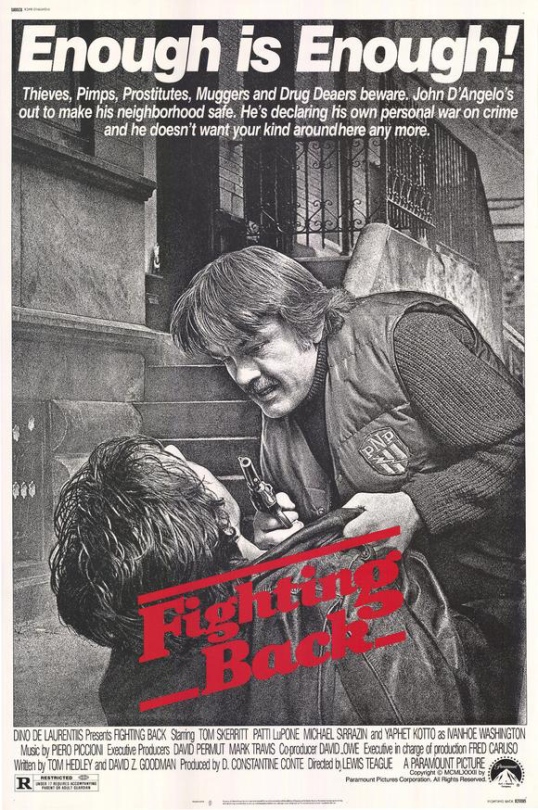
A Movie A Day #38: Fighting Back (1982, directed by Lewis Teague)


fightingbackpost

The time is 1982.  The place is Hell on Earth, also known as Philadelphia.  Crime is out of control and the police are powerless to stop it.  When deli owner John D’Angelo (Tom Skerritt) and his wife, Lisa (Patti LuPone), confront a pimp named Eldorado (Pete Richardson), he rams his car into the back of their car, causing the pregnant Lisa to lose her unborn child.  At almost the exact same time, John’s mother (Gina DeAngles) is mugged by two thugs who chop off her ring finger.

In the grand tradition of Charles Bronson, John decides to fight back.  But he doesn’t go it alone.  With his best friend, a police officer named Vince (Michael Sarrazin), John starts the People’s Neighborhood Patrol.  The PNP is going to clean up Philadelphia, one street at a time.  The media (represented by David Rasche) make John into a celebrity.  The black community (represented by Yaphet Kotto) suspect that John and the PNP are guilty of racial discrimination.  The Mafia wants to bring John over to their side.  John runs for city council but he still has time to drop a grenade in a pimp’s car.

Fighting Back was one of the many urban vigiliante films to come out after the success of Death Wish.  Fighting Back‘s producer, Dino De Laurentiis, also produced Death Wish but made the mistake of later selling the rights to Cannon.  Fighting Back was not the box office success that either Death Wish or its sequels were, even though Fighting Back is actually the better movie.  That’s because Fighting Back was directed by the underrated Lewis Teague.  Teague does a good job of making Philadelphia look like a war zone and the scenes of vigilante justice are enjoyable but, overall, Teague takes a far more ambiguous approach to vigilantism than Michael Winner did when he directed Death Wish.  As vile as Philadelphia criminals may be, John D’Angelo isn’t always that likable himself.  When Kotto accuses John and the all-white PNP of being racially prejudiced, Teague suggests that he has a point.  Tom Skerritt gives a good performance, playing John as a proud, blue collar guy who wants to do the right thing but gets seduced by his newfound celebrity.

Better acted than Death Wish and smarter than The Exterminator, Fighting Back is an underrated vigilante gem.

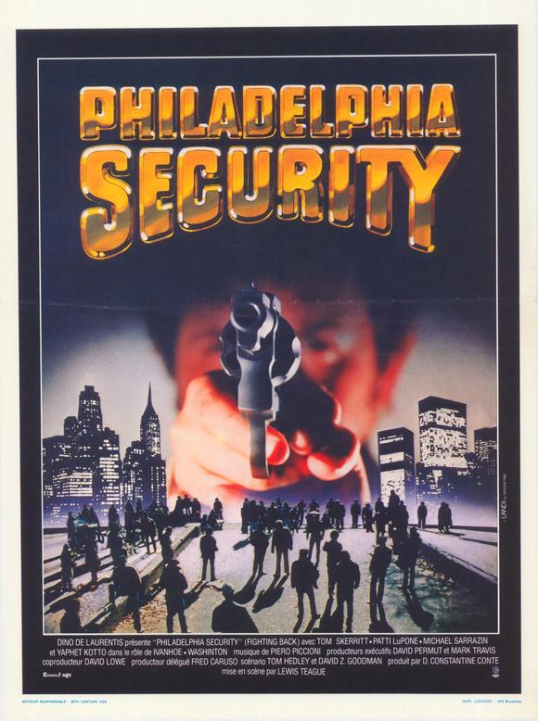
Fighting Back is also known as Philadelphia Security and Death Vengeance.

Fighting Back is also known as Philadelphia Security and Death Vengeance.

Embracing the Melodrama #40: Bugsy (dir by Barry Levinson)


Bugsy5lrg

Let’s continue to embrace the melodrama with the 1991 best picture nominee Bugsy.

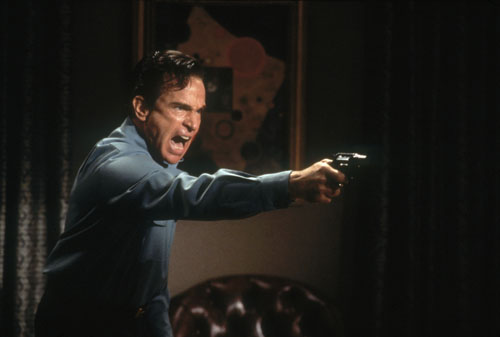
Gangster Benjamin Siegel (Warren Beatty) may be known as Bugsy but nobody dares call him that to his face.  Siegel may be best known for his quick temper and his willingness to murder anyone who gets in his way, but Ben insists that he’s not as crazy as everyone considers him to be.  Instead, Ben knows that he’s a very special person, a visionary businessman whose business just happens to be organized crime.  Along with his childhood friends Lucky Luciano (Bill Graham) and Meyer Lansky (Ben Kingsley), Siegel is one of the founders of the modern American crime syndicate.  Unlike his more practical-minded partners, Siegel revels in being a public figure.  Bugsy examines how Siegel became a celebrity gangster and how that celebrity eventually led to his downfall.

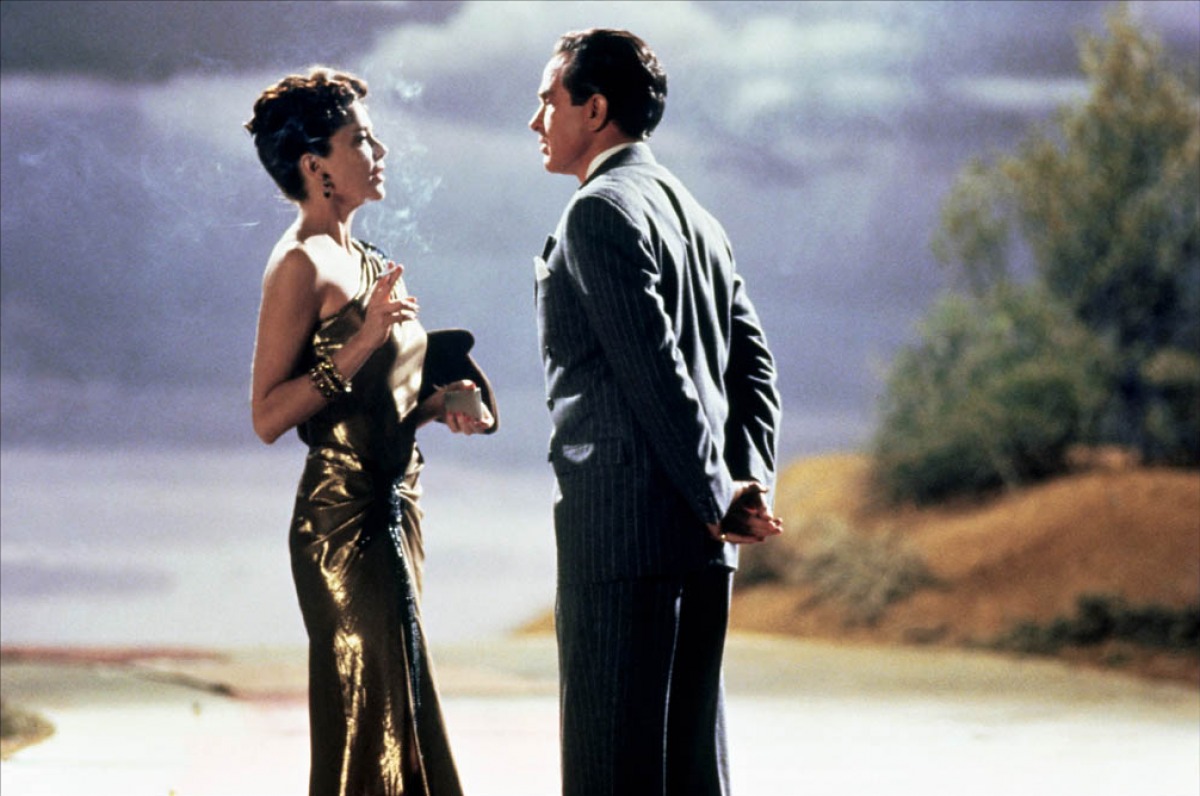
As the film opens, Luciano and Lansky send Siegel out to Los Angeles, specifically to look after their west coast business operations.  Before Siegel leaves, he is specifically told to keep a low profile.  So, of course, as soon as Siegel arrives in Los Angeles, he starts hanging out with actor George Raft (Joe Mantegna) and having a very public affair with actress Virginia Hill (Annette Bening).  Siegel quickly falls in love with the glamour and glitz of Hollywood and starts to think of himself as being a movie star.  When he’s not working with violent gangster Mickey Cohen (Harvey Keitel) to control the Los Angeles underworld, Siegel is attending film premieres and even shooting a Hollywood screen test.  Back in New York, Luciano and Lansky can only watch as their childhood friend goes out of his way to defy their instructions and become the most famous gangster in America.

Eventually, Siegel goes on a gambling trip to Nevada and comes up with an idea that is destined to change America forever.  With funding from Lansky and Luciano, Siegel begins construction on the Flamingo Hotel and Casino in Las Vegas, Nevada.  However, Siegel’s plans are so extravagant and, in many ways, impractical that the budget soon soars out of control.  Not helping matters is the fact that Virginia is embezzling money from the casino’s budget.  Even after Siegel finds out, he can’t bring himself to be angry at her.  He understand that he and Virginia are essentially cut from the same cloth.

However, back in New York, Luciano grows more and more frustrated with Siegel’s wasteful ways and Lansky comes to realize that he can only protect his friend for so long…

Bugsy is a big, extravagant movie that tries to be a few too many things at once.  Over the course of two and a half hours, it attempts to be a love story, a biopic, a classic gangster film, an allegory for the American dream, a history lesson, a period piece, and finally, a metaphor for the act of filmmaking itself.  (When Siegel complains that Luciano and Lansky don’t understand why the Flamingo has to be huge, it’s hard not to feel that he’s meant to be a stand in for every director who has ever had his budget cut by a meddling studio executive.)  When a film tries to be so many different things all at once, you can’t be surprised when the end result is a little uneven.  Bugsy starts out slowly but gradually picks up speed and the final part of the movie is everything that one could hope for from an epic gangster film.

The film works best as a character study of a man who, in the best American tradition, attempts to reinvent himself by moving out west.  Back in New York, Ben is known as a cold-blooded and dangerous killer.  However, once he arrives in Los Angeles, Ben attempts to recreate himself as a celebrity and then as a visionary.  For him, the Flamingo is about more than money.  The Flamingo is about being remembered for something other than his nickname.  The Flamingo is his way to escape from his past.  However, as Bugsy makes clear, the past can be ignored but it never goes away.

bugsy-1991-09-g