A Loyalty Day Film Review: My Son John (dir by Leo McCarey)


Oh my God, did you know that it’s Loyalty Day!?

Well, actually, it’s not Loyalty Day for everyone.  In fact, a lot of the world’s citizens are celebrating Communist May Day today.  However, here in the United States, it’s Loyalty Day.  Even if you are an American, it’s possible that you’ve never heard of Loyalty Day.  It was first celebrated in 1921 and it was intended to provide a non-Communist alternative to International Workers Day.  It wasn’t until 1955 that Loyalty Day was officially recognized by Congress.

From Wikipedia:

Loyalty Day is defined as follows in 36 U.S.C. § 115:

  • (a) Designation.— May 1 is Loyalty Day.
  • (b) Purpose.— Loyalty Day is a special day for the reaffirmation of loyalty to the United States and for the recognition of the heritage of American freedom.
  • (c) Proclamation.— The President is requested to issue a proclamation—
    • (1) calling on United States Government officials to display the flag of the United States on all Government buildings on Loyalty Day; and
    • (2) inviting the people of the United States to observe Loyalty Day with appropriate ceremonies in schools and other suitable places.

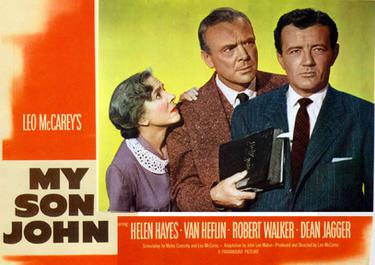
Though released before it officially became a holiday, the 1952 film, My Son John, is perfect for Loyalty Day.

The John of the title is John Jefferson (Robert Walker, in his final role), an employee of the State Department.  While his younger brothers (played by Richard Jaeckel and James Young) are two high school football stars who are looking forward to serving their country in Korea, John is an intellectual who considers concepts like patriotism to be simplistic and naive.  While his father (Dean Jagger) sings patriotic songs at the American Legion hall, John rolls his eyes at such middle class activities.  (“If you don’t like your Uncle Sammy,” move to another country, John’s father sings.)  The only person to whom John is especially close is his nervous mother, Lucille (Helen Hayes).

However, John is keeping a secret from even Lucille.  He’s a double agent, working for the communists!  With FBI agent Stedman (Van Heflin) hot on his trail, will John ever be able to see the light about the communists?  And, how will the communists respond to John having doubts about the cause?

My Son John was a dream project for Hollywood director Leo McCarey.  (It’s not a coincidence that the devoutly Catholic McCarey made a film about a devoutly Catholic family who discovers that one of their own has become a communist.)  McCarey carefully supervised every detail of the film and he was even able to talk stage legend Helen Hayes into starring in the film, her first in 14 years.  My Son John is full of scenes of shadowy communists, smug intellectuals, and all-American FBI agents marveling at the strength of Lucille Jefferson’s faith.  Everything that is today often cited as a negative aspect to living in the suburbs is presented as being a positive in My Son John.  The film’s communists come into a world of happy families, big houses, and well-manicured lawns and they set out to make everyone else as miserable as they are.  There’s nothing subtle about either McCarey’s approach or Helen Hayes’s performance but, as is often the case with propaganda, the film is crudely effective.

My Son John was Robert Walker’s final film.  In fact, he died before completing work on the film, leading the ending being rewritten.  (No longer would John personally deliver a commencement address.  Instead, his words come out of a tape player that has been rolled out on stage.  A holy light shines down on the player while The Battle Hymn of the Republic plays in the background.  It’s bizarre but it’s also probably the most memorable part of the movie.)  Scenes from Strangers On A Train were rather awkwardly spliced into final moments of My Son John, never mind the fact that Robert Walker’s gleefully evil performance as Bruno Antony had little in common with his self-tortured performance as John Jefferson.

Surprisingly, considering that My Son John was released at the height of the anti-Communist era, the film was not a success at the box office.  (Audiences seemed to better appreciate low-budget and pulpier anti-communist films, like I Was A Communist For The FBI.)  Still, thanks to the Internet, My Son John is still available to be viewed on this Loyalty Day.

So, remember — if you don’t like your Uncle Sammy …. well, actually, the cool thing about this country is that you don’t have to like your Uncle Sammy.  You have the right to decide for yourself how you feel about old Uncle Sammy.  That’s an idea that is worth being loyal to.

4 Shots From 4 Cary Grant Films: The Awful Truth, The Philadelphia Story, North by Northwest, Charade


4 Shots From 4 Films is just what it says it is, 4 shots from 4 of our favorite films. As opposed to the reviews and recaps that we usually post, 4 Shots From 4 Films lets the visuals do the talking!

Today is the 116th anniversary of one of the greatest stars of Hollywood’s Golden Age, Cary Grant!  And that means that it’s time for….

4 Shots From 4 Cary Grant Films

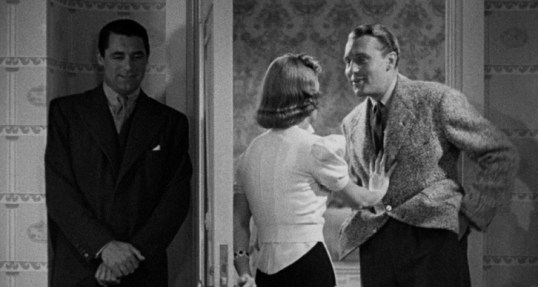
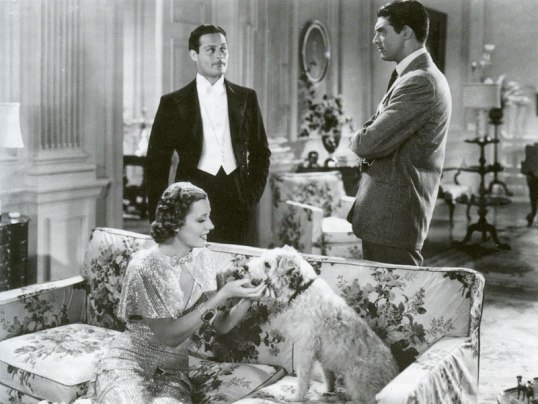
The Awful Truth (1937, dir by Leo McCarey)

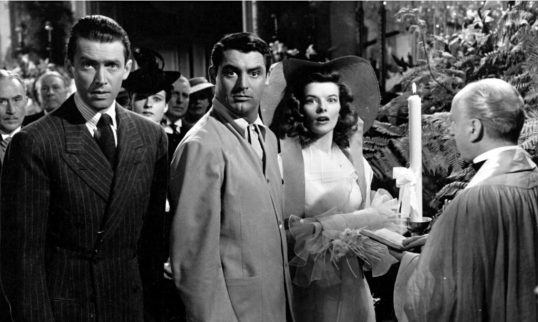
The Philadelphia Story (1940, dir by George Cukor)

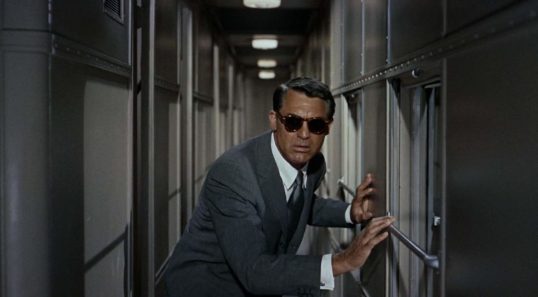
North by Northwest (1959, dir by Alfred Hitchcock)

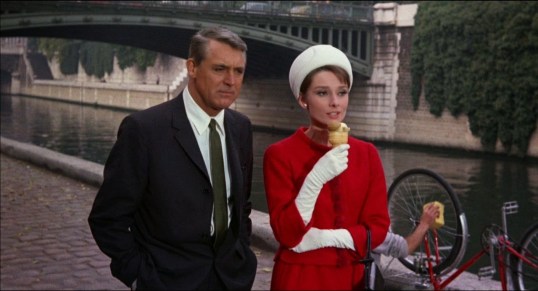
Charade (1963, dir by Stanley Donen)

Scenes That I Love: The Mirror Scene From Duck Soup


Since today is May Day, how about a little Marx for today’s scene of the day?

Believe it or not, when Duck Soup was initially released in 1933, it was considered to be something of a failure.  Especially when compared to previous Marx Brothers films, it was seen as being a box office disappointment.  The critics didn’t care much for it, either.  They felt that the film’s political satire was preposterous and tasteless.  Much as how today’s critics attacked the Death Wish remake for being released at a time when gun control was trending on twitter, critics in 1933 attacked Duck Soup for being a cynical, anti-government satire released during the Great Depression.

(To be honest, you would think that the Great Depression would have made people better appreciate anything that made fun of the incompetence of government but maybe people were in too bad of a mood to see the joke.  Who knows?  1933 was a strange year.)

Of course, today, Duck Soup is justifiably viewed as being a classic comedy.  It’s certainly my favorite Marx Brothers film.  In the classic scene below, Harpo pretends to be Groucho’s reflection in a shattered mirror.  It’s a marvelous piece of physical humor so enjoy it!

(And the next time you see a film bragging about their Rotten Tomatoes score, consider that if Rotten Tomatoes had existed in 1933, it would have gotten a “rotten” rating.  The truth of the matter is that most critics are as clueless as Rufus T. Firefly looking into a broken mirror.)

4 Shots From 4 Films: The Awful Truth, Notorious, North By Northwest, Charade


4 Shots From 4 Films is just what it says it is, 4 shots from 4 of our favorite films. As opposed to the reviews and recaps that we usually post, 4 Shots From 4 Films is all about letting the visuals do the talking.

Happy birthday, Cary Grant!

4 Shots From 4 Films

The Awful Truth (1937, dir by Leo McCarey)

The Awful Truth (1937, dir by Leo McCarey)

Notorious (1946, dir by Alfred Hitchcock)

Notorious (1946, dir by Alfred Hitchcock)

North by Northwest (1959, dir by Alfred Hitchcock)

North by Northwest (1959, dir by Alfred Hitchcock)

Charade (1963, dir by Stanley Donen)

Charade (1963, dir by Stanley Donen)

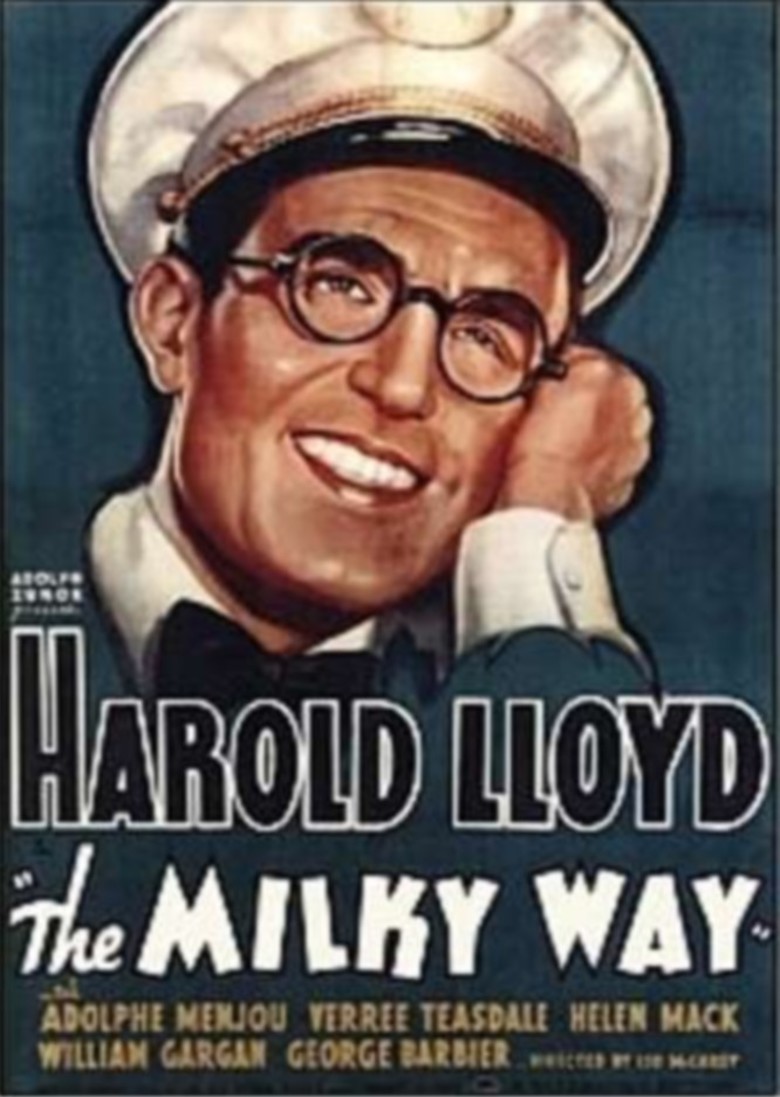
Still Funny After All These Years: Harold Lloyd in THE MILKY WAY (Paramount 1936)


gary loggins's avatarcracked rear viewer

The-Milky-Way-1936-film-images-7f5f83d1-1396-427f-b357-ab5ef9e91bc

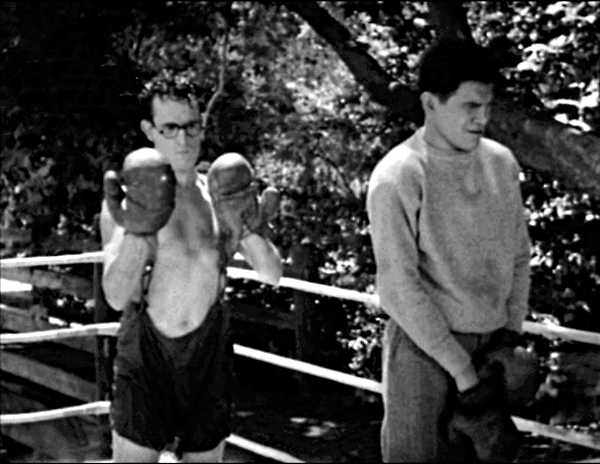
Harold Lloyd was one of the “Big 3” comedy stars of the Silent Era, right up there with Charlie Chaplin and Buster Keaton in popularity. I’ve viewed and enjoyed comic gems like SAFETY LAST and THE FRESHMAN, and some of his hilarious shorts. His bespectacled, energetic character was wildly popular in the Roaring Twenties, but with the advent of sound and The Great Depression, audiences turned away from Harold’s brand of comedy. Recently, I watched 1936’s THE MILKY WAY and wondered why they did, because Harold Lloyd was just as funny as ever in it, and the film is just as good as any screwball comedy of the era.

milky2

Harold plays Burleigh Sullivan, a milquetoast milkman constantly in hot water for failing to meet his quotas. When a pair of drunken ruffians try to hit on his sister, meek Burleigh is forced to come to her defense. A fight breaks out, and Burleigh emerges from the pile victorious. The…

View original post 436 more words

Cleaning Out The DVR #19: The Awful Truth (dir by Leo McCarey)


(For those following at home, Lisa is attempting to clean out her DVR by watching and reviewing 38 films by this Friday.  Will she make it?  Keep following the site to find out!)

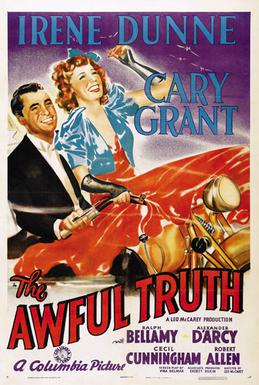
Theawfultruth1937

First released way back in 1937, The Awful Truth is one of the most delightful comedies that I’ve ever seen.  In fact, if I could recommend one movie for you to make an effort to see, it would be The Awful Truth.  This is definitely the best film to ever have the word “awful” in the title.

(Speaking of being the best, The Awful Truth is also the rare screwball comedy to receive a nomination for best picture.  However, it lost to the far more serious The Life of Emile Zola.)

Jerry (Cary Grant) and Lucy Warner (Irene Dunne) are young, married, stylish, and rich.  They seem to have it all but, as the result of Jerry’s lies and a misunderstanding concerning Lucy and her music teacher (Alexander D’Arcy), they end up getting a divorce.  Fortunately, they still share a common bond.  They both love their dog, Mr. Smith (played by Skippy, the same adorable and incredibly talented dog who played Asta in The Thin Man).  Lucy wins custody of Mr. Smith and takes him with her when she moves in with her eccentric Aunt Patsy (Cecil Cunningham).

(It’s not a screwball comedy without an eccentric aunt.)

Jerry, however, has weekly visitation rights with Mr. Smith.  It’s during once such visit that Jerry discovers that, with only two months to go before the final divorce decree, Lucy has become engaged to her next door neighbor, Dan (Ralph Bellamy).  Dan is from Oklahoma and spends most of his time wistfully talking about tumbleweed, oil, and cattle.  He also can’t wait to marry Lucy so that they can both move back to Oklahoma City.  Dan is a nice guy but he’s no Cary Grant.  (He’s also dominated by his judgmental mother.)  Realizing that he still loves Lucy, Jerry wants to reconcile with her but complications and misunderstandings ensue.

(It’s not a screwball comedy without complications and misunderstandings.)

Eventually, in order to prove that he is over Lucy, Jerry starts to date a vacuous heiress, Barbara Vance (a hilariously shallow performance from Molly Lamont).  Suddenly, Lucy finds herself in the same situation that Jerry was in with her and Dan.  Now, it’s her turn to try to break up Barbara and Jerry…

Meanwhile, the day of the final divorce decree approaches…

There’s a lot of reasons to love The Awful Truth.  There’s the snappy dialogue, the physical comedy (at one point, three different men are scurrying around Aunt Patsy’s apartment, two trying to hide from each other and one totally oblivious to everything going on around him), and Leo McCarey’s fast paced direction.  There’s Mr. Smith, a dog so talented that even a confirmed cat person like me loved watching his performance.  There’s the wonderful supporting turns of Ralph Bellamy and Molly Lamont.

But the main reason to see the film is because of the wonderful chemistry between Cary Grant and Irene Dunne.  Grant is so smooth and effortless in his charm that it’s a lot of fun to watch him having to deal with the progressively strange world that he finds himself living in.  The Awful Truth works best when Grant simply reacts to all the craziness around him.  Grant could do more with one look than most actors could do with a Shakespearean monologue.  Meanwhile, Irene Dunne … well, who wouldn’t want to get in a time machine, go back to 1937, and be Irene Dunne for a day?  She’s lively, she’s beautiful, she’s witty, she’s classy, and she’s just neurotic enough to be relatable.

The Awful Truth is pure joy.  If you haven’t seen it, you’re missing out.  If you have seen it, watch it again.

http://www.youtube.com/watch?v=B0-euBr_vRU

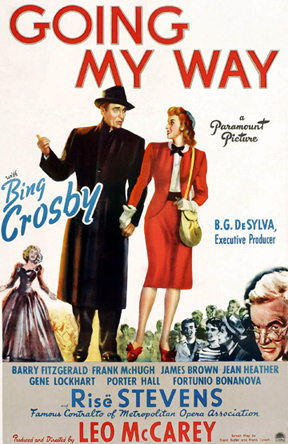
Cleaning Out The DVR #11: Going My Way (dir by Leo McCarey)


GoingmywayBing

Last night, continuing my effort to watch 38 movies in 10 days (and, for the record, I have 7 days left as of today), I watched the 1944 musical-comedy-drama Going My Way.

Going My Way tells the episodic story of Father Chuck O’Malley (Bing Crosby), a priest from St. Louis who is assigned to take charge of a struggling parish in New York City.  O’Malley is meant to replace Father Fitzgibbon (Barry Fitzgerald), a stubbornly old-fashioned priest who is struggling to keep up with a changing world.  Though O’Malley is to take charge of the parish’s affairs, Fitzgibbon is to remain the pastor.  However, the compassionate O’Malley doesn’t tell Fitzgibbon about the arrangement and allows Fitzgibbon to believe that O’Malley is only meant to be his assistant.

It’s obvious from the start that Fitzgibbon and O’Malley have differing approaches.  Fitzgibbon is a traditionalist.  O’Malley, on the other hand, is a priest who sings.  He’s a priest who understands that the best way to prevent the local teens from forming a street gang is to convince them to start a choir instead.  When it appears that 18 year-old Carol (Jean Heather) is “living in sin,” it is the nonjudgmental O’Malley who convinces her to marry her boyfriend.

And, slowly but surely, Fitzgibbon and O’Malley start to appreciate each other.  O’Malley is even able to convince Fitzgibbon to play a round of golf with him, while Fitzgibbon tells O’Malley about his love for his mother in Ireland.

What’s interesting is that we learn very little about O’Malley’s past.  In many ways, he’s like a 1940s super hero or maybe a less violent and far more ethical version of one of Clint Eastwood’s western heroes.   He shows up suddenly, he fixes things, and then he moves on.  Instead of a cape or a poncho, he wears a collar.

(And, of course, he doesn’t kill anyone.  Actually, that’s probably a lousy analogy but I decided I’d give it a try anyway…)

At one point, O’Malley does run into an opera singer named  Genevieve Linden (Rise Stevens).  He and Genevieve (whose real name is Jenny) talk briefly about their past and it becomes obvious that they once had a romantic relationship.  We don’t learn the exact details but it does bring some unexpected melancholy to an otherwise cheerful film.  It reminds us of what O’Malley gave up to become a priest.

Fortunately, Genevieve is more than happy to help out with O’Malley’s choir, even arranging for them to meet with a record executive (William Frawley).  The executive doesn’t have much interest in religious music but then he hears Bing O’Malley sing Swinging On A Star.

It’s a bit strange to watch Going My Way today because it is a film that has not a hint of cynicism.  There’s no way that a contemporary, mainstream film would ever portray a priest as positively as Father O’Malley is portrayed in this film.  Indeed, it says something about the world that we live in that I instinctively cringed a little whenever O’Malley was working with the choir, largely because films like Doubt and Spotlight have encouraged me to view any film scene featuring a priest and an pre-teen boy with suspicion.  O’Malley is the ideal priest, the type of priest that those of us who were raised Catholic wish that we could have known when we were young and impressionable.  Bing Crosby does a pretty good job of playing him, too.  Watching Going My Way felt like stepping into a time machine and going to a simpler and more innocent time.

In the end, Going My Way is a slight but watchable film.  It doesn’t add up too much but, at the same time, it’s always likable.  Though the film may be about a priest, the emphasis is less on religion and more on kindness, charity, and community.  Going My Way was a huge success at the box office and even won the Oscar for best picture.

Personally, I would have given the Oscar to Double Indemnity but Going My Way is still a likable movie.

Speaking of likable, the Academy was so impressed with Barry Fitzgerald’s performance that they actually nominated it twice!  He got so many votes in both categories that Fitzgerald ended up nominated for both Best Actor and Best Supporting Actor.  Subsequently, the Academy changed the rules and decreed that a performance could only be nominated in one category.  As for Fitzgerald, he won the Oscar for best supporting actor.  He later broke the Oscar while practicing his golf swing.
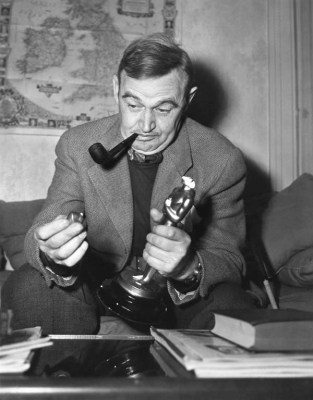
Barry and Oscar

Barry and Oscar

(Don’t worry.  The Academy sent him a replacement.)
Lisa Watches An Oscar Nominee: Love Affair (dir by Leo McCarey)


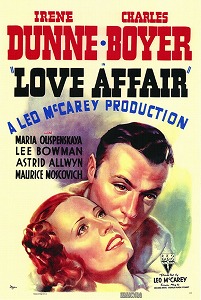
Love_Affair

“If you can paint, I can walk!” — Terry McKay (Irene Dunne) in Love Affair (1939)

So, TCM’s 31 Days of Oscar has ended but I’m still on my mission to watch and review every single film that has ever been nominated for best picture.

Now, don’t get me wrong.  This isn’t going to be one of my series like Shattered Politics or Embracing the Melodrama.  I’m not going to post six best picture reviews a day for the next three weeks until I’ve reviewed every single one of them.  Instead, I’m just going to keep my eyes open.  When I see that a best picture nominee is going to be on TCM, I’ll be sure to record, watch, and review it.  On days that I have some extra time, I’ll watch and review something from my DVD and Blu-ray collection.  And, of course, I’ll keep make sure to keep up with what’s available on Netflix, Hulu, and all the other streaming services.

And, on a night like tonight when its sleeting outside and I’m aware that I probably won’t be going outside for the next two or three days, I’ll be sure to look through my DVR and see what I still need to watch.

Tonight, for example, I did just that and I ended up watching the 1939 best picture nominee, Love Affair.

Love Affair tells the story of two rich people in love.  Michel (Charles Boyer) is a painter and a notorious playboy. Terry (Irene Dunne) is an aspiring singer.  They’re both engaged to other people but, when they meet on a cruise, it’s love at first sight.  They try to avoid each other.  They try to remain faithful to their significant others.  But, when the boat docks off of the island of Madeira, Terry agrees to visit Michel’s grandmother with him.

Michel’s grandmother is played by Maria Ouspenkaya and, while Ouspenkaya does a good job playing the eccentric grandma and even received an Oscar nomination for her 10 minutes or so of screen time, it’s hard to look at her without imagining that she’s about to say something about what happens when the moon is full.  Or, at least, that’s the case if you’re a fan of the old Universal horror films and you’ve seen Ouspenkaya play the gypsy in original Wolf Man.  Instead of talking about the curse of lycanthropy, Michel’s grandma instead tells the two that they are meant to be together.

Anyway, once they return to New York, Michel and Terry agree to separate and, if after six months they still can’t stop thinking about each other, they’ll meet at the top of the Empire State Building.  Michel spends his six months becoming a more responsible human being.  Terry spends her six months singing.

Six months pass.  Michel stands at the top of the Empire State Building.  Little does he know that, on her way to meet him, Terry got struck by a car.  Michel is convinced that Terry stood him up.  Meanwhile, Terry is confined to a wheelchair.

Wow, depressing movie, huh?  Well, don’t worry.  That’s only the first half of the movie.  There’s still a lot more misunderstandings to get through before Terry can deliver her classic final line.

Occasionally, I’ve seen an old film referred to as being creaky but I don’t think I ever understood what that meant until I saw Love Affair.  Love Affair is such an old-fashioned melodrama and such a product of a bygone era that it can’t help but be a little bit fascinating.  Love Affair is definitely a film that was made at a different time and for a very different, far less cynical audiences and, watching the film today, definitely requires a bit of an attitude adjustment.  However, what Love Affair may now lack in entertainment value, it makes up for in historical value.  By today’s standards, Love Affair may seem slow and a bit too melodramatic but it remains a time capsule.  If you want to go back to 1939, you can either build a time machine or you can watch Love Affair.

(And, fortunately, Love Affair is in the public domain, which means it’ll be a lot easier to find than a working time machine.)

http://www.youtube.com/watch?v=qMIOC0st2E0

Lisa Watches An Oscar Nominee: Ruggles of Red Gap (dir by Leo McCarey)


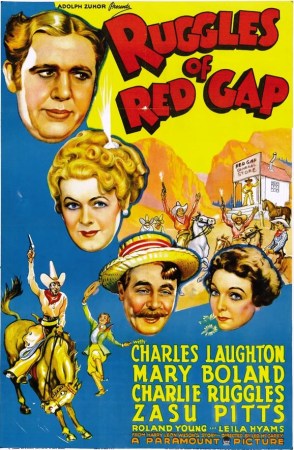
Ruggles_of_red_gap

After watching Barry Lyndon, I decided to continue to explore my DVR by watching another film that was shown as a part of TCM’s 31 Days of Oscar.

First released way back in 1935, Ruggles of Red Gap was nominated for best picture but it lost to Mutiny of the Bounty.  Interestingly enough, both Ruggles and Bounty featured the great Charles Laughton.  In Bounty, Laughton played a tyrannical villain, Capt. Bligh.  In Ruggles, however, Laughton is the film’s hero, a gentle and comedic butler named Marmaduke Ruggles who, after having his contract gambled away in a poker game, finds himself living in the frontier town of Red Gap, Washington.

It’s also interesting to note that Ruggles of Red Gap is one of the few best picture nominees to receive absolutely no other nominations.  To a certain extent, it’s understandable.  Ruggles of Red Gap was made at a time when the Academy had less categories but still nominated ten films for best picture.  As a film, Ruggles mostly serves as a showcase for Charles Laughton but, that year, he received his best actor nomination for his work in Mutiny.  (At that time, there were no supporting categories.  Had there been, it’s likely that Laughton could have received a lead actor nomination for Ruggles and a supporting nomination for Bounty.)  The next time that someone complains that Selma only received two nominations, you remind them that’s one more than Ruggles of Red Gap received.

As for the film itself … well, for a modern audience, the film’s deliberate pace takes some getting used to.  The film’s best moments occur at the start.  Ruggles wakes up one morning to discover that his boss (Roland Young) lost him in a poker game.  Ruggles spends the day meeting and attempting to get used to his new employer, a nouveau riche cowboy named Egbert Floud (Charlie Ruggles).  The joke here, of course, is that Ruggles is stereotypically reserved and British while Egbert is loud, brash, and American.  Ruggles lives his life by the rules of the class system.  Egbert comes from a world where there is no class and everyone is equal.  Ruggles refuses to call Egbert by his first name.  Egbert gets Ruggles drunk.  The scenes of Egbert and Ruggles in Europe are a lot of fun, largely because the two actors were obviously having a lot of fun playing off each other and Laughton clearly relished getting to play comedy as opposed to villainy.

The second half of the film features Ruggles settling into life in Red Gap, Washington.  The citizens of Red Gap are, of course, all honest and hard-working folks who don’t have the slightest hint of pretension.  (Red Gap may have been in Washington but it was obviously nowhere close to Seattle.)  They welcome Ruggles into the community but they also mistake him for being a colonel and soon, everyone is under the impression that Ruggles himself is a war hero.  It’s an odd subplot, one that doesn’t seem to really be necessary to make the film’s point.

And that point, by the way, is that America is a land where everyone is equal and where butlers have the same rights as their employers.  Ruggles goes from being somewhat horrified by his new surrounding to being a proud American, an entrepreneur who is now capable of being his own man.  And it may sound corny and I’m sure all of my cynical friends are rolling their eyes but you know what?  Charles Laughton pulled it off.  As uneven as the film may sometimes be, Laughton’s sincere performance holds it all together.  He’s the main reason to watch Ruggles of Red Gap.

How proud of an American does Ruggles become?  He’s enough of an American that he can even recite the Gettysburg address!  Watch below!