Lisa Reviews An Oscar Nominee: The Snake Pit (dir by Anatole Litvak)


The 1948 film, The Snake Pit, tells the story of a writer named Virginia Cunningham.

Virginia (Olivia de Havilland) is a patient at the Juniper Hill State Hospital, a psychiatric hospital that only treats female patients.  Some days, Virginia knows where she is and some days, she doesn’t.  Some days, she knows who she is and other days, she doesn’t.  Sometimes, she hears voices and other times, the silence in her head is her only companion.  Sometimes, she’s paranoid and other times, she’s quite lucid.

Virginia has been admitted against her will.  Her husband, Robert (Mark Stevens), visits frequently and sometimes, she knows him and sometimes, she doesn’t.  Through flashbacks, we see how Virginia and Robert first met.  Robert worked at a publishing house.  Virginia was a writer whose work kept getting rejected.  Robert and Virginia fell almost immediately in love but Virginia always refused to consider marrying him.  In fact, she even disappeared at one point, because things were getting too serious.  However, one day, Virginia suddenly declared that she wanted to get married.  Afterwards, her behavior became more and more erratic.

In the hospital, Virginia is treated by Dr. Kik (Leo Genn), who is depicted as being a compassionate and progressive psychiatrist, even as he puts Virginia through electroshock treatment.  (Remember, this film was made in 1948.)  With Dr. Kik’s guidance, Virginia starts to piece her life together and get to the cause of nervous breakdown.  Unfortunately, it often seems like every step forward leads to two steps back and Virginia still reacts to every bit of pressure by acting out, even biting one unhelpful doctor.

The hospital is divided into levels.  With each bit of progress that a patient makes, she’s allowed to move to a new level that allows her just a bit more freedom.  Everyone’s goal is to make it to the final level, Level One.  Unfortunately, Level One is run by Nurse Davis (Helen Craig), a tyrant who is in love with Dr. Kik and jealous of the amount of time he spends on Virginia.  Davis starts to goad Helen, trying to get her to lose control.  And what happens if you lose control?  You end up in the Snake Pit, the dreaded Level 33.  Being sent to Level 33 means being abandoned in a padded cell, surrounded by patients who have been deemed untreatable.

At the time that it was released, The Snake Pit was a groundbreaking film, the first major American studio production to deal seriously and sympathetically with mental illness.  Seen today, it’s still effective but you can’t help but cringe at some of the techniques that are used in Virginia’s treatment.  (Electroshock treatment, for instance, is portrayed as being frightening but ultimately necessary.)  The film works best as a showcase for Olivia de Havilland, who gives an absolutely brilliant and empathetic performance as Virginia.  Neither the film not de Havilland shies away from the reality of Virginia’s condition nor does it make the mistake of sentimentalizing her story.  For me, de Havilland’s best moment comes when she learns that she bit another doctor.  At first, she’s horrified but then she starts to laugh because the doctor in question was such a pompous ass that he undoubtedly deserved it.  de Havilland handles the character’s frequent transitions from lucidity to confusion with great skill, without indulging in the temptation to go over-the-top.  Arguably, The Snake Pit features de Havilland’s best lead performance.

(Olivia de Havilland is, at 103 years old, still with us and living, reportedly quite happily, in France.)

Olivia de Havilland was nominated for Best Actress but she lost to Jane Wyman in Johnny Belinda.  (A year later, De Havilland’s won an Oscar for The Heiress.)  The Snake Pit was also nominated for Best Picture but ultimately lost to Laurence Olivier’s adaptation of Hamlet.

Rage in the Cage: CAGED (Warner Brothers 1950)


gary loggins's avatarcracked rear viewer

“In this cage, you get tough or you get killed” – Kitty Stark (played by Betty Garde) in CAGED


The Grandmother of all “Women in Prison” films, CAGED still packs a wallop, nearly seventy years after it’s release. This stark, brutal look at life inside a women’s penitentiary was pretty bold for its time, with its savage sadism and heavy lesbian overtones, and matches up well with BRUTE FORCE as an example of film noir prison flicks. Everything about this film clicks, from its taut direction by John Cromwell to the use of sound to create mood by Stanley Jones, plus a powerhouse mostly female cast led by Eleanor Parker .

The 28-year-old Parker convincingly plays 19-year-old Marie Allen, given a one-to-fifteen year sentence for accessory to an armed robbery during which her husband was killed. The mousey Marie is indoctrinated, given a number (Prisoner #93850), and poked and…

View original post 649 more words

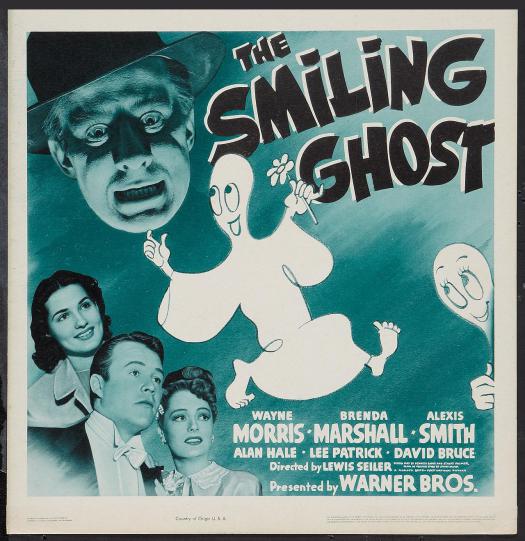
Halloween Havoc!: THE SMILING GHOST (Warner Brothers 1941)


gary loggins's avatarcracked rear viewer

A mysterious killer stalks his prey in an old, dark house! Sound familiar? Sure, the formula has been around since Lon Chaney Sr. first crept his way through 1925’s THE MONSTER, and was perfected in the 1927 horror comedy THE CAT AND THE CANARY. THE SMILING GHOST, a 1941 variation on the venerable theme, doesn’t add anything new to the genre, but it’s a pleasant enough diversion with a solid cast courtesy of the Warner Brothers Stock Company of contract players and a swift 71-minute running time.

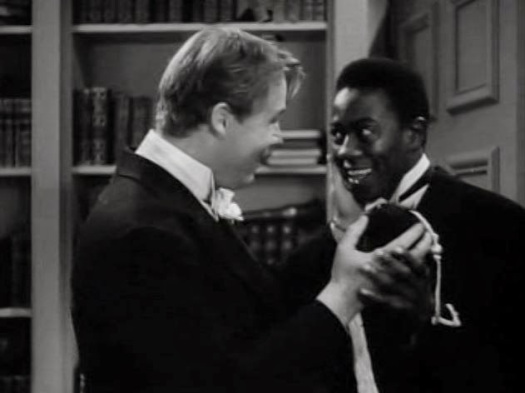
Lucky Downing, a somewhat dimwitted chemical engineer heavily in debt to his creditors, answers a newspaper ad for a male willing to do “anything legal’ for a thousand bucks. Rich Mrs. Bentley explains the job is to get engaged to her granddaughter, Elinor Bentley Fairchild, for a month. Smelling easy money, and a way out of the hole, Lucky and his best friend/valet Clarence take a train…

View original post 553 more words

Cleaning Out The DVR #25: The Maltese Falcon (dir by John Huston)


(For those following at home, Lisa is attempting to clean out her DVR by watching and reviewing 38 films by this Friday.  Will she make it?  Keep following the site to find out!)

220px-Falconm

I would love to see a remake of The Maltese Falcon with Bill Murray in the role of Sam Spade.  Well, maybe not the Bill Murray of today because he’s getting a little bit too old to play a hard-boiled private detective who is as good with his fists as his brain.  Instead, I’m thinking more of Lost In Translation era Bill Murray, when he was no longer young but could still probably beat up any sniveling punk who came at him with a gun.

Now, that may sound crazy to some but think about it.  Bill Murray is one of the great deadpan snarkers and so is Sam Spade.  Last night, when I watched the famous 1941 version of The Maltese Falcon (the story was filmed twice before, once with Bette Davis as the femme fatale), I was struck by how much of the film really was a comedy.  It may have been a murder mystery that featured death and betrayal and a lot of people getting beaten up but, ultimately, The Maltese Falcon is really about Sam Spade reacting to all of the crazy and strange people around him.  No matter how weird things get, Spade always responds with a smirk and a quip.  It’s a role that, at times, seems to be tailor-made for an actor like Bill Murray.

Bill Murray wasn’t around in 1941 but fortunately, Humphrey Bogart was.  Humphrey Bogart may have grown up wealthy and attended private schools but, on screen, nobody was tougher than Humphrey Bogart and nobody was better at delivering sarcastic, snark-filled dialogue.  After spending years as a villainous supporting actor, Humphrey Bogart got his first starring role when he played Sam Spade in The Maltese Falcon.  His performance, of course, would set the standard by which all future cinematic private eyes would be judged.

And, of course, Spade was tough and he was cynical and he has that wonderful moment at the end of the film where he explains that nobody’s going to make a “sap” out of him.  But for me, Bogart’s best moments come when Spade is alone and thinking.  It’s at those times that Spade suddenly becomes a human being.  A slight smirk comes to his lips, almost as if he’s sharing a private joke with the audience.  You can tell that he’s thinking to himself, “Can you believe how weird my life is?”

And it is indeed a weird life.  The film opens with Spade’s partner, Miles Archer (Jerome Cowan), being murdered.  The police believe that Archer was murdered by a man named Thursby and that Thursby was subsequently murdered by Spade.  Spade, however, suspects that both Archer and Thursby were killed by his latest client, a woman who introduced herself as Ruth Wonderly (Mary Astor).  Except, of course, that’s not her real name.  Her real name is Brigid O’Shaughnessy and, as she admits to Spade, Thursby was her partner.  She claims that Thursby must have murdered Archer but that she doesn’t know who could have possibly killed Thursby.

What’s particularly interesting about all this is that no one really seems to be that upset about Archer’s death.  Spade’s main motivation for investigating the murder is to clear his name and there are several lines of dialogue that reveal how little regard he had for Miles.  In fact, when Archer’s widow (Gladys George) suggests that Spade might be Archer’s killer, you can understand why she might think that.  But then again, that’s the world of The Maltese Falcon.  Only the tough survive.  Getting sentimental or allowing yourself to care is the biggest mistake you can make.

The murders are connected to the hunt for a valuable statue of a bird.  (This is the famous Maltese Falcon of the title.)  As Spade tries to clear his name in the two murders, he also finds himself getting caught up with a strange group of treasure hunters.  There’s the obsequious Joel Cairo (Peter Lorre).  There’s the ruthless “fat man,” Kasper Gutman (Sidney Greenstreet).  And then there’s Wilmer (Elisha Cook, Jr.), Gutman’s young henchman who spends the entire film trying to convince everyone that he’s tougher than he appears.  Wilmer is a born patsy.  Whenever Spade gets annoyed, he beats up Wilmer.  And he usually smiles afterward.

Along with being the directorial debut of John Huston, The Maltese Falcon was also one of the first great film noirs.  It’s one of the most influential films ever made and, even seen today, it’s a lot of fun.  You really can’t go wrong with Bogart, Astor, Greenstreet, Lorre, and Cook all in the same movie.  Bill Murray may never get a chance to play Sam Spade but that’s okay.  Humphrey Bogart’s the only Sam Spade we really need.

The Maltese Falcon was nominated for best picture.  However, it lost to How Green Was My Valley, a film that literally seems to take place in an entirely different universe from The Maltese Falcon.

Lisa Watches An Oscar Nominee: Auntie Mame (dir by Morton DaCosta)


Oh Lord, Auntie Mame.

There were two reasons why I watched the 1958 film Auntie Mame.

First off, as I’ve mentioned before, TCM has been doing their 31 Days of Oscar this month.  They’ve been showing a lot of films — both good and bad — that were nominated for best picture.  Since it’s long been my goal to see and review every single film that has ever nominated for best picture, I have made it a point to DVR and watch every best picture nominee that has shown up on TCM this month.  Auntie Mame was nominated for best picture of 1958 and was broadcast on TCM this month so I really had no choice but to watch it.

My other reason for wanting to see Auntie Mame was because, when I was 19, I was cast in a community theater production of Mame.  (Mame, of course, is the musical version of Auntie Mame.)  Though everyone who saw the auditions agreed that I should have played the role of Gloria Upson, I was cast in the ensemble.  (Gloria was played by the daughter of a friend of the director.  Typical community theater politics.)  As a member of the ensemble, I didn’t get any lines but I still had fun.  In the opening party scene, I dressed up like a flapper and I got to show off my legs.  And then in another scene, I was an artist’s model and I got show off my cleavage.  (If you don’t use being in the ensemble as an excuse to show off what you’ve got, you’re doing community theater wrong.)  Towards the end of the play, I appeared as one of Gloria’s friends and whenever she delivered her lines, I would make sure to have the most over-the-top reactions possible.  She may have stolen the part but I stole the scene.  It was a lot of fun.

But, even while I was having fun, I have to admit that I didn’t care much for Mame.  It was an extremely long and kind of annoying show and there’s only so many times you can listen to someone sing We Need A Little Christmas before you’re tempted to rip out the hair of the actress who stole the role of Gloria Upson from you.

So, when I recently sat down and watched Auntie Mame, I was genuinely curious to see if the story itself worked better without everyone breaking out into song.  After all, Auntie Mame was the number one box office hit of 1958, it was nominated for best picture, and it was apparently so beloved that it inspired a musical!  There had to be something good about it, right!?

Right.

Auntie Mame tells the story of Mame Dennis (Rosalind Russell, attempting to be manic and just coming across as hyper) who is rich and quirky and irrepressibly irresponsible.  When her brother dies, Mame suddenly finds herself entrusted with raising his son, Patrick (played, as a child, by the charmless Jan Hadzlik and, as an adult, by the stiff Roger Smith).  Mame is a wild nonconformist (which I suppose is easy to be when you’ve got as much money as she does) and she tries to teach Patrick to always think for himself.  However, once Patrick grows up and decides that he wants to marry snobby Gloria Upson, Mame decides maybe Patrick shouldn’t think for himself and goes out of her way to prevent the wedding.

Auntie Mame is an episodic film that follows Mame as she goes through a series of oppressively zany adventures.  When the Great Depression hits, she’s forced to work as an actress, a saleswoman, and a telephone operator and she’s not very good at any of them.  She does eventually meet and marry the wealthy Beauregard Jackson Pickett Burnside (Forrest Tucker).  As you can probably guess from the man’s name, he’s supposed to be from the south.  (And yet Tucker plays the role with a western accent…)  He loves Mame but then he ends up falling off a mountain.  So much for Beau.

(In the production of Mame that I appeared in, Beau was played by this 50 year-old guy who simply would not stop hitting on me and every other girl in the cast and who was always “accidentally” entering the dressing room while we were all changing.  Whenever Mame mentioned Beau’s death, all of us ensemble girls would cheer backstage.)

Anyway, as a film, Auntie Mame doesn’t hold up extremely well.  I can understand, to an extent, why it was so popular when it was first released.  It was an elaborate adaptation of a Broadway play and, in 1958, I’m sure that its theme of nonconformity probably seemed somewhat daring.  When you watch it today, though, the whole film seems almost oppressively heavy-handed and simplistic.  It’s easy to embrace Mame’s philosophy when everyone else in the film is essentially a sitcom creation.

As I mentioned previously, Auntie Mame was nominated for best picture.  However, it lost to the musical Gigi.