4 Or More Shots From 4 Or More Films is just what it says it is, 4 shots from 4 of our favorite films. As opposed to the reviews and recaps that we usually post, 4 Shots From 4 Films lets the visuals do the talking!
Today, we pay tribute to the year 1989! It’s time for….
4 Shots From 4 1989 Films
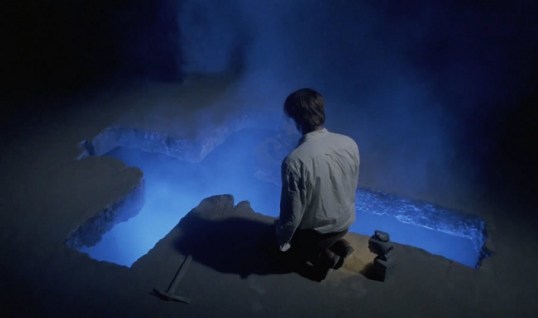
The Church (1989, dir by Michele Soavi, DP: Renato Tafuri)
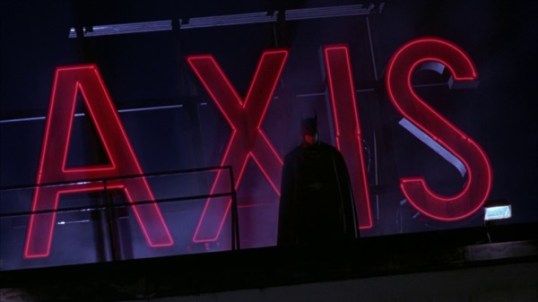
Batman (1989, dir by Tim Burton, DP: Roger Pratt)
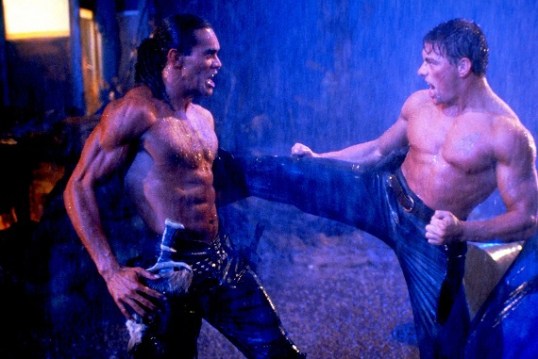
Cyborg (1989, dir by Albert Pyun, DP: Philip Alan Waters)
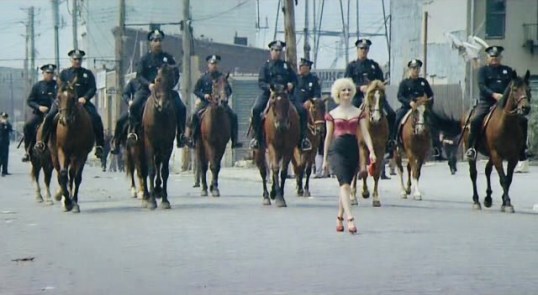
Last Exit to Brooklyn (1989, dir by Uli Edel, DP: Stefan Czapsky)
I have no idea what this day is supposed to celebrate but I hope everyone has a good one.
There doesn’t seem to be any agreed upon way to celebrate Labor Day. A few people have the day off and they’re the reason why I decided to hold off on going up to Lake Texoma until this upcoming, holiday-free weekend. Personally, I think the best way to celebrate any holiday is with a film festival so here are my suggestions for your Labor Day viewing:
Red Menace (1949) — In this wonderfully atmospheric film noir, a former GI named Bill Jones (Robert Rockwell) finds himself seduced by the Communist Party. After he witnesses the head of the party murder a man who questions the wisdom of Marx, Jones and his lover go on the run.
Big Jim McClain (1951) — John Wayne takes on the commies! And you better believe that no one is more determined to keep America and its workers safe from communist influence than the Duke! This film features some lovely Hawaiian scenery and enough over-the-top propaganda to make any American proud.
I Was A Communist For The FBI (1951) — Based (I imagine very loosely) on a true story, I Was A Communist For The FBI is about an agent who spent nine years undercover as a communist. As a result, he lost his friends and almost his family but he also serves his country. Featuring a scene where a strike turns violent, there’s nothing subtle about this film but, as with Big Jim McClain, that’s a large part of what makes the movie so watchable.
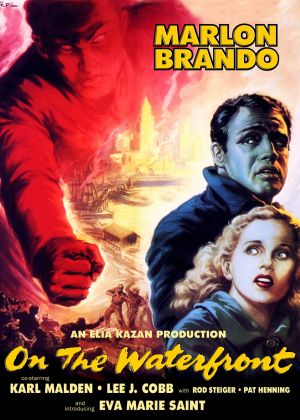
On The Waterfront (1954) — Marlon Brando won his first Oscar for this film about union corruption.
Dr. No (1962) — In his very first film outing, James Bond shows what a good job a true professional can do.
Blue Collar (1978) — In this gritty film from Paul Schrader, three auto-workers (played by Yaphet Kotto, Harvey Keitel, and Richard Pryor) discover that their union is even more corrupt than management. Consider this film to be an antidote to Norma Rae.
F.I.S.T. (1978) — After the success of Rocky, Sylvester Stallone played a thinly-disguised version of Jimmy Hoffa in this epic historical film. The film is poorly paced and doesn’t quite work but it’s interesting to see Stallone, post-Rocky, playing a character who isn’t necessarily all-that heroic.
Convoy (1979) — The film celebrate the independent trucker, the hard-working driver who doesn’t want to be tied down by either the unions or the law. Convoy is infamous for being an out-of-control production and yes, it is a bit self-indulgent. But who cares? When that convoy forms, you have to heartless not to cheer a little.
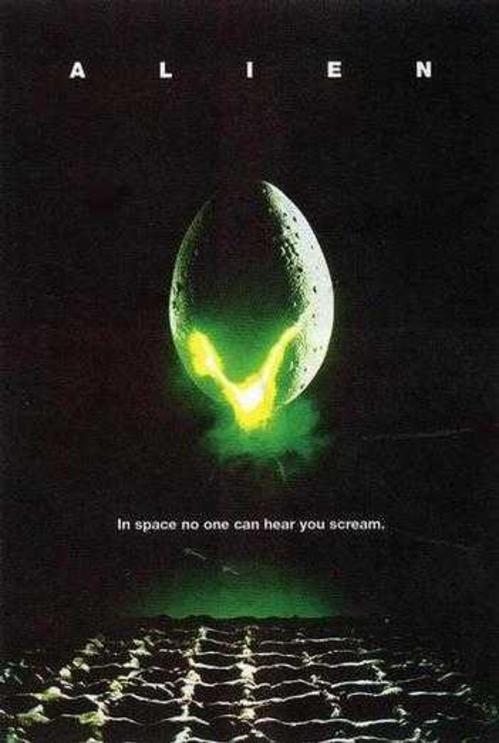
Alien (1979) — One of the best films about how much it sucks to have to work for a living, Alien follows a group of blue-collar workers whose lives are deliberately put in danger by a big, faceless corporation.
Last Exit to Brooklyn (1989) — A labor strike leaves a Brooklyn neighborhood reeling. This film is not for the faint-hearted.
Hoffa (1991) — Jack Nicholson stars as Jimmy Hoffa in this uneven but watchable film. This movie is unabashedly pro-Hoffa and therefore, it provides an interesting contrast to films like F.I.S.T. and Blue Collar.
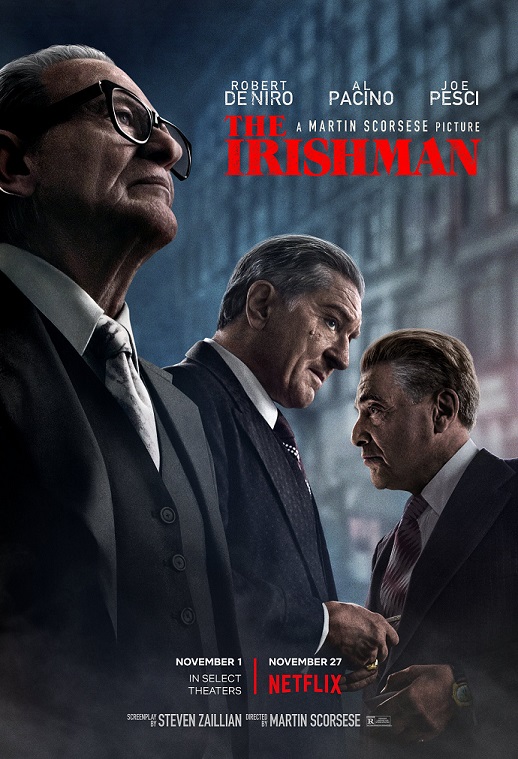
The Irishman (2019) — Despite all the criticism that it received when it was first released, TheIrishman is one of Martin Scorsese’s finest films. It takes a while to get used to the de-aging but Al Pacino’s performance as Jimmy Hoffa was brilliant. This film is one of the best looks at how the American labor movement lost its way.
The year is 1952 and one neighborhood in Brooklyn is on the verge of exploding.
A thug named Vinnie (Peter Dobson) holds court at a local bar. (His associates include the moronic Sal, who is played by a very young Stephen Baldwin.) Some nights, Vinnie and his associates mug people for money. Sometimes, they just attack people for fun.
A strike at the local factory has entered its sixth month, with management showing no sign of compromising and Boyce (Jerry Orbach), the head of the union, showing little concern for the men who are now struggling to feed their families. The local shop steward, Harry Black (Stephen Lang), is a self-important braggart who never stops talking about how he’s the one leading the strike. At home, Harry ignores his wife, with the exception of a violent quickie. On the streets, Harry embezzles money from the union and uses it to try to impress the men that he would rather be spending his time with. But even the men who Harry considers to be friends quickly turn on him when he is at his most pathetic.
Big Joe (Burt Young) is a proud union member who is shocked to discover that his teenage daughter (Ricki Lake) is 8-months pregnant. Despite being out-of-work and not caring much for Tommy (John Costelloe), Joe puts together the wedding that appears to be the social event of a shabby season. But even at the reception, violence lurks below the surface.
Georgette (Alexis Arquette) is a transgender prostitute who loves Vinnie, even after he and his idiot friends stab her in the leg while playing with a knife. Beaten at home by her homophobic brother (Christopher Murney), Georgette sinks into drug addiction.
Tralala (Jennifer Jason Leigh) is an amoral prostitute, one who specializes in picking up military men and then arranging from them to be mugged by Vinnie and his gang. Sick of being exploited by Vinnie, Tralala heads to Manhattan and meets Steve (Frank Military), an earnest soldier from Idaho. For the first time, Tralala is treated decently by a man but Steve is set to ship out to Korea in a few days and, as he continually points out, there’s a chance that he might not return. For all of the happiness she finds in Manhattan, Tralala is continually drawn back to her self-destructive life in Brooklyn.
First released in 1989 and directed by Uli Edel (who directed another film about desperation, Christiane F.), Last Exit To Brooklyn is based on a controversial novel by Hubert Selby, Jr. In fact, it was so controversial that the novel was banned in several countries and, for a while, was listed as being obscene by the U.S. Post Office. I read the novel in the college and it is indeed a dark and depressing piece of work, one that offers up very little hope for the future. It’s also brilliantly written, one that sucks you into its hopeless world and holds your interest no matter how bleak the stories may be. Due to its reputation, it took over 20 years for Last Exit to Brooklyn to be adapted into a film.
The film is actually a bit more positive than the book. One character who appears to die in the book manages to survive in the film. The wedding subplot was a minor moment in the book but, in the film, it’s made into a major event and provides some mild comedic relief. That said, the film is definitely dark. Almost every character is greedy and angry and those who aren’t are victimized by everyone else. Unfortunately, the film lacks the power of Selby’s pungent prose. As a writer, Selby held your attention even when you want to put the book away. When it comes to the film, the lack of Selby’s voice makes it very easy to stop caring about the characters or their stories. Even with the attempts to lighten up the story, the film is still so dark that it’s easy to stop caring. The non-stop bleakness starts to feel like a bit of an affectation.
And that’s a shame because there are some brilliant moments and some brilliant performances to be found in Last Exit To Brooklyn. An extended sequence where the police fight the striking workers is wonderfully directed, with the police becoming an invading army and the men on strike being transformed from just factory workers to rebels. The scene where Boyce informs Harry that he’s not as important as he thinks is wonderfully acted by both Jerry Orbach and Stephen Lang. As Tralala, Jennifer Jason Leigh gives a raw and powerful performance, whether she’s shyly accepting Steve’s kindness or drunkenly exposing herself to a bar full of lowlifes. In many ways, Tralala is the most tragic of all the characters to be found in Last Exit to Brooklyn. She’s tough. She’s angry. But, in the end, she’s ultimately the victim of men who are too stupid to understand anything other than aggression. The neighborhood applauds her when she confidently walks past a line of cops and strikebreakers but the same people who cheered for her later try to destroy her.
The film ends on an ambiguous note, with a peace that feels very temporary. The message seems to be that men are at their worst when they’re bored so perhaps it’s best to keep them busy, whether with a job or perhaps a wedding. It’s a flawed film but it sticks with you.
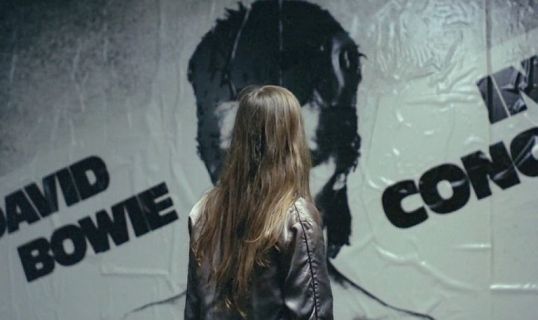
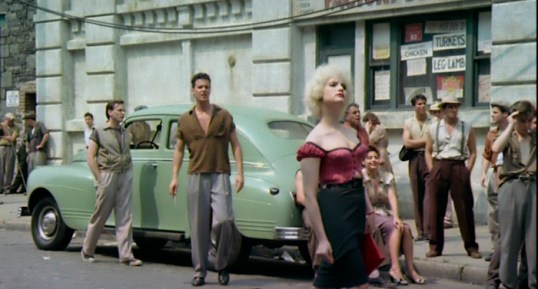
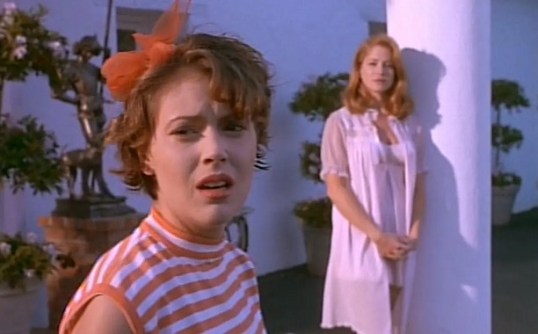
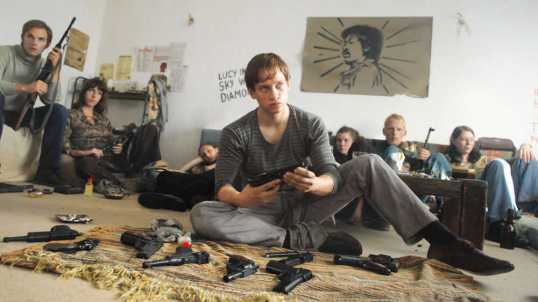
4 Or More Shots From 4 Or More Films is just what it says it is, 4 shots from 4 of our favorite films. As opposed to the reviews and recaps that we usually post, 4 Shots From 4 Films lets the visuals do the talking!
Today, the Shattered Lens wishes a happy 76th birthday to German director, Uli Edel! It’s time for….
4 Shots from 4 Uli Edel Films
Christiane F. (1981, dir b Uli Edel, DP: Justus Pankau and Jürgen Jürges)
Last Exit to Brooklyn (1989, dir by Uli Edel, DP: Stefan Czapsky)
Confessions of a Sorority Girl (1994, dir by Uli Edel, DP: Jean de Segonzac)
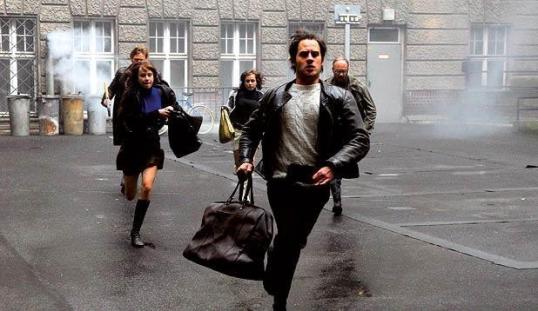
The Baader Meinhof Complex (2008, dir by Uli Edel, DP: Rainer Klausmann)
4 Or More Shots From 4 Or More Films is just what it says it is, 4 shots from 4 of our favorite films. As opposed to the reviews and recaps that we usually post, 4 Shots From 4 Films lets the visuals do the talking!
Today, the Shattered Lens wishes a happy 75th birthday to German director, Uli Edel! It’s time for….
4 Shots from 4 Uli Edel Films
Christiane F. (1981, dir b Uli Edel, DP: Justus Pankau and Jürgen Jürges)
Last Exit to Brooklyn (1989, dir by Uli Edel, DP: Stefan Czapsky)
Body of Evidence (1993, dir by Uli Edel, DP: Douglas Milsome)
The Baader Meinhof Complex (2008, dir by Uli Edel, DP: Rainer Klausmann)



 Through the Shattered Lens