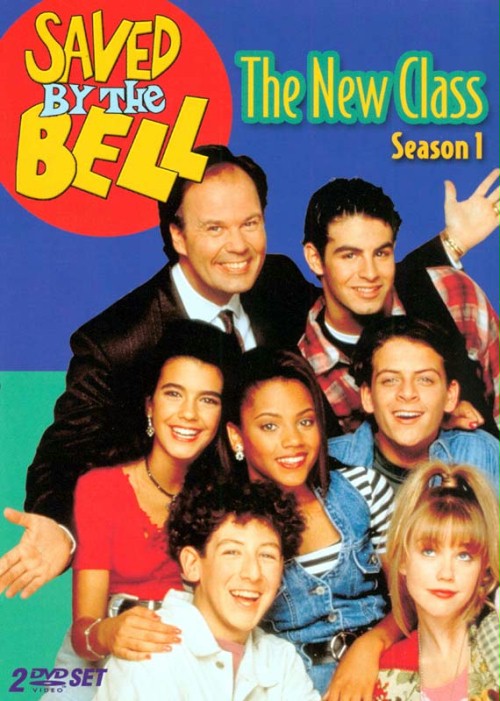
Welcome to Retro Television Reviews, a feature where we review some of our favorite and least favorite shows of the past! On Tuesdays, I will be reviewing Saved By The Bell: The New Class, which ran on NBC from 1993 to 2o00. The show is currently on Prime.
This week, Scott and Tommy D attempt to exploit Weasel’s happiness for their own monetary gain. Ah, that’s classic Bayside!
Episode 1.3 “A Kicking Weasel”
(Dir by Don Barnhart, originally aired on September 25th, 1993)
It’s been ten years since Bayside had a good football team!
That’s what Scott tell us at the start of this episode. Scott explains that the Bayside student body has no enthusiasm for football. No one cares because the team always loses and, as such, even Mr. Belding is more concerned with the school’s ping pong team.
To which I say, “What?”
Seriously, every Saved By The Bell fan knows that A.C. Slater led the Bayside Tigers to victory after victory. With the help of Ox and all the other players, Slater made Bayside into a football powerhouse.
This can only mean one of two things. Saved By The Bell: The New Class is either taking place ten years after Saved By The Bell (possible but I doubt it due to the fact that Screech is coming back next season) or that the writers just didn’t care about continuity. I’ll go with the latter.
Things are looking up for the football team, though. It turns out that Weasel can actually kick the ball! He goes from being the waterboy to the cornerstone of the team’s offense. But Weasel can only kick well when he’s angry. When he’s not angry, he’s too mellow. When he become a football star, he’s happy. He mellows out.
That’s bad news for Scott and Tommy D, who are looking to make a fortune by selling Weasel t-shirts! Tommy D agreed to embezzle the seed money from the print shop fund. (Hey, that’s a crime!) In return, Scott fixed the varsity cheerleader tryouts so that Lindsay beat out both Megan and Vicki. When Linsday finds out that the tryouts were fixed, she refuses to cheer. That makes Weasel mad and he ends up winning the game with 11 field goals. Lindsay, meanwhile. gets her revenge by telling Belding that Scott and Tommy D will be donating all of the t-shirt profits to the ping pong team.
This episode …. actually, I’m going to surprise myself by saying that it wasn’t that bad. Yes, the plot was way too busy for its own good and Scott’s constant scheming feels like what it was, a bad imitation of Zack Morris. But, in the role of Weasel, Isaac Lidsky actually gave a pretty good sympathetic performance. (Weasel was never as annoying as Screech, largely due to Lidsky.) Jonathan Angel delivered his dialogue with the right amount of dumb earnestness and it was nice to see the Bayside nerds end up winning for once. All in all, this one really wasn’t bad.
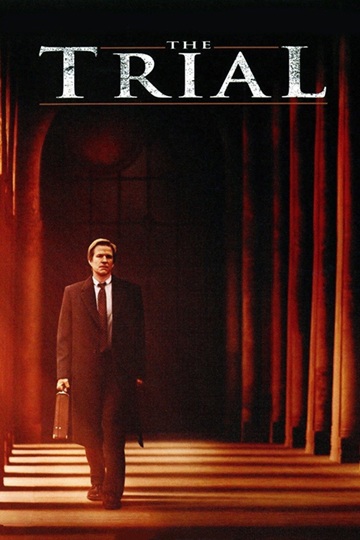
Mac is a Southern lawyer, even though it’s been a while since he practiced. After his wife and children were killed in a car accident, Mac decided to retire from practicing law but he never surrendered his license. A judge (Rance Howard) reaches out to him, asking him to serve as a public defender for Pete Thomason (Randy Wayne), a young man who has been accused of murdering his girlfriend. The evidence is stacked against Pete and there are plenty of wealthy people who, for various reasons, want Pete to quickly be convicted. Mac takes the case because he can tell that Pete is being railroaded. When he discovers that Pete will possibly be facing the death penalty if he’s convicted, the case becomes very personal for Mac.
The prosecuting attorney (Bob Gunton) has managed to find a doctor (Brett Rice) who is willing to testify that Pete is a sociopath. (The doctor has a reputation for finding just about anyone on trial to be a sociopath.) Mac finds a doctor of his own, Dr. Anne Wilkes (Clare Carey), his testifies that Pete is nowhere near being a sociopath. The problem is that Pete has no memory of what happened the night of the murder. Mac may believe that Pete is innocent but can he convince the jury when the evidence all seems to suggest otherwise?
Like The List, The Trial was based on a novel by Robert Whitlow and it was directed by Gary Wheeler. I was pretty hard on The List in last night’s review but I actually rather enjoyed The Trial, which was a solid and well-made legal thriller. (The film’s status as a faith-based film largely comes from a scene in which Mac quotes the Book of Provers in regards to how, during a trial, it’s easy to believe the first person who speaks but it’s equally important to listen to how the accused replies.) I enjoyed the twists and turns of the plot and the film’s ending worked well. Though the film had a a made-for-television feel to it (despite having been a theatrical release), it still held and rewarded my interest.
It helped that the cast was well-selected and everyone gave good performances. Matthew Modine, in particular, gave a strong performance as Mac, playing him not as being a saint but instead as being someone who was just determined to give his client the defense he deserved and to ultimately do the right thing. Robert Forster played Mac’s brother-in-law and lead investigator and he brought his own brand of world-weary determination to the part. Nobody plays a smug prosecutor as well as Bob Gunton, though it should be noted that the character himself never became a caricature. Rance Howard was the ideal judge, tough but fair. Randy Wayne was sympathetic as the confused Pete. The cast really brought the film’s world to life.
I always enjoy a good legal thriller and The Trial was certainly that.
Horizon: An American Saga: Chapter One is the rather unwieldy title of the first part of what Kevin Costner has said will be an epic four-part movie about the settling of the American frontier.
It’s very, very long.
It has a running time of three hours, during which time a lot of characters are introduced and a lot of plotlines are initiated but, because this is the only first chapter, none of them come to a close. In fact, as the film ends, it’s still a mystery as to how some of the characters are even related. I watched all three hours and I took my ADD meds this morning so you can be assured that I was actually paying attention. That said, I still struggled to keep track of who everyone was or even where they were in proximity to each other. Indeed, it was only towards the end of the film that I realized that several years were supposed to have passed over the course of the first chapter’s running time.
That’s not to say that the film is a disaster. While it’s not quite the nation-defining epic that Costner obviously envisioned it as being, it’s also not quite the cinematic atrocity that several critics made it out to be. It’s a throwback of sorts, to the epic westerns of old. As such, the film features taciturn gunslingers, a woman with a past, dangerous outlaw families, fierce Indian warriors, and a wise Indian chief who has dreamed of the coming of the white man. The film is full of actors — like Michael Rooker, Sienna Miller, Sam Worthington, Danny Huston, Will Patton, James Russo, Dale Dickey, and Kevin Costner himself — who feel as if they belong to a different era of filmmaking. Just about everyone in the film is heading to the settlement of Horizon, which sits in Apache territory. Despite the efforts of the Indians to kill every settler who shows up, they keep coming. As one army officer explains it, the Indians have made the mistake of thinking that the settlers will come to believe the land is cursed while the settlers, all of whom are full of American optimism, instead chose to believe that the previous settlers were unlucky but that the next wave of settlers will make it work. Costner has the right visual sensibility for a western. The film reveals a director who is obviously in love with the Western landscape and the film is at its best when it simply frames the characters against the beauty of the frontier. But when it comes to actually telling a compelling story, he struggles. There are a lot of moving parts to the first chapter of Horizon and the problem is not that they don’t automatically connect but instead that Costner never gives us any reason to believe that they’ll ever connect. There are no visual clues or bits of dialogue to assure the viewer that everything they’re watching is going to eventually pay off. Costner asks his audience to have faith in him and remember that he directed Open Range and Dances With Wolves while forgetting about The Postman.
The first hour, which features a brutal raid on the settlement by a group of Indians, is the strongest. It really drives home the brutality of what we now call the old west. In the style of Michael Cimino’s The Deer Hunter, Costner closely observes the individual customs of the film’s settlers and carefully introduces several appealing characters who leave the viewer feeling as if they’ve met a very special and very unique community of people. That makes it all the more devastating when the majority of those characters are subsequently wiped out with casual cruelty in a raid led by the Indian warrior Pionsenay (Owen Crow Shoe). (Later — much later — a tracker played by Jeff Fahey will show similar brutality while wiping out a group of Apaches.) The first hour establishes the frontier as being beautiful but also dangerous and it also drives home the mix of determination, desperation, and even madness that led so many to follow Horace Greeley’s advice and “Go west!” Though the film was shot in early 2023, the brutality of the raid brought to mind the terrible images of the October 7th attacks on Israel. The subsequent scenes in which Pionesenay and his followers ridiculed those in the tribe who wanted peace mirrored the current schism that’s driving apart the worldwide Left. The U.S. Army, for their part, arrives a day late and can only offer up not-so subtle condescension. The surviving settlers, however, remain determined to make a home for themselves.
The second hour focuses on Hayes (played by Costner), who rides into a mining town and gets involved with a family of outlaws who are looking for the woman who shot their father. The second hour is a bit more of a traditional western than the first hour, though some of the violence is still shockingly brutal. (Even being comedic relief won’t save you in this film.) Abbey Lee gives a good performance as the woman with a past and a baby and Kevin Costner is …. well, he’s Costner. He could play this type of role in his sleep.
The third hour is a mess, introducing a wagon train and featuring a miscast Luke Wilson as the leader of the settlers and Jeff Fahey giving a strong performance as a ruthless tracker. The third hour meandered as a whole new set of characters were introduced and I was left to wonder why the film needed new characters when the characters from the first two hours were perfectly adequate. It was during the third hour that I started to really get impatient with the film and its leisurely approach to storytelling.
The film ends with a montage of what we can expect from the next few chapters of Horizon and I will say that the montage actually looked pretty cool. That’s because the montage was almost totally made up of action scenes, with none of the padding that caused Chapter One to last an unwieldy three hours despite only having 90 minutes worth of story. Still, one has to wonder if we’ll actually get to see the next three chapters. The first chapter bombed at the box office and didn’t exactly excite critics. Costner is producing and financing the films himself and I doubt he’ll give up on them. The Horizon saga will be completed but will it made it to theaters or will it just end up on streaming? Personally, I think the whole thing would work best as a miniseries but who knows? (If Horizon was airing on Paramount, it would probably be a Yellowstone-style hit.) All I really do know is that Chapter Two has yet to be released. And that’s a shame because, for all of Chapter One‘s flaws, I’d still like to see how the story turns out.
 Through the Shattered Lens