A lot of what you need to know about Demons, an Italian horror film from 1985, can be summed up by the fact that one of the leading characters is named Tony the Pimp. Demons is a very self-aware film, one that is not only over-the-top and ludicrous but which is cheerfully aware that it’s over-the-top and ludicrous. Considering that Demons is an apocalyptic film that ends with nearly the entire cast dead, Demons is a surprisingly good-natured horror film.
The film opens in Berlin. There’s a mysterious man hanging out at a subway station. He’s wearing a silver half-mask and, from what we can see of his face, he appears to be heavily scarred. Interestingly enough, the man is played by Michele Soavi. (Though Soavi is now best remembered as the director of Dellamorte Dellamore, he was an actor and assistant to Dario Argento when Demons was produced.) The man doesn’t speak. Instead, he hands out flyers to random people, inviting them to attend the premiere of a new horror film.
The man obviously does a very good because a truly diverse group of characters show up for the premiere. There’s a wealthy blind man who comes with his assistant. (The assistant is played by Dario Argento’s oldest daughter, Fiore.) There’s an older couple who keep shushing everyone in the audience. There’s Cheryl (Natasha Hovey), who ends up sitting next to the handsome George (Urbano Barberini, who would later co-star in Dario Argento’s Opera). And, of course, there’s Tony the Pimp (Bobby Rhoades) who shows up wearing a white suit and with two prostitutes.
The film-within-the-film is a horror film that plays out like an homage to every Italian horror film released in the 1980s. It deals with four teenagers who stumble across the grave of Nostradamus and end up transforming into blood-thirsty demons. One of the teenagers is played by Michele Soavi, though it’s never clear whether the teenager and the man in the mask are supposed to be the same person.
As they watch the movie, something strange starts to happen in the audience. One of the prostitutes scratched her face when she put on a prop mask. When the same mask appears in the movie, the cut on her face starts to throb. Soon, she is transformed into a … DEMON!
JUST LIKE IN THE MOVIE!
Needless to say, the arrival of a real-life demon leads to a panic in the theater but guess what? The doors are locked! There’s no way out! When Tony the Pimp breaks into the projection booth, he discovers that there’s no projectionist and the movie cannot be stopped! On top of that, getting scratched by a demon means that you transform into a demon yourself!
In other words — remember the debate about whether or not horror movies can turn their viewers into murderous monsters? Well, Demons says that they definitely can…
Demons was directed by Lamberto Bava, son of the famous Mario Bava, and it remains one of the most popular Italian horror films of all time. With a script that was co-written by Dario Argento (who also produced), Demons is a fun and exciting horror film that cheerfully dares you to take it too seriously. Watching this energetic film, you can tell that Bava was having a lot of fun with the idea that the world could end as a result of watching just one horror movie.
Demons was a huge box office hit so, naturally, there were hundreds of unofficial sequels. Though Michele Soavi’s The Churchwas a Demons film in every way but name, the only official sequel was Demons 2. We’ll look at that film tomorrow.
I’ve been using this October’s horrorthon as an excuse to rewatch and review the films of Dario Argento! Today we take a look at one of Argento’s best and most underrated films, 1980’s Inferno!
“There are mysterious parts in that book, but the only true mystery is that our very lives are governed by dead people.”
— Kazanian (Sacha Pitoeff) in Inferno
When 20th Century Fox released Dario Argento’s Suspiria in 1977, they weren’t expecting this Italian horror film to be a huge box office success. That it was caught them totally off guard. Though the studio executives may not have understood Italian horror, they did know that Suspiria made them a lot of money and they definitely wanted to make more of it.
As for Dario Argento, he followed up Suspiria by producing George Romero’s Dawnof the Dead. He also supervised the film’s European cut. (In Europe, Dawn of the Dead was known as Zombi, which explains why Lucio Fulci’s fake sequel was called Zombi2.) When Dawn of the Dead, like Suspiria before it, proved to be an unexpected box office hit, it probably seemed as if the Argento name was guaranteed money in the bank.
Hence, when Argento started production on a semi-sequel to Suspiria, 20th Century Fox agreed to co-finance. Though the majority of the film was shot on a sound stage in Rome, Argento was able to come to New York to do some location work, hence making this Argento’s first “American” film. The name of the movie was Inferno.
Sadly, Inferno proved to be a troubled production. Shortly after production began, Argento became seriously ill with hepatitis and reportedly, he had to direct some scenes while lying on his back while other sequences were done by the second unit.
As well, Argento had a strained relationship with 20th Century Fox. Argento wanted James Woods to star in Inferno but, when it turned out that Woods was tied up with David Cronenberg’s Videodrome, the studio insisted that Argento cast an actor named Leigh McCloskey instead. As a performer, James Woods is nervy, unpredictable, and compulsively watchable. Leigh McCloskey was none of those things.
Worst of all, as a result of a sudden management change at 20th Century Fox, Inferno was abandoned by its own distributor. The new studio executives didn’t know what to make of Inferno and, in America, the film only received an extremely limited release. The few reviews that the film received were largely negative. (Like most works of horror, Argento’s films are rarely critically appreciated when first released.) It’s only been over the past decade that Inferno has started to receive the exposure and acclaim that it deserves.
Argento has said that he dislikes Inferno, largely because watching it remind him of a very difficult time in his life. That’s unfortunate, because Inferno is one of his best films.
The Mother of Tears (Ania Pieroni) in Inferno
“Have you ever heard of the Three Sisters?”
“You mean those black singers?”
— Sara (Eleonora Giorgi) and Carlo (Gabriele Lavia) discuss mythology in Inferno
As I stated previously, Inferno is a semi-sequel to Suspiria. Whereas Suspiria dealt with an ancient witch known as the Mother of Sighs, Inferno deals with her younger sister, the Mother of Darkness. The Mother of Sighs lives underneath a German dance academy. The Mother of Darkness lives underneath a New York apartment building. The Mother of Sighs was a witch. The Mother of Darkness is an alchemist.
Beyond that and the fact that Alida Valli is in both films (though apparently playing different characters), there aren’t many references to Suspiria in Inferno. The tone of Inferno is very different from the tone of Suspiria. If Suspiria was perhaps Argento’s most straight-forward films, Inferno is one of his most twisted. It makes sense, of course. Suspiria is about magic but Inferno is about science. Suspiria casts a very Earthy spell while Inferno often feels like a scientific equation that cannot quite be solved.
The film deals with Mark Elliott (Leigh McCloskey), an American music student in Rome. After he gets a disturbing letter from his sister, Rose (Irene Miracle), a poet who lives alone in New York City, Mark heads back to the U.S. to check in on her. (That’s right — Mark and Rose are two more of Argento’s artistic protagonists.) However, when Mark arrives, he discovers that his sister is missing and it’s obvious that strange inhabitants of the building are trying to cover something up.
“May I ask a strange question?”
“How strange?”
— Sara (Eleonora Giorgi) and Mark Elliot (Leigh McCloskey) in Inferno
Even more than with some of Argento’s other films, the plot of Inferno isn’t particularly important. One reason why it’s easy to get annoyed with Mark is because he spends the entire film demanding to know where his sister is, despite the fact that those of us in the audience already know that she’s dead. Argento showed us her being murdered shortly before Mark’s arrival. Argento makes sure that we know but he never bothers to reveal the truth to Mark and one of the more curious aspects of the film is that Mark never discovers that his sister is dead. (By the end of the film, one assumes that he’s finally figured it out but even then, we don’t know for sure.) The fact of the matter is that Mark and his search for his sister are never really that important. Argento doesn’t particularly seem to care about Mark and he never really gives the viewer any reason to care either. (Of course, it doesn’t help that Mark is rather stiffly played by Leigh McCloskey.)
Instead, Argento approaches Inferno as a collection of increasingly surreal set pieces. Much as in Lucio Fuci’s Beyond trilogy, narrative logic is less important than creating a dream-like atmosphere. Often time, it’s left to the viewer to decide how everything fits together.
There are so many odd scenes that it’s hard to pick a favorite or to know where to even begin. Daria Nicolodi shows up as Elise Stallone Van Adler, a neurotic, pill-popping aristocrat who briefly helps Mark look for his sister. Eventually, she’s attacked by thousands of cats before being stabbed to death by one of Argento’s trademark black-gloved killers. After Elise’s death, her greedy butler makes plans to steal her money. Did the butler kill Elise? We’re never quite sure. Does the butler work for The Mother of Darkness or is he just being influenced by her evil aura? Again, we’re never sure. (By that same token, when the butler eventually turns up with eyes literally hanging out of their sockets, we’re never quite sure how he ended up in that condition. And yet, somehow, it makes a strange sort of sense that he would.)
Cats also feature into perhaps the film’s most famous scene. When the crippled and bitter book seller Kazanian (Sacha Pitoeff) attempts to drown a bag of feral cars in a Central Park pond, he is suddenly attacked by a pack of a carnivorous rats. A hot dog vendor hears Kazanian’s cries for help and rushes over. At first, the vendor appears to be a good Samaritan but suddenly, he’s holding a knife and stabbing Kazanian to death. Why did the rats attack in the first place? Is the hot dog vendor (who only appears in that one scene) a servant of the Mother of Darkness or is he just some random crazy person? And, in the end, does it matter? At times, Inferno seems to suggest that the real world is so insane that the Mother of Darkness is almost unnecessary.
Meanwhile, in Rome, Mark sits in class and reads a letter from his sister. When he looks up, he immediately sees that a beautiful young woman is looking straight at him. She’s petting a cat and staring at him with a piercing stare. (She is played Ania Pieroni, who later achieved a certain cult immortality by appearing as the enigmatic housekeeper in Lucio Fulci’s The House By The Cemetery.) The film later suggests that the woman is the third mother, the Mother of Tears, but why would she be in the classroom? Why would she be staring at Mark?
When Mark’s girlfriend, Sara (Eleonora Giorgi), does some research in a library, she finds a copy of a book about The Three Mothers and is promptly attacked by a mysterious figure. When she flees back to her apartment, she meets Carlo (Gabriele Lavia, who was also in Deep Red) who agrees to stay with her until Mark arrives. Is Carlo sincere or is he evil? Argento does eventually answer that question but he certainly keeps you guessing until he does.
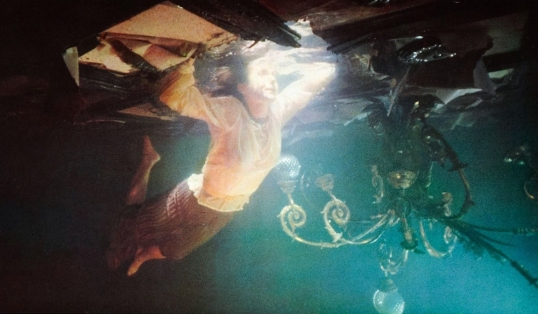
Finally, I have to mention the best and most haunting scene in the film. When Rose searches a cellar for a clue that she believes will lead her to the Mother of Darkness, she discovers a hole that leads to a flooded ballroom. When Rose drops her keys into the hole, she plunges into water and swims through the room. (The first time I saw this scene, I immediately said, “Don’t do that! You’re going to ruin your clothes!”) As Rose discovers, not only keys get lost in that flooded ballroom. There’s a dead body as well, one which floats into the scene from out of nowhere and then seems to be intent on following Rose through the entire room. It’s a sequence that is both beautiful and nightmarish. (It certainly does nothing to help me with my fear of drowning.)
In the end, Inferno is a dream of dark and disturbing things. Does the plot always make sense? Not necessarily. But that plot’s not important. The film’s surreal imagery and atmosphere of doom and paranoia casts a hypnotic spell over the viewer. Inferno is perhaps as close to a filmed nightmare as you’ll ever see.
“She writes poetry.”
“A pastime especially suited for women.”
— Mark and the Nurse (Veronica Lazar) in Inferno
Finally, no review of Inferno would be complete without discussing some of the people who worked behind-the-scenes.
Along with acting in the film, Daria Nicolodi also worked on the script. As is so often the case with Daria and Dario’s collaborations, there are conflicting reports of just how involved Nicolodi was with the final script. Daria has said that she would have demanded co-writing credit, if not for the fact that it had previously been such an ordeal to get credited for Suspiria. Others have claimed that, while Nicolodi offered up some ideas, the final script was almost all Argento’s creation.
(Comparing the films that Argento made with Nicolodi to the ones that he made without her leads me to side with Nicolodi.)
Working on the film as a production assistant was William Lustig, the famed exploitation film producer and director who would later become the CEO of Blue Underground. Reportedly, during filming, Lustig attempted to convince Nicolodi to star in a film that he was going to direct. Nicolodi’s co-star would have been legendary character actor Joe Spinell. Disgusted by the film’s script, Nicolodi refused the role and, as a result, Caroline Munro ended up playing the stalked fashion photographer in Lustig’s controversial Maniac.
Future director Michele Soavi worked on several of Argento’s films. I’ve always been under the impression that Soavi was a production assistant on Inferno but, when I rewatched the film, he wasn’t listed in the credits. Inferno is also not among his credits on the imdb. I guess the idea that one of my favorite Italian horror directors worked on one of my favorite Italian horror films was just wishful thinking on my part.
However, you know who is listed in the credits? Lamberto Bava! Bava, who would later direct the Argento-produced Demons, worked as an assistant director on Inferno. That leads us to perhaps the most famous member of Inferno’s crew…
Mario Bava!
Inferno was the final film for the father of Italian horror. As so often happens, there are conflicting reports of just how involved Bava was with the production. It is know that he worked on the special effects and that he directed some second unit work while Argento was bed ridden with hepatitis. Irene Miracle has said that almost all of her scenes were directed by Mario Bava and that she rarely saw Argento on set.
Mario Bava is often erroneously described as being Dario Argento’s mentor. That’s certainly what I tended to assume until I read Tim Lucas’s All The Colors of the Dark, the definitive biography on Mario Bava. Bava was certainly an influence and it’s certainly true that Argento appears to have had a better relationship with him than he did with Lucio Fulci. But the idea that a lot of Italian horror fans have — that Mario Bava was hanging out around the set of The Bird With The Crystal Plumage and offering Argento fatherly advice — does not appear to be at all true. (It’s a nice image, though.) With all that in mind, it’s still feels somewhat appropriate that Bava’s final work was done on one of the best (if most underappreciated) Italian horror films of all time.
“I do not know what price I shall have to pay for breaking what we alchemists call Silentium, the life experiences of our colleagues should warn us not to upset laymen by imposing our knowledge upon them.”
— The Three Mothers by E. Varelli, as quoted in Dario Argento’s Inferno
4 Shots From 4 Films is just what it says it is, 4 shots from 4 of our favorite films. As opposed to the reviews and recaps that we usually post, 4 Shots From 4 Films is all about letting the visuals do the talking.
Happy birthday, Lamberto Bava!
4 Shots From 4 Films
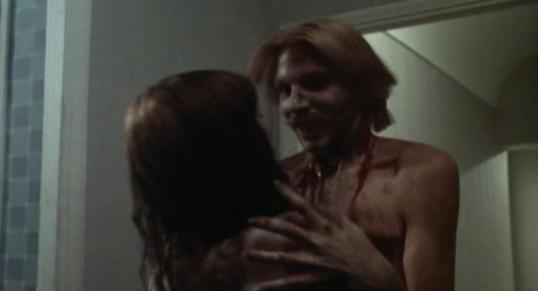
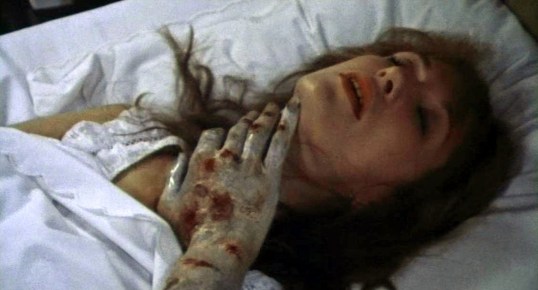
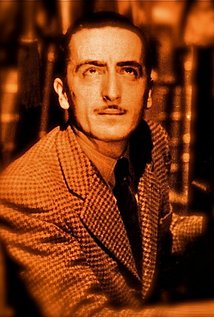
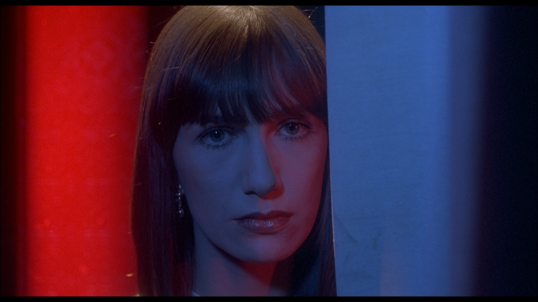
Macabre (1980, dir by Lamberto Bava)
Demons (1985, dir by Lamberto Bava)
Demons 2 (1986, dir by Lamberto Bava)
Dinner With A Vampire (1987, dir by Lamberto Bava)
“I warn you, the hate of a woman can be very bad!”
— Dialogue from Delirium (1987
The 1987 Italian film Delirium is an odd combination of soapy melodrama and giallo horror. Someone is murdering models and taking pictures of their corpses. Some other people are plotting to take over a magazine. Obscene phone calls are received. Recorded taunts are heard. Oh, and one unlucky model is attacked by a swarm of bees.
That’s right — Delirium is the first and probably the only giallo to feature bees used as a deadly weapon.
Gioia (Serena Grande) is a former prostitute-turned-model-turned-men’s-magazine-publisher. When we first meet Gioia, she’s sitting out at her pool and watching a photo shoot. Her neighbor — a teenage boy who is confined to a wheel chair — calls her.
“You make my member hard with desire!” he tells her, “It wants to penetrate your flower and explode!”
Gioia calmly tells him to stop bothering her and then hangs up on him. And really, this scene pretty much establishes everything that we need to know about Gioia. She is a successful businesswoman who is just as comfortable dealing with the pervert next door as she is making high power deals. You think Donald Trump’s ruthless? Well, he’s got nothing on Gioia!
The other thing that you notice about Gioia is that she has an extremely voluptuous figure. There’s not a single scene that isn’t shot to emphasize that fact and yet, the unapologetic pride that Gioia (and actress Serena Grande) took in her body was actually very empowering and one of the better aspects of the film. Far too often, movies associate being busty with either being stupid or slutty and women are told that they have to hide their figure to be taken seriously. (Traditionally, in horror films, it seems like the bigger an actress’s cup size, the less likely she is to survive until the end of the film.) Speaking as someone who shares Gioia’s struggle, I was happy to see a woman with big boobs being portrayed as both an intelligent businesswoman and a tough, strong survivor.
Gioia has more than just the pervert next door to deal with. There’s also the fact that her models are being murdered and she’s receiving photos of their dead bodies in the mail. Who is killing Gioia’s employees? Could it be a rival publisher (played by Capucine)? Could it be Gioia’s neurotic assistant (played by Daria Nicolodi)? Could it be George Eastman, who plays Gioia’s former lover? Actually, it’s made pretty clear that it’s not George Eastman, which is odd when you consider how many movies have featured Eastman as a killer. (Eastman and Grandi also co-starred in the infamous cannibal epic Anthropophagus, in which Eastman was the killer and Grandi was the center of one of the most infamous scenes in the history of Italian horror.) Or could the killer by the pervert next door?
As is typical of films in the giallo genre, most of the murders are filmed from the killer’s point of view. What’s interesting is that, when the killer looks at his victims, he literally sees them as twisted monsters. It’s a neat little technique that leads to scenes like this:
Delirium was directed by Lamberto Bava, who has never quite gotten the attention that he deserves. Despite the fact that he directed such classics as the two Demons films and A Blade In the Dark,I’ve always felt that Lamberto is often overshadowed by the achievements of his father, Mario Bava. However, Lamberto Bava’s films are almost always entertaining when taken on their own terms. Delirium may not reach the heights of A Blade In The Dark or even Demons but it’s still an entertaining giallo. It’s perhaps not the film to use to introduce a newcomer to the genre but, those of us who are familiar with giallo, Delirium is an enjoyably crazed offering.
Though it seems that he’ll never get the credit that he truly deserves, Italian director Mario Bava was truly one of the most influential and important filmmakers of all time. While he spent most of his long career making genre films, Bava was also an artist who put his own unique stamp on the horror film and whose influence continues to be felt in film today. With Blood and Black Lace, Bava helped to launch the entire giallo genre and every slasher film that has ever been made owes a debt to Bava’s Bay of Blood. While Bava’s final work as a director, 1977′s Shock, may not be as well-known as some of his other films, it’s one of his best works and it’s certainly worthy to be listed with the rest of Bava’s oeuvre.
Shockis a haunted house film. Dora (played by the great Daria Nicolodi) is a mentally fragile woman who is still in the process of recovering emotionally from the suicide of her first husband. When Dora marries Bruno, an apparently well-meaning airline pilot (but he’s played by John Steiner and anyone who loves Italian exploitation knows that it’s always dangerous when Steiner shows up as a sympathetic character), it briefly appears that Dora’s life might be getting back on the right track.
Except, of course, for the fact that, whenever Bruno leaves the house, Dora gets the feeling that she’s not alone. Things fall off of shelves. A razor blade suddenly shows up hidden between the keys of a piano. Worst of all, her young son Marco (David Collin, Jr.) starts to act differently. When he’s not sneaking into the master bedroom and using a kitchen knife to chop up Dora’s underwear, Marco is doing things like aggressively wrestling with his mother and cutting Bruno out of all the family pictures.
Dora quickly becomes convinced that the spirit of her first husband is both haunting the house and possessing young Marco. Bruno, meanwhile, worries that Dora may be having another nervous breakdown. As for Marco, he’s busy spying on Bruno and Dora while they’re sleeping and calling them dirty names under his breath…
The plot of Shock will probably not shock anyone who has seen a haunted house film but one doesn’t really watch a Bava film for its plot. With a Bava film, the story is never quite as important as the way that Bava tells it. Working in the years before CGI, Bava was a master at creating special effects that were cheap, simple, and ultimately very effective and that’s what Bava does here. In perhaps the film’s most effective (and famous) moment, Marco seems to transform into Carlo right before our eyes. It’s pretty easy to figure out how Bava achieved the effect but that doesn’t make it any less of a frightening moment.
However, the main reason that this film works is because of Daria Nicolodi. Bava was never known for being a great director of actors but, for this film, he managed to capture one of the best performances in the history of horror cinema. In the role of Dora, Nicolodi is like an exposed nerve. It’s impossible not to sympathize with her, even if you’re never quite sure just how sane or insane that she may actually be. Watching Nicolodi’s performance in this film, it’s hard not to regret that, in the years to come, her talent would be so overshadowed by both her former boyfriend Dario Argento and their daughter, Asia.
By all accounts, Mario Bava was in failing health during the making of Shock (and perhaps that’s why he showed so much empathy for the similarly frail Dora) and he was aided, in the making of the film, by his son Lamberto Bava (who would later become a well-known horror director himself). Sadly, Mario Bava died three years after completing Shock and the film has never quite gotten the amount of attention that it deserves. Shock is a worthy end to a brilliant career.
Daria Nicolodi in Tenebrae (1982, dir by Dario Argento)
4 Shots From 4 Films is just what it says it is, 4 shots from 4 of our favorite films. As opposed to the reviews and recaps that we usually post, 4 Shots From 4 Films is all about letting the visuals do the talking.
I have to admit that I’m breaking the rules here. When Arleigh first suggested 4 Shots From 4 Films as a feature here on Through the Shattered Lens, I promised myself that I would pace myself and, at most, only contribute once on a weekly basis.
But then, after Arleigh posted the first entry in 4 Shots From 4 Films, I realized that it was Lucio Fulci’s birthday and, being the lover of Italian horror that I am, there was no way that I could pass up the chance to post a Fulci-themed 4 Shots From 4 Films. And now, less than 24 hours later, I find myself posting yet another 4 Shots From 4 Films.
But can you blame me? It’s Daria Nicolodi’s birthday and, if you love Italian horror, then you know just how important an actress Nicolodi is. Not only did Daria Nicolodi serve as the inspiration for what is arguably Dario Argento’s best film, Suspiria, but she also appeared in Mario Bava’s classic Shock. The combination of her undeniable talent and her outspoken and eccentric style — there is no such thing as a boring Daria Nicolodi interview — has made Daria Nicolodi into an icon of horror cinema.
And, on top of all that, she’s Asia Argento’s mother!
So, indulge me because, as a lover of Italian horror, there is no way that I could pass up a chance to present our readers with 4 Shots From 4 Films: The Special Daria Nicolodi Edition!
Oh my God, I cannot begin to put into words how much I love this trailer. It is just so shameless and obvious in its intentions and it typifies everything I love about grindhouse advertising. I’ve never seen Liz or, to be honest, even heard of it before I came across this trailer. However, just from watching the trailer, I get the feeling about a woman named Liz who has sex.
(By the way, did you know that the name Lisa originally started as a shortened version of the name Elizabeth? So, this is yet another film that appears to be named after me. I’m not saying that’s necessarily a good thing since it appears to be about a self-destructive nymphomaniac — yes, yes, I know — but I’m just saying.)
Directed by Larry Cohen, God Told Me To is one of the best sci-fi/horror/urban thriller hybrids of all time. Unfortunately, I don’t think this trailer quite does it justice but I’m including it here because this is a rare case where I love the movie more than the trailer.
“They were hired to clean up the town … instead, they cleaned it out!” Actually, I take that back, my favorite line from this trailer is the one about “loving not wisely…but very well indeed.”
This is yet another 1970s Fred Williamson blaxploitation film. This one not only features Williamson killing a lot of people but Roddy McDowall and Elliot Gould as well!
I just had to start out with this because it represents everything that I love about these old school exploitation trailers. It’s just so shameless and cheerful about it all. This film is from Herschell Gordon Lewis and it features ESP, a really kinda scary witch, and a random LSD trip. The title of this film also inspired the name of one of my favorite companies, Something Weird Video. (I make it a point to buy something from Something Weird every chance I get. My most recent Something Weird video is a film from the 60s called Sinderella and the Golden Bra. Haven’t gotten a chance to watch it yet but with a title like that, how could it be bad?)
This is actually a really, really bad movie and I think the trailer goes on for a bit too long but it does have a few vaguely effective moments — i.e., when Dennis Christopher stares at the camera with half of his face painted. Plus, you can catch a young Mickey Rourke acting a lot like Michael Madsen.
3) Monster Shark (1984)
Now you may think that since this Italian film was directed by Lamberto Bava (credited here as John Old, Jr. because his father, Mario, was occasionally credited as John Old, Sr.) and has the word “shark” in the title that it’s yet another rip-off of Jaws. Well, joke’s on you because, as they state repeatedly in the trailer, “It’s not a shark!” Even if you didn’t know this was an Italian film before watching the trailer, it wouldn’t be hard to guess. First off, there’s the dubbing. Then there’s the scene of the film’s main character wandering around aimlessly. (Most Italian horror trailers feature at least one scene of someone just walking around.) And finally, there’s the fact that this is yet another trailer that uses a sped-up version of Goblin’s Beyond The Darkness soundtrack for its background music. While I haven’t seen this film yet, I plan to just to find out who Bob is.
Originally, I was planning on including the trailer for a Ted V. Mikels’ film called The Worm Eaters right here but I reconsidered because, quite frankly, The Worm Eaters is one of the most disgusting, stomach-churning things I’ve ever seen. I’m going to wait until I find five other equally disgusting trailers to feature it with and then I’m going to put them all up under the heading: 6 Trailers To Inspire Vomit. Until then, enjoy a far more pleasant trailer — Van Nuys Blvd. This trailer rhymes! I’m tempted to say that I could have written it but then again, I only write free verse poetry. Anyway, where was I? Oh yeah, Van Nuys Blvd.
However, there was a darker side to Van Nuys Blvd. and here it is: Vice Squad, starring Wings Hauser. Eventually, I’ll review this film but until I do, check out our new friend Trash Film Guru’s review.
6) Crosstalk (1982)
We’ll conclude with the only thing scarier than Wings Hauser in Vice Squad — a computer that has not only witnessed a murder but enjoyed it!
If you’re lucky, you remember your first time. I know I do. I was 17 years old and I was trying very hard to convince myself that I was an adult. It had been less than a year since I was first diagnosed as being bipolar and I was still struggling to understand what that truly meant about me. My days were spent wondering if I was crazy or if I was just misunderstood. In the end, I just desperately wanted to be loved. As for the event itself, I remember being more than a little anxious and, once things really got going, pleasantly surprised. However, the main thing I remember is thinking to myself, “Wow, that’s a lot of blood.”
Yes, everyone should remember the experience of seeing their first giallo as clearly as I do.
Over the years, I’ve read a lot of different definitions of what a giallo is and none of them have really managed to capture what makes this genre of film so strangely compelling. The simplest and quickest definition is that a giallo is an Italian thriller. Typically (though not always), the film features a protagonist who witnesses and then proceeds to investigate a series of increasingly gory murders. Often times, solving the murders means uncovering some dark and sordid sin of the past and, just as often, the film’s “hero” turns out to be as damaged a soul as the killer. However, the plot is rarely the important in a giallo film. What’s important is how the director chooses to tell the story. When I watch the classic giallo films of the 60s and 70s, I get a sense of a small group of directors who were all competing to say who could come up with the most startling camera angle, who could pull off the bloodiest death scene, and who could pull off the most audacious tracking shot. Giallo is a uniquely Italian genre of film, an unapologetic opera of mayhem and murder. For the most part, the films seems to have a polarizing effect on viewers. You either get them or you don’t. (From my own personal experience, I think it helps if you come from a Catholic background but, again, that’s just my opinion.)
The protagonist of A Blade in the Dark is Bruno, a popular young composer who has been hired to score a horror movie. The film’s director has arranged for Bruno to stay in an isolated villa while he works. Every night, Bruno sits in front of his piano and searches for the perfect note. Occasionally, his actress girlfriend calls him from the other side of Italy and demands to know if he’s cheating on her. He’s not despite the fact that he has two attractive neighbors who tend to come by at the most inconvenient of times and who make cryptic comments about the woman who lived at the villa before him. Bruno would probably be even more frustrated if he knew that, on most night, he’s being watched by someone outside hiding outside the villa. One night, Bruno listens to the movie’s soundtrack and hears a menacing voice whispering on the recording. Meanwhile, the mysterious watcher begins to brutally murder anyone who has any contact with Bruno.
(Despite all these distractions, Bruno continues to vainly try to create the perfect score. Much like Kubrick’s Shining,A Blade in the Dark is as much about the horrors of the artistic process as it is about anything else.)
As it typical of most giallo films, the plot of A Blade in the Dark makes less and less sense the more that you think about it. However, this is a part of the genre’s charm. One doesn’t watch a giallo for the story. One watches to see how the story is told and that is where A Blade in the Dark triumphs. Wisely, director Lamberto Bava keeps things simple. Working with a small cast and one main set, Bava fills every scene with a palpable sense of dread and uneasiness. As Bruno finds himself growing more and more paranoid, so does the audience. Watching the movie, you feel that anyone on the screen could die at any moment and, for the most part, that turns out to be the case.
A Blade in the Dark is probably best known for the brutality of its violence. Even after repeat viewings, the murders are still, at times, difficult to watch. In the most infamous of them, one of Bruno’s neighbors is killed while washing her hair over a sink. The violence here is so sudden and so much blood is spilled (and spurted) that its easy to miss just how well-directed and effectively shocking this scene really is. In this current age of generic cinematic mayhem, the violence of A Blade In The Dark still packs a powerful punch.
(The scene is so effective that, for quite some time after seeing it, I actually got uneasy whenever I found myself standing in front of a sink. A Blade in the Dark does for the bathroom sink what Psycho did for showers.)
Bruno is played by Andrea Occhipinti, an actor whose non-threatening, Jonas Brotheresque handsome earnestness was used to great effect by Lucio Fulci in the earlier New York Ripper. Since I’ve only seen the dubbed version, it’s difficult to judge his performance here. He’s never quite believable as a great composer though you could easily imagine him writing whatever syrupy ballad that James Cameron chooses to play at the end of his next blockbuster. However, Occhipinti does have a likable enough presence that you don’t want to see him killed and that’s all that the film really requires anyway.
A far more interesting presence in the cast is that of Michele Soavi. Soavi plays Bruno’s landlord and, even with limited screen time and even with his dialogue dubbed into English, Soavi is such a charismatic presence that he dominates every scene that he’s in. Before being cast, Soavi was already serving as Bava’s assistant director on Blade in the Dark and, of course, he later went on to have a significant directorial career of his own. Soavi is perhaps best known for directing one of the greatest films of the 1990s, Dellamorte Dellamore.
While Soavi would go on to great acclaim, the same cannot be said of this movie’s director. Among fans of Italian horror, it’s become somewhat fashionable to be dismissive of Lamberto Bava. It’s often pointed out that the majority of his filmography is actually made up of cheap knock-offs that he made for Italian television (and, admittedly, A Blade in the Dark started life as a proposed miniseries). Most of the credit for Bava’s most succesful film — Demons — is usually given to producer Dario Argento. Perhaps the most common complaint made about Lamberto Bava is that he isn’t his father, Mario Bava. With films like Blood and Black Lace, Lisa and the Devil, Black Sabbath, and Bay of Blood, Mario Bava developed a deserved reputation for being the father of Italian horror and Lamberto is often accused of simply trading in on his father’s reputation.
It’s true that Lamberto Bava is no Mario Bava but then again, who is? Blade in the Dark was Lamberto’s second film (as a director) and its a tightly constructed, quickly paced thriller. Bava makes good use of the vila and creates a truly claustrophobic atmosphere that keeps the viewer on edge throughout the entire film. Even when viewed nearly three decades after they were filmed, the film’s murders are still shocking in both their violence and their intensity. There’s a passion and attention-to-detail in Bava’s direction here that, sadly, is definitely lacking in his later films. If most of Bava’s film seem to be the work of a disinterested craftsman, A Blade in the Dark is the work of an artist.
I love movies and I love books so I guess it would stand to reason that I love books about movies the most of all. (I also love movies about books but there are far fewer of those, unfortunately.) Below are my personal favorites. I’m not necessarily saying that these are the ten greatest film books ever written. I’m just saying that they’re the ones that I’m always happy to know are waiting for me at home.
10) Soon To Be A Major Motion Pictureby Theodore Gershuny — This is one of the great finds of mine my life. I found this in a used bookstore and I bought it mostly because it only cost a dollar. Only later did I discover that I had found one of the greatest nonfiction books about the shooting of a movie ever written! Gershuny was present during the filming of a movie called Rosebud in the early 70s. I’ve never seen Rosebud but, as Gershuny admits, it was a critical disaster that managed to lose a ton of money. The book provides a fascinating wealth of backstage gossip as well as memorable portraits of director Otto Preminger and actors Robert Mitchum (who was originally cast in the lead role), Peter O’Toole (who took over after Mitchum walked off the set), and Isabelle Huppert. If nothing else, this book should be read for the scene where O’Toole beats up critic Kenneth Tynan.
9) Suspectsby David Thomson — A study of American cinema noir disguised as a novel, Suspects imagines what would happen if George Bailey from It’s a Wonderful Life fell in love with Laura from the movie of the same name. Well, apparently it would lead to Sunset Boulevard’s Norma Desmond having an affair with Chinatown’s Noah Cross and to one of George’s sons, sensitive little Travis, getting a job in New York City as a Taxi Driver. And that’s just a small sampling of what happens in this glorious mindfuck of a novel.
8 ) Profondo Argentoby Alan Jones — Long-time fan Alan Jones examines each of Dario Argento’s films (even Argento’s obscure historical comedy The Five Days of Milan) and proceeds to celebrate and (in many cases) defend Argento’s career. Jones also interviews and profiles several of Argento’s most frequent collaborators — Daria Nicolodi, Asia and Fiore Argento, Simon Boswell, Claudio Simonetti, Keith Emerson, George Romero, Lamberto Bava, Michele Soavi, and many others. Jones’ sympathetic yet humorous profile of Luigi Cozzi is priceless.
7) Spaghetti Nightmaresby Luca Palmerini — Spaghetti Nightmares is a collection of interviews conducted with such Italian filmmakers as Dario Argento, Ruggero Deodato, Umberto Lenzi, Lucio Fulci, and others. Among the non-Italians interviewed are Tom Savini (who, as always, comes across as appealingly unhinged) and David Warbeck. (Sadly, both Warbeck and Fulci would die shortly after being interviewed.) What makes this interesting is that, for once, Argento, Fulci, et al. are actually being interviewed by a fellow countryman as opposed to an American accompanied by a translator. As such, the subsequent interviews turn out to be some of the most revealing on record.
6) Sleazoid Expressby Bill Landis and Michelle Clifford — Landis and Clifford’s book is both a history and a defense of the old grindhouse theaters of New York City. Along with describing, in loving and memorable detail, some of New York’s most infamous grindhouses, they also write about some of the more popular movies to play at each theater. Along the way, they also offer up revealing profiles of such legendary figures as David Hess and Mike and Roberta Findley. Reading this book truly made me mourn the fact that if I ever did find myself in New York City, I won’t be able to hit the old grindhouse circuit.
5) Beyond Terror: The Films of Lucio Fulciby Stephen Thrower — Fulci has always been a terribly underrated director and, indeed, it’s easy to understand because, in many ways, he made movies with the specific aim of alienating and outraging his audience. It requires a brave soul to take Fulci on his own terms and fortunately, Stephen Thrower appears to be one. Along with the expected chapters on Fulci’s Beyond Trilogy and on Zombi 2, Thrower also devotes a lot of space to Fulci’s lesser known works. Did you know, for instance, that before he became the godfather of gore, Fulci specialized in making comedies? Or that he also directed two very popular adaptations of White Fang? Thrower also examines Fulci’s often forgotten westerns as well as his postapocalyptic sci-fi films. And, best of all, Thrower offers up a defense of the infamous New York Ripper that, when I read it, actually forced me to consider that oft-maligned film in a new light. That said, Thrower does admit to being as confused by Manhattan Baby as everyone else.
4) Immoral Talesby Cathal Tohill and Pete Toombs — Tohill and Toombs offer an overview of European “shock” cinema and some of the genre’s better known masters. The book contains perhaps the best critical examination of the work of Jean Rollin ever written. The authors also examine the work of Jesus Franco and several others. This is a great book that reminds us that the Italians aren’t the only ones who can make a great exploitation film.
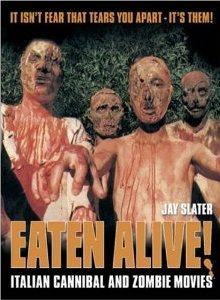
3) Eaten Aliveby Jay Slater — This book offers an overview of the Italian film industry’s legendary cannibal and zombie boom. Along with reviewing every Italian movie to feature even the slightest hint of cannibalism or the living dead (this is one of the few books on Italian cinema that discusses both Pasolini and Lucio Fulci as equals), Eaten Alive also features some very revealing interviews with such iconic figures as Catriona MacColl, Ian McCullough, and especially Giovanni Lombardo Radice. Radice, in fact, also contributes a memorable “guest” review of one of the movies featured in the book. (“What a piece of shit!” the review begins.) Memorable reviews are also contributed by Troma film founder Lloyd Kaufman who brilliantly (and correctly) argues that Cannibal Holocaust is one of the greatest films ever made and Ramsey Campbell who hilariously destroys Umberto Lenzi’s infamous Nightmare City.
2) The Book of the Deadby Jamie Russell — If, like all good people, you love zombies then you simply must do whatever it takes to own a copy of this book. Starting with such early masterpieces as White Zombie and I Walked With A Zombie, Russell proceeds to cover every subsequent zombie film up through George Romero’s Land of the Dead. Russell offers up some of the best commentaries ever written on Romero’s Dead films, Fuci’s Beyond Trilogy, Rollin’s Living Dead Girl, and Spain’s Blind Dead films. The pièce de résistance, however, is an appendix where Russell describes and reviews literally ever zombie film ever made.
1) All The Colors Of the Darkby Tim Lucas — This is it. This is the Holy Grail of All Film Books. If you’ve ever asked yourself if any book is worth paying close to 300 dollars, now you have your answer. This one is. Tim Lucas offers up the most complete biography of director Mario Bava ever written. In fact, this may be the most complete biography of any director ever written! Lucas examines not only Bava’s life but also every single movie that Bava was ever in any way connected to, whether as a director or as a cameraman or as the guy in charge of the special effects. This is 1,128 pages all devoted to nothing but the movies. This is the type of book that makes me thankful to be alive and I owe a huge debt of gratitude to Tim Lucas for writing it.












 Through the Shattered Lens