For today’s horror song of the day, we have Demon, a track from the soundtrack for the 1985 film, Demons. This song was composed and performed by Claudio Simonetti, who is best known as the keyboardist of Goblin.
The music video, incidentally, was directed by Michele Soavi, who also appeared in Demons as the mysterious masked man handing out free movie tickets.
For today’s bonus song of the day, we have Demon, a track from the soundtrack for the 1985 film, Demons. This song was composed and performed by Claudio Simonetti, who is best known as the keyboardist of Goblin.
The music video, incidentally, was directed by Michele Soavi, who also appeared in Demons as the mysterious masked man handing out free movie tickets.
4 Shots From 4 Films is just what it says it is, 4 shots from 4 of our favorite films. As opposed to the reviews and recaps that we usually post, 4 Shots From 4 Films is all about letting the visuals do the talking.
Today’s director in Lamberto Bava, one of the most underrated directors in the history of Italian horror cinema.
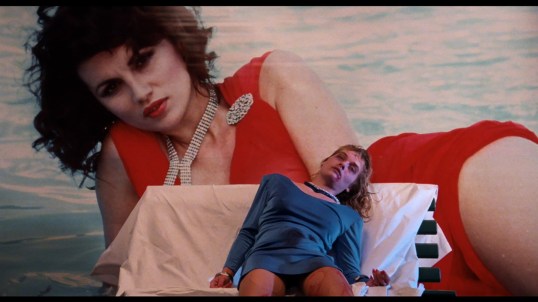
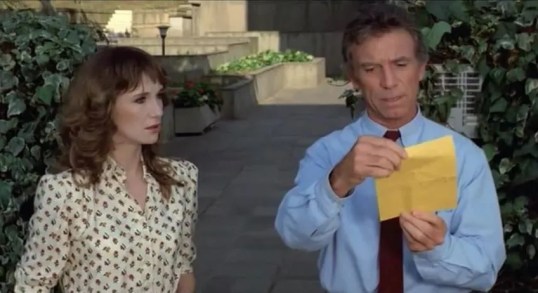
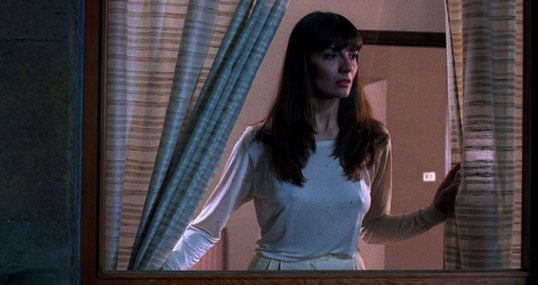
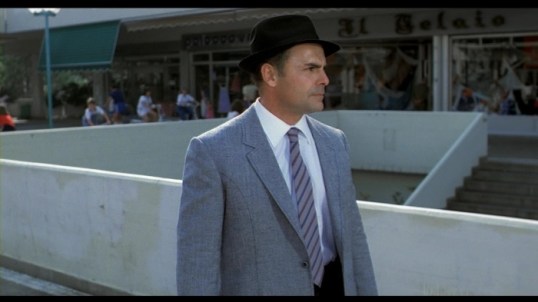
4 Shots From 4 Lamberto Bava Films
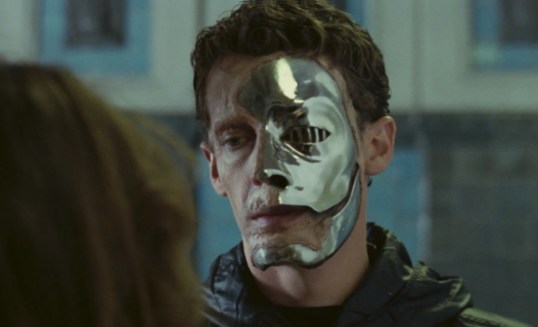
Macabre (1980, dir by Lamberto Bava, DP: Franco Delli Colli)
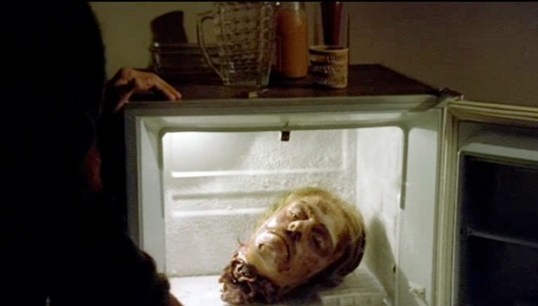
A Blade In the Dark (1983, dir by Lamberto Bava, DP: DP: Gianlorenzo Battaglia)
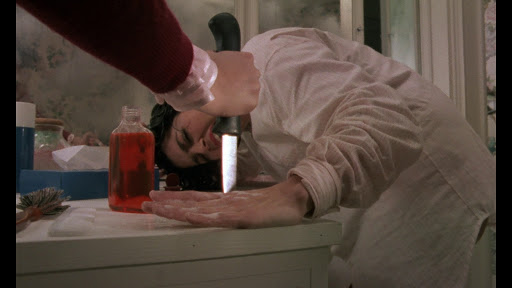
Demons 2 (1986, dir by Lamberto Bava, DP: Gianlorenzo Battaglia)
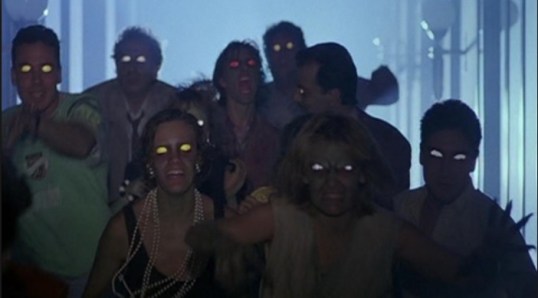
Delirium (1987, dir by Lamberto Bava, DP: Gianlorenzo Battaglia)
A few Octobers ago, I got the bright idea to try to review all of Dario Argento’s films over the course of TSL’s annual horrorthon. Unfortunately, I got that idea on September 29th, two days before the start of Horrorthon. I managed to make my way through Inferno until I had to temporarily abandon the project to focus on everything else that was going on that month. However, since I’m not the type to fully give up on anything, I figured this would be the great year to finish up my Argento reviews.
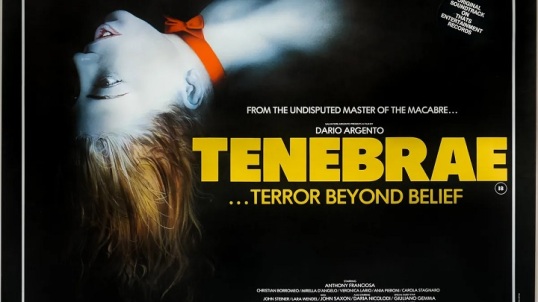
Following the commercial failure of Inferno, a disillusioned Dario Argento returned to Rome. His bad experience with 20th Century Fox had soured Argento on continuing to work with Hollywood and his struggles to film Inferno (as well as his increasingly strained relationship with girlfriend Daria Nicolodi) left him with little desire to continue The Three Mothers trilogy. Instead, he focused on a new idea, one that was inspired by his own experience with an obsessed fan who had left vaguely threatening messages for him when he was in New York. Released in 1982, Tenebrae was Argento’s return to the giallo genre and it would turn out to be a very triumphant return, even if in, typical Argento fashion, it would take a few years for many people to realize just how triumphant.
Argento himself claimed that, while the film was certainly a giallo, it was also his first stab at science fiction. In an interview that appeared in Cinefantastique, Argento said that the film was meant to take place a few years in the future, after some sort of calamity had occurred that has greatly reduced the world’s population. Interestingly, Argento said that the survivors were largely from the upper class and that none of them wanted to talk about or remember what had happened.
Is the science fiction element actually present in this film? I think it is, though perhaps only because I’ve specifically looked for it. Rome, as portrayed in Tenebrae, is a city that is full of sleek but impersonal buildings, the type that would have been recently built by a wealthy society that was unsure of what it believed. Argento specifically avoids filming any scene near any historical landmarks, suggesting all of the evidence of Rome’s former greatness has been wiped out.
Perhaps the most futuristic element of the film (and the most prophetic) is that no one really seems to have a connection with anyone else. The crowd scenes in Tenebrae aren’t really that crowded, even the ones that take place in what should be a busy airport. (In many ways, the film’s portrayal of a Rome that is both busy but strangely empty brings to mind Jean Rollin’s portrayal of Paris in The Night of the Hunted.) Even when we see people socialize, there seems to be an invisible barrier between them, as if they don’t want to run the risk of getting too close to each other. When one character is fatally stabbed while out in public, perhaps the most disturbing aspect of the murder is that so many people just walk away, as if they’ve been conditioned to ignore anything unpleasant. The only thing that prevents this scene from feeling like a vision of 2023 is that there aren’t a bunch of people filming the victim’s final moments on their phone.
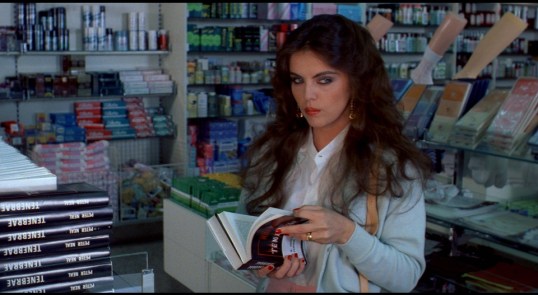
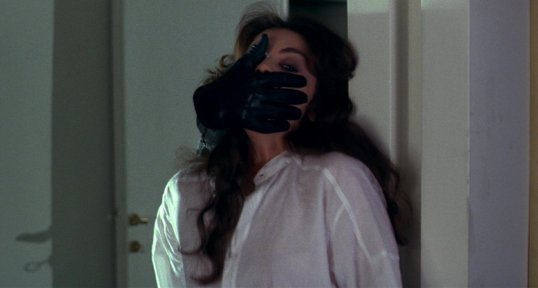
The film opens with a sequence that, as a former teen shoplifter, left me feeling disturbed. Elisa Manni (Ania Pieroni, who played The Mother of Tears in Inferno and the enigmatic housekeeper in Fulci’s The House By The Cemetery) is a shoplifter who gets caught trying to steal the latest book by thriller novelist Peter Neal. After being released, the carefree Elisa walks back to her home and, after being menaced by both a barking dog and a pervy old man, Elisa arrives in the safety of her house, starts to undress, and is promptly attacked by a black-gloved killer who slashes her neck and stuffs pages of Neal’s book into her mouth. It’s not just the murder that makes this scene disturbing but also the fact that the killer was somehow waiting for Elisa in her house, establishing that this is a world where the safety of even a locked door is an illusion.
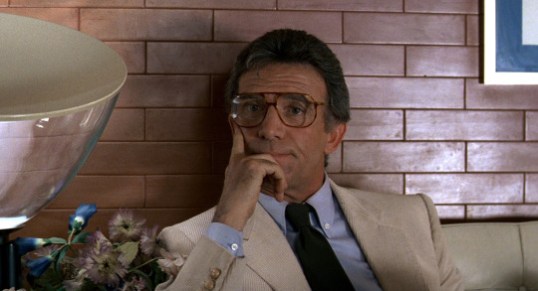
Peter Neal (Anthony Franciosa), who we first see riding his bicycle in New York, has come to Italy to promote his latest book, Tenebrae. He arrives in Rome with his manager, Bullmer (John Saxon, giving a likable performance) and his assistant, Anne (Daria Nicolodi). Confident to the point of arrogance, Peter is a pro at dismissing claims that his books are violent and misogynistic but even he is taken aback when an old friend of his, the journalist Tilde (Mirella D’Angelo), suggests that Tenebrae might inspire violence.
Peter Neal is a celebrity and a pretty obvious stand-in for Argento and everyone in the film is obsessed with him. His ex-fiancée, Jane (Victoria Lario), has followed Peter to Rome, intent on getting some sort of revenge for the way that he treated her while they were together. (Daria Nicolodi felt the vindictive and unstable Jane was based on her, which was another thing that strained her notoriously volatile relationship with Dario.) Peter’ young assistant, Gianni (Christian Borromeo, of Deodato’s The House on the Edge of the Park and Fulci’s Murderrock) hero worships him. The puritanical talk show host, Christiano Berti (John Steiner), wants to interview Peter about the morality of his books. And the killer, whoever they may be, is leaving letters for Peter, informing him that his book have inspired the killer’s crimes. Detective Germani (Spaghetti western star Giuliano Gemma) is investigating the letters and he is an admitted fan of Peter Neal’s novels but, somewhat alarmingly, he mentions that he’s never able to guess the killer’s identity.
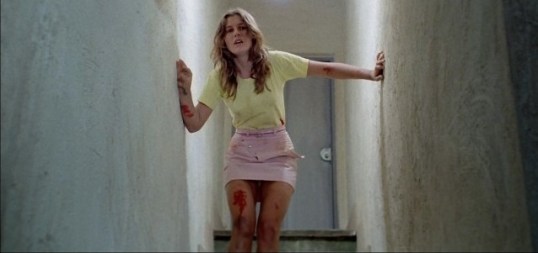
Argento’s camera restlessly prowls his futuristic Rome while Goblin’s music booms on the soundtrack as the people in Peter Neal’s life are murdered by a killer wearing black gloves and carrying a straight razor. The murder scenes feature some of Argento’s best work, directed in such a ruthless and relentless manner that we understand the killer’s determination without having to see their face. This is a film of elaborate set pieces and, as if in direct response to 20th Century Fox’s attempts to control his work on Inferno, Argento is eager to show what he can do when left alone. The film is remembered for the sequence where the camera glides over the exterior of an apartment building while the killer stalks the inhabitants but, for me, the scariest scene is when poor Maria (Lara Wendel), the daughter of Neal’s landlord, finds herself being chased straight into the killer’s lair by a very viscous Doberman.
When the film does slow down, it’s for flashbacks to a beach and acts of sexual violence performed by and against an enigmatic woman (who is played by transgender performer, Eva Robbins). The beach flashbacks unfold in a hazy, dream-like manner and they leave us to wonder if what we’re watching is real or if it’s just a fantasy. If the “modern” scenes feature Argento at his most energetic, the beach scenes feature Argento at his most enigmatic.
Daria Nicolodi often said that she considered her final scene in this film to be Argento’s greatest act of cruelty to her. Coming across the killer’s final tableaux and discovering the truth about who the killer is, Anne stands in the rain and screams over and over again. Nicolodi apparently felt that Argento required her to stand there soaked and screaming in order to punish her for having worked (with Tenebrae co-star John Steiner) on Mario Bava’s Shock, instead of having accepted a supporting role in Suspiria.
Whatever personal motives may have been involved in the decision, I think Nicolodi’s screaming is one of the most powerful moments to be found in Tenebrae. It’s certainly the most human moment because I think anyone with a soul would scream upon learning the truth of what has been happening in Rome. Every assumption that Anne had has been overturned. Who wouldn’t scream? Continuing with Argento’s claim that the film was about a world where people no longer discuss the terrible things that have happened, Anne’s screams are the most human part of the movie.
Tenebrae is the last of Agento’s truly great and flawless films. Of course, in usual Argento fashion, it was not treated well in the States, where it was initially released in a heavily edited version and with a terrible title (Unsane, under which it can still be found in certain Mill Creek box sets). But Tenebrae has since been rediscovered and today stands as one of Argento’s greatest triumphs.
4 Shots From 4 Films is just what it says it is, 4 shots from 4 of our favorite films. As opposed to the reviews and recaps that we usually post, 4 Shots From 4 Films is all about letting the visuals do the talking.
This October, I am going to be using our 4 Shots From 4 Films feature to pay tribute to some of my favorite horror directors, in alphabetical order! That’s right, we’re going from Argento to Zombie in one month!
Today’s director in Lamberto Bava, one of the most underrated directors in the history of Italian horror cinema.
4 Shots From 4 Lamberto Bava Films
A Blade In The Dark (1983, dir by Lamberto Bava, DP: Gianlorenzo Battaglia)
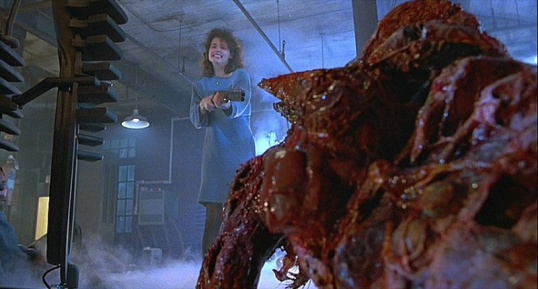
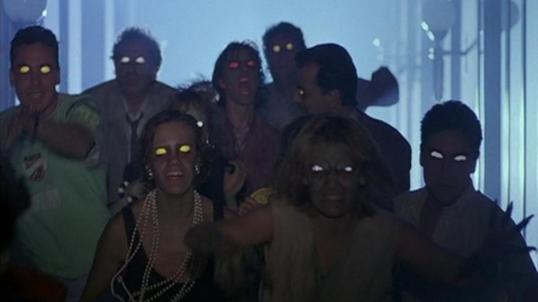
Demons (1985, dir by Lamberto Bava, DP: Gianlorenzo Battaglia)
Midnight Killer (1986, dir by Lamberto Bava, DP: Gianlorenzo Battaglia)
Delirium (1987, dir by Lamberto Bava, DP: Gianlorenzo Battaglia)
4 Or More Shots From 4 Or More Films is just what it says it is, 4 shots from 4 of our favorite films. As opposed to the reviews and recaps that we usually post, 4 Shots From 4 Films lets the visuals do the talking!
This October, I’m going to be doing something a little bit different with my contribution to 4 (or more) Shots From 4 (or more) Films. I’m going to be taking a little chronological tour of the history of horror cinema, moving from decade to decade.
Today, we take a look at a very important year: 1984, 1985, and 1986.
8 Shots From 8 Films: 1984 — 1986
A Nightmare on Elm Street (1984, dir by Wes Craven, DP: Jacques Haitkin)
Gremlins (1984, dir by Joe Dante, DP: John Hora)
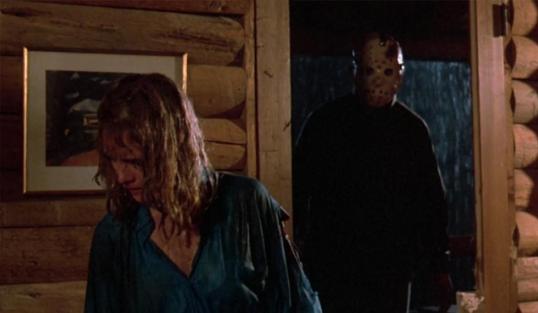
Friday the 13th: The Final Chapter (1984, dir by Joseph Zito, DP: João Fernandes)
Phenomena (1985, dir by Dario Argento, DP: Romano Albani)
Day of the Dead (1985, dir by George Romero, DP: Michael Gornick)
Demons 2 (1986, dir by Lamberto Bava, DP: Gianlorenzo Battaglia)
Witchboard (1986, dir by Kevin S. Tenney, DP: Roy Wagner)
The Fly (1986, dir by David Cronenberg, DP: Mark Irwin)
4 Shots From 4 Films is just what it says it is, 4 shots from 4 of our favorite films. As opposed to the reviews and recaps that we usually post, 4 Shots From 4 Films lets the visuals do the talking!
4 Shots From 4 Films is just what it says it is, 4 shots from 4 of our favorite films. As opposed to the reviews and recaps that we usually post, 4 Shots From 4 Films lets the visuals do the talking!
This October, we’re using 4 Shots From 4 Films to look at some of the best years that horror has to offer!
4 Shots From 4 Films is just what it says it is, 4 shots from 4 of our favorite films. As opposed to the reviews and recaps that we usually post, 4 Shots From 4 Films is all about letting the visuals do the talking.
This October, I am going to be using our 4 Shots From 4 Films feature to pay tribute to some of my favorite horror directors, in alphabetical order! That’s right, we’re going from Argento to Zombie in one month!
Today’s director in Lamberto Bava, one of the most underrated directors in the history of Italian horror cinema.














 Through the Shattered Lens