Retro Television Review: The Love Boat 4.21 “Clothes Make The Girl/Black Sheep/Hometown Girl”


Welcome to Retro Television Reviews, a feature where we review some of our favorite and least favorite shows of the past!  On Wednesdays, I will be reviewing the original Love Boat, which aired on ABC from 1977 to 1986!  The series can be streamed on Paramount Plus!
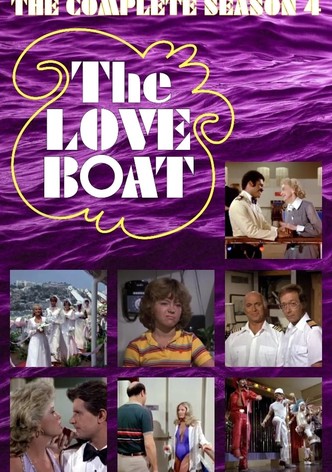
It’s time for another cruise on …. THE LOVE BOAT!

Episode 4.21 “Clothes Make The Girl/Black Sheep/Hometown Girl”

(Dir by Earl Bellamy, originally aired on February 28th, 1981)

This week’s cruise is all about money!

For instance, in this episode, we learn that Doc Bricker is from a small town called Cedar Flats.  Doc was the head of a committee that raised the money necessary to send Mike Lucas (Randy Powell) to medical school so that Mike could return home and serve as the town doctor.  However, when Mike boards the cruise with his fiancée, Tracy (Cindy Morgan), it turns out that he has some bad news.  Tracy’s wealthy father has offered Mike a job working at a Park Avenue clinic in Manhattan.  Mike is planning on taking the job because of the money and the fact that Tracy doesn’t want to live in a small town.  Unfortunately, that will leave Cedar Flats without a doctor.

Doc Bricker, showing that he actually is a man of integrity despite also being a walking HR nightmare, decides that he has no choice but to return to Cedar Flats and serve as their doctor until someone can be found to replace him.  He asks Captain Stubing for a six-month leave of absence.  Stubing agrees but warns that the cruise line might hire someone to take Doc’s place.

Meanwhile, Suzy Marshall (Kyle Aletter) is excited because it appears that her daughter, Anne (Lee Meriwether), has attracted the attention of a wealthy man named Jonathan (Larry Breeding).  Little do they know that Jonathan is actually just Johnny, the ship’s valet.  Johnny is wearing another passenger’s clothes and pretending to be rich.

At one point, Johnny takes Anne back to his cabin, making this the first episode to show us what a low-level employee’s cabin looks like.  It’s small and cramped and located at the bottom the boat, which means it’ll be the first to flood if The Love Boat ever hits an iceberg.  It’s also mentioned that Johnny is not allowed to eat in the main dining room with the passengers.  I have to admit that it’s all a bit disillusioning.  Apparently, the Love Boat is a terrible place to work!

Finally, a passenger named Donald Gray (Robert Ginty) tells the Captain that he works for the Secret Service.  He is on the Love Boat because he hopes to capture a notorious counterfeiter.  But what will happen when that counterfeiter turns out to be Jesse (Demond Wilson), Issac’s ne’er-do-well uncle who claims to have turned a new leaf?  Poor Isaac!

Well, don’t worry.  Everything works out:

1) Mike realizes that he has to honor his commitment to Cedar Flats and, after talking to her father, Cindy realizes that she loves Mike enough that she can be happy in a small town.  (Cindy’s father says some very dismissive things about Cedar Flats but it turns out that he was only doing that to get Mike so outraged that he would have no choice but to return home.  He was doing it as a favor to Doc Bricker.  Can you imagine if that plan didn’t work?  What if Mike just said, “You’re right!  New York, here we come!”)

2) Anne learns the truth when she sees Johnny in his valet uniform.  Luckily, she doesn’t care.

3) It turns out that Donald is actually a criminal who is masquerading as a treasury agent and Uncle Jesse is an undercover government agent!  Isaac is happy to learn this but also agrees to keep Jesse’s secret.  “You’re my favorite nephew,” Uncle Jesse replies.  Awwwww!

This was an okay cruise.  The guest stars weren’t particularly interesting but Bernie Kopell and Ted Lange both got an opportunity to show what they could do when given a real storyline to deal with.  Kopell especially deserves a lot of credit for showing that humanity that lurked underneath Doc’s carefree surface.  This episode kept me entertained and I enjoyed the scenery.  Really, what else can you ask for from The Love Boat?
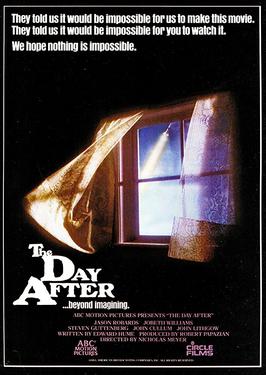
Film Review: The Day After (dir by Nicholas Meyer)


“This is Lawrence. This is Lawrence, Kansas. Is anybody there? Anybody at all?”

The words of Joe Huxley (John Lithgow) hang over the ending of The Day After, a 1983 film that imagines what the aftermath of a nuclear war would be like not on the East or the West Coasts but instead in the rural heartland of America.  Huxley is a professor at the University of Kansas and, as he explains early on in the film, Kansas would be an automatic target in any nuclear war because it houses a number of missile silos.  When he explains that, it’s in an almost joking tone, largely because the missiles haven’t been launched yet.  Instead, the only thing we’ve heard are a few barely noticed news stories about growing tensions between America and Russia.  About halfway through The Day After, the bombs go off and there are suddenly no more jokes to be made.

When the bombs drop over Kansas, we watch as cities and field and people burst into flames.  In a matter of minutes, several thousands are killed.  I’m almost ashamed to admit that I was probably more upset by the image of a horse being vaporized than I was by the death of poor Bruce Gallatin (Jeff East), the college student who was planning on marrying Denise Dahlberg (Lori Lethin).  I guess it’s because horses — really, all animals — have nothing to do with the conflicts between nations.  Humans are the ones who take the time to build bigger and better weapons and The Day After is one of the few films about war that’s willing to acknowledge that, when humans fight, it’s not just humans that die.

The bombing sequence is lengthy and I have to admit that I was a bit distracted by the fact that I recognized some of the footage from other movies.  A scene of panicked people running through a building was taken from Two-Minute Warning.  A scene of a building exploding and a construction worker being consumed by flames was lifted from Meteor.  As well, there’s some stock footage which should be familiar to anyone who has ever seen a documentary about the early days of the Cold War.  Still, despite that, it’s an effective sequence simply because it’s so relentless.  Some of the film’s most likable characters are vaporized before our eyes.  Steve Guttenberg, of all people, is seen ducking into a store.

Guttenberg plays Stephen Klein, a pre-med student who manages to survive the initial attack and takes shelter with the Dahlberg family at their ranch.  At first, it’s a bit distracting to see Steve Guttenberg in a very serious and very grim film about the nuclear apocalypse but he does a good job.  The sight of him losing both his teeth and his hair carries a punch precisely because he is reliably goofy Steve Guttenberg.

If the film has a star, it’s probably Jason Robards, the doctor who witnesses the initial blast from the safety of his car and then treats the dying in Lawrence, Kansas.  He does so, despite the fact that he doesn’t know if his wife, son, and daughter are even still alive.  He continues to do so until he also falls ill with radiation poisoning.  Knowing that he’s dying, he heads home just to discover that there is no home to return to.

Home is reccuring theme throughout The Day After.  Everyone wants to return to their home but everyone’s home has been wiped out.  “This is my home,” Jim Dahlberg (John Cullum) tries to explain before he’s attacked by a group of feral nomads.  Home no longer exists and trying to pretend like life can go back to the way it once was is an often fatal mistake.

Real happy film, right?  Yeah, this isn’t exactly a film that you watch for fun.  I have to admit that I made a joke about how I wouldn’t want to die while wearing the unfortunate blue jumpsuit that Jason Robards’s daughter chooses to wear on the day of the nuclear attack and I felt guilty immediately.  (Well, not that guilty.  Seriously, it was a terrible fashion choice.)  The Day After is a film that gives audiences zero hope by design.  It was made at a time when it was generally assumed that nuclear was inevitable and it was designed to scare the Hell out of everyone watching.  And while I can’t attest to how audience may have reacted in 1983, I can say that, in 2020, it’s still a powerful and disturbing film.

“Is anybody there? Anybody at all?” Joe Huxley asks and by the end of the film, the answer doesn’t matter.  The damage has already been done.