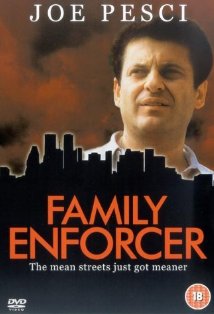
 Jerry Bolanti (Joe Cortese) is a cocky loud-mouth who has just returned to New Jersey after serving a prison sentence. Jerry needs a work so a mid-level gangster named Tony (Lou Criscuolo) hires Jerry as a debt collector. The problem is that Jerry is just not very good at his job. His attempt to collect money from Bernie Feldshuh (Frank Vincent) leads to Bernie hiring a legendary hitman (Keith Davis) to kill Jerry. Despite working with two experienced enforcers, Joe (Joe Pesci) and Serge (Bobby Alto), Jerry’s next job is just as unsuccessful and leads to even more unnecessary deaths. Tony starts to wonder if maybe he made a mistake giving a job to Jerry and, unfortunately, no one simply gets fired from the Mafia.
A low-budget and nihilistic film, The Death Collector occupies a strange place in film history. Though it was largely ignored when it was first released, one of the few people who did see it was actor Robert De Niro. De Niro brought the film to the attention of Martin Scorsese, who was casting Raging Bull at the time. Both Joe Pesci and Frank Vincent made their film debuts in The Death Collector and, after watching the movie, Scorsese cast both of them in Raging Bull.
The rest is history:
In Raging Bull, Pesci beats up Vincent.
In Goodfellas, Pesci kills Vincent.
In Casino, Vincent finally gets to kill Pesci.
If not for The Death Collector, Frank Vincent would never have told Joe Pesci to “get your fucking shinebox.” If not for The Death Collector, Joe Pesci would never have thrown Frank Vincent in that trunk. It all started with The Death Collector.
As for the film itself, The Death Collector was filmed on location in New Jersey and it occasionally has a raw and intense grittiness but it suffers because there’s never any reason to care about Jerry. He starts the movie as an asshole and he ends the movie as an asshole and Joe Cortese’s bland performance fails to make Jerry into a compelling antihero. The Death Collector works best whenever Vincent and Pesci are on-screen. Pesci’s performance is slightly toned down version of the hyped-up maniacs that he became best known for playing while Vincent shows that, even in his first film, he was already a master at playing slightly ridiculous tough guys.
The Death Collector can also be found under the title, Family Enforcer. It’s been released on DVD by several companies, all of which claim that the film “stars” Joe Pesci. My copy has a picture of Pesci that was lifted from 8 Heads In A Duffel Bag on the cover.
 If there is a male bonding hall of fame,
 Through the Shattered Lens