Horror Film Review: The Tingler (dir by William Castle)


The 1959 film, The Tingler, opens with a middle-aged man standing on a stage and speaking directly to the audience.

“I am William Castle, the director of the motion picture you are about to see. I feel obligated to warn you that some of the sensations—some of the physical reactions which the actors on the screen will feel—will also be experienced, for the first time in motion picture history, by certain members of this audience. I say ‘certain members’ because some people are more sensitive to these mysterious electronic impulses than others. These unfortunate, sensitive people will at times feel a strange, tingling sensation; other people will feel it less strongly. But don’t be alarmed—you can protect yourself. At any time you are conscious of a tingling sensation, you may obtain immediate relief by screaming. Don’t be embarrassed about opening your mouth and letting rip with all you’ve got, because the person in the seat right next to you will probably be screaming too. And remember this—a scream at the right time may save your life.”

When this film was first released in 1959, William Castle wasn’t lying in this warning.  Certain audience members would feel the tingling sensation of fear because some theaters agreed to wire certain seats with buzzers that, when activated, would give the viewer a tingling sensation.  Castle also arranged for certain theaters to fake an attack by the film’s monster, complete with the houselights coming up, a woman screaming and pretending to faint, and the voice of Vincent Price encouraging everyone in the audience to scream because “the Tingler is loose in the theater!”

Uhmm …. that sounds like fun.  When it comes to William Castle’s gimmicks, there’s a lot of documentation concerning what Castle arranged but there’s not as much documentation about how people reacted to being buzzed while watching a movie.  Hopefully, everyone screamed, played along, and had fun.  Personally, I probably would have left the theater during the chaos and snuck into a showing of Anatomy of a Murder.

As for the film, it stars the great Vincent Price as Warren Chapin, a pathologist who is investigating the source of fear.  As he explains to his colleague, Dave Morris (Dwayne Hickman), he believes that the tingling that people feel at the base of their spine is actually a living creature that is formed by fear.  The only way to kill the creature is to scream.  If you don’t scream, the creature will eventually snap your spine.  Well, I guess you better scream then.

Anyway, Dr. Chapin confronts his wife Isabel (Patricia Cutts) over the fact that she’s cheating on him.  He pulls a gun on her and, as she begs for his life, he fires.  She collapses but fear not!  The gun was loaded with blanks and Dr. Chapin just wanted to scare her so that he could x-ray her back and see if the Tingler was forming on her spine.  Dr. Chapin is overjoyed when the Tingler shows up on x-rays but now, he needs to bring a Tingler into the real world….

(I’m not sure why you would want a Tingler but whatever….)

One of Chapin’s friends is Ollie Higgins (Philip Coolidge) who owns a movie theater with his wife, Martha (Judith Evelyn).  Martha is deaf and mute and therefore cannot scream.  When Ollie deliberately frightens her, the Tingler appears on her spine and snaps it.  At the subsequent autopsy, Chapin is able to remove the Tingler from Martha’s spine.  The Tingler, which is a giant centipede that likes to crawl up people’s legs, gets loose and needless to say, all tingling heck breaks out.

Wow, this is a silly film!  There’s is absolutely nothing frightening about a plastic centipede being pulled across the screen by wires.  But, at the same time, it’s a Vincent Price film and Vincent knew exactly how to play his mad-but-not-evil scientist, delivering his lines with the perfect combination of snark and melodrama.  This film came out the same year as another Castle/Price collaboration, The House on Haunted Hill.  It’s nowhere near as good as The House on Haunted Hill but The Tingler is still a lot of fun in its silly way.  It won’t make you scream from fright but you might laugh really loudly.
Horror on TV: Suspense 4.12 “The Far-Off House”


Mrs. Collins (Judith Evelyn) is returning home after a long visit with her mother.  There’s storm raging.  The power’s dead.  Her husband is on a business trip.  There’s an escaped killer on the loose.  And, as soon as Mrs. Collins arrives at her home, she realizes that she may not be alone….

The episode of Suspense stars Judith Evelyn.  Fans of classic films may recognize her as both Miss Lonelyhearts in Hitchcock’s Rear Window and as the deaf victim from William Castle’s The Tingler.  Here, she gives another good performance as someone in trouble.

This episode originally aired on December 4th, 1951.

Enjoy!

Horror on TV: Thriller 2.1 “What Beckoning Ghost” (dir by Ida Lupino)


For today’s adventure into the world of televised horror, we have another episode of the Boris Karloff-hosted anthology series, Thriller!

In this episode, a concert pianist (Judith Evelyn) is haunted by visions of mysterious piano and the sound of someone playing.  Is she losing her mind, is she being set up, or is her house truly haunted?  This enjoyable episode was directed by actress Ida Lupino.

http://www.youtube.com/watch?v=ZjTltusqkCk

Embracing The Melodrama #12: Giant (dir by George Stevens)


Giant

Let’s continue to embrace the melodrama by taking a look at the 1956 best picture nominee, Giant.

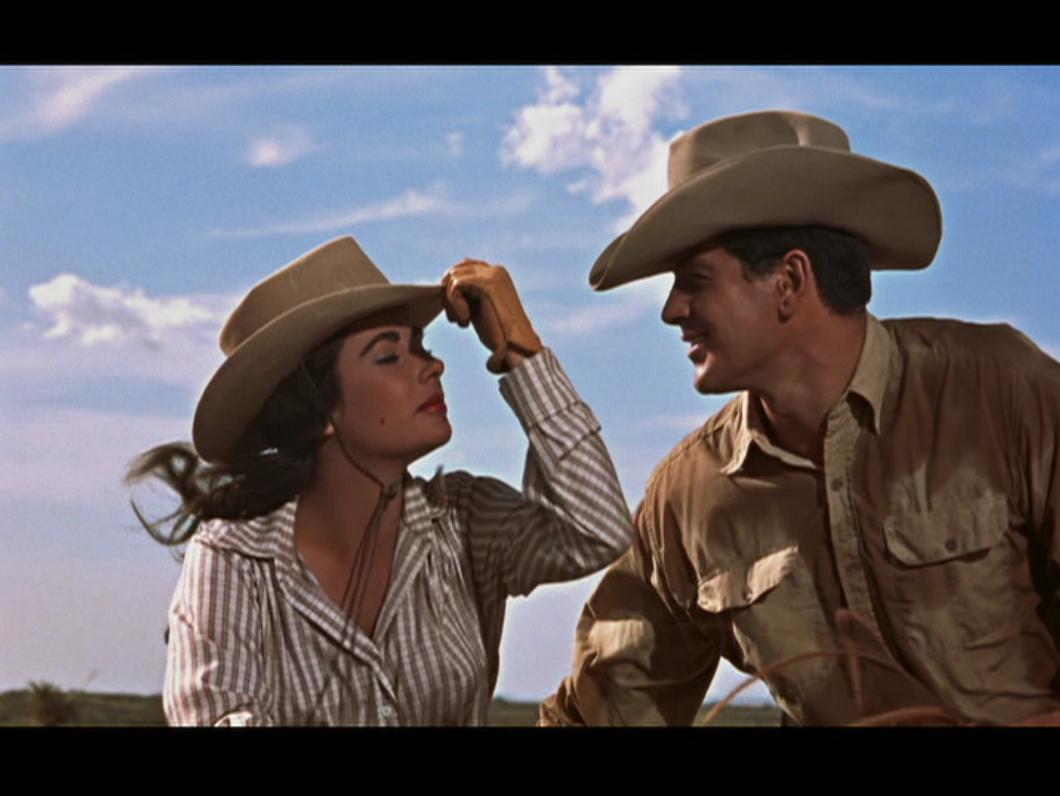
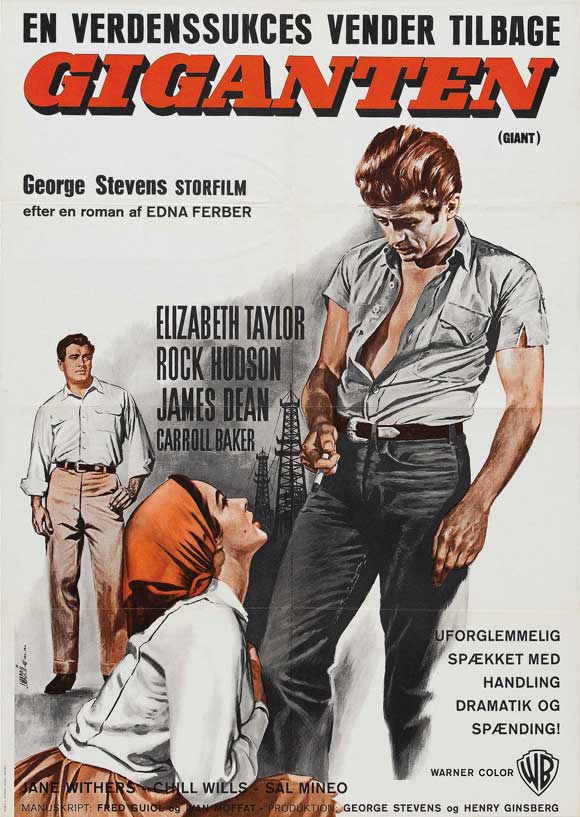
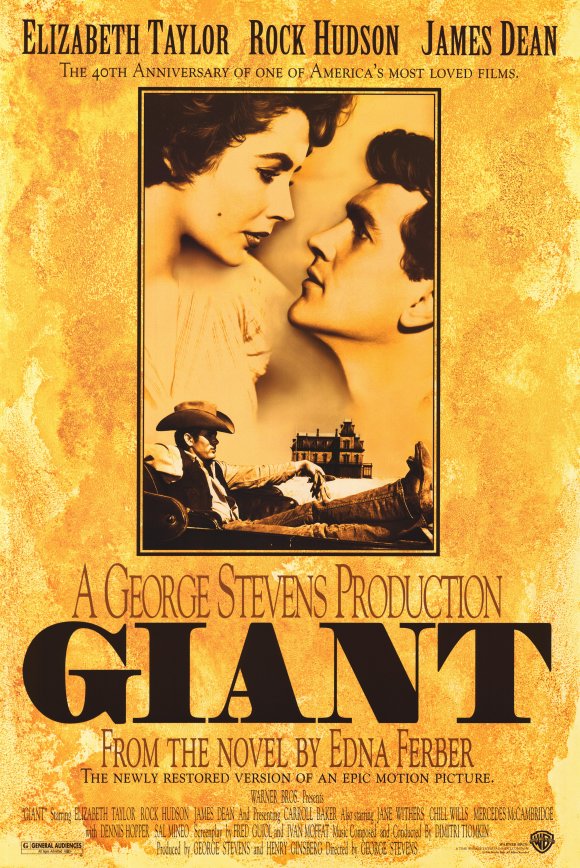
Giant is a film about my home state of Texas.  Texas rancher Bick Benedict (Rock Hudson) goes to Maryland to buy a horse and ends up returning to Texas with a bride, socialite Lesley Lynnton (Elizabeth Taylor).  At first, Lesley struggles to adapt to the harsh and hot Texas landscape.  Bick’s sister, Luz (Mercedes McCambridge) takes an instant dislike to Lesley and Bick is annoyed by Lesley’s concern over the living conditions of the Mexicans that work on Bick’s ranch.  It sometimes seems like the only person who appreciates Lesley is Jett Rink (James Dean), an ambitious ranch hand who secretly loves her and who is planning on becoming a rich man.  That’s exactly what happens when oil is found on the land around Bick’s ranch.  While Bick stubbornly clings to the past, oilman Jett represents both the future of Texas and the nation.  Meanwhile, Bick and Lesley’s son (played by a very young Dennis Hopper) challenges his father’s casual bigotry when he falls in love with a Mexican girl.

Taylor and Hudson

Giant is appropriately named because it is a huge film.  Clocking in at 201 minutes, Giant tells a story that spans several decades and features a big cast that is full of familiar faces, all struggling for their chance to somehow stand out from everyone else around them.  Even the film’s wonderful panoramic shots of the empty Texas landscape only serve to remind us of how big the entire film is.  To a certain extent, the size of Giant‘s production is to be understood.  In the 1950s, Hollywood was having to compete with television and they did this by trying to make every film into a major event.  You watch a movie like Giant and you practically hear the old Hollywood moguls shouting at America, “See!?  You can’t get that on your precious TV, can you!?”

For those of us watching Giant today, the length is both a blessing and a curse.  It’s a curse because the movie really is too damn long.  The opening scenes drag and many of them really do feel superfluous.  It’s hard not to feel that the real story doesn’t really start until about 90 minutes into the movie.  And once the story really does get started,  there’s still way too much of it for it all to be crammed into one sitting.  Oddly enough, you end up feeling as if this extremely long film is still not telling you everything that you need to know.  If Giant were made today, it would probably be a two-part movie on either HBO or Lifetime and it would definitely feature a lot more sex.

However, to be honest, one of the reasons that I did enjoy Giant was because it was as big as it was.  I mean, the film is about Texas so of course it should be a little excessive!  Everything’s bigger in Texas and that includes our movies.  Add to that, Giant may be too long but it uses that length to deals with issues that are still relevant today — oil, immigration, and racial prejudice.  Rock Hudson may not have been a great actor but he is at least convincing as he transitions from bigotry to tolerance.

But really, when it comes to Giant, most people are only interested in James Dean.  And they definitely should be because Dean gives a great and compelling performance here.  Dean brings all of the emotional intensity of the method to material that one would not naturally associate with method acting and the end result is amazing to watch.  Giant was released after Dean had been killed in that infamous car wreck.  I can only imagine what it must have been like to be sitting in a theater in 1956 and to see this compelling and charismatic actor towering above the world on the big screen while aware, all the time, that his life had already been cut short and he would never been seen in another film.

James Dean

Even better, Dean’s new style of acting clashes perfectly with Hudson’s old style of acting, making the conflict between Bick and Jett feel all the more real and intense.  Much as Bick represents old Texas and Jett represents the new Texas, Hudon and Dean represented the two sides of Hollywood: the celebrity and the artist.  Needless to say, Dean wins the battle but, surprisingly, Hudson occasionally manages to hold his own.

I can’t necessarily say that Giant is an essential film.  A lot of people are going to be bored by the excessive length.  But if you’re a fan of James Dean or if you’re from Texas, Giant is a film that you need to see at least once.

elizabeth_taylor_giant_swedish_movie_poster_2a