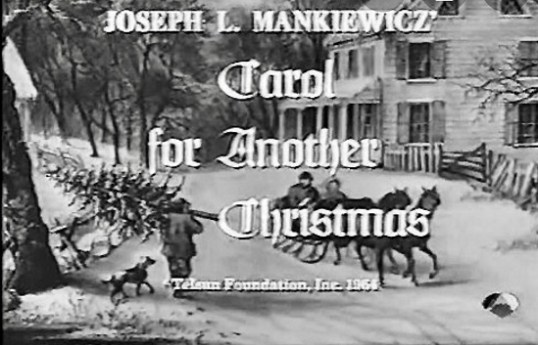
Holiday Film Review: Carol For Another Christmas (dir by Joseph L. Mankiewicz)


Daniel Grudge (Sterling Hayden) is a wealthy American industrialist who served in World War II and who, despite seeing first hand the horrors of Hiroshima, still believes that war is sometimes the only answer.  He spends his Christmas Eve sitting in darkened study, thinking about his dead son (who was killed in combat) and listening to an old record.  When his nephew, Fred (Ben Gazzara), stops by, it leads to an argument about American foreign policy.  (Who stops by their uncle’s house on Christmas Eve to argue politics?)  Fred is do-gooder.  Daniel Grudge hates do-gooders.

So, naturally, it’s time for Daniel Grudge to be visited by three ghosts!  The Ghost of Christmas Past (Steve Lawrence) takes Grudge first to a troop ship that is full of coffins, representing the dead of World War I.  Then he forces Grudge to relive his own callous reaction to Hiroshima.  Grudge sees how his actions upset the nurse (Eva Marie Saint) who was traveling with him.  The Ghost of Christmas Present (Pat Hingle) invites Grudge to eat a feast in front of a camp full of refugees.  The Ghost of Christmas Future (Robert Shaw) takes Grudge to the future where, after a devastating nuclear war, a buffoonish leader (Peter Sellers) encourages his followers to continue to make war and to live only for themselves.  Grudge watches as his former butler (Percy Rodriguez) is murdered for advocating for peace.  Back at his mansion, Fred shows up again and Grudge must now decide …. will he support the work of the United Nations?

YEEEEESH!  What a heavy-handed movie!  Really, I guess I shouldn’t be surprised at how unsubtle the film’s message was.  Originally made for television, A Carol For Another Christmas was actually co-produced by the United Nations.  It was the first of four UN-produced films that aired on ABC between 1964 and 1966.  Seen today, with all that we know about the UN’s signature mix of corruption and incompetence, the film’s message seems almost laughably naïve.   “Only the UN can bring peace,” the film says.  Tell that to Israel, the next time that the UN passes a resolution condemning it for existing and defending itself.  Say that only the UN can make the world a better place when some of the worst dictatorships on the planet are sitting on the Human Rights council.

The heavy-handed message aside, A Carol For Another Christmas was full of talent both behind and in front of the camera.  This was the only TV movie to be directed by Joseph L. Mankiewicz and, whatever else one might say about the film, he was responsible for some intriguingly moody shots.  The script was written by Rod Serling who, unfortunately, allowed his didactic tendencies to get the better of him and wrote a film where characters didn’t have conversations as much as they just gave speeches.  The cast, however, is uniformly strong.  Sterling Hayden, Robert Shaw, and Steve Lawrence are obvious stand-outs.  Pat Hingle does fine until his role is diminished to one long harangue.  Playing the so-called “Imperial Me,” Peter Sellers brings so much needed unpredictability to the film, even if his character is saddled with the film’s most heavy-handed moment.  The Imperial Me teaches his followers that the individual is more important than the state and that everyone should focus on “me” instead of “we.”  Cutting-edge satire this is not and again, there’s something rather offensive about the UN being held up as humanity’s last hope against rampant individualism. 

This is very much a film of its time.  The fear of nuclear war runs through every frame.  The disillusionment that came with the assassination of John F. Kennedy is present in the film’s open-ended conclusion.  What good is convincing one man when the rest of the world continues to think for itself? the film seems to be asking.  Dickens, I think, would probably say that Serling missed the point of A Christmas Carol and it’s hard not to feel that Dickens would be correct.
4 Shots From 4 Films: Special Marilyn Monroe Edition


4 Or More Shots From 4 Or More Films is just what it says it is, 4 shots from 4 of our favorite films. As opposed to the reviews and recaps that we usually post, 4 Shots From 4 Films lets the visuals do the talking!

Marilyn Monroe would have been 96 years old today.  Sixty years after her mysterious death, Marilyn Monroe continues to intrigue film lovers and conspiracy theorists alike.  Her legacy is such that, ever since her death, directors have been trying to recreate her life with biopics and actresses have been trying to recapture Marilyn’s magic.  The latest to try will be Andrew Dominick and Ana de Armas with Blonde later this year.

While I wish them luck, Marilyn Monroe was an original and not someone whose talent and charisma can be easily duplicated.  Needless to say, it’s time for….

4 Shots From 4 Marilyn Monroe Films

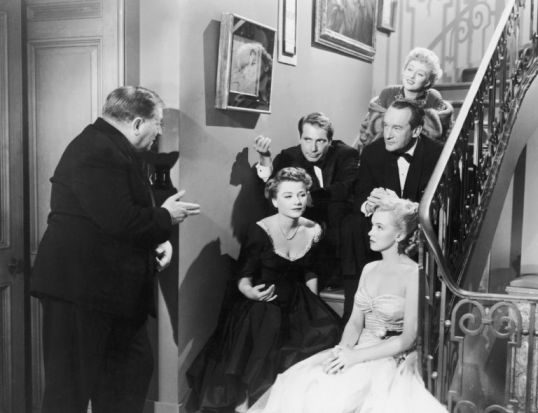
All About Eve (1950, dir by Joseph L. Mankiewicz, DP: Milton R. Krassner)

Niagara (1953, dir by Henry Hathaway, DP: Joseph MacDonald)

Some Like It Hot (1959, dir by Billy Wilder, DP: Charles Lang)

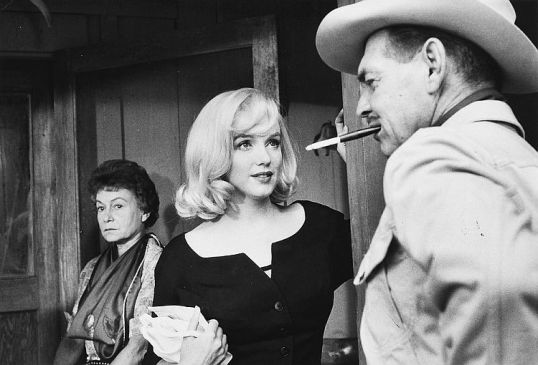
The Misfits (1961, dir by John Huston, DP: Russell Metty)

4 Shots From 4 Films: Special Katharine Hepburn Edition


4 Shots From 4 Films is just what it says it is, 4 shots from 4 of our favorite films. As opposed to the reviews and recaps that we usually post, 4 Shots From 4 Films lets the visuals do the talking!

Yesterday was the birthday of one of the most iconic screen legends of all time, the one and only Katharine Hepburn!  In honor of her life, career, and legacy, here are….

4 Shots From 4 Films

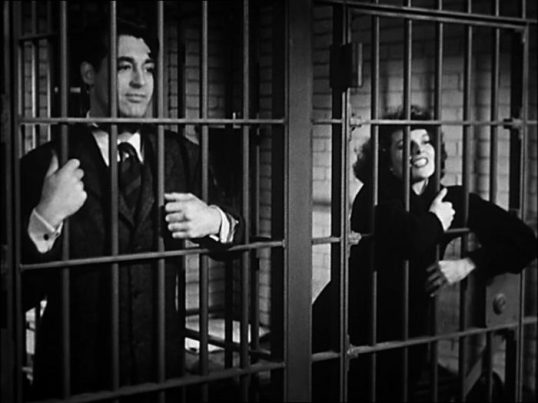
Bringing Up Baby (1938, dir by Howard Hawks)

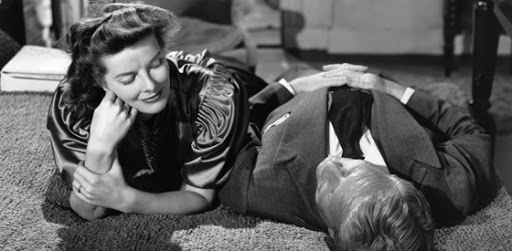
State of the Union (1948, dir by Frank Capra)

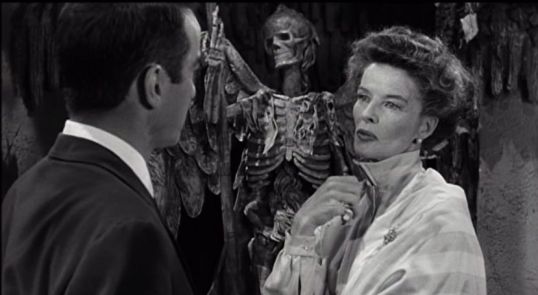
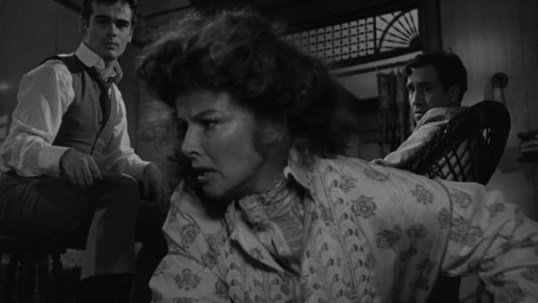
Suddenly, Last Summer (1959, dir by Joseph L. Mankiewicz)

Long Day’s Journey Into Night (1962, dir by Sidney Lumet)

4 Shots From 4 Elizabeth Taylor Films: A Place In The Sun, Suddenly Last Summer, Boom!, Night Watch


4 Shots From 4 Films is just what it says it is, 4 shots from 4 of our favorite films. As opposed to the reviews and recaps that we usually post, 4 Shots From 4 Films lets the visuals do the talking!

Today is the birthday of one of the greatest films stars ever, Elizabeth Taylor!  And you know what that means.  It’s time for….

4 Shots From 4 Elizabeth Taylor Films

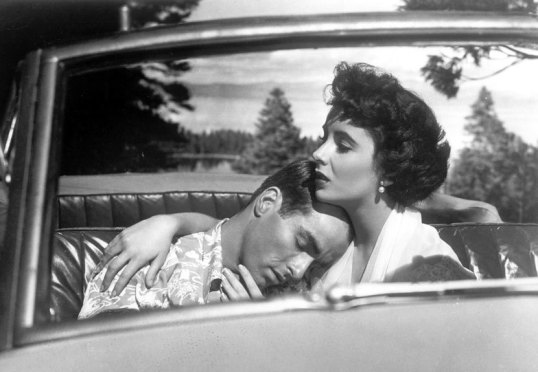
A Place in the Sun (1951, dir by George Stevens)

Suddenly, Last Summer (1959, dir by Joseph L. Mankiewicz

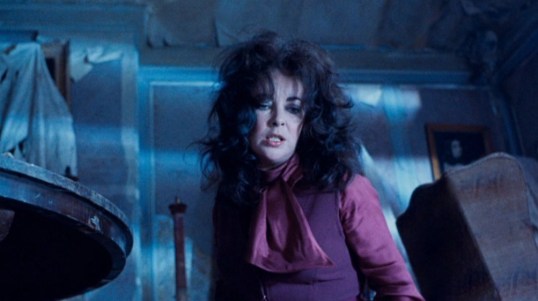
Boom! (1968, dir by Joseph Losey)

Night Watch (1973, dir by Brian G. Hutton)

4 Shots From 4 Films: The 4 best Best Picture Winners


4 Shots From 4 Films is just what it says it is, 4 shots from 4 of our favorite films. As opposed to the reviews and recaps that we usually post, 4 Shots From 4 Films lets the visuals do the talking.

Today is Oscar Sunday!  Tonight, a new film will join the exclusive list of the 90 previous best picture winners!

Sometimes, we spend so much time focusing on the winners that shouldn’t have won that we forget that some truly great films have managed to take the top prize.  So, with this edition of 4 Shots From 4 Films, I’m highlighting for the four best Best Picture winners!

4 Shots From 4 Films

All About Eve (1950, dir by Joseph L. Mankiewicz)

The Godfather Saga (1972 and 1974, dir by Francis Ford Coppola)

It Happened One Night (1934, dir by Frank Capra)

West Side Story (1961, dir by Robert Wise and Jerome Robbins)

4 Shots From 4 Marilyn Monroe Films: All About Eve, Don’t Bother To Knock, Bus Stop, The Misfits


4 Shots from 4 Films is just what it says it is, 4 shots from 4 of our favorite films. As opposed to the reviews and recaps that we usually post, 4 Shots from 4 Films lets the visuals do the talking!

If only she hadn’t been destroyed by the Kennedys, Marilyn Monroe would be 92 years old today.  Though Marilyn died in 1962, her performances will live forever.  This is…

4 Shots From 4 Marilyn Monroe Films

All About Eve (1950, dir by Joseph L. Mankiewicz)

Don’t Bother To Knock (1952, dir by Roy Ward Baker)

Bus Stop (1956, dir by Joshua Logan)

The Misfits (1961, dir by John Huston)

4 Shots From 4 Films: Special Cleopatra Edition


4 Shots From 4 Films is just what it says it is, 4 shots from 4 of our favorite films. As opposed to the reviews and recaps that we usually post, 4 Shots From 4 Films is all about letting the visuals do the talking.

Let’s celebrate the Ides of March with four shots from four films about Caesar’s one true love, Cleopatra!

4 Shots From 4 Films

Cleopatra (1917, dir by J. Gordon Edwards)

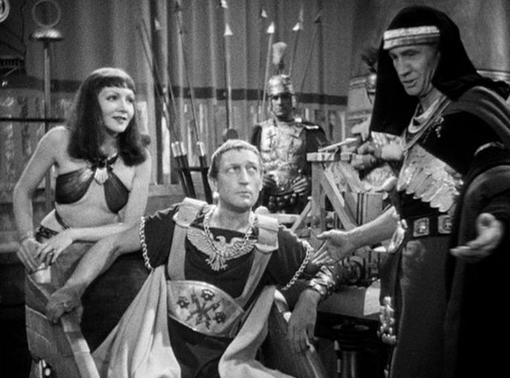
Cleopatra (1934, dir by Cecil B. DeMille)

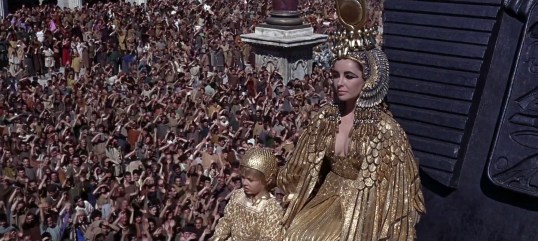
Cleopatra (1963, dir by Joseph L. Mankiewicz )

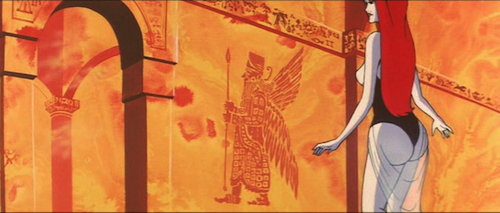
Cleopatra (1970, dir by Osamu Tezuka and Eiichi Yamamoto)

4 Shots From 4 Films: Cleopatra, The Fall of the Roman Empire, Caligula, Titus


4 Shots From 4 Films is just what it says it is, 4 shots from 4 of our favorite films. As opposed to the reviews and recaps that we usually post, 4 Shots From 4 Films is all about letting the visuals do the talking.

Welcome to a special Ides of March edition of 4 Shots From 4 Films.  These 4 shots are taken from 4 diverse films about the Roman Empire (which, of course, was a direct result of events that occurred long ago on the Ides of March).

4 Shots From 4 Films

Cleopatra (1963, directed by Joseph L. Mankiewicz)

Cleopatra (1963, directed by Joseph L. Mankiewicz)

The Fall of the Roman Empire (1964, dir by Anthony Mann)

The Fall of the Roman Empire (1964, dir by Anthony Mann)

Caligula (1979, dir by Tinto Brass, et al)

Caligula (1979, dir by Tinto Brass, et al)

Titus (1999, dir by Julie Taymor)

Titus (1999, dir by Julie Taymor)

Film Review: There Was a Crooked Man… (1970, directed by Joseph L. Mankiewicz)


Crooked_manI first saw There Was A Crooked Man as a part of TCM’s tribute to the great actor Warren Oates.  Warren Oates was rarely cast in the lead but, as a character actor, he appeared in supporting roles in several great films.  Unfortunately, There Was A Crooked Man is not one of them.

Directed by Joseph L. Mankiewicz and written by the screenwriting team of Robert Benton and David Newman (best known for writing Bonnie and Clyde), There Was A Crooked Man is meant to be a comedic western.  Outlaw Paris Pittman (Kirk Douglas) is arrested while visiting a bordello.  Paris is sent to an Arizona prison, where everyone tries to get him to reveal where he has hidden the stash from a $500,000 robbery.  Pittman uses everyone’s greed to manipulate them into helping him attempt to escape.  Standing in Pittman’s way is the new warden, a liberal reformer played by Henry Fonda.

There Was A Crooked Man is a long movie that features a lot of familiar faces.  Burgess Meredith plays The Missouri Kid, who has been in prison for so long that he is now an old man.  Hume Cronyn and John Randolph play a bickering gay couple who eventually become a part of Pittman’s scheme to escape.  Even Alan Hale, the skipper from Gilligan’s Island, shows up as a guard named Tobaccy!  There Was A Crooked Man is a big movie but it’s also not a very good one.  It’s not serious enough to be a good drama but it’s not funny enough to be a good comedy either.

At least the movie has Warren Oates going for it.  Oates plays Harry Moon, a prisoner who is drafted into Pittman’s escape plot.  It is a typical Warren Oates supporting role but he steals every scene that he appears in.  Even in the smallest of roles, Warren Oates was worth watching and he’s the best thing about There Was A Crooked Man.

Hume Cronyn, Warren Oates, Kirk Douglas, Michael Blodgett, and John Randolph in There Was A Crooked Man

Hume Cronyn, Warren Oates, Kirk Douglas, Michael Blodgett, and John Randolph in There Was A Crooked Man

Embracing the Melodrama Part II #26: Cleopatra (dir by Joseph L. Mankiewicz)


Cleopatra_posterWhile watching the 1963 best picture nominee, Cleopatra, I had many thoughts.  The film lasts over 4 hours so I had a lot of time to think.

For instance, I often found myself impressed by the sheer size of the production.  I marveled at the recreation of ancient Greece and Rome.  I loved looking at the ornate costumes.  I loved feeling as if I was taking a look back at what Rome may have actually looked like at the height of the Roman Empire.  Making it all the more impressive was that this film was made in the days before CGI.  When the film’s Romans walked through the streets of Rome, they weren’t just actors standing in front of a green screen.  They were walking down real streets and surrounded by real buildings.  It reminded me of the awe and wonder that I felt when I was in Italy and I was visiting the ruins of ancient Rome.

(I don’t know if any of the cast accidentally flashed everyone like I did when I visited during Pompeii on a windy day but considering how short some of the skirts on the men were, it wouldn’t surprise me if they did!)

And, as I marveled at the recreation of Rome, I also thought to myself, “How long is this freaking movie?”  Because, seriously, Cleopatra is an amazingly long movie.  It’s not just the film is over four hours long.  It’s that the film feels even longer.  Gone With The Wind, The Godfathers Part One and Part Two, Once Upon A Time In America; these are all long films but, because they’re so great, you never find yourself checking the time while watching.  Cleopatra is the opposite of that.  Cleopatra is a film that, at its slowest, will make you very much aware of how many seconds are in a minute.

I found myself marveling at the lack of chemistry between Elizabeth Taylor and Richard Burton.  If anything, this is the most shocking thing about Cleopatra.  If Cleopatra is famous for anything, it’s famous for being the film where Elizabeth Taylor (cast in the role of Cleopatra) first met Richard Burton (who was playing Mark Antony).  Their affair dominated the gossip headlines.  (If TMZ and YouTube had been around back then, there would be daily videos of Richard Burton punching out paparazzi.)  Cleopatra was the first of many big-budgeted, overproduced films that Taylor and Burton co-starred in.

(Then again, they also starred in Who’s Afraid of Virginia Woolf, a film that is almost the exact opposite of Cleopatra.)

In the role of Mark Antony, Burton spends most of the film looking absolutely miserable.  Elizabeth Taylor, meanwhile, seems to be having a lot more fun.  It’s almost as if she understood what Cleopatra was going to become so she went out of her way to give the type of over-the-top performance that the film deserved.  The same can also be said about Rex Harrison, who plays Julius Caesar and who, perhaps because he appears to have shared her attitude, actually does have some chemistry with Taylor.

Actually, if anyone gives a truly great performance in Cleopatra, it’s Roddy McDowall.  McDowall plays the future Emperor Augustus with a mesmerizing intensity.  Again, McDowall’s performance is not exactly subtle but Cleopatra is not a film that demands subtlety.

As the film finally neared its end, I found myself wondering how Joseph L. Mankiewicz went from directing two close to perfect films, A Letter To Three Wives and All About Eve, to directing this.  Even more amazing, Mankiewicz had previously directed one of the best Roman Empire films ever, 1953’s Julius Caesar.  (When compared to Cleopatra, the low-key and thoughtful Julius Caesar appears to have been filmed on an entirely different planet.)  Well, in Mankiewicz’s defense, he was not the original director.  He was brought in to replace Rouben Mamoulian, who had previously attempted to make the film with Joan Collins, Ben-Hur‘s Stephen Boyd, and Peter Finch.  When Mankiewicz was brought in, the cast was replaced with Taylor, Burton, and Harrison.  Between the expensive stars, the troubled production, and all of the offscreen romantic melodrama, Mankiewicz probably did the best that he could.

Today, Cleopatra is mostly interesting as an example of a film from the “Only Gigantic Productions Will Save Us From Television!” era of Hollywood filmmaking.  Cleopatra started out as a $2,000,000 production and ended up costing $31,000,000.  It was the number one film at the 1963 box office and it still nearly bankrupted 20th Century Fox.  While the film does have some kitsch appeal, the critics hated it and it’s easy to see why.

And yes, it was nominated for best picture of the year, a tribute to the size of the production and the determination of 20th Century Fox to get something — anything — in return for their money.

Cleopatra is a bit of a chore to sit through but it can be fun if you’re in a snarky mood.  It’ll do until the inevitable Angelina Jolie remake comes along.