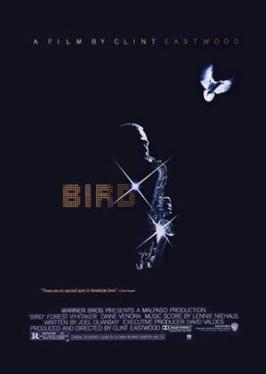
 Forest Whitaker stars as the legendary saxophonist Charlie “Bird” Parker. The film, which is structured around flashbacks and time jumps and features some of the most beautifully-done transitions that I’ve ever seen, follows Parker as he plays his saxophone, challenges the jazz purists who his own individual style, and looks for work in both America and France. Along the way, we watch as he befriends and learns from Dizzy Gillespie (Samuel Wright), mentors a young trumpet player named Red Rodney (Michael Zelniker), and has a complex relationship with a white jazz lover named Chan Parker (Diane Venora). Throughout his life, Charlie Parker struggles with his addiction to heroin and alcohol, occasionally getting clean to just then fall back into his habit. To its credit, the film avoids most of the biopic cliches when it comes to portraying Parker’s addiction. Parker accepts that he’s an addict, just as he accepts that he has a talent that is destined to revolutionize American music.
Director Clint Eastwood has always been a fan of jazz and he actually saw Charlie Parker perform when he was a young man. His love of jazz had been present in almost every modern-era film that he has directed, staring with Play Misty For Me’s lengthy trip to the Monterey Jazz Festival. Bird was a passion project for Eastwood, the first film that Eastwood directed without also appearing in. (Eastwood doesn’t star in his second directorial effort, Breezy, but he does have a brief and silent cameo as a man standing on pier.) Eastwood takes a nonlinear approach to telling the story, eschewing the traditional bopic format and instead putting the focus on Parker’s music. Eastwood was able to get several never bef0re-released recordings of Parker performing and, when Whitaker is blowing into his saxophone in the film, we’re actually hearing Parker. Eastwood’s direction captures the smoky atmosphere of the jazz clubs where Parker and Gillespie made their name while the nonlinear style reflects the feeling of just letting a song take you to wherever it’s going. This is a movie about jazz that plays out like a jazz improvisation.
Forest Whitaker gives an amiable and charismatic performance as Charlie Parker, playing him as someone who has found both an escape and peace in his music, even as he physically struggles with the ravages of his drug addiction. Whitaker won the Best Actor at Cannes for his performance in Bird. Eastwood received the Golden Globe for Best Director. Bird feels like it was labor of love for both of them. Bird may not have set the box office on fire when it was originally released but it remains one of the best jazz films.
 Through the Shattered Lens