4 Shots From 4 Films is just what it says it is, 4 shots from 4 of our favorite films. As opposed to the reviews and recaps that we usually post, 4 Shots From 4 Films lets the visuals do the talking!
Today, the Shattered Lens wishes a happy birthday to English director and editor, John Glen! It’s time for….
4 Shots From 4 John Glen Films
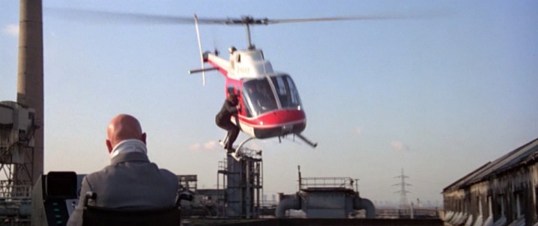
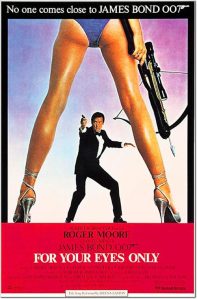
For Your Eyes Only (1981, dir by John Glen, DP: Alan Hume)
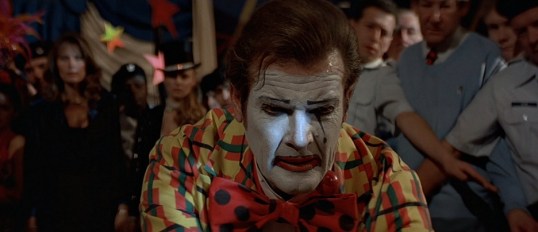
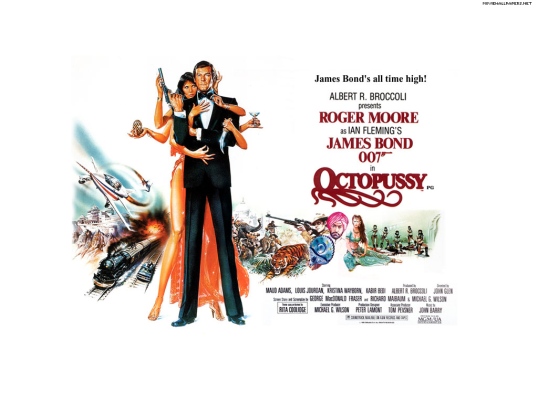
Octopussy (1983, dir by John Glen, DP: Alan Hume)
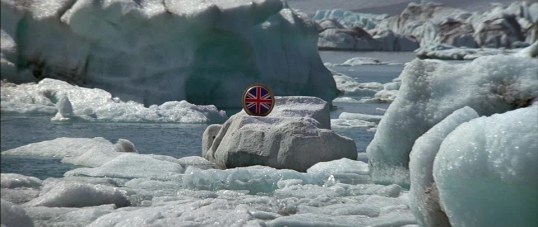
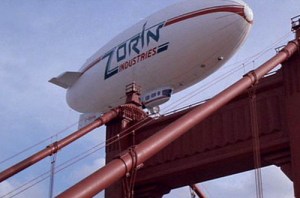
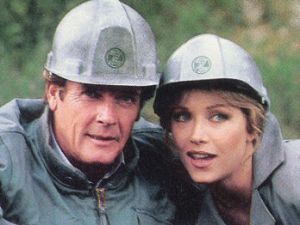
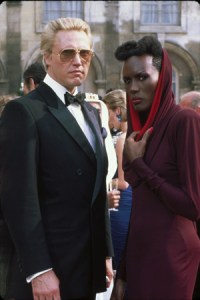
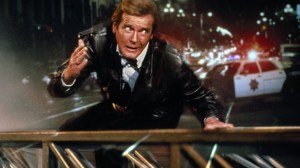
A View To A Kill (1985, dir by John Glen, DP: Alan Hume)
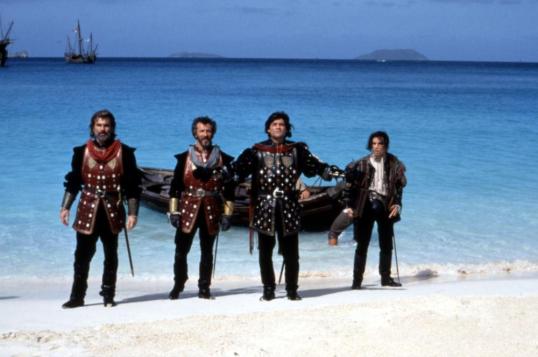
Christopher Columbus: The Discovery (1992, dir by John Glen, DP: Alec Mills)
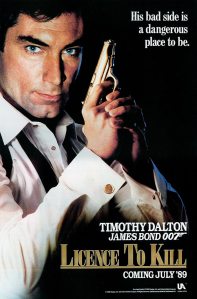
Licence to Kill, which was initially released in 1989,was the 16th “official” James Bond film. It was also the second and the last one to feature Timothy Dalton in the role of James Bond. This is the one where Felix Leiter gets eaten by a shark, Bond resigns from MI6, and ends up going to Central America in search of revenge. Sad to say, it’s also one of my least favorite of the Bond films.
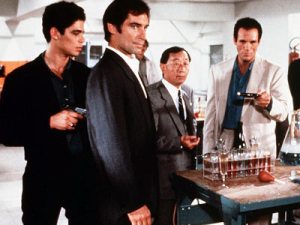
Licence to Kill starts out with Bond in Florida, attending the wedding of his best friend, Felix Leiter (played by David Hedison, who previously played the role in Live and Let Die). However, before going to ceremony, Felix and Bond take a few minutes to arrest notorious drug lord Franz Sanchez (Robert Davi). With the help of a crooked DEA agent (played by a wonderfully smarmy actor named Everett McGill), Sanchez escapes from custody. Accompanied by his psychotic henchman Dario (Benecio Del Toro), Sanchez gets his revenge by killing the new Mrs. Leiter and feeding Felix to a shark. When Bond discover the barely alive Felix, he also discovers a note that (in a scene borrowed from the novel Live and Let Die) reads, “He disagreed with something that ate him.”
Investigating on his own, Bond discovers that Sanchez’s partner in Florida is the wonderfully named Milton Krest (played by a brilliantly sleazy Anthony Zerbe). Soon, James Bond is on a mission of vengeance that involves tracking down and killing every member of Sanchez’s organization. However, M (Robert Brown) doesn’t like the idea of his best secret agent killing the entire population of Florida. Bond responds by resigning from the service and heading to Central America on his own.
In typical Bond film fashion, James Bond manages to infiltrate Sanchez’s organization and Sanchez soon takes a liking to the man who has vowed to kill him. Along the way, Bond romances both Sanchez’s abused mistress Lupe (Talisa Soto) and an ex-CIA agent named Pam Bouvier (Carey Lowell) and the viewers learn that Sanchez’s criminal enterprise not only involves drugs but also a crooked TV preacher (played by Las Vegas mainstay Wayne Newton) as well.
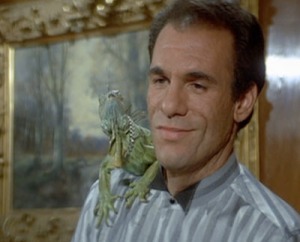
Let’s start with the positive. Robert Davi, playing the role of Franz Sanchez, makes for a memorable villain. Along with the silky charm and hints of madness that we’ve come to expect from Bond villains, Davi brings an almost perverse edge to the character. Every line of dialogue that he delivers is practically dripping with decadence. Whether he’s doting on his pet iguana, his main henchman Dario, or poor Lupe, Sanchez makes for a dangerously charismatic and compelling villain, one that feels like he would have been at home in one of Ian Fleming’s original novels. Wisely, Davi plays his role almost as if he was playing James Bond and, as a result, the scenes that he shares with Dalton all have a crackling energy to them that is missing from the film as a whole.
In fact, almost all of the villains are compelling in this film, from Franz Sanchez all the way down to the lowliest henchman. As played by a very young Benicio Del Toro, Dario is all smoldering intensity and arrogant swagger. Smuggler Milton Krest is played by veteran character actor Anthony Zerbe and he gets one of the bloodiest death scenes in the history of the series. However, I have to admit that my favorite bad guy was Sanchez’s business manager, Truman-Lodge (played by Anthony Starke). Truman-Lodge is just so enthusiastic about the business opportunities that came along with allying oneself with evil that it’s rather infectious.
With such a memorable collection of bad guys, it’s a shame that the film didn’t provide them with any goals worthy of their evil talents. In previous (and future) Bond films, far less interesting villains have still come up with plans to allow them to take over the world. Even Moonraker‘s Hugo Drax was able to overcome his lack of personality and come up with a diabolical intergalactic scheme. Meanwhile, Franz Sanchez — one of the most complex and impressive Bond villains of all time — is simply content to sell drugs and feed people to sharks. It feels almost disrespectful to Davi’s performance that Sanchez’s goals are, ultimately, so boring.
And, in the end, I think that’s the main problem that I have with Licence to Kill. The film feels so predictable. There’s nothing about it that makes it comes across as a story that could only have been about James Bond. Instead, it feels like the type of standard action/revenge film that always seems to come out every summer. The film’s hero might be an Englishman named James Bond but he could just as easily be an American named Jake Sully.
According to Sinclair McKay’s invaluable history of the Bond franchise, The Man With The Golden Touch, Licence to Kill was specifically written to compliment Timothy Dalton’s more “realistic” interpretation of the Bond character. As Dalton played Bond as grim and serious, Licence to Kill is a grim and serious film. Innocents and villains alike die in bloody agony and, the few times that Dalton does smile, the expression looks so unnatural that you worry that his face is about to split in half. Unfortunately, along with being grim and serious, Dalton’s Bond is also remote and uncharismatic and, with the exception of Robert Davi, he doesn’t have any chemistry with anyone else in the cast. (Carey Lowell brings a lot of energy to the role of Pam but Dalton’s Bond never seems to be that into her.) Dalton simply doesn’t make for a very compelling hero and, as a result, Licence to Kill ends up feeling like an empty collection of occasionally impressive stunts.
Licence to Kill holds a few dubious distinctions. It was the least financially succesful of all the Bond films and it was also the last Bond film to be produced by Albert Broccoli and directed by John Glen. It was also the last to feature Robert Brown in the role of M and, of course, it was also the last to feature Timothy Dalton in the role of James Bond. (That’s not all that shocking when you consider just how miserable and bored Dalton seems to be in this film.) Over the next six years, the Bond franchise would be mired in a lawsuit between Eon productions and producer Kevin McClory and when James Bond finally did return, he would do so in the form of Pierce Brosnan.
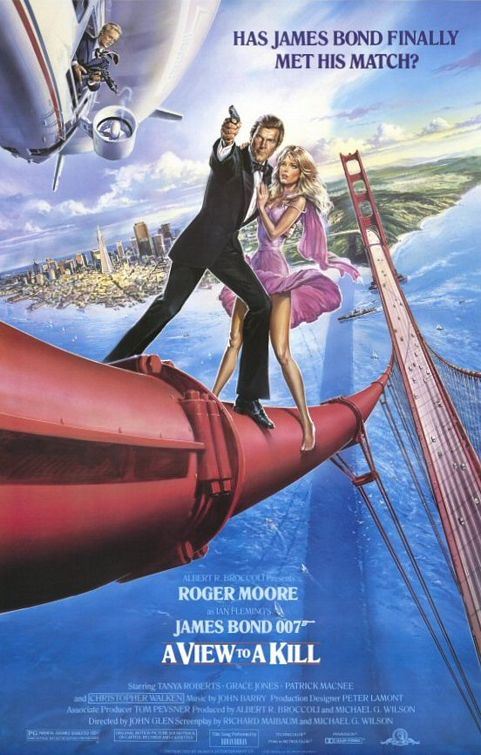
In the days leading up to the American premiere of Skyfall, the Shattered Lens has been revisiting the previous films in the James Bond franchise. Today we take a look at 1985’s A View To A Kill.
Along with bring the 14th “official” Bond film, it was also the last to star Roger Moore in the role of 007. On a personal note, it was also released the same year that I was born. I have to say that I hope I’ve aged better than this film has.
Much like The Spy Who Loved Me, A View To A Kill opens with a ski chase between Bond and a bunch of Russians. And while the chase itself isn’t all that exciting, it does lead to one of the better opening credits sequences of the Bond franchise.
Say what you will about A View To A Kill, it features the perfect theme song. I first heard Duran Duran’s title song long before I saw the actual film. After I graduated high school, I spent the summer in Italy and I can still remember hearing this song blaring from a loud speaker in Venice. With it combination of exuberant music and incoherent lyrics, the song is the perfect soundtrack for both an American girl abroad and a mid-80s spy flick.
A View To A Kill finds James Bond investigating the mysterious industrialist Max Zorin (Christopher Walken). Though Zorin is one of the world’s richest men, MI6 is suspicious of him. Microchips manufactured by Zorin Industries are turning up in Russian submarines. Perhaps even worse, it’s become apparent that, much like Auric Goldfinger, Zorin is a cheater. He owns a champion racehorse but it’s rumored that the horse is somehow being given steroids. MI6 sends Bond and racehorse trainer Sir Godfrey Tibbets (played, quite wonderfully, by Patrick Macnee) to investigate.
These scenes, in which an undercover Bond sneaks around Zorin’s estate in France, are my favorites of the film. Moore and Macnee make for a likable team and it’s fun to watch the two veteran actors play off each other. As well, since these scenes are more about detection than action, it’s easier to ignore the fact that Moore was 58 years old when he made A View To A Kill.
Unfortunately, the rest of the film doesn’t work as well and that’s unfortunate because A View To A Kill starts to get seriously weird as things progress. It turns out that Zorin isn’t just a shady businessman. No, he’s actually the product of Nazi genetic experimentation and, as a result, he’s both a genius and a complete sociopath. What this means is that, opposed to previous Bond antagonists, Zorin spends a lot more time giggling and smiling as if even he can’t believe how evil he is.
Bond ends up following Zorin and his aide, May Day (Grace Jones), to San Francisco. It’s there that Bond discovers that Zorin is planning on setting off a massive underground explosion, in hopes of causing an Earthquake that will totally destroy California. This will allow Zorin to corner the world microchip market and make a lot of money but, for the most part, Zorin just seems to want to do it so that he’ll have something to talk about the next time he gets together with his fellow megalomaniacs.
Once everyone arrives in San Francisco, James Bond ends up teaming up with geologist Stacy Sutton (played by Tanya Roberts, better known as Donna’s mother on That 70s Show). As for Zorin, he divides his time between holding business meetings on his blimp and laughing like a maniac while gunning down random people.
Seriously, it’s an odd film.
Whenever film critics are looking over the Bond films, A View to A Kill seems to be the Bond film that’s destined to get the least amount of respect and admittedly, this is an uneven entry in the Bond franchise. In Sinclair McKay’s excellent look at the oo7 films, The Man With The Golden Touch, Roger Moore is quoted as having been uncomfortable with just how violent A View To A Kill eventually turned out to be and, watching the film, he definitely had a point. It’s odd to see Moore’s light-hearted approach coupled with scenes in which Zorin gleefully kills a thousand people in a thousand seconds. It also didn’t help that, in this film, Roger Moore looked every bit of his 58 years. Never have I been as aware of stuntmen then when I watched A View To A Kill. Finally, Moore and Tanya Roberts have next to no chemistry together.
With all that in mind, A View To A Kill is something of a guilty pleasure and that’s largely because of the bad guys.
If anyone was born to play a Bond villain, it’s Christopher Walken and Max Zorin is an enjoyably over-the-top villain. Whereas previous Bond villains were motivated primarily by greed, Zorin is the first Bond sociopath and Walken seems to be having a blast playing bad. As opposed to the grim bad guys of the past, Zorin laughs and grins through the whole movie and Walken is a lot of fun to watch. Regardless of whatever other flaws that the film may have, Max Zorin is rightly regarded as one of the best of the cinematic Bond villains.
As played by Grace Jones, May Day is one of the franchise’s most memorable and flamboyant villainous lackeys. Much like Richard Kiel in The Spy Who Loved Me, Jones is such a physical presence that she dominates every scene that she’s in. In their scenes together, Walken and Jones have the type of chemistry that’s so noticeably lacking between Moore and Roberts.
As I previously stated, A View To A Kill was Roger Moore’s final appearance as James Bond. Before we started our look at the Bond films, I spent some time researching the history of both the franchise and the men who have played 007. One thing that quickly became apparent was that nearly everyone agreed that Roger Moore is a nice, likable guy but that he didn’t bring much more than likability to the role of James Bond. Having now rewatched the Bond films, I can say that Roger Moore’s performance as James Bond was and is seriously underrated. Yes, Moore may have brought a light touch to the role but his interpretation of Bond was perfect for the films that he was starring in. Much as it’s difficult to imagine Roger Moore in From Russia With Love, it’s just as difficult to visualize Sean Connery in The Spy Who Loved Me. Moore’s greatest talent may have been likability but that likability kept the Bond franchise alive and Moore’s interpretation of the role deserves better than to be continually dismissed.
With Roger Moore leaving the franchise, the role of James Bond would next be played by an actor named Timothy Dalton. If Moore was the likable, fun Bond, Dalton was, in many ways, the complete opposite. We’ll be taking a look at The Living Daylights tomorrow.
We’re at the home stretch in the Roger Moore-era of Ian Fleming’s James Bond film series. During his time in the role as Britain’s super spy extraordinaire we’ve seen him put his own personal stamp on the role. It was a daunting task seeing the role had been played by Sean Connery early in the film series and had done such a great job of making the character such a cultural icon that anyone following him would forever be compared. Moore doesn’t just hold his own, but has built such a loayl following in the role that many consider his portrayal of Agent 007 as the best in the series.
His Bond when compared to Connery’s portrayal was more the witty charmer who tried to use his wits and brains to solve problematic (usually dangerous ones) situations he finds himself in. Connery’s Bond was more the physical type whose charm belied a much darker personality streak that Moore’s portrayal could never pull off no matter how the writers tried.
The Roger Moore-era also redefined the franchise as more more about action and less and less thriller with each new film. This culminates in Moore’s most action-packed film in the role with the 13th Bond film (produced by EON) in Octopussy.
The film begins with one of the more impressive opening sequences in the series as we find Bond in the middle of an undercover mission in Cuba. This intro’s stunt work with Bond piloting a mini-plane in and around Cuban airspace to escape and, at the same time, fulfill his mission remains a highlight in the series where each new film tries to raise the bar in terms of well-choreographed and very complicated action scenes.
Octopussy sees Bond traveling to India, East and West Germany to halt the nuclear and warmongering ambitions of a Soviet general who sees his country’s nuclear disarmament talks with the West as inviting defeat for the Soviet Union. We also have the theft of priceless Russian treasures like the Faberge Eggs being used to finance this general’s plan to complicate bond’s main mission. The plot for Octopussy is a reminder of the time it was filmed in. Reagan and Thatcher had a strong control of the West and their confrontational attitudes towards the Soviet Union and it’s satellite states made people believe that the world was on the brink of war. This public sentiment affected the fiction and entertainment of the time with Cold War thrillers becoming ascendant once more.
As much as the basic outline of the film’s plot looked to be impressive on the face of it the way the story unfolded was quite a hit-and-miss affair. I put some of this on the shoulders of it’s director John Glen who seemed more interested in moving the story from one action scene to the next while paying just the minimum of lip-service to the quieter scenes that occur in-between.
This being Moore’s sixth Bond film we pretty much know how his Bond operates. So, it falls to fleshing out his rivals and enemies to help create a much more interesting film beyond the extravagant action scenes. We learn about the agendas and personalities of Bond’s rivals through too much exposition info dumps. Even the title’ character of Octopussy (played by Maud Adams) we don’t get to learn much of other than a brief personal history dialogue she has with Bond the first time we meet. Of Bond’s two enemies in the film one is the warmongering General Orlov (played by Steven Berkoff) who comes off like an over-the-top caricature with a distinct speech pattern to match. The other is the exiled Afghan prince Kamal Khan who comes off a bit more fleshed out as Octopussy’s covetous partner-in-crime. Louis Jourdan as Kamal Khan plays the role with a sense of panache and joie de vivre that at times he’s able to match Moore’s Bond in the charisma department whenever the two share the screen together.
What should interest people about Octopussy are the very action scenes I spoke about earlier. From the opening sequence in Cuba to a thrilling race against time that traverses from East Germany to West Germany to stop a nuclear weapon from detonating it’s no wonder some people consider Octopussy as a favorite. I enjoyed the film for these very sequences despite missteps in the overall execution of the plot and inconsistencies in the performances of the cast. Yet, the film had the DNA to be much better and after repeated viewings one could see that in the hands of a different filmmaker and changes in the cast this sixth Moore-era Bond film had the potential to be one of the best.
Octopussy would mark the start of the franchise’s decline in the face of much more violent and action-packed action films of the 80’s. The film tried to keep up with this rising trend in action filmmaking during the 80’s. It was able to succeed in a fashion in making the series much more action-packed (though quite bloodless in comparison to what was about to come out of Hollywood in the coming years), but in doing so the film’s storyline and characters suffered that the film doesn’t hold up the test of time unlike some of the early Connery and Moore films.
On a side note, the film did have one of my favorite Bond song’s with Rita Coolidge singing “All Time High” in the intro sequence. A song title that was quite ironic considering that the film definitely didn’t hit an all time high.
For Your Eyes Only marks a few changes in the way EON Productions wanted to go with James Bond. With Moonraker being so over the top, the producers decided to go a little more low key and practical. After working on the 2nd unit for Moonraker and a few other Bond Films, John Glen would step up to the plate as the director for this and every 007 film leading up to Goldeneye. Instead of John Barry working on the music, Bill Conti would take over here, which ended up being a very different kind of sound for the film, one fitting of the early 80s.
For Your Eyes Only opens with an interesting start, having Bond visit the grave of his wife, Tracy, who was killed during the events in Her Majesty’s Secret Service. Bond is informed that his helicopter is ready, but when he climbs inside, he finds that it’s under the control of someone with a serious grudge, and though we can’t see his face, we’re to assume he could be Ernst Starvo Blofeld. Supposedly, the scene, which ends with Bond reclaiming control of the helicopter and dropping the would be Blofeld into a chimney pipe, was a jab at writer Kevin McClory. Over the years, the Thunderball lawsuit caused some rifts between McClory and EON Productions. The statement made with For Your Eyes Only was that EON could come up with plenty of great stories without having to use a signature villain like Blofeld. They’d been successful with two movies back to back using Richard Kiel as the henchman Jaws, and probably felt they were doing pretty well. In reponse, McClory would give the Thunderball another try in the bond film Never Say Never Again (which isn’t part of the EON produced Bond films, and won’t be found in any of their Bond Blu-Ray / DVD compilations.
Similar to Tomorrow Never Dies, the story starts with a boat being attacked and sunk. Bond is asked to retrieve a targeting system from the ship and return it to Britain before the Russians do the same. One of the great things about the time period is that since it was pretty much the Cold War, everything was a black ops -sneak in, sneak out – scenario to avoid World War III and nukes being fired by both sides.
The Bond Girl for this film is Melina Havelock (Carole Bouquet), who I really liked here. After her parents are gunned down on their boat, she picks up a bow and arrow to take revenge. As a result, she manages to run into Bond on a number of occasions and had a real sense of calm to her (or as calm as one could be when facing a giant fellow in a scuba suit). The villain of the story, Kristatos was played by Julian Glover, who I enjoyed in Indiana Jones and the Last Crusade and currently on Game of Thrones. I didn’t care much for him in Harry Potter and the Chamber of Secrets as Hagrid’s pet spider, Aragog. One thing to note about Glover is that at one point, he was approached to actually play Bond after Connery left. An interesting casting choice if you notice him is Charles Dance as one of the henchmen and Fiddler On the Roof’s Topol, who played a former business partner of Kristatos’. I found that kind of fun, that you could see these actors here in 1981 that people are familiar with to some degree. The year this came out, Liam Neeson was in Excalibur, for example.
The story features a number of good moments, particularly a great snow skiing chase, a mountain climb as well as a fight between Bond and some hockey players. There’s even a well filmed underwater sequence. Of the Roger Moore Bond films, I always thought of this one and The Spy Who Loved Me as two of his best. With the mission being as small as it is, there wasn’t a lot of room for anything as wild as Moonraker. It’s a pretty tight, practical film that doesn’t rely too much on the gadgetry of the other films. It should also be pointed out that like The Spy Who Loved Me, the signature car for Moore’s Bond is still a Lotus, as I don’t believe the Aston Martins made an appearance until The Living Daylights. That was a little of a letdown for me, but otherwise, the film is beautiful.
Tomorrow, The Shattered Lens takes on Octopussy, a film that showcases just how deadly the circus can be when James Bond is involved. We’ll leave you with the theme song to For Your Eyes Only, sung by Sheena Easton.
 Through the Shattered Lens