4 Or More Shots From 4 Or More Films is just what it says it is, 4 shots from 4 of our favorite films. As opposed to the reviews and recaps that we usually post, 4 Shots From 4 Films lets the visuals do the talking!
Today, the Shattered Lens wishes a happy birthday to Sylvester Stallone! It’s time for….
4 Shots From 4 Sylvester Stallone Films
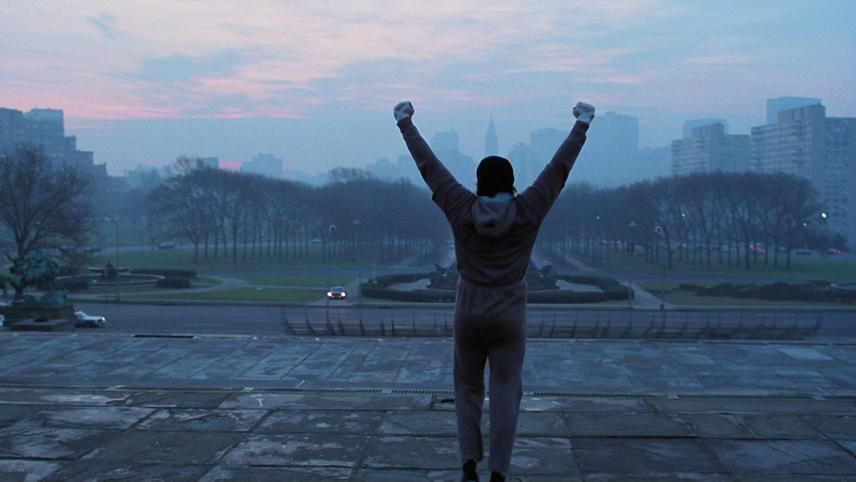
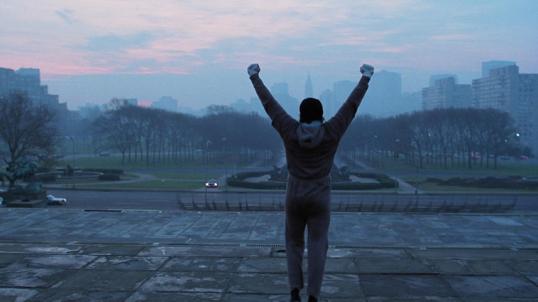
Rocky (1976, dir by John G. Avildsen, DP: James Crabe)
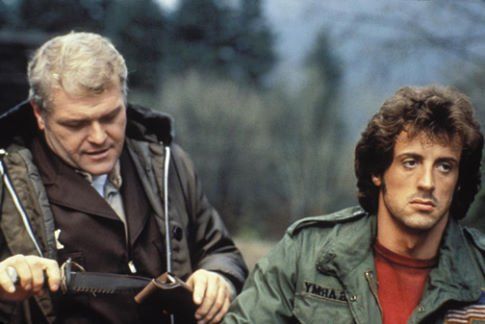
First Blood (1982, dir by Ted Kotcheff, DP: Andrew Laszlo)
Rocky III (1982, dir by Sylvester Stallone, DP: Bill Butler)
Rambo: First Blood Part II (1985, dir by George Pan Cosmatos, DP: Jack Cardiff)
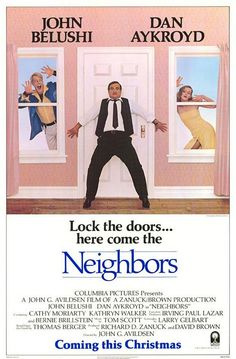
Uptight suburbanite Earl Keese (John Belushi) is paranoid about his new neighbors, Vic (Dan Aykroyd) and Ramona (Cathy Moriarty). Ramona continually tries to seduce Earl (and everyone else) while Vic is loud and obnoxious, always telling off-color jokes and insinuating that Earl is less of a man than he is. Earl thinks that there’s something mentally wrong with Vic but Earl’s wife and daughter (played respectively by Kathryn Walker and Lauren-Marie Taylor) love both Vic and Ramona. Over the course of one very long night and morning, Earl grows more and more suspicious even as he starts to feel truly alive for the first time in several years.
Based on a novel by Thomas Berger, Neighbors is an unfortunate attempt at dark comedy that also turned out to be the final film appearance of John Belushi. It’s appropriate that Belushi’s final film featured him with his comedic partner and best friend, Dan Aykroyd, though I think most of their fans would rather remember them for The Blues Brothers than Neighbors. Originally, Aykroyd was cast as Earl while Belushi was meant to play Vic but the two actors decided to switch roles at the last minute. It takes a while to get used to seeing Belushi as an uptight character who worries about the neighbor’s dog digging up his flower garden but Belushi actually does give a good performance as Earl, revealing that he had more range as an actor that most suspected. Aykroyd and Moriarty also give good performances, though Aykroyd’s performance is not as much a departure as Belushi’s. Earl is an amiable eccentric with several out-there beliefs, which also sounds like a good description of Dan Aykroyd.
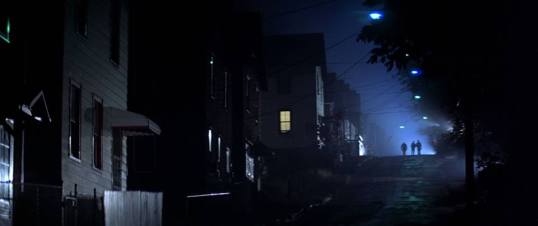
Why, despite the talented cast, does Neighbors fail? Director John G. Avildsen was the wrong choice to direct the film. From the first shot of Earl and Vic’s two houses sitting on a hill and looking like left-over sets from The Addams Family, Avildsen directs in a cartoonish manner that is not appropriate for a comedy-of-manners. The book’s humor comes from Earl becoming progressively more and more unstable but, in the movie, Earl seems to be unhinged from the start. Bill Conti’s musical score drives him every point with a thudding obviousness. Conti’s style was perfect for the soaring anthems of Rocky but not for a comedy like Neighbors.
Unfortunately, this would be Belushi’s final film. Neighbors was released in December of 1981. John Belushi died four months later.
1973’s Save The Tiger tells the story of Harry Stoner (Jack Lemmon).
When Harry was a young man, he loved baseball and he felt like he could conquer the world. He saw combat in World War II and spent the final part of the war on the Island of Capri, recuperating after being wounded in battle. Harry went on to partner up with Phil Greene (Jack Gilford) and they started a clothing company in Los Angeles, Capri Casuals.
Now, Harry is a middle-aged man who is still haunted by nightmares about the war. He’s married. He has a daughter attending school in Switzerland. He’s respected in the industry. He lives in a nice house in Beverly Hills. And he’s totally miserable. He wakes up every day and wonders what is happening to the country. He talks about witnessing a wild pitch at a baseball game, missing the days when something like that could seem like the most important thing in his life. He spends all of his time at work, cheating to balance the books and keeping clients happy by setting them up with a sophisticated prostitute named Margo (played, with a weary cynicism, by Lara Parker).
Save The Tiger covers just a few days in the life of Harry Stoner, as he searches for some sort of meaning in his life. He gives a ride to a free-spirited hippie (Laurie Heineman) who offers to have sex with him. (Harry replies that he’s late for work.) He accepts an award at an industry dinner and, as he tries to give his acceptance speech, he is haunted by the sight of dead soldiers sitting in the audience. With Phil, he debates whether or not to balance the books by setting fire to one of their warehouses in order to collect the insurance. Harry sees a poster imploring him to “Save the Tigers.” Who can save Harry as he finds himself increasingly overwhelmed by the realities of his life?
As I watched Save the Tiger, I found myself thinking about two other films of the era that featured a middle-aged man dealing with a midlife crisis while searching for meaning in the counterculture. In Petulia and Breezy, George C. Scott and William Holden each found meaning in a relationship with a younger woman. And while Petulia and Breezy are both good films, Save The Tiger is far more realistic in its portrayal of Harry’s ennui. There is no easy solution for Harry. Even if he accepted the hippie’s offer to “ball” or if he acted on the obvious attraction between himself and Margo, one gets the feeling that Harry would still feel lost. Harry’s problem isn’t that he’s merely bored with his life. Harry’s problem is that he yearns for a past that can never be recaptured and which may only exist in his imagination. If George C. Scott and William Holden were two actors who excelled at playing characters who refused to yield to the world’s demands, Jack Lemmon was an actor who played characters who often seemed to be desperate in their search for happiness. Save The Tiger features Lemmon at his most desperate, playing a character who has yielded so often and compromised so much that he now has nowhere left to go.
It’s not exactly a cheerful film but it is one that sticks with you. Jack Lemmon won his second Oscar for his performance as Harry and he certainly deserved it. Lemmon does a wonderful job generating some sympathy for a character who is not always particularly likable. Many of Harry’s problems are due to his own bad decisions. No one forced him to use “ballet with the books” to keep his business open and no one is forcing him to hire arsonist Charlie Robbins (Thayer David, giving a performance that is both witty and sinister at the same time) to burn down not only his warehouse but also an adjoining business that belongs to an acquaintance. Harry could admit the truth and shut down his business but then how would he afford the home in Beverly Hills and all the other symbols of his success? Harry yearns for a time when he was young and his decisions didn’t have consequences but that time has passed.
This isn’t exactly the type of film that many would expect from the director of Rocky but director John G. Avildsen does a good job of putting the viewer into Harry’s seedy world. I especially liked Avilden’s handling of the scene where Harry hallucinates a platoon of wounded soldiers listening to his awards speech. Instead of lingering on the soldiers, Avildsen instead uses a series of a quick cuts that initially leave the audience as confused as Harry as to what Harry is seeing. Both Rocky and Save The Tiger are about a man who refuses to give up. The difference is that perhaps Harry Stoner should.
“You can’t play with us, mister!” a kid yells at Harry when he attempts to recreate the wild pitch that so impressed him as a youth. In the end, Harry is a man trapped by his memories of the past and his dissatisfaction with the present. He’s made his decisions and he’ll have to live with the consequences but one is left with the knowledge that, no matter what happens, Harry will be never find the happiness or the satisfaction that he desires. The tigers can be saved but Harry might be a lost cause.
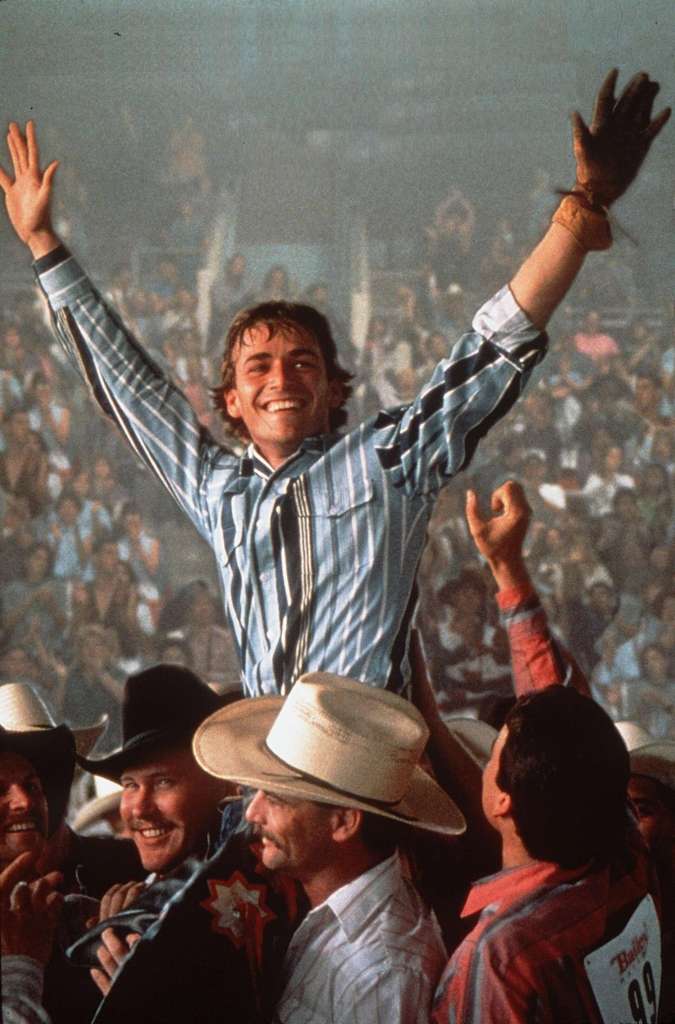
I watched the 1994 film 8 SECONDS today for the first time in close to 30 years. The movie is based on the life of Lane Frost, the world champion bull rider, who tragically died when a bull gored him at the Frontier Days in Cheyenne, Wyoming in 1989 at just 25 years of age. I’ll go ahead and say that I’m about as opposite from a rodeo cowboy as a person can possibly get. I won’t go into all the hows and whys, but I’m actually a little scared of cows and horses. I have my reasons, and I’ll leave it at that. We did attend a rodeo in Cody, Wyoming featuring professional bull riders in the summer of 2023 when we were vacationing in Yellowstone. We enjoyed the evening at the rodeo, but it’s also a brutal sport where professional cowboys were getting thrown off more often than not, and sometimes with some rather serious looking injuries. Even though I’m not a rodeo guy, I do enjoy movies based on real stories and people. The short, but spectacular life of Lane Frost makes for a compelling story.
Our story opens in Oklahoma with a little boy and his dad watching a cattle drive. The boy tells his dad that he isn’t scared of the bulls they are watching. We then see that boy, a young Lane Frost, growing up at the rodeo, first riding sheep and then bulls until he’s being played by Luke Perry. At this point in his life, Lane and his two best friends, Tuff and Cody, are riding the weekend Texas rodeo circuit in towns like Amarillo and Nacogdoches. Lane is a better rider than his buddies, and he’s also great with his young fans. One day Lane notices a beautiful barrel racer named Kellie and asks her to go eat with him. Since they’re in Texas, I enjoyed that he took her to Whataburger. I’ll pause for a quick tangent about why I enjoyed the choice of restaurant for their dinner. Our son grew up in Arkansas on McDonalds as the fast food of choice, but he went to college in Texas. When he first got to East Texas Baptist University, he’d suggest to his buddies on the golf team that they go to Mickey D’s. His buddies, the ones from Texas, would give him hell and say that Whataburger is the ONLY place to go for burgers and fries. His buddies were down right snobbish about it and put down McDonald’s like it was completely second class to the gold standard that is Whataburger. When he told me about it, I just thought it was funny. Tangent over and back to the movie. After this amazing Whataburger experience, we see Lane rising in the rodeo world, while simultaneously romancing and marrying Kellie. From this point forward, the movie settles in with the ups and downs of Frost’s professional life and personal life. We see really high moments like his ascension to world bull riding champion at just 24 years of age, and we see really low moments like their temporary marital separation due to the temptations of being on the road too much. Lane and Kellie eventually reconcile and are in a great place in their relationship when we arrive at that tragic day in Cheyenne.
There are quite a few things that I like about 8 SECONDS, but the main reason is that I like Luke Perry. When I was in college in the early 90’s, I had a standing date with my girlfriend and her older sister to watch every new episode of BEVERLY HILLS 90210. Like most people, that’s where I first got to know Luke. Couple that with his co-starring role on the 1992 film version of BUFFY THE VAMPIRE SLAYER, with the great Rutger Hauer as the head vampire, and I was a fan for life. Our kids got to know him on the Netflix show RIVERDALE, so it was nice to see them discover him as well. It was a real shame that we lost Luke Perry in March of 2019 at 52 years old. I also like that Lane Frost’s mom in the movie is played by actress Carrie Snodgress. Carrie played the evil villainess Joan Freeman who sliced Charles Bronson’s stomach with an axe in MURPHY’S LAW. It made me happy to see her again as I had forgotten she was even in the movie. It’s also interesting to see a young Renee Zellweger pop up as a tempting “Buckle Bunny” a couple of years before she hit the real big time with JERRY MAGUIRE. I like that John G. Avildsen directed 8 SECONDS. Avildsen has directed classics like ROCKY and THE KARATE KID. This may not rise to those heights, but it has its share of touching and stirring moments, which is a specialty of the veteran director. I’ll admit to a couple of tears when Lane’s often critical dad (veteran actor James Rebhorn) finally tells him that he’s proud of him, something that Lane has been needing to hear for years. Additional misty moments occurred when Lane’s longtime buddy Tuff (Stephen Baldwin) dedicates his own national championship ride to Frost, riding his bull for 16 seconds instead of eight. Finally, I like country music and Vince Gill, McBride & the Ride, and Brooks & Dunn all perform in the movie at different times. The early 90’s were an extremely popular time in country music and it’s fun seeing these stars pop up.
As I close this review, I wanted to point out one last thing about 8 SECONDS that I really enjoy. The film’s credits last for over 10 minutes and they’re played over pictures and videos of the real life Lane, Kellie, Tuff, Lane’s parents, and others. It’s quite touching as we see the real people and many of the real events that inspired what we had just watched in the movie. It’s quite poignant and brings the movie home in a way that feels genuinely special.
4 Shots From 4 Films is just what it says it is, 4 shots from 4 of our favorite films. As opposed to the reviews and recaps that we usually post, 4 Shots From 4 Films lets the visuals do the talking!
Today, I’m using this feature to take a look at the history of the Academy Award for Best Picture. Decade by decade, I’m going to highlight my picks for best of the winning films. To start with, here are 6 shots from 6 Films that won Best Picture during the 1970s! Here are….
6 Shots From 6 Best Picture Winners: The 1970s
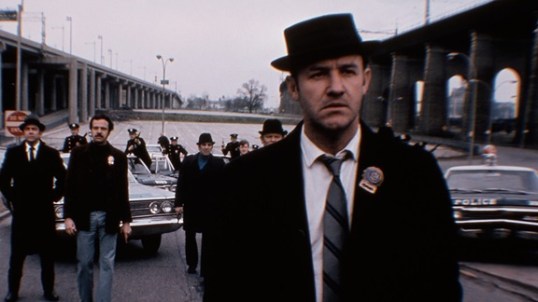
The French Connection (1971, dir by William Friedkin, DP: Owen Roizman)
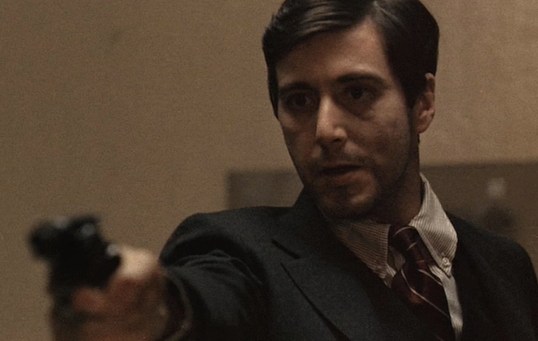
The Godfather (1972, dir by Francis Ford Coppola, DP: Gordon Willis)
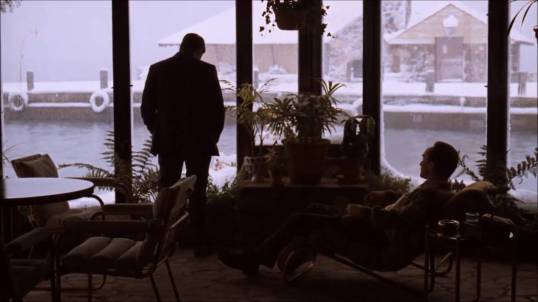
The Godfather Part II (dir by Francis Ford Coppola, DP: Gordon Willis)
One Flew Over The Cuckoo’s Nest (1975, dir by Milos Forman, DP: Haskell Wexler and Bill Butler)
Rocky (1976, dir by John G. Avildsen, DP: James Crabe)
The Deer Hunter (1978, dir by Michael Cimino, DP: Vilmos Zsigmond)
Finally, I am getting a chance to continue my series of Back to School reviews!
Earlier today, we had a pretty big storm down here in Texas and it knocked out the electricity for three and a half hours! There I was, sitting in the dark and wondering if I would ever get a chance to review the 16th movie in this 56-film review series.
(Originally, I was planning on being done by this weekend but, as always seems to happen whenever I do a review series, I’m currently running behind so it’ll probably won’t be until the weekend after next that I post my final Back to School review.)
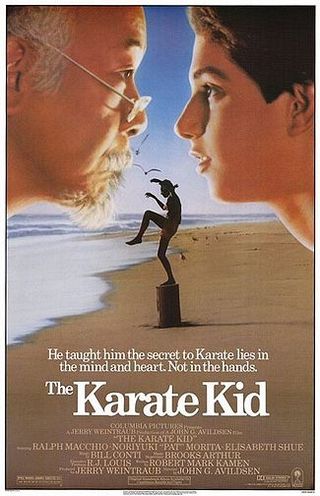
Fortunately, the Oncor truck eventually showed up in the alley. I, of course, ran out into the back yard and started to shout at them, “I need power! I have movies to review!” They must have heard me because, suddenly, the power came back on. And now, I can finally get around to sharing a few thoughts on the original, 1984 version of The Karate Kid!
Up until last night, believe it or not, I had never seen The Karate Kid before. Certainly, I knew about it. Much like Star Wars and Star Trek, The Karate Kid is one of those cultural landmarks that everyone knows about even if they haven’t actually sat down and watched the movie. Even before I watched the film, I knew about Mr. Miyagi. I knew about “wax on” and “wax off.” I knew about the crane. I even knew about “You’re alright, LaRusso!”
But I hadn’t actually seen the film and I have to admit that I was a little bit hesitant about doing so. Everything I had heard about The Karate Kid made it sound like a thoroughly predictable and excessively 80s sports film. I was expecting the film to be all about power ballads and training montages and uplifting dialogue and certainly, The Karate Kid had a lot of that.
But what took me by surprise is what a genuinely sweet movie The Karate Kid is. Yes, it’s predictable and it’s full of clichés but dammit, it all works. It still brought tears to my mismatched eyes.
The karate kid of the title is Daniel LaRusso (Ralph Macchio), who moves, with his mother, from New Jersey to California. Daniel’s a nice kid who has learned a little karate from reading books but he’s still no match for the bullies at his new high school. Daniel does get a girlfriend, Ali Mills (Elisabeth Shue, giving a performance that feels far more genuine than any of her more recent work), but even that leads to him getting in trouble. It turns out that Ali’s ex-boyfriend is Johnny (William Zabka), the top student at Cobra Kai. Oddly enough, Johnny’s teacher is also named John. John Kreese (Martin Kove) is a Vietnam veteran who decorates his dojo with pictures of himself looking threatening. Kreese, we soon discover, is a total psychopath. “NO MERCY!” he shouts at this students.
When Johnny and his fellow Cobra Kai students beat up Daniel on Halloween, Daniel’s life is saved by Mr. Miyagi (Pat Morita). Mr. Miyagi may appear to just be a simple maintenance man but he’s actually a total badass. He teaches Daniel not only the moves of karate (“Wax on…wax off…”) but the philosophy as well. He explains to Daniel that there are “No bad students. Just bad teacher.” In short, he is the exact opposite of Kreese.
Who is the better teacher? That’s a question that will be answered when Daniel faces off against the Cobra Kai bullies at the Under-18 All-Valley Karate Tournament. Can Daniel defeat Johnny, win Ali’s love, and earn the right to live free of harassment?
Well, it would be a pretty depressing movie if he didn’t…
Anyway, The Karate Kid turned out to be a really sweet and likable movie. I was never surprised by the movie’s plot but I still found myself being drawn into the story and hoping that everything would work out for Daniel and Ali. The character of Mr. Miyagi has been parodied in so many other films that I was a bit surprised to see just how good Pat Morita was in the role. Yes, Morita gets to say a lot of funny lines but he also gets a rather harrowing dramatic scene where talks about how his wife and child died while he was away, serving in the army.
It’s interesting to note that, at the end of the film, even Johnny got to show a glimmer of humanity, suggesting that even the worst jerk in the world can be redeemed by a good ass-kicking. That said, Kreese is pure evil from beginning to end and Johnny’s friend, Dutch (played by Chad McQueen), is about as scary a high school bully as I’ve ever seen. But at least Johnny is willing to admit the truth.
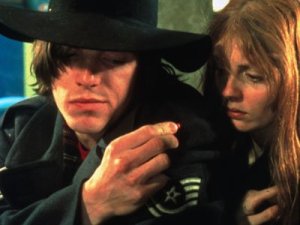
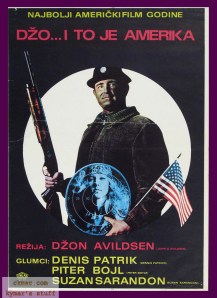
On Monday night, my movie before bedtime was an old one from 1970, John G. Avildsen’s Joe. Though Joe is an occasionally uneven and rather heavy-handed film, it’s also a brutally effective one that I haven’t been able to get out of my mind since watching it.
Joe opens with Melissa Compton (played by Susan Sarandon, in her film debut) and her boyfriend, Frank Russo (Patrick McDermott). It is quickly established that Melissa is a “rich girl” who has dropped out of society while Frank is a drug dealer. Frank, incidentally, is probably one of the least likable characters in the history of cinema. When we first meet Frank, he’s taking a bath but it makes no difference as the character just seems to covered in a permanent layer of grime. Both Frank and Melissa are also drug addicts.
Patrick McDermott (left) and Susan Sarandon
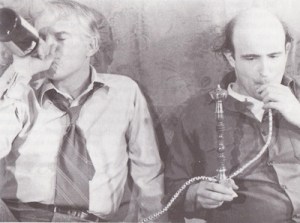
When Melissa has a drug overdose and ends up in the hospital, Frank doesn’t really care but her father, advertising executive Bill Compton (Dennis Patrick) does. He promptly goes over to Frank’s apartment and after Frank taunts him by saying that Melissa “had a real hang-up about you,” Bill beats Frank to death in a fit of rage. Shaken by his actions, Bill goes to a neighborhood bar where he runs into a factory worker named Joe Curran (Peter Boyle). A drunken Joe rants about how much he would like to kill a hippie. Bill replies, “I just did.”
This leads to an odd relationship between the two men. While Bill originally fears that Joe wants to blackmail him, Joe appears to just want to be his friend. Soon, Joe is introducing Bill to his bowling league and Bill introduces Joe to his colleagues at the advertising firm. Bill and his wife even have a memorably awkward dinner with Joe and his wife. Bill’s wife worries that Joe might be dangerous but Bill smugly assures her that he is Joe’s hero.
Meanwhile, Melissa is released from the hospital and moves back in with her parents. One night, she hears them talking about how Bill killed Frank. Melissa flees from the apartment and when Bill chases after her, she shouts at him, “Are you going to kill me too!?” before disappearing into the New York night.
Searching for Melissa, Bill and Joe go to various hippie hangouts in Manhattan. Every hippie they meet tends to be dismissive of the suit-wearing Bill and the uneducated Joe. However, once Bill reveals that his car is full of drugs that he stole from Frank, the hippies are suddenly a lot more friendly. A group of hippies take Joe and Bill back to their apartment. At Bill’s insistence, both of the men smoke weed for the first time and then have sex with two of the hippie girls. While they’re busy doing it, the rest of the hippies steal their money and all of the drugs.
Suddenly, Joe takes charge of the situation, leaving Bill to watch helplessly as Joe repeatedly slaps one of the girls until she tells them where her friends have gone. (I’ve seen a lot of movies and I like to think that there’s little I can’t handle watching but the scene where Joe interrogates the girl was genuinely disturbing and I actually had a hard time watching it. This was largely due to the intensity of Boyle’s performance.) Joe drags Bill to the commune where the hippies live. Standing outside the house, as snow falls around them, Joe gets two hunting rifles out of his car and tosses one to Bill before the film reaches its inetivable conclusion.
Joe With Friend
Like many films released in the early 70s, Joe is distinguished by a continually shifting tone. The film’s opening (which feature Susan Sarandon getting naked and then watching her disturbingly unhygienic boyfriend shooting up) feels almost like it’s composed of outtakes from some lost Andy Warhol Factory film while the scenes immediately following Melissa’s drug overdose feel like a melodramatic Lifetime special. After Bill kills Frank, the film briefly becomes a Hitchcockian thriller just to then segue into heavy-handed social satire as we watch the development of Joe and Bill’s unlikely, hate-fueled friendship. The awkward comedy continues for a while until, somewhat jarringly, Joe suddenly becomes a violent revenge film. While many films have been doomed by the lack of a consistent tone, it actually works here. Joe‘s odd mishmash of comedy, tragedy, and exploitation actually perfectly reflects the uncertain worldview and hidden fears of Bill Compton. Much as the audience is often times left uncertain whether they’re watching a comedy or a tragedy, Bill is a man who is no longer sure how to react to the world around him.
And make no doubt about it, Joe may be the title character but the film is truly about Bill Compton. It’s Bill’s repressed anger (and desire for his own daughter) that fuels the plot. As played by Dennis Patrick, Bill Compton is the type of smugly complacent figure whose outward confidence hides the fact that he’s been rendered impotent by the world changing around him. For the majority of the film, Bill looks down on both sides of the cultural divide, looking down on both his daughter’s hippie friends and his new blue-collar acquaintance Joe. (He assures his wife that Joe would never attempt to blackmail him because Joe “looks up” to him.) It’s only at the film’s conclusion that Bill realizes just how powerless he is to control anything. In those final scenes, Dennis Patrick’s face reveals what the audience has already figured out. By trying to place himself above it all, he’s left himself with nowhere to go.
Dennis Patrick (left) and Peter Boyle
That said, the film truly is dominated by Peter Boyle’s demonic performance as Joe. For much of the movie, Joe is a buffoonish figure (he even gets his own mocking theme song “Hey Joe” which plays as he wanders around his house and scratches his navel) and it’s sometimes hard not to feel like you’re watching a long-lost episode of Everybody Loves Raymond where Frank Barone remembers the time that he killed a lot of hippies. However, once Bill and Joe find themselves searching for Melissa among the hippies, Boyle slowly starts to pull back the layers and a new, far more threatening Joe emerges. By the end of the film, Joe has become a nightmarish figure and we’re forced to reconsider everything that we’ve previously assumed. By the film’s end, Joe almost seems to be a direct personification of Bill’s Id, a man who exists solely to force Bill to do what he’s always secretly wanted to do.*
When Joe was first released back in 1970, it apparently made a lot of money, generated a lot of controversy, and even managed to score an Oscar nomination for best original screenplay. Oscar nomination aside, Joe is the epitome of a well-made and effective exploitation film. While Joe and Bill are basically counter-culture nightmares of a murderous American establishment, the film’s hippies are portrayed as being so smug and so scummy that I’m not surprised to read that apparently audiences cheered once Joe and Bill started gunning them down. (Peter Boyle, however, was apparently so shocked that he swore he would never make another film that “glamorized violence.”) By embracing the best traditions of the grindhouse and attempting to appeal to both sides of the cultural divide in the crudest way possible, the filmmakers ended up making a film that, over 40 years later, somehow feels more honest than most of the other “generation gap” films of the 60s and 70s.
As any film lover knows, any film made between 1966 and 1978 tends to age terribly, to the extent that often times they’re impossible to take seriously when watched today. (And anyone who doubts me on this should track down films like R.P.M, Thank God It’s Friday, Skatetown U.S.A., Getting Straight, and Zabriskie Point.) However, watched today in our present age of Occupiers and Tea Partiers, Joe still feels relevent and, at times, downright prophetic.
—-
* In many ways, Joe Curran is a cruder, balder version of Tyler Durden.
A few days ago, I set the DVR to record the 1976 Best Picture winner Rocky off of TCM. Last night, I finally got a chance to sit down and actually watch it.
Why Was I Watching It?
I’ll be honest here and admit that I wasn’t watching it because I’ve ever had any great desire to see this movie or, for that matter, any other Sylvester Stallone film. (Though, for the record, I thought the Expendables was vaguely entertaining.) However, this being Oscar season, my mind right now is pretty much dominated by 1) a mental list of all 493 best picture nominees and 2) an obsessive need to see every single one of those films.
And since we’re focusing on reviewing best picture nominees this month, I figured why not take this opportunity to watch Rocky. After all, I thought, this is the film that managed to win best picture over Network, Taxi Driver, and All The President’s Men. How bad can it be?
What’s It About?
So, there’s this guy named Rocky Balboa (Sylvester Stallone) and he’s got to be the nicest Mafia goon alive. He spends his time collecting debts for the local loan shark (played by the Maniac himself, Joe Spinell) but he refuses to break anyone’s thumbs while doing so and even offers up helpful advice like, “Yo, you got to start thinking.” Spinell’s all like, “Rocky, why aren’t you breaking anyone’s thumbs?” and Rocky says he doesn’t want to and Spinell’s all like, “That’s okay,” because oddly enough, Joe Spinell is the only guy in the Mafia who is nicer than Rocky.
Anyway. Rocky is also a boxer who fights “bums” (as his trainer Burgess Meredith is fond of bellowing) and who is sweetly courting Adrian (Talia Shire), a shy girl who works in the local pet store. Adrian’s brother (played by Burt Young) is named Paul but since everyone in the film is Italian, he’s called “Paulie” instead. (I can say this because I’m a fourth Italian and if your name is Paul, I’m going to call you “Paulie” whether you like it or not.)
Anyway, there’s another boxer (played by Carl Weathers) and he’s named Apollo Creed. Apollo is the champ because when you’ve got a name like Apollo Creed, you better be the best or else you’re just going to look silly. For publicity reasons, Apollo gives the unknown Rocky the chance to fight him for the championship. Apollo is expecting an easy fight but he hasn’t taken into consideration that Rocky is not only willing to run every morning but he’s willing to run up steps as well!
What Worked?
(WARNING: SPOILERS BELOW.)
The love story between Rocky and Adrian was kinda sweet, largely because Talia Shire and Sylvester Stallone both had a very genuine chemistry and Shire gave such a good performance that Stallone (who spends most of the film coming across like a parody of a method actor) gives a better performance when he’s sharing the screen with her. I spent a lot of this movie rolling my eyes at just how shamelessly manipulative it was but I have to admit that the final scene — with Adrian going “I love you, Rocky,” and a bloody and kinda gross-looking Rocky replying with a heartfelt, “I love you!” — brought tears to my multi-colored eyes.
What Didn’t Work?
Rocky has got to be one of the most shamelessly manipulative films ever made. Director John G. Avildsen (who won best director while Martin Scorsese wasn’t even nominated for Taxi Driver) pushed every obvious button and used every technique at his disposal to force the audience to root for Rocky. Hence, we get the famous training montage set to soaring music and the subtle appeals to racism that are inherent in the portrayals of Apollo Creed and his entourage. Admittedly, one reason that a lot of these scenes fell flat is because I’ve seen them duplicated in thousands of other sports films. I know its possible that the reason I’ve seen them duplicated is because of Rocky’s success but still, it doesn’t make those scenes feel any less obvious and vaguely silly.
Do you know how sometimes you just watch a movie and you go, “There is absolutely nothing in this movie for me to relate to and I really should be watching the Real Housewives of Beverly Hills right now?” Well, my reaction to Rocky wasn’t that extreme but it was pretty close. I watched this film — which I’ve seen described as one of the most emotional films ever made — feeling oddly detached from everything I was seeing on-screen, my attention only being held by a clinical fascination concerning just how shamelessly manipulative this film was. Try as I might, I simply could not get emotionally invested in what I was watching. Some of that, undoubtedly, has to do with the fact that I’m not into sports films in general. However, I think most of it comes down to the fact that I have a vagina and, quite frankly, the appeal of Sylvester Stallone is lost on me.
Speaking of the appeal of Sylvester Stallone…
“Oh my God! Just like me!” Moments:
None. It’s rare that I say that because I can usually find a way to relate any movie I see to my life but Rocky was just too alien to me.




 Through the Shattered Lens