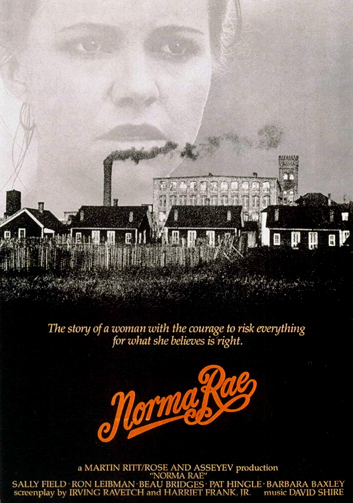
Late Night Retro Television Review: Highway to Heaven 4.12 “With Love, The Claus”


Welcome to Late Night Retro Television Reviews, a feature where we review some of our favorite and least favorite shows of the past!  On Thursdays, I will be reviewing Highway to Heaven, which aired on NBC from 1984 to 1989.  The entire show is currently streaming on Tubi and several other services!
Merry Christmas!

Episode 4.12 “With Love, The Claus”

(Dir by Michael Landon, originally aired on December 23rd, 1987)

Jonathan and Mark find themselves working for a lawyer named Paul Burke (John Calvin).  It’s the Christmas season and they help Paul out by taking his son to Newman’s Department Store.  The kid wants to talk to Santa.  What the kid doesn’t know is that there are several Santas at Newman’s.  They work in shifts and they’re pretty cynical.  However, the newest Santa (Bill Erwin) takes his job very seriously because …. he is Santa!

So, why is Santa working at a department store instead of getting things ready up at the North Pole?  This episode never really explains.  Instead, we get Santa taking offense when he’s asked to help the store sell it’s latest toy.
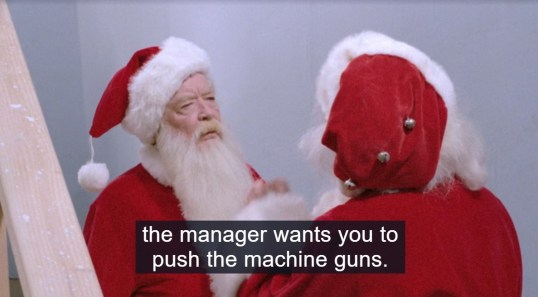
Santa says that there’s no way he’s going to push machine guns.  He’s about peace and love!  His boss, Mr. Grinchley (Robert Casper), threatens to fire him.  Santa doesn’t react well to that.
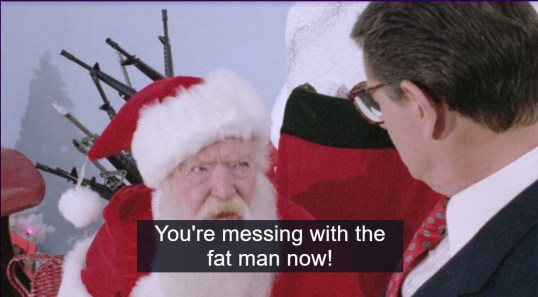
Santa ends up unemployed and with nowhere to live.  Jonathan arranges for Paul to represent Santa in a lawsuit that Santa has filed against Newman’s Department Store.  The lead counsel for Newman’s just happens to Paul’s ex-wife, Donna (Wendie Malick).

You can probably guess where all this is going, right?  Santa eventually ends up in jail after the chairman of Newman’s files a lawsuit against him.  Santa says that he can’t stay in jail because Christmas Eve is approaching.  Maybe Santa should have thought about that earlier.

This episode owed a lot to one of my favorite Christmas movies, Miracle on 34th Street.  Of course, Miracle on 34th Street featured Edmund Gwenn, who gave a delightful performance as Santa.  This episode features Bill Erwin, who basically plays Santa as being a half-crazed grump who won’t stop complaining.  Seriously, this episode may feature the most unlikable Santa Claus this side of Rudolph The Red-Nosed Reindeer.  I don’t know why Michael Landon directed Erwin to play Santa as if Santa was plotting to kill all of his enemies but it definitely wasn’t the right approach.

Seriously, Santa is really self-righteous in this episode.

I hate to criticize a Christmas episode and, as always, I’m sure that Michael Landon had the best and the sincerest of intentions.  But this episode just didn’t work for me.  Santa was too much of a jerk.
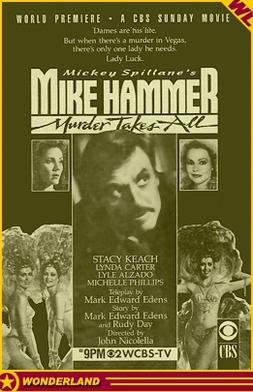
Mike Hammer: Murder Takes All (1989, directed by John Nicollela)


Entertainer Johnny Roman (Ed Winter, best-known as the crazed Colonel Flagg on M*A*S*H) sends an invitation to New York P.I. Mike Hammer (Stacy Keach), asking him to come to Vegas for a job.  Hammer refuses.  Vegas is not for him.  He’s pure New York.  So, someone has Hammer abducted and thrown out of an airplane over Vegas.  Luckily, they gave Hammer a parachute.  Unluckily, for them, Hammer is now in Las Vegas and he’s pissed off.

Johnny, who says he had nothing to do with the kidnapping and just wants Hammer to help him deal with a singer who has been stealing from him, is killed by an explosive device while hosting a telethon.  Everyone suspects Hammer.  When the singer that Hammer was supposed to investigate also turns up dead, Hammer is again suspected.  Hammer has to clear his name while dealing with guest stars ranging from Lynda Carter to Michelle Phillips to Jim Carrey.

Stacy Keach was Mike Hammer for most of the 80s, playing Mickey Spillane’s notorious detective in a television series and in several made-for-TV movies, like this one.  Television was an awkward fit for Mike Hammer, or at least Hammer the way he was imagined in the books.  Mike Hammer was written to be a killer with his own brand of justice.  He was not written to be a nice person.  Instead, he was the brutal but intelligent warrior that you hoped would be on your side.  The television version of Mike Hammer was considered to be violent for the era but the show still toned down Hammer’s signature brutality.  Keach’s Hammer still killed people but he no longer gloated about it.  Stacy Keach, with his trademark intensity, was a good pick for Mike Hammer, even if the show’s scripts often let him down.

This movie is hamstrung by the fact that it was made-for-TV.  Hammer is not happy about being in Las Vegas but he can’t go off on the city in the same way that he would have in one of Mickey Spillane’s novels.  Keach still gives a good and tough performance as Hammer, getting as close to the character as anyone could under the restrictions of 80s network television.  The mystery is interesting, though Hammer doesn’t really solve it as much as he just waits until all the other suspects have been killed.  The main attraction of this one is the amount of guest stars who show up.  Lynda Carter is a great femme fatale and it’s always good to see Michelle Phillips, even in a small role.  Jim Carrey, in his pre-In Living Color days, plays an accountant and does okay with a serious role.

Who could play Mike Hammer today?  It’s hard to say.  There aren’t many believably tough actors around anymore and even those who do seem like they could hold their own in a fight don’t have the gritty world-weariness that the character requires.  (Just try to imagine Dwayne Johnson reenacting the end of I, the Jury.)  A few years ago, I would have said Frank Grillo.  In the 90s, Bruce Willis would have been the perfect Hammer.  Today, though, Mike Hammer’s time may finally have passed.

Lisa Reviews An Oscar Nominee For Labor Day: Norma Rae (directed by Martin Ritt)


Earlier, in honor of Labor Day, I reviewed one of the most anti-labor union films ever made, the 1954 Oscar winner On The Waterfront.  In the interest of fairness, it only seems right to now take a look at one of the most pro-union films ever made, the 1979 best picture nominee Norma Rae.

Norma Rae takes place in one of those small Southern towns that is defined by just one industry.  In this case, almost everyone in town works for minimum wage at the local textile mill.  Conditions are terrible, with the employees working long and brutal shifts in a hot and poorly ventilated factory.  The overwhelming roar of the machines have left the majority of the workers deaf to reality, both figuratively and literally.  The mill is run by the usual collection of slow-talking, tie-wearing rednecks who always seem to show up in movies like this.

One day, a union organizer from New York shows up in town.  Brash and cocky, Ruben Warshowsky (Ron Leibman) is determined to unionize the mill but, at first, he struggles.  Nobody wants to risk their job by being seen with him and his Yankee manners rub many of the townspeople the wrong way.

Eventually, Ruben does find one ally.  Norma Rae (Sally Field) has worked at the mill her entire life.  She’s tough and determined but she’s also regularly shunned because of her past.  A widow who has three children (“She’s had a child out of wedlock!” a judgmental union organizer tells Ruben in a near panic), Norma channels her frustration into drinking too much and having an affair with a married (and abusive) salesman.

Two things happen that give Norma Rae a new purpose in life.  First off, she meets and marries the well-meaning but chauvinistic Sonny (Beau Bridges).  Secondly, she helps Ruben in his efforts to unionize the plant, even at the risk of going to jail and losing her job.   With the mill’s management spreading untrue rumors about Norma’s relationship with Ruben, her dedication to the union soon starts to threaten her marriage to Sonny.

I have to admit that I have mixed feelings about Norma Rae.  In many ways, Ruben is an annoying character.  He’s so brash and so smugly out-of-place that I actually found it difficult to consider any of the points that he was making.  I suppose that was partly intentional.  Ruben can’t accomplish anything until he gets Norma Rae on his side.  But, at the same time, there was something very condescending about Ruben as a character.  Much like the villainous rednecks in charge of the mill, Ruben felt like a stock character.  He was Super Yankee, bravely venturing below the Mason-Dixon Line to bring the truth to all of us stupid Southerners.  Whenever Ruben smirked and started to complain about how dumb everyone else was, I was reminded of why I never wanted much to do with the whole Occupy Movement.

As well, Norma Rae is one of those films that technically takes place in the South but it’s the South of the Northern imagination.  The accents were inconsistent and the dialogue often tried way too hard to sound “authentic.”  Ultimately, Norma Rae lacked the artistry necessary to disguise its more heavy-handed moments.

And yet, I still liked Norma Rae.  It had nothing to do with the film’s political message and everything to do with the character of Norma Rae.  Sally Field gives such a good performance as Norma, making her both strong and vulnerable.  The film’s best moments are the ones where Norma stands up for herself and does what she feels is right, despite the opposition from the mill’s management, Sonny, and her father (Pat Hingle).  Towards the end of the film, there’s a simply incredible scene where Norma finally tells her children about her past and, at that moment, Norma Rae reveals itself to be a great and heartfelt tribute to the strength and resilience of women everywhere.  At that moment, Norma’s strength reminded me of the greatest woman that I’ve ever known, my mom.  It made me appreciate the struggles that my mom went through as she raised four strong-willed daughters on her own, while working crappy jobs and dealing with a society that is always threatened by and cruelly judges a woman who refuses to settle.  Personally, I think Norma could have done better than Sonny and that Ruben should have been called out for constantly talking to down to her but what’s important, in the end, is that Norma never stopped standing up for what she believed.  By the end of the film, Norma is standing in for every woman who has ever been underestimated or judged or told that her opinions didn’t matter.  Norma is standing up for all of us.

Sally Field won an Oscar for her role in Norma Rae.  Off the top of my head, I have no idea who she defeated for the award.  (Yes, I know that I could just look it up on wikipedia but that’s not the point.)  But, regardless of her competition, it’s an honor that she definitely deserved.

Norma Rae