Today, the Shattered Lens wishes a happy birthday to the one and only Liza Minnelli. Here she is, in today’s scene that I love, performing Money with Joel Grey in 1972’s Cabaret.
Today, the Shattered Lens wishes a happy birthday to the one and only Liza Minnelli. Here she is, in today’s scene that I love, performing Money with Joel Grey in 1972’s Cabaret.
“The Love Boat will not be reviewed tonight so that we might bring you this special presentation….”
My Retro Television Reviews, including my reviews of The Love Boat, will return next week. For now, let’s enjoy a blast from the past. First aired in 1973, Don’t Call me Mama Anymore was the second television special to feature Cass Elliott. Like the first one, it was essentially a pilot for a weekly variety show. This special was a far better showcase for Cass Elliott and it actually led to her getting a show for the 1974 season. Unfortunately, Cass passed away in London before filming began.
For now, here is Don’t Call Me Mama Anymore, featuring Cass Elliott, Joel Grey, Michelle Phillips, and Dick Van Dyke.
Today, the Shattered Lens wishes a happy birthday to the one and only Liza Minnelli. Here she is, in today’s scene that I love, performing Money with Joel Grey in 1972’s Cabaret.
1976’s Buffalo Bill and the Indians, or Sitting Bull’s History Lesson takes place in the waning years of the Old West. Civilization is coming to America and the “wild” west’s days are numbered. And yet, even as the days of outlaws and gunslingers come to an end, America is already in the process of building up its own mythology.
Buffalo Bill (Paul Newman) owns a popular wild west show, one where his stars put on a show that claims to recreate the great moments of western history. The show is made up of a motely collection of performers, some of whom are more talented than others. This is a Robert Altman film and, as usual, the emphasis is more on watching how his large ensemble of actors interact as opposed to highlighting any one actor. Indeed, it can be hard to keep everyone in the film straight and one gets the feeling that this was intentional on Altman’s part. Buffalo Bill and the Indians may be a revisionist western and a satire of American history but it’s also a showbiz film. The emphasis is on people continually coming and going, sticking around long enough to either prove their worth as a performer or moving on to a hopefully more receptive audience.
Geraldine Chaplin plays Annie Oakley, the sharp shooter who takes joy in firing her gun and who barely seems to notice that her husband (John Considine) is terrified of getting shot. Joel Grey serves as the unflappable manager of the show while Harvey Keitel is miscast as Buffalo Bill’s somewhat nerdy assistant. (Keitel, with his natural intensity, seems like he’s desperately waiting for a chance to explode, a chance that never really comes.) Burt Lancaster plays Ned Buntline, the writer who made Buffalo Bill into a celebrity and who provides a somewhat sardonic commentary as Bill’s current activities. Shelley Duvall shows up as the wife of President Grover Cleveland (played by Pat McCormick), who comes to the show and is amused until an Indian points a gun towards the president.
Throughout it all, Buffalo Bill enjoys his fame and pushes his vision of the Old West on those who come to see his show. Newman plays Bill as being a blowhard, an eccentric who is obsessed with opera and whose entire persona is a fake. He can’t shoot straight. He can barely ride a horse. His trademark long hair is actually a wig. The only people who take Bill seriously as those who come to see his show. Those who know him view him as being a buffoon but they also understand that he’s a very successful and very famous buffoon and that ultimately matters more than any sort of historical truth.
What conflict there is in the film occurs when Sitting Bull (Frank Kaquitts) and his translator (Will Sampson) arrive on the scene. Sitting Bull has agreed to appear in the show but only under his own terms. Buffalo Bill grows frustrated with Sitting Bull and his refusal to pretend to be a savage but he also knows that this audience wants to see the last remaining great Indian chief.
It’s a big and sprawling film and it’s really not entirely successful. Altman was an intelligent director who was willing to take risks and no one deserves more credit for popularizing the idea of the ensemble film. That said, he could also be a bit heavy-handed and that’s certainly the case here. It takes a certain amount of courage to cast a star like Paul Newman as a thoroughly unlikable character and it also took a bit of courage on Newman’s part to give the performance that he did. At the same time, neither the shallow Buffalo Bill nor the dignified Sitting Bull are really compelling enough characters to carry a film that runs for more than two hours. The film’s message is an obvious one and it’s also one that Altman handled in a much more memorable way with Nashville.
That said, the film is a memorable misfire. It’s at its best when it abandons the politics and just concentrates on the community of performers that popular Buffalo Bill’s show. The film’s best moments are not the ones with Paul Newman growling but instead the ones with John Considine hoping that Geraldine Chaplin won’t accidentally shoot him. As with many of Altman’s film, Buffalo Bill and the Indians works best when it focuses on the misfit community at the center of its story.

Sherlock Holmes has long been a favorite literary character of mine. As a youth, I devoured the Sir Arthur Conan Doyle stories, marveling at the sleuth’s powers of observation and deduction. I reveled in the classic Universal film series starring Basil Rathbone and Nigel Bruce as Holmes and Watson, and still enjoy them today. I read Nicholas Meyer’s 1974 novel “The Seven-Per-Cent Solution” as a teen, where a coked-out Holmes is lured by Watson to Vienna to have the famed Sigmund Freud cure the detective of his addiction, getting enmeshed in mystery along the way. I’d never viewed the film version until recently, and while Meyer’s screenplay isn’t completely faithful to his book, THE SEVEN-PER-CENT SOLUTION is one of those rare instances where the movie is better than the novel.

This is due in large part to a pitch-perfect cast, led by Nicol Williamson’s superb performance as Sherlock. We see Holmes at his worst…
View original post 393 more words
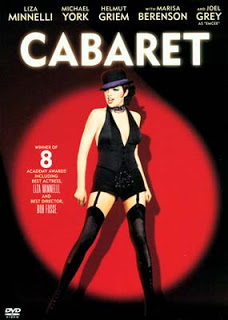
The Godfather is such a classic film that it’s always somewhat surprising to be reminded that it wasn’t exactly an Oscar powerhouse. When the Academy Awards for 1972 were handed out, The Godfather may have won Best Picture, Adapted Screenplay, and Actor but, out of 10 nominations, that’s all it won. Francis Ford Coppola did not win Best Director, Gordon Willis was not even nominated for Best Cinematography, and neither Al Pacino, James Caan, nor Robert Duvall won Best Supporting Actor. According to the fascinating book Inside Oscar, Godfather producer Al Ruddy started his acceptance speech by acknowledging that, “We were getting a little nervous there.”
When you look at the 1972 Academy Awards, what quickly becomes obvious is that the year’s big winner was Cabaret. All of those Oscars that people naturally assume went to The Godfather? They went to Cabaret. Out of ten nominations, Cabaret won eight. It set a record for the most Oscars won by a film that did not win best picture.
If it hadn’t been for The Godfather, Cabaret would have won best picture and it would have totally deserved it. Oh my God — how I envy all of our readers who were alive in 1972! How wonderful it must have been to have not one but two legitimately great and groundbreaking films released in the same year! Five years ago, I was lucky enough to see both The Godfather and Cabaret on the big screen and it was an amazing experience but I can only imagine what it was like to discover these two films for the very first time, with no preconceived notions.
Seriously, I need a time machine and I need it now.
Cabaret takes place in Berlin in 1931. Germany is still struggling to recover from World War I. When the reserved English academic Brian (Michael York) first arrives in the city, he barely notices the buffoonish men standing on street corners, handing out anti-Semitic pamphlets. He’s more interested in earning his doctorate. When he moves into a boarding house, he meets and cautiously befriends Sally Bowles (Liza Minnelli), a free-spirited American actress who dances at the Kit Kat Klub. When Sally tries to seduce Brian, he is curiously passive. Finally, after she asks him if he doesn’t like girls, Brian tells her that he’s tried to have sex with three separate women and each time, he failed. However, Sally is not one to give up and eventually she does manage to seduce Brian, telling him that the other women were just the “wrong three girls.”
To make money, Brian gives English lessons. One of his students is the wealthy and innocent, Natalia (Marisa Berenson). While Brian teachers her English and Sally gives her advice about sex and love, Natalia finds herself more and more of an outsider in Berlin. She’s Jewish and as a result, her dog is murdered. Fritz Wendel (Fritz Wepper) falls in love with Natalia but marrying her means publicly revealing that he’s Jewish and putting both of their lives in danger.
Sally performs at the Kit Kat Klub, where the Emcee (Joel Grey) gives the wealthy audiences a taste of decadence. At first, the audience is full of well-dressed and upper class people but, with each performance, we notice that the audience is changing. More humorless men in uniforms appear at the tables, like constantly multiplying cancer cells. Outside the Klub, men are attacked in the streets but the show inside continues. Though they may not know it (and Sally would certainly never admit it), we watch the performances in Kit Kat Klub with the full knowledge of what is going to eventually happen to the majority of the people who we see on stage. (That the Emcee is played by an actor who is both Jewish and gay only serves to drive the point home.) As a result, the performances are both entertaining and ominous at the same time.
It’s easy to be critical of Sally. In fact, I think it’s a little bit too easy for some critics. Sally may be apathetic and she may be self-centered and apolitical but how different is she from most of us? With the exception of Natalia, Sally may be the only truly honest character in the film. She alone understand that life is a nonstop performance and that there’s nothing she can do to change the world in which she’s found herself. All she can do is look out for herself.
Sally and Brian eventually meet and enter into a brief ménage à trois with Max (Helmut Griem), a wealthy baron. Sally occasionally allows herself to dream of being a baroness while Brian struggles to deal with the jealousy he feels towards both Max and Sally.
Of the three of them, Brian is the only one to eventually become alarmed by the rise of the National Socialism. Sally refuses to take consider anything that’s happening outside of her own life and her own dreams. Meanwhile, Max holds the Nazis in disdain but insists that the aristocracy can control them and that the Nazis are useful for keeping the lower classes in line.
And then this happens:
This scene is one of the most important in the history of cinema and it’s one that is even more relevant today than ever. With the U.S. currently in the middle of a bitter and angry election cycle, everyday seems to bring more of the political mob mentality that this scene epitomizes. In Cabaret, the mob sang in a beer garden. In the modern world, they hop on twitter and start hashtags.
Whenever I watch Cabaret, I always think about that old man in the beer garden. He alone sits there and does not sing. He alone seems to understand.
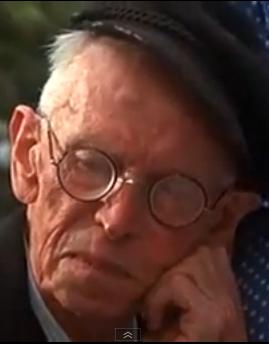
Cabaret is a powerful and important film, now more than ever.

When I decided that I was going to post a series of dance scenes that I love, I knew I’d have to include at least one scene from Cabaret.
But which scene?
Bob Fosse’s 1972 film is a treasure trove for those of us who love dance.
In the end, I went with Money because it’s true.
Money does make the world go around.

 Through the Shattered Lens