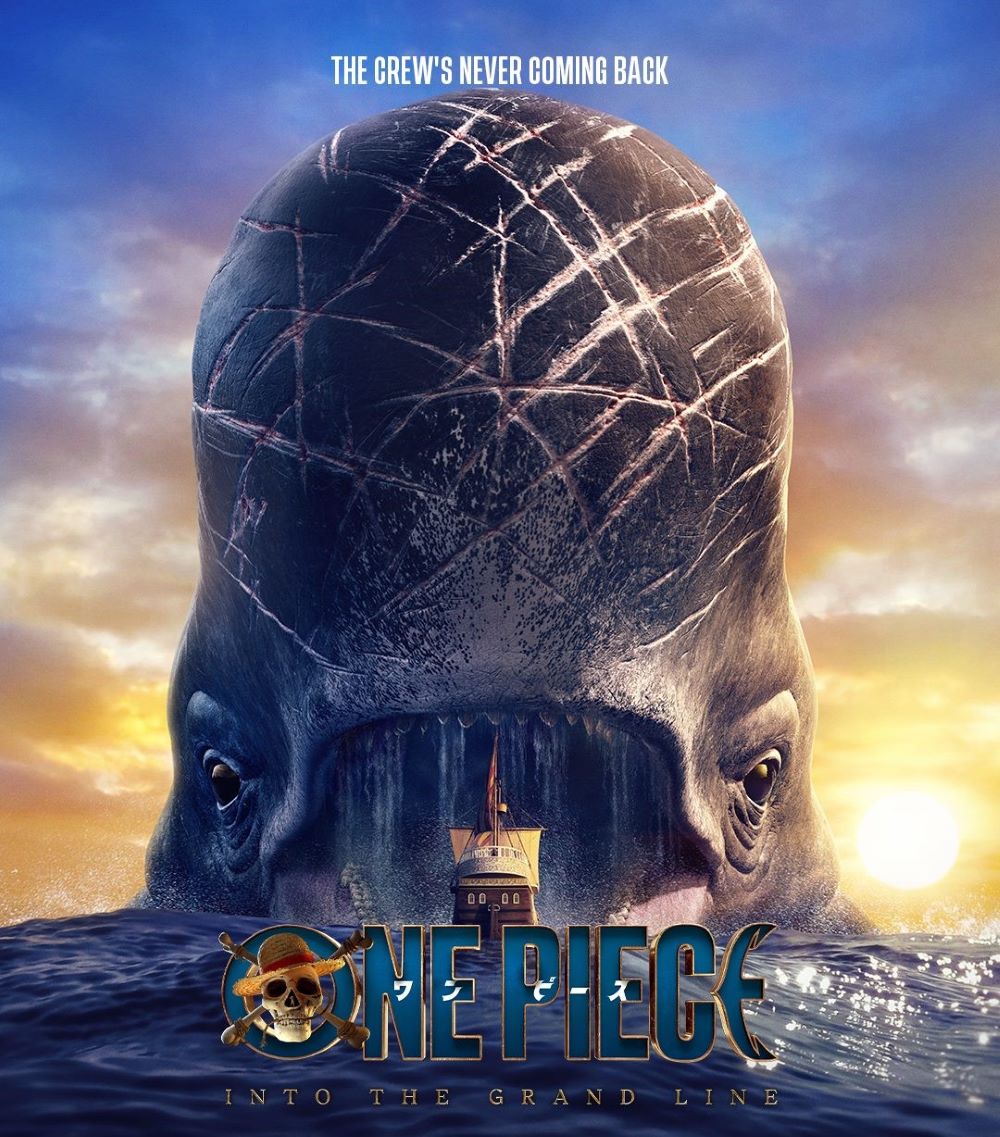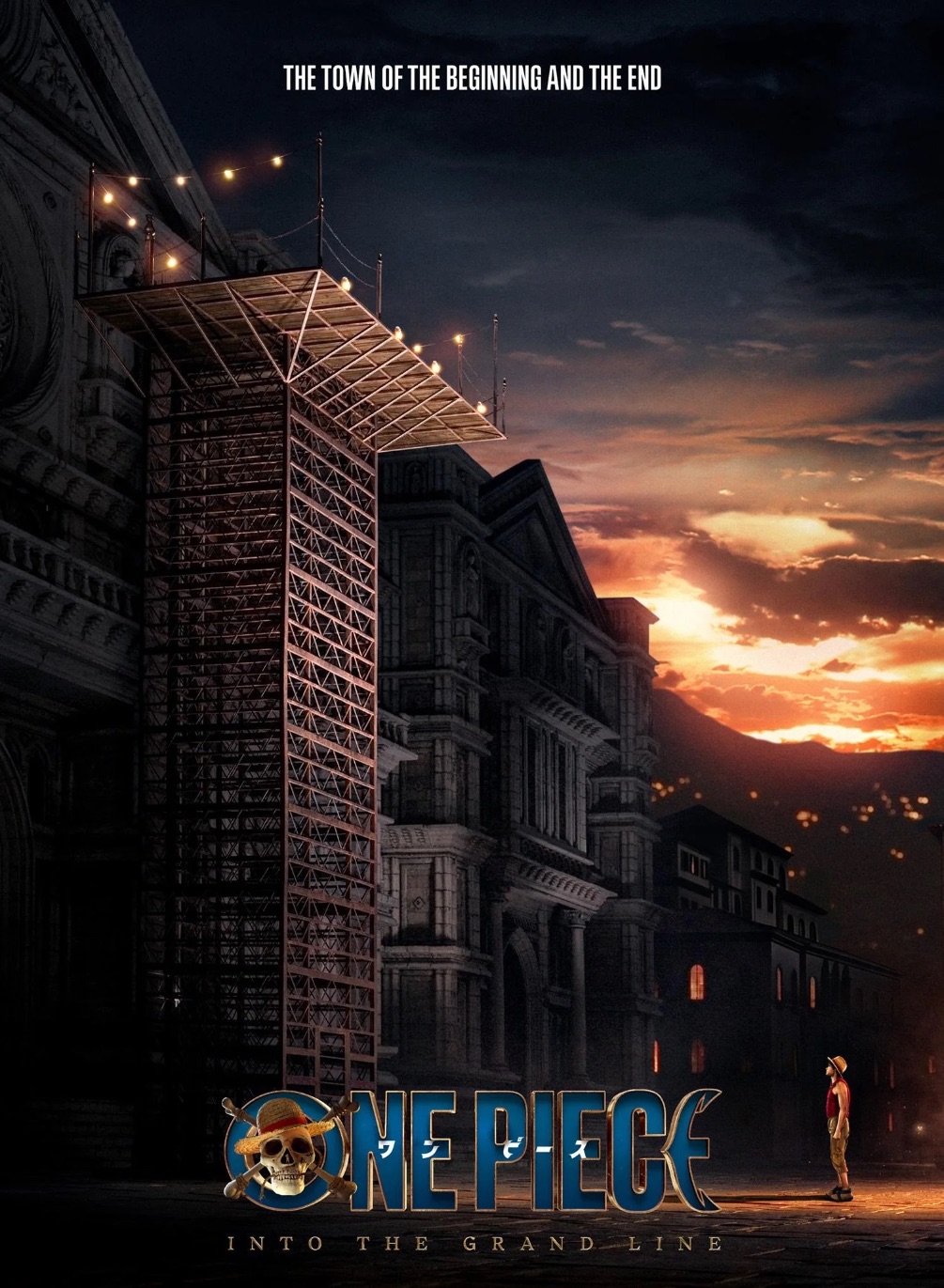
Review: One Piece (Season 1)


“Being a pirate is not about raiding villages or perfect plans; it’s about adventure and freedom.” — Monkey D. Luffy

Netflix’s first season of the live-action One Piece is one of those rare anime adaptations that’s both messy and genuinely charming, often in the same scene. It doesn’t completely escape the usual problems that come with translating wild, cartoon logic into real people and real sets, but it gets enough right—especially the cast dynamics and worldbuilding—that it feels more like a real show than a cosplay experiment.

The basics: this first season covers the East Blue saga, following Monkey D. Luffy as he puts together the early Straw Hat crew and heads off toward the Grand Line. You get the big beats fans expect: Romance Dawn, Zoro’s introduction, Orange Town and Buggy, Syrup Village with Usopp and Kaya, Baratie with Sanji, and Arlong Park with Nami’s backstory as the emotional anchor. It’s condensed into eight hour-ish episodes, so you’re not getting a one-to-one remake of either the One Piece manga or the anime; this is very much a “greatest hits” version of that early stretch, with a ton of trimming, merging, and reordering to make it work as a bingeable live-action series.

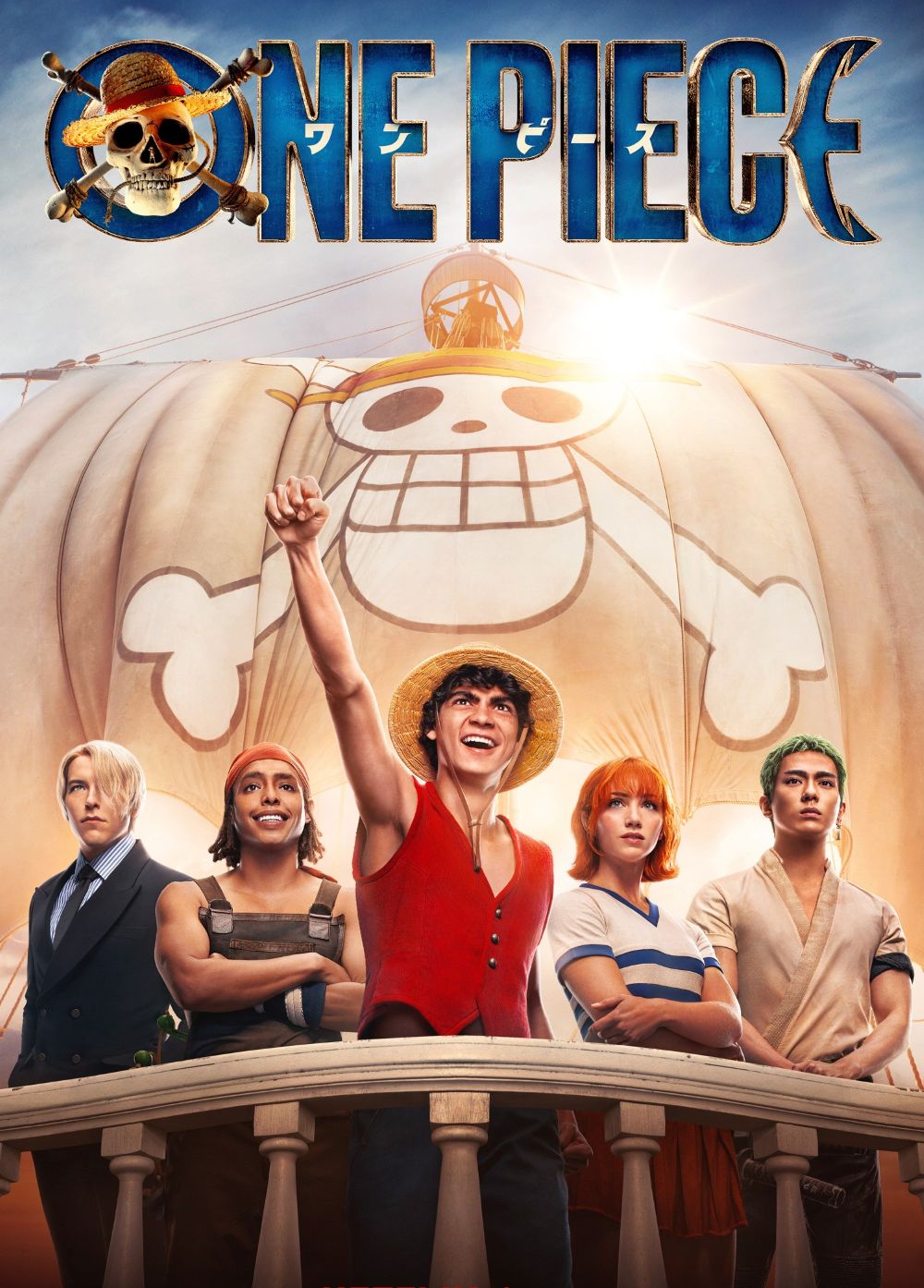
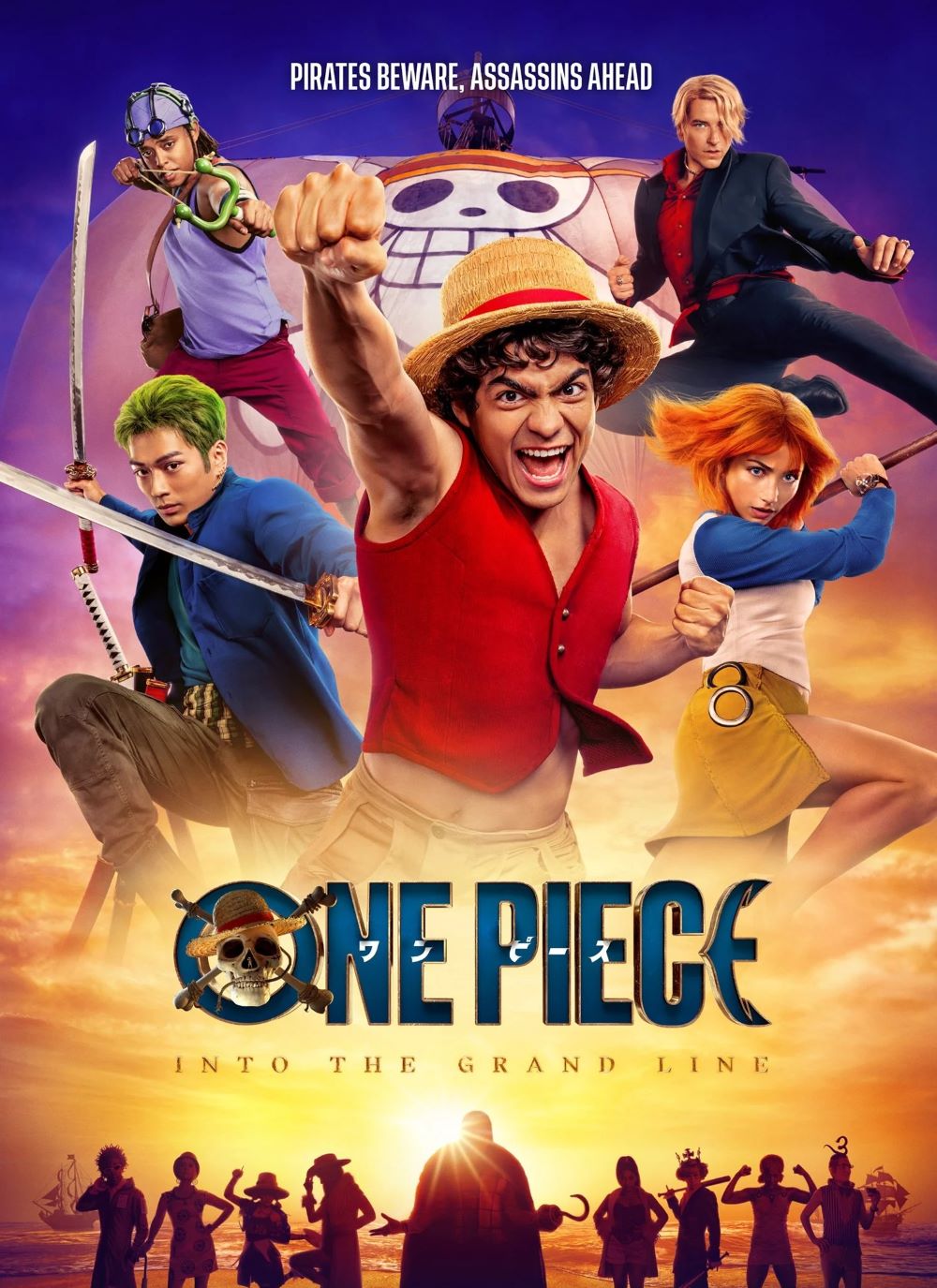
Probably the easiest part to recommend is the core cast and their chemistry, which does a lot of heavy lifting. Iñaki Godoy’s Luffy is unapologetically goofy, earnest, and loud in a way that could’ve gone horribly wrong in live action, but he leans into the character’s optimism so hard that it mostly works. He feels like someone who really does believe he’ll be King of the Pirates and doesn’t see any reason to question it, and that unshakable confidence becomes the emotional center of the crew. Godoy also nails Luffy’s mix of childlike wonder and sudden steel; he can flip from grinning over a new ship to staring down a villain in a way that sells Luffy as more than just a rubbery himbo. His turn as Luffy ends up being the highlight performance of the season, because if he doesn’t work, nothing else does—and he absolutely carries the show’s heart on his sleeve.

Mackenyu’s Zoro is basically the polar opposite energy, which is why their dynamic works so well. He plays Zoro with a dry, deadpan coolness that never tips completely into parody, even when he’s doing something as inherently ridiculous as fighting with three swords. His line delivery is often clipped and understated, and that restraint gives him room to land some of the show’s funnier reactions just by raising an eyebrow or sighing at Luffy’s nonsense. Importantly, Mackenyu makes Zoro feel like someone who’s constantly sizing up the room and quietly choosing when to step in, which fits the character’s “honor-bound mercenary slowly becoming a real crewmate” vibe.

Emily Rudd’s Nami brings a different energy altogether, mixing competence, guardedness, and flashes of vulnerability in a way that really pays off once the Arlong Park material kicks in. Early on, she plays Nami with a kind of wary charm—she’s clearly the most practical person on the ship, always thinking about maps, money, and survival, and Rudd lets that edge peek through even when Nami is going along with Luffy’s madness. When the show finally digs into her backstory, she shifts gears into something rawer and more emotional without it feeling out of character, and her scenes in the latter part of the season give the story a genuine emotional spine. Alongside Godoy, Rudd’s performance is another standout, since the season’s biggest emotional payoff basically hinges on whether you buy Nami’s pain and eventual trust in the crew.

Jacob Romero as Usopp leans into the character’s role as the lovable coward and storyteller, but he doesn’t make him a total joke. His performance captures that mix of bluster and insecurity—he’s a guy who talks a big game, clearly doesn’t always believe himself, and still steps up when it matters. Romero’s physicality and timing help sell Usopp’s more exaggerated reactions, but he also gives the quieter moments with Kaya and the Going Merry a sincerity that keeps the character from being just comic relief. You can see why this crew keeps him around, even when he’s clearly terrified half the time.

Taz Skylar’s Sanji doesn’t show up until later in the season, but he makes a strong impression once he does. Skylar leans into Sanji’s suave, flirtatious side without making him completely insufferable, and he brings a surprising amount of warmth to the character’s loyalty toward Zeff and the Baratie. His fight scenes, built around kicks and flashy movement, give the action a slightly different flavor whenever he’s involved, and his banter with Zoro and Luffy slots into the group dynamic quickly. The show dials back some of Sanji’s more over-the-top anime tendencies, and Skylar’s performance sells that reined-in version pretty well.

One thing that helps the whole project feel less like a random “Hollywood take” and more like a genuine extension of the franchise is how closely One Piece creator Eiichiro Oda worked with the team to adapt his manga and anime for live action. His involvement doesn’t magically make every creative choice perfect, but it does temper some of the bigger changes from the original, since you get the sense that the tweaks to pacing, structure, and certain character beats were made with his blessing rather than behind his back. Even when the show compresses arcs or reshuffles events, it still feels guided by the spirit of One Piece as Oda sees it, which goes a long way toward making the adaptation easier to accept for fans who might otherwise bristle at every deviation.

The show spends a lot of time on relationships and backstory, and that’s both a strength and a weakness. On the plus side, those flashbacks—Luffy and Shanks, Zoro’s childhood, Nami’s history with Arlong, the way characters like Kaya and Usopp connect—give emotional weight to what might otherwise just be colorful pirate antics. By the time Arlong Park rolls around, you actually care enough about Nami and her village that the standoff with Arlong lands as the season’s big payoff rather than just another boss fight. On the minus side, the early episodes can feel overstuffed with introductions and tone-setting. There are a lot of characters and a lot of lore thrown at you quickly, and if you’re not already familiar with One Piece, it can feel chaotic and hard to latch onto at first.

Visually, the show is kind of wild—in a good way. One of the big fears with live-action anime is that the production design ends up feeling cheap, empty, or embarrassed by the source material. Here, the sets are large, busy, and distinct: each island or town has its own look and vibe, from circus-horror weirdness with Buggy to the ocean-front glam of the Baratie to the more oppressive, grimy feel of Arlong Park. There’s a sense that this is a big, strange world rather than just three reused soundstages and a backlot. The costumes, props, and little bits of world detail—like the transponder snails and offbeat outfits—lean into the original’s absurdity instead of trying to “ground” it into blandness, and that helps the show retain a lot of its personality.

The CGI and action are… pretty good, with caveats. Luffy’s rubber powers were always going to be a challenge, and sometimes the stretching looks a little off, but the show smartly leans into the inherent ridiculousness rather than pretending it’s supposed to look “realistic.” The action scenes are choreographed to be big and theatrical rather than gritty, which fits One Piece’s energy. There are moments where the limitations show—fights can be shorter than fans might want, and some sequences are clearly staged to avoid pushing the visual effects too hard—but when the show goes all-in, the results are genuinely fun. The key is that the action is always driven by character: Zoro’s swordsmanship, Sanji’s kicks, and Luffy’s unshakeable confidence all feel distinct and recognizable.

That brings us to the fishmen, which are easily one of the trickiest elements to pull off in live action. The make-up effects and prosthetics do a lot of heavy lifting, and from a distance the designs are bold and striking, but when the camera gets up close, things can get pretty rough. You can see the seams, the stiffness, and the slightly rubbery, mask-like quality that’s hard to completely disguise when you’re turning heavily stylized cartoon fish-people into real actors in costumes. By the time the show gets to that particular section of the season, though, the audience has more or less made its peace with the whole experiment: either you’ve bought into the concept that this is a live-action One Piece—with all the heightened, cosplay-adjacent weirdness that implies—or you haven’t, and the fishmen are just going to be one more thing you can’t get past. For viewers already on the show’s wavelength, the emotional stakes of Arlong Park matter more than the occasional rubbery jawline.

Performance-wise beyond the core Straw Hats, there are a few clear standouts in the supporting cast, and the obvious high point is Jeff Ward as Buggy. He takes a character who’s primarily used as broad, loud comedic relief in the manga and anime and plays him the same way on the surface—still ridiculous, still theatrical, still a clown-themed pirate—but with a bit more bite and cynicism underneath. There’s a mean streak and a sense of bruised ego in his version of Buggy that makes him feel less like a one-note gag and more like an actual threat who just happens to be funny. That extra edge helps his scenes pop whenever he’s on screen and makes Buggy one of the side characters you actually want to see come back later instead of just being a one-arc villain.

Tone-wise, season 1 walks a tightrope between over-the-top anime goofiness and more grounded live-action drama. The first couple of episodes lean heavily into cartoonish humor and big, exaggerated deliveries, which can feel jarring if you’re not already on board with that style. As the season goes on, though, the show settles into a more comfortable rhythm where the comedy and drama balance better. The horror-tinged atmosphere in some mid-season episodes, the emotional flashbacks, and the quieter character moments give it some texture beyond “loud and wacky.” Still, there’s no getting around the fact that some jokes are pushed too hard and some lines land awkwardly; not every animated beat translates cleanly to actors on a physical set.

One of the more interesting aspects is how the story has been compressed and rearranged. Plotlines that took multiple episodes in the anime get condensed, combined, or reordered so that they fit into an eight-episode season with a clear build toward Arlong Park as the climax. On the positive side, this keeps things moving and avoids the bloat that long-running anime can fall into. There aren’t many filler-feeling stretches; almost every scene is trying to push plot, character, or worldbuilding forward. On the negative side, there are moments where you can feel the rush: some conflicts resolve faster than they arguably should, certain relationships don’t get as much space to breathe, and some secondary characters end up feeling like sketches rather than fully realized people.

If you’re a long-time fan of the One Piece manga or anime, that editing is going to be a bit of a mixed bag. Some changes genuinely help the story flow better in live action, tightening up arcs that were originally more meandering. Other changes will probably rub purists the wrong way, especially when beloved scenes are trimmed, altered, or moved around. That said, the adaptation is more faithful in spirit than many other anime-to-live-action attempts. The Straw Hats act like themselves, the world still feels strange and adventurous, and the show never seems ashamed of its source material. It’s clearly designed as an accessible starting point for newcomers rather than a frame-by-frame recreation for existing fans.

Pacing is another area where the season both succeeds and stumbles. The length of the episodes means there’s room for characterization and little worldbuilding beats, but they can sometimes feel bloated, especially in the early going when you’re still figuring out how seriously to take anything. Some viewers may bounce off before the show fully finds its groove. However, once the series gets deeper into the crew’s emotional histories—especially in the middle episodes and leading into the Arlong material—it becomes easier to invest in what’s happening on screen. The season builds nicely toward its finale, even if the path there is occasionally uneven.

As a whole package, season 1 of Netflix’s One Piece is far from perfect but genuinely enjoyable if you’re open to what it’s trying to do. It’s big, colorful, sometimes clumsy, and often surprisingly heartfelt. Fans looking for a meticulous, panel-accurate adaptation are going to notice every shortcut and deviation. People who hate anime-style humor may find parts of it grating or too over-the-top. But if you’re okay with a show that’s earnest, occasionally awkward, and unafraid to be strange, there’s a lot here to like—especially the way the crew’s bond slowly becomes the emotional core of the story.

In the end, this first season feels less like a flawless triumph and more like a strong proof of concept. It shows that One Piece can work in live action without losing its identity, even if compromises have to be made in pacing, tone, and scale. The highlight performances from Godoy as Luffy and Rudd as Nami, backed by a solid ensemble that includes scene-stealers like Jeff Ward’s Buggy, Oda’s guiding hand, the ambitious production design, and the emotional beats of arcs like Arlong Park are strong enough that, by the time the final stinger hints at more adventures to come, it’s easy to imagine sticking around for another voyage with this crew—even if the make-up isn’t always convincing and the rubber powers don’t always look great.

2016 in Review: The Best of Lifetime


Today, I continue my look back at the year 2016 with the best of Lifetime!  Below, you’ll find my nominations for the best Lifetime films and performances of 2016!  Winners are starred and listed in bold!

mother-mural-lmn-620x325

Best Picture
Bad Sister, produced by Robert Ballo, Timothy O. Johnson, Rukmani Jones, Ken Sanders
The Cheerleader Murders, produced by Sharon Bordas, Arthur Edmonds III, Hannah Pillemer, Fernando Szew, Jennifer Westin
Girl in the Box, produced by Stephen Kemp, Charles Tremayne, Thomas Vencelides
Inspired to Kill, produced by Johnson Chan, Michael Fiefer, Douglas Howell, Stephanie Rennie, Vincet Reppert, Nathan Schwab, Tammana Shah, Shawn Tira
Manson’s Lost Girls, produced by Nancy Bennett, Kyle A. Clark, Lawrence Ducceschi, Joan Harrison, Jonathan Koch, Stephen Kronish, Steven Michaels, Lina Wong
Mommy’s Little Girl, produced by Tom Berry, Steve Boisvert, Neil Bregman, Cinthia Burke, Christine Conradt, Curtis Crawford, Pierre David, Donald M. Osborne, Andrew E. Pecs
*A Mother’s Escape, produced by Sharon Bordas, Lori Bell Leahy, Michael Leahy, Kristofer McNeeley, Fernando Szew
My Sweet Audrina, produced by Dan Angel, David Calvert-Jones, Harvey Kahn, Kane Lee, Tom Mazza, Mike Rohl, Jane Startz
The Night Stalker, produced by Matthew R. Brady, Patrick G. Ingram, Michel Rangel, Alisa Tager
The Wrong Car, produced by Mark Donadio, Miriam Marcus, Molly Martin, Michael O’Neil

Best Director
Doug Campbell for Bad Sister
Megan Griffiths for The Night Stalker
*Blair Hayes for A Mother’s Escape
David Jackson for The Cheerleader Murders
Leslie Libman for Manson’s Lost Girls
Mike Rohl for My Sweet Audrina

Best Actress
*Tara Buck in A Mother’s Escape
India Eisley in My Sweet Audrina
MacKenzie Mauzy in Manson’s Lost Girls
Alyshia Ochse in Bad Sister
Karissa Lee Staples in Inspired To Kill
Addison Timlin in Girl in the Box

Best Actor
Zane Holtz in Girl in the Box
Lou Diamond Phillips in The Night Stalker
*Eric Roberts in Stalked By My Doctor: The Return
Antonio Sabato, Jr in Inspired To Kill
Jason-Shane Scott in The Wrong Roommate
Jeff Ward in Manson’s Lost Girls

Best Supporting Actress
*Toni Atkins in My Sweet Audrina
Eden Brolin in Manson’s Lost Girls
Zoe De Grande Maison in Pregnant at 17
Beth Grant in A Mother’s Escape
Ryan Newman in Bad Sister
Zelda Williams in Girl in the Box

Best Supporting Actor
Blake Berris in Wrong Swipe
Rogan Christopher in Pregnant at 17
*Rhett Kidd in The Wrong Car
Christian Madsen in Manson’s Lost Girls
William McNamara in The Wrong Roommate
James Tupper in My Sweet Audrina

Best Screenplay
Bad Sister, Barbara Kymlicka
*The Cheerleader Murders, Matt Young
Girl in the Box, Stephen Kemp
Mommy’s Little Girl, Christine Conradt
A Mother’s Escape, Mike Bencivenga, Blair Hayes, Kristofer McNeeley
My Sweet Audrina, Scarlett Lacey

Best Cinematography
The Cheerleader Murders, Denis Maloney
Mommy’s Little Girl, Bill St. John
*A Mother’s Escape, Samuel Calvin
My Sweet Audrina, James Liston
The Night Stalker, Quyen Tran
The Wrong Car, Terrence Hayes

Best Costuming
Girl in the Box, Barb Cardoso, Tania Pedro
Manson’s Lost Girls, Dorothy Amos
*My Sweet Audrina, Farnaz Khaki-Sadigh
The Night Stalker, Rebecca Luke
The Red Dress, Sophie Pace
Toni Braxton: Unbreak My Heart, Mary McLeod

Best Editing
The Cheerleader Murders, Eric Potter
Girl in the Box, Julian Hart
Manson’s Lost Girls, Josh Hegard
*A Mother’s Escape, Travis Graalman
My Sweet Audrina, Charles Robichaud
The Night Stalker, Celia Beasley

Best Makeup and Hairstyling
Girl in the Box, Claudia Breckenridge, Jen Fisher, Oriana Rossi, Alex Rotundo, Collette Tolen
Killing Mommy, Cinthia Burke, Christie Capustinsky, Kevin Crawley, Kirsten Fairfield, Margaret Harding-Crawley, Corey J. Stone
*Manson’s Lost Girls, Jenni Brown Greenberg, Randi Mavestrand, Kelly Muldoon, Natalie Thimm
A Mother’s Escape, Jenny Hausam, Toni Mario
My Sweet Audrina, Alannah Bilodeau
Toni Braxton: Unbreak My Heart, Tara Hadden-Watts, Alexandra Holmes

Best Original Score
911 Nightmare, David Findlay
*The Cheerleader Murders, Cladue Foisy
Inspired To Kill, Brandon Jarrett
A Mother’s Escape, Todd Haberman
My Sweet Audrina, Graeme Coleman
The Wrong Car, Ed Grenga

Best Production Design
Bad Sister, Lia Burton, Danielle Lee
Girl in the Box, Andrew Berry, Jere Sallee
*Manson’s Lost Girls, Cynthia E. Hill, Linda Spheeris
A Mother’s Escape, Zackary Steven Graham
My Sweet Audrina, Tink, Janessa Hitsman
Toni Braxton: Unbreak My Heart, James Robbins, Courtney Stockstad, Amanda Christmas

Best Sound
*Center Stage: On Pointe
The Cheerleader Murders
Honeymoon from Hell
I Have Your Children
Inspired to Kill
Toni Braxton: Unreak My Heart

Best Visual Effects
Final Destiny
*Flashback
House of Darkness
The Inherited
Little Girl’s Secret
The Watcher

Congratulations to all the nominees and thank you for keeping us entertained in 2016!

Want to see my picks for the best of Lifetime in 2015?  Click here!

And if you want to see my picks from 2014, click here!

Tomorrow, I’ll continue my look back at 2016 with the 16 worst films of the year!

Previous Entries In The Best of 2016:

  1. TFG’s 2016 Comics Year In Review : Top Tens, Worsts, And Everything In Between
  2. Anime of the Year: 2016
  3. 25 Best, Worst, and Gems I Saw In 2016
  4. 2016 in Review: The Best of SyFy

Lifetime Movie Review: Manson’s Lost Girls (dir by Leslie Libman)


MLG

I know way too much about the crimes of Charles Manson.

I realized that, earlier tonight, as I watched the latest Lifetime original film, Manson’s Lost Girls.  It was one of the better films that I’ve recently seen on Lifetime and it was certainly superior to NBC’s Aquarius, the TV show that tried to turn Manson into some sort of sexy anti-hero.  (Memo to NBC:  Walter White was a great anti-hero.  Charles Manson was just a grubby little serial killer.)  Manson’s Lost Girls was well-acted and it did a fairly good job of portraying the 60s without falling back on too many of the usual clichés (at no point was White Rabbit heard on the soundtrack), and it also did a pretty good job of portraying how certain lost people can be brainwashed by one cunning sociopath.

Yet, with all that in mind, I found myself watching the film and thinking, Where is Bruce Davis?  Where’s Clem Grogan?  What about Catherine Share, whose parents were both members of the resistance during the Nazi occupation of Germany just for their daughter to end up a brainwashed member of Manson’s Family?”  For whatever reason, the Family portrayed in Manson’s Lost Girls was considerably smaller than the real-life Family and seriously, how disturbing is that?  I mean, the 10-member cult in Mason’s Lost Girls was bad enough but, in real life, there were even more of them!  How disturbing is that!?  But, in retrospect, it’s even more disturbing that I knew enough about the Family to know that Bruce Davis, Clem Grogan, and Catherine Share were all missing from the film.

(Actually, I just looked at the credits on the imdb and I saw that Diana Irvine is credited as playing Catherine.  So, perhaps Catherine Share was included as a character and I just didn’t notice.)

When I was 16, I took a sociology class in high school.  One of the class assignments was to do a report on a subculture.  I did my report on vampires and the less said about that the better.  However, the hot and troubled guy who sat in front of me did his report on the Manson Family.  As a part of his report, he handed out a little booklet that had pictures of all the Family members in it.  I can remember looking through those pictures and thinking that Charles Manson looked scary and that Tex Watson was kind of hot, in a rebellious son of an evangelical preacher sort of way.  (Tex Watson spent a semester at North Texas State University.  Four decades later, I went to NTSU — or UNT as its now called.  Around the campus, you can find pictures of famous former students like Joe Don Baker, Peter Weller, Pat Boone, and Roy Orbison.  For obvious reasons, you will never find a picture of Charles “Tex” Watson.)  But, as I listened to the details of Manson’s crimes and his belief that the Beatles were sending him secret messages and that those messages justified murder, I found myself wondering how any of the fresh-faced people in those pictures could have possibly believed a word that Manson said.  It just seemed so weird and …. stupid.

(By the end of the presentation, Tex Watson no longer looked hot.)

And I have to admit that I was a bit intrigued by it all.  It wasn’t that I had any sympathy for those murderers.  But I found myself wondering how they could have done what they did.  I wondered how so many different people from different background could come together and all buy into the same stupid bullshit.  Though I didn’t realize it at the time, I was struggling to understand the very nature of evil.  To most people, it was easy enough to say that Manson and his followers were evil but I wanted to know how they had become evil.  I wanted to understand why and, though I may not have wanted to admit it, I wanted to make sure that I never woke up to discover that I had made the same mistake of surrendering my free will to a some nut just because he was able to look at me and tell that I had issues with my father.

By telling the story of Linda Kasabian (played quite well by MacKenzie Mauzy), Manson’s Lost Girls attempts to answer that question.  Linda was a young mother who, after her drug dealing husband deserted her, found herself living on the Spahn Movie Ranch with Manson and the Family.  Linda spent a month with Manson.  At first, she felt as if she had a found a new home and a new family but soon, things started to unravel.  In hopes of bringing about a race war (and also looking for vengeance over his own failure to become a rock star), Manson ordered his followers to commit murder.  Linda witnessed the tragic and brutal murder of actress Sharon Tate and her friends.  After the murders, Linda fled the Family and she would later serve as the prosecution’s star witness in Manson’s murder trial.

Manson’s Lost Girls is told almost totally from Linda’s point of view.  It’s through her that we are introduced to Manson and his Family.  The film doesn’t quite succeed in giving us a definitive answer as to how Manson could get people to kill for him but, then again, there may not be a definitive answer.  Fortunately, Manson’s Lost Girls does provide hints.  In her narration, Linda emphasizes that Manson kept everyone perpetually wasted.  But, even more importantly, the film highlights that, for these brainwashed future murderers, the Family truly was a family.  They were lost.  They were rejected by conventional society.  And when they met Manson, they were given a chance to belong.  The film suggests that need to belong and to be a part of something greater than what they had left all the members of the Family vulnerable to Charlie’s manipulations.

Manson was played by Jeff Ward, who did a pretty good job in the role.  Wisely, the film didn’t overplay Manson’s charisma or attempt to turn him into some sort of supervillain.  (In short, it didn’t make the same mistake as Aquarius.)  Instead, it portrayed him as what he probably was — a grubby hustler with a massive chip on his shoulder.  As played by Ward, Manson is less a messiah and more an extremely lucky con artist.  Manson’s Lost Girls deserves credit for portraying Manson without a hint of glamour.

The film suggests that Manson’s rampage was largely motivated by his bitterness over not being able to get a record contract.  As I watched, I found myself what would have happened if Manson had gotten that contract.  Would he now be remembered as one of those obscure musicians from the 60s and 70s whose later career was made up of performing at fairs and cheap clubs?  Or, if he had found success, would he have eventually ended up as a mentor on an early episode of American Idol?

Far more importantly, I found myself wondering what the future would have held for his most famous victim, Sharon Tate?  Sharon gave a such good performance in Valley of the Dolls, one that suggested she was capable of a lot more than she had been given credit for.  Would she have continued to grow and develop as an actress?  And what of her unborn son?  If not for Manson and his followers, Paul Polanski would now be 46 years old.

Manson’s Lost Girls does not linger on the murders.  They largely happen off-screen and, for that, I’m thankful.  But, at the same time, it never shies away from the real-life tragedy of Manson’s crimes.  And, even if the film did not have all the answers, it did remind us why the questions must be asked.  In the end, Manson’s Lost Girls reminds us of what evil can come from surrendering our independence and our free will.

It’s a film that reminds us that no matter how lost we may be, we must always be careful about those who claim to have found us.  Instead of waiting for others to find us, we must find ourselves.

MansonGirls_Group07172015_JZ_0020.psd_copy