Lisa Reviews An Oscar Nominee: Airport (dir by George Seaton)


First released in 1970, Airport is a real time capsule.

As one can guess from the title, it takes place over 12 hours at an airport.  The airport in question is a fictional one, Chicago’s Lincoln International Airport.  Over the course of one night, almost everything that can happen does happen.

A sudden snowstorm causes almost all of the other airports in the midwest to shut down for the night.  On Lincoln’s Runway 29, one of the airplanes gets stuck in the show when it lands.  No one is hurt but, until Joe Patroni (George Kennedy) and his men can dig out and move that plane, no one is going to be able to land on 29.

Runway 22 is still open but the homeowners association is currently picketing the airport to protest the amount of noise pollution that is caused whenever airplanes use Runway 22.  Using 22 in the middle of the night is sure to prove their point and make trouble for the airport.  Mel Bakersfield (Burt Lancaster), the airport manager, thinks that the only solution is to buy up all of the land around the airport but the Board of Commissioners disagrees.  Mel says that airports have to adjust to changing times but no one is willing to put up the money.

Mel is unhappily married to the wealthy and socially ambitious Cindy (Dana Wynter), who is not happy to learn that, due to the storm, Mel is going to miss an important dinner party.  Tanya Livingston (Jean Seberg), head of customer relations for Trans Global Airlines, is in love with Mel but Mel isn’t the type to cheat, even if his marriage is troubled.

On the other hand, Mel’s brother-in-law, pilot Vernon Demerest (Dean Martin, the hippest pilot in the sky), has absolutely no problem cheating on his wife (Barbara Hale).  Vernon is currently having an affair with flight attendant, Gwen Meighen (Jacqueline Bisset).  When Gwen tells Vernon that she’s pregnant, Vernon says that “it” can be taken care of in Sweden.  Gwen says that she wants to have the baby.

Meanwhile, Ada Quonsett (Helen Hayes, who won an Oscar for her performance here) is an elderly woman who has developed an addiction to stowing away on flights.  She manages to sneak onto a plane flying to Rome, the same plane on which Vernon is the co-pilot.  (Technically, Vernon is on the plane to evaluate the captain, who is played by Barry Nelson.  Yes, the same Barry Nelson who played Jimmy Bond in 1954’s Casino Royale and Mr. Ullman in The Shining.)  Ada ends up sitting next to a nervous man named D.O. Guerrero (Van Heflin).  Having failed as a businessman, Guerrero has a bomb in his briefcase and is planning on blowing himself and the airplane up so that his wife (Maureen Stapleton) can receive an insurance payment.

Seriously, that’s a lot of drama!  It seems like this airport has a little bit of everything!  But you know what this airport doesn’t have?  It doesn’t have the TSA groping people and telling them what they can and cannot take on the plane with them.  It doesn’t have the endless lines full of tired travelers who just want to be allowed to get on with their business.  It doesn’t have the suspicious atmosphere that has become a part of modern air travel.  Compared to the average airport experience of 2026, the movie’s airport is a paradise, full of people who are working hard, who are polite to each other, and who all seem to know what they’re doing.  I’d take the drama of 1970’s Airport over the reality of a modern airport any day.

Airport is very much a celebration of competent people getting the job done.  On the whole, we really don’t learn much about the characters played by Burt Lancaster, Dean Martin, Jean Seberg, Barry Nelson, and George Kennedy but we definitely learn that they’re all very good at their jobs.  Even Helen Hayes’s stowaway is meant to be likable precisely because she is so good at stowing away.  The only person who is portrayed as being a failure as Van Heflin’s D.O. Guerrero and he’s so upset about not being good at his job that he decides to blow himself up.  Though the film is full of split screens and dialogue that was probably risqué by the standards of a 1970 studio film, one gets the feeling that Airport probably felt old-fashioned even when it was first released.  One can only imagine what George Kennedy’s hard-working Joe Patroni would have thought about the characters in a film like Easy Rider.  About as close as Airport gets to the counterculture is Dean Martin mockingly calling Burt Lancaster “dad” while telling him to get his favorite runway cleared.  This is a film where even Dean Martin is a stickler for regulations.

Based on a best-selling novel, Airport is often listed as being one of the worst films to ever be nominated for best picture.  And …. well, okay, it’s definitely not a great film, especially when compared to some of the other films of the early 70s.  The film was the highest grossing film of 1970 and that, more than anything, probably explains why it was nominated.  Airport moves at a very deliberate pace and and visually, it is pretty flat.  It looks like a competently made television pilot.  When I first did a capsule review of Airport in 2010, I was fairly harsh towards it.  I have to admit, though, that when I recently rewatched the film, I actually kind of liked it.  Compared to today’s world, there’s something comforting about the competence of the characters in AirportAirport has its flaws and it definitely should not have been nominated for 11 Oscars but it presents a world that seems almost cozy compared to what we have to deal with nowadays.

Dean Martin as a pilot?  Helen Hayes as a chatty stowaway?  George Kennedy chewing on an unlit cigar and complaining to Burt Lancaster about how incompetent the TGA pilots are?  Hey, why not?  If it means not having to deal with the TSA and knowing that everyone is dedicated to getting me to where I’m going in comfort, I’m all for taking my next flight out Lincoln International.

So, I Watched Paint Your Wagon (1969, Dir. by Joshua Logan)


Lisa Marie asked me to review Paint Your Wagon for Clint Eastwood’s birthday and, being a good sister, I agreed.  I have to learn to stop doing that.

Paint Your Wagon is a musical western starring a bunch of people who have done a lot of westerns but who still have no business singing, at least not in a movie.  If they want to sing in private, that’s fine.  Ben Rumson (Lee Marvin) and “Pardner” (Clint Eastwood) discover gold in a muddy creek and soon, the incredibly ugly town of No Name City springs up.  Because everyone in the town is a dude, everyone’s really lonely.  Then a Mormon shows up with two wives and the miners convince him to sell his youngest wife, Elizabeth (Jean Seberg) to the highest bidder.  Ben is always drunk but he still manages to buy Elizabeth.  Elizabeth says that she’s not going to marry Ben unless he builds her a cabin and also lets her marry Pardner as well.   Hello, polyamory. Eventually, a bull gets loose in the mines underneath No Name City and the entire town collapses but that’s okay because it was an ugly town and no one’s going to miss it.  Ben sings about how he was born under a wandering star so that means he can’t stay very long in once place, even if he does have a polyamorous marriage to look forward to.  Pardner sings that he likes to talk to the trees so he doesn’t need a town to live in.

My first thought on Paint Your Wagon is that it was really, really long.  It had a two and a half hour running time but it felt more like five or six.  My second thought is that movie looked really bad, like it was filmed through a mud filter.  It wasn’t just the buildings in the town that looked bad.  The entire movie looked dirty, oppressive, and depressing.  I like my musicals to have more color to them.  This movie looked like it needed an antibiotic.  My third thought was that, for a musical, none of the songs made much of an impression.  After the movie was over, I didn’t find myself humming any of them.  I can’t even remember what most of them were about.  Even if they had been better, Lee Marvin and Clint Eastwood shouldn’t have been singing them.  Lee Marvin’s singing voice sounded like whiskey being poured out over cement.  Clint Eastwood’s voice was thin and he got stuck with all the sappy songs.  I’ll take old and grumpy Clint Eastwood over singing and sappy Clint Eastwood any day.  This was like watching a community theater production where you’re not supposed to care about how bad the performance is because you know everyone in the cast.  Finally, I thought that there wasn’t enough wagon painting.  The entire town was unpainted.  It wasn’t just the wagon that was being neglected.

The funniest thing about this movie is that was advertised as being “the comedy goldmine of 69.”  Nice.

I didn’t like Paint Your Wagon but don’t worry.  I’ll be watching Trouble With The Curve later today.  Now that one, I do like!


Scenes That I Love: The Ending of Breathless


Today would have been the 92nd birthday of international screen icon, Jean-Paul Belmondo.

Belmondo spent the majority of his career in France, where he was one of the early faces of the New Wave and also a prominent action star, famed for doing his own very dangerous stunts.  In America, he was best-known for his starring turn in Jean-Luc Godard’s Breathless.  In Breathless, Belmondo was the perfect existential outlaw, living life day-by-day and obviously doomed but still so incredibly magnetic and stylish.

In tribute to Belmondo, today’s scene that I love is the final moments of Breathless, with Belmondo and Jean Seberg.

Scenes That I Love: Jean-Paul Belmondo in Breathless


Today would have been the 91st birthday of international screen icon, Jean-Paul Belmondo.

Belmondo spent the majority of his career in France, where he was one of the early faces of the New Wave and also a prominent action star, famed for doing his own very dangerous stunts.  In America, he was best-known for his starring turn in Jean-Luc Godard’s Breathless.  In Breathless, Belmondo was the perfect existential outlaw, living life day-by-day and obviously doomed but still so incredibly magnetic and stylish.

In tribute to Belmondo, here is a scene that I love, the final moments of Breathless, with Belmondo and Jean Seberg.

Scenes That I Love: The Ending of Breathless (R.I.P., Jean-Paul Belmondo)


I was saddened to learn of the death of French actor Jean-Paul Belmondo earlier today.  He was 88 years old and still an international icon of movie star charisma at the time of his death.

Belmondo spent the majority of his career in France, where he was one of the early faces of the New Wave and also a prominent action star, famed for doing his own very dangerous stunts.  In America, he was best-known for his starring turn in Jean-Luc Godard’s Breathless.  In Breathless, Belmondo was the perfect existential outlaw, living life day-by-day and obviously doomed but still so incredibly magnetic and stylish.

In tribute to Belmondo, here is a scene that I love, the final moments of Breathless.

The International Lens: Breathless (dir by Jean-Luc Godard)


The 1960 French film, Breathless, tells the story two people, a French criminal named Michel (Jean-Paul Belmondo) and an American student named Patricia (Jean Seberg).

Michel is a criminal but it’s hard not to like him.  Some of that is due to the fact that he’s played by Jean-Paul Belmondo, a charmingly off-center actor whose confidence and refusal to pretend to be anything other than what he was made him appealing even if he was not exactly handsome.  The other reason why it’s easy to like Michel is because, no matter how many crimes he commits, you get the feeling that he’s just playing a role.  He dresses like he belongs in a 30s gangster movie and a lot of his attitude has obviously been borrowed from Humphrey Bogart and James Cagney.  Even the way he smokes a cigarette feels like an affectation.  He’s a kid, playing dress-up.  One almost gets the feeling that he knows he’s a character in a movie and he’s going out of his way to give the audience what they expect.

When we first see Michel, he’s stealing a car.  He drives around the French countryside.  He dismissively observes two hitchhikers.  A few times, he appears to speak directly to the audience.  Is he musing out loud or is he acknowledging that there’s a film camera in the passenger’s seat?  It’s hard to say.  When Michel gets pulled over by a cop, Michel shoots him.  Or does he?  The scene is edited in such a way that it’s hard to say for sure.  Maybe the cameraman shot the cop.  Maybe director Jean-Luc Godard shot the cop.  Not that it matters.  Michel is the one who is now wanted for murder.

With the authorities now determined to catch him and his face in all of the newspapers, Michel flees to Paris.  That’s where his girlfriend, Patricia, lives.  Patricia is an American student who aspires to be a journalist.  She sells copies of the New York Herald Tribune while walking around Paris.  Despite her journalistic ambitions, Patricia does not know that her boyfriend is wanted for murder.  Then again, boyfriend might not be the right word.  That would suggest more of a commitment than either one shows much interest in maintaining.

Michel hides out at Patricia’s apartment and, at one point, Patricia tells Michel that she might be pregnant with his baby.  Michel promptly blames her for not being “careful” and we’re never quite sure if Patricia is telling the truth or not.  While Michel hides out from the police and tries to figure out how to get enough money to flee to Italy, he and Patricia discuss …. things.  (It is a French film, after all.  It’s also a Godard film and, even if this film does feature Godard at his least pretentious, there’s still no way you’re going to get through a Godard film without at least a little conversation about the meaning of life.)  Michel is resigned to the idea of living in the moment and seems to be somewhat death obsessed.  Patricia remains optimistic and looks forward to the future.  Michel complains that Americans always make heroes out of the wrong Frenchmen.

Do Michel and Patricia love each other?  Who knows?  By the end of the film, one of them has betrayed the other and we’re not quite sure why.  One is dead and the other seems oddly ambivalent and rather confused about the whole thing.

One of the seminal works of the French new wave, Breathless was the directorial debut of Jean-Luc Godard, who was working from a story treatment that was originally written by Francois Truffaut and Claude Chabrol.  When it was first released, Breathless reportedly stunned audience by using techniques — like frequent jump cuts, location shooting, and the use of a handheld camera — that are now so familiar that we take them for granted.  That said, even if Godard’s techniques are no longer shocking, Breathless remains an exciting film to watch.  It’s not just the Michel and Patricia are frequently breathless.  One also gets the feeling that Godard was breathless behind the camera, trying to keep up with the story that he was telling.  This is a film that, much like it’s lead characters, never stops moving.  Indeed, a huge reason why the film’s finale remains powerful is because it’s the first time that anyone in the film truly seems to be still.  The viewer has gotten so used to the film’s frenetic energy that it’s a shock when it all comes to an end.

It’s been written that there are two eras of cinema — pre-Breathless and post-Breathless.  I don’t know if that’s true but it is impossible to watch Breathless and not see what a huge influence it’s had on every crime film that has followed.  Every film about lovers-on-the-run probably owes at least a minor debt to Breathless.  It’s one of those films that you simply have to see, both because of it’s historic importance and also just because it’s a damn good movie.  It’s a film that’s in love with cinema and, by the time things come to a close, you’ll be in love with it too.

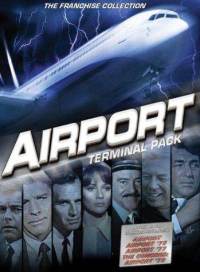
Film Reviews: The Airport Terminal Pack


 Sometimes, you have to be careful which films you choose to watch over the course of the day. 

Such as, last Friday night, I heard the news that Jill Clayburgh had died and I ended up watching An Unmarried Woman.  This, along with the fact that I also watched the Black Swan trailer, led to me dancing around the house in my underwear, en pointe in bare feet, and doing a half-assed pirouette in the living room.  And I felt pretty proud of myself until I woke up Saturday morning and my ankle (which I don’t think has ever properly healed from the day, seven years ago, that I fell down a flight of stairs and broke it in two places) literally felt like it was on fire.  That was my body’s way of saying, “You ain’t living in a movie, bitch.  Deal with it.”

So, come Sunday, I decided to play it safe by watching something that I was sure wouldn’t lead to any imitative behavior on my part.  Since I had previously reviewed Earthquake on this site, I decided that I would devote some time to the movies that started the entire 1970s disaster movie genre — Airport.  Watching Airport led to me watching Airport’s three sequels.

I was able to do this largely because I own the Airport Terminal Pack, a two-disk DVD collection that contains all four of the Airport films and nothing else.  There’s no special features or commentary tracks.  That’s probably a good thing because these films are so extremely mainstream that I doubt the commentary tracks would be all that interesting except to people who love “Me and Jennings Lang had the same lawyer…” style stories.

The movies are a mixed bag of ’70s sexism, mainstream greed, and casts that were described as being “all-star” despite the fact that they featured very few stars.  They’re all worth watching as time capsules of a past time.  Some of them are just more worthy than others.

Below are my thoughts on each individual film in the collection…

Airport (directed by George Seaton)

First released in 1970, Airport was nominated for 10 Academy Awards (including best picture), broke box office records, and started the whole 70s disaster movie trend.  It also has to be one of the most boring, borderline unwatchable movies ever made.  The fact that I managed to sit through the whole thing should be taken as proof that I’m either truly dedicated to watching movies or I’m just insane.  Take your pick.

Anyway, the film is painstakingly detailed account of the every day operations of an airport.  Yeah, sounds like a lot of fun, doesn’t it?  Burt Lancaster runs the airport.  His brother-in-law Dean Martin flies airplanes.  Both of them have mistresses but we’re told that’s okay because Lancaster’s wife expects him to talk to her and Martin’s wife is cool with him fucking around as long as he comes home at night.  I would be tempted to say that this is a result of the film having been made in 1969 and released in 1970 but actually, it’s just an introduction to the sexual politics of the typical disaster film.  Men save the day while women get in the way.  And if you think things have changed, I’d suggest you watch a little film calledf 2012

The only interesting thing about the film is that Lancaster’s mistress is played by Jean Seberg who, ten years earlier, had helped change film history by co-starring in Jean-Luc Godard’s classic film Breathless.  Nine years later, after years of being hounded by the American press and the FBI for her radical politics, Seberg committed suicide.

Airport 1975 (directed by Jack Smight)

As opposed to its predecessor, Airport 1975 is actually a lot of fun in its campy, silly way.  This is the one where a small private plane (flown by Dana Andrews, the star of the wonderful film noir Laura) collides with a commercial airliner.  The entire flight crew is taken out and head stewardess Karen Black has to pilot the plane despite the fact that she’s obviously cross-eyed.  Luckily, since Black is a stewardess, she has a pilot boyfriend who is played by Charlton Heston.  Heston talks her through the entire flight despite the fact that she was earlier seen trying to pressure him into not treating her like an idiot.  Anyway, Heston does his usual clench-jaw thing and if you need a drinking game to go with your bad movie, just take a shot every time Heston calls Black “honey.”  You’ll be drunk before the plane lands.

There’s some other stuff going on in this movie (for instance, Gloria Swanson appears as “herself” and doesn’t mention Sunset Boulevard or Joseph Kennedy once!) but really, all you need to know is that this is the film where Karen Black acts up a storm and random characters keep saying, “The stewardess is flying the plane!?”

Odd trivia fact: Airport 1975 was released in 1974.

Airport ’77 (directed by Jerry Jameson)

In Airport ’77, a group of art thieves attempt to hijack an airplane which, of course, leads to the airplane crashing into the ocean and somehow sinking down to the ocean’s floor without splitting apart.  The crash survivors have to try to figure out how to get to the surface of the water before they run out of oxygen. 

In this case, our resident sexist pilot is Jack Lemmon who has a really ugly mustache.  He wants to marry head stewardess Brenda Vaccarro.  Vaccarro doesn’t understand why they have to get married to which Lemmon responds, “Because I want a wife and kids!”  The film also gives us Lee Grant as a woman who is married to Christopher Lee but who is having an affair with another man.  She also drinks a lot and dares to get angry when she realizes that the airplane is underwater.  While this sort of behavior is acceptable from Dean Martin, Charlton Heston, and Jack Lemmon, the film punishes Lee Grant by drowning her in the final minutes.

Technically, Airport ’77 is probably the best of the Airport films.  The cast does a pretty good job with all the melodrama, the film doesn’t drag, and a few of the scenes manage to generate something resembling human emotion.  (For instance, when the blind piano player died, I had a tear in one of my freaky, mismatched eyes.)  Unfortunately, the movie’s almost too good.  It’s not a lot of fun.  Everyone plays their roles straight so the silly plot never quite descends into camp and the key to a good disaster film is always camp.  This film also has the largest body count of the series, with most of the cast dead by the end of the movie.  (And, incidentally, this film did nothing to help me with my fear of water…)

The Concorde: Airport ’79 (directed by David Lowell Rich)

The last Airport movie is also the strangest.  Some people have claimed that this film was meant to be a satire of the previous Airport films.  I can understand the argument because you look at film like Concorde and you say, “This must be a joke!”  However, the problem with this theory is that there are moments of obvious “intentional” humor in this film (i.e., J.J. from Good Times smokes weed in the plane’s bathroom, another passenger has to go to the bathroom whenever she gets nervous) and none of them show any evidence of the type of wit and outlook necessary to come up with anything this silly on purpose.  Add to that, the film’s story is credited to Jennings Lang, a studio executive.  Studio execs do not take chances.  (Plus, the actual script was written by Eric Roth, who went on to write the amazingly humorless The Curious Case of Benjamin Button).

No, this film is meant to be taken seriously and oh my God, where do I start?

Our pilots are George Kennedy and Alain Delon.  The head stewardess (and naturally, Delon’s girlfiend) is played by Sylvia “Emanuelle” Kristel who, at one point, says, “You pilots are such men!”  “Hey, they don’t call it a cockpit for nothing, honey,” Kennedy replies. 

Meanwhile, Robert Wagner is trying to destroy the Concorde because one of the passengers is his girlfriend who has proof that Wagner has been selling weapons to America’s enemies.  So, he attempts to blow the plane up with a guided missile and when that fails, he sends a couple of fighter planes after them.  Kennedy responds by opening up the cockpit window — while breaking the sound barrier mind you — and firing a flare gun at their pursuers.  

After this, there’s stop over in Paris where Delon arranges for Kennedy to sleep with a prostitute who assures Kennedy that he made love “just like a happy fish.”

The next day, everyone returns to the exact same Concorde — despite the fact that just a day earlier they’d nearly been blown up by a squadron of fighter planes — and take off on the second leg of the flight.  Let me repeat that just to make sure that we all understand what this film is asking us to believe.  After nearly getting blown up by a mysterious squad of fighter planes, everybody shows up the next morning to get on the exact same plane.

Oh, and it never occurs to Wagner’s ex-girlfriend that Wagner might have something to do with all of this.

Now sad to say, Concorde is the one of those films that’s a lot more fun to talk about than to actually watch.  It should be a lot more fun in its badness than it actually is.  Still, the movie has just enough camp appeal to make it fun in a “what the fuck…” sorta way.

And that’s how the Airport series comes to an end.