What Lisa Watched Last Night #229: Sleepwalking In Suburbia (dir by Alex Wright)


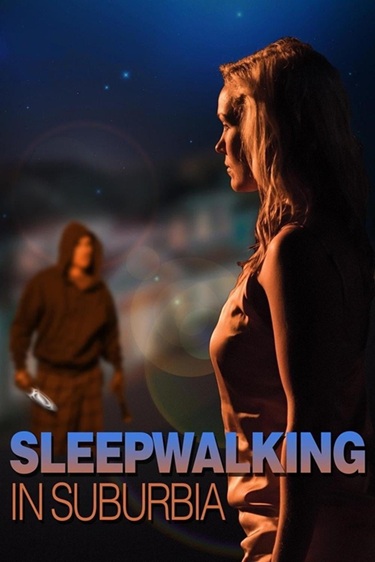
Last night, I watched the classic 2017 Lifetime film, Sleepwalking In Suburbia.
Why Was I Watching It?

I was watching it as a part of the #MondayMania watch party!  We’ve been watching the Stalked By My Doctor films and Sleepwalking In Suburbia, along with being a stand-alone film, leads into the fourth Stalked By Doctor film.  While I watched, I realized that I hadn’t reviewed this film yet so I decided to get on it.

What Was It About?

Michelle Miller (Emillie Ullerup) has a nice house in the suburbs and a successful husband (Giles Panton) but she also has a sleepwalking problem.  At night, she’ll get out of bed, leave the house, and, while in trance, go inside someone else’s house and either have sex in the living room or join them in bed.  She’s been diagnosed with “sexsomia.”

One sleepwalking incident leads to her having sex with her neighbor, Luke (Carlo Marks).  Now, every time that Luke sees Michelle, he’s like, “When are you coming by again?” and Michelle is like, “What are you even talking about, weirdo?”

Michelle’s pregnant!  Her husband is all excited but is he the father or is it Luke?  And when Luke’s wife seemingly vanishes, Michelle suspects that there might be murder in suburbia as well!

What Worked?

What worked?  The entire movie, that’s what worked!  Seriously, this was one of the greatest Lifetime films ever made.  It embraced the melodrama.  The plot featured twist after implausible twist.  The performances were enjoyably over-the-top and I defy anyone not to smile when the kindly doctor announces that Michelle has “sexsomia.”

Here’s the thing: sexsomia is a real thing.  Now, if you look it up on Wikipedia, it redirects to “sleep sex” but this is a Lifetime film and it’s obvious that it was understood that “sexsomia” just sounds better than “sleep sex.”  Was this film a realistic portrayal of sexsomia?  Who knows and who cares?

The title was absolutely brilliant.  Anytime you see the word “suburbia” in the title of a Lifetime movie, you know you’re about to see something special.  And I have to say that the film made the suburbs look very nice.  All the houses were big and well-decorated. No one in the Lifetime universe lives in a small house (unless they’re living in a trailer parker, which does happen on occasion.)  That’s the way things should be.

Emillie Ullerup gave a great performance as Michelle.  Her intense sleepwalking stare was one of the thing that made this film so entertaining.  Giles Panton and Carlo Marks also gave good performance as two of the men in her life in her waking and sleeping life.  The scene where Panton, as Michlle’s husband, reveals that he wants to handcuff Michelle in bed so that she won’t leave is both horrifying and slightly funny.  “Not kinky!” her husband assures her.

Finally, the film ended with one of those out-there twists that Lifetime is known for.  Seriously, when you’re in a Lifetime film, trust no one!  The film’s ending was also open-ended enough that it allowed Michelle to return for Stalked By My Doctor: A Sleepwalker’s Nightmare.

What Did Not Work?

It all worked!  This is a film that relentlessly and unapologetically embraced the melodrama in the best Lifetime tradition!  When I talk about the best Lifetime films being self-aware without being too in-your-face about it, this is the type of film that I’m talking about.

“Oh my God!  Just like me!” Moments

Wandering around in your night clothes in the middle of the night?  Hey, I’ve been there!  Of course, in my case, I was actually awake and I was checking on a cat.  I have never broken into a house while just wearing a slip.  I usually at least put on a robe before doing something like that.

Lessons Learned

Lock the door before you go to sleep.  And the windows!
Late Night Retro Television Review: Pacific Blue 2.21 “The Last Ride”


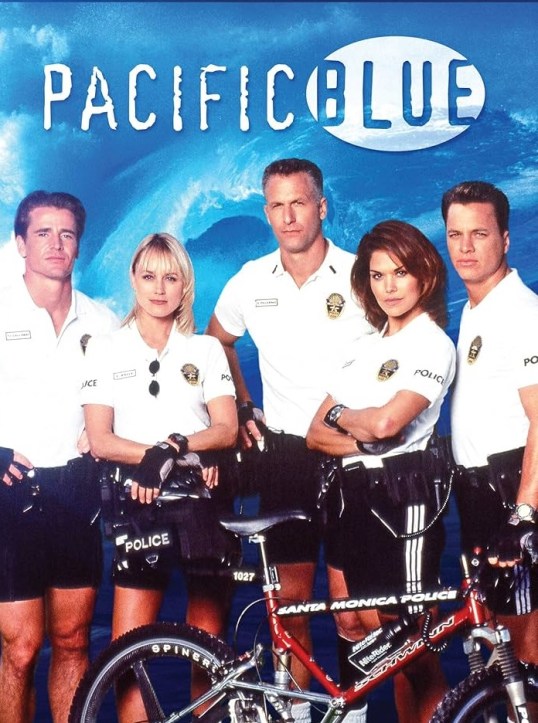
Welcome to Late Night Retro Television Reviews, a feature where we review some of our favorite and least favorite shows of the past! On Tuesdays, I will be reviewing Pacific Blue, a cop show that aired from 1996 to 2000 on the USA Network!  It’s currently streaming everywhere, though I’m watching it on Tubi.

This week, wild things are happening in Malibu.

Episode 2.21 “The Last Ride”

(Dir by Michael Levine, originally aired on April 13th, 1997)

Mahmoud (Shaun Toub) has promised everyone that he will be going straight as soon as he completes his community service.  However, we all know better than to trust Mahmoud!  It turns out that he’s gotten involved in an elaborate con job to sell Malibu Pier to some naive investors.  Oh, that Mahmoud!

What was that?  What did you ask?  Oh, who is Mahmoud?

I asked that exact same question when I watched this episode.  I had no idea who Mahmoud was or why exactly he was at the center of an episode of a show about bicycle cops.  Chris and Cory did show up occasionally to harass him but, still, it really did seem like Mahmoud belonged on a different show.  After this episode ended, I did a search of my previous reviews and discovered that Mahmoud actually has appeared on the show before.  As a vendor on the beach, he sold Chris a necklace that made her neck turn green.  But that was about eight episodes ago and it was a rather minor subplot, all things considered.

As for Mahmoud in this episode, he was annoying.  His dialogue was overwritten, his story felt cartoonish, and Shaun Taub’s overacting didn’t help things.  Still, it’s interesting to think that the regular characters were so boring that the show’s writers decided they would rather do a show about a minor supporting character than actually try to come up with anything for Chris and Cory to do.

The episode’s other subplot actually does feature the bicycle cops.  Victor’s childhood friend has been released from prison and is now the head of a violent car theft ring.  Victor is forced to deal with his own guilt over being a juvenile delinquent as he and TC try to take down the car thieves.  This was pretty standard stuff but it did feature one scene that was just stupid enough to be entertaining.  With the car thieves opening fire on them, Victor and TC ride their bikes straight toward the thieves.  Eventually they both stand up on their still-moving bikes and, leaning forward against the handle bars, they start shooting their guns back at the bad guys.  Somehow, they’re able to do this and aim well-enough to take out the car thieves while also keeping their bikes rolling forward.  (TC does get shot but it turns out the bullet only grazed his forehead.  “He’ll just have a headache for a while,” Chris says.  Yeah, I would think so.)  This is one of those moments that would have been really badass if not for the fact that Victor and TC were still wearing their dorky bike cop uniforms during it.  The blue shorts, the white polo shirts, the bicycle helmets — sorry, you just can’t look cool when you’re wearing all that.  Nice try, guys!

Next week, season 2 ends!

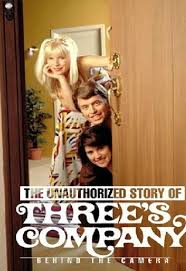
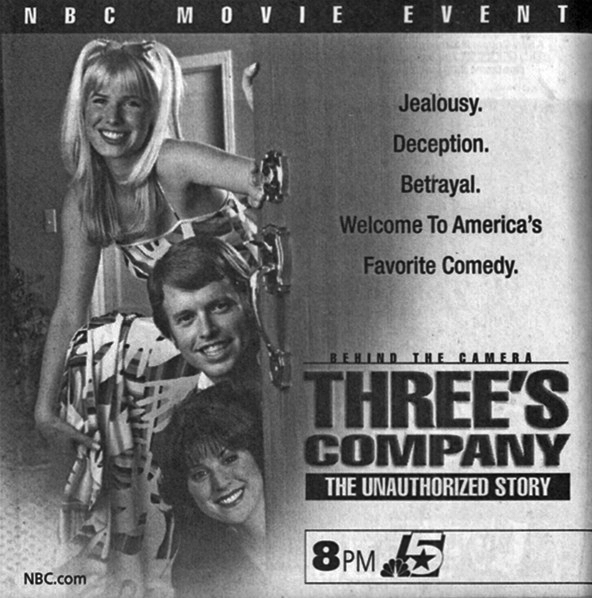
Behind the Camera: The Unauthorized Story of Three’s Company (2003, directed by Jason Ensler)


Do you remember Three’s Company?

The sitcom was a big hit when it aired in the 70s and 80s and it still gets a lot of play in syndication today.  Based on a British sitcom (and you would really be surprised to how closely the first season followed the original series), Three’s Company starred John Ritter as Jack Tripper, an aspiring chef who moved in with two single women, Janet (Joyce DeWitt) and Chrissy (Suzanne Somers).  Because their impotent landlord (Norman Fell) didn’t want people of the opposite sex living with each other unless they were married, Jack pretended to be gay.  Every episode centered around a misunderstanding, though it was Suzanne Somers’s performance as the perpetually bouncy and braless Chrissy Snow that made the show a hit.  The show fell apart when Somers asked for more money, Ritter and DeWitt got angry with her, and the studio bosses lied to everyone.  Today, the show is legendary as an example of how backstage tension can end even a popular series.

Behind The Camera: The Unauthorized Story of Three’s Company attempts to dramatize the success and eventual downfall of Three’s Company.  Joyce DeWitt appears at the beginning and the end to talk about how important she thinks the show was.  In the movie, she is played by Melanie Paxson.  John Ritter is played by a lookalike actor named Bret Anthony while an actress named Jud Taylor plays Somers.  Brian Dennehy plays ABC president Fred Silverman and other executives are played by Daniel Roebuck, Wallace Langham, Gary Hudson, and Christopher Shyer.  The movie recreates all of the drama that went on during Three’s Company without offering much insight or really anything new to the story.  Even though the movie was co-produced and hosted by Joyce DeWitt, Suzanne Somers is really the only sympathetic character in the movie.  DeWitt comes across as being jealous while Anthony plays John Ritter as being a bland nonentity who chooses his own success over being honest with his costars.  The network executives are more interesting, just because watching them provides a glimpse into how real producers and showrunners picture themselves.  They just wanted to make a good show about a sex addict pretending to be gay so he could live with two attractive, single women but the agents and the network presidents just keep getting in the way!  Won’t someone please think of the mid-level network executives?

Bland though this recreation was, it was enough of a rating hits that NBC went on to produce several more Behind The Camera films.  Three’s Company was only the beginning.

Lifetime Film Review: The Lost Wife of Robert Durst (dir by Yves Simoneau)


Tonight’s Lifetime premiere was The Lost Wife of Robert Durst, the latest of many films to deal with the 1982 disappearance of Kathie Durst and the subsequent activities of her husband, millionaire weirdo Robert Durst.

The disappearance of Kathie Durst is an intriguing cold case.  Robert Durst was a member of one of the wealthiest and most powerful families in New York.  Many have speculated that may be why Durst was never charged with anything, despite the fact that everyone was convinced that he was responsible for her disappearance.  (Others have pointed out that most of the evidence against Durst was circumstantial and that Kathie’s body has never been found.)  Durst, himself, appears to have spent the last few decades as something of a millionaire hobo.  His best friend, Susan Berman, was murdered in 2000.  (Berman provided Durst with an alibi for the night of Kathie’s disappearance.)  Durst himself eventually turned up in Galveston, where he attempted to disguise himself as a woman and was eventually arrested for murdering his neighbor, Morris Black.  Durst was acquitted in that case.  All Good Things, a feature film starring Ryan Gosling and Kirsten Dunst, led to resurgence of interest in the case of Kathie’s disappearance.  It also led to a HBO documentary series, called The Jinx.  In an act that was either extremely cocky or extremely self-destructive, Durst agreed to be interviewed for the documentary, implicated himself in all three of the murders that he was suspected of committing, and was subsequently charged with murdering Susan Berman.

It’s one of those stories that, when you hear the details, you can hardly believe is true.  It has everything: love, greed, sex, jealousy, politics, the mafia, and several unsolved murders.  It’s not surprising that there’s been several movies and TV shows based on the Durst case.  The problem that every new film faces is what can it add to the story that we haven’t already seen.  The Lost Wife of Robert Durst is relatively well-made but there’s really nothing here that you couldn’t find in All Good Things or The Jinx.  This is like the Wikipedia version of Durst case.  It gives you all the details without going into too much depth about any of it.

Of course, one of the main questions about this case is whether Robert Durst is mentally ill or if he’s just extremely clever.  Those that claim that Durst is crazy tend to point out that he saw his mother commit suicide when he was a young boy, that he has a habit of muttering to himself, and that he lives like a hermit despite all of his money.  Those who claim that Durst is actually very clever and in total control of all of his actions point out that all of Durst’s alleged crimes required extensive planning and that, in The Jinx, he was caught saying, “What the Hell did I do?  Killed them all, of course.”  That would seem to indicate that Durst is fully aware of whatever he may have done.  The question of Durst’s sanity is not a minor one.  In some states, it would be the difference between life in prison and execution.

The Lost Wife of Robert Durst attempts to have it both ways.  As played by Daniel Gillies, Durst is obviously unstable yet clearly calculating at the same time.  In fact, I would argue that, from a purely dramatic point of view, Gillies plays Durst as being a little too obviously unstable.  You find yourself wondering why Kathie (played by Katharine McPhee) would have ever agreed to go out with him in the first place, much less marry him.  As played by McPhee, Kathie is almost as hard to read as Durst.  Even in the scenes depicting the early days of Durst marriage, the lack of chemistry between Gillies and McPhee is a problem.  I spent most of the film wishing that it would dig a little bit deeper into the case.  Then again, considering that Durst has yet to be convicted on any charges, I suppose there’s only so much that the movie could suggest.  (All Good Things changed everyone’s names, which gave it at least a little bit of freedom to speculate.)

That said, the Robert Durst story is such a strange one that, flaws and all, The Lost Wife of Robert Durst is watchable.  It’s a good enough introduction to the case, if you’re looking for one.  Ultimately, though, All Good Things remains the Durst film to watch.