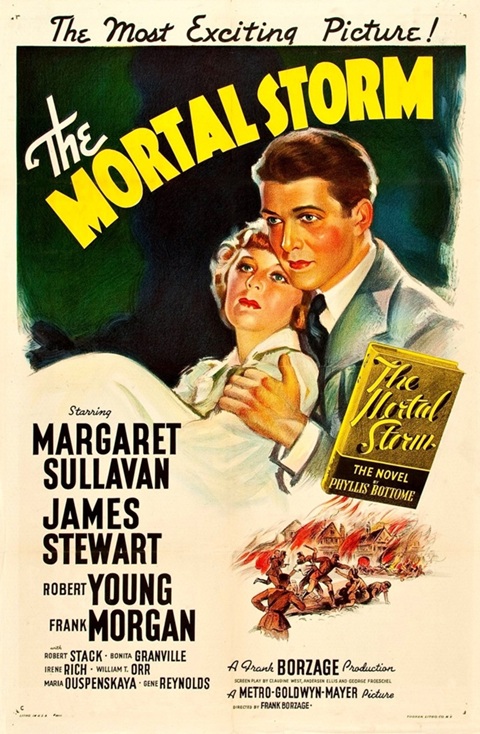
In honor of James Stewart’s birthday, our scene that I love comes from one of my favorite Stewart films, 1959’s Anatomyofa Murder.
In today’s scene that I love, James Stewart explains to his client (played by Ben Gazzara) that there are four ways that he can defend a murder charge. The contrast between Stewart’s classic style and Gazzara’s intense method style makes for an intense scene between two very talented and unique actors.
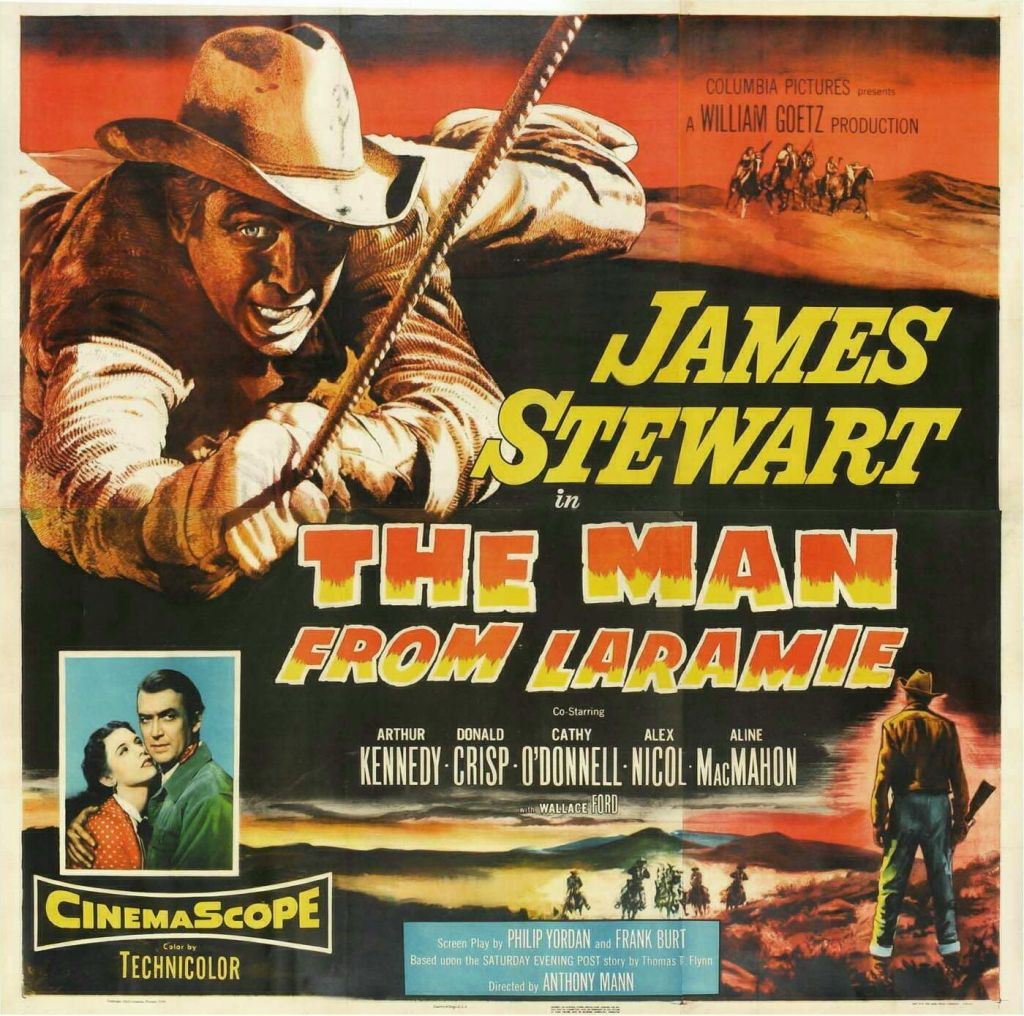
I’m celebrating Jimmy Stewart’s birthday by watching his western THE MAN FROM LARAMIE! Stewart plays Will Lockhart, a man who has run into some bad luck. His brother, a U.S. cavalryman, was recently killed in an attack by Apaches using repeating rifles outside of the town of Coronado, New Mexico. In an attempt to track down the man who sold the rifles to the Indians, Lockhart has come to Coronado from Laramie, WY, to snoop around. He’s welcomed to town by Dave Waggoman (Alex Nicol), we’ll call him “Crazy Dave,” the son of powerful local rancher Alec Waggoman (Donald Crisp). Accusing Lockhart of stealing salt off of their land, Crazy Dave proceeds to drag him with a rope, burn his wagons and shoot his mules. Before he can do even more damage to Lockhart, the foreman of the Waggoman ranch Vic Hansbro (Arthur Kennedy) comes along and stops him. Vic seems like a reasonable man, but he does ask Lockhart to move on down the trail before there’s any more trouble. Lockhart isn’t leaving until he finds out more about those rifles so he politely declines by going back into town, finding Crazy Dave, and kicking his ass. He then goes to see Alec and asks to be paid back for the wagons and mules that crazy Dave destroyed. Alec pays Lockhart back and then calls Vic in to come see him. Here’s where we start to get a feel for Waggoman family dynamics. You see, Alec loves his son no matter how crazy he is, and he expects Vic to keep him out of trouble. He even takes the cost of the destroyed wagons and dead mules out of Vic’s pay instead of Crazy Dave’s. We find out that Crazy Dave is jealous of Vic, and that Vic feels underappreciated by a man he has treated like a father for many years. Against this backdrop of family jealousy and insanity, Lockhart will continue to dig around until he finds out who sold the rifles that killed his brother. Could it be Vic or Crazy Dave?
THE MAN FROM LARAMIE is the last of five westerns that Stewart worked on under the direction of Anthony Mann. Their work is legendary, including the western classics WINCHESTER ‘73 (1950), BEND OF THE RIVER (1952), THE NAKED SPUR (1953), and THE FAR COUNTRY (1954). In my opinion, they may have saved their best for last. Jimmy Stewart gives a masterful performance in the role of Will Lockhart. Stewart was very smart in the way he played his parts in westerns. Tall and gangly, he would never have been a believable western star if he had played his roles more like a John Wayne or Gary Cooper. Rather, his character here is driven by an uncontrollable desire for revenge, so no matter what happens to him, outside of being killed, he’s going to keep on coming. In this movie, he’s dragged, beaten and even has his hand shot from point blank range, but that doesn’t stop him. And every so often he flashes that Jimmy Stewart smile and you can’t help but have complete sympathy for him. The supporting performances are good as well, especially from Donald Crisp as Alec Waggoman and Arthur Kennedy as Vic Hansbro. Neither are completely bad men, but they make bad decisions based on emotions that most of us can completely understand. They’re so good in the roles that we can’t help but kinda like them in spite of those bad decisions. One of the things I love about old westerns is the way they deal with honest emotions and universal truths. At one point in the film, after discovering that Vic has lied to him about something, Alec tells him, “Once you start lying, there’s no way to stop!” If you’ve ever lied about something before, you know that one lie always leads to another, and then to another. The drama in THE MAN FROM LARAMIE centers around what happens to the characters when the truth finally comes to light. In my opinion it’s great stuff, and produces one of my very favorite westerns!
On a side note, I love this movie so much that I demanded that my wife and I stop and eat in Laramie a couple of years ago when we were visiting family in Wyoming. Here’s a pic from that wonderful day. I wanted to make sure we got the sign in the back that said Laramie!
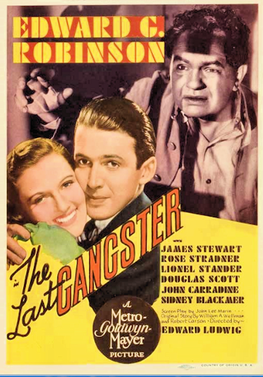
In 1937’s TheLastGangster, Edward G. Robinson plays Al Capone.
Well, actually, that’s not technically true. The character he’s playing is named Joe Krozac. However, Joe is a ruthless killer and gangster. He’s made his fortune through smuggling alcohol during prohibition. Despite his fearsome reputation, Joe is a family man who loves his wife Tayla (Rose Stradner) and who is overjoyed when he learns that she’s pregnant. To top it all off, Joe is eventually arrested for and convicted of tax evasion. He gets sent to Alcatraz, where he finds himself being bullied by another inmate (John Carradine) and waiting for his chance to regain his freedom.
In other words, Edward G. Robinson is playing Al Capone.
Krozac does eventually get out of prison but, by that point, Tayla has moved on. She’s married Paul North (James Stewart), a former tabloid reporter who was so outraged by how his newspaper exploited Tayla’s grief that he resigned his position. Joe Krozac’s son has grown up with the name Paul North, Jr. and he has no idea that his father is actually a notorious gangster.
Krozac wants to get his son back but his gang, now led by Curly (Lionel Stander), has other ideas. They want Krozac to reveal where he hid the money that he made during his gangster days. As well, an old rival (Alan Bazter) not only wants to get revenge on Krovac but also on Krovac’s son. Joe Krovac, fresh out of prison, finds himself torn between getting his revenge on his wife and protecting his son. This being a 30s gangster film, it leads to shoot-outs, car chases, and plenty of hardboiled dialogue.
Edward G. Robinson and Jimmy Stewart in the same movie, how could I n0t watch this!? I was actually a bit disappointed to discover that, even though both Robinson and Stewart give their customarily fine performances, they don’t spend much time acting opposite each other. Indeed, it sometimes seem like the two men are appearing in different pictures.
Robinson is appearing in one of the gangster films that made him famous. (Indeed, the film’s opening credits feature footage that was lifted from some of Robinson’s previous films.) He gives a tough and snarling performance but also one that suggests that, as bad as he is, he’s nowhere near as bad as the other gangsters that are working against him. His gangster is ultimately redeemed by his love for his son, though the Production Code still insists that Joe Krozac has to pay for his life of crime.
Stewart, meanwhile, plays his typical romantic part, portraying Paul as being an incurable optimist, a happy go-getter who still has a sense of right-and-wrong and a conscience. Stewart isn’t in much of the film. This is definitely Robinson’s movie. But still, there’s a genuine charm to the scenes in which Paul romances the distrustful Tayla. Not even being forced to wear a silly mustache (which is the film’s way of letting us know that time has passed) can diminish Stewart’s natural charm.
If you like 30s gangster films, like I do, you should enjoy TheLastGangster. I would have liked it a bit more if Robinson and Stewart had shared more scenes but regardless, this film features these two men doing what they did best. This is an offer that you can’t refuse.
1936’s Speed takes place in Detroit, at the home of Emery Motors.
When Joan Mitchell (Wendy Barrie) shows up to start her new job in the PR department, one of the first things she sees is a car being driven around a race track at a high speed until eventually it crashes. Automotive engineer Frank Lawson (Weldon Heybourn) explains that it’s all a part of making sure the car is safe. At Emery Motors, they crash cars on a daily basis to make sure that both the car and the driver will survive.
Terry Martin (James Stewart), the driver of the crashed car, proceeds to give Joan a tour of the factory. There’s an obvious attraction between the two of them but Joan also seems to have feelings for Frank. Terry and Frank are rivals. Terry may not have Frank’s education but he has instincts and he has common sense. He and his friend, Gadget Haggerty (Ted Healy), have an instinctive understanding of cars. They know how to drive them. They know how to fix them. They know how to make them go really fast.
In fact, Terry is working on a new carburetor, one that he says will increase the speed of Emery’s cars. Frank is skeptical but Terry knows that, if he can enter his car into the Indianapolis 500, he’ll be able to prove that he knows what he’s talking about. Joan comes to believe in Terry and his carburetor. And, fortunately, Joan has a secret of her own that will be very helpful to Terry’s ambitions.
Speed was not Jimmy Stewart’s first feature role but it was his first starring role. 28 years old when he starred in Speed, Stewart is tall, a little bit gawky, and unbelievably adorable. From the minute that Terry climbs out of that wrecked car and introduces himself to Joan, Stewart’s a true movie star. He and Wendy Barrie have a lot of chemistry and are a truly cute couple but Stewart is the one who dominates the film with his straight-forward charisma. Terry may not be the best educated engineer at Emery Motors but he is determined to prove himself and Stewart does a great job of portraying that determination.
As for the film itself, it’s low-budget and it’s short. Automotive enthusiasts might enjoy seeing all of the old cars and getting a chance to see what a car race was about in the days when cars themselves were still a relatively new invention. The film itself starts out as almost a documentary, with Stewart (as Terry) explaining how each car is manufactured on the assembly line. He points out all the machinery that goes into making the car in an almost-awed tone of voice. If the information is a bit dry, it doesn’t matter because it’s impossible not to enjoy listening to Jimmy Stewart speak. In his pre-WWII films, Stewart was the voice of American optimism and that’s certainly the case with Speed.
Speed was not a huge box office success but, in just two years, Stewart would be working with Frank Capra on You Can’t Take It With You, the first Stewart film to be nominated for (and to win) the Oscar for Best Picture of the year.
4 Shots From 4 Films is just what it says it is, 4 shots from 4 of our favorite films. As opposed to the reviews and recaps that we usually post, 4 Shots From 4 Films lets the visuals do the talking!
Today, we celebrate the birthday of one of the greatest American actors of all time, the wonderful James Stewart! It’s time for….
4 Shots From 4 James Stewart Films
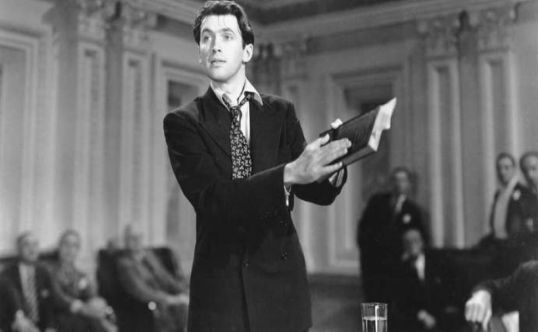
Mr. Smith Goes To Washington (1939, dir by Frank Capra, DP: Joseph Walker)
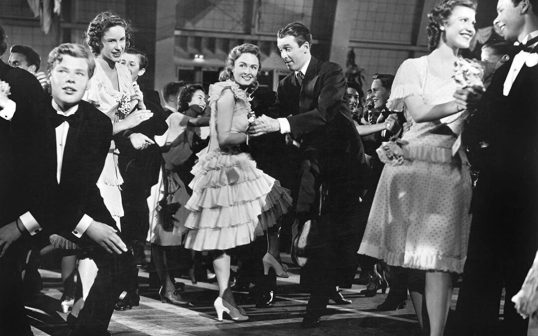
It’s A Wonderful Life (1946, dir by Frank Capra, DP: Joseph Walker and Joseph Biroc)
Rear Window (1954, dir by Alfred Hitchcock, DP: Robert Burks)
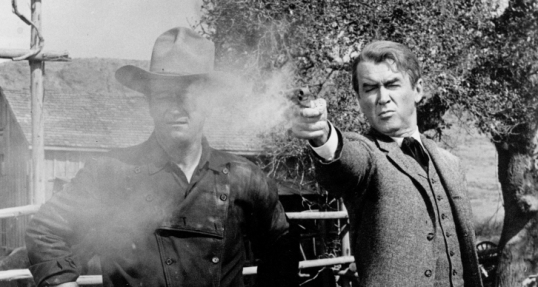
The Man Who Shot Liberty Valance (1962, dir by John Ford. DP: William H. Clothier)
Raymond Chandler’s detective classic, The Big Sleep, has twice been adapted for film.
The first version came out in 1946, just seven years after the book’s publication. That version starred Humphrey Bogart as detective Philip Marlowe and Lauren Bacall as Vivian, the daughter of a man who has hired Marlowe to discover who is trying to blackmail him. Directed by Howard Hawks and co-written by William Faulkner, this version of TheBigSleep is considered to be a classic noir, one that was cited as being a major influence on director Akira Kurosawa.
The 1978 version was directed by Michael Winner, takes place in London in the 1970s, and features Robert Mitchum as Marlowe. Despite a strong ensemble cast and an excellent lead performance from Mitchum, this version of TheBig Sleep still features one of the worst performances ever put on film.
Sarah Miles plays the role of Charlotte Sternwood Regan, the eldest daughter of General Sternwood (James Stewart). Miles is playing the role that Lauren Bacall played in the first film and, despite the fact that they both earlier co-starred to a certain amount of acclaim in Ryan’sDaughter, Miles and Mitchum do not have a hint of chemistry in this film. Actually, Miles doesn’t have chemistry with anyone in this film. She seems detached from the action and her frequent half-smiles come across as being not mysterious but instead somewhat flakey, as if she doesn’t quite understand that she’s in a noir. Sarah Miles is not a bad actress (as anyone who has seen Hope and Glory can tell you) but her performance here is incredibly dull. That said, she is not the one who gives the worst performance in the film.
Instead, that honor goes to Candy Clark, playing General Sternwood’s youngest daughter, Camilla. Camilla is meant to be mentally unstable and potentially dangerous. Clark plays the role like a giggly teenager, constantly fidgeting and literally hissing in more than a few scenes, as if she’s been possessed by a cat. Clark overacts to such an extent that you’ll be more likely to laugh at than be disturbed by her antics. It doesn’t help that she shares nearly all of her scenes with Robert Mitchum, a man who was a master when it came to underacting. If you’re going to give a bad performance, you don’t want to do it opposite someone who will make you look even worse by comparison.
The mystery of who is blackmailing General Sternwood is twisty and full of disreputable people. At times, the film feels like a a parade of character actors. Edward Fox, Joan Collins, Richard Boone, Oliver Reed, Harry Andrews, Richard Todd, and John Mills all show up throughout the film and, as a viewer, I was happy to see most of them. They all brought their own sense of style to the film, especially the menacing Oliver Reed. That said, director Michael Winner was never known for being a particularly subtle director and the film gets so mired in its own sordidness that it becomes be a bit of a slog to sit through. As a filmmaker, Winner was a shameless. That sometimes worked to a film’s advantage, as with the original DeathWish. That film needed a director who would dive into its Hellish portrayal of New York City without a moment’s hesitation and that’s what it got with Michael Winner. With Winner’s adaptation of The Big Sleep, however, the film gets so caught up in trying to shock and titillate that it’s hard not to miss the wit that made the first adaptation so special.
That said, TheBigSleep does feature the truly special opportunity to see Robert Mitchum and James Stewart acting opposite each other. Both give good and heartfelt performances, with Mitchum plays Marlowe as a cynic with a heart and Stewart capturing the pain of knowing that your children don’t deserve all that you do for them. Stewart and Mitchum bring a lot of emotion and sincerity to their scenes and, for at least a few minutes, The Big Sleep becomes about something more than just bloody murders and revealing photographs. It becomes about two aging men trying to find their place in a changing world. TheBigSleep was one of Stewart’s final feature films and he shows that, even late into his career, he was always one of the best.
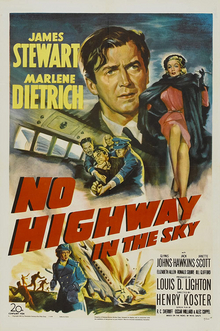
In 1951’s No Highway In The Sky, James Stewart stars as Dr. Theodore Honey.
In many ways, Theodore Honey is similar to the other roles that Stewart played after he returned from serving in World War II. Dr. Honey is intelligent, plain-spoken, and good-hearted. He’s eccentric and he sometimes has a difficult time relating to other people. He’s also deeply troubled. Dr. Honey is an engineer, one who specializes in determining how many hours an airplane can fly before it starts to fall apart. Dr. Honey is in England, working for an airline and testing his hypothesis that their newest model’s tail will fall off after the plane accumulates a specific number of hours. As is usually the case with these things, Dr. Honey’s employers are skeptical about his claims. There’s a lot of money to be made in air travel and the last thing they need is some eccentric American scaring everyone.
When Honey sets out to investigate a recent crash site, he finds himself on the same type of airplane that he’s been testing. After the plane takes off, Dr. Honey talks to the pilots and discovers, to his horror, that the plane is closing in on the time limit. While flight attendant Marjorie Corder (Glynis Johns) tries to keep him calm, Dr. Honey explains his theory to a film star named Monica Teasdale (Marlene Dietrich), who just happens to be a passenger on the flight. Both Marjorie and Monica find themselves falling in love with Dr. Honey and who can blame them? He may be an eccentric and it may be hard to follow what he’s talking about but he’s still Jimmy Stewart!
I’ve often thought that Stewart was “Jimmy” before World War II but he was definitely James afterwards. Stewart, unlike a lot of Hollywood stars who enlisted and were then used solely for PR purposes, actually flew several combat missions and saw firsthand the devastation of the war. He returned to America deeply disturbed by what he had seen and there’s a definite sense of melancholy to be found in all of Stewart’s post-war performances. That’s certainly the case here. Dr. Honey is a widower, his wife having been killed by a rocket attack during the war. He’s raising his 12 year-old daughter on his own and he deals with his sadness by throwing himself into his work. He’s someone who has seen and experienced great tragedy firsthand and it’s left him more than a little obsessed. There’s a very authentic sadness at the heart of Stewart’s performance and it elevates this film, making what could have been a by-the-book corporate thriller into a character study of a man standing at the dawning of a new age, the post-war era of commercial air travel, and saying, “Well, hold on one minute.”
Unfortunately, Honey’s obsessive nature makes it easy for some to dismiss him. When Dr. Honey purposefully sabotages the plane to keep it from flying again, he finds himself forced to defend his actions. Can he prove that his theory is true? And who will he end up falling in love with? You can probably guess the answers but it doesn’t matter if the latter half of the film is a bit predictable. James Stewart’s performance carries the film and keeps you watching.
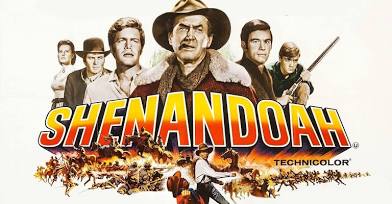
Jimmy Stewart plays Charlie Anderson, the patriarch of a large farming family in Virginia during the time of the Civil War. His family doesn’t own slaves, so he doesn’t figure it’s any of their business what all the fighting is about. He wants to keep working the land in hopes that the war will pass them by. Besides, he has six sons, a daughter, and a daughter in law that he wants to keep safe. He’s trying to keep the family together on his own as his beloved Martha had passed away sixteen years earlier giving birth to their youngest son, who we only know as Boy (Phillip Alford). Aside from the war that’s going on all around them, things seem pretty good for the Anderson’s. They all sit down for a big delicious meal every night. They attend Church every Sunday where they’re usually late and given the side-eye by Pastor Bjoerling (Denver Pyle). One of the sons, James Anderson (Patrick Wayne) and his wife Ann (Katharine Ross), have a precious newborn baby to take care of. The beautiful daughter Jennie (Rosemary Forsyth) is being courted by, and eventually marries, a lovestruck confederate officer named Sam (Doug McClure). Unfortunately the war won’t just go away, and when Boy is taken prisoner by Union soldiers, Charlie can’t stand idly by any longer. They head out to find him and bring him home.
In the guise of an entertaining semi-western, SHENANDOAH does a great job of illustrating how futile and randomly tragic war can be. The movie starts out lighthearted and fun as the family goes about its normal life, with Jimmy Stewart’s Charlie Anderson giving his homespun advice and rolling his cigars. This is a self-sufficient family that loves, respects and enjoys each other even if they don’t agree on everything. But the war keeps inching its way into their lives. First in the form of small group of confederate soldiers who come by to get some water and try to convince the boys to join up. None of the boys will join up, but they do help bury the soldiers when they’re ambushed and killed just down the road. Next a group of men come to the ranch to try to confiscate their horses for the Union army. Of course, Charlie Anderson isn’t going to let that happen and this turns into the type of brawl that seems to come right out of John Wayne western comedy like MCLINTOCK. Everybody joins in with the participants punching and being punched repeatedly, while Boy keeps getting knocked into the horse trough. This shouldn’t be a surprise because Director Andrew V. McLaglen directed MCLINTOCK and many other John Wayne films. Finally, Boy is taken prisoner because he is wearing a confederate cap that he found floating down the steam while he was out fishing one day. Once Charlie and most of his family head out to search for Boy, the movie begins a turn into tragedy. I won’t give the specifics away, but some members of the family will die, and not a single one of their deaths will be based on the actual fighting of a war. Rather, their deaths will be based on the chaos and depravity that surrounds the war. It’s tough to see, especially when they were all so happy just a little bit earlier. For me, the movie’s changes in tone make the tragedy more powerful and really drive home its message about the futility of war. But the Anderson family, like the United States of America after the Civil War, is made up of tough, resilient folks, and the movie ends on a hopeful note that definitely brought some extra moisture to my eyes.
Jimmy Stewart commands the screen in SHENANDOAH. You simply can’t take your eyes off of him, and his performance alone would make the movie worth watching. But with its powerful message, excellent cast, and solid direction, the movie is much more than just Stewart’s strong performance. I highly recommend it.
James Stewart, Charles Bronson, and Mary Tyler Moore!? All in a film directed by Richard Donner!?
Well, kind of.
James Stewart does not actually appear onscreen in 1961’s X-15. However, he does provide the narration, explaining to us the origins of the NASA’s X-15 project and why it’s important that America be the first to explore and conquer space. He talks about the men who risked their lives to test the rocket and the women who supported them and who started every day with the knowledge that they might never see their husband again after he left for work. There’s something undeniably comforting about hearing Stewart’s voice in this film. It’s the voice of an idealized America. It’s a little weary. There’s definitely a bit of age in the voice. It’s the voice of a man and a country that has had to survive a lot, especially over the past few years. But it’s also an incurably optimistic voice. You hear that voice and you know that everything is going to be okay.
Richard Donner’s directorial debut, X-15 is a docudrama that often plays out like a commercial for the X-15 and America’s young space program. The film mixes actual footage of the X-15 with scenes of the pilots returning (and sometimes not returning) home. The emphasis is on each man doing what needs to be done to make the program a success and each woman doing what she has to do to support her man. Throughout the film, there are scenes where the wives and the girlfriends of the pilots hear sirens and explosions and silently hope that they won’t be the one getting the call.
Making her film debut, Mary Tyler Moore plays Pamela, the girlfriend of pilot Matt Powell (played, in rather dull fashion, by David McLean). When Pamela first arrives at the base, the wives warn her about overreacting to every explosion. Major Rinaldi (Brad Dexter) warns her to not even try to get pregnant because that would take Powell away from the program. (When Rinaldi talks to Pamela, he comes across as more than just being a 50s-style sexist. That would be expected, considering that the film was made in 1961. Instead, Rinaldi actually comers across as being rather threatening. It’s kind of disturbing, to be honest.) Pamela comes to understand the importance of Matt’s work and Matt …. well, Matt’s kind of dull.
Actually, despite being played by wonderful character actors like James Gregory and Kenneth Tobey, just about every man in this film is kind of boring. This is one of those films that celebrates the idea of cold, hard professionalism. No one shows much emotion, even when one of the pilots is killed in an accident. No one is blamed. No one is shouted at. It’s just something that happens and everyone understands the risks. It’s actually an admirable attitude and one reason why I have a thing for pilots. But the deliberate blandness of the pilots in X-15 makes it difficult to keep track of who’s who. The only male actor who makes a real impression is Charles Bronson, playing Lt. Col. Brandon. Bronson’s incredible screen presence makes up for the fact that his character doesn’t have much of a personality.
That said, it’s a bit of a disappointment that Jimmy Stewart is not onscreen and Mary Tyler Moore has to share her scenes not with Bronson but instead with the dull David McLean. When the film was released in 1961, it was providing audiences with something that they hadn’t seen before and I imagine it was truly exciting to see a rocket fly, however briefly, into space. However, modern audiences have seen TopGun and TopGun: Maverick. I’ve seen TheRightStuff, which covers much of the same material as X-15. As a result, when viewed today, X-15 is a bit dull and features little of the flair that would characterize Richard Donner’s later directorial efforts. Today, the main reason to watch the film is for Stewart, Moore, and Bronson. Not having them acting opposite each other feels like a huge missed opportunity.
The 1950 film, BrokenArrow, takes place in the years following the Civil War.
Having survived the war, frontier scout Tom Jeffords (James Stewart) just wants to get away from his fellow countrymen for a while. During the Civil War, Jeffords saw the worst that humanity had to offer and the experience has left him cynical about the idea of bringing civilization to the American frontier. Tom just wants to be left alone. Still, when he comes across a 14 year-old Apache who has been shot in the back, Tom stops to help. Though wounded, the Apache still tries to attack him. He’s learned not to trust the white man. BrokenArrow is a film that suggests that he has good reason not to. Indeed, BrokenArrow was one of the first major Hollywood productions to attempt to treat the American Indians with sympathy and fairness.
Tom saves the Apache’s life and reunites him with his tribe. When the Apaches attack and kill a group of nearby gold prospectors, they allow Tom to live but they warn him to stay out of their territory. However, circumstances make it impossible for Tom to do that. When Tom arrives in Tucson, the citizens are incredulous that he allowed the Apache child to live. When Tom learns the Apache language and customs and marries an Apache woman named Sonseeahry (Debra Paget), it causes the other whites to distrust him even more. However, it is Tom’s eventual friendship with the Apache chief Cochise (Jeff Chandler) that eventually lands Tom in the middle of the conflict between the Apaches who want to preserve their way of life and the white men who want their land.
BrokenArrow is a well-intentioned film, in the way that mildly liberal films from the 50s tended to be. The U.S. government and its citizens are criticized for breaking their promises and their treaties to the Apache but the film’s ultimate message is one of compromise and understanding. The bigoted whites may be the villains but then again, so is Geronimo (Jay Silverheels) for refusing to accept Cochise’s desire for peace. Cochise is the film’s hero specifically because he calls for setting aside differences and living in peace with the white man, despite his own distrust of their leaders. The majority of the extras were Apache, though Neither Jeff Chandler nor Debra Paget were of Native descent. Both of them give good performances that largely avoid the stereotypes of the time. Chandler received his only Oscar nomination, for Best Supporting Actor, for his performance in this film.
That said, the unnominated Jimmy Stewart dominates the film and that’s not really surprising. (It should be noted that, while Stewart was not nominated for this film, he was nominated for his performance in Harvey, that same year.) Stewart may have first found fame as the happy and go-lucky face of Middle America but his experiences in World War II left a definite mark on him. He returned from the war a much more serious figure and every character that he played (even the lovable Elwood in Harvey) had more than a hint of melancholy to him. Stewart plays Tom as being a troubled soul, someone who is still struggling to come to terms with the destruction and cruelty that he saw during the Civil War. There’s an authenticity to Stewart’s performance, leaving little doubt that he understood exactly what Tom was going through. BrokenArrow ends on a note of compromise and racial harmony but it’s a sad film because we know what waits in the future for Cochise and his people. Tom Jeffords fights to bring peace to the frontier but it’s a peace that won’t last. And, as played by Stewart, Tom seems to understand that better than anyone.