It’s strange to hear Leslie Nielsen drop an F bomb.
That was my main though I watched Camouflage. Leslie Nielsen plays a hard-boiled private detective named Jack Potter who reluctantly takes on an apprentice named Matty McKenzie (Lochlyn Munro). Mostly to get Matty, a failed stage actor, out of his hair, Jack sends him to handle a minor case in the small town of Beaver Ridge. The minor case becomes a major case when it becomes clear that a murder is being planned.
Camouflage starts out like a typical Leslie Nielsen mockbuster, with Nielsen providing a ridiculous, Frank Drebin-style narration. But the film itself develops into a dark comedy where Matty finds himself in a small town where everyone’s got secret. Nielsen gives an almost-serious performance as Potter, playing him as a cynic with a tragic backstory and little patience for his protegee. There’s a tonal imbalance between the moments of broad comedy and the more serious moments and the film doesn’t work as a result but it is interesting to see a post-Airplane! Leslie Nielsen playing things relatively straight.
One interesting thing about Camouflage is that it was written by Billy Bob Thornton and Tom Epperson but, in the final cut, the screenplay is credited to Reginald Perry. (The small town setting is one that Thornton used frequently in his scripts and it’s easy to imagine him playing the role of Jack Potter in alternate version of this film.) Camouflage reportedly sat on the shelf for quite a while before it was finally given a release and Nielsen’s narration often feels like it was something that was added in post-production to try to both bring the disjointed film together and to draw in the Naked Gun fans. I have a feeling the story behind this film is probably more interesting than the film itself.
Welcome to Retro Television Reviews, a feature where we review some of our favorite and least favorite shows of the past! On Saturdays, I will be reviewing The American Short Story, which ran semi-regularly on PBS in 1974 to 1981. The entire show can be purchased on Prime and found on YouTube and Tubi.
This week, we have an adaptation of a Stephen Crane short story.
Episode 1.8 “The Blue Hotel”
(Dir by Jan Kadar, originally aired in 1977)
In the dying days of the Old West, a train pulls into a station in a small frontier town. Getting off the train, a Cowboy (John Bottoms), an Easterner (Geddeth Smith), and a Swede (David Warner) head to the town’s only hotel. A blizzard is coming and the three men are seeking shelter for the night. The owner of the hotel, Scully (Rex Everhart), is happy to provide it. As the men wait for dinner to be served, they play a card game with Scully’s son, Johnnie (James Keach).
At first, the game plays out without incident. The men are all friendly, with the exception of the Swede. The Swede remains quiet and seems distrustful. After a few hands of the game, the Swede accuses Johnnie of cheating. Over the next few hours, as the wind howls outside, the Swede rants and raves. Convinced that the wild west is truly full of outlaws and that it’s all exactly like the dime-store novels that he read before boarding the train, he cannot bring himself to accept that the men mean him no harm. It all leads to violence and tragedy.
This episode made excellent use of the shadowy Blue Hotel and the desolate wind blowing outside. Over the course of an hour, the hotel went from being a friendly shelter to an ominous location that seemed to pulse with paranoia. David Warner gave a strong performance as the unstable Swede and the final act of violence (which was changed slightly from the short story’s original conclusion) comes as a genuine shock as does the final twist in the tale. TheBlueHotel becomes a look at how people unknowingly shape their own destiny, for better or worse.
Though the Academy of Motion Picture Arts and Sciences claim that the Oscars honor the best of the year, we all know that there are always worthy films and performances that end up getting overlooked. Sometimes, it’s because the competition too fierce. Sometimes, it’s because the film itself was too controversial. Often, it’s just a case of a film’s quality not being fully recognized until years after its initial released. This series of reviews takes a look at the films and performances that should have been nominated but were, for whatever reason, overlooked. These are the Unnominated.
First released in 1980, The Long Riders is one of the many films to tell the story of the James/Younger Gang.
A group of former Confederate guerillas who became some of the most notorious bank robbers to roam post-Civil War America and who were based in Missouri, the brothers who made up the James/Younger Gang were hunted by the Pinkertons and beloved by the citizens who viewed them as being 19th Century Robin Hoods. Following a disastrous attempt to rob a bank in Northfield, Minnesota, the Younger brothers were captured by the government while Jesse and Frank James made it back to Missouri. Jesse was shot in the back by Bob Ford while Frank subsequently surrendered to authorities and made a good living on the lecture circuit.
The Long Riders tells the story of the gang, from their first encounter with the heavy-handed Pinkertons to the Northfield raid to Frank’s eventual surrender. Director Walter Hill both celebrates the legend of the James/Younger Gang while also emphasizing that all the members of the gang were also individual humans who had their strengths and their flaws. Hill emphasizes the idea of the gang being a group of post-war rebels, still fighting a war against a government that is more interested in protecting banks than looking after people. The Long Riders deconstructs the legend while also celebrating it.
The main thing that sets The Long Riders apart from other films about the James/Younger Gang is the fact that the brothers are played by actual brothers. David, Keith, and Robert Carradine plays the Youngers. Randy Quaid plays Clell Miller while Dennis Quaid assumes the role of the cowardly Ed Miller. Nicholas and Christopher Guest make a memorably creepy impression as Charley and Bob Ford. And finally, Jesse and Frank James are played by James and Stacy Keach. (The Keaches also worked on the film’s script). And while Stacy is definitely the more charismatic of the Keach brothers, the film makes good use of James’s rather stoic screen presence. While the rest of the gang enjoys the outlaw life, James Keach’s Jesse is rigid, serious, and ultimately too stubborn and obsessive for his own good.
Now, the casting might sound like a gimmick but it works wonderfully. When Clell chooses the gang over Ed, it carries an emotional weight because we’re watching real brothers reject each other. The comradery between the Carradines carries over to the comradery between the Youngers and it also informs their occasional rivalry with the better known James brothers. While it is Stacy Keach and David Carradine who ultimately dominate the film, every brother in the cast makes a strong impression. Also giving a memorable performance is Pamela Reed as a defiantly independent Belle Starr, who loves David Carradine’s Cole Younger but marries Sam Starr (James Remar). The knife fight between Carradine and Remar is one of the film’s highlights, as is the violent and disastrous attempt to rob the bank in Northfield.
The Long Riders is an exciting and ultimately poignant western but sadly, it received not a single Oscar nomination, not even for the stunning cinematography or Ry Cooder’s elegiac score. Fortunately, just like the legend of the James/Younger Gang, The Long Riders lives on.
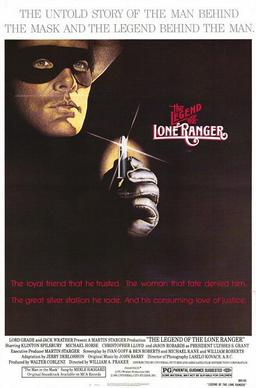
Long before he found fame playing Deputy Hawk on Twin Peaks, Michael Horse made his film debut in one of the most notorious box office flops of all time, The Legend of the Lone Ranger.
Michael Horse played Tonto, the young Comanche who rescues his childhood friend, John Reid (Klinton Spilsbury), and nurses him back to health after Reid has been attacked and left for dead by the notorious outlaw, Butch Cavendish (Christopher Lloyd). Reid was a civilian, accompanying a group of Texas Rangers led by his older brother, Dan (John Bennett Perry). When Cavendish attacked, John was the only survivor. John wants to avenge his brother’s death but first, Tonto is going to have to teach him how to shoot a six-shooter and how to ride his new horse, Silver. Finally, John is ready to don the mask and becomes the Lone Ranger. It’s just in time, because Cavendish has kidnapped President Grant (Jason Robards).
An even bigger flop than the more recent Lone Ranger film starring Armie Hammer and Johnny Depp, The Legend of the Lone Ranger failed for several reasons. For one thing, the film has a major identity crisis. The violence is not for kids but most of the dialogue and the performances are. For another thing, it takes forever for John Reid to actually put on the mask and become the Lone Ranger. By the time the William Tell Overture is heard, the movie is nearly over.
It was made to capitalize on the same type of nostalgia that previously made Superman a hit and, just as Superman introduced the world to Christopher Reeve, The Legend of the Lone Ranger introduced the world to a football player turned actor, named Klinton Spilsbury. Unfortunately, the world did not want to meet Klinton Spilsbury, whose blank-faced performance was so bad that James Keach was brought in to dub over all of his dialogue. Spilsbury did not help himself by reportedly acting like a diva during the shooting, demanding constant rewrites, and getting into bar brawls offset. Of the two actors who made their screen debuts in The Legend of the Lone Ranger, Michael Horse has worked again. Klinton Spilsbury has not.
When The Legend of the Lone Ranger went into production, the film’s producers made the incredibly boneheaded move of getting a court injunction barring Clayton Moore (who had played the role on TV) from wearing his Lone Ranger uniform is public. Since the semi-retired Moore was living off of the money that he made appearing as the Lone Ranger at country fairs and children’s hospitals, this move was a public relations disaster. (For his part, Moore filed a counter suit and continued to make appearances, now wearing wrap-around sunglasses instead of his mask.) Moore refused to appear in a cameo and spent much of 1981 speaking out against the film.
Finally, the main reason that Legend of The Lone Ranger flopped was because it opened on the same Friday as a little film called Raiders of the Lost Ark.
 It’s strange to hear Leslie Nielsen drop an F bomb.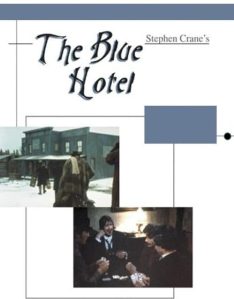

 Long before he found fame playing Deputy Hawk on Twin Peaks, Michael Horse made his film debut in one of the most notorious box office flops of all time, The Legend of the Lone Ranger.
  Through the Shattered Lens