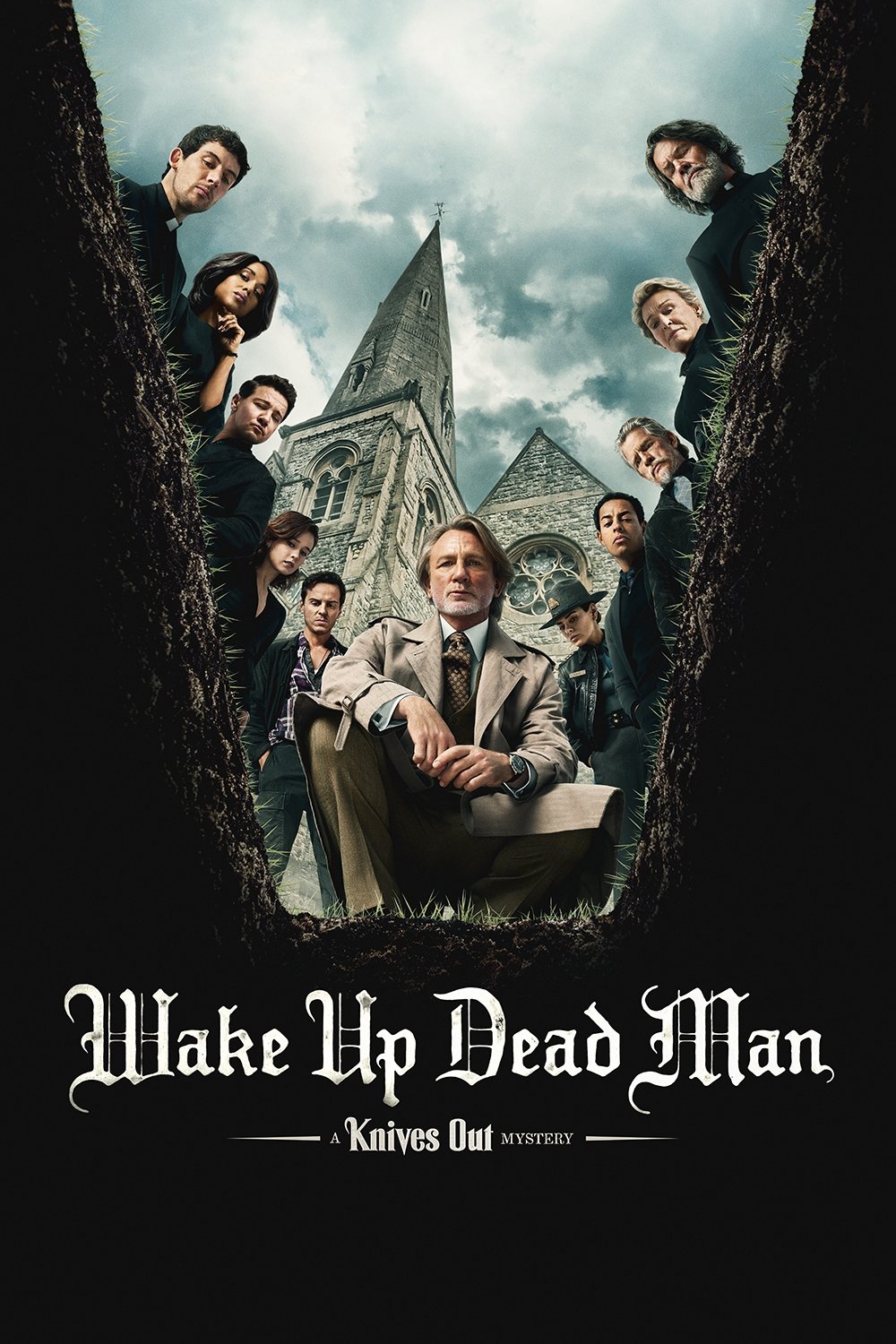
“Grace isn’t cheap. It’s bought with blood and fire, not your weak-kneed handshakes with sin.” Monsignor Jefferson Wicks
Wake Up Dead Man: A Knives Out Mystery is Rian Johnson’s latest entry in his whodunit series. It reunites Daniel Craig with his charismatic detective Benoit Blanc. The film trades the intimate family drama of the first movie and the over-the-top glamour of the second for a tense, small-town tale of faith, secrets, and an impossible crime at a rural church. It’s an ambitious evolution. Yet it doesn’t always land every punch in the trilogy.
To appreciate where this fits, glance back at the predecessors. The original Knives Out from 2019 burst onto the scene. It updated classic mystery tropes cleverly. The story centered on the death of a wealthy author. The dysfunctional Thrombey family circled like vultures over his estate. Blanc’s folksy charm cut through the lies with surgical precision. He delivered razor-sharp twists. His commentary bit into privilege and entitlement. All this wrapped in a snug, stage-play setup. It felt like a modern And Then There Were None. Every character popped—from Chris Evans’ smirking man-child to Ana de Armas’ wide-eyed nurse. The script’s misdirections kept you guessing until the final gut-punch reveal. It was tight, surprising, and endlessly rewatchable. Humor, heart, and social satire blended into a perfect whodunit package.
Glass Onion: A Knives Out Mystery followed in 2022. It cranked up the scale dramatically. A billionaire’s private island became the playground. A squad of self-important influencers played at being geniuses. The satire shifted gears. It skewered tech elites and performative allyship. Bigger laughs came from set pieces like the glass onion puzzle. Wilder ensemble clashes featured Edward Norton’s bumbling Miles Bron. Blanc unraveled the chaos with gleeful theatricality. Sure, it leaned heavier into farce than the original’s grounded tension. But those oh-so-satisfying reveals kept the momentum roaring. Janelle Monáe’s layered turn helped too. Each film stands alone as a self-contained puzzle. Yet they build Blanc’s legend incrementally. They refresh the murder-mystery playbook. Johnson’s signature flair nods to Agatha Christie roots.
Wake Up Dead Man arrives a few years after those events. Blanc looks more rumpled—bearded and brooding. He carries the visible weight of prior investigations. These have chipped away at his unflappable facade. Detective Benoit Blanc dives into a fresh case. It orbits a magnetic priest, Monsignor Jefferson Wicks. His tight-knit parish sits at Our Lady of Perpetual Fortitude. This is a fading rural church in snow-dusted upstate New York. A baffling death strikes right in the middle of services. It’s a stabbing during a Good Friday ritual. The congregation watches it unfold. It’s framed as an impossible crime with no clear entry or escape. Blanc must sift through hidden motives. He navigates frayed bonds and simmering tensions in the flock. His goal is to expose the culprit. Young assistant priest Rev. Jud Duplenticy becomes an unlikely ally.
Josh O’Connor stands out as Jud. He’s the earnest, ex-boxer priest. He brings raw vulnerability and quiet intensity. This grounds the film’s more outlandish elements. The powerhouse lineup fuels suspicion and sparks. Josh Brolin plays the commanding, domineering Wicks. His sermons blend fire-and-brimstone charisma with manipulative control. Glenn Close is the loyal church pillar Martha Delacroix. She’s his steely right-hand woman. She hides decades of devotion and resentment. Mila Kunis is police chief Geraldine Scott. She’s tough and skeptical but out of her depth. Jeremy Renner plays local doc Dr. Nat Sharp. His bedside manner conceals shadier dealings. Kerry Washington is attorney Vera Draven. She’s sharp-tongued and protective. Thomas Haden Church is reserved groundskeeper Samson Holt. He observes everything with cryptic folksiness. Andrew Scott plays best-selling author Lee Ross. He peddles scandalous exposes on the parish. Cailee Spaeny is the disabled former concert cellist Simone Vivane. Her ethereal presence masks deeper pain. Daryl McCormack is aspiring politician Cy Draven. He’s ambitious and entangled in family webs. Noah Segan pops up as sleazy Nikolai. It’s a fun callback to his earlier roles. This adds series continuity without stealing focus. The ensemble ignites every scene. Clashing agendas and barbed dialogue keep the paranoia boiling.
This installment carves its own distinct path. It embraces a darker, more introspective tone. Think faith-versus-reason noir laced with locked-room impossibility. The setting is a snow-dusted upstate New York parish. This contrasts the polished puzzle-box feel of the originals. The church throbs with simmering divisions. They feel palpably real. Fiery sermons alienate younger parishioners. They drive attendance into the dirt. Whispers hint at buried family fortunes. These tie to the church’s crumbling foundations. Rituals mask exploitation, abuse of power, and grudges. All hide under a veneer of piety.
Cinematographer Steve Yedlin works masterfully. He captures stark contrasts. Candlelit services flicker against vaulted ceilings. Shadowy mausoleums hide grisly secrets. Fog-shrouded grounds host midnight confessions that turn sinister. A cold, wintry palette amplifies isolation. Nathan Johnson’s score blends ominous orchestral swells. It adds subtle choral hints and dissonant organ tones. This creates a haunting vibe. It underscores spiritual unease without overpowering dialogue. Blanc prowls with trademark wit and theatrical flourishes. But a deeper layer emerges. He grapples with existential questions. These involve belief, deception, and waking from illusions. The title ties in directly. It calls amid apparent miracles, staged resurrections, and devilish symbolism. This blurs divine intervention and human malice.
The storyline thrives on classic misdirection. It piles on clues like a stolen devil’s-head knife from the altar. Vanished evidence dissolves in acid. Eerie occurrences hint at the otherworldly. Ghostly apparitions and bleeding statues appear. Then it snaps back to human frailty and greed. The film peels back the parish’s seedy underbelly. Hypocrisy rules the pulpit. Opportunism infects the flock. Buried sins span generations. It avoids preachiness or heavy-handedness. Instead, it fuels interpersonal fireworks. These erupt in confessionals, potlucks gone wrong, and heated vestry arguments.
Highlights abound. Blanc holds probing chats during tense masses. A single hymn masks frantic whispers. Late-night graveyard prowls use flashlights. They reveal half-buried scandals. A pulse-pounding chase winds through labyrinthine catacombs. Jud’s raw confession scenes blend vulnerability with defiance. The unmaskings cascade like dominoes. They form a brilliantly orchestrated finale. This echoes the first film’s precision. But it adds emotional stakes. Themes of redemption, forgiveness, and blind faith’s cost hit hard. They linger longer.
Flaws exist. The runtime stretches past two hours, leading to noticeable drag in the back half where explanatory flashbacks overstay their welcome and blunt the mounting tension. The crowded suspect list feels star-studded to a fault, with the expanded cast and their distinct personalities—from Renner’s oily doc to Washington’s sharp lawyer—often coming across more as a parade of familiar cameos than fully fleshed-out suspects. This dilutes the razor-sharp individual motivations that made the earlier entries so airtight, as some characters blend into the background despite the name recognition.
Craig remains the beating heart. He refines Blanc into a weary yet unbreakable warrior. Twinkling eyes hide hard-earned cynicism and quiet scars. This bridges the series’ growth perfectly. He evolves from wide-eyed newcomer to seasoned truth-seeker. Notably, his performance dials back bombastic Foghorn Leghorn bluster. It drops the scenery-chewing antics from Glass Onion. Instead, it opts for nuanced eccentricities. Subtle drawl inflections shift from playful to piercing. Haunted pauses carry unspoken regrets. Layered glances reveal a detective worn by deceptions. He keeps infectious charm and deductive brilliance.
He bounces off O’Connor’s conflicted priest. Their electric, buddy-cop chemistry grounds the mystery. It adds human connection amid supernatural tinges. Brolin chews scenery as tyrannical Wicks. His booming voice and piercing stare dominate. Close brings steely devotion to Martha. She layers quiet menace under pious smiles. The ensemble delivers scene-stealing turns. Renner’s oily doc has subtle tics. Washington’s lawyer cuts through BS like a blade. Church’s groundskeeper drops cryptic wisdom. Spaeny’s cellist haunts the score. The group dynamic crackles. Suspicion, snark, and alliances build tension. It doesn’t fully match Knives Out‘s intimacy. Nor does it rival Glass Onion‘s ego clashes. Raw charisma and sharp writing carry it far. Tighter arcs would elevate it further.
Behind the camera, Johnson amps visual and thematic style. It reflects the trilogy’s arc masterfully. The debut had cozy, rain-lashed Thrombey manor confines. The sequel brought flashy, tropical island excess. This film offers brooding parish grit. Sacred spaces twist into battlegrounds. Production design captures ecclesiastical opulence turned sinister. Vibrant stained glass casts blood-red shadows. Ancient relics whisper curses. Fog-shrouded grounds pulse with menace. It avoids campy parody. The balance feels reverent yet unsettling.
Dialogue pops with Blanc’s poetic rants. Extended musings explore faith’s illusions. They mirror “dead men walking” through empty rituals. This weaves personal growth into procedural beats. It never halts the pace. Screenplay-wise, it remixes boldly. It expands from domestic squabbles to global posers. Now it targets a fractured flock in dogma and greed. Subtle nods hint at Blanc’s odyssey. No direct sequel hook burdens it. No franchise baggage weighs it down.
In the end, Wake Up Dead Man solidifies the saga. It spins timeless whodunits freshly and vitally. Each outing sharpens the social knife. Targets evolve—from greedy kin to tycoons to holy hypocrites wielding faith. Pacing hiccups hit the bloated third act. The overwhelming ensemble poses challenges. Still, it grabs from the opening sermon-gone-wrong. It rewards with twists, depth, and a hopeful close. This lingers like a benediction. Devotees find layers to chew. Mystery fans geek over mechanics. Newcomers benefit from earlier starts. But this standalone shines. Johnson’s vision evolves fearlessly. Craig’s magnetism deepens. The door cracks for more mayhem. Pop the popcorn. Dim the lights. Let confessions begin.
 Through the Shattered Lens